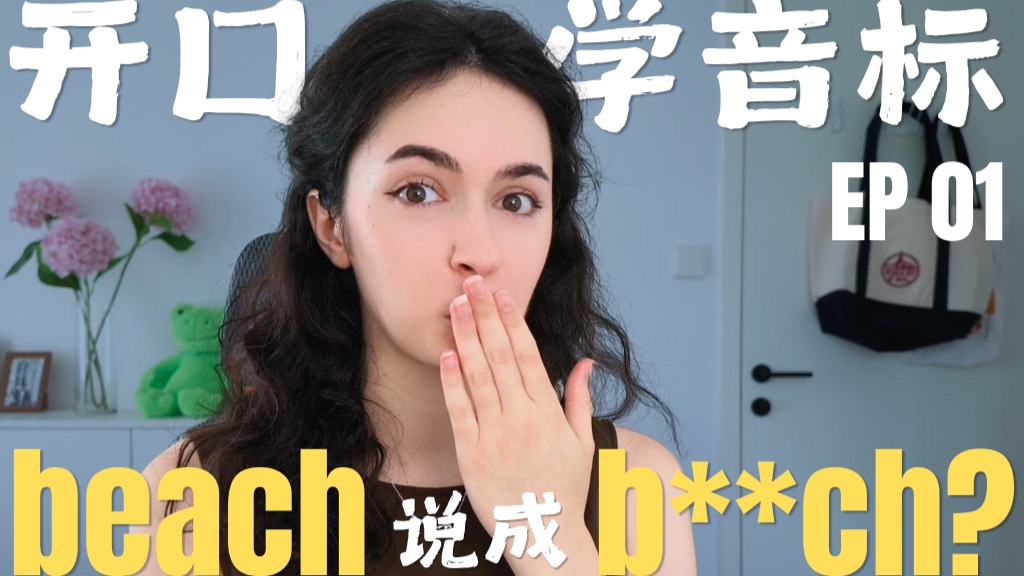
我说的是 beach,为什么你听成了…?| 开口学音标 01
字幕摘录
| 时间 | 英文 | 中文 |
|---|---|---|
| 0:00 | Hi, I'm Lia. | 嗨,我是利亚。 |
| 0:01 | Is English good? | 英语好听吗? |
| 0:02 | Let's see if pronunciation is right. | 试看发音是否正确. |
| 0:03 | From this video, | 从这个视频, |
| 0:04 | I will try my best to explain the American pronunciation little by little to you. | 我会尽我最大的努力 解释美国发音 一点点地给你。 |
| 0:09 | In this video, | 在这个视频中, |
| 0:10 | I will introduce you to two very difficult pronunciations. | 我向你们介绍两个非常困难的发音。 |
| 0:14 | Note that I am talking about pronunciation, not accent. | 请注意,我指的是发音,而不是重音。 |
| 0:17 | There is no right or wrong in accent. | 口音没有对错。 |
| 0:19 | But pronunciation is different. | 但发音不同. |
展开字幕全文(77 条)
| 序号 | 英文 | 中文 |
|---|---|---|
| 1 | Hi, I'm Lia. | 嗨,我是利亚。 |
| 2 | Is English good? | 英语好听吗? |
| 3 | Let's see if pronunciation is right. | 试看发音是否正确. |
| 4 | From this video, | 从这个视频, |
| 5 | I will try my best to explain the American pronunciation little by little to you. | 我会尽我最大的努力 解释美国发音 一点点地给你。 |
| 6 | In this video, | 在这个视频中, |
| 7 | I will introduce you to two very difficult pronunciations. | 我向你们介绍两个非常困难的发音。 |
| 8 | Note that I am talking about pronunciation, not accent. | 请注意,我指的是发音,而不是重音。 |
| 9 | There is no right or wrong in accent. | 口音没有对错。 |
| 10 | But pronunciation is different. | 但发音不同. |
| 11 | Sometimes one tiny sound can change your entire meaning. | 有时一个微小的声音可以改变你的全部意义. |
| 12 | Imagine you want to say, | 想象一下你想说, |
| 13 | I love the beach. | 我喜欢海滩 |
| 14 | But the other person hears, | 但对方听到 |
| 15 | 我喜欢BQQ | |
| 16 | Those two sentences have entirely different meanings. | 这两个句子的意义完全不同。 |
| 17 | And it all comes down to two little sounds. | 这一切都会变成两个小声音。 |
| 18 | E and it. | 和它一样。 |
| 19 | Here's another example. | 这是另一个例子。 |
| 20 | I saw a sheep. | 我看见一只羊。 |
| 21 | I saw a ship. | 我看见一艘船。 |
| 22 | Sheep, ship. | 羊,飞船. |
| 23 | If you don't distinguish these sounds, | 如果你不区分这些声音, |
| 24 | the person listening could have a totally different image in their head. | 监听者脑中可能有一个完全不同的形象。 |
| 25 | For many English learners, | 对于许多英语学习者来说, |
| 26 | these two sounds can be quite difficult | 这两个声音可能很困难 |
| 27 | because many languages don't differentiate them in the same way. | 因为许多语言并没有以同样的方式区分它们. |
| 28 | The difference isn't just simply that one is long and one is short. | 区别不单是长而短。 |
| 29 | If you only focus on the length of these sounds, | 如果你只关注这些声音的长度 |
| 30 | it's not enough to distinguish them. | 这不足以区分他们。 |
| 31 | So let's feel how your mouth changes and moves | 所以让我们来感受一下你的嘴如何改变和移动 |
| 32 | when we pronounce both of these sounds. | 当我们发出这两个声音时 |
| 33 | For E as in sheep, | 对于E就像羊, |
| 34 | your tongue is high in your mouth | 你的舌头在你的嘴里很高 |
| 35 | and more towards the front of your mouth. | 更靠近你的嘴前边 |
| 36 | Also, the corners of your mouth are pulled slightly outward or upward. | 另外,你的嘴角 被略微拉向或向上。 |
| 37 | It's a little bit tense in these corners. | 这些角落有点紧张 |
| 38 | 以羊为 sheep. | |
| 39 | Now say ship, ship, ship. | 现在说船,船,船。 |
| 40 | Notice the corners of your mouth should be much more relaxed. | 注意你的嘴角应该更放松 |
| 41 | You don't need that tension anymore. | 你不需要那种紧张了 |
| 42 | Your tongue is slightly lowered in your mouth | 舌头在嘴里略低 |
| 43 | and a little bit farther back. | 再往前一点 |
| 44 | So the difference between E and I is not just about their length. | 所以E和我之间的区别 不仅仅是它们的长度。 |
| 45 | Your tongue position, your mouth shape, and muscle tension all change. | 你的舌头位置,嘴的形状和肌肉张力都变了 |
| 46 | Let's practice them together. | 我们一起练习吧 |
| 47 | You can repeat after me. | 你可以跟着我重复一遍 |
| 48 | Now let's try these pairs. | 现在让我们试试这些对。 |
| 49 | These little sounds can affect everyday conversation. | 这些小声音可以影响日常的对话. |
| 50 | So we shouldn't only practice individual words. | 所以我们不应该只练习个别的词. |
| 51 | We should also practice full sentences. | 我们还应执行全部判决。 |
| 52 | Try saying this. | 试着说这个 |
| 53 | Let's try another one. | 我们再试试看 |
| 54 | I'll leave this here. | 我会留在这儿。 |
| 55 | Notice the difference. | 注意区别 |
| 56 | After all of that pronunciation practice, | 在读音练习之后 |
| 57 | let's see if your ears can hear the difference. | 让我们看看你的耳朵能听到什么不同。 |
| 58 | I'll say three words and you tell me which word you think I'm saying. | 我会说三个字,你告诉我,你认为我在说什么。 |
| 59 | Number one, sheep, sheep. | 第一,绵羊,绵羊。 |
| 60 | Did you get it? | 你拿到了吗? |
| 61 | Number two, leave, leave. | 第二,离开,离开。 |
| 62 | Is it this word or that word? | 是这个词还是那个词? |
| 63 | Leave, leave. | 离开,离开。 |
| 64 | Number three, fill, fill, fill. | 第三 填满 填满 |
| 65 | What's the point of practicing all of these sounds? | 练习这些声音有什么意义? |
| 66 | Remember the goal of pronunciation practice is not to erase your accent | 记住发音练习的目的不是去除你的口音 |
| 67 | and it's not to make you sound exactly like a native speaker. | 而不是让你听起来像个本地人 |
| 68 | There are two much more important reasons. | 有两个更重要的原因。 |
| 69 | The first one is to be able to express yourself clearly and accurately | 第一个是能够清晰准确地表达自己 |
| 70 | to make sure the other person hears the word you actually intended to say. | 以确保其他人听到 你真正想说的词。 |
| 71 | And the second is to improve your own listening skills | 第二是提高你自己的听力 |
| 72 | to make sure you can understand which word or which phrase the other person is saying. | 确保你能够理解 哪个词 或另一个人说什么。 |
| 73 | Clear pronunciation helps you be understood | 清晰的发音帮助你被理解 |
| 74 | while careful listening helps you understand others. | 仔细听会帮助你理解别人 |
| 75 | Or what words always sound bad? | 或者什么词总是听起来不好? |
| 76 | Let me know in the comments. | 在评论中告诉我。 |
| 77 | Maybe next time I'll talk about the one with the most headache. | 也许下次我会说那个头痛的 |
该视频共有字幕 78 条。解锁更多字幕为会员功能,请移动到 价格