别被政治口号骗了!5分钟讲透“关税战”的底层逻辑:关税到底谁
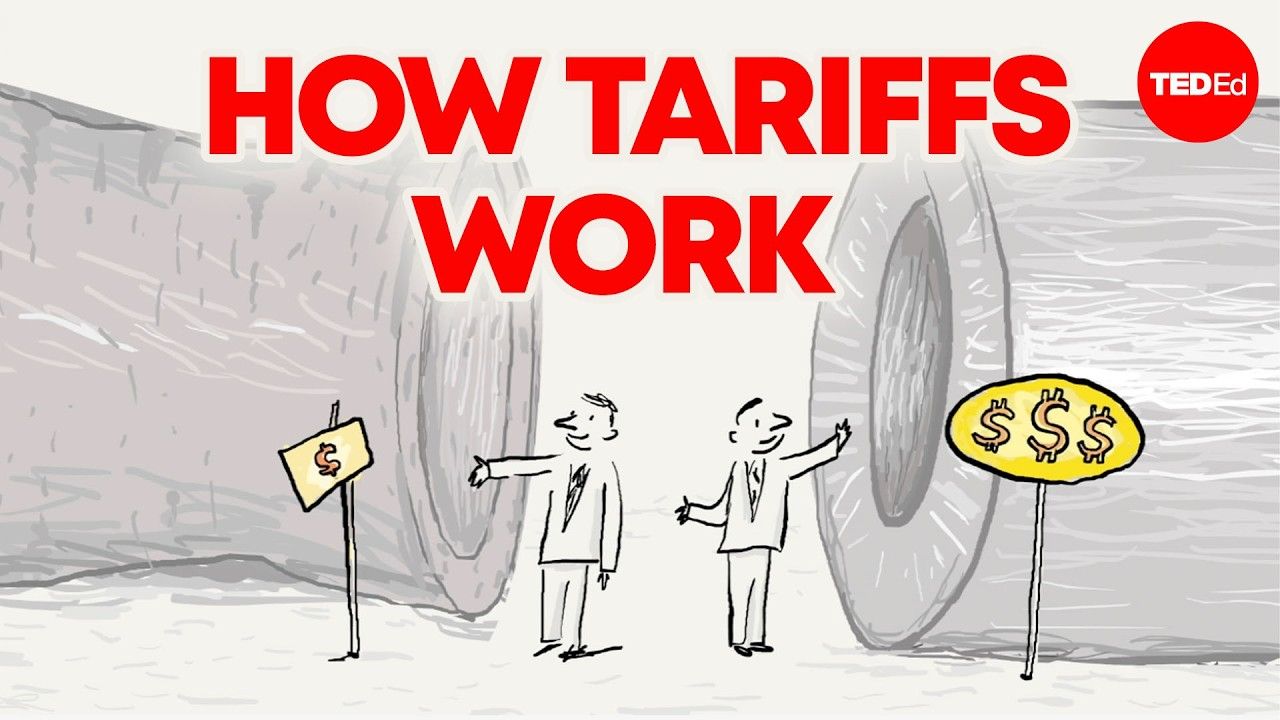
字幕摘录
| 时间 | 英文 | 中文 |
|---|---|---|
| 0:07 | In 1930, as the Great Depression ravaged the United States, President Herbert Hoover made | 1930年,随着大萧条肆虐美国,赫伯特·胡佛总统 |
| 0:13 | a bold economic decision. | 一个大胆的经济决定。 |
| 0:15 | With the goal of supporting American farmers and manufacturers, he approved a sweeping | 为了支持美国农民和制造商,他批准了一个彻底的 |
| 0:20 | 20% tax on all imported agricultural and industrial goods. | 对所有进口农产品和工业品征收20%的税。 |
| 0:26 | He believed making foreign goods more expensive would encourage consumers to buy domestic, | 他认为让外国商品更昂贵会鼓励消费者购买国内商品, |
| 0:31 | thus funneling cash into American businesses and creating more jobs. | 从而将现金注入美国企业,创造更多的就业机会。 |
| 0:37 | But Hoover's plan completely backfired. | 但胡佛的计划完全反弹. |
| 0:39 | Other countries retaliated by taxing American goods, leading exports to fall and global | 其他国家通过对美国货物征税进行报复,导致出口下降和全球 |
| 0:45 | trade to decline. | 贸易下降。 |
| 0:47 | In the end, this policy led American prices to spike and caused even more unemployment. | 最终,这一政策导致美国物价暴涨,造成更多的失业. |
展开字幕全文(72 条)
| 序号 | 英文 | 中文 |
|---|---|---|
| 1 | In 1930, as the Great Depression ravaged the United States, President Herbert Hoover made | 1930年,随着大萧条肆虐美国,赫伯特·胡佛总统 |
| 2 | a bold economic decision. | 一个大胆的经济决定。 |
| 3 | With the goal of supporting American farmers and manufacturers, he approved a sweeping | 为了支持美国农民和制造商,他批准了一个彻底的 |
| 4 | 20% tax on all imported agricultural and industrial goods. | 对所有进口农产品和工业品征收20%的税。 |
| 5 | He believed making foreign goods more expensive would encourage consumers to buy domestic, | 他认为让外国商品更昂贵会鼓励消费者购买国内商品, |
| 6 | thus funneling cash into American businesses and creating more jobs. | 从而将现金注入美国企业,创造更多的就业机会。 |
| 7 | But Hoover's plan completely backfired. | 但胡佛的计划完全反弹. |
| 8 | Other countries retaliated by taxing American goods, leading exports to fall and global | 其他国家通过对美国货物征税进行报复,导致出口下降和全球 |
| 9 | trade to decline. | 贸易下降。 |
| 10 | In the end, this policy led American prices to spike and caused even more unemployment. | 最终,这一政策导致美国物价暴涨,造成更多的失业. |
| 11 | These disastrous outcomes of the Smoot-Hawley Tariff Act were no surprise to the over 1,000 | 《斯穆特-霍利关税法》的这些灾难性结果对1 000多人来说并不奇怪。 |
| 12 | economists who publicly condemned the bill. | 公开谴责该法案的经济学家. |
| 13 | But this wouldn't be the last time a world leader was shocked by a tariff's consequences. | 但这不是世界领导人最后一次被关税的后果震惊. |
| 14 | So what exactly is a tariff? | 那么,什么是关税? |
| 15 | A tariff is a tax an importer pays to bring foreign goods into a country. | 关税是指进口商为将外国货物运入一国而缴纳的税款。 |
| 16 | For example, if they import $1,000 worth of goods at a 10% tariff rate, they'll pay | 例如,如果他们以10%的关税率进口价值1 000美元的货物,他们会支付 |
| 17 | $100 to the government in addition to $1,000 to the seller. | 100美元给政府,另外1000美元给卖家. |
| 18 | Foreign exporters could respond to a tariff by reducing their product's price to keep | 外国出口商可通过降低其产品价格来应对关税,以保持 |
| 19 | an importer's business. | 进口商的生意 |
| 20 | But if they don't, importers bear this cost and then increase their prices so consumers | 但如果他们不这样做, 进口商承担这个成本 然后提高价格 所以消费者 |
| 21 | will make up the difference. | 将弥补差异。 |
| 22 | This may sound straightforward, but enacting a tariff kicks off a complicated economic | 这听起来可能很直接,但颁布一项关税令经济情况变得复杂。 |
| 23 | chain reaction. | 连锁反应。 |
| 24 | So to keep things simple, let's look at some examples from just one country to explore | 因此,为了简单起见,让我们来看看一些例子 从一个国家来探索 |
| 25 | some of the factors that make a tariff's outcomes tricky to predict. | 使关税结果难以预测的一些因素。 |
| 26 | First, tariffs can be applied to different countries at different rates. | 首先,关税可以以不同的税率适用于不同国家。 |
| 27 | For example, in 2024, America had a 6% tariff on all wool entering the country. | 例如,2024年,美国对所有进入该国的羊毛征收6%的关税. |
| 28 | However, if that wool came from Mexico or South Korea, it would be tariff-free due to | 但是,如果羊毛是从墨西哥或韩国运来的,那么由于 |
| 29 | trade agreements. | 贸易协定。 |
| 30 | Meanwhile, importers getting wool from Russia could face a hefty 55.5% tariff. | 与此同时,从俄罗斯获得羊毛的进口商可能会面临高达55.5%的关税。 |
| 31 | Policies like these might help domestic wool producers, or they might just encourage importers | 此类政策可能有助于国内羊毛生产商,或只是鼓励进口商 |
| 32 | to buy from specific foreign producers. | 向特定的外国生产商购买。 |
| 33 | Things get even trickier when trying to predict how tariffs impact jobs. | 当人们试图预测关税如何影响工作时,情况变得更加微妙。 |
| 34 | Sometimes the jobs they create come at a high cost. | 有时他们创造的就业机会成本很高。 |
| 35 | In 2018, the US imposed a tariff on washing machines that created 1,800 jobs and raised | 2018年,美国对洗衣机征收关税,创造了1,800个工作岗位,并提升了 |
| 36 | roughly $82 million in government revenue. | 政府收入约8200万美元. |
| 37 | However, it also increased the average price of washing machines by $86, costing consumers | 然而,它也使洗衣机的平均价格提高了86美元,使消费者付出了代价。 |
| 38 | roughly $1.5 billion. | 大约15亿美元。 |
| 39 | This means consumers paid roughly $817,000 to create each of those jobs. | 这意味着消费者花费了大约817 000美元来创造这些工作。 |
| 40 | In other cases, the jobs tariffs create come at the cost of existing jobs. | 在其他情况下,创造的就业关税是以现有工作为代价的。 |
| 41 | In 2002, the Bush administration imposed tariffs as high as 30% on imported steel. | 2002年,布什政府对进口钢铁征收高达30%的关税. |
| 42 | Employment in US steel production had been decaying for decades, so by making foreign | 美国钢铁生产中的就业已经衰退了数十年,因此,通过使外国钢铁生产 |
| 43 | steel more expensive, the tariffs sought to create new jobs for US steel manufacturers. | 更昂贵的钢铁,关税试图为美国钢铁制造商创造新的就业机会。 |
| 44 | Initially, the policy did slow down job loss. | 最初,保险确实减缓了失业。 |
| 45 | But since US steel still costs more than pre-tariff foreign steel, domestic industries that use | 但是,由于美国钢铁的成本仍然高于关税前外国钢铁, 国内工业使用 |
| 46 | this material had to increase their prices. | 这种材料不得不提高价格。 |
| 47 | This made their products less competitive internationally, where foreign manufacturers | 这使得其产品在国际上的竞争力降低,而外国制造商 |
| 48 | were still using cheap steel. | 还用廉价钢铁 |
| 49 | Within a year of enacting the tariff, the US lost far more jobs in steel-related industries | 在颁布关税一年之内,美国在与钢铁相关的工业中失去了更多的就业机会。 |
| 50 | than they gained in steel-producing industries. | 而不是在生产钢铁的行业。 |
| 51 | Clearly, how other countries respond to tariffs is another big part of the ripple effect these | 显然,其他国家如何应对关税是这些波及效应的另一大部分。 |
| 52 | policies have. | 政策已经。 |
| 53 | One clear example comes from 2018, when the US attempted to address its trade deficit | 一个明显的例子是2018年,当时美国试图解决其贸易赤字问题。 |
| 54 | with China by taxing Chinese goods. | 与中国通过对中国商品征税. |
| 55 | While these tariffs protected domestic businesses and raised government revenue, they also set | 虽然这些关税保护了国内企业,提高了政府收入,但也规定了 |
| 56 | off a trade war. | 结束一场贸易战 |
| 57 | China retaliated by raising tariffs on US exporters, including farmers relying on Chinese | 中国对包括依赖中国的农民在内的美国出口商提高关税进行报复 |
| 58 | markets for soybean sales. | 豆类销售市场。 |
| 59 | In the end, this led to higher prices for US consumers and a slight drop in America's | 最终,这导致美国消费者价格上升,美国消费者价格略有下降。 |
| 60 | GDP. | 国产总值. |
| 61 | Trade wars aren't new. | 贸易战争不是新的。 |
| 62 | And even in the 18th and early 19th centuries, when certain tariffs did help struggling industries | 即使在18世纪和19世纪初 某些关税确实帮助了挣扎的工业 |
| 63 | find their domestic footing, they were mostly used to raise government funds. | 他们主要用来筹集政府资金。 |
| 64 | But over the last 200 years, our global economy has become far more interdependent. | 但在过去200年里,我们的全球经济变得更加相互依存。 |
| 65 | Today, there are more manufacturing components being imported than ever before, many of | 今天,进口的制造部件比以往任何时候多,其中许多是: |
| 66 | which are used to make a wide variety of consumer goods. | 用于制造多种消费品。 |
| 67 | This complexity means that even a seemingly simple tariff can trigger a global chain reaction, | 这种复杂性意味着即使看似简单的关税也可能引发全球连锁反应, |
| 68 | creating more consequences than anyone can plan for. | 造成比任何人都更严重的后果 |
| 69 | Ready to keep learning? | 准备好继续学习了吗? |
| 70 | Watch these videos to either challenge what you think you know, or learn more about what | 观看这些视频 或挑战你认为你知道的, 或学习更多关于什么 |
| 71 | you don't. | 你没有。 |
| 72 | Subscribe and stay curious. | 订阅并保持好奇. |
该视频共有字幕 72 条。解锁更多字幕为会员功能,请移动到 价格