谁在控制韩国?韩国的政商交易史
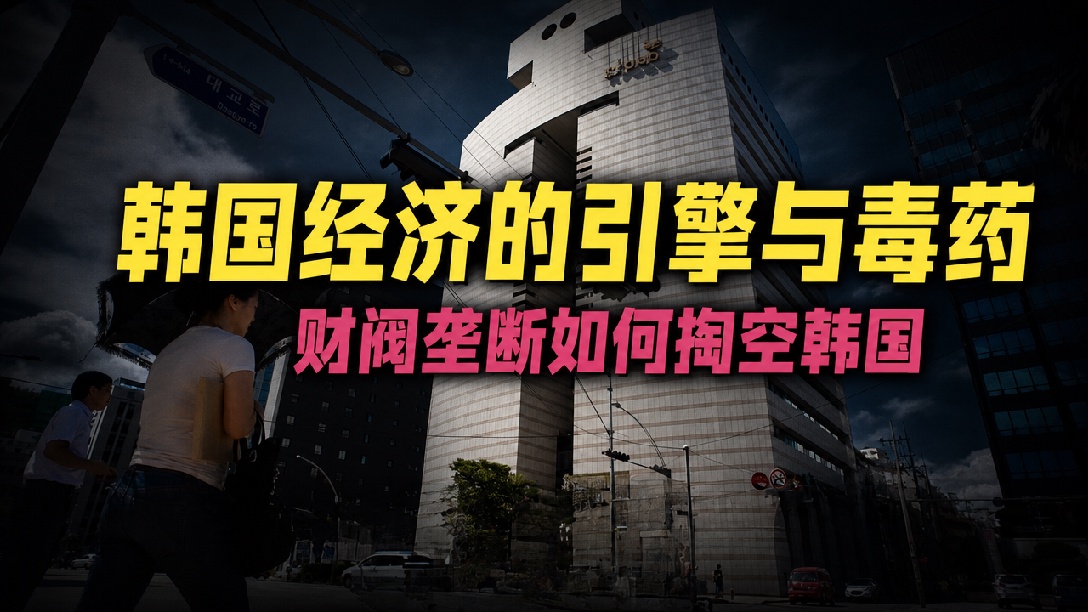
字幕摘录
| 时间 | 英文 | 中文 |
|---|---|---|
| 0:00 | One of South Korea's greatest economic strengths is also one of their biggest economic weaknesses. | 韩国最大的经济优势之一也是其最大的经济弱点之一. |
| 0:06 | Their country's economy is divined by a series of massive business groups with names familiar | 他们的国家经济 由一系列庞大的 商业集团 名称熟悉 |
| 0:10 | to everyone. | 给大家 |
| 0:11 | Samsung, Hyundai, and LG. | 三星,现代,和LG. |
| 0:15 | These groups power its export economy and dominate | 这些集团为出口经济提供动力,并主导 |
| 0:18 | its people's everyday lives. | 其人民的日常生活。 |
| 0:20 | They also manipulate the Korean economy to their own advantage | 他们也操纵韩国经济为自己谋利 |
| 0:23 | and pay millions to maintain corrupt ties with the highest levels of power in Korea. | 并付出数百万美元维持与韩国最高权力层的腐败关系. |
| 0:29 | Corruption in Korea predates the modern state. | 韩国的腐败早于现代国家. |
| 0:32 | The Japanese colonial state and its agricultural | 日本殖民国家及其农业 |
展开字幕全文(291 条)
| 序号 | 英文 | 中文 |
|---|---|---|
| 1 | One of South Korea's greatest economic strengths is also one of their biggest economic weaknesses. | 韩国最大的经济优势之一也是其最大的经济弱点之一. |
| 2 | Their country's economy is divined by a series of massive business groups with names familiar | 他们的国家经济 由一系列庞大的 商业集团 名称熟悉 |
| 3 | to everyone. | 给大家 |
| 4 | Samsung, Hyundai, and LG. | 三星,现代,和LG. |
| 5 | These groups power its export economy and dominate | 这些集团为出口经济提供动力,并主导 |
| 6 | its people's everyday lives. | 其人民的日常生活。 |
| 7 | They also manipulate the Korean economy to their own advantage | 他们也操纵韩国经济为自己谋利 |
| 8 | and pay millions to maintain corrupt ties with the highest levels of power in Korea. | 并付出数百万美元维持与韩国最高权力层的腐败关系. |
| 9 | Corruption in Korea predates the modern state. | 韩国的腐败早于现代国家. |
| 10 | The Japanese colonial state and its agricultural | 日本殖民国家及其农业 |
| 11 | economy was also quite corrupt and unequal. | 经济也相当腐败和不平等。 |
| 12 | The large landlords earned all the income | 大房东赚了这么多钱 |
| 13 | and ruthlessly exploited the farmers. | 残酷地剥削农民。 |
| 14 | This administration ended with World War II. | 这个政府以二战结束. |
| 15 | Much of its legacies, however, passed on to the new South Korean government, | 然而,它遗留下来的很多遗产都传给了韩国新政府, |
| 16 | which fell under the Western sphere of influence. | 属于西方势力范围 |
| 17 | Its first president, Syngman Rhee, thus was a staunch anti-communist. | 其首任会长Syngman Rhee因此是坚定的反共主义者. |
| 18 | And I guess he proved it. | 我猜他证明了这一点。 |
| 19 | First, by committing a variety of massacres against suspected communists | 首先,通过对共产主义嫌疑分子进行各种屠杀 |
| 20 | that left some 100,000 dead. | 这导致大约十万人死亡。 |
| 21 | The Bodo League massacre in 1950, I felt, was especially cruel. | 1950年的博多联盟屠杀,我觉得特别残忍. |
| 22 | 第二,Rhee创造了Chaebol。 | |
| 23 | He needed to raise funds to fight the Korean War, | 他需要为朝鲜战争筹款 |
| 24 | so starting in 1946 and peaking in the 1950s, his government sold off many of the assets they seized | 从1946年开始,到20世纪50年代达到顶峰 他的政府卖掉了他们没收的许多资产 |
| 25 | from the old Japanese state, along with a few other prized state-owned entities. | 以及其他几个受人尊敬的国有实体 |
| 26 | The prices for these privatizations of public assets were determined via private negotiation | 公共资产私有化的价格是通过私人谈判确定的。 |
| 27 | rather than public auction. | 而不是公开拍卖。 |
| 28 | A steal by any value investing metric. | 以任何价值投资的衡量标准衡量的窃取。 |
| 29 | Valuable companies like Tongyang Beers, today Oriental Breweries, Daehan Textile, | 唐洋啤酒公司 东方酿酒公司 大汉纺织公司 |
| 30 | and Tongyang Cement are part of the Tongyang Group. | 与通阳水泥属通阳集团. |
| 31 | Like with the Zaibatsu of Japan, | 就像日本的宰巴松一样 |
| 32 | the purchasers of these amazing assets would eventually become the Chaebol. | 这些惊人资产的购买者最终将成为Chaebol。 |
| 33 | Then in 1961, Park Chung-hee led a military coup that ended the Second Republic. | 随后在1961年,朴正熙领导军事政变,结束了第二共和国. |
| 34 | Immediately after the coup, Park arrested the heads of the Chaebol on the basis that they | 政变结束后,朴槿惠立即逮捕了Chaebol族的首领,理由是他们 |
| 35 | were corruptly accumulating wealth. | 他们是贪婪地积累财产的。 |
| 36 | But very quickly afterwards, his government negotiated | 但很快,他的政府谈判 |
| 37 | a crony capitalism deal with the Chaebol. | 一个裙带资本主义 处理Chaebol。 |
| 38 | Park wanted to emulate Japan's industrialization | 朴槿惠想模仿日本的工业化 |
| 39 | process and sought the company's help. | 并寻求公司的帮助。 |
| 40 | The Chaebol would support Park's policies for | Chaebol将支持朴槿惠的政策 |
| 41 | import substitution and later exports. | 进口替代和以后的出口。 |
| 42 | The Korean government would in turn lend the Chaebol | 韩国政府转而借钱 |
| 43 | foreign currency loans at below market interest rates so that they can acquire foreign technologies | 外币贷款低于市场利率,以便获得外国技术 |
| 44 | and build up their capacities in those industries. | 并建设这些行业的能力。 |
| 45 | And oh, by the way, the Chaebol will also contribute | 哦,顺便说一句,Chaebol人也会作出贡献 |
| 46 | funds for Park's upcoming 200 million dollar presidential election campaign. | 资助朴槿惠即将到来的2亿元总统竞选活动. |
| 47 | These came in the form of 10-15% loan commissions, namely kickbacks. | 这些贷款形式为10-15%的贷款佣金,即回扣。 |
| 48 | Companies realized that the best way to acquire cheap capital and get rich | 公司意识到,获得廉价资本和致富的最佳方式 |
| 49 | was to be good friends with the president. | 和总统做好朋友 |
| 50 | For instance, Park Chung-hee maintained very | 例如,朴正熙非常坚持 |
| 51 | close personal ties with Chung Ju-yong of Hyundai and Kim Woo-jung of Daewoo. | 与现代的钟朱荣和大宇的金宇中关系密切. |
| 52 | The kickbacks also grew over the years. | 这些年来,回扣也有所增加。 |
| 53 | Adjusted to 1990 prices, | 按1990年价格调整, |
| 54 | the top five Chaebol contributed over 800 million won annually to the Park government | 前5名Chaebol每年向公园政府捐款8亿韩元 |
| 55 | before 1972. | 1972年之前。 |
| 56 | That grew to 1.5 billion after 1972. | 1972年后增长到15亿。 |
| 57 | Over the next 20 years, the government and the Chaebol ran Korean society as its dominant | 在接下来的20年里,政府和Chaebol管理着韩国社会 |
| 58 | actors. | 演员。 |
| 59 | The companies helped fund the government's political campaigns and satisfied social compact | 公司帮助资助政府的政治运动 满足社会契约 |
| 60 | growing the economy. | 经济增长。 |
| 61 | 政府又授予Chaebol特权, | |
| 62 | force to impose the costs of the Chaebol's excesses onto greater society. | 将Chaebol的过度行为的代价 强加给更大的社会 |
| 63 | For instance, | 比如说, |
| 64 | in 1971 the Chaebol found themselves over leveraged and requested a bailout. | 1971年,Chaebol公司发现自己举债过重,要求救助。 |
| 65 | The Korean | 韩国人 |
| 66 | government converted all the Chaebol's private market loans to five-year public ones and froze | 政府将Chaebol所有私人市场贷款 改为五年公共贷款 并冻结 |
| 67 | private interest rates. | 私人利率。 |
| 68 | Small lenders got hosed since nominal listed interest rates for such public | 自名义上市利率以来,小贷款人得到了软化 |
| 69 | loans did not exceed inflation. | 贷款不超过通货膨胀。 |
| 70 | But as Korea entered the turbulent 1980s, the military | 但随着韩国进入动荡的1980年代 军队 |
| 71 | dictatorship gradually lost its monopoly grip on power. | 独裁政权逐渐失去对权力的垄断控制. |
| 72 | The partnership began to get a little | 合作开始有点... |
| 73 | shaky as the balance of power started to shift. | 随着力量平衡开始转变而动摇. |
| 74 | By the mid-1980s, things had tipped decisively in | 到20世纪80年代中期, 事情已经决定性地向 |
| 75 | Chaebol的帮助。 | |
| 76 | The top five Chaebol accounted for nearly 20% of the country's GDP | 前5名Chaebol占全国国内生产总值的近20% |
| 77 | and 45% of its mining slash manufacturing output. | 及其45%的采矿斜拉式制造产出。 |
| 78 | The top 10 Chaebol owned an average of 8.6 | 前十名Chaebol拥有平均8.6美元 |
| 79 | manufacturing businesses, 20 to 40 businesses in total. | 制造业,共20至40家企业。 |
| 80 | Korea's Chaebol-centric strategy had | 韩国以Chaebol为中心的策略 |
| 81 | suffocated the country's small and medium-sized business sector. | 扼杀了我国的中小企业部门。 |
| 82 | From 1966 and 1976, the number | 1966年和1976年的数字 |
| 83 | of manufacturing firms in Korea grew just 10%, but their size exploded 176%. | 韩国制造业企业的增长率仅为10%,但规模却爆炸了176%。 |
| 84 | By contrast, Taiwan pursued a less cozy state business relationship with its corporate elites | 相形之下,台湾与公司精英 建立不那么舒适的国营商业关系 |
| 85 | and also did not get hit with a devastating war. | 也没有受到毁灭性战争的打击。 |
| 86 | They saw its number of manufacturing firms | 他们看到了制造公司的数量 |
| 87 | grow by 150% and firm size by 29% over the same period of time. | 同期增长150%,企业规模增长29%. |
| 88 | This vast imbalance between the Chaebol and the rest of the country started to become an issue. | Chaebol人和该国其他地区之间的这种巨大不平衡开始成为一个问题。 |
| 89 | The people of South Korea disapproved of the outsized power these big business groups had. | 韩国人民不赞成这些大型商业集团拥有的庞大权力。 |
| 90 | The people were getting richer and with that they wanted more than just higher wages. | 人民越来越富有,他们想要的不仅仅是更高的工资。 |
| 91 | They wanted better environmental regulations, working conditions, and a better life in general. | 他们希望改善环境规章、工作条件和总体生活。 |
| 92 | The government, now increasingly democratic, had to respond, | 政府现在越来越民主,必须作出反应, |
| 93 | switching from a stance of support to one of regulation. | 从支持立场转变为监管立场。 |
| 94 | The problem was that the government's leaders still needed the Chaebol's financial contributions | 问题是政府领导人仍然需要Chaebol的财政捐助。 |
| 95 | to stay in power. | 保持权力。 |
| 96 | This continued regardless of who was in charge. | 不论由谁负责,这种情况仍在继续。 |
| 97 | Park Jung-hee was assassinated, | 朴正熙被暗杀了 |
| 98 | and another military leader Chun Doo-hwan came to lead South Korea afterwards. | 而另一位军事领袖春斗焕后来也前来领导韩国. |
| 99 | During his administration, the Chaebol contributed 15 to 22 billion won to high-level | 在他执政期间,Chaebol人向高层捐款150亿至220亿韩元 |
| 100 | political campaigns and 21 to 25 billion won during the subsequent administration of President | 在后来的总统执政期间开展政治运动和210至250亿韩元 |
| 101 | Roh Tae-woo. | 罗泰宇. |
| 102 | This corrupt deal between the Korean government and business evolved this way partly | 韩国政府与企业之间的腐败交易 部分演变成这样 |
| 103 | because of how weak Korea's political parties have been. | 因为韩国的政党多么软弱. |
| 104 | During the military dictatorship era, | 在军事独裁时代, |
| 105 | the party served as simple shells for their candidates. | 该党为候选人提供了简单的贝壳。 |
| 106 | People voted the party simply | 人们只投票给党 |
| 107 | because they wanted to vote for the candidate. | 因为他们想投候选人的票 |
| 108 | Then the country democratized in 1987, holding | 1987年国家民主化 |
| 109 | free and open elections for the first time. | 首次举行自由和公开的选举。 |
| 110 | But after so many years of military dictatorship, | 但经过这么多年的军事独裁 |
| 111 | there had been no time to build suitable political campaigning norms. | 没有时间制定适当的政治竞选准则。 |
| 112 | Without an above-board financing system, parties and candidates found themselves starved for cash, | 没有上层融资系统,政党和候选人发现自己缺乏现金, |
| 113 | which made them vulnerable to corruption. | 这使得他们容易堕落。 |
| 114 | Which means the Chaebol are still able to get what they | 也就是说Chaebol仍然能拿到他们想要的东西 |
| 115 | want. | 想要吗? |
| 116 | Government aid in the form of plentiful capital, favorable regulations, and protections | 政府援助形式为丰富的资本、有利的规章和保护 |
| 117 | from competition. | 从竞争。 |
| 118 | The Asian financial crisis would demonstrate the consequences of Korea's | 亚洲金融危机将表明韩国的 |
| 119 | inability to rein in their big businesses. | 无法控制他们的大生意 |
| 120 | In the 10 years after democratization in 1987, | 在1987年民主化后的十年中, |
| 121 | the Chaebol gained substantial political power. | Chaebol人获得了巨大的政治权力。 |
| 122 | For instance, in 1988, Daewoo Group was able to | 例如,1988年,大宇集团能够 |
| 123 | the National Assembly to amend the law so to allow the government to bail out the ailing Daewoo | 国会将修改法律 以便政府能拯救大宇之灾 |
| 124 | shipbuilding corporation. | 造船公司. |
| 125 | They also used that power to get rapid liberalization reforms to | 他们还利用这种力量使自由化改革迅速到 |
| 126 | aid their growth and expansion. | 帮助他们的成长和扩大。 |
| 127 | One of those reforms had been to allow the Chaebol to more | 其中一项改革是允许 " Chaebol " 族成员更多参加。 |
| 128 | easily access foreign capital financing. | 容易获得外国资本融资。 |
| 129 | In other words, take out cheap loans denominated | 换句话说,用便宜的贷款 |
| 130 | in foreign currencies. | 外币。 |
| 131 | This would eventually kick off a massive debt boom that ended in the | 这最终会引发大规模债务暴涨,最终导致 |
| 132 | Asian financial crisis. | 亚洲金融危机. |
| 133 | Another major reform allowed the Chaebol to take limited ownership | 另一项重大改革使Chaebol拥有有限的所有权。 |
| 134 | stakes in non-bank financial companies. | 非银行金融公司的股份。 |
| 135 | This encouraged super complicated cross-ownership | 这鼓励了超复杂的交叉所有权 |
| 136 | structures obscuring their true size. | 结构模糊其真实大小。 |
| 137 | For instance, the Samsung Group and its controlling | 例如,三星集团及其控制 |
| 138 | Li family. | 李家传. |
| 139 | The Li's own a minority of the shares in Samsung affiliated firms, yet through that | 李氏在三星的附属公司中占有少数股权 但通过这个 |
| 140 | companies increasingly complex structures meant that nobody knew which subsidiaries made money | 公司结构越来越复杂 意味着没有人知道哪个子公司赚钱 |
| 141 | and which ones burned it. | 和谁烧了它。 |
| 142 | The profitable companies started propping up the weak ones, | 盈利的公司开始支持弱者, |
| 143 | leading to market inefficiencies and oversupply in certain industries. | 导致某些行业的市场低效和供过于求。 |
| 144 | This all came to a head in 1997 which vastly pared back the power of the Chaebol. | 这些都发生在1997年,它大大回落了Chaebol的力量。 |
| 145 | It left an | 它留下了一个 |
| 146 | open door for reforms, encouraging a more common prosperity, to steal a term. | 打开改革的大门,鼓励更加共同的繁荣,偷取一个名词. |
| 147 | A variety of reforms were imposed on the ailing Chaebol by both the Kim Dae-jung | 金大中两家都对钱宝尔实行各种改革 |
| 148 | and Ryu Moo-hyeong administrations. | 和龙武政府 |
| 149 | The goals were to prevent another financial crisis from | 目标是防止再次发生金融危机。 |
| 150 | ever happening again by limiting debt capacity and cross-shareholder structures. | 限制债务能力和交叉持有者结构,从而再次出现。 |
| 151 | Some of these reforms succeeded, but not without wide raging consequences. | 其中一些改革取得成功,但并非没有广泛的后果。 |
| 152 | For instance, in my video about Hanjin shipping, I talked about how the company had to reduce its | 例如,在我的关于汉源航运的视频中,我谈到公司如何减少 |
| 153 | debt to equity loads below 200%. | 债务对股本的负载低于200%。 |
| 154 | It forced Hanjin to sell off ships and lease others to retain | 这迫使汉源把船卖掉,租给别人 |
| 155 | capacity, converting those financing costs into operating ones. | 将筹资费用转换为业务费用。 |
| 156 | Reforms did cut a lot of the fat | 改革确实削减了很多脂肪 |
| 157 | in the Korean car industry. | 在韩国汽车工业。 |
| 158 | In 1997, there had been five independent Korean car companies. | 1997年,韩国有5家独立的汽车公司. |
| 159 | Soon after, there would be just one. | 不久后,将只有一个。 |
| 160 | The Chaebol dialed back their affiliates and further separated them. | Chaebol拨回了他们的附属公司,并进一步将它们分开。 |
| 161 | In 1997, | 在一九九七年时, |
| 162 | a sample of Chaebol showed 819 affiliates. | Chaebol样本显示有819个子公司。 |
| 163 | Three years later, that number became 544. | 3年后,这个数字变为544人. |
| 164 | Dividends to minority shareholders, the ones getting stiffed the most by the cross-holdings | 分给少数股东的股权 最受交叉控股的影响 |
| 165 | structure, increased from 2.2 trillion won in 2001 to 10.8 trillion by 2006. | 从2001年的2.2万亿韩圆增加到2006年的10.8万亿韩圆。 |
| 166 | The crisis also helped create the Korean export juggernaut. | 此次危机还帮助建立了韩国出口juggernaut. |
| 167 | Realizing the unfriendly domestic | 实现不友好的国内 |
| 168 | environment, the biggest Chaebols seized on a variety of free trade agreements in the 2000s | 环境,2000年代在各种自由贸易协议上 抓住的最大Chaebols |
| 169 | and turned outwards. | 然后转身向外。 |
| 170 | They became wildly successful. | 他们变得非常成功。 |
| 171 | By 2013, 86% of Samsung's revenue came from abroad, | 到2013年,三星的收入有86%来自国外, |
| 172 | and this success drove the Korean economy's top-line recovery. | 而这一成功推动了韩国经济的第一线复苏. |
| 173 | From 1998 to 2010, Korea's economy grew at an average rate of 5%. | 1998年至2010年,韩国经济平均增长5%. |
| 174 | A very good number. | 一个非常好的数字。 |
| 175 | But that shiny golden number hid a variety of troubling social issues | 但那个闪闪发亮的金色数字隐藏了各种令人不安的社会问题 |
| 176 | beneath the surface. | 在地表之下, |
| 177 | On the basis of GDP growth alone, the Korean economy grew well and everything should be fine, | 光是GDP增长,韩国经济就增长良好,一切都应该很好 |
| 178 | right? | 对吧? |
| 179 | The problem, however, was that the benefits of that growth fell to a very small cohort of | 然而,问题在于,这种增长的好处落在极少数群体身上。 |
| 180 | people. | 人们 |
| 181 | A significant gap opened up between the haves and the have-nots in Korean society. | 韩国社会贫富悬殊。 |
| 182 | In 2013, the Chaebols brought in over 50% of revenue and value add in the manufacturing sector. | 2013年,Chaebols为制造业带来了50%以上的收入和增值。 |
| 183 | But they employed less than 20% of the sector's employees. | 但他们雇用的这个部门的雇员不到20%。 |
| 184 | As part of the negotiations during the reform era after 1997, the government wanted the Chaebols to | 作为1997年之后改革时期谈判的一部分,政府希望Chaebols人 |
| 185 | become more profitable, so that they can more easily service their debts. | 更有利可图,这样他们就能更容易偿还债务。 |
| 186 | Chaebols说, | |
| 187 | but wanted to make it easier for them to lay people off. | 但想让他们更容易地解雇人 |
| 188 | The Korean government agreed. | 韩国政府同意. |
| 189 | Hundreds of thousands of people lost their jobs. | 数十万人失业. |
| 190 | Many of them have never found regular | 很多人从未发现过正常的 |
| 191 | salaried work since and instead work irregularly. | 从那以后就从事有薪工作,而不是非正常工作。 |
| 192 | Elder poverty in Korea has since reached four | 从那时起,韩国的老年贫困达到了4个 |
| 193 | times the OECD average. | 乘以经合组织平均数。 |
| 194 | Income share for the top 1% of Korean society rose from 7% | 韩国社会前1%的收入份额从7%上升 |
| 195 | before 1997 to 12% in the mid-2010s. | 在1997年以前到2010年代中期为12%。 |
| 196 | The Korean people recognize this inequality. | 朝鲜人民认识到这种不平等。 |
| 197 | That they have seen and shared none of the | 他们没有看到和分享任何 |
| 198 | by the country's so-called national champions and its plutocratic owners. | 由国内的所谓全国冠军 及其流利的主人。 |
| 199 | And that is why the Korean people voted for a change of direction in 2007. | 这就是为什么韩国人民在2007年投票赞成改变方向。 |
| 200 | President Lee Myung-bak is a conservative from the Pak Chang-hee line. | 李明博主席是朴昌熙一线的保守派. |
| 201 | A former businessman and CEO of Hyundai Construction, his 2007 presidential campaign | 他的2007年总统竞选 |
| 202 | emphasized economic recovery after what he called a lost decade of liberal rule. | 在他称之为失去自由统治的十年之后,强调经济复苏。 |
| 203 | Note again that the Korean economy grew 5% a year from 1997 to 2007. | 再次指出,1997年至2007年,韩国经济年均增长5%. |
| 204 | Nothing like the glory years of the 80s and early 90s, but very good by almost any measure. | 没有什么比80年代和90年代早期的辉煌年代,但几乎任何衡量都非常好. |
| 205 | Lee's campaign made the 747 promise to the Korean people. | 李'的竞选使747年对朝鲜人民的承诺. |
| 206 | By bringing CEO-style management to | 通过将CEO式的管理 |
| 207 | Korea, he would raise GDP growth to 7%, achieve a per capita income of $40,000, | 韩国,他将把GDP增长提高到7%,实现人均收入40,000美元. |
| 208 | and make Korea the seventh largest economy. | 并让韩国成为第七大经济体. |
| 209 | Lee won with the highest margin in years. | 李以多年来最高的比分获胜. |
| 210 | But record low voter participation indicated that | 但记录显示选民参与率低 |
| 211 | the Korean people were starting to lose faith in their government's ability to curb the country's | 朝鲜人民开始对政府遏制朝鲜的能力失去信心 |
| 212 | social inequalities and bring the good times back. | 社会不平等,把美好时光带回来。 |
| 213 | Fundamentally, Lee's business policies | 基本上,李商隐的经营政策 |
| 214 | indicated that he felt the previous 10 years had held back the chaebol's abilities to compete | 他表示,他觉得过去10年中,Chaebol的竞争能力受到了阻碍。 |
| 215 | against other multinational corporate giants. | 对抗其他跨国公司巨头 |
| 216 | Thus, not that big business was too big for Korea, | 因此,对于韩国来说,大生意并不太大, |
| 217 | but big business was too small for the world. | 但大生意对世界来说太小了 |
| 218 | He lowered the corporate tax rate from 25% to 20%, raised the ceiling on non-bank | 他将公司税率从25%降低到20%,提高了非银行的上限。 |
| 219 | financial investment, and amnestied a number of executives convicted in wake of the financial | 金融投资,并赦免了一些在金融投资之后被定罪的行政主管。 |
| 220 | crisis. | 危机。 |
| 221 | He also oversaw a continuation of market-oriented reforms, giving more | 他还监督着面向市场的改革的继续,给予更多的 |
| 222 | decision-making powers to the industry. | 行业的决策权。 |
| 223 | One can argue that Lee's goal would bring back the era of Park Chung-hee's rapid economic growth | 可以说李中熙的进球会让朴正熙经济迅速发展 |
| 224 | and development. | 发展。 |
| 225 | Lee traded on those sentiments, especially when he added Park-era economic | 特别是当他加入了朴槿惠时代的经济 |
| 226 | planners to his administration. | 计划他的管理。 |
| 227 | But unlike with Park, Lee did not force the chaebol to | 但与朴槿惠不同的是,李并没有强迫钱宝尔 |
| 228 | funnel profits into new and risky industries. | 将利润注入新的和有风险的行业。 |
| 229 | Something wild and crazy like quantum computers, | 像量子计算机一样疯狂疯狂的东西 |
| 230 | offshore wind, or fusion energy that the chaebol would otherwise not really invest in. | 离岸风, 或聚变能量, 否则不会真正投资。 |
| 231 | The government failed to do that and instead funneled money to rust-spelt industries | 政府没有这样做,反而把钱输给了生锈工业 |
| 232 | like construction and infrastructure. | 像建筑和基础设施。 |
| 233 | In the end, the Lee administration could not deliver the growth that they promised. | 最终李政无法实现他们承诺的增长. |
| 234 | GDP growth has continued to decline throughout the 2000s. | 在整个2000年代,国内生产总值的增长继续下降。 |
| 235 | Korean presidents only have one term. | 韩国总统只有一个任期. |
| 236 | So Lee soon stepped down. | 于是李 soon很快下台. |
| 237 | In 2018, he was arrested for charges of bribery, embezzlement, and tax fraud. | 2018年,因受贿,贪污,税务欺诈等罪名被逮捕. |
| 238 | During the next presidential election in 2012, conservative Park Geun-hye | 在2012年的下届总统选举中,保守派朴槿惠 |
| 239 | moved leftwards on her messaging. | 她的留言左转 |
| 240 | She combined her platform of nostalgia for the glory years | 她结合了她的怀旧纲领 为荣耀的岁月 |
| 241 | with stronger emphasis on welfare. | 更强调福利。 |
| 242 | Notably, however, she did not advocate for a higher | 值得注意的是,她不主张提高 |
| 243 | capital gains tax, key to the accelerating Korean wealth gap. | 资本收益税,加速韩国财富差距的关键. |
| 244 | Modern corruption committed by the chaebol is done to maximize their wealth and market power | 腐败者所犯下的现代腐败是为了最大限度地扩大他们的财富和市场力量。 |
| 245 | in Korea and elsewhere. | 在韩国和其他地方。 |
| 246 | Two areas in particular focus on maintaining control of their empire, | 两个领域特别侧重于保持对其帝国的控制, |
| 247 | mostly through the use of tax manipulations and legislation, and regulatory capture. | 主要是通过利用税收操纵和立法,以及管制手段。 |
| 248 | I want to talk more on the latter. | 我想多谈谈后者。 |
| 249 | A lot of people today take a nihilistic perspective to the wealth inequality and big business | 今天很多人从虚无的角度看待财富不平等和大生意 |
| 250 | problem. | 问题。 |
| 251 | Gosh, it might even be cool to do so now. | 天啊,现在这样做可能很酷 |
| 252 | Who cares? | 谁在乎? |
| 253 | We can't do anything about it. | 亦无所施. |
| 254 | They got all the politicians in their pockets. | 他们把政客都藏在口袋里了 |
| 255 | The reality is that these actions have consequences. | 现实是,这些行动产生了后果。 |
| 256 | And that came to be most apparent | 这已经很明显了 |
| 257 | with the 2014 Sewol sinking, which claimed 304 lives, most of them high school students. | 伴随着2014年锡沃勒沉没,造成304人死亡,其中大部分是高中生. |
| 258 | A variety of things have been said about the Sewol sinking. | 关于锡沃尔沉没事件,人们有多种说法. |
| 259 | Most of them are true. | 多数是真实的。 |
| 260 | For instance, I mentioned that the ferry already had been quite old when it was first | 例如,我提到渡轮在刚开始的时候已经很老了 |
| 261 | purchased and converted to passenger use, and that it had been very overloaded when it set off | 购买后改为客用,起动时超载 |
| 262 | on its journey. | 在它的旅程。 |
| 263 | The most proximate reason why the death rate was so high, however, | 然而,死亡率如此高的最近原因, |
| 264 | was that safety and rescue regulations were ignored. | 安全和救援条例被忽略了 |
| 265 | And had been so for a while. | 并一直如此 一段时间。 |
| 266 | For too long, the regulatory agency and the company worked closely together to ignore | 长期以来,管理机构和公司密切合作,无视 |
| 267 | and keep the profitable status quo. | 保持有利可图的现状 |
| 268 | A status quo which included the continued rotation of government employees into the industry, | 现状,包括政府雇员继续轮换进入该行业, |
| 269 | and the ferry company's continued monopoly privilege of the lucrative Incheon Jeju | 和渡轮公司继续垄断 |
| 270 | ferry route. | 轮渡路线。 |
| 271 | Without pressure from either government or market, why should a ferry | 没有政府或市场的压力, 为什么要摆渡船 |
| 272 | company try harder? | 公司更努力吗? |
| 273 | Why should any company? | 为什么要有公司? |
| 274 | South Korea's struggle with its biggest companies | 韩国与最大公司的斗争 |
| 275 | continues. | 继续。 |
| 276 | President Park Geun-hye's administration ended in a spate of corruption scandals and impeachment. | 朴槿惠总统的执政以一连串腐败丑闻和弹劾告终. |
| 277 | Her successor, President Moon Jae-in, has responded with certain business reforms and | 她的继任者,穆恩·杰因总统,通过某些商业改革以及 |
| 278 | higher tax rates. | 提高税率。 |
| 279 | And it seems to have brought about a bit of an improvement, at least in the | 这似乎带来了一些改善,至少是在 |
| 280 | court of public opinion. | 公议庭. |
| 281 | However, the South Korean economy, like Taiwan's to some extent, | 然而,韩国的经济,在某种程度上和台湾一样, |
| 282 | is now quite dependent on its handful of super-powerful global companies. | 现在相当依赖它的少数超级强大的全球公司。 |
| 283 | It is more than likely that substantial reform will weaken their place in the world marketplace | 实质性改革很可能削弱它们在世界市场上的地位。 |
| 284 | against companies in the United States, Europe and China. | 打击美国、欧洲和中国的公司。 |
| 285 | South Korean democratic society has become increasingly polarized like many others in the | 南朝鲜的民主社会正日益两极分化, |
| 286 | world. | 这个世界 |
| 287 | And the issue will be furiously debated. | 这个问题将激烈辩论。 |
| 288 | Chaebol改革和如何应对 | |
| 289 | continues to be an issue in South Korean presidential politics. | 仍然是韩国总统政治中的一个问题。 |
| 290 | Right up there with what to do about North Korea. | 上面有关于朝鲜的事 |
| 291 | Sign up for the newsletter and I'll see you guys next time. | 报名参加通讯 下次见 |
该视频共有字幕 291 条。解锁更多字幕为会员功能,请移动到 价格