人类如何学会说话的?
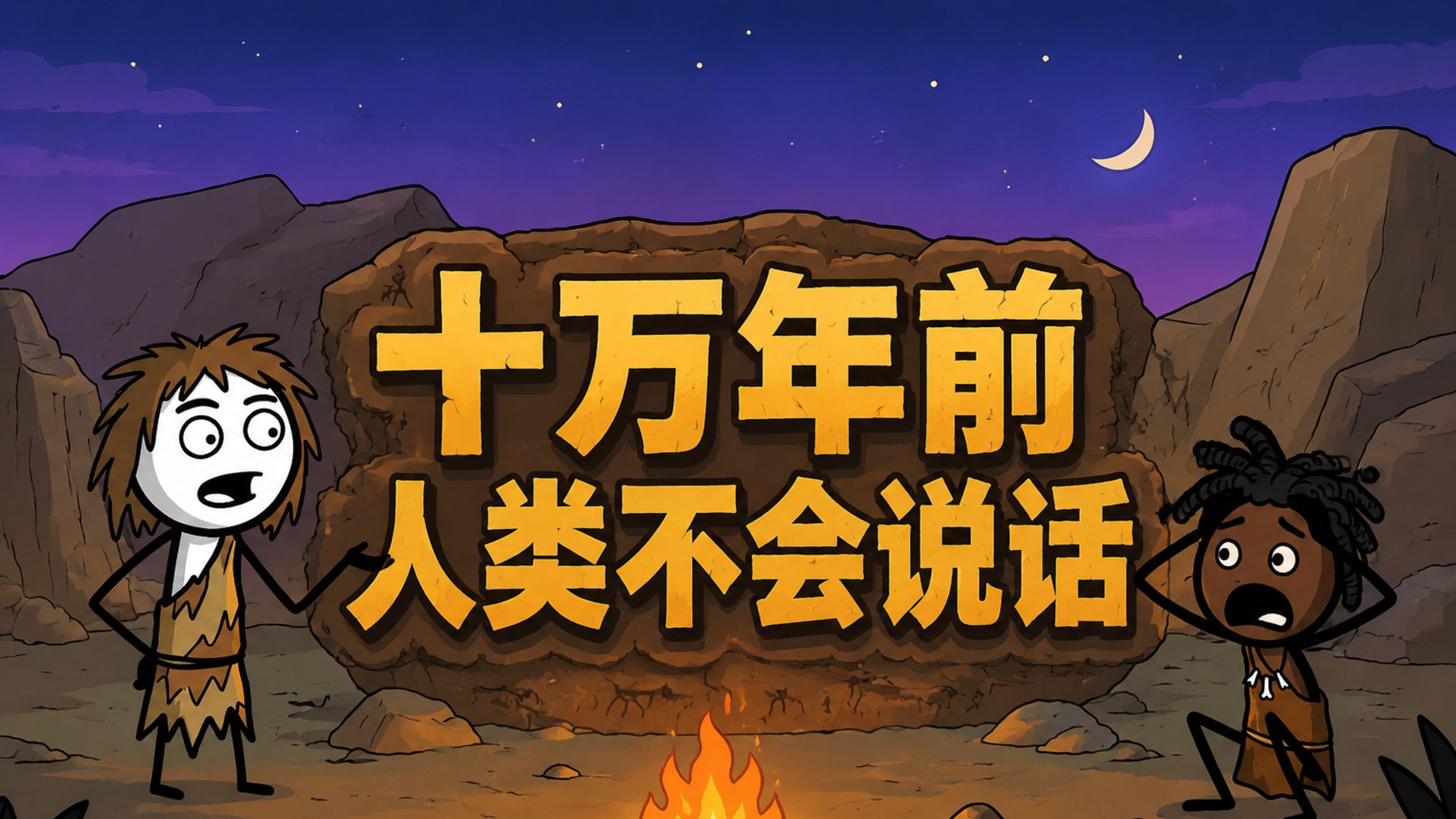
字幕摘录
| 时间 | 英文 | 中文 |
|---|---|---|
| 0:00 | Imagine you're sitting around a fire. | 想象一下你坐在火堆里 |
| 0:01 | It's 100,000 years ago. | 十万岁已. |
| 0:03 | You're cold, you're hungry, | 你冷,你饿了 |
| 0:04 | and there's something massive and furry lurking just outside the light. | 光线外潜伏着巨大的毛茸茸的东西 |
| 0:07 | You want to warn your | 你想警告你吗? |
| 0:08 | buddy across the fire, so you do what any modern human would do. | 朋友在火对面, 所以你做任何现代人会做的。 |
| 0:12 | You open your mouth, | 你张开嘴 |
| 0:13 | and absolutely nothing comes out. | 绝对不出来。 |
| 0:15 | Because here's the thing nobody talks about. | 因为没人会说这个 |
| 0:17 | There was a time, | 曾经有过一次 |
展开字幕全文(392 条)
| 序号 | 英文 | 中文 |
|---|---|---|
| 1 | Imagine you're sitting around a fire. | 想象一下你坐在火堆里 |
| 2 | It's 100,000 years ago. | 十万岁已. |
| 3 | You're cold, you're hungry, | 你冷,你饿了 |
| 4 | and there's something massive and furry lurking just outside the light. | 光线外潜伏着巨大的毛茸茸的东西 |
| 5 | You want to warn your | 你想警告你吗? |
| 6 | buddy across the fire, so you do what any modern human would do. | 朋友在火对面, 所以你做任何现代人会做的。 |
| 7 | You open your mouth, | 你张开嘴 |
| 8 | and absolutely nothing comes out. | 绝对不出来。 |
| 9 | Because here's the thing nobody talks about. | 因为没人会说这个 |
| 10 | There was a time, | 曾经有过一次 |
| 11 | a real, documented, scientifically verified time, when human beings could not speak. | 一个真实的,有文件记载的,经过科学验证的时间,当人类不能说话的时候. |
| 12 | Not a single | 一个都没有 |
| 13 | word. | 词 |
| 14 | Not a grunt that meant anything. | 没有叫声,这意味着什么。 |
| 15 | Just biological silence. | 只是生物学上的沉默。 |
| 16 | And the question of how we | 以及我们如何 |
| 17 | went from that, from a creature staring blankly at a mammoth, to a species that invented podcast | 从那之后,从一只 空白地盯着一头猛毛象的生物 变成一个发明播客的物种 |
| 18 | drama, political debates, and the phrase, I'm fine, when we are clearly not fine. | 戏剧,政治辩论, 和这句话,我很好, 当我们显然不是很好。 |
| 19 | That question is | 问题是 |
| 20 | one of the most insane mysteries in all of science. | 这是所有科学中最疯狂的奥秘之一。 |
| 21 | And we're going to go through it today. | 则今经也. |
| 22 | Let's | 让我们 |
| 23 | start with the problem. | 从问题开始。 |
| 24 | Unlike bones, unlike tools, unlike cave paintings, language leaves | 不像骨骼 不像工具 不像洞穴画 语言叶 |
| 25 | no physical trace. | 没有身体痕迹。 |
| 26 | You cannot dig up a fossil and find a sentence. | 你不能挖出一个化石 找到句子。 |
| 27 | You cannot carbon date a | 你无法与碳约会 a |
| 28 | conversation. | 谈话。 |
| 29 | Language is made of air, and air does not preserve well over geological timescales. | 语言由空气制成,空气在地质时间尺度上没有很好的保存. |
| 30 | So scientists studying the origin of speech are essentially forensic linguists, piecing together | 所以研究语音起源的科学家 基本上是法医语言学家, 拼凑在一起 |
| 31 | an ancient puzzle from whatever fragments they can find. | 一个古老的谜题 无论他们能找到什么碎片 |
| 32 | Skull shapes, hyoid bones, genetic mutations, | 骷髅形状 hy骨 基因突变 |
| 33 | cave art, and a lot of educated guessing. | 洞穴艺术, 和很多受过教育的猜测。 |
| 34 | And the educated guesses are extraordinary. | 而受过教育的猜测是非凡的. |
| 35 | The first thing | 材ㄆ |
| 36 | we need to get straight is, what exactly is language? | 我们需要直说 语言到底是什么? |
| 37 | Because before humans had real language, | 因为人类没有真正语言之前 |
| 38 | we almost certainly had something. | 我们几乎肯定有东西。 |
| 39 | Animals communicate. | 动物交流. |
| 40 | That's not up for debate. | 这不是辩论的问题。 |
| 41 | Bees do | 蜜蜂会 |
| 42 | little waggle dance to tell their friends where the good flowers are. | 小摇摆舞 告诉他们的朋友好花在哪里。 |
| 43 | Dolphins have signature | 海豚有签名 |
| 44 | whistles that function like names. | 吹口哨像名字一样 |
| 45 | Chimpanzees in the wild have a system of calls and gestures | 野外的黑猩猩有一套召唤和手势 |
| 46 | that conveys basic information. | 传递基本信息。 |
| 47 | So the question isn't, when did living things start communicating? | 所以问题不是,生物什么时候开始交流的? |
| 48 | The question is, when did communication become language? | 问题是,沟通何时成为语言? |
| 49 | When did it cross that line from | 它什么时候越过这条线的? |
| 50 | signal to symbol? | 信号到符号? |
| 51 | Because there's a massive fundamental difference between the two. | 因为两者有着巨大的根本区别. |
| 52 | A signal | 一个信号 |
| 53 | is direct. | 这是直接的。 |
| 54 | It means one thing. | 它意味着一件事。 |
| 55 | A dog growls because it's threatened. | 狗咆哮是因为它受到威胁。 |
| 56 | The growl is the threat. | 咆哮是威胁. |
| 57 | But a | 不过 |
| 58 | danger is just an arrangement of sounds that, by collective agreement, represents the concept | 危险只是一种声音的安排,通过集体协议,它代表概念 |
| 59 | of danger. | 危险。 |
| 60 | It doesn't sound like danger. | 这听起来不像是危险 |
| 61 | It doesn't look like danger. | 不似险恶. |
| 62 | We all just agreed, | 我们都同意, |
| 63 | at some point, that those particular vibrations in the air would mean that specific thing. | 在某个时候,这些特定的振动 在空气中将意味着 特定的东西。 |
| 64 | That's | 这是 |
| 65 | insane when you think about it. | 想想看就是疯了 |
| 66 | Every word you've ever spoken is a social hallucination that billions | 你说过的每一句话 都是社会幻觉 亿万 |
| 67 | of people happen to share. | 碰巧人们分享。 |
| 68 | And making that leap from signal to symbol, from direct response to | 从信号到符号 从直接反应到 |
| 69 | abstract meaning, that was the cognitive revolution that changed everything. | 抽象的意义,那是认知革命 改变了一切。 |
| 70 | Now, | 现在, |
| 71 | scientists don't agree on exactly when it happened. | 科学家们对事情发生的确切时间并不认同. |
| 72 | And honestly, that's part of what makes this so | 老实说,这是其中的一部分 使得这一点 |
| 73 | fascinating. | 令人着迷。 |
| 74 | There are two major camps, and they've been fighting about this for decades. | 有两大阵营,他们为此进行了数十年的战斗. |
| 75 | Camp One | 第一营 |
| 76 | says language evolved gradually over hundreds of thousands of years, slowly complexifying from | 说语言在数十万年中逐渐演变,慢慢地从 |
| 77 | simple calls into full grammar. | 简单的调用为完整的语法。 |
| 78 | This is the continuity hypothesis, and its supporters point | 这是连续性假设,它的支持者指出 |
| 79 | to our evolutionary relatives. | 我们的进化亲属。 |
| 80 | Chimps, bonobos, gorillas, who already show rudimentary symbolic | 黑猩猩、黑猩猩、大猩猩 他们已经表现出了基本的象征意义 |
| 81 | thinking. | 考虑。 |
| 82 | They can learn signs. | 他们可以学习迹象。 |
| 83 | They can combine symbols in new ways. | 它们可以以新的方式结合符号. |
| 84 | They seem to understand that | 他们似乎明白 |
| 85 | things have names. | 东西有名字。 |
| 86 | So maybe language is just the end point of a very long road that started way, | 所以也许语言只是一段很长的路段的终点, |
| 87 | way back. | 路回来。 |
| 88 | Camp Two says something very different. | 营地 二说甚深不同. |
| 89 | They say there was a moment, a specific leap, | 他们说有一刻,一个具体的飞跃, |
| 90 | probably somewhere between 100,000 and 50,000 years ago, when something clicked in the human | 可能是在10万到5万年前 当一些东西在人身上被点击 |
| 91 | brain. | 大脑。 |
| 92 | Some mutation, or some threshold of brain complexity, that suddenly unlocked full recursive | 一些突变,或者大脑复杂度的阈值, 突然解锁了完整的循环 |
| 93 | syntax. | 语法. |
| 94 | The ability to embed ideas inside other ideas. | 将想法嵌入其他想法的能力. |
| 95 | The man who I think knows the woman who lost | 我想那个男人认识那个输了的女人 |
| 96 | the dog. | 那个狗 |
| 97 | That kind of complexity. | 那种复杂。 |
| 98 | Sentences inside sentences inside sentences. | 判决在判决中 |
| 99 | And before that moment, | 在那一刻之前, |
| 100 | there was nothing even close. | 根本就没什么 |
| 101 | This is the discontinuity hypothesis, and if it's right, | 这是不连续的假设 如果这是正确的 |
| 102 | then language didn't grow. | 然后语言没有增长。 |
| 103 | It erupted. | 它爆发了。 |
| 104 | The truth is probably somewhere in between, and it involves | 真相可能就在两者之间,它涉及 |
| 105 | several different pieces coming together at different times. | 在不同的时间,有好几个不同的片段拼凑在一起。 |
| 106 | Let's talk about the body first, | 我们先谈谈尸体 |
| 107 | because language isn't just a mental thing, it's a physical one. | 因为语言不仅仅是一个精神问题,它是一个物理问题。 |
| 108 | To produce the range of sounds that | 产生声音范围 |
| 109 | make up human speech, you need a very specific anatomy. | 编造人类的演讲 你需要一个非常具体的解剖学 |
| 110 | And for most of evolutionary history, | 对于大多数进化史, |
| 111 | our ancestors didn't have it. | 我们的祖先没有 |
| 112 | The key structure is the larynx, your voice box, and more specifically, | 关键结构是喉咙, 你的语音盒,更具体地说, |
| 113 | its position in the throat. | 它的喉咙位置。 |
| 114 | In most mammals, including our closest relatives, the chimpanzees, | 在大多数哺乳动物中,包括我们的近亲,黑猩猩, |
| 115 | the larynx sits high in the throat. | 喉咙在喉咙里坐高 |
| 116 | This is actually useful for them. | 这实际上对他们有用。 |
| 117 | It means they can | 这意味着他们可以 |
| 118 | breathe and swallow at the same time, which reduces the risk of choking. | 同时呼吸和吞咽,这降低了窒息的风险. |
| 119 | Practical, efficient, | 实用、高效、 |
| 120 | but it severely limits the range of sounds they can produce. | 但这严重限制了它们能产生的声音范围. |
| 121 | In humans, the larynx is positioned | 在人类中,喉咙是定位的 |
| 122 | much lower. | 更低点 |
| 123 | This creates a larger resonating chamber, the pharynx, which is what allows us | 这造就了一个更大的共振室, 法兰克斯,这就是让我们 |
| 124 | to produce the full range of vowels and consonants that make speech possible. | 以产生各种元音和辅音,使语音成为可能。 |
| 125 | The trade-off, we can | 取舍,我们可以 |
| 126 | choke. | |
| 127 | We are literally the only mammals that regularly die from inhaling food. | 我们是唯一经常死于吸入食物的哺乳动物。 |
| 128 | Every year, | 每年 |
| 129 | thousands of people choke to death on things like poorly chewed steak or ambitious sandwiches. | 数以千计的人在吃不饱的牛排 或雄心勃勃的三明治上窒息而死 |
| 130 | Evolution looked at the ability to speak and said, yes, worth the risk of dying to a rogue | 进化研究了说话的能力,说,是的,值得冒着死在流氓身上的风险 |
| 131 | The descent of the larynx likely happened gradually over millions of years, and different | 喉咙的下降 很可能在数百万年中逐渐发生 并且不同 |
| 132 | species of the genus Homo had it to varying degrees. | 不同程度的Homo基因的物种 |
| 133 | But here's the frustrating part. | 但这是令人沮丧的部分。 |
| 134 | Larynx position isn't preserved in fossils. | 拉林克斯的位置没有保存在化石中. |
| 135 | Soft tissue doesn't fossilize. | 软组织不化石. |
| 136 | So we're back | 所以我们回来了 |
| 137 | to inference and probability. | 推论和概率 |
| 138 | What does preserve is bone. | 保存的是骨头。 |
| 139 | And there's one bone in particular that | 尤其有一个骨头 |
| 140 | gives us clues. | 给我们一些线索 |
| 141 | The hyoid. | 者. |
| 142 | The hyoid is a small, U-shaped bone in your throat that anchors the | hy是一个小的,U形的骨头 在你的喉咙,锁定 |
| 143 | muscles used in speaking and swallowing. | 肌肉用来说话和吞咽。 |
| 144 | It's the only bone in the human body that doesn't | 这是人体内唯一没有的骨头 |
| 145 | articulate with any other bone. | 用其他的骨头来表达 |
| 146 | It just floats in there, held by muscles and tendons. | 它只是漂浮在那里, 被肌肉和阴茎牵着。 |
| 147 | And, | 还有, |
| 148 | because of its relationship to the muscles involved in speech, its shape can tell us | 由于其与说话的肌肉的关系 它的形状可以告诉我们 |
| 149 | something about an ancient hominid's vocal capacity. | 关于一个古老的人类的声音能力。 |
| 150 | In 1989, a complete hyoid bone was | 1989年,一个完整的 骨 |
| 151 | found at a Neanderthal burial site at Keberra Cave in Israel. | 在以色列Keberra Cave的尼安德特墓地被发现。 |
| 152 | It was 60,000 years old. | 时年六万. |
| 153 | And when | 什么时候 |
| 154 | scientists analyzed its shape, they found something remarkable. | 科学家分析了它的形状, 他们发现了一些了不起的东西。 |
| 155 | It was nearly identical to a modern | 和现代的差不多 |
| 156 | This was a huge deal. | 这是一个巨大的交易。 |
| 157 | It suggested that Neanderthals, our thick-browed, stocky cousins | 它表明,尼安德特人, 我们厚厚的,有丝袜的表亲 |
| 158 | who lived across Europe and Asia for hundreds of thousands of years, might have had the physical | 他们在欧洲和亚洲 生活了数十万年, 他们可能已经身体上 |
| 159 | capacity for speech. | 演讲能力。 |
| 160 | And then the genetics people showed up, and things got really interesting. | 然后遗传学的人出现了, 事情变得很有趣。 |
| 161 | In 2002, scientists identified a gene called FOXP2. | 2002年,科学家确定了一个名为FOXP2. |
| 162 | And it immediately became famous, | 它立刻变得很出名 |
| 163 | probably too famous because the press started calling it the language gene, which is a massive | 可能太出名了 因为媒体开始称它为 语言基因,这是一个巨大的 |
| 164 | oversimplification that made every actual geneticist quietly scream. | 过于简化,让每个真正的遗传学家 悄悄地尖叫。 |
| 165 | But the reason it | 但为什么 |
| 166 | got that nickname is real. | 那绰号是真的 |
| 167 | Humans with damaged copies of FOXP2 have severe difficulties with | FOXP2的复制品受损的人类在 |
| 168 | speech and language. | 语言和语言。 |
| 169 | They struggle to coordinate the fine motor movements needed for speaking. | 他们努力协调演讲所需的精细运动。 |
| 170 | They have trouble with grammar. | 他们的语法有问题。 |
| 171 | It's a genuinely debilitating condition. | 其病实虚弱. |
| 172 | What made the discovery | 是什么让发现 |
| 173 | explosive was this. | 爆炸是这个。 |
| 174 | The human version of FOXP2 is different from the version found in every other | FOXP2的人类版本不同于其他版本 |
| 175 | including chimpanzees. | 包括黑猩猩。 |
| 176 | 老鼠拥有FOXP2. | |
| 177 | 松鸟有FOXP2. | |
| 178 | Even crocodiles have FOXP2. | 甚至鳄鱼也有FOXP2. |
| 179 | But the human variant has two specific mutations that don't appear anywhere else in the animal | 但人类的变种有两个特定的变种, 它们没有出现在动物的任何地方 |
| 180 | kingdom. | 王国 |
| 181 | Mutations that appear to have undergone strong positive selection. | 变异似乎经历了强烈的积极选择。 |
| 182 | Meaning evolution | 意义演变 |
| 183 | really, really wanted us to have them. | 真的,真的很希望我们拥有它们。 |
| 184 | And then researchers tested Neanderthal DNA. | 然后研究人员测试了尼安德特DNA. |
| 185 | They had | 他们有 |
| 186 | Neanderthal Neanderthal DNA. | 涅盘涅盘DNA. |
| 187 | They had extracted it from ancient bones. | 他们从古老的骨头里提取的 |
| 188 | And when they looked at the | 当他们看着 |
| 189 | FOXP2 gene, the Neanderthals had the same human mutations. | FOXP2基因,尼安德特人也有相同的人类突变. |
| 190 | The same ones. | 同样的 |
| 191 | Which means Neanderthals | 也就是说尼安德特人 |
| 192 | and modern humans shared this genetic adaptation for speech. | 现代人类分享这种基因适应语言。 |
| 193 | And since both lineages diverged from | 由于两个血统都不同 |
| 194 | a common ancestor at least 400,000 years ago, FOXP2 had to have been present in that common | 至少在40万年前 一个共同的祖先 FOXP2 必须出现在这个共同的地方 |
| 195 | ancestor too. | 祖师也. |
| 196 | Or it evolved independently in both lineages. | 或者在两种血统中独立演变. |
| 197 | Which would be such a jaw-dropping | 那样下巴就会掉下去 |
| 198 | coincidence that most scientists refuse to believe it. | 巧合的是大多数科学家都不相信 |
| 199 | So here's where that leaves us. | 因此,这就是我们离开的地方。 |
| 200 | By at least | 起码 |
| 201 | 400,000 years ago, possibly earlier, our ancestors had the genetics for the physical coordination | 40万年前,也许更早的时候 我们的祖先有基因来协调身体 |
| 202 | needed for speech. | 需要发言。 |
| 203 | By 60,000 years ago, at the latest, Neanderthals had the physical throat | 到了六万年前,最晚尼安德特人 拥有了实际的喉咙 |
| 204 | anatomy that could support complex vocalization. | 解剖学可以支持复杂的声学。 |
| 205 | And sometime before that, somewhere in the lineage | 在那之前的某个时候, 在世系的某个地方 |
| 206 | leading to modern humans, the brain had wired itself for symbolic language. | 导致现代人类 大脑被连接到象征语言 |
| 207 | But none of this | 但是没有这些 |
| 208 | tells us what those first words actually were. | 告诉我们这些最初的话是什么。 |
| 209 | And this is where things get wonderfully weird, | 这就是事情变得非常怪异的地方 |
| 210 | because there are several competing theories and some of them are absolutely hilarious. | 因为有几种相互竞争的理论 有些是绝对好笑的 |
| 211 | The oldest and most dismissive theory is called the bow-wow theory. | 最古老和最不屑的理论被称为弓翼理论. |
| 212 | The idea is simple. | 想法很简单。 |
| 213 | The first | 第一个 |
| 214 | words were imitations of sounds in the environment. | 语言是模仿环境中的声音。 |
| 215 | You see a dog, you say something like the noise it | 你看见一只狗,就说出类似的声音 |
| 216 | makes. | 制造。 生产。 |
| 217 | You hear thunder, you name it after the sound. | 你听到雷声,就用声音命名 |
| 218 | This is called onomatopoeia, and it's real. | 这叫做血栓,是真的 |
| 219 | Words like crash and buzz and hiss are clearly rooted in the sounds they describe. | 诸如坠机和嗡嗡声之类的话语 和他的话语显然植根于他们描述的声音中 |
| 220 | But it can | 但它会 |
| 221 | only account for a tiny fraction of vocabulary. | 只占词汇的一小部分。 |
| 222 | You can't really onomatopoeia your way to words | 你说话的手法可不好说 |
| 223 | like justice or therefore or bureaucracy. | 正义或官僚主义 |
| 224 | At some point, you need arbitrary symbols. | 在某些时候,你需要任意的符号. |
| 225 | Then there's the poo-poo theory. | 后有普po论. |
| 226 | Yes, that's its real academic name. | 是的,这是它真正的学术名称。 |
| 227 | This one suggests that language | 这个建议是语言 |
| 228 | began from involuntary emotional sounds. | 从非自愿的情感声音开始 |
| 229 | The ouch when you stub your toe, the sigh of relief, the laugh. | 摸脚趾时的触摸,解脱的叹息,欢笑. |
| 230 | And while these vocalizations are clearly ancient and deeply embedded in our biology, they're also | 虽然这些声调显然古老 深深植根于我们的生物学,但它们也 |
| 231 | largely instinctive and uncontrolled, which makes it hard to see how they evolved into deliberate | 基本上本能和无控制, 这使得很难看到它们是如何演变成 故意的 |
| 232 | structured language. | 结构语言。 |
| 233 | There's the yo-hee-ho theory, which proposes that rhythmic grunts made during | 有个Yo -hee -ho理论, 提出节奏性咕噜声在... |
| 234 | coordinated physical labor, hauling a heavy log, rowing together, pulling a rope, gave rise to the | 协调体力劳动,拖着一条重木头,一起划船,拉绳子,导致 |
| 235 | rhythmic patterns underlying speech. | 语言背后的节奏规律. |
| 236 | Think of sea shanties as a living fossil of proto-language. | 认为海棚是原始语言的活化石. |
| 237 | There's actually something to this. | 其实这里面有些东西 |
| 238 | Music and language share enormous overlaps in the brain, | 音乐和语言在大脑中有着巨大的重叠 |
| 239 | and many researchers believe they co-evolved, which would mean that singing came before speaking. | 很多研究者认为他们共同进化, 这意味着歌声在演讲前就来了。 |
| 240 | And then there's the ta-ta theory, which is genuinely delightful. | 然后是ta -ta理论, 这是真正令人愉快的。 |
| 241 | It suggests that language | 它建议语言 |
| 242 | began as vocal imitations of gesture, that early humans were gesturing with their hands and their | 早期人类用手和手 |
| 243 | mouths started mimicking the movements, gradually turning physical signals into vocal ones. | 嘴开始模仿运动,逐渐将物理信号转化为声信号. |
| 244 | The | 那个 |
| 245 | idea has been mostly abandoned, but it lives on as a reminder that the history of linguistics | 思想大多被抛弃了 但是它继续维持下去 提醒着语言学的历史 |
| 246 | includes people naming theories after nonsense syllables. | 包括以无稽之谈命名理论的人。 |
| 247 | The gesture hypothesis, though, | 手势假设,虽然, |
| 248 | the broader idea that language may have roots in hand and body gesture, is taken much more seriously. | 语言可能根植于手和身体姿态的广义观念,被更认真地对待. |
| 249 | And here's why. | 且道个甚么. |
| 250 | Look at the brain. | 视其脑. |
| 251 | The area of the brain responsible for language in modern humans, | 现代人类负责语言的大脑领域, |
| 252 | Braca's area, is closely linked to areas that control fine motor movements of the hands. | 布拉卡所在区域与控制手部精细运动的区域紧密相连. |
| 253 | In non-human primates, this same region seems to be involved in processing manual gestures | 在非人类灵长类动物中,这个区域似乎也参与了人工手势的处理. |
| 254 | and facial expressions. | 还有面部表情 |
| 255 | The connection is not accidental. | 连接不是偶然的 。 |
| 256 | Moreover, many features of language | 此外,语言的许多特征 |
| 257 | make more sense. | 更讲道理 |
| 258 | Pointing is arguably the most fundamental linguistic act. | 指点可能是最基本的语言行为。 |
| 259 | It means attend to | 意思是照顾 |
| 260 | that thing over there. | 那边那个东西 |
| 261 | And pointing with a finger appears to be unique to humans, and possibly great | 用手指指着似乎是人类独有的,而且可能很棒 |
| 262 | apes in captivity. | 被囚禁的猩猩。 |
| 263 | Chimps in the wild almost never point. | 野外的黑猩猩几乎从不点。 |
| 264 | Infants learn to point before they | 婴儿在他们面前学会指点 |
| 265 | speak. | 说吧 |
| 266 | There's a powerful argument that language began with the hands and the voice caught up later. | 有一种强有力的论点认为语言开始于手和声音在后来被夹住. |
| 267 | Which brings us to perhaps the most important and underappreciated part of the whole story, | 这让我们想到了 整个故事中最重要的 和低估的部分, |
| 268 | the social brain. | 社会大脑。 |
| 269 | You can have the right anatomy, you can have the FOXP2 gene, | 你可以有正确的解剖学, 你可以有FOXP2基因, |
| 270 | you can have vocal cords and a low larynx and Braca's area all wired up and ready to go. | 你可以有声带和低喉咙 和布拉卡的面积 全部连接起来,准备去。 |
| 271 | But none of it matters unless you have the cognitive infrastructure for what language | 但是除非你具备什么语言的认知基础 否则一切都不重要 |
| 272 | actually requires, theory of mind. | 实际上需要, 心理理论。 |
| 273 | Theory of mind is the ability to understand that other beings | 心灵理论是理解他人的能力 |
| 274 | have thoughts, beliefs, and intentions that are different from your own. | 思想、信仰和意图都不同于你自己 |
| 275 | It's the ability to model | 做模特的能力 |
| 276 | another mind. | 另一种心态。 |
| 277 | And language, real language, not just signaling, requires it absolutely. | 而语言,真实语言,而不仅仅是信号,都绝对需要它. |
| 278 | Because | 因为 |
| 279 | when I say a word to you, I'm not just making a noise. | 当我跟你说话时 我不只是在发出声音 |
| 280 | I'm making a noise with the intention | 我无意冒犯 |
| 281 | that you will recognize my intention to communicate a specific meaning. | 你将认识到我的意图 传达一个具体的意义。 |
| 282 | That's a sentence I just said. | 我刚刚说了一句 |
| 283 | And it's mind-bending when you unpack it. | 当你打开它时,它会让人心烦意乱。 |
| 284 | Language is built on a kind of social telepathy. | 语言是建立在一种社会感应上。 |
| 285 | I'm | и琌 |
| 286 | trusting that you can read my mind, and you're trusting that I mean to be understood. | 相信你能读懂我的思想 而你却相信我会明白 |
| 287 | This is | 这是 |
| 288 | something non-human animals appear to largely lack, or at least to have in much more limited | 一些非人类动物似乎基本上缺乏, 或者至少是有限的 |
| 289 | form. | 表单。 |
| 290 | When a chimp communicates, it's typically requesting something or responding to a situation. | 当一只黑猩猩交流时,它通常会请求某种东西或对某种情况作出反应. |
| 291 | It's not trying to share information for the sake of sharing information. | 它不是为了分享信息而试图分享信息. |
| 292 | The collaborative, | 合作者, |
| 293 | cooperative sharing of knowledge, telling someone about something that happened yesterday, | 合作分享知识 告诉别人昨天发生的事情 |
| 294 | describing a place you visited, speculating about the future, that appears to require a level of | 描述你访问过的地方, 对未来的猜测, 这似乎需要水平 |
| 295 | social cognition that is distinctly, radically human. | 社会认知是显著的,彻底的人类。 |
| 296 | And interestingly, the development of | 有趣的是,发展了 |
| 297 | our evolutionary history. | 我们的进化史。 |
| 298 | About half a million years ago, our ancestors were living in small | 大约50万年前 我们的祖先生活在小地方 |
| 299 | bands. | 乐队。 |
| 300 | By 100,000 years ago, groups were getting larger and more complex. | 到了10万年前,团体规模越来越大,越来越复杂. |
| 301 | Managing relationships | 管理关系 |
| 302 | in larger groups requires keeping track of more people, their alliances, their histories, | 在更大的群体需要 跟踪更多的人,他们的联盟,他们的历史, |
| 303 | their trustworthiness. | 他们的可信度。 |
| 304 | Some researchers, most famously the evolutionary psychologist Robin | 一些研究者,最著名的是进化心理学家罗宾 |
| 305 | Dunbar, have argued that language evolved precisely as a solution to this social complexity | 邓巴 认为语言的演化 恰恰是解决这种社会复杂性的方法 |
| 306 | problem. | 问题。 |
| 307 | He called it social grooming by another means. | 他称之为通过另一种方式进行社交美化. |
| 308 | Chimpanzees maintain social bonds by | 黑猩猩维持社会联系 |
| 309 | literally picking insects off each other, which is sweet, but doesn't scale well when you have 150 | 从字面上挑取昆虫 彼此,这是甜蜜的, 但是没有很好的比例 当你有150 |
| 310 | people in your tribe. | 你们部落里的人 |
| 311 | Language lets you bond with multiple people simultaneously. | 语言可以让你同时与多人联系. |
| 312 | Gossip essentially | 基本上是八卦 |
| 313 | was the killer app that drove the evolution of language. | 是驱动语言演变的杀手应用 |
| 314 | And once language existed, the feedback | 一旦语言存在 反馈 |
| 315 | loops became extraordinary. | 循环变得非凡。 |
| 316 | Language allowed better coordination, which allowed bigger and more | 语言允许更好的协调,从而能够扩大和增加 |
| 317 | complex societies. | 复杂的社会。 |
| 318 | Bigger and more complex societies created more information that needed | 更大和更复杂的社会创造了更多需要的信息 |
| 319 | to be transmitted, which put pressure on language to become more precise and more powerful. | ,这给语言带来压力,使其更加精确和强大。 |
| 320 | More | 更多 |
| 321 | precise language allowed the transmission of knowledge across generations. | 准确的语言可以使知识代代相传。 |
| 322 | Not just the | 不仅仅是 |
| 323 | immediate showing of how to nap a flint, but the verbal instruction, the explanation, the story | 立即展示如何睡火石 但口头指示 解释 故事 |
| 324 | that embeds the knowledge in a narrative that can travel across time. | 将知识嵌入一个可以穿越时间的叙述中。 |
| 325 | And once knowledge could | 一旦知识可以 |
| 326 | accumulate across generations rather than being reinvented every time, cultural evolution took | 一代又一代的积累 而不是每次被重塑 文化进化 |
| 327 | off at a pace that biological evolution couldn't match. | 以生物进化不匹配的速度起飞 |
| 328 | The moment language crystallized, the game | 语言结晶的时刻,游戏 |
| 329 | changed permanently. | 永久更改。 |
| 330 | Suddenly, humans could cooperate with strangers, could plan months | 突然间,人类可以和陌生人合作 计划几个月 |
| 331 | in advance, could lie, which is honestly an underrated cognitive achievement, could create | 老实说,这是一个被低估的认知成就, |
| 332 | myths and stories and gods and social rules that bound large groups of unrelated individuals | 神话、故事、神灵、社会规则 束缚着大量无关的个人 |
| 333 | together into functioning societies. | 共同进入正常运作的社会。 |
| 334 | Everything that came after agriculture, cities, writing, | 在农业、城市、写作之后, |
| 335 | science, the internet, this YouTube video, traces back to that first moment when a human being looked | 科学、互联网、YouTube的视频 追溯到人类的第一瞬间 |
| 336 | at another human being and said something that both of them understood to mean the same thing. | 在另一个人面前 说出他们俩都明白的一样的话 |
| 337 | We don't know exactly when that happened. | 我们不知道什么时候发生的 |
| 338 | We don't know exactly where, though Africa is the | 虽然非洲是 |
| 339 | near-universal consensus. | 几乎是普遍的共识。 |
| 340 | We don't know what the first word was, and we almost certainly never will. | 我们不知道第一个词是什么,我们几乎肯定永远不会知道。 |
| 341 | But we can say with reasonable confidence that by 70,000 years ago, when modern humans suddenly | 但我们有理由相信 在七万年前 现代人类突然出现 |
| 342 | began doing things that look dramatically different from anything before, creating art and | 开始做一些与以前大不相同的事情 创造艺术 |
| 343 | jewelry and complex tools and trading across vast distances, language was there, fully functioning, | 珠宝和复杂的工具 和交易 遥远的距离, 语言在那里,充分运行, |
| 344 | turning individual minds into a shared project. | 将个人思想变成一个共同的项目。 |
| 345 | The behavioral explosion that archaeologists call | 考古学家所说的行为爆炸 |
| 346 | the Upper Paleolithic Revolution is, in many ways, just the visible fingerprint of language. | 上旧石器革命在许多方面只是语言的可见指纹. |
| 347 | The cave paintings at Chauvet, 36,000 years old, depicting animals with movement, with depth, | 在Chauvet的洞穴画,有36000年的历史, 描绘动物有运动,有深度, |
| 348 | with narrative. | 与叙事. |
| 349 | They are the work of minds that had stories. | 它们是有故事的思想的作品。 |
| 350 | The Venus figurines scattered across | 金星浮雕分散在各地 |
| 351 | Europe, the carved flutes made from vulture bone, the careful arrangement of red ochre and shells | 欧洲,用秃鹰骨头做的雕刻的笛子, 精心安排的红斑和贝壳 |
| 352 | as personal decoration. | 作为个人装饰。 |
| 353 | All of these are the products of a species that had learned to take | 所有这些都是一个物种的产物 它学会了带走 |
| 354 | things that existed in the mind and make them exist in the world. | 思想中存在的东西 并使它们存在于世界上。 |
| 355 | That is what language does. | 这就是语言的作用。 |
| 356 | It externalizes thought. | 它将思想外部化. |
| 357 | It makes the invisible visible, the temporary permanent, the individual | 它使看不见的, 临时永久的,个人 |
| 358 | collective. | 集体的。 |
| 359 | And here's the thing that should genuinely blow your mind. | 这是应该真正吹嘘你的想法。 |
| 360 | Every language on Earth | 地球上的每一种语言 |
| 361 | today, all 7,000 of them, from Mandarin to Swahili to Basque to the click languages of the Kalahari, | 今天,所有7000人,从普通话到斯瓦希里语到巴斯克语, 再到卡拉哈里语的点击语言, |
| 362 | every single one of them, despite their extraordinary surface differences, | 他们中的每一个, 尽管他们的异常的表面差异, |
| 363 | shares deep, structural properties that linguists believe are hardwired into the human brain. | 语言学家认为 人类大脑中 有着深厚的结构特性 |
| 364 | Noam Chomsky called it universal grammar, the idea that all human languages are fundamentally | 诺姆·乔姆斯基称之为普世语法,认为所有人类语言都从根本上讲 |
| 365 | the same language wearing different clothes because they all emerge from the same underlying | 穿着不同衣服的同一种语言 因为它们都来自同一个基础 |
| 366 | cognitive architecture. | 认知架构. |
| 367 | Babies across all cultures, in all languages, in all circumstances, | 各种文化的婴儿,所有语言的婴儿,在任何情况下, |
| 368 | acquire language the same way, at the same pace, with the same stages. | 以同样的速度,同样阶段获得语言。 |
| 369 | A baby in Tokyo, | 东京的婴儿 |
| 370 | and a baby in Lagos, and a baby in Sao Paulo will all babble, then produce single words, | 和在拉各斯的一个婴儿, 和在圣保罗的一个婴儿 都会叫喊, 然后产生单词, |
| 371 | then two word combinations, then full sentences on roughly the same timeline without anyone | 然后两个词组合, 然后在大致相同的时间线上 完全句子,没有人 |
| 372 | explicitly teaching them the rules of grammar. | 明确教他们语法规则. |
| 373 | The capacity is in there. | 能力就在这里。 |
| 374 | It was installed by | 安装于 |
| 375 | evolution. | 进化 |
| 376 | And that capacity, that extraordinary, world-altering, species-defining capacity, | 而这种能力, 非凡的, 改变世界, 物种确定能力, |
| 377 | came from a long series of accidents and adaptations and selection pressures acting on | 源自一系列的事故、适应和选择压力 |
| 378 | over millions of years. | 超过数百万年 |
| 379 | A larynx that dropped, a gene that mutated, a brain that wired itself | 喉咙脱落 基因突变 大脑自系 |
| 380 | for social complexity, a species that needed to keep track of who owed what to whom around | 对于社会复杂性,一个物种需要 跟踪谁欠谁 |
| 381 | increasingly complicated campfires. | 越来越复杂的营火。 |
| 382 | All of that so that one day, somewhere in Africa, | 所以有一天,在非洲的某个地方, |
| 383 | two human beings could look at each other in the dark, and one of them could say, | 两个人可以在黑暗中互相看对方 其中一个会说 |
| 384 | hey, watch out, something is out there, and the other one could understand. | 嘿,小心,东西在那里, 而另一个可以理解。 |
| 385 | That's the origin of | 这是起源 |
| 386 | That's where everything started. | 皆从此起. |
| 387 | Not with poetry, not with philosophy, not with love songs. | 不与诗,不与哲学,不与情歌. |
| 388 | Though | 虽然 |
| 389 | those came quickly enough, with two people sharing a piece of information that mattered. | 他们来得足够快 两个人分享了很重要的信息 |
| 390 | Two minds | 两个思想 |
| 391 | touching across the dark. | 触摸着黑暗 |
| 392 | Which is still, when you think about it, what language is every single time | 这仍然是,当你想到它, 什么是语言是每次 |
该视频共有字幕 392 条。解锁更多字幕为会员功能,请移动到 价格