海底90米竟藏巨型森林
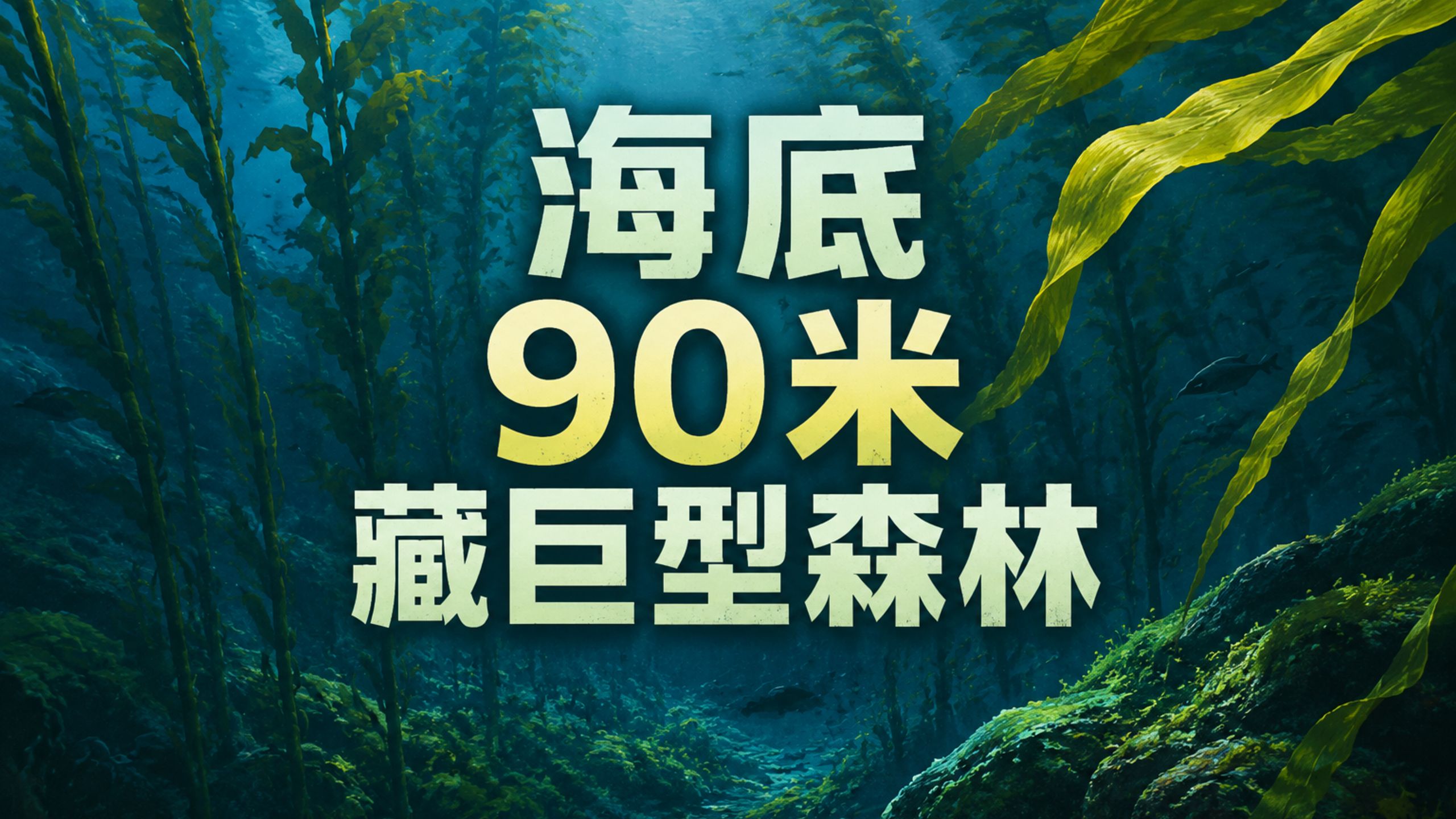
字幕摘录
| 时间 | 英文 | 中文 |
|---|---|---|
| 0:02 | In the mid-20th century, the first scuba technology allowed deep-sea divers in the Mediterranean | 在20世纪中叶,第一个潜水技术 允许深海潜水员在地中海 |
| 0:09 | to reach previously impossible depths. | 以达到以前不可能的深度。 |
| 0:13 | And after descending into the mesophotic zone, an ocean region spanning 30 to 150 meters, | 在进入中间层后 一个30到150米的海洋区域 |
| 0:20 | these aquanauts made a remarkable discovery. | 这些水瓶 做了一个显著的发现。 |
| 0:25 | Up to 90 meters below the surface, where sometimes only 0.1% of surface sunlight can reach, | 距离地表90米以下,有时只有0.1%的表面阳光可以到达, |
| 0:32 | they found a forest of huge kelps over twice the size of a giraffe. | 他们发现了一个巨大的海藻森林 比长颈鹿大两倍 |
| 0:40 | Today, kelps are known to be the largest marine plants, | 今天,海藻是已知最大的海洋植物, |
| 0:44 | and there had already been talk of such giants being pulled up from enormous depths in the late 19th century. | 已经有人说这些巨人 在19世纪后期 从巨大的深度被拉上来 |
| 0:52 | But following the Mediterranean discovery, fishermen, naval officers, and scientists | 但随着地中海的发现, 渔民,海军军官和科学家 |
| 0:58 | began dredging up more massive mesophotic kelps in the Philippine Sea | 在菲律宾海开始疏浚更多大面积的中间海藻 |
展开字幕全文(64 条)
| 序号 | 英文 | 中文 |
|---|---|---|
| 1 | In the mid-20th century, the first scuba technology allowed deep-sea divers in the Mediterranean | 在20世纪中叶,第一个潜水技术 允许深海潜水员在地中海 |
| 2 | to reach previously impossible depths. | 以达到以前不可能的深度。 |
| 3 | And after descending into the mesophotic zone, an ocean region spanning 30 to 150 meters, | 在进入中间层后 一个30到150米的海洋区域 |
| 4 | these aquanauts made a remarkable discovery. | 这些水瓶 做了一个显著的发现。 |
| 5 | Up to 90 meters below the surface, where sometimes only 0.1% of surface sunlight can reach, | 距离地表90米以下,有时只有0.1%的表面阳光可以到达, |
| 6 | they found a forest of huge kelps over twice the size of a giraffe. | 他们发现了一个巨大的海藻森林 比长颈鹿大两倍 |
| 7 | Today, kelps are known to be the largest marine plants, | 今天,海藻是已知最大的海洋植物, |
| 8 | and there had already been talk of such giants being pulled up from enormous depths in the late 19th century. | 已经有人说这些巨人 在19世纪后期 从巨大的深度被拉上来 |
| 9 | But following the Mediterranean discovery, fishermen, naval officers, and scientists | 但随着地中海的发现, 渔民,海军军官和科学家 |
| 10 | began dredging up more massive mesophotic kelps in the Philippine Sea | 在菲律宾海开始疏浚更多大面积的中间海藻 |
| 11 | and off the coasts of Brazil, Australia, and North America. | 以及巴西、澳大利亚和北美沿海地区。 |
| 12 | There were even claims of plants this large being brought up from as deep as 150 meters. | 甚至有人声称,这种大型植物是从150米深处饲养的。 |
| 13 | That's deeper than the Great Pyramid of Giza is tall. | 这比吉萨大金字塔还高 |
| 14 | These forests should be impossible. | 这些森林应该是不可能的。 |
| 15 | Like any other plant, kelps require light to grow. | 像其他植物一样,海藻需要光来生长. |
| 16 | Yet these specimens grow as large as, and often even larger than, their shallow counterparts, | 然而,这些标本的生长规模与它们的浅层对应物一样大,而且往往甚至更大, |
| 17 | all with less light than they should require just to stay alive. | 光线比他们活着需要的要少 |
| 18 | Then again, the mesophotic is the border between two worlds, | 再者,中间是两个世界的边界, |
| 19 | one where life depends on the energy provided by sunlight, | 生命依赖于阳光提供的能量 |
| 20 | and another where life has learned to live in darkness. | 和另一个生活 学会生活在黑暗中。 |
| 21 | So how have these large, light-dependent organisms adapted to thrive at such depths? | 那么这些依赖光的大型生物 是如何适应在如此深处生长的呢? |
| 22 | Researchers are still investigating the answer to this question, but they do have theories. | 研究人员仍在调查这个问题的答案,但他们确实有理论. |
| 23 | Mesophotic kelps photosynthesize more efficiently than their shallow counterparts, | 中光藻光合作用比浅层的光合作用效率更高, |
| 24 | and some have suggested this might be due to having very large surface area relative to biomass, | 一些人提出,这可能是因为相对于生物量而言地表面积很大, |
| 25 | which allows deep kelps to maximize light harvesting and minimize respiration. | 它可以让深海海藻 最大限度的采光和最大限度的呼吸。 |
| 26 | By taking these adaptations into account, existing research still suggests | 通过考虑这些调整,现有的研究仍然表明: |
| 27 | that deep kelp forests don't photosynthesize enough to sustain their growth and respiration, | 深海藻森林光合作用不足以维持生长和呼吸 |
| 28 | even at peak sunlight. | 即使在最高峰的阳光下 |
| 29 | So the real key to their success might be thriftiness. | 所以他们成功的真正关键可能是节俭。 |
| 30 | Photosynthesis is dependent on four main ingredients—sunlight, water, nutrients, and CO2. | 光合作用依赖四种主要成分——阳光、水、营养和二氧化碳。 |
| 31 | And while sunlight is severely limited, the deep ocean is full of water and nutrients. | 而虽然阳光受到严重限制,但深海却充满了水和养分. |
| 32 | It's also full of CO2. | 亦充满二氧化碳. |
| 33 | However, most marine CO2 is in a bicarbonate form that requires lots of energy to convert. | 然而,大多数海洋二氧化碳呈双碳酸盐形式,需要大量能量才能转化. |
| 34 | Most aquatic plants have evolved mechanisms to handle this energy-intensive process, | 大部分水生植物已经发展出 处理这种能源密集型过程的机制, |
| 35 | but deep kelps take the easy way out. | 但深海藻会轻松的离开 |
| 36 | Since their deeper waters have more CO2, which doesn't need to be converted, | 由于它们的深层水域有较多的二氧化碳,不需要转换, |
| 37 | they get their fill through low-energy, passive diffusion. | 它们通过低能,被动的传播得到填充. |
| 38 | Mesophotic kelps also save energy by not having to produce molecular sunscreen, | 中光海藻也通过不用产生分子防晒霜来节省能量, |
| 39 | which plants typically need to avoid damage from excess sunlight. | 植物通常需要避免过度阳光的破坏。 |
| 40 | These aren't the only tricks deep kelps use to conserve energy. | 这些并不是深海藻用来节省能源的唯一伎俩。 |
| 41 | In the darker winter months, these plants suppress their respiration | 在更黑暗的冬天 这些植物抑制了呼吸 |
| 42 | and subsist on the carbon reserves they stocked up over the summer. | 在夏天他们储存的碳储量上生存 |
| 43 | This adaptation is similar to how shallow polar kelp forests survive months of darkness. | 这种适应类似于浅海极海藻森林在数月的黑暗中生存. |
| 44 | But while mesophotic kelps' access to sunlight also changes with the seasons, | 但中光海藻获得阳光的机会也随着季节而改变, |
| 45 | temperature is fairly consistent in the deep ocean, | 温度在深海相当一致, |
| 46 | so they don't have to contend with extreme temperature swings. | 这样他们就不用面对极端的温度波动 |
| 47 | This lets these forests act as a climate refuge, | 这使得这些森林成为气候保护区, |
| 48 | providing a stable home for species in shallower zones fleeing marine heatwaves. | 为躲避海洋热浪的较浅区域物种提供稳定的家园。 |
| 49 | Kelps also draw down some of the atmospheric CO2 that causes climate change. | Kelps还提取了一些导致气候变化的大气二氧化碳. |
| 50 | In fact, kelp detritus will keep photosynthesizing and drawing down CO2 | 事实上,海藻会保持光合作用和吸收二氧化碳 |
| 51 | as it drifts to the ocean floor, | 当它漂流到洋底时, |
| 52 | though researchers are still investigating its exact impact on the carbon cycle. | 虽然研究人员仍在调查它对碳循环的确切影响。 |
| 53 | There's still lots to be learned about the ocean's hidden forests. | 关于海洋的隐蔽森林,还有很多事情要学习. |
| 54 | In fact, we still don't even know how much of the seafloor they cover, | 事实上,我们甚至不知道 他们覆盖了多少海底, |
| 55 | Since most kelp forests are invisible to satellites, | 由于大多数海藻森林对卫星来说是看不见的, |
| 56 | researchers need to use cutting-edge underwater robots to find the answer. | 研究人员需要使用尖端的水下机器人来找到答案. |
| 57 | These remotely operated vehicles, or ROVs, | 这些遥控车辆,或ROV, |
| 58 | can explore and film depths far beyond the reach of humans. | 能够探索和拍摄人类远远无法达到的深度. |
| 59 | And with their help, marine biologists have already found new kelp forests, | 在他们的帮助下,海洋生物学家已经发现了新的海藻森林, |
| 60 | such as those off the tropical coast of the Galapagos Islands. | 例如加拉帕戈斯群岛热带海岸外的 |
| 61 | But given how many surprises these impossible forests have already revealed, | 但考虑到这些不可能的森林已经暴露了多少惊喜 |
| 62 | who knows what other mysteries they're hiding. | 谁知道他们藏了什么秘密 |
| 63 | Ready to keep learning? | 准备好继续学习了吗? |
| 64 | Ready to keep learning? Ready to keep learning? | 准备好继续学习了吗? 准备好继续学习了吗? |
该视频共有字幕 65 条。解锁更多字幕为会员功能,请移动到 价格