美国砖房为何渐渐被淘汰了
字幕摘录
| 时间 | 英文 | 中文 |
|---|---|---|
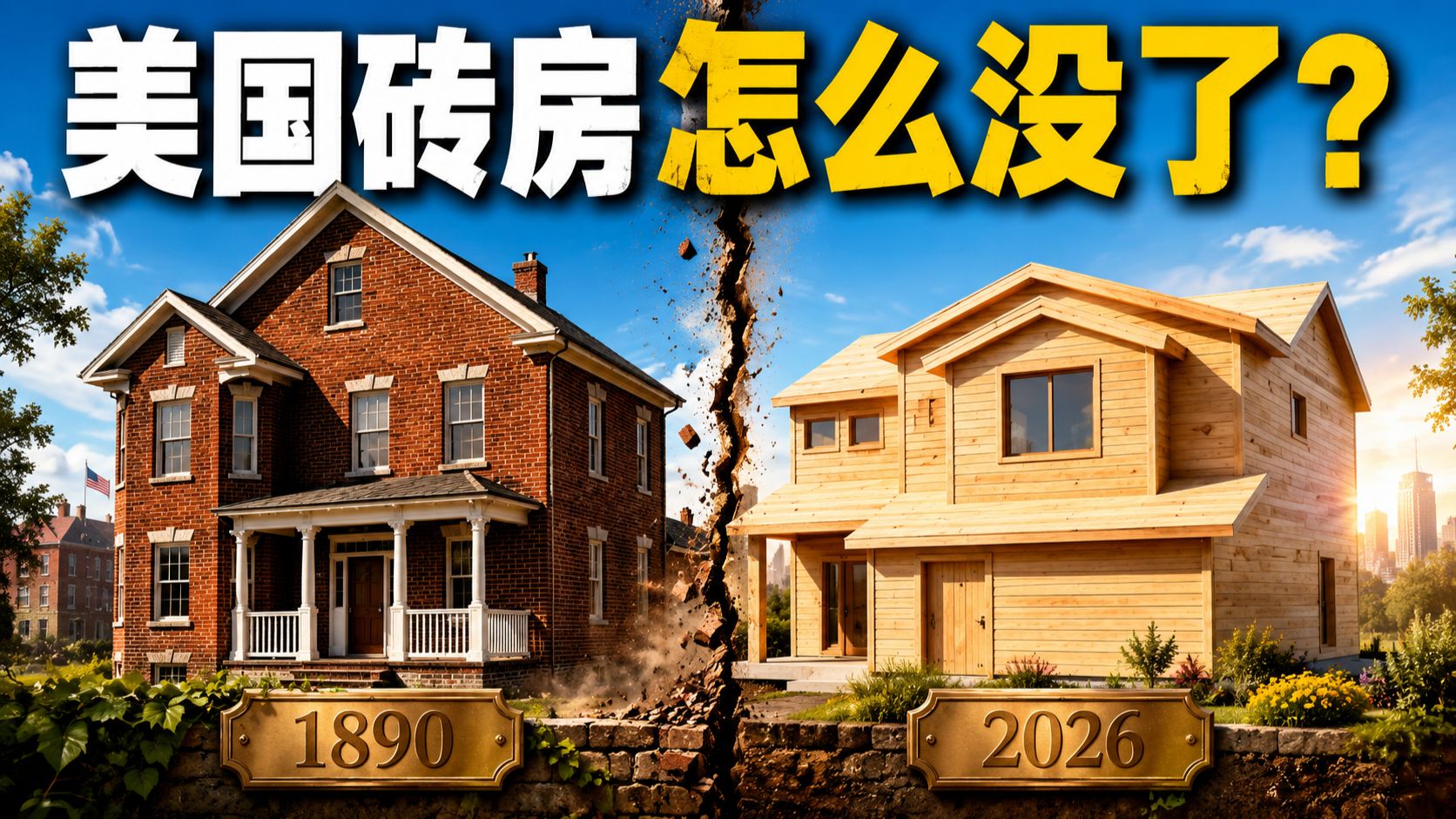
| 0:00 | Picture yourself walking through any American neighborhood built before 1950. | 想象一下自己走遍了1950年以前建造的美国街区 |
| 0:04 | The houses are made of brick, solid dark red brick, laid by hand, course by course. | 房屋用砖砌成,实心暗红砖,由手铺设,当然用. |
| 0:10 | The walls are thick. | 墙壁粗密. |
| 0:11 | The houses look serious. | 房子看起来很严肃 |
| 0:13 | They look like they were built to outlast everyone who ever lived in them. | 他们看起来像是建造 超过所有生活在他们中的人。 |
| 0:16 | Now drive through any suburb built after 1980. | 现在开车穿过任何1980年后建造的郊区. |
| 0:20 | Vinyl. | 维尼. |
| 0:20 | Wood frame. | 木框.. |
| 0:22 | Panels made in a factory and snapped together on site. | 在一个工厂里制造的小组 一起在现场崩溃 |
| 0:25 | Houses that look like they could be taken apart in a weekend. | 房子看起来可以 拆在一个周末。 |
展开字幕全文(120 条)
| 序号 | 英文 | 中文 |
|---|---|---|
| 1 | Picture yourself walking through any American neighborhood built before 1950. | 想象一下自己走遍了1950年以前建造的美国街区 |
| 2 | The houses are made of brick, solid dark red brick, laid by hand, course by course. | 房屋用砖砌成,实心暗红砖,由手铺设,当然用. |
| 3 | The walls are thick. | 墙壁粗密. |
| 4 | The houses look serious. | 房子看起来很严肃 |
| 5 | They look like they were built to outlast everyone who ever lived in them. | 他们看起来像是建造 超过所有生活在他们中的人。 |
| 6 | Now drive through any suburb built after 1980. | 现在开车穿过任何1980年后建造的郊区. |
| 7 | Vinyl. | 维尼. |
| 8 | Wood frame. | 木框.. |
| 9 | Panels made in a factory and snapped together on site. | 在一个工厂里制造的小组 一起在现场崩溃 |
| 10 | Houses that look like they could be taken apart in a weekend. | 房子看起来可以 拆在一个周末。 |
| 11 | Something changed. | 事情变了 |
| 12 | It happened fast. | 事情发生得很快 |
| 13 | Driven by one emergency, one government program, | 在一个紧急情况下, 一个政府计划, |
| 14 | and one man who figured out how to build a house in 16 minutes. | 一个在16分钟内想出如何建造房子的人 |
| 15 | And almost nobody noticed it happening. | 几乎没有人注意到它发生。 |
| 16 | Before World War II, brick wasn't a luxury. | 二战前,砖头并非奢侈品. |
| 17 | It was just how you built. | 这只是你建造。 |
| 18 | Walk through a working class neighborhood in Chicago, Baltimore, or Philadelphia in | 穿过芝加哥、巴尔的摩或费城的工人阶级社区 |
| 19 | the 1930s and almost everything around you was brick. | 20世纪30年代 你身边几乎所有的东西都是砖头 |
| 20 | Not a thin decorative layer. | 不是薄薄的装饰层. |
| 21 | Actual structural brick. | 实际结构砖. |
| 22 | Walls 12 inches thick in some places. | 墙壁有些地方厚12英寸. |
| 23 | Houses that carried their own weight directly into the ground. | 直接将自身重量带入地面的房屋. |
| 24 | Regular people lived in them. | 常人住其中. |
| 25 | Factory workers. | 工厂工人。 |
| 26 | Immigrants. | 移民们 |
| 27 | Families of 5 in 1,200 square feet. | 1200平方英尺5个家庭. |
| 28 | Those houses were built to last 200 years. | 这些房子建造了200年。 |
| 29 | And many of them have. | 他们中有很多人有 |
| 30 | Then the war ended. | 后来战争结束. |
| 31 | 12 million soldiers came home in 1945. | 1945年1200万士兵回国. |
| 32 | They wanted houses immediately. | 他们马上要房子 |
| 33 | And the country had nowhere near enough of them. | 这个国家没有足够多的人。 |
| 34 | The federal government estimated a shortage of 5 million homes. | 联邦政府估计有500万套住房短缺。 |
| 35 | And one builder saw that crisis and decided to solve it his way. | 一个建筑商看到了危机,决定用他的方法来解决危机。 |
| 36 | His name was William Levitt. | 他的名字是威廉·莱维特. |
| 37 | In 1947, on 4,000 acres of potato fields on Long Island, | 1947年,在长岛4000亩的马铃薯田上, |
| 38 | he started building houses using a method borrowed from Henry Ford. | 他开始用从亨利·福特借来的方法建造房屋. |
| 39 | Levitt broke construction into 26 separate steps. | 莱维特将建筑分为26个独立步骤. |
| 40 | Each crew did one step only, moving house to house like workers on an assembly line. | 每个船员只做了一步, 搬家像工人在装配线上的房子。 |
| 41 | At peak production, his operation completed between 10 and 12 new houses every single day. | 在高峰期生产时,他每天完成10到12间新房的运营. |
| 42 | And this is what ended brick. | 这就是最后的砖头。 |
| 43 | Brick cannot be built on an assembly line. | 砖块不能建在装配线上. |
| 44 | Every brick has to be laid by a skilled mason, one at a time, at a pace you cannot rush. | 每块砖头都要由熟练的工匠铺设,一次一个,速度你无法匆忙. |
| 45 | Levitt wasn't interested in that. | 莱维特对此不感兴趣 |
| 46 | He built with wood frames and concrete slabs. | 他用木框和混凝土板建造. |
| 47 | Fast, cheap, and backed by government mortgages with zero down payment for veterans. | 快速,廉价,并辅以政府抵押贷款,对退伍军人的首付为零. |
| 48 | A four-room house for $6,999. | 四间房价6999. |
| 49 | No money down. | 没有钱 |
| 50 | Thousands of young couples camped outside in the cold just for the chance to buy one. | 数以千计的年轻夫妇在寒冷的寒冷中露营 只是为了买一个 |
| 51 | But here's what almost nobody talks about. | 但这里几乎没人谈论。 |
| 52 | Levitt's houses were deliberately designed to look nothing like the brick row houses people | 莱维特的房屋被刻意设计 不像砖排的人住 |
| 53 | had left behind in the city. | 已经留在城里了 |
| 54 | That was a feature, not a flaw. | 这是一个特点,而不是缺陷。 |
| 55 | Light, airy, surrounded by grass, a yard, a driveway, space. | 光,气,周围有草,院,车道,空间. |
| 56 | The message was clear. | 信息是明确的。 |
| 57 | Brick is the past. | 砖是过去. |
| 58 | This is the future. | 这是未来。 |
| 59 | And millions of people believed it. | 而百万众生信解. |
| 60 | When Levitt and every builder who copied him abandoned brick, the entire industry built | 当利维特和每一个复制他的建筑师 都抛弃了砖头,整个行业都兴建了 |
| 61 | around it collapsed. | 周围崩溃了。 |
| 62 | Demand for skilled masons fell off a cliff. | 对熟练的工匠的需求从悬崖上掉下来了 |
| 63 | Apprenticeship programs shut | 学徒程序关闭 |
| 64 | down. | 下来 |
| 65 | Local brick manufacturers that had supplied neighborhoods for generations couldn't survive. | 世代供养街区的当地砖瓦制造商无法生存. |
| 66 | Then, in the early 1960s, something arrived that finished the job. | 之后,在1960年代初期,有东西运抵完成这项工作. |
| 67 | Vinyl siding. | 维尼西丁 |
| 68 | A company called Crane Plastics introduced vinyl panels in 1958. | 1958年一家名为Crane Plastics的公司引入了乙烯板. |
| 69 | Early versions cracked and faded. | 早期版本破解并消退. |
| 70 | But by the 1970s and 80s, vinyl had become something genuinely | 但是到20世纪70年代和80年代 乙烯已经真正成为了一种 |
| 71 | hard to argue against. | 很难反对 |
| 72 | It didn't rot. | 它没有腐烂。 |
| 73 | It didn't need painting. | 它不需要画。 |
| 74 | A contractor could clad an entire house in a day. | 承包商可以在一天之内把整个房子都盖上 |
| 75 | By the year 2000, vinyl was installed on nearly 40% of all new American homes. | 到2000年,美国近40%的新住宅都安装了乙烯. |
| 76 | Brick had fallen to 20%. | 砖块跌至20%。 |
| 77 | And here's the detail that changes how you see every suburb you've ever driven through. | 这里的细节 改变了你对每个郊区的感受 |
| 78 | Most homes that look like brick today aren't brick. | 今天看起来像砖头的房子大多不是砖头 |
| 79 | They're wood frames wearing a brick costume, a layer of thin tiles about an inch thick, | 他们是木框 穿着砖头服装, 一层薄的瓷砖 大约一英寸厚, |
| 80 | tied to the outside of a wood frame wall. | 绑在木框墙的外面 |
| 81 | If you removed it, the house would still stand. | 如果你把它拆了,房子就还站着。 |
| 82 | The brick is doing nothing. | 砖头什么都不做 |
| 83 | It's decoration. | 这是装饰。 |
| 84 | The thing that made brick brick, that it was the house, that it held the weight, that's gone. | 造砖之物,乃屋 it,承重而逝. |
| 85 | A real brick house, properly built, can last 300 years. | 一座真正的砖屋,建造得当,可以持续300年. |
| 86 | There are homes in Baltimore and Philadelphia standing strong | 巴尔的摩和费城都有房子 |
| 87 | after a century and a half with no major structural repair. | 一个半世纪后,没有重大的结构修复。 |
| 88 | The average American wood frame house is expected to last 50 to 100 years. | 美国平均木框架房屋预计将持续50至100年. |
| 89 | If the moisture stays out. | 若湿气不入. |
| 90 | If it gets in behind the vinyl, you get rot inside walls that look fine from the outside. | 如果它进入阴道后面, 你得到腐烂的墙壁 从外面看起来很好。 |
| 91 | In Pennsylvania alone, multiple major home builders have faced | 仅在宾夕法尼亚州, 多个主要的房屋建造者面临 |
| 92 | multimillion-dollar lawsuits over exactly this. | 数百万美元的诉讼 完全针对这一点。 |
| 93 | Brand new houses falling apart behind a perfect facade. | 崭新的房子倒塌在一个完美的外表。 |
| 94 | We built our neighborhoods to expire. | 我们建了我们的街区 以结束。 |
| 95 | The brick house wasn't just a material choice. | 砖屋不仅仅是物质选择 |
| 96 | It was a declaration. | 这是一个宣言。 |
| 97 | I'm building something that will outlast me. | 我在做一件会超过我的时间的事 |
| 98 | When Levitt put up 12 houses a day, he made a different declaration. | 当莱维特每天安置12间房屋时,他发表了不同的宣言. |
| 99 | We need houses now. | 我们现在需要房子。 |
| 100 | Speed now. | 现在速度。 |
| 101 | Affordability now. | 现在可以承受了 |
| 102 | Both things were true. | 这两件事都是真的。 |
| 103 | The veterans needed homes. | 退伍军人需要住房。 |
| 104 | The country needed to move fast. | 该国需要迅速行动。 |
| 105 | But somewhere between the emergency of 1947 and the suburbs of today, | 但是在1947年的紧急事件和今天的郊区之间 |
| 106 | the temporary became permanent. | 临时成为永久的。 |
| 107 | And the houses built to last a lifetime became the model for houses built to last a mortgage. | 而建造的房屋也成为了建造房屋以维持抵押的模式. |
| 108 | Today, full structural masonry costs roughly triple what wood frame construction costs. | 今天,整个结构的砖瓦造价大约是木框架建造成本的三倍。 |
| 109 | We didn't lose brick because it stopped working. | 我们没有失去砖块 因为它停止工作。 |
| 110 | We lost it because in one urgent moment, we chose speed over permanence. | 我们失去了它,因为在一个紧迫的时刻,我们选择了速度而不是持久性。 |
| 111 | And then, we never went back. | 然后,我们从来没有回去。 |
| 112 | The old houses are still out there. | 老房子还在外面 |
| 113 | Walk through any pre-war neighborhood and you'll see them. | 穿过任何战前的街区 你会看到他们的 |
| 114 | Still solid. | 还坚固. |
| 115 | Still doing exactly what they were built to do. | 仍然在做他们本该做的事 |
| 116 | Maybe the real question isn't why we stopped building them. | 也许真正的问题是 为什么我们停止建造它们。 |
| 117 | Maybe it's why we're still okay with that. | 也许这就是为什么我们仍可以接受 |
| 118 | If this kind of story interests you, | 如果你喜欢这种故事 |
| 119 | there's a video right here about what happened to the American front porch | 这里有段关于美国前廊的视频 |
| 120 | and why its disappearance changed something deeper than just the look of our streets. | 以及为什么它的消失 改变了一些比我们街道看起来更深的事物 |
该视频共有字幕 120 条。解锁更多字幕为会员功能,请移动到 价格