你以为的烟瘾其实是在求救
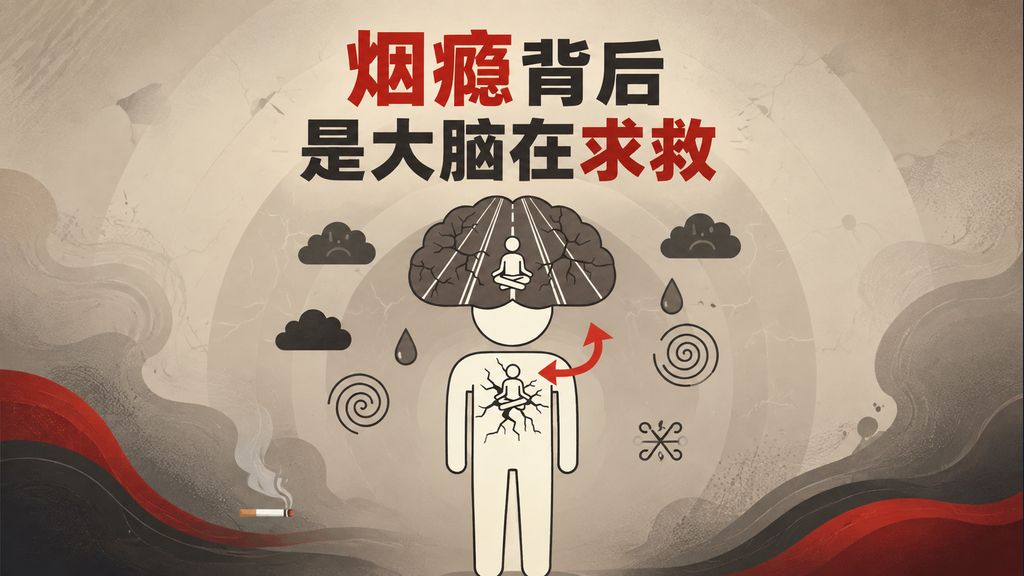
字幕摘录
| 时间 | 英文 | 中文 |
|---|---|---|
| 0:00 | In the next few minutes, you'll understand something most people get wrong about smokers. | 在接下来的几分钟里,你会明白 大多数人对吸烟有错误。 |
| 0:06 | Everyone thinks smoking is about addiction, about nicotine, about weakness. | 每个人都认为吸烟是关于瘾君子,关于尼古丁,关于软弱. |
| 0:12 | They're all missing the point. | 他们都忽略了重点 |
| 0:15 | Here's what's actually happening inside a smoker's mind. | 下面是吸烟者心中实际发生的事情. |
| 0:19 | You're stressed, anxious, maybe heartbroken. | 你紧张,焦虑,也许心碎。 |
| 0:23 | Your mind is screaming, and you light up. | 你的头脑在尖叫, 你点燃。 |
| 0:26 | Not because your body needs nicotine, because your mind needs an exit. | 不是因为你的身体需要尼古丁, 因为你的思想需要退出。 |
| 0:32 | In that moment, smoking doesn't feel like self-harm. | 在那一刻,吸烟不觉得有自我伤害的感觉. |
| 0:36 | It feels like self-protection. | 感觉像是自我保护 |
| 0:38 | Your brain floods with dopamine, but not because you're happy, | 你的脑部被多巴胺淹没 但不是因为你高兴 |
展开字幕全文(132 条)
| 序号 | 英文 | 中文 |
|---|---|---|
| 1 | In the next few minutes, you'll understand something most people get wrong about smokers. | 在接下来的几分钟里,你会明白 大多数人对吸烟有错误。 |
| 2 | Everyone thinks smoking is about addiction, about nicotine, about weakness. | 每个人都认为吸烟是关于瘾君子,关于尼古丁,关于软弱. |
| 3 | They're all missing the point. | 他们都忽略了重点 |
| 4 | Here's what's actually happening inside a smoker's mind. | 下面是吸烟者心中实际发生的事情. |
| 5 | You're stressed, anxious, maybe heartbroken. | 你紧张,焦虑,也许心碎。 |
| 6 | Your mind is screaming, and you light up. | 你的头脑在尖叫, 你点燃。 |
| 7 | Not because your body needs nicotine, because your mind needs an exit. | 不是因为你的身体需要尼古丁, 因为你的思想需要退出。 |
| 8 | In that moment, smoking doesn't feel like self-harm. | 在那一刻,吸烟不觉得有自我伤害的感觉. |
| 9 | It feels like self-protection. | 感觉像是自我保护 |
| 10 | Your brain floods with dopamine, but not because you're happy, | 你的脑部被多巴胺淹没 但不是因为你高兴 |
| 11 | because you just avoided pain, even if just for three minutes. | 因为你只是避免了疼痛 即使只有三分钟 |
| 12 | And here's where it gets psychological. | 而这里是它得到心理。 |
| 13 | Your brain takes notes every single time. | 你的大脑每次都记笔记 |
| 14 | Emotional pain equals cigarette equals relief. | 情感痛苦等于香烟等于解脱. |
| 15 | Do this enough times, and your brain rewires itself. | 做这个足够多的时间, 你的大脑重新连接自己。 |
| 16 | The next time stress hits, your brain doesn't search for solutions. | 下次压力大的时候 你的大脑不会寻找解决方案 |
| 17 | It searches for cigarettes. | 它在找香烟。 |
| 18 | This is what psychologists call conditioned emotional response. | 这就是心理学家所说的有条件的情绪反应。 |
| 19 | But it goes deeper. | 但它会更深。 |
| 20 | The flick of the lighter, the rhythm of the inhale, even the smell of smoke. | 打火机的闪烁 吸气的节奏 甚至烟味 |
| 21 | It all becomes a ritual. | 这一切都变成了一种仪式。 |
| 22 | A ritual your mind mistakes for safety. | 一个仪式 你的思想错误的安全。 |
| 23 | People who smoke aren't just addicted to nicotine. | 抽烟的人不只是对尼古丁上瘾 |
| 24 | They're addicted to what smoking represents. | 他们沉迷于吸烟意味着什么。 |
| 25 | Control, pause, escape. | 控制,暂停,逃跑。 |
| 26 | Let me show you what this looks like. | 让我告诉你这看起来像什么。 |
| 27 | Sarah, 38 years old, smoked for 20 years. | 莎拉,38岁,吸烟20年. |
| 28 | Her therapist asked her one question. | 她的治疗师问了她一个问题。 |
| 29 | What were you feeling the first time you ever smoked? | 你第一次抽烟是什么感觉? |
| 30 | She paused. | 她暂停了 |
| 31 | My parents were fighting. | 我爸妈在吵架 |
| 32 | I was alone in my room, scared. | 我一个人在房间里,害怕。 |
| 33 | And what did the cigarette do? | 那烟是做什么的? |
| 34 | It gave me something to do with my hands, something to focus on. | 它给了我一些与我的手有关的东西, 有所侧重。 |
| 35 | I felt less alone. | 我不太孤独 |
| 36 | There it was. | 就是这样 |
| 37 | For 20 years, Sarah wasn't smoking to feel good. | 20年来,莎拉不吸烟 感觉很好。 |
| 38 | She was smoking to not feel bad. | 她抽烟不觉得不舒服。 |
| 39 | This is the psychology of smokers. | 这是吸烟者的心理。 |
| 40 | They're not running toward pleasure. | 他们不会走向快乐 |
| 41 | They're running away from pain. | 他们正在逃避痛苦 |
| 42 | And their brain? | 他们的大脑呢? |
| 43 | It's been keeping score. | 它一直在记分。 |
| 44 | Every time they felt overwhelmed and lit up, the brain reinforced it. | 每一次他们感到不堪重负,闪亮,大脑就强化了它. |
| 45 | Every time they celebrated and lit up, reinforced. | 每次他们庆祝和点亮,都强化. |
| 46 | Every time they were bored and lit up, reinforced. | 每次他们无聊和点燃, 强化。 |
| 47 | The brain built a highway. | 脑建高速公路. |
| 48 | Emotion leads to cigarette, leads to belief. | 情绪导致香烟,导致信仰. |
| 49 | And now that highway is 10 lanes wide. | 而现在的高速公路是10车道宽的. |
| 50 | But here's what makes smokers different from nonsmokers. | 但这里使得吸烟者与非吸烟者不同. |
| 51 | Nonsmokers sit with discomfort. | 无烟者以烦恼坐. |
| 52 | They ride it out. | 他们骑它出去。 |
| 53 | Smokers don't. | 吸烟者不会。 |
| 54 | They've trained their brain to believe discomfort is dangerous. | 他们训练他们的大脑 相信不适是危险的。 |
| 55 | So the brain screams, get the cigarette, now. | 所以,大脑尖叫, 拿烟,现在。 |
| 56 | It's not about willpower. | 这不是关于意志力。 |
| 57 | It's about wiring. | 是为布线. |
| 58 | Scientists did a study. | 科学家做了一项研究。 |
| 59 | They put smokers and nonsmokers in stressful situations. | 它们使吸烟者和非吸烟者处于紧张的境地。 |
| 60 | Nonsmokers? | 烟鬼? |
| 61 | Cortisol spiked and gradually came down. | 科尔蒂索尔突围并逐渐下山. |
| 62 | Smokers? | 烟鬼? |
| 63 | Cortisol stiked higher and stayed elevated longer, even after smoking. | 科蒂索尔在吸烟后更高,更长时间地保持高涨. |
| 64 | Why? | 为什么? |
| 65 | Because smoking doesn't actually reduce stress. | 因为吸烟实际上不会减轻压力. |
| 66 | It reduces the symptoms of nicotine withdrawal. | 能减少尼古丁退缩的症状. |
| 67 | The smoker's brain interprets relief for withdrawal as stress relief. | 烟台的大脑将戒除解脱解释为应力解脱. |
| 68 | It's a trick, but the brain falls for it every time. | 是个诡计,但大脑每次都会掉下来 |
| 69 | Here's another layer. | 这是另一层。 |
| 70 | People who smoke often have what psychologists call low-distress tolerance. | 吸烟的人往往有心理学家所称的低沉耐受性. |
| 71 | They struggle to sit with negative emotions, anxiety, boredom, sadness. | 他们苦苦地坐着消极的情绪,焦虑,无聊,悲伤. |
| 72 | The cigarette becomes their emotional regulator. | 香烟成为他们的情绪调节器. |
| 73 | Bad day at work, cigarette. | 工作不好,抽烟 |
| 74 | Fight with partner, cigarette. | 跟搭档打,抽烟 |
| 75 | Feeling empty, cigarette. | 感觉空虚,香烟。 |
| 76 | It's not a habit. | 这不是习惯。 |
| 77 | It's a coping mechanism. | 这是一个应对机制。 |
| 78 | And over time, smokers lose the ability to cope without it. | 随着时间的推移,吸烟者失去应付能力。 |
| 79 | Their emotional toolkit shrinks to one tool, the cigarette. | 他们的情感工具包缩小到一个工具,即香烟. |
| 80 | This is why quitting feels impossible. | 这就是为什么放弃感觉是不可能的。 |
| 81 | You're not just fighting nicotine. | 你不只是和尼古丁战斗 |
| 82 | You're fighting years of psychological conditioning. | 你在与多年的心理调节搏斗 |
| 83 | Your brain genuinely believes it needs cigarettes to survive emotional pain. | 你的大脑真的相信 它需要香烟 来度过感情痛苦。 |
| 84 | But here's where it gets hopeful. | 但这里它得到了希望。 |
| 85 | Sarah's therapist gave her an assignment. | Sarah的治疗师给她分配了任务 |
| 86 | Next time you crave a cigarette, sit still for five minutes. | 下次想抽根烟,就坐五分钟 |
| 87 | Don't fight it. | 别反抗 |
| 88 | Just observe it. | 只是观察它。 |
| 89 | What will that do? | 这有什么用? |
| 90 | It'll teach your brain that feelings pass, even without cigarettes. | 它会教你的大脑 感觉通过, 即使没有香烟。 |
| 91 | First time, she lost it 90 seconds. | 她第一次输了90秒 |
| 92 | Her hands shook. | 她的手握着 |
| 93 | Her chest tightened. | 她的胸口收紧了 |
| 94 | But she didn't smoke. | 但她不抽烟。 |
| 95 | Second time, three minutes. | 第二次,三分钟。 |
| 96 | By the tenth time, something shifted. | 到了第十回,有些东西变了。 |
| 97 | The craving came. | 渴望来了。 |
| 98 | She sat with it. | 她坐在这里。 |
| 99 | After five minutes, it passed. | 5分钟后,它通过了。 |
| 100 | Her brain learned something new. | 她的大脑学到了新的东西。 |
| 101 | We can survive this. | 我们可以活下来 |
| 102 | The highway started to crack. | 高速公路开始开裂. |
| 103 | This is called extinction learning. | 这就是所谓的灭绝学习。 |
| 104 | Your brain slowly realizes the old pattern isn't necessary. | 你的大脑慢慢地意识到 旧的模式是不必要的。 |
| 105 | But it only happens when you stop running. | 但只有停止逃跑才会发生 |
| 106 | So here's the psychology of people who successfully quit. | 这就是那些成功退出的人的心理学。 |
| 107 | They don't fight cravings. | 他们不会与渴望斗争 |
| 108 | They sit with them. | 他们和他们坐在一起。 |
| 109 | They don't shame themselves. | 二者不自惭愧. |
| 110 | They observe themselves. | 他们观察自己。 |
| 111 | They don't white-knuckle through withdrawal. | 他们不白指通过退出。 |
| 112 | They teach their brain a new response. | 他们教他们的大脑 新的反应。 |
| 113 | Every time they feel the pull and don't light up, | 每一次他们感觉到拉动而不点亮, |
| 114 | they're not just resisting, they're rewiring. | 他们不仅在反抗,还在重生 |
| 115 | Their brain is building a new pathway. | 他们的大脑正在构建一条新的路径。 |
| 116 | Stress doesn't need cigarettes. | 压力不需要香烟 |
| 117 | Sadness doesn't need cigarettes. | 悲伤不需要香烟 |
| 118 | Boredom doesn't need cigarettes. | 鲍瑞多姆不需要香烟 |
| 119 | But that pathway only gets built through repetition. | 但这条路只能通过重复建造。 |
| 120 | One uncomfortable moment at a time. | 一时不适. |
| 121 | So here's what the psychology of smokers really tells us. | 这就是吸烟者的心理学告诉我们的。 |
| 122 | They're not weak. | 他们不软弱。 |
| 123 | They're trapped in a loop. | 他们被困在一个循环。 |
| 124 | They're not lacking discipline. | 他们不是缺乏纪律。 |
| 125 | They're lacking emotional tools. | 他们缺乏情感工具。 |
| 126 | And they're not choosing to smoke. | 他们不会选择抽烟的 |
| 127 | Their brain is choosing for them. | 他们的大脑是为他们选择的。 |
| 128 | But the loop can break the moment they stop running | 但是一旦他们停止运行 循环就会中断 |
| 129 | from discomfort and start sitting with it. | 从不适开始坐着 |
| 130 | That's not just quitting smoking. | 这不仅仅是戒烟。 |
| 131 | That's rewiring the mind. | 即复发心. |
| 132 | That's the beginning of psychological freedom. | 这就是心理自由的开始. |
该视频共有字幕 132 条。解锁更多字幕为会员功能,请移动到 价格