快速解决你难题的惊人秘诀【TED演讲】
共 3 集
剧集目录
| 集 | 标题 | 时长 |
|---|---|---|
| P1 | 快速解决你难题的惊人秘诀【TED演讲】 中英双语 | 15:17 |
| P2 | 快速解决你难题的惊人秘诀【TED演讲】 英文字幕(注释+中文 | 15:17 |
| P3 | 快速解决你难题的惊人秘诀【TED演讲】 无字幕(中英外挂) | 15:17 |
P1 · 快速解决你难题的惊人秘诀【TED演讲】 p01 中英双语 (P1)
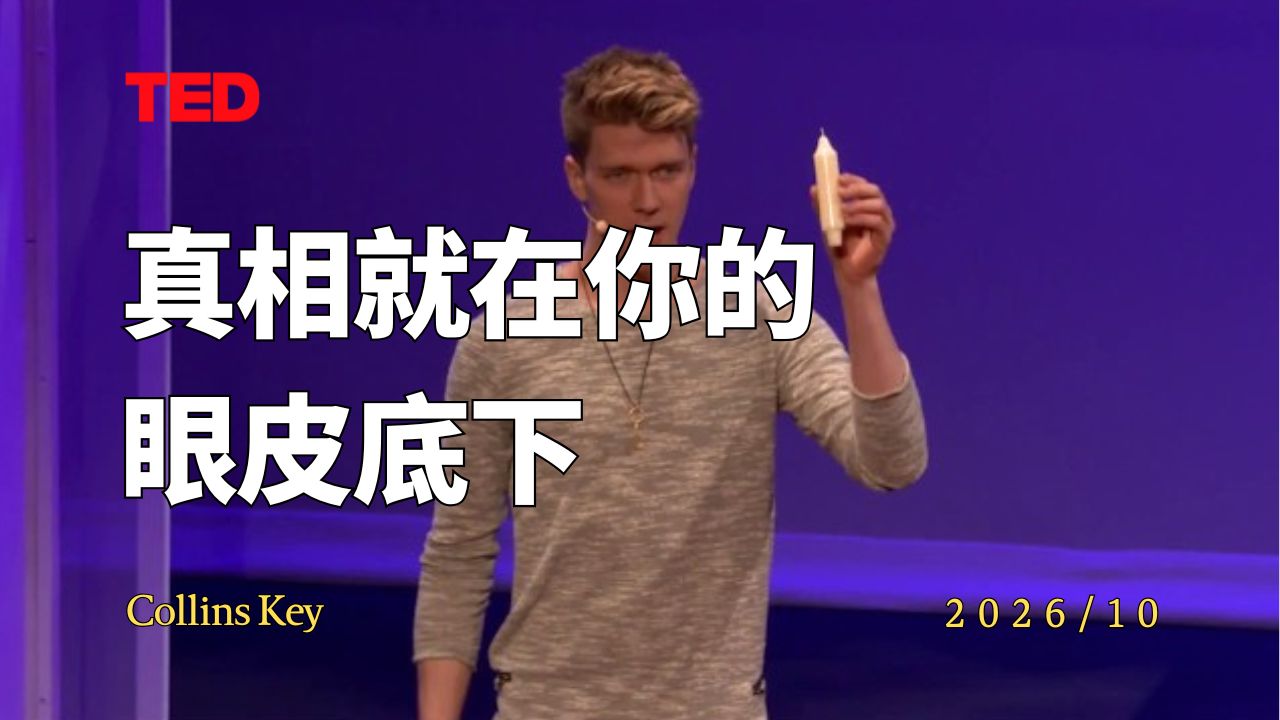
字幕摘录
| 时间 | 英文 | 中文 |
|---|---|---|
| 0:01 | Imagine if you could take your brain | 想象一下,如果你能拿你的大脑 |
| 0:05 | and then turn it inside out, | 然后把它打开 |
| 0:07 | and then have access to the information | 然后可以获取信息 |
| 0:10 | to be able to solve virtually any problem. | 能够解决几乎所有问题。 |
| 0:13 | Sounds pretty cool, right? | 听起来很酷吧? |
| 0:15 | Well, here's how. | 是这样的 |
| 0:16 | We're gonna take a look at problem solving | 我们要看看解决问题 |
| 0:17 | in a very different way, | 以非常不同的方式, |
| 0:20 | one that can bring tremendous benefit to your life. | 能为你们带来巨大利益 |
| 0:22 | And this is a technique I was first introduced to | 这是我第一次被介绍的技巧 |
展开字幕全文(342 条)
| 序号 | 英文 | 中文 |
|---|---|---|
| 1 | Imagine if you could take your brain | 想象一下,如果你能拿你的大脑 |
| 2 | and then turn it inside out, | 然后把它打开 |
| 3 | and then have access to the information | 然后可以获取信息 |
| 4 | to be able to solve virtually any problem. | 能够解决几乎所有问题。 |
| 5 | Sounds pretty cool, right? | 听起来很酷吧? |
| 6 | Well, here's how. | 是这样的 |
| 7 | We're gonna take a look at problem solving | 我们要看看解决问题 |
| 8 | in a very different way, | 以非常不同的方式, |
| 9 | one that can bring tremendous benefit to your life. | 能为你们带来巨大利益 |
| 10 | And this is a technique I was first introduced to | 这是我第一次被介绍的技巧 |
| 11 | at the age of 12 when I began studying the art form of magic. | 12岁开始研究魔法的艺术形式 |
| 12 | And I've continued to develop it | 我继续开发 |
| 13 | throughout my professional career. | 在我职业生涯中 |
| 14 | And now, best of all, this will be able to work for you | 现在,最重要的是,这个能为你效劳 |
| 15 | in your personal life, professional, | 在你个人生活中,职业, |
| 16 | or to help you create that next billion-dollar idea. | 或者帮助你创造 下一个十亿美元的想法。 |
| 17 | And in any field, sales, marketing, show business, | 在任何领域,销售,营销,表演业务, |
| 18 | it doesn't matter. | 没关系 |
| 19 | Now, throughout this talk, I'm gonna be revealing to you | 现在,这整个谈话, 我会告诉你 |
| 20 | three core psychological principles | 三项核心心理原则 |
| 21 | that magicians have been using | 那些魔术师一直在使用 |
| 22 | for more than 5,000 years. | 超过5000年 |
| 23 | And all of these principles have one thing in common, | 所有这些原则都有一个共同点, |
| 24 | they all revolve around the most important concept in magic, | 他们都围绕着魔法中最重要的概念, |
| 25 | and that is the answer to every problem | 这就是每个问题的答案 |
| 26 | is hiding in plain sight. | 隐藏在眼前 |
| 27 | So let me explain. | 让我解释一下 |
| 28 | Imagine you're seated at a table | 想象一下,你坐在桌子上 |
| 29 | and you're given a problem to solve | 你有一个问题要解决 |
| 30 | using nothing except for these items, | 除这些物品外,别无他法, |
| 31 | a candle, some pushpins, and some matches. | 蜡烛、推杆和火柴 |
| 32 | Now, you've got 60 seconds to figure out | 现在,你还有60秒想清楚 |
| 33 | how to attach this candle to the wall | 怎么把蜡烛挂在墙上 |
| 34 | in a way that, when it's lit, | 这样,当它被点燃, |
| 35 | the wax will not drip down onto the table. | 蜡不会滴在桌子上。 |
| 36 | Okay, so some of you may be familiar with this, | 好吧,所以有些 你们可能熟悉这一点, |
| 37 | but for the rest of you, | 但对于你们其他人来说, |
| 38 | while you're trying to figure this out, | 当你试图想明白这一点, |
| 39 | let me give you a little bit of history | 让我给你一点历史 |
| 40 | of where this came from. | 这是从哪里来的。 |
| 41 | Now, this is a classic test | 现在,这是一个经典的测试 |
| 42 | of creative problem-solving developed | 创新问题的解决 |
| 43 | by the renowned psychologist Dr. Carl Dunker, | 由著名心理学家卡尔·邓克博士(Dr. |
| 44 | and it was first published in 1945. | 1945年首次出版. |
| 45 | But although this is over three quarters of a century old, | 但是虽然这已经超过一个世纪的四分之三了 |
| 46 | Dunker博士的评估 | |
| 47 | of how our cognitive brain solves problems | 我们的认知大脑是如何解决问题的 |
| 48 | hasn't really changed at all. | 一点都没变 |
| 49 | Again, it's back to what I said earlier. | 又复如前所说. |
| 50 | The answer to every problem is hiding in plain sight. | 每一个问题的答案都隐藏在眼前。 |
| 51 | You see, the thing is, we look right at the answer, | 问题是 我们正视着答案 |
| 52 | but we rarely see it. | 但我们很少看到它。 |
| 53 | And in this case, most people are so consumed | 在这种情况下,大多数人都如此消费 |
| 54 | with how to attach the candle to the wall using tacks | 如何用塔克把蜡烛挂在墙上 |
| 55 | while the real answer is right in front of them. | 真正的答案就在他们面前 |
| 56 | You guys see it? | 你们看见了吗? |
| 57 | The box. | 那个盒子 |
| 58 | Again, that's what I mean by the answer | 再说一遍,这就是答案的意思 |
| 59 | is hidden in plain sight. | 隐藏在眼前 |
| 60 | And again, the reason we don't think | 再说一遍,我们不认为 |
| 61 | the box is one of the solutions | 框是解决方案之一 |
| 62 | is because it's not presented to us as such. | 因为它不是 给我们这样的。 |
| 63 | It's locked away in our brain and positioned simply | 它被锁在我们的大脑里 然后就定位了 |
| 64 | as a container for the pins. | 作为针的容器。 |
| 65 | Now, Dr. Dunker called this functional fixedness, | 现在,Dunker博士称这个功能固定, |
| 66 | the cognitive bias that limits a person | 限制一个人的认知偏差 |
| 67 | to using an object only in the way | 仅以方式使用对象 |
| 68 | that is traditionally intended. | 这是传统上的意图。 |
| 69 | And the same is also true of ideas and concepts. | 思想和概念也是如此。 |
| 70 | For example, this candlestick problem | 比如说这个烛台问题 |
| 71 | was presented to you simply as a creative problem-solving test | 被介绍给大家 只是一个创造性的解决问题的测试 |
| 72 | when, in fact, it also had a secondary purpose. | 事实上,它也有次要目的。 |
| 73 | It contained a very important clue, one that | 它包含一个非常重要的线索,一个 |
| 74 | was hiding in plain sight, which you | 藏在明眼里,这是你 |
| 75 | will need to unlock another facet of your cognitive | 需要解开你认知的另一面 |
| 76 | problem-solving ability. | 解决问题的能力。 |
| 77 | Now, the thing is, you probably didn't notice | 问题是,你可能没注意到 |
| 78 | because you weren't instructed to look for it. | 因为你没有被指示去寻找它。 |
| 79 | So right now, I'm giving you a heads up. | 所以,现在,我给你一个提醒。 |
| 80 | There's going to be one more clue hidden during this talk. | 这次谈话中还有一条线索要隐藏 |
| 81 | So pay close attention to every detail. | 所以仔细注意每个细节 |
| 82 | Now, to make all this a lot easier | 现在,让这一切变得容易得多 |
| 83 | to understand, I've simplified the process into three words. | 为了理解,我已经把过程简化为三个字。 |
| 84 | The first word is misconceptions. | 第一个词是误解。 |
| 85 | Most people think a difficult problem | 大多数人都觉得很困难 |
| 86 | must have a complex solution. | 必须有一个复杂的解决方案。 |
| 87 | The second word, assumptions. | 第二个词,假设。 |
| 88 | We utilize information based upon prior knowledge | 我们利用以前的知识 |
| 89 | and experience, and we don't think beyond those parameters. | 和经验,我们不思考 超出这些参数。 |
| 90 | And the third word is expectations. | 第三个词是期望。 |
| 91 | The answer we expect to find often limits us | 我们期望找到的答案 经常限制我们 |
| 92 | and does not allow us to see what's really going on. | 也不允许我们看到 到底发生了什么。 |
| 93 | Now, I thought it'd be kind of fun to show you | 现在,我还以为给你看会很有趣 |
| 94 | what all three of these words look like in action, | 这三个词在行动上是什么样子的 |
| 95 | and then we'll dive into each one | 然后我们潜入每一个 |
| 96 | in a little bit more detail. | 更详细一点 |
| 97 | So for this here, we've got a few bills, two, three, four, | 因此,在这里,我们有一些 账单,二,三,四, |
| 98 | I think $5 here. | 我想这里有5美元。 |
| 99 | So here's the goal. | 因此,这是目标。 |
| 100 | The goal is to be able to take these bills. | 目标是能够收取这些账单。 |
| 101 | If I can do this properly, we'll actually | 如果我能做对,我们真的 |
| 102 | be able to take them on the count of three. | 可以数到三就把他们带走 |
| 103 | We go one, two, three, like that, | 我们走一,二,三,像这样, |
| 104 | and let you transform into $500. | 然后让你变成500美元。 |
| 105 | OK, now I have to say this. | 好吧,现在我得说这个。 |
| 106 | I can't promise you'll actually be | 我不能保证你会是 |
| 107 | able to transform money at your fingertips | 能够用手指变钱 |
| 108 | by the end of this talk, but you will | 话到此为止,但你会 |
| 109 | be able to utilize these same principles, the same principles | 能够利用这些原则、同样的原则 |
| 110 | I just used to turn $1 bills into $100 bills | 我只是把一块钱变成一百块 |
| 111 | to solve virtually any problem. | 解决几乎所有的问题。 |
| 112 | All right, so let's break this whole thing down right now, | 好吧,让我们打破 整个事情现在, |
| 113 | starting with misconceptions. | 从误解开始 |
| 114 | This is the exact same thing that happens with the candlestick | 烛台也是这样 |
| 115 | problem. | 问题。 |
| 116 | You see, most people are so focused on how | 你看,大多数人都这么专注于如何 |
| 117 | to attach the candlestick, they can't figure out exactly what's | 将蜡烛棒附着起来, 他们无法想清到底什么是 |
| 118 | going on with the box. | 继续与盒子。 |
| 119 | It gets buried in their brains. | 它被埋在他们的脑海里 |
| 120 | And what happens, you have to force your brain | 发生什么,你必须强迫你的大脑 |
| 121 | to reassess everything about the situation, every detail, | 重新评估一切情况, 每一个细节, |
| 122 | to bring the information to the surface | 将信息带到表面 |
| 123 | and then be able to expand your ability | 然后可以扩展你的能力 |
| 124 | to utilize cognitive thinking. | 利用认知思维。 |
| 125 | So I've got another little, this one's so fun, | 我还有一个小,这个好好玩 |
| 126 | I can't wait to show you this. | 我迫不及待想给你看这个 |
| 127 | So this here is a little thing. | 所以这是个小问题 |
| 128 | So guys, take a look right over here. | 伙计们,看看这里 |
| 129 | We've got a couple of cards, six cards to be exact. | 我们有几张牌,六张牌是准确的 |
| 130 | Each card is different, and each card | 每张牌不同,每张牌 |
| 131 | has been selected for a very important psychological reason. | 被选中是出于一个非常重要的心理原因 |
| 132 | You'll find out why in just a moment. | 你马上会知道原因的 |
| 133 | So right now, I want you to focus on just one card | 所以,现在,我要你只关注一张牌 |
| 134 | and remember it. | 并记住它。 |
| 135 | Keep repeating the name of your card | 继续重复卡片的名字 |
| 136 | over and over and over in your mind. | 一遍又一遍地在你的脑海里。 |
| 137 | You got it? | 明白了吗? |
| 138 | Great. | 不错 |
| 139 | We're going to turn the cards over, start mixing them up. | 我们要把牌翻过来 开始搅拌 |
| 140 | Now, if I did this correctly, all of you, yes, all of you | 现在,如果我做正确, 你们所有人,是的,你们所有人 |
| 141 | will have been influenced to choose the exact same card. | 将会被影响选择相同的牌。 |
| 142 | And I'm going to remove your card right now. | 我现在就去除你的卡片 |
| 143 | Let's see if it worked. | 看看有没有用 |
| 144 | So it's pretty crazy, right? | 所以这是相当疯狂的,对不对? |
| 145 | OK. | 摆 |
| 146 | So how did this happen? | 怎么会这样? |
| 147 | Like I said, there is a psychological reason | 我说过,有心理上的原因 |
| 148 | why these cards were selected. | 为什么这些牌被选中 。 |
| 149 | But it is not so that all of you would | 但你们不会都这样 |
| 150 | be drawn to the same card. | 被抽到同一个牌。 |
| 151 | It's so that all of you would focus on only one card | 这样你们都只看一张牌 |
| 152 | and ignore the rest. | 并忽略其余部分。 |
| 153 | And that's where the misconception comes in, | 误解就由此而来, |
| 154 | because what you don't know is that there's actually | 因为你不知道的其实是 |
| 155 | two separate sets of cards. | 两套不同的牌。 |
| 156 | Again, the answer was hiding in plain sight. | 答案再次隐藏在眼前。 |
| 157 | And the reason you didn't notice is | 你没有注意到的原因是 |
| 158 | because both sets of cards are actually very similar. | 因为这两套牌实际上非常相似. |
| 159 | So let's say, for instance, in the first spread, | 因此,让我们假设, 例如,在第一个传播, |
| 160 | you selected the King of Clubs. | 你选择了俱乐部之王。 |
| 161 | In the second spread, it was replaced by the King of Spades. | 在第二次传播中,它被斯派兹王取代. |
| 162 | So no matter what card you chose in the first spread, | 所以,无论你选择什么牌 在第一次发行, |
| 163 | it's not going to show up in the second spread. | 它不会出现在第二次传播。 |
| 164 | And to top it all off, you were so focused on your one card, | 最重要的是,你只关注一张卡片 |
| 165 | you didn't even notice any of the other cards around it. | 你甚至没有注意到其他卡片。 |
| 166 | This is why misconception is so dangerous. | 这就是为什么误解如此危险。 |
| 167 | And it often makes problem solving take way longer | 也常常让解决问题的时间更长 |
| 168 | than it really should. | 更不该这样 |
| 169 | All right. | 好吧,我们走。 |
| 170 | Now, the next idea we're going to tackle is assumptions. | 现在,我们接下来要处理的就是假设。 |
| 171 | And more importantly, false assumptions. | 更重要的是,错误的假设。 |
| 172 | So I want you to take a look at this animation right now | 所以,我要你看看这个动画 |
| 173 | and tell me, which way is the key rotating? | 告诉我,钥匙在哪个方向旋转? |
| 174 | Now, some of you will assume the key is rotating clockwise. | 现在,你们中有些人认为 钥匙是顺时针旋转的。 |
| 175 | Others will assume the key is rotating counterclockwise. | 其他人会假设密钥是逆时针旋转. |
| 176 | And both of those assumptions are wrong. | 这两种假设都是错误的。 |
| 177 | You see, we assume the key is moving in just one direction | 你看,我们假设 关键是朝着一个方向走 |
| 178 | or the other, but I can assure you it's not. | 或对方, 但我可以向你保证,它不是。 |
| 179 | Now, if you're more of a right-brain user, | 如果你更喜欢用右脑的话 |
| 180 | you'll likely see the key rotating to the right. | 你可能会看到钥匙旋转到右边 |
| 181 | If you're more of a left-brain user, | 如果你更喜欢用左脑 |
| 182 | you'll likely see the key rotating to the left. | 你可能会看到 键旋转到左边。 |
| 183 | But by switching your thinking from right-brain to left-brain, | 但通过将你的思维从右脑转向左脑, |
| 184 | you'll be able to shift the direction of the key. | 你就能改变钥匙的方向 |
| 185 | Now, this takes a little bit of practice, | 现在,这需要一点练习, |
| 186 | but the results are almost magical. | 但结果几乎是神奇的 |
| 187 | So how does this relate to hiding in plain sight? | 那这跟躲在眼前有什么关系? |
| 188 | Well, in this situation, our brain thinks and assumes | 那么,在这种情况下,我们的大脑思考和假设 |
| 189 | that there's only one of two possible answers. | 只有两个可能的答案之一 |
| 190 | The only two it readily knows and accepts. | 唯一能轻易了解和接受的两种 |
| 191 | The key can rotate right or the key can rotate left. | 键可以右旋转,也可以左旋转. |
| 192 | It's inconceivable the key could be rotating | 钥匙可能旋转是不可思议的 |
| 193 | in both directions at the same time. | 双向同时. |
| 194 | But you see, if we really study the image, | 但如果我们真的研究图像 |
| 195 | we realize we don't have enough information | 我们意识到我们没有足够的信息 |
| 196 | to determine the key's direction at all. | 确定钥匙的方向 |
| 197 | Because you see, the key is solid black. | 因为你看到,钥匙是黑色的 |
| 198 | There's no highlights, shadows, | 没有亮点 影子 |
| 199 | or any other distinguishing marks | 或任何其他区别标志 |
| 200 | to give us the appropriate information. | 给我们适当的信息。 |
| 201 | Now, our brain fills in these missing pieces, | 现在,我们的大脑充满了这些缺失的碎片, |
| 202 | and we assume, because our mind likes to work | 我们假设,因为我们的头脑喜欢工作 |
| 203 | in an orderly fashion, that what we see is the key rotating | 以有序的方式,我们看到的是关键旋转 |
| 204 | in one direction or the other. | 在一个方向或另一个方向。 |
| 205 | It doesn't even occur to us that maybe | 我们甚至没有想到 也许 |
| 206 | we're missing the relevant information | 我们缺少相关信息 |
| 207 | to make an informed decision. | 做出知情决定。 |
| 208 | And we assume that what our mind tells us, | 我们假设我们的思想告诉我们, |
| 209 | based on the way that it chooses to function at that moment, | 基于它选择在那个时刻运作的方式, |
| 210 | that our logic is correct. | 我们的逻辑是正确的。 |
| 211 | So the correct answer to this one | 所以这个答案是正确的 |
| 212 | is simply hiding in plain sight. | 完全隐藏在眼前。 |
| 213 | Depending on your perception, | 根据你的看法 |
| 214 | the key rotates in both directions. | 键在双向旋转。 |
| 215 | Now, there's still one more crucial word | 现在还有一个关键词 |
| 216 | we need to explore, and that is expectations. | 我们需要探索,这就是期望。 |
| 217 | The answer we expect to find can blind us | 我们期待找到的答案会使我们失明 |
| 218 | to what is actually happening, | 到底发生了什么 |
| 219 | and this is what makes problem solving so difficult. | 这正是解决问题的难处 |
| 220 | Now, a great example of this is when I was asked | 现在,一个伟大的例子 就是当我被问到 |
| 221 | to be on the TV show, America's Got Talent. | 上电视,美国有才华 |
| 222 | There was just one problem. | 只有一个问题 |
| 223 | At the time, the producers of the show expected magicians | 当时,节目的制作人 期待魔术师 |
| 224 | to perform big, flashy, Vegas-type illusions, | 来表演巨大的,闪耀的, 拉斯维加斯类型的幻觉, |
| 225 | which I didn't do. | 我没有这么做 |
| 226 | Now, the reason that America's Got Talent | 现在,美国有才华的原因 |
| 227 | wanted these types of acts was because the show | 想要这些类型的行为 是因为节目 |
| 228 | was being taped in front of 6,000 people | 在六千人面前被录音 |
| 229 | at Radio City Music Hall, | 在广播城市音乐厅, |
| 230 | and they wanted the show to feel huge. | 他们想让节目变得巨大 |
| 231 | But I noticed that none of the magicians | 但我注意到没有魔术师 |
| 232 | ever made it past the first few rounds, | 曾经成功过前几轮, |
| 233 | so I started analyzing why. | 所以我开始分析原因 |
| 234 | I mean, the acts were great in front of the 6,000 people | 我是说,六千人面前的表演很棒 |
| 235 | in the audience, but to the millions of people | 在观众中,但对于数百万人 |
| 236 | who were watching on TV at home and then voting, | 他们在家看电视 然后投票 |
| 237 | there was a disconnect between the performer. | 表演者之间发生了脱节 |
| 238 | Again, I analyzed why. | 我再次分析了原因。 |
| 239 | Well, television is really an intimate medium, | 嗯,电视确实是一个亲密的媒介, |
| 240 | and the best kind of magic for television | 也是电视上最好的魔术 |
| 241 | is close-up magic, because it, too, is intimate. | 是特写魔法,因为它也是亲密的。 |
| 242 | It draws the viewer in. | 能引观者入. |
| 243 | So armed with this new insight, I realized | 带着这个新洞察力 我意识到 |
| 244 | the answer was right in front of me. | 答案就在我面前 答案就在我面前 |
| 245 | It was literally hiding in plain sight. | 它真的藏在了眼前。 |
| 246 | I didn't need to perform big, flashy, Vegas-type illusions. | 我用不着做大 闪闪发光的拉斯维加斯式的幻觉 |
| 247 | I needed to do small, close-up, intimate performances | 我需要做小的,特写,亲密的表演 |
| 248 | that would blow the minds of the judges | 那会让法官们大吃一惊 |
| 249 | and the people watching at home. | 和在家观看的人。 |
| 250 | Now, it took a bit of convincing to get the producers | 现在,花了一点说服力 得到了制作人 |
| 251 | to agree to this whole thing. | 同意这整件事。 |
| 252 | They definitely did not see it the way | 他们肯定没看出来 |
| 253 | that I did at that time. | 那时我做了。 |
| 254 | But once I was able to refocus their attention | 但一旦我重新关注他们 |
| 255 | back to what they already knew, | 回到他们已经知道的, |
| 256 | which is that television is intimate, | 电视很亲密 |
| 257 | therefore the magic acts should be intimate as well, | 因此,魔术行为也应当是亲密的, |
| 258 | they said, okay, let's do it. | 他们说,好吧,让我们做到这一点。 |
| 259 | And it was a paradigm-shifting way for magic to be done | 它是一个范式转变的方式 魔法完成 |
| 260 | on America's Got Talent, and I actually became | 在美国的天赋, 我实际上成为 |
| 261 | the first magician to ever make it | 是第一个成功过的魔术师 |
| 262 | into the finals on that show. | 进入那个节目的决赛 |
| 263 | Thank you. | 谢谢 |
| 264 | Now, it all happened because I was able to shift | 现在,一切都发生了,因为我能够转移 |
| 265 | the producers' expectations of what they thought would work. | 制作者们对他们认为可行的期望。 |
| 266 | So right now, it's time for me to shift yours. | 现在,我该换你的了 |
| 267 | As I mentioned earlier, throughout this entire talk, | 正如我之前提到的,在整个谈话中, |
| 268 | I've given you two clues to the problems | 我给了你两个问题线索 |
| 269 | I'm about to show you right now. | 我现在就给你看 |
| 270 | Now, you may or may not have noticed them, | 现在,你可能或可能没有注意到他们, |
| 271 | and if you didn't, here's a little hint. | 如果你没有,这里有一个小提示。 |
| 272 | If you go back and watch this again, | 如果你再回去看这个 |
| 273 | you'll notice that every time I touch my key, | 你会注意到,每次我碰我的钥匙, |
| 274 | say the answer is hiding in plain sight, | 说答案藏在眼前 |
| 275 | I would point to the clue that you will need | 我要指出你需要的线索 |
| 276 | to quickly solve these next few problems. | 以迅速解决接下来的几个问题。 |
| 277 | Now, there's a chance you probably just didn't even notice | 你可能根本没注意到 |
| 278 | that you perceived the touching of my key | 你感觉到我钥匙的触摸 |
| 279 | just an irrelevant gesture. | 只是个无关紧要的姿态 |
| 280 | You didn't expect such a simple action | 你没想到会这么简单 |
| 281 | could contain the answer to what you perceived | 可以包含答案 对于你的看法 |
| 282 | as a much more complicated problem. | 更复杂的问题 |
| 283 | So here are the challenges. | 这就是挑战所在。 |
| 284 | The first one, how do you drink champagne from the bottle | 第一个,你怎么从瓶子里喝香槟 |
| 285 | without opening it? | 不打开它? |
| 286 | Immediately, your mind will start thinking | 马上,你的思想就会开始思考 |
| 287 | of all these different solutions, | 所有这些不同的解决办法, |
| 288 | most of which probably have to do with a complicated way | 大部分都和复杂的方式有关 |
| 289 | of getting the cork off and getting the champagne out | 把软木圈脱下来,把香槟拿出来 |
| 290 | without actually opening up the bottle. | 没有打开瓶子。 |
| 291 | Keep thinking. | 继续想 |
| 292 | The next one here involves two glasses, | 下一个是两杯 |
| 293 | a dollar bill suspended between them, and a salt shaker. | 他们之间暂停支付一美元 和盐剂。 |
| 294 | And the challenge is to get the salt shaker | 挑战在于拿盐水 |
| 295 | to balance on top of the dollar bill while staying suspended | 保持平衡,同时暂停支付 |
| 296 | so when you let go, it won't drop down to the table. | 所以当你放手的时候 它不会掉到桌子上 |
| 297 | Again, the answer's probably a lot easier than you think. | 再说一遍,答案可能比你想象的容易得多。 |
| 298 | And also, again, if you wanna learn these, | 还有 如果你想学这些 |
| 299 | all you gotta do is watch this again | 你要做的就是再看一次这个 |
| 300 | and look for the times when I touch my key point | 并寻找时间 当我触摸我的关键点 |
| 301 | and say the answer is hiding in plain sight. | 并说答案是隐藏在眼前。 |
| 302 | This here is actually what people consider a bar bet. | 这其实是人们所认为的酒吧赌注。 |
| 303 | So if you're familiar with magic and puzzles, | 如果你熟悉魔法和谜题 |
| 304 | you probably recognize it, | 你可能认得它, |
| 305 | and it uses the exact same principles | 它使用完全相同的原则 |
| 306 | that magicians have been using all along. | 那些魔术师一直使用。 |
| 307 | If you had a bit of difficulty figuring it out, don't worry, | 如果你有一点难解 别担心 |
| 308 | because it's actually much easier | 因为它实际上容易得多 |
| 309 | to fool a really intelligent person | 骗一个聪明人 |
| 310 | than someone who maybe isn't quite as sophisticated. | 比一个可能不太成熟的人 |
| 311 | I got you, I got you. | 我扶着你,我扶着你 |
| 312 | But it's really true. | 但这是真的。 |
| 313 | It's actually very difficult to fool children. | 愚弄孩子其实非常困难. |
| 314 | And I'll explain why. | 我会解释原因的 |
| 315 | For a really sophisticated person, | 对于一个非常成熟的人来说, |
| 316 | you will almost always talk yourself | 你几乎总是说话自己 |
| 317 | out of the simple solution. | 从简单的解决方案。 |
| 318 | Even though it's the right solution, | 虽然这是正确的解决方案, |
| 319 | your misconception will cause you to overlook the obvious. | 你的误解会让你忽略明显的事实 |
| 320 | Now this also has you call, | 现在,这个你 打电话, |
| 321 | create a false set of assumptions. | 创建一套虚假的假设。 |
| 322 | For example, a child will see a lady floating in the air | 例如,孩子会看到一个女士漂浮在空中 |
| 323 | and say, yeah, well, there are strings holding her up. | 并说,是的,嗯,有弦 拖住她。 |
| 324 | A more sophisticated person would say, | 一个更成熟的人会说, |
| 325 | but see, I can't see any strings. | 但看,我看不到任何线。 |
| 326 | Plus, it would take a lot of strings | 而且,这需要很多弦 |
| 327 | to support the weight of a person. | 支持一个人的体重。 |
| 328 | They utilize information based upon prior knowledge | 他们利用基于先前知识的信息 |
| 329 | and experience, and they don't go beyond those parameters. | 和经验, 他们不会超越这些参数。 |
| 330 | And finally, they create a false set of expectations. | 最后,他们制造了一套虚假的期望。 |
| 331 | Because a magician passed a hoop around the lady, | 因为一个魔术师在女士身边经过一个圈套 |
| 332 | they allow this one simple action | 他们允许这个简单的动作 |
| 333 | to blind them from the truth. | 使他们蒙蔽真理。 |
| 334 | It's the perfect example of misconceptions, assumptions, | 这是误解 假设的完美例子 |
| 335 | and expectations all working against you, | 并期望所有对你不利的工作, |
| 336 | all stopping you from achieving your goal. | 所有阻止你实现你的目标。 |
| 337 | Once you master these principles, | 一旦你掌握了这些原则, |
| 338 | you will be able to unleash the answers | 你就能解开答案 |
| 339 | and realize the benefits | 并实现利益 |
| 340 | that are always hiding in plain sight. | 总是隐藏在眼前 |
| 341 | Thank you. | 谢谢 |
| 342 | Thank you all so much. | 谢谢大家 |
该视频共有字幕 343 条。解锁更多字幕为会员功能,请移动到 价格
P2 · 快速解决你难题的惊人秘诀【TED演讲】 p02 英文字幕(注释+中文外挂) (P2)
字幕摘录
| 时间 | 英文 | 中文 |
|---|---|---|
| 0:01 | Imagine if you could take your brain | 想象一下,如果你能拿你的大脑 |
| 0:05 | and then turn it inside out, | 然后把它打开 |
| 0:07 | and then have access to the information | 然后可以获取信息 |
| 0:10 | to be able to solve virtually any problem. | 能够解决几乎所有问题。 |
| 0:13 | Sounds pretty cool, right? | 听起来很酷吧? |
| 0:15 | Well, here's how. | 是这样的 |
| 0:16 | We're gonna take a look at problem solving | 我们要看看解决问题 |
| 0:17 | in a very different way, | 以非常不同的方式, |
| 0:20 | one that can bring tremendous benefit to your life. | 能为你们带来巨大利益 |
| 0:22 | And this is a technique I was first introduced to | 这是我第一次被介绍的技巧 |
展开字幕全文(351 条)
| 序号 | 英文 | 中文 |
|---|---|---|
| 1 | Imagine if you could take your brain | 想象一下,如果你能拿你的大脑 |
| 2 | and then turn it inside out, | 然后把它打开 |
| 3 | and then have access to the information | 然后可以获取信息 |
| 4 | to be able to solve virtually any problem. | 能够解决几乎所有问题。 |
| 5 | Sounds pretty cool, right? | 听起来很酷吧? |
| 6 | Well, here's how. | 是这样的 |
| 7 | We're gonna take a look at problem solving | 我们要看看解决问题 |
| 8 | in a very different way, | 以非常不同的方式, |
| 9 | one that can bring tremendous benefit to your life. | 能为你们带来巨大利益 |
| 10 | And this is a technique I was first introduced to | 这是我第一次被介绍的技巧 |
| 11 | at the age of 12 when I began studying the art form of magic. | 12岁开始研究魔法的艺术形式 |
| 12 | And I've continued to develop it | 我继续开发 |
| 13 | throughout my professional career. | 在我职业生涯中 |
| 14 | And now, best of all, this will be able to work for you | 现在,最重要的是,这个能为你效劳 |
| 15 | in your personal life, professional, | 在你个人生活中,职业, |
| 16 | or to help you create that next billion-dollar idea. | 或者帮助你创造 下一个十亿美元的想法。 |
| 17 | And in any field, sales, marketing, show business, | 在任何领域,销售,营销,表演业务, |
| 18 | it doesn't matter. | 没关系 |
| 19 | Now, throughout this talk, I'm gonna be revealing to you | 现在,这整个谈话, 我会告诉你 |
| 20 | three core psychological principles | 三项核心心理原则 |
| 21 | that magicians have been using | 那些魔术师一直在使用 |
| 22 | for more than 5,000 years. | 超过5000年 |
| 23 | And all of these principles have one thing in common, | 所有这些原则都有一个共同点, |
| 24 | they all revolve around the most important concept in magic. | 它们都围绕着魔法中最重要的概念。 |
| 25 | And that is the answer to every problem | 这就是所有问题的答案 |
| 26 | is hiding in plain sight. | 隐藏在眼前 |
| 27 | So let me explain. | 让我解释一下 |
| 28 | Imagine you're seated at a table | 想象一下,你坐在桌子上 |
| 29 | and you're given a problem to solve | 你有一个问题要解决 |
| 30 | using nothing except for these items, | 除这些物品外,别无他法, |
| 31 | a candle, some pushpins, and some matches. | 蜡烛、推杆和火柴 |
| 32 | Now, you've got 60 seconds to figure out | 现在,你还有60秒想清楚 |
| 33 | how to attach this candle to the wall | 怎么把蜡烛挂在墙上 |
| 34 | in a way that, when it's lit, | 这样,当它被点燃, |
| 35 | the wax will not drip down onto the table. | 蜡不会滴在桌子上。 |
| 36 | Okay, so some of you may be familiar with this, | 好吧,所以有些 你们可能熟悉这一点, |
| 37 | but for the rest of you, | 但对于你们其他人来说, |
| 38 | while you're trying to figure this out, | 当你试图想明白这一点, |
| 39 | let me give you a little bit of history | 让我给你一点历史 |
| 40 | of where this came from. | 这是从哪里来的。 |
| 41 | Now, this is a classic test | 现在,这是一个经典的测试 |
| 42 | of creative problem-solving developed | 创新问题的解决 |
| 43 | by the renowned psychologist Dr. Carl Dunker, | 由著名心理学家卡尔·邓克博士(Dr. |
| 44 | and it was first published in 1945. | 1945年首次出版. |
| 45 | But although this is over three quarters of a century old, | 但是虽然这已经超过一个世纪的四分之三了 |
| 46 | Dunker博士的评估 | |
| 47 | of how our cognitive brain solves problems | 我们的认知大脑是如何解决问题的 |
| 48 | hasn't really changed at all. | 一点都没变 |
| 49 | Again, it's back to what I said earlier. | 又复如前所说. |
| 50 | The answer to every problem is hiding in plain sight. | 每一个问题的答案都隐藏在眼前。 |
| 51 | You see, the thing is, we look right at the answer, | 问题是 我们正视着答案 |
| 52 | but we rarely see it. | 但我们很少看到它。 |
| 53 | And in this case, most people are so consumed | 在这种情况下,大多数人都如此消费 |
| 54 | with how to attach the candle to the wall using tacks | 如何用塔克把蜡烛挂在墙上 |
| 55 | while the real answer is right in front of them. | 真正的答案就在他们面前 |
| 56 | You guys see it? | 你们看见了吗? |
| 57 | The box. | 那个盒子 |
| 58 | Again, that's what I mean by the answer | 再说一遍,这就是答案的意思 |
| 59 | is hidden in plain sight. | 隐藏在眼前 |
| 60 | And again, the reason we don't think | 再说一遍,我们不认为 |
| 61 | the box is one of the solutions | 框是解决方案之一 |
| 62 | is because it's not presented to us as such. | 因为它不是 给我们这样的。 |
| 63 | It's locked away in our brain and positioned simply | 它被锁在我们的大脑里 然后就定位了 |
| 64 | as a container for the pins. | 作为针的容器。 |
| 65 | Now, Dr. Dunker called this functional fixedness, | 现在,Dunker博士称这个功能固定, |
| 66 | the cognitive bias that limits a person | 限制一个人的认知偏差 |
| 67 | to using an object only in the way | 仅以方式使用对象 |
| 68 | that is traditionally intended. | 这是传统上的意图。 |
| 69 | And the same is also true of ideas and concepts. | 思想和概念也是如此。 |
| 70 | For example, this candlestick problem | 比如说这个烛台问题 |
| 71 | was presented to you simply as a creative problem-solving test | 被介绍给大家 只是一个创造性的解决问题的测试 |
| 72 | when, in fact, it also had a secondary purpose. | 事实上,它也有次要目的。 |
| 73 | It contained a very important clue, one that | 它包含一个非常重要的线索,一个 |
| 74 | was hiding in plain sight, which you | 藏在明眼里,这是你 |
| 75 | will need to unlock another facet of your cognitive | 需要解开你认知的另一面 |
| 76 | problem-solving ability. | 解决问题的能力。 |
| 77 | Now, the thing is, you probably didn't notice | 问题是,你可能没注意到 |
| 78 | because you weren't instructed to look for it. | 因为你没有被指示去寻找它。 |
| 79 | So right now, I'm giving you a heads up. | 所以,现在,我给你一个提醒。 |
| 80 | There is going to be one more clue hidden during this talk. | 这次谈话中还有一条线索 |
| 81 | So pay close attention to every detail. | 所以仔细注意每个细节 |
| 82 | Now, to make all this a lot easier | 现在,让这一切变得容易得多 |
| 83 | to understand, I've simplified the process into three words. | 为了理解,我已经把过程简化为三个字。 |
| 84 | The first word is misconceptions. | 第一个词是误解。 |
| 85 | Most people think a difficult problem | 大多数人都觉得很困难 |
| 86 | must have a complex solution. | 必须有一个复杂的解决方案。 |
| 87 | The second word, assumptions. | 第二个词,假设。 |
| 88 | We utilize information based upon prior knowledge | 我们利用以前的知识 |
| 89 | and experience, and we don't think beyond those parameters. | 和经验,我们不思考 超出这些参数。 |
| 90 | And the third word is expectations. | 第三个词是期望。 |
| 91 | The answer we expect to find often limits us | 我们期望找到的答案 经常限制我们 |
| 92 | and does not allow us to see what's really going on. | 也不允许我们看到 到底发生了什么。 |
| 93 | Now, I thought it'd be kind of fun to show you | 现在,我还以为给你看会很有趣 |
| 94 | what all three of these words look like in action, | 这三个词在行动上是什么样子的 |
| 95 | and then we'll dive into each one | 然后我们潜入每一个 |
| 96 | in a little bit more detail. | 更详细一点 |
| 97 | So for this here, we've got a few bills. | 所以在这里,我们有一些帐单。 |
| 98 | Two, three, four, I think $5 here. | 2,3,4,我想这里5美元。 |
| 99 | So here's the goal. | 因此,这是目标。 |
| 100 | The goal is to be able to take these bills. | 目标是能够收取这些账单。 |
| 101 | If I can do this properly, we'll actually | 如果我能做对,我们真的 |
| 102 | be able to take them on the count of three. | 可以数到三就把他们带走 |
| 103 | So we go one, two, three, like that, | 所以,我们走一,二,三,像这样, |
| 104 | and let you transform into $500. | 然后让你变成500美元。 |
| 105 | OK, now I have to say this. | 好吧,现在我得说这个。 |
| 106 | I can't promise you'll actually be | 我不能保证你会是 |
| 107 | able to transform money at your fingertips | 能够用手指变钱 |
| 108 | by the end of this talk, but you will | 话到此为止,但你会 |
| 109 | be able to utilize these same principles, | 能够利用这些原则, |
| 110 | the same principles I just used to turn $1 bills into $100 | 同样的原则 我刚刚把一块钱变成一百块 |
| 111 | bills to solve virtually any problem. | 法案解决几乎所有问题。 |
| 112 | All right, so let's break this whole thing down right now, | 好吧,让我们打破 整个事情现在, |
| 113 | starting with misconceptions. | 从误解开始 |
| 114 | It's the exact same thing that happens | 事情也一样 |
| 115 | with the candlestick problem. | 烛台的问题。 |
| 116 | You see, most people are so focused | 你看,大多数人都这么专注 |
| 117 | on how to attach the candlestick, | 如何连接蜡烛棒, |
| 118 | they can't figure out exactly what's going on with the box. | 他们不知道盒子到底是怎么回事 |
| 119 | It gets buried in their brains. | 它被埋在他们的脑海里 |
| 120 | And what happens, you have to force your brain | 发生什么,你必须强迫你的大脑 |
| 121 | to reassess everything about the situation, every detail, | 重新评估一切情况, 每一个细节, |
| 122 | to bring the information to the surface | 将信息带到表面 |
| 123 | and then be able to expand your ability | 然后可以扩展你的能力 |
| 124 | to utilize cognitive thinking. | 利用认知思维。 |
| 125 | So I've got another little, this one's so fun, | 我还有一个小,这个好好玩 |
| 126 | I can't wait to show you this. | 我迫不及待想给你看这个 |
| 127 | So this here is a little thing. | 所以这是个小问题 |
| 128 | So guys, take a look right over here. | 伙计们,看看这里 |
| 129 | We've got a couple cards, six cards to be exact. | 我们有几张牌,六张牌是准确的 |
| 130 | Each card is different and each card | 每张牌都不同,每张牌都不同 |
| 131 | has been selected for a very important psychological reason. | 被选中是出于一个非常重要的心理原因 |
| 132 | You'll find out why in just a moment. | 你马上会知道原因的 |
| 133 | So right now, I want you to focus on just one card | 所以,现在,我要你只关注一张牌 |
| 134 | and remember it. | 并记住它。 |
| 135 | Keep repeating the name of your card | 继续重复卡片的名字 |
| 136 | over and over and over in your mind. | 一遍又一遍地在你的脑海里。 |
| 137 | You got it? | 明白了吗? |
| 138 | Great, gonna turn the cards over, start mixing them up. | 好,把牌翻过来,开始搅拌 |
| 139 | Now, if I did this correctly, all of you, | 现在,如果我这样做正确,你们所有人, |
| 140 | yes, all of you will have been influenced | 是的,你们都会受到影响 |
| 141 | to choose the exact same card. | 选择相同的牌。 |
| 142 | And I'm going to remove your card right now. | 我现在就去除你的卡片 |
| 143 | Let's see if it worked. | 看看有没有用 |
| 144 | So it's pretty crazy, right? | 所以这是相当疯狂的,对不对? |
| 145 | So, okay, so how did this happen? | 那么,好吧,这是怎么发生的? |
| 146 | Like I said, there is a psychological reason | 我说过,有心理上的原因 |
| 147 | why these cards were selected. | 为什么这些牌被选中 。 |
| 148 | But it is not so that all of you | 但不是你们都这样 |
| 149 | would be drawn to the same card. | 会被抽到同样的牌。 |
| 150 | It's so that all of you would focus on only one card | 这样你们都只看一张牌 |
| 151 | and ignore the rest. | 并忽略其余部分。 |
| 152 | And that's where the misconception comes in | 误解就由此而来 |
| 153 | because what you don't know is that there's actually | 因为你不知道的其实是 |
| 154 | two separate sets of cards. | 两套不同的牌。 |
| 155 | Again, the answer was hiding in plain sight. | 答案再次隐藏在眼前。 |
| 156 | The reason you didn't notice is because both sets of cards | 你没有注意到是因为两套牌 |
| 157 | are actually very similar. | 其实很相似 |
| 158 | So let's say, for instance, in the first spread, | 因此,让我们假设, 例如,在第一个传播, |
| 159 | you selected the king of clubs. | 您选择了梅花 K。 |
| 160 | In the second spread, | 在第二次传播中, |
| 161 | it was replaced by the king of spades. | 它被黑桃王取代。 |
| 162 | So no matter what card you chose in the first spread, | 所以,无论你选择什么牌 在第一次发行, |
| 163 | it's not going to show up in the second spread. | 它不会出现在第二次传播。 |
| 164 | And to top it all off, | 再说一遍 |
| 165 | you were so focused on your one card, | 你这么专注你的一张卡, |
| 166 | you didn't even notice any of the other cards around it. | 你甚至没有注意到其他卡片。 |
| 167 | This is why misconception is so dangerous | 这就是为什么误解如此危险 |
| 168 | and it often makes problem solving take way longer | 这往往让解决问题的时间更长 |
| 169 | than it really should. | 更不该这样 |
| 170 | All right, now the next idea we're going to tackle | 好吧,现在下一个想法 我们要解决 |
| 171 | is assumptions. | 是假设。 |
| 172 | And more importantly, false assumptions. | 更重要的是,错误的假设。 |
| 173 | So I want you to take a look at this animation right now | 所以,我要你看看这个动画 |
| 174 | and tell me, which way is the key rotating? | 告诉我,钥匙在哪个方向旋转? |
| 175 | Now, some of you will assume the key is rotating clockwise. | 现在,你们中有些人认为 钥匙是顺时针旋转的。 |
| 176 | Others will assume the key is rotating counterclockwise. | 其他人会假设密钥是逆时针旋转. |
| 177 | And both of those assumptions are wrong. | 这两种假设都是错误的。 |
| 178 | You see, we assume the key is moving | 你看,我们假设钥匙在动 |
| 179 | in just one direction or the other, | 在一个或另一个方向, |
| 180 | but I can assure you it's not. | 但我可以向你保证不是 |
| 181 | Now, if you're more of a right brain user, | 现在,如果你更 一个正确的大脑用户, |
| 182 | you'll likely see the key rotating to the right. | 你可能会看到钥匙旋转到右边 |
| 183 | If you're more of a left brain user, | 如果你是左脑使用者 |
| 184 | you'll likely see the key rotating to the left, | 你可能会看到 键旋转到左边, |
| 185 | but by switching your thinking from right brain | 但是,通过转变你的思维 从正确的大脑 |
| 186 | to left brain, | 左脑 |
| 187 | you'll be able to shift the direction of the key. | 你就能改变钥匙的方向 |
| 188 | Now this takes a little bit of practice, | 这需要练习一下 |
| 189 | but the results are almost magical. | 但结果几乎是神奇的 |
| 190 | So how does this relate to hiding in plain sight? | 那这跟躲在眼前有什么关系? |
| 191 | Well, in this situation, our brain thinks and assumes | 那么,在这种情况下,我们的大脑思考和假设 |
| 192 | that there's only one of two possible answers. | 只有两个可能的答案之一 |
| 193 | The only two it readily knows and accepts. | 唯一能轻易了解和接受的两种 |
| 194 | The key can rotate right or the key can rotate left. | 键可以右旋转,也可以左旋转. |
| 195 | It's inconceivable the key can be rotating | 钥匙可以旋转是不可思议的 |
| 196 | in both directions at the same time. | 双向同时. |
| 197 | But you see, if we really study the image, | 但如果我们真的研究图像 |
| 198 | we realize we don't have enough information | 我们意识到我们没有足够的信息 |
| 199 | to determine the key's direction at all. | 确定钥匙的方向 |
| 200 | Because you see, the key is solid black. | 因为你看到,钥匙是黑色的 |
| 201 | There's no highlights, shadows, | 没有亮点 影子 |
| 202 | or any other distinguishing marks | 或任何其他区别标志 |
| 203 | to give us the appropriate information. | 给我们适当的信息。 |
| 204 | Now our brain fills in these missing pieces | 现在我们的大脑充满了这些缺失的碎片 |
| 205 | and we assume, | 我们假设, |
| 206 | because our mind likes to work in an orderly fashion, | 因为我们的头脑喜欢有序工作, |
| 207 | that what we see is the key rotating | 我们所看到的是关键旋转 |
| 208 | in one direction or the other. | 在一个方向或另一个方向。 |
| 209 | It doesn't even occur to us | 我们甚至没有想到 |
| 210 | that maybe we're missing the relevant information | 也许我们缺少相关信息 |
| 211 | to make an informed decision. | 做出知情决定。 |
| 212 | And we assume that what our mind tells us, | 我们假设我们的思想告诉我们, |
| 213 | based on the way that it chooses to function at that moment, | 基于它选择在那个时刻运作的方式, |
| 214 | that our logic is correct. | 我们的逻辑是正确的。 |
| 215 | So the correct answer to this one | 所以这个答案是正确的 |
| 216 | is simply hiding in plain sight. | 完全隐藏在眼前。 |
| 217 | Depending on your perception, | 根据你的看法 |
| 218 | the key rotates in both directions. | 键在双向旋转。 |
| 219 | Now, there's still one more crucial word we need to explore. | 现在,还有一个关键词我们需要探索。 |
| 220 | And that is expectations. | 这就是期望。 |
| 221 | The answer we expect to find | 我们期望找到的答案 |
| 222 | can blind us to what is actually happening. | 能够使我们对实际发生的事情视而不见。 |
| 223 | And this is what makes problem solving so difficult. | 这就是解决问题的难度所在。 |
| 224 | Now a great example of this | 现在一个伟大的例子 |
| 225 | is when I was asked to be on the TV show, | 当我被要求上电视的时候, |
| 226 | America's Got Talent. | 美国有才华. |
| 227 | There was just one problem. | 只有一个问题 |
| 228 | At the time, | 当时, |
| 229 | the producers of the show expected magicians | 表演的制作者 |
| 230 | to perform big, flashy, Vegas-type illusions, | 来表演巨大的,闪耀的, 拉斯维加斯类型的幻觉, |
| 231 | which I didn't do. | 我没有这么做 |
| 232 | Now the reason that America's Got Talent | 现在美国才华横溢的原因 |
| 233 | wanted these types of acts | 想要这种行为 |
| 234 | was because the show was being taped | 是因为节目被录音了 |
| 235 | in front of 6,000 people at Radio City Music Hall, | 在广播城市音乐厅的6000人面前 |
| 236 | and they wanted the show to feel huge. | 他们想让节目变得巨大 |
| 237 | But I noticed that none of the magicians | 但我注意到没有魔术师 |
| 238 | ever made it past the first few rounds. | 曾经成功过前几轮。 |
| 239 | So I started analyzing why. | 所以我开始分析原因。 |
| 240 | I mean, the acts were great | 我的意思是,这些行为是伟大的 |
| 241 | in front of the 6,000 people in the audience, | 在观众面前, |
| 242 | but to the millions of people | 但对数百万人 |
| 243 | who were watching on TV at home and then voting, | 他们在家看电视 然后投票 |
| 244 | there was a disconnect between the performer. | 表演者之间发生了脱节 |
| 245 | Again, I analyzed why. | 我再次分析了原因。 |
| 246 | Well, television is really an intimate medium, | 嗯,电视确实是一个亲密的媒介, |
| 247 | and the best kind of magic for television | 也是电视上最好的魔术 |
| 248 | is close-up magic, | 是一种特技的魔术, |
| 249 | because it, too, is intimate. | 因为它也是亲密的。 |
| 250 | It draws the viewer in. | 能引观者入. |
| 251 | So armed with this new insight, | 带着这个新见解, |
| 252 | I realized the answer was right in front of me. | 我意识到答案就在我面前 |
| 253 | It was literally hiding in plain sight. | 它真的藏在了眼前。 |
| 254 | I didn't need to perform big, flashy, Vegas-type illusions. | 我用不着做大 闪闪发光的拉斯维加斯式的幻觉 |
| 255 | I needed to do small, close-up, intimate performances | 我需要做小的,特写,亲密的表演 |
| 256 | that would blow the minds of the judges | 那会让法官们大吃一惊 |
| 257 | and the people watching at home. | 和在家观看的人。 |
| 258 | Now, it took a bit of convincing | 现在,花了一点说服力 |
| 259 | to get the producers to agree to this whole thing. | 让制作人同意这件事 |
| 260 | They definitely did not see it | 他们绝对没看见 |
| 261 | the way that I did at that time. | 就像我当时那样 |
| 262 | But once I was able to refocus their attention | 但一旦我重新关注他们 |
| 263 | back to what they already knew, | 回到他们已经知道的, |
| 264 | which is that television is intimate, | 电视很亲密 |
| 265 | therefore the magic actually be intimate as well, | 魔法其实也是亲密的, |
| 266 | they said, okay, let's do it. | 他们说,好吧,让我们做到这一点。 |
| 267 | And it was a paradigm-shifting way | 它是一个范式转变的方式 |
| 268 | for magic to be done on America's Got Talent. | 让魔法能用在美国的天赋上 |
| 269 | And I actually became the first magician | 我实际上成为了第一个魔术师 |
| 270 | to ever make it into the finals on that show. | 永远进入决赛 在那个节目。 |
| 271 | Thank you. | 谢谢 |
| 272 | Now, it all happened | 现在,一切都发生了 |
| 273 | because I was able to shift the producers' expectations | 因为我能改变制片人的期望 |
| 274 | of what they thought would work. | 他们认为会成功。 |
| 275 | So right now, it's time for me to shift yours. | 现在,我该换你的了 |
| 276 | As I mentioned earlier, throughout this entire talk, | 正如我之前提到的,在整个谈话中, |
| 277 | I've given you two clues | 我给你两个线索 |
| 278 | to the problems I'm about to show you right now. | 我现在要告诉你的问题。 |
| 279 | Now, you may or may not have noticed them, | 现在,你可能或可能没有注意到他们, |
| 280 | and if you didn't, here's a little hint. | 如果你没有,这里有一个小提示。 |
| 281 | If you go back and watch this again, | 如果你再回去看这个 |
| 282 | you'll notice that every time I touch my key, | 你会注意到,每次我碰我的钥匙, |
| 283 | say the answer is hiding in plain sight, | 说答案藏在眼前 |
| 284 | I would point to the clue | 我会指出线索 |
| 285 | that you will need to quickly solve these next two problems. | 您需要快速解决接下来的两个问题。 |
| 286 | Now, there's a chance you probably just didn't even notice | 你可能根本没注意到 |
| 287 | that you perceived the touching of my key | 你感觉到我钥匙的触摸 |
| 288 | just an irrelevant gesture. | 只是个无关紧要的姿态 |
| 289 | You didn't expect such a simple action | 你没想到会这么简单 |
| 290 | could contain the answer to what you perceived | 可以包含答案 对于你的看法 |
| 291 | as a much more complicated problem. | 更复杂的问题 |
| 292 | So here are the challenges. | 这就是挑战所在。 |
| 293 | The first one, how do you drink champagne from the bottle | 第一个,你怎么从瓶子里喝香槟 |
| 294 | without opening it? | 不打开它? |
| 295 | Immediately, your mind will start thinking | 马上,你的思想就会开始思考 |
| 296 | of all these different solutions, | 所有这些不同的解决办法, |
| 297 | most of which probably have to do with a complicated way | 大部分都和复杂的方式有关 |
| 298 | of getting the cork off and getting the champagne out | 把软木圈脱下来,把香槟拿出来 |
| 299 | without actually opening up the bottle. | 没有打开瓶子。 |
| 300 | Keep thinking. | 继续想 |
| 301 | The next one here involves two glasses, | 下一个是两杯 |
| 302 | a dollar bill suspended between them, and a salt shaker. | 他们之间暂停支付一美元 和盐剂。 |
| 303 | And the challenge is to get the salt shaker | 挑战在于拿盐水 |
| 304 | to balance on top of the dollar bill while staying suspended | 保持平衡,同时暂停支付 |
| 305 | so when you let go, it won't drop down to the table. | 所以当你放手的时候 它不会掉到桌子上 |
| 306 | Again, the answer is probably a lot easier than you think. | 答案可能比你想象的要简单得多 |
| 307 | And also, again, if you wanna learn these, | 还有 如果你想学这些 |
| 308 | all you gotta do is watch this again | 你要做的就是再看一次这个 |
| 309 | and look for the times when I touch my key point | 并寻找时间 当我触摸我的关键点 |
| 310 | and say the answer is hiding in plain sight. | 并说答案是隐藏在眼前。 |
| 311 | This here is actually what people consider a bar bet. | 这其实是人们所认为的酒吧赌注。 |
| 312 | So if you're familiar with magic and puzzles, | 如果你熟悉魔法和谜题 |
| 313 | you probably recognize it, | 你可能认得它, |
| 314 | and it uses the exact same principles | 它使用完全相同的原则 |
| 315 | that magicians have been using all along. | 那些魔术师一直使用。 |
| 316 | If you had a bit of difficulty figuring it out, don't worry. | 如果你有一点困难 找出它,不用担心。 |
| 317 | Because it's actually much easier | 因为其实容易得多 |
| 318 | to fool a really intelligent person | 骗一个聪明人 |
| 319 | than someone who maybe isn't quite as sophisticated. | 比一个可能不太成熟的人 |
| 320 | I got you, I got you. | 我扶着你,我扶着你 |
| 321 | But it's really true. | 但这是真的。 |
| 322 | It's actually very difficult to fool children. | 愚弄孩子其实非常困难. |
| 323 | And I'll explain why. | 我会解释原因的 |
| 324 | For a really sophisticated person, | 对于一个非常成熟的人来说, |
| 325 | you will almost always talk yourself | 你几乎总是说话自己 |
| 326 | out of the simple solution. | 从简单的解决方案。 |
| 327 | Even though it's the right solution, | 虽然这是正确的解决方案, |
| 328 | your misconception will cause you to overlook the obvious. | 你的误解会让你忽略明显的事实 |
| 329 | Now this also has you call, create a false set of assumptions. | 现在,这也让你呼吁, 制造一套错误的假设。 |
| 330 | For example, a child will see a lady floating in the air | 例如,孩子会看到一个女士漂浮在空中 |
| 331 | and say, yeah, well, there are strings holding her up. | 并说,是的,嗯,有弦 拖住她。 |
| 332 | A more sophisticated person would say, | 一个更成熟的人会说, |
| 333 | but see, I can't see any strings. | 但看,我看不到任何线。 |
| 334 | Plus, it would take a lot of strings | 而且,这需要很多弦 |
| 335 | to support the weight of a person. | 支持一个人的体重。 |
| 336 | They utilize information based upon prior knowledge | 他们利用基于先前知识的信息 |
| 337 | and experience, and they don't go beyond those parameters. | 和经验, 他们不会超越这些参数。 |
| 338 | And finally, they create a false set of expectations. | 最后,他们制造了一套虚假的期望。 |
| 339 | Because a magician passed a hoop around the lady, | 因为一个魔术师在女士身边经过一个圈套 |
| 340 | they allow this one simple action | 他们允许这个简单的动作 |
| 341 | to blind them from the truth. | 使他们蒙蔽真理。 |
| 342 | It's the perfect example of misconceptions, | 这是误解的完美例子, |
| 343 | assumptions, and expectations all working against you, | 假设,和期望 所有工作与你, |
| 344 | all stopping you from achieving your goal. | 所有阻止你实现你的目标。 |
| 345 | Once you master these principles, | 一旦你掌握了这些原则, |
| 346 | you will be able to unleash the answers | 你就能解开答案 |
| 347 | and realize the benefits that are always | 并实现永远的好处 |
| 348 | hiding in plain sight. | 藏在眼前, |
| 349 | Thank you. | 谢谢 |
| 350 | Thank you all so much. | 谢谢大家 |
| 351 | Thank you. | 谢谢 |
该视频共有字幕 351 条。解锁更多字幕为会员功能,请移动到 价格
P3 · 快速解决你难题的惊人秘诀【TED演讲】 p03 无字幕(中英外挂) (P3)
字幕摘录
| 时间 | 英文 | 中文 |
|---|---|---|
| 0:01 | Imagine if you could take your brain | 想象一下,如果你能拿你的大脑 |
| 0:05 | and then turn it inside out, | 然后把它打开 |
| 0:07 | and then have access to the information | 然后可以获取信息 |
| 0:10 | to be able to solve virtually any problem. | 能够解决几乎所有问题。 |
| 0:13 | Sounds pretty cool, right? | 听起来很酷吧? |
| 0:15 | Well, here's how. | 是这样的 |
| 0:16 | We're gonna take a look at problem solving | 我们要看看解决问题 |
| 0:17 | in a very different way, | 以非常不同的方式, |
| 0:20 | one that can bring tremendous benefit to your life. | 能为你们带来巨大利益 |
| 0:22 | And this is a technique I was first introduced to | 这是我第一次被介绍的技巧 |
展开字幕全文(351 条)
| 序号 | 英文 | 中文 |
|---|---|---|
| 1 | Imagine if you could take your brain | 想象一下,如果你能拿你的大脑 |
| 2 | and then turn it inside out, | 然后把它打开 |
| 3 | and then have access to the information | 然后可以获取信息 |
| 4 | to be able to solve virtually any problem. | 能够解决几乎所有问题。 |
| 5 | Sounds pretty cool, right? | 听起来很酷吧? |
| 6 | Well, here's how. | 是这样的 |
| 7 | We're gonna take a look at problem solving | 我们要看看解决问题 |
| 8 | in a very different way, | 以非常不同的方式, |
| 9 | one that can bring tremendous benefit to your life. | 能为你们带来巨大利益 |
| 10 | And this is a technique I was first introduced to | 这是我第一次被介绍的技巧 |
| 11 | at the age of 12 when I began studying the art form of magic. | 12岁开始研究魔法的艺术形式 |
| 12 | And I've continued to develop it | 我继续开发 |
| 13 | throughout my professional career. | 在我职业生涯中 |
| 14 | And now, best of all, this will be able to work for you | 现在,最重要的是,这个能为你效劳 |
| 15 | in your personal life, professional, | 在你个人生活中,职业, |
| 16 | or to help you create that next billion-dollar idea. | 或者帮助你创造 下一个十亿美元的想法。 |
| 17 | And in any field, sales, marketing, show business, | 在任何领域,销售,营销,表演业务, |
| 18 | it doesn't matter. | 没关系 |
| 19 | Now, throughout this talk, I'm gonna be revealing to you | 现在,这整个谈话, 我会告诉你 |
| 20 | three core psychological principles | 三项核心心理原则 |
| 21 | that magicians have been using | 那些魔术师一直在使用 |
| 22 | for more than 5,000 years. | 超过5000年 |
| 23 | And all of these principles have one thing in common, | 所有这些原则都有一个共同点, |
| 24 | they all revolve around the most important concept in magic. | 它们都围绕着魔法中最重要的概念。 |
| 25 | And that is the answer to every problem | 这就是所有问题的答案 |
| 26 | is hiding in plain sight. | 隐藏在眼前 |
| 27 | So let me explain. | 让我解释一下 |
| 28 | Imagine you're seated at a table | 想象一下,你坐在桌子上 |
| 29 | and you're given a problem to solve | 你有一个问题要解决 |
| 30 | using nothing except for these items, | 除这些物品外,别无他法, |
| 31 | a candle, some pushpins, and some matches. | 蜡烛、推杆和火柴 |
| 32 | Now, you've got 60 seconds to figure out | 现在,你还有60秒想清楚 |
| 33 | how to attach this candle to the wall | 怎么把蜡烛挂在墙上 |
| 34 | in a way that, when it's lit, | 这样,当它被点燃, |
| 35 | the wax will not drip down onto the table. | 蜡不会滴在桌子上。 |
| 36 | Okay, so some of you may be familiar with this, | 好吧,所以有些 你们可能熟悉这一点, |
| 37 | but for the rest of you, | 但对于你们其他人来说, |
| 38 | while you're trying to figure this out, | 当你试图想明白这一点, |
| 39 | let me give you a little bit of history | 让我给你一点历史 |
| 40 | of where this came from. | 这是从哪里来的。 |
| 41 | Now, this is a classic test | 现在,这是一个经典的测试 |
| 42 | of creative problem-solving developed | 创新问题的解决 |
| 43 | by the renowned psychologist Dr. Carl Dunker, | 由著名心理学家卡尔·邓克博士(Dr. |
| 44 | and it was first published in 1945. | 1945年首次出版. |
| 45 | But although this is over three quarters of a century old, | 但是虽然这已经超过一个世纪的四分之三了 |
| 46 | Dunker博士的评估 | |
| 47 | of how our cognitive brain solves problems | 我们的认知大脑是如何解决问题的 |
| 48 | hasn't really changed at all. | 一点都没变 |
| 49 | Again, it's back to what I said earlier. | 又复如前所说. |
| 50 | The answer to every problem is hiding in plain sight. | 每一个问题的答案都隐藏在眼前。 |
| 51 | You see, the thing is, we look right at the answer, | 问题是 我们正视着答案 |
| 52 | but we rarely see it. | 但我们很少看到它。 |
| 53 | And in this case, most people are so consumed | 在这种情况下,大多数人都如此消费 |
| 54 | with how to attach the candle to the wall using tacks | 如何用塔克把蜡烛挂在墙上 |
| 55 | while the real answer is right in front of them. | 真正的答案就在他们面前 |
| 56 | You guys see it? | 你们看见了吗? |
| 57 | The box. | 那个盒子 |
| 58 | Again, that's what I mean by the answer | 再说一遍,这就是答案的意思 |
| 59 | is hidden in plain sight. | 隐藏在眼前 |
| 60 | And again, the reason we don't think | 再说一遍,我们不认为 |
| 61 | the box is one of the solutions | 框是解决方案之一 |
| 62 | is because it's not presented to us as such. | 因为它不是 给我们这样的。 |
| 63 | It's locked away in our brain and positioned simply | 它被锁在我们的大脑里 然后就定位了 |
| 64 | as a container for the pins. | 作为针的容器。 |
| 65 | Now, Dr. Dunker called this functional fixedness, | 现在,Dunker博士称这个功能固定, |
| 66 | the cognitive bias that limits a person | 限制一个人的认知偏差 |
| 67 | to using an object only in the way | 仅以方式使用对象 |
| 68 | that is traditionally intended. | 这是传统上的意图。 |
| 69 | And the same is also true of ideas and concepts. | 思想和概念也是如此。 |
| 70 | For example, this candlestick problem | 比如说这个烛台问题 |
| 71 | was presented to you simply as a creative problem-solving test | 被介绍给大家 只是一个创造性的解决问题的测试 |
| 72 | when, in fact, it also had a secondary purpose. | 事实上,它也有次要目的。 |
| 73 | It contained a very important clue, one that | 它包含一个非常重要的线索,一个 |
| 74 | was hiding in plain sight, which you | 藏在明眼里,这是你 |
| 75 | will need to unlock another facet of your cognitive | 需要解开你认知的另一面 |
| 76 | problem-solving ability. | 解决问题的能力。 |
| 77 | Now, the thing is, you probably didn't notice | 问题是,你可能没注意到 |
| 78 | because you weren't instructed to look for it. | 因为你没有被指示去寻找它。 |
| 79 | So right now, I'm giving you a heads up. | 所以,现在,我给你一个提醒。 |
| 80 | There is going to be one more clue hidden during this talk. | 这次谈话中还有一条线索 |
| 81 | So pay close attention to every detail. | 所以仔细注意每个细节 |
| 82 | Now, to make all this a lot easier | 现在,让这一切变得容易得多 |
| 83 | to understand, I've simplified the process into three words. | 为了理解,我已经把过程简化为三个字。 |
| 84 | The first word is misconceptions. | 第一个词是误解。 |
| 85 | Most people think a difficult problem | 大多数人都觉得很困难 |
| 86 | must have a complex solution. | 必须有一个复杂的解决方案。 |
| 87 | The second word, assumptions. | 第二个词,假设。 |
| 88 | We utilize information based upon prior knowledge | 我们利用以前的知识 |
| 89 | and experience, and we don't think beyond those parameters. | 和经验,我们不思考 超出这些参数。 |
| 90 | And the third word is expectations. | 第三个词是期望。 |
| 91 | The answer we expect to find often limits us | 我们期望找到的答案 经常限制我们 |
| 92 | and does not allow us to see what's really going on. | 也不允许我们看到 到底发生了什么。 |
| 93 | Now, I thought it'd be kind of fun to show you | 现在,我还以为给你看会很有趣 |
| 94 | what all three of these words look like in action, | 这三个词在行动上是什么样子的 |
| 95 | and then we'll dive into each one | 然后我们潜入每一个 |
| 96 | in a little bit more detail. | 更详细一点 |
| 97 | So for this here, we've got a few bills. | 所以在这里,我们有一些帐单。 |
| 98 | Two, three, four, I think $5 here. | 2,3,4,我想这里5美元。 |
| 99 | So here's the goal. | 因此,这是目标。 |
| 100 | The goal is to be able to take these bills. | 目标是能够收取这些账单。 |
| 101 | If I can do this properly, we'll actually | 如果我能做对,我们真的 |
| 102 | be able to take them on the count of three. | 可以数到三就把他们带走 |
| 103 | So we go one, two, three, like that, | 所以,我们走一,二,三,像这样, |
| 104 | and let you transform into $500. | 然后让你变成500美元。 |
| 105 | OK, now I have to say this. | 好吧,现在我得说这个。 |
| 106 | I can't promise you'll actually be | 我不能保证你会是 |
| 107 | able to transform money at your fingertips | 能够用手指变钱 |
| 108 | by the end of this talk, but you will | 话到此为止,但你会 |
| 109 | be able to utilize these same principles, | 能够利用这些原则, |
| 110 | the same principles I just used to turn $1 bills into $100 | 同样的原则 我刚刚把一块钱变成一百块 |
| 111 | bills to solve virtually any problem. | 法案解决几乎所有问题。 |
| 112 | All right, so let's break this whole thing down right now, | 好吧,让我们打破 整个事情现在, |
| 113 | starting with misconceptions. | 从误解开始 |
| 114 | It's the exact same thing that happens | 事情也一样 |
| 115 | with the candlestick problem. | 烛台的问题。 |
| 116 | You see, most people are so focused | 你看,大多数人都这么专注 |
| 117 | on how to attach the candlestick, | 如何连接蜡烛棒, |
| 118 | they can't figure out exactly what's going on with the box. | 他们不知道盒子到底是怎么回事 |
| 119 | It gets buried in their brains. | 它被埋在他们的脑海里 |
| 120 | And what happens, you have to force your brain | 发生什么,你必须强迫你的大脑 |
| 121 | to reassess everything about the situation, every detail, | 重新评估一切情况, 每一个细节, |
| 122 | to bring the information to the surface | 将信息带到表面 |
| 123 | and then be able to expand your ability | 然后可以扩展你的能力 |
| 124 | to utilize cognitive thinking. | 利用认知思维。 |
| 125 | So I've got another little, this one's so fun, | 我还有一个小,这个好好玩 |
| 126 | I can't wait to show you this. | 我迫不及待想给你看这个 |
| 127 | So this here is a little thing. | 所以这是个小问题 |
| 128 | So guys, take a look right over here. | 伙计们,看看这里 |
| 129 | We've got a couple cards, six cards to be exact. | 我们有几张牌,六张牌是准确的 |
| 130 | Each card is different and each card | 每张牌都不同,每张牌都不同 |
| 131 | has been selected for a very important psychological reason. | 被选中是出于一个非常重要的心理原因 |
| 132 | You'll find out why in just a moment. | 你马上会知道原因的 |
| 133 | So right now, I want you to focus on just one card | 所以,现在,我要你只关注一张牌 |
| 134 | and remember it. | 并记住它。 |
| 135 | Keep repeating the name of your card | 继续重复卡片的名字 |
| 136 | over and over and over in your mind. | 一遍又一遍地在你的脑海里。 |
| 137 | You got it? | 明白了吗? |
| 138 | Great, gonna turn the cards over, start mixing them up. | 好,把牌翻过来,开始搅拌 |
| 139 | Now, if I did this correctly, all of you, | 现在,如果我这样做正确,你们所有人, |
| 140 | yes, all of you will have been influenced | 是的,你们都会受到影响 |
| 141 | to choose the exact same card. | 选择相同的牌。 |
| 142 | And I'm going to remove your card right now. | 我现在就去除你的卡片 |
| 143 | Let's see if it worked. | 看看有没有用 |
| 144 | So it's pretty crazy, right? | 所以这是相当疯狂的,对不对? |
| 145 | So, okay, so how did this happen? | 那么,好吧,这是怎么发生的? |
| 146 | Like I said, there is a psychological reason | 我说过,有心理上的原因 |
| 147 | why these cards were selected. | 为什么这些牌被选中 。 |
| 148 | But it is not so that all of you | 但不是你们都这样 |
| 149 | would be drawn to the same card. | 会被抽到同样的牌。 |
| 150 | It's so that all of you would focus on only one card | 这样你们都只看一张牌 |
| 151 | and ignore the rest. | 并忽略其余部分。 |
| 152 | And that's where the misconception comes in | 误解就由此而来 |
| 153 | because what you don't know is that there's actually | 因为你不知道的其实是 |
| 154 | two separate sets of cards. | 两套不同的牌。 |
| 155 | Again, the answer was hiding in plain sight. | 答案再次隐藏在眼前。 |
| 156 | The reason you didn't notice is because both sets of cards | 你没有注意到是因为两套牌 |
| 157 | are actually very similar. | 其实很相似 |
| 158 | So let's say, for instance, in the first spread, | 因此,让我们假设, 例如,在第一个传播, |
| 159 | you selected the king of clubs. | 您选择了梅花 K。 |
| 160 | In the second spread, | 在第二次传播中, |
| 161 | it was replaced by the king of spades. | 它被黑桃王取代。 |
| 162 | So no matter what card you chose in the first spread, | 所以,无论你选择什么牌 在第一次发行, |
| 163 | it's not going to show up in the second spread. | 它不会出现在第二次传播。 |
| 164 | And to top it all off, | 再说一遍 |
| 165 | you were so focused on your one card, | 你这么专注你的一张卡, |
| 166 | you didn't even notice any of the other cards around it. | 你甚至没有注意到其他卡片。 |
| 167 | This is why misconception is so dangerous | 这就是为什么误解如此危险 |
| 168 | and it often makes problem solving take way longer | 这往往让解决问题的时间更长 |
| 169 | than it really should. | 更不该这样 |
| 170 | All right, now the next idea we're going to tackle | 好吧,现在下一个想法 我们要解决 |
| 171 | is assumptions. | 是假设。 |
| 172 | And more importantly, false assumptions. | 更重要的是,错误的假设。 |
| 173 | So I want you to take a look at this animation right now | 所以,我要你看看这个动画 |
| 174 | and tell me, which way is the key rotating? | 告诉我,钥匙在哪个方向旋转? |
| 175 | Now, some of you will assume the key is rotating clockwise. | 现在,你们中有些人认为 钥匙是顺时针旋转的。 |
| 176 | Others will assume the key is rotating counterclockwise. | 其他人会假设密钥是逆时针旋转. |
| 177 | And both of those assumptions are wrong. | 这两种假设都是错误的。 |
| 178 | You see, we assume the key is moving | 你看,我们假设钥匙在动 |
| 179 | in just one direction or the other, | 在一个或另一个方向, |
| 180 | but I can assure you it's not. | 但我可以向你保证不是 |
| 181 | Now, if you're more of a right brain user, | 现在,如果你更 一个正确的大脑用户, |
| 182 | you'll likely see the key rotating to the right. | 你可能会看到钥匙旋转到右边 |
| 183 | If you're more of a left brain user, | 如果你是左脑使用者 |
| 184 | you'll likely see the key rotating to the left, | 你可能会看到 键旋转到左边, |
| 185 | but by switching your thinking from right brain | 但是,通过转变你的思维 从正确的大脑 |
| 186 | to left brain, | 左脑 |
| 187 | you'll be able to shift the direction of the key. | 你就能改变钥匙的方向 |
| 188 | Now this takes a little bit of practice, | 这需要练习一下 |
| 189 | but the results are almost magical. | 但结果几乎是神奇的 |
| 190 | So how does this relate to hiding in plain sight? | 那这跟躲在眼前有什么关系? |
| 191 | Well, in this situation, our brain thinks and assumes | 那么,在这种情况下,我们的大脑思考和假设 |
| 192 | that there's only one of two possible answers. | 只有两个可能的答案之一 |
| 193 | The only two it readily knows and accepts. | 唯一能轻易了解和接受的两种 |
| 194 | The key can rotate right or the key can rotate left. | 键可以右旋转,也可以左旋转. |
| 195 | It's inconceivable the key can be rotating | 钥匙可以旋转是不可思议的 |
| 196 | in both directions at the same time. | 双向同时. |
| 197 | But you see, if we really study the image, | 但如果我们真的研究图像 |
| 198 | we realize we don't have enough information | 我们意识到我们没有足够的信息 |
| 199 | to determine the key's direction at all. | 确定钥匙的方向 |
| 200 | Because you see, the key is solid black. | 因为你看到,钥匙是黑色的 |
| 201 | There's no highlights, shadows, | 没有亮点 影子 |
| 202 | or any other distinguishing marks | 或任何其他区别标志 |
| 203 | to give us the appropriate information. | 给我们适当的信息。 |
| 204 | Now our brain fills in these missing pieces | 现在我们的大脑充满了这些缺失的碎片 |
| 205 | and we assume, | 我们假设, |
| 206 | because our mind likes to work in an orderly fashion, | 因为我们的头脑喜欢有序工作, |
| 207 | that what we see is the key rotating | 我们所看到的是关键旋转 |
| 208 | in one direction or the other. | 在一个方向或另一个方向。 |
| 209 | It doesn't even occur to us | 我们甚至没有想到 |
| 210 | that maybe we're missing the relevant information | 也许我们缺少相关信息 |
| 211 | to make an informed decision. | 做出知情决定。 |
| 212 | And we assume that what our mind tells us, | 我们假设我们的思想告诉我们, |
| 213 | based on the way that it chooses to function at that moment, | 基于它选择在那个时刻运作的方式, |
| 214 | that our logic is correct. | 我们的逻辑是正确的。 |
| 215 | So the correct answer to this one | 所以这个答案是正确的 |
| 216 | is simply hiding in plain sight. | 完全隐藏在眼前。 |
| 217 | Depending on your perception, | 根据你的看法 |
| 218 | the key rotates in both directions. | 键在双向旋转。 |
| 219 | Now, there's still one more crucial word we need to explore. | 现在,还有一个关键词我们需要探索。 |
| 220 | And that is expectations. | 这就是期望。 |
| 221 | The answer we expect to find | 我们期望找到的答案 |
| 222 | can blind us to what is actually happening. | 能够使我们对实际发生的事情视而不见。 |
| 223 | And this is what makes problem solving so difficult. | 这就是解决问题的难度所在。 |
| 224 | Now a great example of this | 现在一个伟大的例子 |
| 225 | is when I was asked to be on the TV show, | 当我被要求上电视的时候, |
| 226 | America's Got Talent. | 美国有才华. |
| 227 | There was just one problem. | 只有一个问题 |
| 228 | At the time, | 当时, |
| 229 | the producers of the show expected magicians | 表演的制作者 |
| 230 | to perform big, flashy, Vegas-type illusions, | 来表演巨大的,闪耀的, 拉斯维加斯类型的幻觉, |
| 231 | which I didn't do. | 我没有这么做 |
| 232 | Now the reason that America's Got Talent | 现在美国才华横溢的原因 |
| 233 | wanted these types of acts | 想要这种行为 |
| 234 | was because the show was being taped | 是因为节目被录音了 |
| 235 | in front of 6,000 people at Radio City Music Hall, | 在广播城市音乐厅的6000人面前 |
| 236 | and they wanted the show to feel huge. | 他们想让节目变得巨大 |
| 237 | But I noticed that none of the magicians | 但我注意到没有魔术师 |
| 238 | ever made it past the first few rounds. | 曾经成功过前几轮。 |
| 239 | So I started analyzing why. | 所以我开始分析原因。 |
| 240 | I mean, the acts were great | 我的意思是,这些行为是伟大的 |
| 241 | in front of the 6,000 people in the audience, | 在观众面前, |
| 242 | but to the millions of people | 但对数百万人 |
| 243 | who were watching on TV at home and then voting, | 他们在家看电视 然后投票 |
| 244 | there was a disconnect between the performer. | 表演者之间发生了脱节 |
| 245 | Again, I analyzed why. | 我再次分析了原因。 |
| 246 | Well, television is really an intimate medium, | 嗯,电视确实是一个亲密的媒介, |
| 247 | and the best kind of magic for television | 也是电视上最好的魔术 |
| 248 | is close-up magic, | 是一种特技的魔术, |
| 249 | because it, too, is intimate. | 因为它也是亲密的。 |
| 250 | It draws the viewer in. | 能引观者入. |
| 251 | So armed with this new insight, | 带着这个新见解, |
| 252 | I realized the answer was right in front of me. | 我意识到答案就在我面前 |
| 253 | It was literally hiding in plain sight. | 它真的藏在了眼前。 |
| 254 | I didn't need to perform big, flashy, Vegas-type illusions. | 我用不着做大 闪闪发光的拉斯维加斯式的幻觉 |
| 255 | I needed to do small, close-up, intimate performances | 我需要做小的,特写,亲密的表演 |
| 256 | that would blow the minds of the judges | 那会让法官们大吃一惊 |
| 257 | and the people watching at home. | 和在家观看的人。 |
| 258 | Now, it took a bit of convincing | 现在,花了一点说服力 |
| 259 | to get the producers to agree to this whole thing. | 让制作人同意这件事 |
| 260 | They definitely did not see it | 他们绝对没看见 |
| 261 | the way that I did at that time. | 就像我当时那样 |
| 262 | But once I was able to refocus their attention | 但一旦我重新关注他们 |
| 263 | back to what they already knew, | 回到他们已经知道的, |
| 264 | which is that television is intimate, | 电视很亲密 |
| 265 | therefore the magic actually be intimate as well, | 魔法其实也是亲密的, |
| 266 | they said, okay, let's do it. | 他们说,好吧,让我们做到这一点。 |
| 267 | And it was a paradigm-shifting way | 它是一个范式转变的方式 |
| 268 | for magic to be done on America's Got Talent. | 让魔法能用在美国的天赋上 |
| 269 | And I actually became the first magician | 我实际上成为了第一个魔术师 |
| 270 | to ever make it into the finals on that show. | 永远进入决赛 在那个节目。 |
| 271 | Thank you. | 谢谢 |
| 272 | Now, it all happened | 现在,一切都发生了 |
| 273 | because I was able to shift the producers' expectations | 因为我能改变制片人的期望 |
| 274 | of what they thought would work. | 他们认为会成功。 |
| 275 | So right now, it's time for me to shift yours. | 现在,我该换你的了 |
| 276 | As I mentioned earlier, throughout this entire talk, | 正如我之前提到的,在整个谈话中, |
| 277 | I've given you two clues | 我给你两个线索 |
| 278 | to the problems I'm about to show you right now. | 我现在要告诉你的问题。 |
| 279 | Now, you may or may not have noticed them, | 现在,你可能或可能没有注意到他们, |
| 280 | and if you didn't, here's a little hint. | 如果你没有,这里有一个小提示。 |
| 281 | If you go back and watch this again, | 如果你再回去看这个 |
| 282 | you'll notice that every time I touch my key, | 你会注意到,每次我碰我的钥匙, |
| 283 | say the answer is hiding in plain sight, | 说答案藏在眼前 |
| 284 | I would point to the clue | 我会指出线索 |
| 285 | that you will need to quickly solve these next two problems. | 您需要快速解决接下来的两个问题。 |
| 286 | Now, there's a chance you probably just didn't even notice | 你可能根本没注意到 |
| 287 | that you perceived the touching of my key | 你感觉到我钥匙的触摸 |
| 288 | just an irrelevant gesture. | 只是个无关紧要的姿态 |
| 289 | You didn't expect such a simple action | 你没想到会这么简单 |
| 290 | could contain the answer to what you perceived | 可以包含答案 对于你的看法 |
| 291 | as a much more complicated problem. | 更复杂的问题 |
| 292 | So here are the challenges. | 这就是挑战所在。 |
| 293 | The first one, how do you drink champagne from the bottle | 第一个,你怎么从瓶子里喝香槟 |
| 294 | without opening it? | 不打开它? |
| 295 | Immediately, your mind will start thinking | 马上,你的思想就会开始思考 |
| 296 | of all these different solutions, | 所有这些不同的解决办法, |
| 297 | most of which probably have to do with a complicated way | 大部分都和复杂的方式有关 |
| 298 | of getting the cork off and getting the champagne out | 把软木圈脱下来,把香槟拿出来 |
| 299 | without actually opening up the bottle. | 没有打开瓶子。 |
| 300 | Keep thinking. | 继续想 |
| 301 | The next one here involves two glasses, | 下一个是两杯 |
| 302 | a dollar bill suspended between them, and a salt shaker. | 他们之间暂停支付一美元 和盐剂。 |
| 303 | And the challenge is to get the salt shaker | 挑战在于拿盐水 |
| 304 | to balance on top of the dollar bill while staying suspended | 保持平衡,同时暂停支付 |
| 305 | so when you let go, it won't drop down to the table. | 所以当你放手的时候 它不会掉到桌子上 |
| 306 | Again, the answer is probably a lot easier than you think. | 答案可能比你想象的要简单得多 |
| 307 | And also, again, if you wanna learn these, | 还有 如果你想学这些 |
| 308 | all you gotta do is watch this again | 你要做的就是再看一次这个 |
| 309 | and look for the times when I touch my key point | 并寻找时间 当我触摸我的关键点 |
| 310 | and say the answer is hiding in plain sight. | 并说答案是隐藏在眼前。 |
| 311 | This here is actually what people consider a bar bet. | 这其实是人们所认为的酒吧赌注。 |
| 312 | So if you're familiar with magic and puzzles, | 如果你熟悉魔法和谜题 |
| 313 | you probably recognize it, | 你可能认得它, |
| 314 | and it uses the exact same principles | 它使用完全相同的原则 |
| 315 | that magicians have been using all along. | 那些魔术师一直使用。 |
| 316 | If you had a bit of difficulty figuring it out, don't worry. | 如果你有一点困难 找出它,不用担心。 |
| 317 | Because it's actually much easier | 因为其实容易得多 |
| 318 | to fool a really intelligent person | 骗一个聪明人 |
| 319 | than someone who maybe isn't quite as sophisticated. | 比一个可能不太成熟的人 |
| 320 | I got you, I got you. | 我扶着你,我扶着你 |
| 321 | But it's really true. | 但这是真的。 |
| 322 | It's actually very difficult to fool children. | 愚弄孩子其实非常困难. |
| 323 | And I'll explain why. | 我会解释原因的 |
| 324 | For a really sophisticated person, | 对于一个非常成熟的人来说, |
| 325 | you will almost always talk yourself | 你几乎总是说话自己 |
| 326 | out of the simple solution. | 从简单的解决方案。 |
| 327 | Even though it's the right solution, | 虽然这是正确的解决方案, |
| 328 | your misconception will cause you to overlook the obvious. | 你的误解会让你忽略明显的事实 |
| 329 | Now this also has you call, create a false set of assumptions. | 现在,这也让你呼吁, 制造一套错误的假设。 |
| 330 | For example, a child will see a lady floating in the air | 例如,孩子会看到一个女士漂浮在空中 |
| 331 | and say, yeah, well, there are strings holding her up. | 并说,是的,嗯,有弦 拖住她。 |
| 332 | A more sophisticated person would say, | 一个更成熟的人会说, |
| 333 | but see, I can't see any strings. | 但看,我看不到任何线。 |
| 334 | Plus, it would take a lot of strings | 而且,这需要很多弦 |
| 335 | to support the weight of a person. | 支持一个人的体重。 |
| 336 | They utilize information based upon prior knowledge | 他们利用基于先前知识的信息 |
| 337 | and experience, and they don't go beyond those parameters. | 和经验, 他们不会超越这些参数。 |
| 338 | And finally, they create a false set of expectations. | 最后,他们制造了一套虚假的期望。 |
| 339 | Because a magician passed a hoop around the lady, | 因为一个魔术师在女士身边经过一个圈套 |
| 340 | they allow this one simple action | 他们允许这个简单的动作 |
| 341 | to blind them from the truth. | 使他们蒙蔽真理。 |
| 342 | It's the perfect example of misconceptions, | 这是误解的完美例子, |
| 343 | assumptions, and expectations all working against you, | 假设,和期望 所有工作与你, |
| 344 | all stopping you from achieving your goal. | 所有阻止你实现你的目标。 |
| 345 | Once you master these principles, | 一旦你掌握了这些原则, |
| 346 | you will be able to unleash the answers | 你就能解开答案 |
| 347 | and realize the benefits that are always | 并实现永远的好处 |
| 348 | hiding in plain sight. | 藏在眼前, |
| 349 | Thank you. | 谢谢 |
| 350 | Thank you all so much. | 谢谢大家 |
| 351 | Thank you. | 谢谢 |
该视频共有字幕 351 条。解锁更多字幕为会员功能,请移动到 价格