塑造双语思维【TED演讲】
共 3 集
剧集目录
| 集 | 标题 | 时长 |
|---|---|---|
| P1 | 塑造双语思维【TED演讲】 中英双语 | 16:51 |
| P2 | 塑造双语思维【TED演讲】 英文字幕(中文外挂) | 16:51 |
| P3 | 塑造双语思维【TED演讲】 无字幕(中英外挂) | 16:51 |
P1 · 塑造双语思维【TED演讲】 p01 中英双语 (P1)
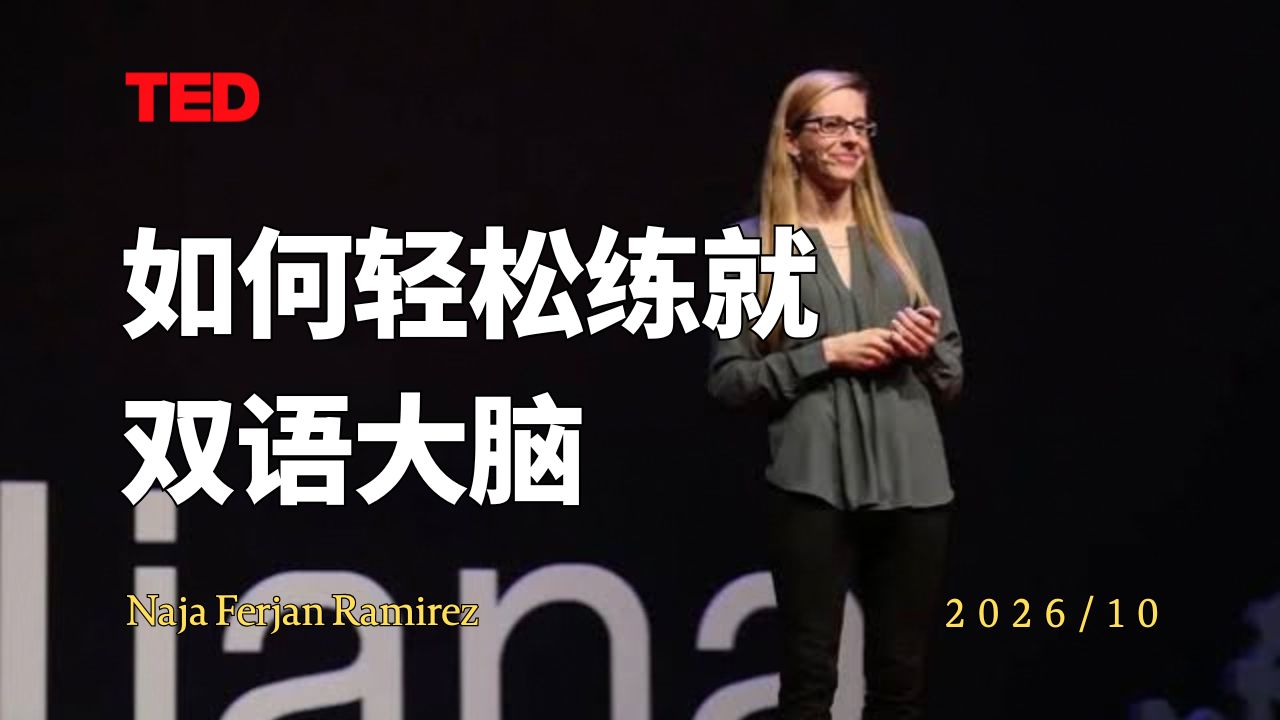
字幕摘录
| 时间 | 英文 | 中文 |
|---|---|---|
| 0:01 | How many of you can speak two languages? | 你们有多少人能说两种语言? |
| 0:06 | Most of you can we are in Europe after all now. | 你们中的大多数现在可以在欧洲了 |
| 0:10 | Let me ask you this | 我问你这个 |
| 0:12 | How many of you would say that you are completely fluent in two languages so that you could take a job or? | 你们中有多少人会说,你们完全流利地使用两种语言,以便你们能够工作或工作? |
| 0:20 | Dream in either one of them not as many | 在其中任何一个梦里,没有那么多 |
| 0:25 | Why is that? | 为什么? |
| 0:27 | I think we can all agree that being fluent in two languages is a good thing | 我想我们都同意 流利两种语言是件好事 |
| 0:33 | It creates additional job prospects. | 它创造了更多的工作前景。 |
| 0:35 | It allows us to talk to more people | 它让我们能和更多的人交谈 |
| 0:38 | It also has been linked to several cognitive and social advantages and it delays the onset of Alzheimer's disease | 也与认知和社会优势有关 也延缓了老年痴呆症的发病 |
展开字幕全文(204 条)
| 序号 | 英文 | 中文 |
|---|---|---|
| 1 | How many of you can speak two languages? | 你们有多少人能说两种语言? |
| 2 | Most of you can we are in Europe after all now. | 你们中的大多数现在可以在欧洲了 |
| 3 | Let me ask you this | 我问你这个 |
| 4 | How many of you would say that you are completely fluent in two languages so that you could take a job or? | 你们中有多少人会说,你们完全流利地使用两种语言,以便你们能够工作或工作? |
| 5 | Dream in either one of them not as many | 在其中任何一个梦里,没有那么多 |
| 6 | Why is that? | 为什么? |
| 7 | I think we can all agree that being fluent in two languages is a good thing | 我想我们都同意 流利两种语言是件好事 |
| 8 | It creates additional job prospects. | 它创造了更多的工作前景。 |
| 9 | It allows us to talk to more people | 它让我们能和更多的人交谈 |
| 10 | It also has been linked to several cognitive and social advantages and it delays the onset of Alzheimer's disease | 也与认知和社会优势有关 也延缓了老年痴呆症的发病 |
| 11 | So why are we not all fluent bilinguals? | 那么为什么我们不都是流利的双语? |
| 12 | Those of us who studied foreign languages in school probably remember how hard it was and how much we struggled | 在学校里学外语的人 可能记得我们有多辛苦和挣扎 |
| 13 | I'm certainly speaking from experience here | 我当然是从经验上讲的 |
| 14 | I started learning English when I was about 10 years old in school right here in Ljubljana and | 我10岁的时候开始学英语 就在卢布尔雅那 |
| 15 | About nine years later when I went to study in the United States. | 大约9年后,我去了美国留学。 |
| 16 | I thought my English was pretty good | 我以为我的英语很好听 |
| 17 | I was able to do my homework just fine | 我做了功课,很好 |
| 18 | but I also remember eating dinner with my college friends and | 但我也记得和我的大学朋友一起吃晚饭 |
| 19 | not being able to follow their conversations or | 无法跟踪他们的谈话或 |
| 20 | Going on my first date in America and only understanding about half of what the guy was telling me now | 我第一次去美国约会 只了解他现在告诉我的一半 |
| 21 | I'm sure many of you have your own stories about foreign language learning | 我相信你们很多人都有自己关于外语学习的故事 |
| 22 | But there's one thing that most of these stories have in common | 但有一件事 这些故事大多有共同点 |
| 23 | Foreign language learning is hard. | 外语学习难. |
| 24 | It takes a lot of time a lot of effort and it seems that | 这需要很多时间 努力,似乎 |
| 25 | No matter how hard we try | 不管我们怎么努力 |
| 26 | We rarely achieve native like fluency | 我们很少像流利一样实现本土化 |
| 27 | Even in those cases when we have been using our foreign language for years. | 即使在那些我们多年来一直使用外语的情况下。 |
| 28 | We still maintain that for an accent | 我们仍然保留这个口音 |
| 29 | Does it have to be this hard? | 一定要这么难吗? |
| 30 | I | 一、导 言 |
| 31 | Don't think it does | 别以为会 |
| 32 | What I'll tell you today is that the human brain is fully capable of achieving | 我今天要告诉你的是 人类大脑完全有能力实现 |
| 33 | Native fluency in two languages at the same time and that we don't necessarily have to struggle to get there | 同时使用两种语言的土著流利度,而且我们并不一定必须为此而奋斗。 |
| 34 | So what is it that we have to do to create bilingual minds? | 那么,我们要怎么做才能创造双语思想呢? |
| 35 | I | 一、导 言 |
| 36 | Very promising start is to study the brains of those who are really really good at language learning babies | 非常有希望的开始是研究那些真正擅长学习语言的孩子的大脑. |
| 37 | Babies are linguistic geniuses and all over the world babies learn their native languages naturally and spontaneously | 婴儿是语言天才 世界各地的婴儿自然和自发地学习母语 |
| 38 | Without anybody actually teaching them how to do this | 没有人真正教他们怎么做 |
| 39 | But this gets even better | 但这样会更好 |
| 40 | Those babies who have a chance to listen to and interact in two languages | 那些孩子有机会用两种语言倾听和交流 |
| 41 | Learn both and they can become native speakers of both | 既学会了,又能成为两种语言的母语 |
| 42 | You and I can't do that and computers can't do that either | 你和我不能这样 电脑也不能这样 |
| 43 | So why and how are babies so good at language learning? | 那么,为什么和如何 婴儿这么擅长语言学习? |
| 44 | I'm a researcher at the University of Washington's Institute for learning and brain sciences | 我是华盛顿大学学习和脑科学研究所的研究员 |
| 45 | I labs for short and I studied the brain processing of language in babies between zero and three years of age. | 我做短期实验,研究0至3岁婴儿语言的大脑处理. |
| 46 | I | 一、导 言 |
| 47 | Focused specifically on those babies who are learning two languages at the same time bilingual babies | 专门针对同时学习两种语言的婴儿; |
| 48 | The approach that we take to study the baby brain is called Magnetoencephalography | 我们研究婴儿脑的方法叫做磁性脑分析 |
| 49 | MeG for short we call it the hairdryer from Mars | 简而言之,我们称之为火星发廊 |
| 50 | But it's important to understand that this machine is actually completely safe | 但重要的是要明白 这台机器其实是完全安全的 |
| 51 | Non-invasive and completely silent. | 无侵及而全寂. |
| 52 | So pretty baby-friendly | 这么漂亮的婴儿友好 |
| 53 | We use Magnetoencephalography to study the baby brains and the MEG machine that we have at our Institute is actually one of the few | 我们用磁铁脑分析来研究婴儿脑和我们研究所拥有的MEG机器 实际上是少数 |
| 54 | In the world that's configured specifically for babies | 在为婴儿特别配置的世界里 |
| 55 | We also have a team of trained research assistants whose job is to keep the babies happy and entertained when we study their brains | 我们还有一组训练有素的研究助理 他们的工作是让孩子快乐和娱乐 当我们研究他们的大脑 |
| 56 | One question that we recently studied with MEG was what goes on in the brains of those babies? | 最近我们和MEG一起研究的一个问题是 这些婴儿的大脑里发生了什么? |
| 57 | Who grow up in households where two languages are spoken at the same time by native speakers? | 谁在同时讲两种语言的家庭中长大? |
| 58 | If we look at these babies brains before the babies even begin to talk | 如果我们在婴儿开始说话前看看这些婴儿的大脑 |
| 59 | Are they different from those of babies who listen to a single language? | 他们与听一种语言的婴儿不同吗? |
| 60 | Here's how we tested these these questions | 这就是我们测试这些问题的方法 |
| 61 | We brought the babies into the lab half of them were from bilingual families were one parent was a native speaker of Spanish and | 我们把婴儿带进实验室 一半来自双语家庭 父母是讲西班牙语的本地人 |
| 62 | The other one was a native speaker of English | 另一个是英语母语 |
| 63 | The other half of the babies were from families where both parents were native English speakers | 另一半的婴儿来自父母都讲英语的家庭。 |
| 64 | So English was the only language spoken in the household then to prepare the babies for MEG | 所以,英语是家里唯一会说的语言 然后让孩子为MEG做准备 |
| 65 | We use the special digitizing pen and a hat and what this procedure allows us to do is to | 我们使用特殊的数字化笔和帽子 这个程序让我们能够做的是 |
| 66 | Track the shape of the baby's head so that we can then continuously monitor the baby's motions | 跟踪婴儿头部的形状 这样我们就能持续监控婴儿的运动 |
| 67 | When the head is in the MEG helmet, we then brought the babies into the MEG room where they sat on a special high chair | 当头戴在MEG头盔时,我们把婴儿带到MEG房间,坐在特别的高椅子上 |
| 68 | The head goes right into the MEG helmet and the parents sit right next to them when we look at their brains | 头直接进入MEG头盔,当我们看着他们的大脑时,父母坐在他们旁边. |
| 69 | During the MEG studies the babies typically listen to the sounds of language in this case | 在MEG学习期间,婴儿们通常会听语言的声音 |
| 70 | The sounds came from Spanish and English | 声音来自西班牙语和英语 |
| 71 | So let's take a listen to see what that sounded like | 我们来听听这听起来怎么样 |
| 72 | Some of these sounds are specific to English some are specific to Spanish and some are common to both languages | 有些是英语专用的,有些是西班牙语专用的,有些是两种语言通用的 |
| 73 | All babies in these studies were exactly 11 months old | 这些研究中的所有婴儿都是11个月大 |
| 74 | This is typically right around the time when babies begin to produce their first words, but they're not really speaking yet | 这通常在婴儿开始生产第一句话的时候, 但他们还没有真正说话 |
| 75 | So what did we find? | 我们发现了什么? |
| 76 | What we found was that the brains of monolingual babies were specialized to process the sounds of English | 我们发现 独语婴儿的大脑 专门处理英语的声音 |
| 77 | Their native language and were not specialized to process the sounds of Spanish the language to which these babies were not exposed | 他们的母语,没有专门处理这些婴儿没有接触的西班牙语语言的声音 |
| 78 | What about the brains of bilingual babies? | 那双语婴儿的大脑呢? |
| 79 | Well as it turns out the brains of bilingual babies were specialized to process the sounds of both languages | 双语婴儿的大脑 专门处理两种语言的声音 |
| 80 | Spanish and English | 西班牙语和英语 |
| 81 | So what does this mean? | 这是什么意思? |
| 82 | And why am I so excited about this? | 为什么我这么兴奋? |
| 83 | What this means is that the baby brain specializes to process whatever language or | 这意味着婴儿大脑 专门处理任何语言或 |
| 84 | Languages are present in the environment the brains of those babies who listen to one language specialized to process one language | 环境中有听一种语言的婴儿的大脑 |
| 85 | But the brains of those babies who listen to two languages specialized to process two | 但是那些听两种语言的婴儿的大脑... ... |
| 86 | There's one more finding in this study that I'd like to tell you about | 研究中还有一个发现 我想告诉你 |
| 87 | There's a part of the brain called the prefrontal cortex | 大脑有一部分叫做前额皮层 |
| 88 | It's highlighted in green in this schematic that you can see but it's right here in the very front of your brain | 这张图中以绿色突出,你可以看到,但它就在大脑的前面 |
| 89 | And we use this part of the brain to direct our attention | 我们利用大脑的这一部分来引导我们的注意力 |
| 90 | To switch back and forth between doing different tasks and to think flexibly | 在完成不同任务和灵活思考之间互换 |
| 91 | Think we can all agree that these are extremely important tasks to do in the 21st century | 我们都能同意,这些是21世纪最重要的任务 |
| 92 | We were curious to see how the two groups of babies compared in terms of their brain activity in these prefrontal areas | 我们很想知道这两组婴儿 在脑部活动方面 是如何比较的 |
| 93 | Interestingly what we found was that the bilingual babies had stronger brain activity stronger brain responses to language sounds | 有趣的是,我们发现双语婴儿的大脑活动更强 大脑对语言声音的反应更强 |
| 94 | specifically in these prefrontal regions | 特别是在这些前沿地区 |
| 95 | Now why would that be? | 为什么? |
| 96 | One explanation is that the constant switching back and forth between two different languages | 一种解释是 两种不同语言之间不断的互换 |
| 97 | provides exercise for the brain that | 为大脑提供运动 |
| 98 | It strengthens these brain networks that participate in attention switching and that this provides a cognitive boost to the bilinguals | 它加强了这些参与注意力转换的大脑网络,这为双语提供了认知动力。 |
| 99 | Many other studies have actually shown that bilingual children, but also | 许多其他研究实际表明,双语儿童,但是, |
| 100 | Bilingual adults have advantages when it comes to tasks that require cognitive flexibility | 在涉及需要认知灵活性的任务时,双语成年人有优势 |
| 101 | But what's particularly intriguing here is that we see brain differences | 但最有趣的是我们看到大脑的差异 |
| 102 | specifically in these areas that are related to flexible thinking at 11 months of age before these babies are even speaking so | 特别是在那些与11个月大时的灵活思维有关的领域,这些婴儿甚至还没有说到这一点。 |
| 103 | Our studies have shown that the baby brain is fully capable of specializing in two languages at the same time and there | 我们的研究表明,婴儿大脑完全有能力 专门使用两种语言 同时,在那里 |
| 104 | Possibly some additional advantages that come along with this for free | 可能会有一些额外的优势 伴随着这个免费 |
| 105 | So given these findings you may be wondering | 所以鉴于这些发现 你可能会想知道 |
| 106 | Why are we not raising all babies to be bilingual there has to be a disadvantage here that I'm not telling you about | 为什么我们不把所有的婴儿都养成双语... ... ...... |
| 107 | some people think so | 有人这么认为 |
| 108 | one | 一个 |
| 109 | Common concern is that bilingualism slows language learning down that it makes it slower | 共同的担心是,双语学会减缓语言学习的速度,从而减缓语言学习的速度。 |
| 110 | Research doesn't actually support this | 研究并不支持这个 |
| 111 | Instead what studies have shown is that if we consider the patterns in bilingual learning | 相反,研究表明,如果我们考虑到双语学习的模式, |
| 112 | They're actually very very similar to what we see in monolingual learning for example | 他们其实和我们在单语学习中看到的非常相似 |
| 113 | Bilingual babies start producing their first sounds as well as their first words at the same age as monolingual babies | 双语婴儿在与单一语言婴儿相同的年龄开始产生第一声音和第一话 |
| 114 | We also know that if we give bilingual children credit for each word that they know | 我们还知道,如果我们给 双语儿童信用 他们知道每个字 |
| 115 | Across their two languages their vocabularies are of the same size if not bigger than those of monolingual babies | 在两种语言中,其词汇如果不比单一语言的婴儿大,大小相同。 |
| 116 | Another common concern is that? | 另外一个共同的关切是? |
| 117 | bilingualism causes confusion this concern | 双语主义造成混乱 |
| 118 | Arises from the fact that bilinguals sometimes combine their two languages in the same sentence or in the same situation | 双语有时在同一句子或同一情况下结合两种语言。 |
| 119 | This is called code switching or code mixing so does code switching or code mixing indicate confusion | 这叫做代码切换或代码混合 代码切换或代码混合表示混乱 |
| 120 | Science suggests that it does not | 科学说明它没有 |
| 121 | Most bilinguals code switch and my family is not an exception in my family. | 大部分双语密码开关 我家也不例外 |
| 122 | We actually speak three languages and | 我们实际上说三种语言, |
| 123 | Sometimes we hear sentences from our children that combine all three | 有时我们听到我们的孩子的句子 结合了所有三个 |
| 124 | Slovene Spanish and English | 斯洛文尼亚语西班牙语和英语 |
| 125 | Does this mean that our children are confused? | 这是否意味着我们的孩子感到困惑? |
| 126 | I don't think it does so let me give you an example to demonstrate | 我想不会的 让我举个例子来证明 |
| 127 | Why this is the case? | 为什么会这样? |
| 128 | my four-year-old will sometimes say sentences like | 我四岁的孩子有时会说: |
| 129 | Mom is daddy | 妈妈是爸爸 |
| 130 | Potutum this means mommy's daddy in the shower now. | 波图姆,这意味着妈妈的爸爸在洗澡了。 |
| 131 | Why does he say sentences like this? | 他为什么说这样的句子? |
| 132 | There are a few reasons the first one is that he can | 有几个原因 第一个是他可以 |
| 133 | bilinguals | 双语 |
| 134 | unlike monolinguals have another language from which they can easily borrow words and they sometimes do this because | 与单语族不同的是,他们有另一种语言,可以轻易借用词,有时他们这样做是因为 |
| 135 | They know words from one language sometimes better than they do in the other so for example | 他们知道一种语言的词 有时比另一种语言的词要好 比如说 |
| 136 | My son probably knows the word shower better in Slovene than he does in English | 我儿子可能比英文更懂斯洛文尼亚语的淋浴词 |
| 137 | So he uses it because it's easier the second reason he uses sentences like this is that he knows | 所以他用它,因为它更容易 第二个原因 他使用这样的句子 因为他知道 |
| 138 | I will understand him | 我会理解他的 |
| 139 | He rarely uses Slovene words in his preschool because he knows that his teachers and his friends will have no idea what he's talking about | 他很少在学前班上使用斯洛文尼亚语,因为他知道老师和朋友会不知道自己在说什么 |
| 140 | bilingual children typically know very very well when they can and can't mix their languages and studies have shown that even two-year-olds | 双语儿童通常非常清楚,当他们能够和不能混合他们的语言,而且研究表明,即使是两岁的孩子, |
| 141 | Will adapt their language to match that of their conversational partner. | 将调整他们的语言 与他们的谈话伙伴。 |
| 142 | There's one final point about code mixing that I'd like to make | 最后一点 关于密码混合 我想说 |
| 143 | Even though it's called mixing. | 虽名为杂. |
| 144 | It's not just randomly mixing together words from different languages | 这不仅仅是随机混合 来自不同语言的词 |
| 145 | It follows grammatical rules. | 它遵循语法规则. |
| 146 | I | 一、导 言 |
| 147 | rarely hear sentences such as | 很少听到诸如 |
| 148 | Mom is daddy put tush | 妈妈是爸爸把Tush |
| 149 | Now those of us who are fluent speakers of Slovene and English will know that I can say daddy goes put tush | 现在那些能流利地说斯洛文尼亚语和英语的人会知道 我可以说爸爸去吐 |
| 150 | But daddy is put tush doesn't work. | 但是爸爸被灌醉了 没用的 |
| 151 | It has to be put to shum. | 须以hum敷之. |
| 152 | This is because the verb be | 这是因为动词是 |
| 153 | Indicates a state and in Slovene it requires a different case than the verb go which indicates motion | 表示状态,在斯洛文尼亚语中,它需要不同的情况,而不是动词去表示运动 |
| 154 | This is complicated, right | 这很复杂,对吧? |
| 155 | The point is this code mixing is not easy | 关键是密码的混合不容易 |
| 156 | It requires a lot of linguistic knowledge in both languages as well as then being able to | 这需要两种语言的大量语言知识,然后能够 |
| 157 | Figure out how to combine this knowledge in a meaningful way | 找出如何以有意义的方式综合这种知识 |
| 158 | So rather than indicating confusion code mixing is actually a sign of linguistic sophistication | 而不是表示混淆代码的混合 其实是一个语言精密的迹象 |
| 159 | it's also perfectly normal and | 也是完全正常的,还有... |
| 160 | Expected behavior that we see in bilingual children, but also in bilingual adults who are fully fluent in both languages | 我们所看到的双语儿童以及完全流利的双语成年人的行为 |
| 161 | So bilingualism does not cause confusion. | 所以双语主义不会引起混淆. |
| 162 | It also does not slow language learning down. | 语言学习也不会放慢速度。 |
| 163 | In fact | 其实 |
| 164 | Science suggests that there are many advantages and the demand on bilingual education is actually increasing in the United States as well as | 科学显示,美国有许多优势,对双语教育的需求实际上也在增加, |
| 165 | worldwide | 全世界 |
| 166 | People are also beginning to realize that | 人们也开始意识到 |
| 167 | Starting from an early from an early age may be the best solution because we know that at birth | 从小开始,也许是最好的解决办法,因为我们知道,出生时 |
| 168 | The human brain is just as capable of learning two languages as it is to learn one | 人类的大脑能够学习两种语言 就像学习一种语言一样 |
| 169 | So what should we do? | 那怎么办? |
| 170 | How can we provide all babies with an opportunity to learn two languages from a very young age in? | 我们如何能够为所有婴儿提供从很小的时候开始学习两种语言的机会? |
| 171 | families like mine | 像我这样的家庭 |
| 172 | The answer is straightforward because parents are native speakers of languages that are different from what the child hears outside of the home | 答案是直截了当的,因为父母是讲不同于儿童在家庭以外听到的当地语言的人。 |
| 173 | But what about everybody else as a child language? | 但其他人作为儿童语言呢? |
| 174 | Development specialist I often hear from parents who are eager to provide their baby | 我经常听到那些渴望抚养孩子的家长说 |
| 175 | With an opportunity to learn another language | 有机会学习另一种语言 |
| 176 | But they're not native speakers of that language and they can't afford to hire a nanny who's a native speaker of that language | 但他们不是讲这种语言的土生土长的人 也不能雇一个说那种语言的土生土长的保姆 |
| 177 | Some parents think that their baby may be able to learn a foreign language by watching television | 有些家长认为,他们的宝宝也许可以通过看电视学习外语 |
| 178 | Unfortunately, this is not the case | 可惜没有 |
| 179 | Older children may be able to learn some foreign language words from electronic media | 年长儿童可能能够从电子媒体学习一些外语词汇 |
| 180 | But babies learn languages through play | 但婴儿通过游戏学习语言 |
| 181 | Through frequent social interactions with live human beings who are fully competent and comfortable users of that target language | 通过经常与完全有能力和舒适地使用该目标语言的活人进行社会互动 |
| 182 | So really the question comes down to this | 问题就在于此 |
| 183 | Can we create environments within public education? | 我们能否在公共教育中创造环境? |
| 184 | Through which all babies will be able to learn foreign languages from a very early age | 所有婴儿从小就能够学习外语 |
| 185 | If we start very very early | 如果我们很早就开始 |
| 186 | How much and what kind of language exposure is needed to create a truly bilingual mind? | 创造真正双语思想需要多少和何种语言接触? |
| 187 | From research we know that babies can learn foreign languages surprisingly quickly | 我们从研究中知道 婴儿能很快学外国语言 |
| 188 | But at the same time we also know that the type of language they hear is | 但与此同时我们也知道 他们听到的语言类型是 |
| 189 | Critical in determining how much they will learn and how quickly they will learn | 关键在于确定他们将学习多少,学习多快 |
| 190 | So can we make this work? | 我们能成功吗? |
| 191 | We think that we can | 我们认为我们可以 |
| 192 | From research we know that there are six principles | 根据研究,我们知道有六项原则 |
| 193 | six ingredients if you will that grow children's language | 6种成分,如果你想 生长儿童语言 |
| 194 | We think that if we take the right science-based approach that combines these six ingredients | 我们认为,如果我们采取正确的基于科学的方法,结合这六种成分 |
| 195 | We can create educational programs through which all babies will be able to learn foreign languages | 我们可以制定教育方案,使所有婴儿都能学习外语。 |
| 196 | Through play in the context of public early education centers | 通过在公共早期教育中心范围内的游戏 |
| 197 | We recently started to test this idea in one of the European capitals where the government is very | 我们最近开始测试这个想法 在欧洲首都之一 在那里,政府非常 |
| 198 | Excited to promote foreign language learning for all babies from birth | 积极推动所有婴儿从出生起就学习外语; |
| 199 | The results of these studies are extremely exciting and extremely promising. | 这些研究的结果极其令人振奋,也极有希望. |
| 200 | So stay tuned | 所以请继续听 |
| 201 | We think that this approach has the potential to change the game for bilingual education | 我们认为这种方法有可能改变双语教育的游戏 |
| 202 | We're hoping to scale it up | 我们希望扩大规模 |
| 203 | So that it will one day allow all babies to reach their full potential and to start learning two languages from a very young age | 这样,总有一天,所有婴儿都能充分发挥潜力,从小开始学习两种语言。 |
| 204 | Thank you | 谢谢 |
该视频共有字幕 204 条。解锁更多字幕为会员功能,请移动到 价格
P2 · 塑造双语思维【TED演讲】 p02 英文字幕(中文外挂) (P2)
字幕摘录
| 时间 | 英文 | 中文 |
|---|---|---|
| 0:01 | How many of you can speak two languages? | 你们有多少人能说两种语言? |
| 0:06 | Most of you can we are in Europe after all now. | 你们中的大多数现在可以在欧洲了 |
| 0:10 | Let me ask you this | 我问你这个 |
| 0:12 | How many of you would say that you are completely fluent in two languages so that you could take a job or? | 你们中有多少人会说,你们完全流利地使用两种语言,以便你们能够工作或工作? |
| 0:20 | Dream in either one of them not as many | 在其中任何一个梦里,没有那么多 |
| 0:25 | Why is that? | 为什么? |
| 0:27 | I think we can all agree that being fluent in two languages is a good thing | 我想我们都同意 流利两种语言是件好事 |
| 0:33 | It creates additional job prospects. | 它创造了更多的工作前景。 |
| 0:35 | It allows us to talk to more people | 它让我们能和更多的人交谈 |
| 0:38 | It also has been linked to several cognitive and social advantages and it delays the onset of Alzheimer's disease | 也与认知和社会优势有关 也延缓了老年痴呆症的发病 |
展开字幕全文(204 条)
| 序号 | 英文 | 中文 |
|---|---|---|
| 1 | How many of you can speak two languages? | 你们有多少人能说两种语言? |
| 2 | Most of you can we are in Europe after all now. | 你们中的大多数现在可以在欧洲了 |
| 3 | Let me ask you this | 我问你这个 |
| 4 | How many of you would say that you are completely fluent in two languages so that you could take a job or? | 你们中有多少人会说,你们完全流利地使用两种语言,以便你们能够工作或工作? |
| 5 | Dream in either one of them not as many | 在其中任何一个梦里,没有那么多 |
| 6 | Why is that? | 为什么? |
| 7 | I think we can all agree that being fluent in two languages is a good thing | 我想我们都同意 流利两种语言是件好事 |
| 8 | It creates additional job prospects. | 它创造了更多的工作前景。 |
| 9 | It allows us to talk to more people | 它让我们能和更多的人交谈 |
| 10 | It also has been linked to several cognitive and social advantages and it delays the onset of Alzheimer's disease | 也与认知和社会优势有关 也延缓了老年痴呆症的发病 |
| 11 | So why are we not all fluent bilinguals? | 那么为什么我们不都是流利的双语? |
| 12 | Those of us who studied foreign languages in school probably remember how hard it was and how much we struggled | 在学校里学外语的人 可能记得我们有多辛苦和挣扎 |
| 13 | I'm certainly speaking from experience here | 我当然是从经验上讲的 |
| 14 | I started learning English when I was about 10 years old in school right here in Ljubljana and | 我10岁的时候开始学英语 就在卢布尔雅那 |
| 15 | About nine years later when I went to study in the United States. | 大约9年后,我去了美国留学。 |
| 16 | I thought my English was pretty good | 我以为我的英语很好听 |
| 17 | I was able to do my homework just fine | 我做了功课,很好 |
| 18 | but I also remember eating dinner with my college friends and | 但我也记得和我的大学朋友一起吃晚饭 |
| 19 | not being able to follow their conversations or | 无法跟踪他们的谈话或 |
| 20 | Going on my first date in America and only understanding about half of what the guy was telling me now | 我第一次去美国约会 只了解他现在告诉我的一半 |
| 21 | I'm sure many of you have your own stories about foreign language learning | 我相信你们很多人都有自己关于外语学习的故事 |
| 22 | But there's one thing that most of these stories have in common | 但有一件事 这些故事大多有共同点 |
| 23 | Foreign language learning is hard. | 外语学习难. |
| 24 | It takes a lot of time a lot of effort and it seems that | 这需要很多时间 努力,似乎 |
| 25 | No matter how hard we try | 不管我们怎么努力 |
| 26 | We rarely achieve native like fluency | 我们很少像流利一样实现本土化 |
| 27 | Even in those cases when we have been using our foreign language for years. | 即使在那些我们多年来一直使用外语的情况下。 |
| 28 | We still maintain that for an accent | 我们仍然保留这个口音 |
| 29 | Does it have to be this hard? | 一定要这么难吗? |
| 30 | I | 一、导 言 |
| 31 | Don't think it does | 别以为会 |
| 32 | What I'll tell you today is that the human brain is fully capable of achieving | 我今天要告诉你的是 人类大脑完全有能力实现 |
| 33 | Native fluency in two languages at the same time and that we don't necessarily have to struggle to get there | 同时使用两种语言的土著流利度,而且我们并不一定必须为此而奋斗。 |
| 34 | So what is it that we have to do to create bilingual minds? | 那么,我们要怎么做才能创造双语思想呢? |
| 35 | I | 一、导 言 |
| 36 | Very promising start is to study the brains of those who are really really good at language learning babies | 非常有希望的开始是研究那些真正擅长学习语言的孩子的大脑. |
| 37 | Babies are linguistic geniuses and all over the world babies learn their native languages naturally and spontaneously | 婴儿是语言天才 世界各地的婴儿自然和自发地学习母语 |
| 38 | Without anybody actually teaching them how to do this | 没有人真正教他们怎么做 |
| 39 | But this gets even better | 但这样会更好 |
| 40 | Those babies who have a chance to listen to and interact in two languages | 那些孩子有机会用两种语言倾听和交流 |
| 41 | Learn both and they can become native speakers of both | 既学会了,又能成为两种语言的母语 |
| 42 | You and I can't do that and computers can't do that either | 你和我不能这样 电脑也不能这样 |
| 43 | So why and how are babies so good at language learning? | 那么,为什么和如何 婴儿这么擅长语言学习? |
| 44 | I'm a researcher at the University of Washington's Institute for learning and brain sciences | 我是华盛顿大学学习和脑科学研究所的研究员 |
| 45 | I labs for short and I studied the brain processing of language in babies between zero and three years of age. | 我做短期实验,研究0至3岁婴儿语言的大脑处理. |
| 46 | I | 一、导 言 |
| 47 | Focused specifically on those babies who are learning two languages at the same time bilingual babies | 专门针对同时学习两种语言的婴儿; |
| 48 | The approach that we take to study the baby brain is called Magnetoencephalography | 我们研究婴儿脑的方法叫做磁性脑分析 |
| 49 | MeG for short we call it the hairdryer from Mars | 简而言之,我们称之为火星发廊 |
| 50 | But it's important to understand that this machine is actually completely safe | 但重要的是要明白 这台机器其实是完全安全的 |
| 51 | Non-invasive and completely silent. | 无侵及而全寂. |
| 52 | So pretty baby-friendly | 这么漂亮的婴儿友好 |
| 53 | We use Magnetoencephalography to study the baby brains and the MEG machine that we have at our Institute is actually one of the few | 我们用磁铁脑分析来研究婴儿脑和我们研究所拥有的MEG机器 实际上是少数 |
| 54 | In the world that's configured specifically for babies | 在为婴儿特别配置的世界里 |
| 55 | We also have a team of trained research assistants whose job is to keep the babies happy and entertained when we study their brains | 我们还有一组训练有素的研究助理 他们的工作是让孩子快乐和娱乐 当我们研究他们的大脑 |
| 56 | One question that we recently studied with MEG was what goes on in the brains of those babies? | 最近我们和MEG一起研究的一个问题是 这些婴儿的大脑里发生了什么? |
| 57 | Who grow up in households where two languages are spoken at the same time by native speakers? | 谁在同时讲两种语言的家庭中长大? |
| 58 | If we look at these babies brains before the babies even begin to talk | 如果我们在婴儿开始说话前看看这些婴儿的大脑 |
| 59 | Are they different from those of babies who listen to a single language? | 他们与听一种语言的婴儿不同吗? |
| 60 | Here's how we tested these these questions | 这就是我们测试这些问题的方法 |
| 61 | We brought the babies into the lab half of them were from bilingual families were one parent was a native speaker of Spanish and | 我们把婴儿带进实验室 一半来自双语家庭 父母是讲西班牙语的本地人 |
| 62 | The other one was a native speaker of English | 另一个是英语母语 |
| 63 | The other half of the babies were from families where both parents were native English speakers | 另一半的婴儿来自父母都讲英语的家庭。 |
| 64 | So English was the only language spoken in the household then to prepare the babies for MEG | 所以,英语是家里唯一会说的语言 然后让孩子为MEG做准备 |
| 65 | We use the special digitizing pen and a hat and what this procedure allows us to do is to | 我们使用特殊的数字化笔和帽子 这个程序让我们能够做的是 |
| 66 | Track the shape of the baby's head so that we can then continuously monitor the baby's motions | 跟踪婴儿头部的形状 这样我们就能持续监控婴儿的运动 |
| 67 | When the head is in the MEG helmet, we then brought the babies into the MEG room where they sat on a special high chair | 当头戴在MEG头盔时,我们把婴儿带到MEG房间,坐在特别的高椅子上 |
| 68 | The head goes right into the MEG helmet and the parents sit right next to them when we look at their brains | 头直接进入MEG头盔,当我们看着他们的大脑时,父母坐在他们旁边. |
| 69 | During the MEG studies the babies typically listen to the sounds of language in this case | 在MEG学习期间,婴儿们通常会听语言的声音 |
| 70 | The sounds came from Spanish and English | 声音来自西班牙语和英语 |
| 71 | So let's take a listen to see what that sounded like | 我们来听听这听起来怎么样 |
| 72 | Some of these sounds are specific to English some are specific to Spanish and some are common to both languages | 有些是英语专用的,有些是西班牙语专用的,有些是两种语言通用的 |
| 73 | All babies in these studies were exactly 11 months old | 这些研究中的所有婴儿都是11个月大 |
| 74 | This is typically right around the time when babies begin to produce their first words, but they're not really speaking yet | 这通常在婴儿开始生产第一句话的时候, 但他们还没有真正说话 |
| 75 | So what did we find? | 我们发现了什么? |
| 76 | What we found was that the brains of monolingual babies were specialized to process the sounds of English | 我们发现 独语婴儿的大脑 专门处理英语的声音 |
| 77 | Their native language and were not specialized to process the sounds of Spanish the language to which these babies were not exposed | 他们的母语,没有专门处理这些婴儿没有接触的西班牙语语言的声音 |
| 78 | What about the brains of bilingual babies? | 那双语婴儿的大脑呢? |
| 79 | Well as it turns out the brains of bilingual babies were specialized to process the sounds of both languages | 双语婴儿的大脑 专门处理两种语言的声音 |
| 80 | Spanish and English | 西班牙语和英语 |
| 81 | So what does this mean? | 这是什么意思? |
| 82 | And why am I so excited about this? | 为什么我这么兴奋? |
| 83 | What this means is that the baby brain specializes to process whatever language or | 这意味着婴儿大脑 专门处理任何语言或 |
| 84 | Languages are present in the environment the brains of those babies who listen to one language specialized to process one language | 环境中有听一种语言的婴儿的大脑 |
| 85 | But the brains of those babies who listen to two languages specialized to process two | 但是那些听两种语言的婴儿的大脑... ... |
| 86 | There's one more finding in this study that I'd like to tell you about | 研究中还有一个发现 我想告诉你 |
| 87 | There's a part of the brain called the prefrontal cortex | 大脑有一部分叫做前额皮层 |
| 88 | It's highlighted in green in this schematic that you can see but it's right here in the very front of your brain | 这张图中以绿色突出,你可以看到,但它就在大脑的前面 |
| 89 | And we use this part of the brain to direct our attention | 我们利用大脑的这一部分来引导我们的注意力 |
| 90 | To switch back and forth between doing different tasks and to think flexibly | 在完成不同任务和灵活思考之间互换 |
| 91 | Think we can all agree that these are extremely important tasks to do in the 21st century | 我们都能同意,这些是21世纪最重要的任务 |
| 92 | We were curious to see how the two groups of babies compared in terms of their brain activity in these prefrontal areas | 我们很想知道这两组婴儿 在脑部活动方面 是如何比较的 |
| 93 | Interestingly what we found was that the bilingual babies had stronger brain activity stronger brain responses to language sounds | 有趣的是,我们发现双语婴儿的大脑活动更强 大脑对语言声音的反应更强 |
| 94 | specifically in these prefrontal regions | 特别是在这些前沿地区 |
| 95 | Now why would that be? | 为什么? |
| 96 | One explanation is that the constant switching back and forth between two different languages | 一种解释是 两种不同语言之间不断的互换 |
| 97 | provides exercise for the brain that | 为大脑提供运动 |
| 98 | It strengthens these brain networks that participate in attention switching and that this provides a cognitive boost to the bilinguals | 它加强了这些参与注意力转换的大脑网络,这为双语提供了认知动力。 |
| 99 | Many other studies have actually shown that bilingual children, but also | 许多其他研究实际表明,双语儿童,但是, |
| 100 | Bilingual adults have advantages when it comes to tasks that require cognitive flexibility | 在涉及需要认知灵活性的任务时,双语成年人有优势 |
| 101 | But what's particularly intriguing here is that we see brain differences | 但最有趣的是我们看到大脑的差异 |
| 102 | specifically in these areas that are related to flexible thinking at 11 months of age before these babies are even speaking so | 特别是在那些与11个月大时的灵活思维有关的领域,这些婴儿甚至还没有说到这一点。 |
| 103 | Our studies have shown that the baby brain is fully capable of specializing in two languages at the same time and there | 我们的研究表明,婴儿大脑完全有能力 专门使用两种语言 同时,在那里 |
| 104 | Possibly some additional advantages that come along with this for free | 可能会有一些额外的优势 伴随着这个免费 |
| 105 | So given these findings you may be wondering | 所以鉴于这些发现 你可能会想知道 |
| 106 | Why are we not raising all babies to be bilingual there has to be a disadvantage here that I'm not telling you about | 为什么我们不把所有的婴儿都养成双语... ... ...... |
| 107 | some people think so | 有人这么认为 |
| 108 | one | 一个 |
| 109 | Common concern is that bilingualism slows language learning down that it makes it slower | 共同的担心是,双语学会减缓语言学习的速度,从而减缓语言学习的速度。 |
| 110 | Research doesn't actually support this | 研究并不支持这个 |
| 111 | Instead what studies have shown is that if we consider the patterns in bilingual learning | 相反,研究表明,如果我们考虑到双语学习的模式, |
| 112 | They're actually very very similar to what we see in monolingual learning for example | 他们其实和我们在单语学习中看到的非常相似 |
| 113 | Bilingual babies start producing their first sounds as well as their first words at the same age as monolingual babies | 双语婴儿在与单一语言婴儿相同的年龄开始产生第一声音和第一话 |
| 114 | We also know that if we give bilingual children credit for each word that they know | 我们还知道,如果我们给 双语儿童信用 他们知道每个字 |
| 115 | Across their two languages their vocabularies are of the same size if not bigger than those of monolingual babies | 在两种语言中,其词汇如果不比单一语言的婴儿大,大小相同。 |
| 116 | Another common concern is that? | 另外一个共同的关切是? |
| 117 | bilingualism causes confusion this concern | 双语主义造成混乱 |
| 118 | Arises from the fact that bilinguals sometimes combine their two languages in the same sentence or in the same situation | 双语有时在同一句子或同一情况下结合两种语言。 |
| 119 | This is called code switching or code mixing so does code switching or code mixing indicate confusion | 这叫做代码切换或代码混合 代码切换或代码混合表示混乱 |
| 120 | Science suggests that it does not | 科学说明它没有 |
| 121 | Most bilinguals code switch and my family is not an exception in my family. | 大部分双语密码开关 我家也不例外 |
| 122 | We actually speak three languages and | 我们实际上说三种语言, |
| 123 | Sometimes we hear sentences from our children that combine all three | 有时我们听到我们的孩子的句子 结合了所有三个 |
| 124 | Slovene Spanish and English | 斯洛文尼亚语西班牙语和英语 |
| 125 | Does this mean that our children are confused? | 这是否意味着我们的孩子感到困惑? |
| 126 | I don't think it does so let me give you an example to demonstrate | 我想不会的 让我举个例子来证明 |
| 127 | Why this is the case? | 为什么会这样? |
| 128 | my four-year-old will sometimes say sentences like | 我四岁的孩子有时会说: |
| 129 | Mom is daddy | 妈妈是爸爸 |
| 130 | Potutum this means mommy's daddy in the shower now. | 波图姆,这意味着妈妈的爸爸在洗澡了。 |
| 131 | Why does he say sentences like this? | 他为什么说这样的句子? |
| 132 | There are a few reasons the first one is that he can | 有几个原因 第一个是他可以 |
| 133 | bilinguals | 双语 |
| 134 | unlike monolinguals have another language from which they can easily borrow words and they sometimes do this because | 与单语族不同的是,他们有另一种语言,可以轻易借用词,有时他们这样做是因为 |
| 135 | They know words from one language sometimes better than they do in the other so for example | 他们知道一种语言的词 有时比另一种语言的词要好 比如说 |
| 136 | My son probably knows the word shower better in Slovene than he does in English | 我儿子可能比英文更懂斯洛文尼亚语的淋浴词 |
| 137 | So he uses it because it's easier the second reason he uses sentences like this is that he knows | 所以他用它,因为它更容易 第二个原因 他使用这样的句子 因为他知道 |
| 138 | I will understand him | 我会理解他的 |
| 139 | He rarely uses Slovene words in his preschool because he knows that his teachers and his friends will have no idea what he's talking about | 他很少在学前班上使用斯洛文尼亚语,因为他知道老师和朋友会不知道自己在说什么 |
| 140 | bilingual children typically know very very well when they can and can't mix their languages and studies have shown that even two-year-olds | 双语儿童通常非常清楚,当他们能够和不能混合他们的语言,而且研究表明,即使是两岁的孩子, |
| 141 | Will adapt their language to match that of their conversational partner. | 将调整他们的语言 与他们的谈话伙伴。 |
| 142 | There's one final point about code mixing that I'd like to make | 最后一点 关于密码混合 我想说 |
| 143 | Even though it's called mixing. | 虽名为杂. |
| 144 | It's not just randomly mixing together words from different languages | 这不仅仅是随机混合 来自不同语言的词 |
| 145 | It follows grammatical rules. | 它遵循语法规则. |
| 146 | I | 一、导 言 |
| 147 | rarely hear sentences such as | 很少听到诸如 |
| 148 | Mom is daddy put tush | 妈妈是爸爸把Tush |
| 149 | Now those of us who are fluent speakers of Slovene and English will know that I can say daddy goes put tush | 现在那些能流利地说斯洛文尼亚语和英语的人会知道 我可以说爸爸去吐 |
| 150 | But daddy is put tush doesn't work. | 但是爸爸被灌醉了 没用的 |
| 151 | It has to be put to shum. | 须以hum敷之. |
| 152 | This is because the verb be | 这是因为动词是 |
| 153 | Indicates a state and in Slovene it requires a different case than the verb go which indicates motion | 表示状态,在斯洛文尼亚语中,它需要不同的情况,而不是动词去表示运动 |
| 154 | This is complicated, right | 这很复杂,对吧? |
| 155 | The point is this code mixing is not easy | 关键是密码的混合不容易 |
| 156 | It requires a lot of linguistic knowledge in both languages as well as then being able to | 这需要两种语言的大量语言知识,然后能够 |
| 157 | Figure out how to combine this knowledge in a meaningful way | 找出如何以有意义的方式综合这种知识 |
| 158 | So rather than indicating confusion code mixing is actually a sign of linguistic sophistication | 而不是表示混淆代码的混合 其实是一个语言精密的迹象 |
| 159 | it's also perfectly normal and | 也是完全正常的,还有... |
| 160 | Expected behavior that we see in bilingual children, but also in bilingual adults who are fully fluent in both languages | 我们所看到的双语儿童以及完全流利的双语成年人的行为 |
| 161 | So bilingualism does not cause confusion. | 所以双语主义不会引起混淆. |
| 162 | It also does not slow language learning down. | 语言学习也不会放慢速度。 |
| 163 | In fact | 其实 |
| 164 | Science suggests that there are many advantages and the demand on bilingual education is actually increasing in the United States as well as | 科学显示,美国有许多优势,对双语教育的需求实际上也在增加, |
| 165 | worldwide | 全世界 |
| 166 | People are also beginning to realize that | 人们也开始意识到 |
| 167 | Starting from an early from an early age may be the best solution because we know that at birth | 从小开始,也许是最好的解决办法,因为我们知道,出生时 |
| 168 | The human brain is just as capable of learning two languages as it is to learn one | 人类的大脑能够学习两种语言 就像学习一种语言一样 |
| 169 | So what should we do? | 那怎么办? |
| 170 | How can we provide all babies with an opportunity to learn two languages from a very young age in? | 我们如何能够为所有婴儿提供从很小的时候开始学习两种语言的机会? |
| 171 | families like mine | 像我这样的家庭 |
| 172 | The answer is straightforward because parents are native speakers of languages that are different from what the child hears outside of the home | 答案是直截了当的,因为父母是讲不同于儿童在家庭以外听到的当地语言的人。 |
| 173 | But what about everybody else as a child language? | 但其他人作为儿童语言呢? |
| 174 | Development specialist I often hear from parents who are eager to provide their baby | 我经常听到那些渴望抚养孩子的家长说 |
| 175 | With an opportunity to learn another language | 有机会学习另一种语言 |
| 176 | But they're not native speakers of that language and they can't afford to hire a nanny who's a native speaker of that language | 但他们不是讲这种语言的土生土长的人 也不能雇一个说那种语言的土生土长的保姆 |
| 177 | Some parents think that their baby may be able to learn a foreign language by watching television | 有些家长认为,他们的宝宝也许可以通过看电视学习外语 |
| 178 | Unfortunately, this is not the case | 可惜没有 |
| 179 | Older children may be able to learn some foreign language words from electronic media | 年长儿童可能能够从电子媒体学习一些外语词汇 |
| 180 | But babies learn languages through play | 但婴儿通过游戏学习语言 |
| 181 | Through frequent social interactions with live human beings who are fully competent and comfortable users of that target language | 通过经常与完全有能力和舒适地使用该目标语言的活人进行社会互动 |
| 182 | So really the question comes down to this | 问题就在于此 |
| 183 | Can we create environments within public education? | 我们能否在公共教育中创造环境? |
| 184 | Through which all babies will be able to learn foreign languages from a very early age | 所有婴儿从小就能够学习外语 |
| 185 | If we start very very early | 如果我们很早就开始 |
| 186 | How much and what kind of language exposure is needed to create a truly bilingual mind? | 创造真正双语思想需要多少和何种语言接触? |
| 187 | From research we know that babies can learn foreign languages surprisingly quickly | 我们从研究中知道 婴儿能很快学外国语言 |
| 188 | But at the same time we also know that the type of language they hear is | 但与此同时我们也知道 他们听到的语言类型是 |
| 189 | Critical in determining how much they will learn and how quickly they will learn | 关键在于确定他们将学习多少,学习多快 |
| 190 | So can we make this work? | 我们能成功吗? |
| 191 | We think that we can | 我们认为我们可以 |
| 192 | From research we know that there are six principles | 根据研究,我们知道有六项原则 |
| 193 | six ingredients if you will that grow children's language | 6种成分,如果你想 生长儿童语言 |
| 194 | We think that if we take the right science-based approach that combines these six ingredients | 我们认为,如果我们采取正确的基于科学的方法,结合这六种成分 |
| 195 | We can create educational programs through which all babies will be able to learn foreign languages | 我们可以制定教育方案,使所有婴儿都能学习外语。 |
| 196 | Through play in the context of public early education centers | 通过在公共早期教育中心范围内的游戏 |
| 197 | We recently started to test this idea in one of the European capitals where the government is very | 我们最近开始测试这个想法 在欧洲首都之一 在那里,政府非常 |
| 198 | Excited to promote foreign language learning for all babies from birth | 积极推动所有婴儿从出生起就学习外语; |
| 199 | The results of these studies are extremely exciting and extremely promising. | 这些研究的结果极其令人振奋,也极有希望. |
| 200 | So stay tuned | 所以请继续听 |
| 201 | We think that this approach has the potential to change the game for bilingual education | 我们认为这种方法有可能改变双语教育的游戏 |
| 202 | We're hoping to scale it up | 我们希望扩大规模 |
| 203 | So that it will one day allow all babies to reach their full potential and to start learning two languages from a very young age | 这样,总有一天,所有婴儿都能充分发挥潜力,从小开始学习两种语言。 |
| 204 | Thank you | 谢谢 |
该视频共有字幕 204 条。解锁更多字幕为会员功能,请移动到 价格
P3 · 塑造双语思维【TED演讲】 p03 无字幕(中英外挂) (P3)
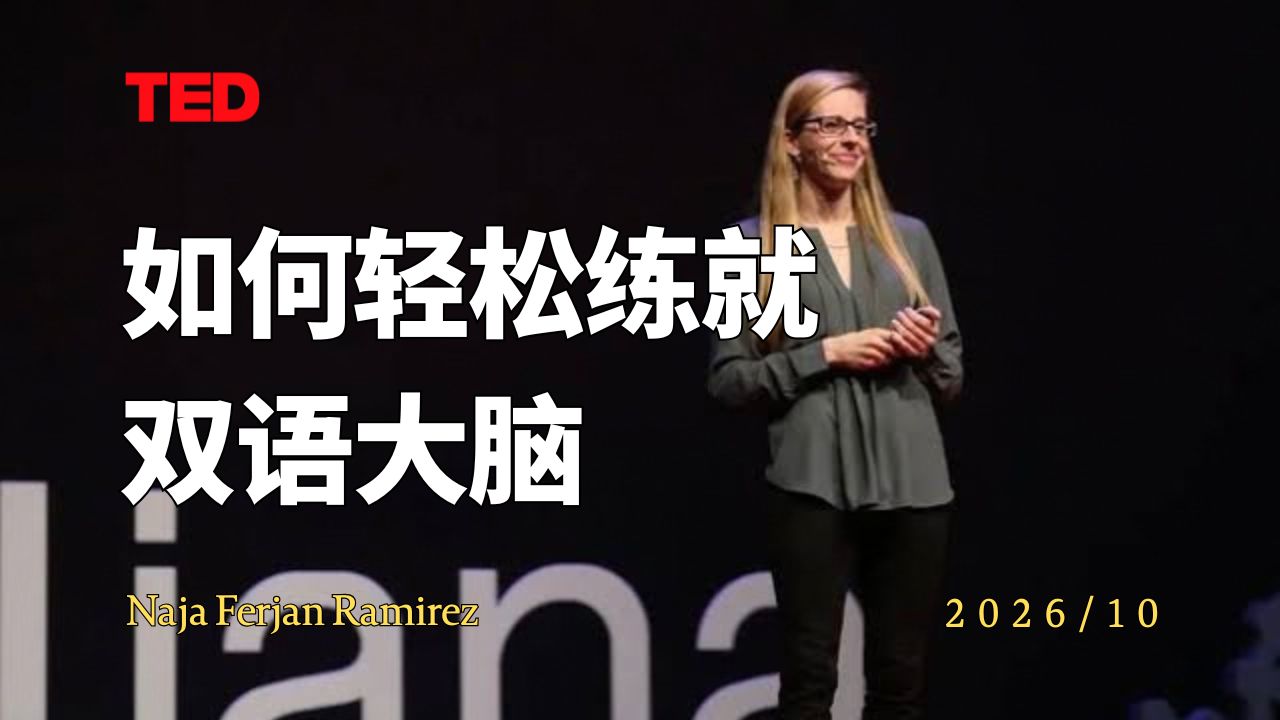
字幕摘录
| 时间 | 英文 | 中文 |
|---|---|---|
| 0:01 | How many of you can speak two languages? | 你们有多少人能说两种语言? |
| 0:06 | Most of you can we are in Europe after all now. | 你们中的大多数现在可以在欧洲了 |
| 0:10 | Let me ask you this | 我问你这个 |
| 0:12 | How many of you would say that you are completely fluent in two languages so that you could take a job or? | 你们中有多少人会说,你们完全流利地使用两种语言,以便你们能够工作或工作? |
| 0:20 | Dream in either one of them not as many | 在其中任何一个梦里,没有那么多 |
| 0:25 | Why is that? | 为什么? |
| 0:27 | I think we can all agree that being fluent in two languages is a good thing | 我想我们都同意 流利两种语言是件好事 |
| 0:33 | It creates additional job prospects. | 它创造了更多的工作前景。 |
| 0:35 | It allows us to talk to more people | 它让我们能和更多的人交谈 |
| 0:38 | It also has been linked to several cognitive and social advantages and it delays the onset of Alzheimer's disease | 也与认知和社会优势有关 也延缓了老年痴呆症的发病 |
展开字幕全文(204 条)
| 序号 | 英文 | 中文 |
|---|---|---|
| 1 | How many of you can speak two languages? | 你们有多少人能说两种语言? |
| 2 | Most of you can we are in Europe after all now. | 你们中的大多数现在可以在欧洲了 |
| 3 | Let me ask you this | 我问你这个 |
| 4 | How many of you would say that you are completely fluent in two languages so that you could take a job or? | 你们中有多少人会说,你们完全流利地使用两种语言,以便你们能够工作或工作? |
| 5 | Dream in either one of them not as many | 在其中任何一个梦里,没有那么多 |
| 6 | Why is that? | 为什么? |
| 7 | I think we can all agree that being fluent in two languages is a good thing | 我想我们都同意 流利两种语言是件好事 |
| 8 | It creates additional job prospects. | 它创造了更多的工作前景。 |
| 9 | It allows us to talk to more people | 它让我们能和更多的人交谈 |
| 10 | It also has been linked to several cognitive and social advantages and it delays the onset of Alzheimer's disease | 也与认知和社会优势有关 也延缓了老年痴呆症的发病 |
| 11 | So why are we not all fluent bilinguals? | 那么为什么我们不都是流利的双语? |
| 12 | Those of us who studied foreign languages in school probably remember how hard it was and how much we struggled | 在学校里学外语的人 可能记得我们有多辛苦和挣扎 |
| 13 | I'm certainly speaking from experience here | 我当然是从经验上讲的 |
| 14 | I started learning English when I was about 10 years old in school right here in Ljubljana and | 我10岁的时候开始学英语 就在卢布尔雅那 |
| 15 | About nine years later when I went to study in the United States. | 大约9年后,我去了美国留学。 |
| 16 | I thought my English was pretty good | 我以为我的英语很好听 |
| 17 | I was able to do my homework just fine | 我做了功课,很好 |
| 18 | but I also remember eating dinner with my college friends and | 但我也记得和我的大学朋友一起吃晚饭 |
| 19 | not being able to follow their conversations or | 无法跟踪他们的谈话或 |
| 20 | Going on my first date in America and only understanding about half of what the guy was telling me now | 我第一次去美国约会 只了解他现在告诉我的一半 |
| 21 | I'm sure many of you have your own stories about foreign language learning | 我相信你们很多人都有自己关于外语学习的故事 |
| 22 | But there's one thing that most of these stories have in common | 但有一件事 这些故事大多有共同点 |
| 23 | Foreign language learning is hard. | 外语学习难. |
| 24 | It takes a lot of time a lot of effort and it seems that | 这需要很多时间 努力,似乎 |
| 25 | No matter how hard we try | 不管我们怎么努力 |
| 26 | We rarely achieve native like fluency | 我们很少像流利一样实现本土化 |
| 27 | Even in those cases when we have been using our foreign language for years. | 即使在那些我们多年来一直使用外语的情况下。 |
| 28 | We still maintain that for an accent | 我们仍然保留这个口音 |
| 29 | Does it have to be this hard? | 一定要这么难吗? |
| 30 | I | 一、导 言 |
| 31 | Don't think it does | 别以为会 |
| 32 | What I'll tell you today is that the human brain is fully capable of achieving | 我今天要告诉你的是 人类大脑完全有能力实现 |
| 33 | Native fluency in two languages at the same time and that we don't necessarily have to struggle to get there | 同时使用两种语言的土著流利度,而且我们并不一定必须为此而奋斗。 |
| 34 | So what is it that we have to do to create bilingual minds? | 那么,我们要怎么做才能创造双语思想呢? |
| 35 | I | 一、导 言 |
| 36 | Very promising start is to study the brains of those who are really really good at language learning babies | 非常有希望的开始是研究那些真正擅长学习语言的孩子的大脑. |
| 37 | Babies are linguistic geniuses and all over the world babies learn their native languages naturally and spontaneously | 婴儿是语言天才 世界各地的婴儿自然和自发地学习母语 |
| 38 | Without anybody actually teaching them how to do this | 没有人真正教他们怎么做 |
| 39 | But this gets even better | 但这样会更好 |
| 40 | Those babies who have a chance to listen to and interact in two languages | 那些孩子有机会用两种语言倾听和交流 |
| 41 | Learn both and they can become native speakers of both | 既学会了,又能成为两种语言的母语 |
| 42 | You and I can't do that and computers can't do that either | 你和我不能这样 电脑也不能这样 |
| 43 | So why and how are babies so good at language learning? | 那么,为什么和如何 婴儿这么擅长语言学习? |
| 44 | I'm a researcher at the University of Washington's Institute for learning and brain sciences | 我是华盛顿大学学习和脑科学研究所的研究员 |
| 45 | I labs for short and I studied the brain processing of language in babies between zero and three years of age. | 我做短期实验,研究0至3岁婴儿语言的大脑处理. |
| 46 | I | 一、导 言 |
| 47 | Focused specifically on those babies who are learning two languages at the same time bilingual babies | 专门针对同时学习两种语言的婴儿; |
| 48 | The approach that we take to study the baby brain is called Magnetoencephalography | 我们研究婴儿脑的方法叫做磁性脑分析 |
| 49 | MeG for short we call it the hairdryer from Mars | 简而言之,我们称之为火星发廊 |
| 50 | But it's important to understand that this machine is actually completely safe | 但重要的是要明白 这台机器其实是完全安全的 |
| 51 | Non-invasive and completely silent. | 无侵及而全寂. |
| 52 | So pretty baby-friendly | 这么漂亮的婴儿友好 |
| 53 | We use Magnetoencephalography to study the baby brains and the MEG machine that we have at our Institute is actually one of the few | 我们用磁铁脑分析来研究婴儿脑和我们研究所拥有的MEG机器 实际上是少数 |
| 54 | In the world that's configured specifically for babies | 在为婴儿特别配置的世界里 |
| 55 | We also have a team of trained research assistants whose job is to keep the babies happy and entertained when we study their brains | 我们还有一组训练有素的研究助理 他们的工作是让孩子快乐和娱乐 当我们研究他们的大脑 |
| 56 | One question that we recently studied with MEG was what goes on in the brains of those babies? | 最近我们和MEG一起研究的一个问题是 这些婴儿的大脑里发生了什么? |
| 57 | Who grow up in households where two languages are spoken at the same time by native speakers? | 谁在同时讲两种语言的家庭中长大? |
| 58 | If we look at these babies brains before the babies even begin to talk | 如果我们在婴儿开始说话前看看这些婴儿的大脑 |
| 59 | Are they different from those of babies who listen to a single language? | 他们与听一种语言的婴儿不同吗? |
| 60 | Here's how we tested these these questions | 这就是我们测试这些问题的方法 |
| 61 | We brought the babies into the lab half of them were from bilingual families were one parent was a native speaker of Spanish and | 我们把婴儿带进实验室 一半来自双语家庭 父母是讲西班牙语的本地人 |
| 62 | The other one was a native speaker of English | 另一个是英语母语 |
| 63 | The other half of the babies were from families where both parents were native English speakers | 另一半的婴儿来自父母都讲英语的家庭。 |
| 64 | So English was the only language spoken in the household then to prepare the babies for MEG | 所以,英语是家里唯一会说的语言 然后让孩子为MEG做准备 |
| 65 | We use the special digitizing pen and a hat and what this procedure allows us to do is to | 我们使用特殊的数字化笔和帽子 这个程序让我们能够做的是 |
| 66 | Track the shape of the baby's head so that we can then continuously monitor the baby's motions | 跟踪婴儿头部的形状 这样我们就能持续监控婴儿的运动 |
| 67 | When the head is in the MEG helmet, we then brought the babies into the MEG room where they sat on a special high chair | 当头戴在MEG头盔时,我们把婴儿带到MEG房间,坐在特别的高椅子上 |
| 68 | The head goes right into the MEG helmet and the parents sit right next to them when we look at their brains | 头直接进入MEG头盔,当我们看着他们的大脑时,父母坐在他们旁边. |
| 69 | During the MEG studies the babies typically listen to the sounds of language in this case | 在MEG学习期间,婴儿们通常会听语言的声音 |
| 70 | The sounds came from Spanish and English | 声音来自西班牙语和英语 |
| 71 | So let's take a listen to see what that sounded like | 我们来听听这听起来怎么样 |
| 72 | Some of these sounds are specific to English some are specific to Spanish and some are common to both languages | 有些是英语专用的,有些是西班牙语专用的,有些是两种语言通用的 |
| 73 | All babies in these studies were exactly 11 months old | 这些研究中的所有婴儿都是11个月大 |
| 74 | This is typically right around the time when babies begin to produce their first words, but they're not really speaking yet | 这通常在婴儿开始生产第一句话的时候, 但他们还没有真正说话 |
| 75 | So what did we find? | 我们发现了什么? |
| 76 | What we found was that the brains of monolingual babies were specialized to process the sounds of English | 我们发现 独语婴儿的大脑 专门处理英语的声音 |
| 77 | Their native language and were not specialized to process the sounds of Spanish the language to which these babies were not exposed | 他们的母语,没有专门处理这些婴儿没有接触的西班牙语语言的声音 |
| 78 | What about the brains of bilingual babies? | 那双语婴儿的大脑呢? |
| 79 | Well as it turns out the brains of bilingual babies were specialized to process the sounds of both languages | 双语婴儿的大脑 专门处理两种语言的声音 |
| 80 | Spanish and English | 西班牙语和英语 |
| 81 | So what does this mean? | 这是什么意思? |
| 82 | And why am I so excited about this? | 为什么我这么兴奋? |
| 83 | What this means is that the baby brain specializes to process whatever language or | 这意味着婴儿大脑 专门处理任何语言或 |
| 84 | Languages are present in the environment the brains of those babies who listen to one language specialized to process one language | 环境中有听一种语言的婴儿的大脑 |
| 85 | But the brains of those babies who listen to two languages specialized to process two | 但是那些听两种语言的婴儿的大脑... ... |
| 86 | There's one more finding in this study that I'd like to tell you about | 研究中还有一个发现 我想告诉你 |
| 87 | There's a part of the brain called the prefrontal cortex | 大脑有一部分叫做前额皮层 |
| 88 | It's highlighted in green in this schematic that you can see but it's right here in the very front of your brain | 这张图中以绿色突出,你可以看到,但它就在大脑的前面 |
| 89 | And we use this part of the brain to direct our attention | 我们利用大脑的这一部分来引导我们的注意力 |
| 90 | To switch back and forth between doing different tasks and to think flexibly | 在完成不同任务和灵活思考之间互换 |
| 91 | Think we can all agree that these are extremely important tasks to do in the 21st century | 我们都能同意,这些是21世纪最重要的任务 |
| 92 | We were curious to see how the two groups of babies compared in terms of their brain activity in these prefrontal areas | 我们很想知道这两组婴儿 在脑部活动方面 是如何比较的 |
| 93 | Interestingly what we found was that the bilingual babies had stronger brain activity stronger brain responses to language sounds | 有趣的是,我们发现双语婴儿的大脑活动更强 大脑对语言声音的反应更强 |
| 94 | specifically in these prefrontal regions | 特别是在这些前沿地区 |
| 95 | Now why would that be? | 为什么? |
| 96 | One explanation is that the constant switching back and forth between two different languages | 一种解释是 两种不同语言之间不断的互换 |
| 97 | provides exercise for the brain that | 为大脑提供运动 |
| 98 | It strengthens these brain networks that participate in attention switching and that this provides a cognitive boost to the bilinguals | 它加强了这些参与注意力转换的大脑网络,这为双语提供了认知动力。 |
| 99 | Many other studies have actually shown that bilingual children, but also | 许多其他研究实际表明,双语儿童,但是, |
| 100 | Bilingual adults have advantages when it comes to tasks that require cognitive flexibility | 在涉及需要认知灵活性的任务时,双语成年人有优势 |
| 101 | But what's particularly intriguing here is that we see brain differences | 但最有趣的是我们看到大脑的差异 |
| 102 | specifically in these areas that are related to flexible thinking at 11 months of age before these babies are even speaking so | 特别是在那些与11个月大时的灵活思维有关的领域,这些婴儿甚至还没有说到这一点。 |
| 103 | Our studies have shown that the baby brain is fully capable of specializing in two languages at the same time and there | 我们的研究表明,婴儿大脑完全有能力 专门使用两种语言 同时,在那里 |
| 104 | Possibly some additional advantages that come along with this for free | 可能会有一些额外的优势 伴随着这个免费 |
| 105 | So given these findings you may be wondering | 所以鉴于这些发现 你可能会想知道 |
| 106 | Why are we not raising all babies to be bilingual there has to be a disadvantage here that I'm not telling you about | 为什么我们不把所有的婴儿都养成双语... ... ...... |
| 107 | some people think so | 有人这么认为 |
| 108 | one | 一个 |
| 109 | Common concern is that bilingualism slows language learning down that it makes it slower | 共同的担心是,双语学会减缓语言学习的速度,从而减缓语言学习的速度。 |
| 110 | Research doesn't actually support this | 研究并不支持这个 |
| 111 | Instead what studies have shown is that if we consider the patterns in bilingual learning | 相反,研究表明,如果我们考虑到双语学习的模式, |
| 112 | They're actually very very similar to what we see in monolingual learning for example | 他们其实和我们在单语学习中看到的非常相似 |
| 113 | Bilingual babies start producing their first sounds as well as their first words at the same age as monolingual babies | 双语婴儿在与单一语言婴儿相同的年龄开始产生第一声音和第一话 |
| 114 | We also know that if we give bilingual children credit for each word that they know | 我们还知道,如果我们给 双语儿童信用 他们知道每个字 |
| 115 | Across their two languages their vocabularies are of the same size if not bigger than those of monolingual babies | 在两种语言中,其词汇如果不比单一语言的婴儿大,大小相同。 |
| 116 | Another common concern is that? | 另外一个共同的关切是? |
| 117 | bilingualism causes confusion this concern | 双语主义造成混乱 |
| 118 | Arises from the fact that bilinguals sometimes combine their two languages in the same sentence or in the same situation | 双语有时在同一句子或同一情况下结合两种语言。 |
| 119 | This is called code switching or code mixing so does code switching or code mixing indicate confusion | 这叫做代码切换或代码混合 代码切换或代码混合表示混乱 |
| 120 | Science suggests that it does not | 科学说明它没有 |
| 121 | Most bilinguals code switch and my family is not an exception in my family. | 大部分双语密码开关 我家也不例外 |
| 122 | We actually speak three languages and | 我们实际上说三种语言, |
| 123 | Sometimes we hear sentences from our children that combine all three | 有时我们听到我们的孩子的句子 结合了所有三个 |
| 124 | Slovene Spanish and English | 斯洛文尼亚语西班牙语和英语 |
| 125 | Does this mean that our children are confused? | 这是否意味着我们的孩子感到困惑? |
| 126 | I don't think it does so let me give you an example to demonstrate | 我想不会的 让我举个例子来证明 |
| 127 | Why this is the case? | 为什么会这样? |
| 128 | my four-year-old will sometimes say sentences like | 我四岁的孩子有时会说: |
| 129 | Mom is daddy | 妈妈是爸爸 |
| 130 | Potutum this means mommy's daddy in the shower now. | 波图姆,这意味着妈妈的爸爸在洗澡了。 |
| 131 | Why does he say sentences like this? | 他为什么说这样的句子? |
| 132 | There are a few reasons the first one is that he can | 有几个原因 第一个是他可以 |
| 133 | bilinguals | 双语 |
| 134 | unlike monolinguals have another language from which they can easily borrow words and they sometimes do this because | 与单语族不同的是,他们有另一种语言,可以轻易借用词,有时他们这样做是因为 |
| 135 | They know words from one language sometimes better than they do in the other so for example | 他们知道一种语言的词 有时比另一种语言的词要好 比如说 |
| 136 | My son probably knows the word shower better in Slovene than he does in English | 我儿子可能比英文更懂斯洛文尼亚语的淋浴词 |
| 137 | So he uses it because it's easier the second reason he uses sentences like this is that he knows | 所以他用它,因为它更容易 第二个原因 他使用这样的句子 因为他知道 |
| 138 | I will understand him | 我会理解他的 |
| 139 | He rarely uses Slovene words in his preschool because he knows that his teachers and his friends will have no idea what he's talking about | 他很少在学前班上使用斯洛文尼亚语,因为他知道老师和朋友会不知道自己在说什么 |
| 140 | bilingual children typically know very very well when they can and can't mix their languages and studies have shown that even two-year-olds | 双语儿童通常非常清楚,当他们能够和不能混合他们的语言,而且研究表明,即使是两岁的孩子, |
| 141 | Will adapt their language to match that of their conversational partner. | 将调整他们的语言 与他们的谈话伙伴。 |
| 142 | There's one final point about code mixing that I'd like to make | 最后一点 关于密码混合 我想说 |
| 143 | Even though it's called mixing. | 虽名为杂. |
| 144 | It's not just randomly mixing together words from different languages | 这不仅仅是随机混合 来自不同语言的词 |
| 145 | It follows grammatical rules. | 它遵循语法规则. |
| 146 | I | 一、导 言 |
| 147 | rarely hear sentences such as | 很少听到诸如 |
| 148 | Mom is daddy put tush | 妈妈是爸爸把Tush |
| 149 | Now those of us who are fluent speakers of Slovene and English will know that I can say daddy goes put tush | 现在那些能流利地说斯洛文尼亚语和英语的人会知道 我可以说爸爸去吐 |
| 150 | But daddy is put tush doesn't work. | 但是爸爸被灌醉了 没用的 |
| 151 | It has to be put to shum. | 须以hum敷之. |
| 152 | This is because the verb be | 这是因为动词是 |
| 153 | Indicates a state and in Slovene it requires a different case than the verb go which indicates motion | 表示状态,在斯洛文尼亚语中,它需要不同的情况,而不是动词去表示运动 |
| 154 | This is complicated, right | 这很复杂,对吧? |
| 155 | The point is this code mixing is not easy | 关键是密码的混合不容易 |
| 156 | It requires a lot of linguistic knowledge in both languages as well as then being able to | 这需要两种语言的大量语言知识,然后能够 |
| 157 | Figure out how to combine this knowledge in a meaningful way | 找出如何以有意义的方式综合这种知识 |
| 158 | So rather than indicating confusion code mixing is actually a sign of linguistic sophistication | 而不是表示混淆代码的混合 其实是一个语言精密的迹象 |
| 159 | it's also perfectly normal and | 也是完全正常的,还有... |
| 160 | Expected behavior that we see in bilingual children, but also in bilingual adults who are fully fluent in both languages | 我们所看到的双语儿童以及完全流利的双语成年人的行为 |
| 161 | So bilingualism does not cause confusion. | 所以双语主义不会引起混淆. |
| 162 | It also does not slow language learning down. | 语言学习也不会放慢速度。 |
| 163 | In fact | 其实 |
| 164 | Science suggests that there are many advantages and the demand on bilingual education is actually increasing in the United States as well as | 科学显示,美国有许多优势,对双语教育的需求实际上也在增加, |
| 165 | worldwide | 全世界 |
| 166 | People are also beginning to realize that | 人们也开始意识到 |
| 167 | Starting from an early from an early age may be the best solution because we know that at birth | 从小开始,也许是最好的解决办法,因为我们知道,出生时 |
| 168 | The human brain is just as capable of learning two languages as it is to learn one | 人类的大脑能够学习两种语言 就像学习一种语言一样 |
| 169 | So what should we do? | 那怎么办? |
| 170 | How can we provide all babies with an opportunity to learn two languages from a very young age in? | 我们如何能够为所有婴儿提供从很小的时候开始学习两种语言的机会? |
| 171 | families like mine | 像我这样的家庭 |
| 172 | The answer is straightforward because parents are native speakers of languages that are different from what the child hears outside of the home | 答案是直截了当的,因为父母是讲不同于儿童在家庭以外听到的当地语言的人。 |
| 173 | But what about everybody else as a child language? | 但其他人作为儿童语言呢? |
| 174 | Development specialist I often hear from parents who are eager to provide their baby | 我经常听到那些渴望抚养孩子的家长说 |
| 175 | With an opportunity to learn another language | 有机会学习另一种语言 |
| 176 | But they're not native speakers of that language and they can't afford to hire a nanny who's a native speaker of that language | 但他们不是讲这种语言的土生土长的人 也不能雇一个说那种语言的土生土长的保姆 |
| 177 | Some parents think that their baby may be able to learn a foreign language by watching television | 有些家长认为,他们的宝宝也许可以通过看电视学习外语 |
| 178 | Unfortunately, this is not the case | 可惜没有 |
| 179 | Older children may be able to learn some foreign language words from electronic media | 年长儿童可能能够从电子媒体学习一些外语词汇 |
| 180 | But babies learn languages through play | 但婴儿通过游戏学习语言 |
| 181 | Through frequent social interactions with live human beings who are fully competent and comfortable users of that target language | 通过经常与完全有能力和舒适地使用该目标语言的活人进行社会互动 |
| 182 | So really the question comes down to this | 问题就在于此 |
| 183 | Can we create environments within public education? | 我们能否在公共教育中创造环境? |
| 184 | Through which all babies will be able to learn foreign languages from a very early age | 所有婴儿从小就能够学习外语 |
| 185 | If we start very very early | 如果我们很早就开始 |
| 186 | How much and what kind of language exposure is needed to create a truly bilingual mind? | 创造真正双语思想需要多少和何种语言接触? |
| 187 | From research we know that babies can learn foreign languages surprisingly quickly | 我们从研究中知道 婴儿能很快学外国语言 |
| 188 | But at the same time we also know that the type of language they hear is | 但与此同时我们也知道 他们听到的语言类型是 |
| 189 | Critical in determining how much they will learn and how quickly they will learn | 关键在于确定他们将学习多少,学习多快 |
| 190 | So can we make this work? | 我们能成功吗? |
| 191 | We think that we can | 我们认为我们可以 |
| 192 | From research we know that there are six principles | 根据研究,我们知道有六项原则 |
| 193 | six ingredients if you will that grow children's language | 6种成分,如果你想 生长儿童语言 |
| 194 | We think that if we take the right science-based approach that combines these six ingredients | 我们认为,如果我们采取正确的基于科学的方法,结合这六种成分 |
| 195 | We can create educational programs through which all babies will be able to learn foreign languages | 我们可以制定教育方案,使所有婴儿都能学习外语。 |
| 196 | Through play in the context of public early education centers | 通过在公共早期教育中心范围内的游戏 |
| 197 | We recently started to test this idea in one of the European capitals where the government is very | 我们最近开始测试这个想法 在欧洲首都之一 在那里,政府非常 |
| 198 | Excited to promote foreign language learning for all babies from birth | 积极推动所有婴儿从出生起就学习外语; |
| 199 | The results of these studies are extremely exciting and extremely promising. | 这些研究的结果极其令人振奋,也极有希望. |
| 200 | So stay tuned | 所以请继续听 |
| 201 | We think that this approach has the potential to change the game for bilingual education | 我们认为这种方法有可能改变双语教育的游戏 |
| 202 | We're hoping to scale it up | 我们希望扩大规模 |
| 203 | So that it will one day allow all babies to reach their full potential and to start learning two languages from a very young age | 这样,总有一天,所有婴儿都能充分发挥潜力,从小开始学习两种语言。 |
| 204 | Thank you | 谢谢 |
该视频共有字幕 204 条。解锁更多字幕为会员功能,请移动到 价格