【双语音+文稿】人生意义的四把钥匙(维克多·弗兰克尔博士)
共 1 集
剧集目录
| 集 | 标题 | 时长 |
|---|---|---|
| P2 | 【双语音+文稿】人生意义的四把钥匙(维克多·弗兰克尔博士) | 4:00 |
P2 · 【双语音+文稿】人生意义的四把钥匙(维克多·弗兰克尔博士) p02 英文版 (P2)
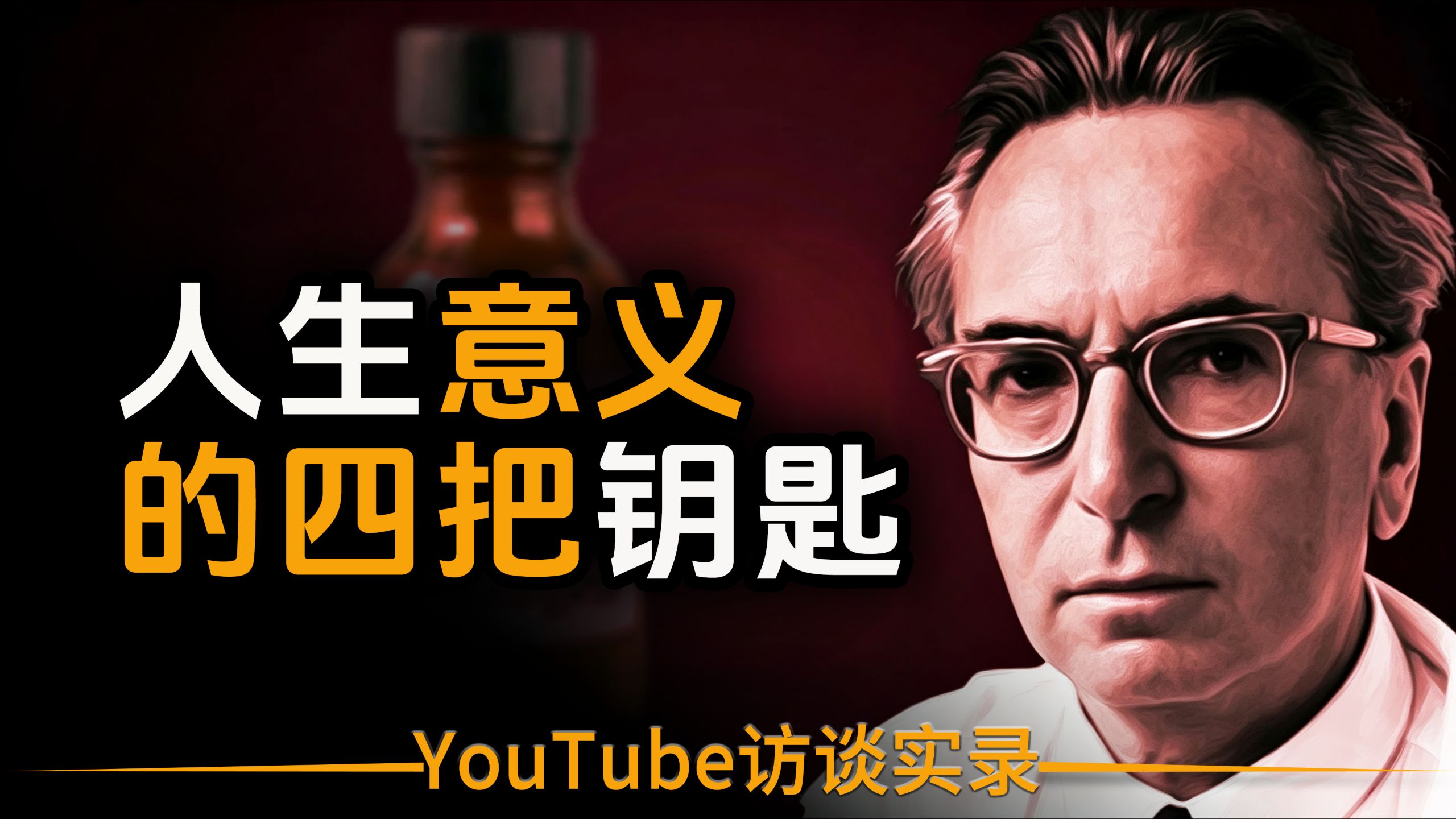
字幕摘录
| 时间 | 英文 | 中文 |
|---|---|---|
| 0:02 | There's a lot of people who believe that life is meaningless. | 很多人认为生活毫无意义. |
| 0:05 | There's no meaning to any of this. | 皆无此义. |
| 0:07 | Nothing matters. | 没什么大不了的 |
| 0:08 | It's all empty and meaningless. | 皆是虚空无意义. |
| 0:10 | The idea that we're passive victims of our genes and our environment. | 认为我们是基因和环境的被动受害者的想法. |
| 0:15 | And the arguments over nature versus nurture. | 和关于自然与培育的争论。 |
| 0:18 | From a scientific point of view, the meaning of life is the propagation of DNA. | 从科学角度看,生命的意义是DNA的传播. |
| 0:22 | Implied in this is the idea that we aren't really free, and it often leads to a kind of nihilism. | 隐含在这个想法中,我们并不真正自由,它常常导致一种虚无主义. |
| 0:28 | The sense that our lives are random and meaningless. | 我们的生活是随机的 毫无意义的 |
| 0:31 | We even see it in popular culture, in memes, and in movies. | 我们甚至在流行文化、迷因和电影中看到。 |
展开字幕全文(61 条)
| 序号 | 英文 | 中文 |
|---|---|---|
| 1 | There's a lot of people who believe that life is meaningless. | 很多人认为生活毫无意义. |
| 2 | There's no meaning to any of this. | 皆无此义. |
| 3 | Nothing matters. | 没什么大不了的 |
| 4 | It's all empty and meaningless. | 皆是虚空无意义. |
| 5 | The idea that we're passive victims of our genes and our environment. | 认为我们是基因和环境的被动受害者的想法. |
| 6 | And the arguments over nature versus nurture. | 和关于自然与培育的争论。 |
| 7 | From a scientific point of view, the meaning of life is the propagation of DNA. | 从科学角度看,生命的意义是DNA的传播. |
| 8 | Implied in this is the idea that we aren't really free, and it often leads to a kind of nihilism. | 隐含在这个想法中,我们并不真正自由,它常常导致一种虚无主义. |
| 9 | The sense that our lives are random and meaningless. | 我们的生活是随机的 毫无意义的 |
| 10 | We even see it in popular culture, in memes, and in movies. | 我们甚至在流行文化、迷因和电影中看到。 |
| 11 | But is it true? | 但这是真的吗? |
| 12 | The best answer I've ever seen to this is in the book, Man's Search for Meaning, by Dr. Viktor Frankl. | 我见过的最好的答案是 维克多·弗兰克尔博士的书《人类寻找意义》 |
| 13 | In it, Frankl describes his own horrifying experiences as a Jewish Holocaust survivor. | 在其中,弗兰克尔描述了自己作为犹太人大屠杀幸存者的可怕经历. |
| 14 | In the Second World War, his incredible story begins in 1939, | 在第二次世界大战中,他不可思议的故事始于1939年, |
| 15 | where he worked as a psychiatrist and became the head of neurology at Rothschild's Hospital in Vienna. | 在那里他担任心理医生,并成为维也纳罗斯柴尔德医院的神经学负责人. |
| 16 | But when the Nazis shut down the hospital, Frankl, his wife, and his family were all sent to concentration camps, | 但是当纳粹关闭医院时 Frankl 他的妻子和家人都被送往集中营 |
| 17 | where almost everything you can imagine was taken from him. | 几乎你能想象的一切都是从他身上夺走的 |
| 18 | It was here that he spent three long and brutal years as a prisoner, | 就是在这里,他作为囚犯度过了三年漫长而残酷的岁月, |
| 19 | forced to work in labor camps in the most terrible conditions, | 被迫在最恶劣的条件下在劳改营工作, |
| 20 | and having so little food that over time the prisoners slowly starved. | 食物很少 囚犯们逐渐挨饿 |
| 21 | And when they became too weak to keep working, they were sent to the gas chambers. | 当他们变得太虚弱而无法继续工作时,他们被送到毒气室. |
| 22 | Their lives extinguished in the most horrific way imaginable. | 他们的生命以最恐怖的方式被毁灭了 |
| 23 | But Frankl tells us that even here, even in the most hopeless situation, life still had meaning. | 但弗兰克尔告诉我们,即使在这里,即使在最绝望的情况下,生活仍然有意义. |
| 24 | Life always has a meaning. | 人生总有其义. |
| 25 | How could that be? | 这怎么可能? |
| 26 | What did he learn from surviving the Holocaust? | 他从大屠杀中吸取了什么教训? |
| 27 | And how can we apply that to our lives in the modern world? | 我们怎样才能在现代生活中应用这个概念? |
| 28 | That is what we'll explore in this video. | 这就是我们在这段视频中探索的。 |
| 29 | Dr. Frankl developed an approach to psychology called logotherapy. | Frankl博士开发了一种心理学方法,称为标志疗法. |
| 30 | Logos is Greek for meaning, and therapy means healing. | 洛戈斯是希腊语的意思,治疗意味着治愈. |
| 31 | And so the goal of logotherapy is to heal ourselves by finding the hidden meaning in our lives. | 因此,标志疗法的目标是通过找到我们生活中隐藏的意义来自我治愈. |
| 32 | Frankl believed that the main thing that drives us is the search for meaning. | 弗兰克尔认为,驱动我们的主要事情是寻找意义. |
| 33 | He pointed to the famous Nietzsche quote, | 他提到著名的尼采语句 |
| 34 | As long as a person has a why to live, they can bear almost any how. | 只要一个人有生存的理由 他们几乎可以忍受任何方式 |
| 35 | Frankl found that it wasn't necessarily the strongest people who survived in the camps. | 弗兰克尔发现在集中营中幸存下来的不一定是最强壮的人. |
| 36 | It was those who had meaning. | 是诸有情者. |
| 37 | And even when they suffered tremendous pain, | 即使他们遭受了巨大的痛苦, |
| 38 | they were less damaged by the terrible things that happened to them. | 他们受到的伤害较少 发生在他们身上的可怕事情。 |
| 39 | They could access an inner world of spiritual freedom. | 他们可以进入一个精神自由的内心世界。 |
| 40 | Frankl called this the self-transcendence of human existence. | 弗兰克尔称这为人类存在的自我过渡. |
| 41 | And he described four main ways we can find meaning in our lives. | 他描述了四种主要的方法,我们可以在生活中找到意义。 |
| 42 | The first is synchronicity. | 第一个是同步。 |
| 43 | Swiss psychologist Carl Jung talked about it in his work, | 瑞士心理学家卡尔·郑在他的作品中谈到了这一点, |
| 44 | Synchronicity, an acausal connecting principle. | 同步,一种因果连接原理. |
| 45 | According to Jung, synchronicity is a meaningful coincidence that happens | 郑氏说,同步是一种有意义的巧合 |
| 46 | when an event in the outside world matches up with an inner state of the mind, | 当外界的事件 与内心的心灵相匹配时 |
| 47 | in a way that has meaning. | 以一种有意义的方式。 |
| 48 | Jung said that what defines synchronicity is the sense of the numinous. | 郑说,对同步性的定义是无量的感官. |
| 49 | It's the feeling of amazement and spiritual transcendence | 这是令人惊叹和精神超越的感觉 |
| 50 | that comes from witnessing something that lifts us outside of ourselves, | 它来自目睹的东西 把我们从我们自己之外, |
| 51 | giving us a glimpse of the divine. | 给我们看一看神 |
| 52 | His most famous example was a patient who was telling Jung | 他最有名的例子是 一个病人告诉郑 |
| 53 | about a dream she had had, about a beetle. | 关于她的梦, 关于甲虫。 |
| 54 | And at exactly that moment, a beetle flew into the room. | 在那一刻,一只甲虫飞进了房间。 |
| 55 | Synchronicity is a powerful source of meaning. | 同步是强大的意义来源. |
| 56 | Frankl doesn't actually use the word synchronicity in his book, | Frankl在书中并没有使用同步这个词, |
| 57 | but he describes two amazing and very meaningful coincidences | 但他描述了两个惊人和非常有意义的巧合 |
| 58 | that happened to him while he was a prisoner in the camps. | 这发生在他当战俘时 |
| 59 | The first happened when he arrived on the first day, | 第一次是他第一天来的时候 |
| 60 | where he was separated from his wife and family. | 在那里,他与他的妻子和家人分离。 |
| 61 | He didn't know it yet, but he would never see it. | 他还不知道,但他永远不会看到它。 |
该视频共有字幕 61 条。解锁更多字幕为会员功能,请移动到 价格