学习第二语言如何改变你看世界的方式|语言如何重塑你的大脑
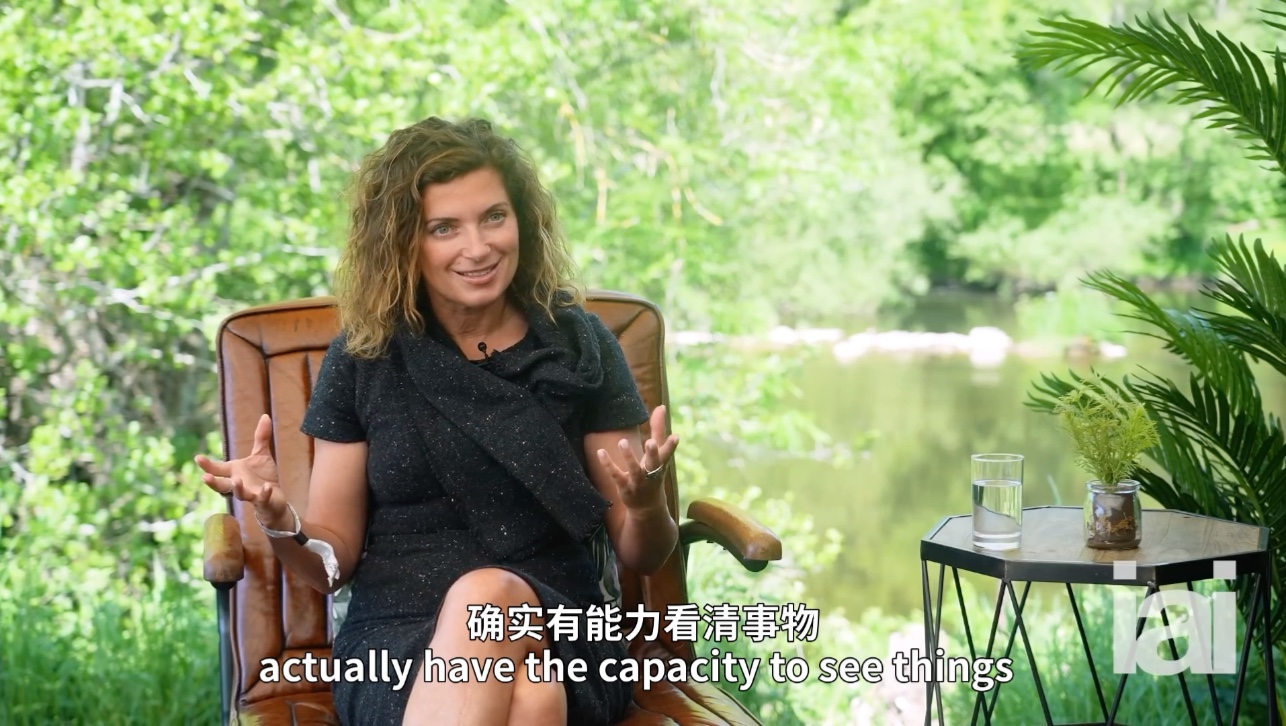
字幕摘录
| 时间 | 英文 | 中文 |
|---|---|---|
| 0:00 | If you show people a bunch of colors, hues that are changing slowly from light blue to | 如果你给人展示一束颜色, 颜色从浅蓝色慢慢改变 |
| 0:04 | dark blue, in the brains of people who call those colors by categorically different names, | 深蓝色,在人们的脑中, 使用这些颜色 绝对不同的名字, |
| 0:10 | there's this surprise marker that goes off as you switch from categorically light blue | 有个惊喜标记在你从纯蓝色转换时爆炸了 |
| 0:17 | to categorically dark blue, whereas for English speakers that surprise marker never goes off | 绝对是深蓝色的, 而对于英语的演讲者来说,惊喜标记永远不会爆炸 |
| 0:21 | because they're all just blue. | 因为他们都是蓝色的 |
| 0:23 | And so even very early on, the brain treats those colors as being categorically different. | 所以,即使很早,大脑就把这些颜色 视为完全不同。 |
| 0:28 | And it goes, oh wait, something has importantly shifted, but only if you speak the kind of | 它去,哦,等等, 东西已经发生了重要的变化, 但只有你说话的那种 |
| 0:33 | language that distinguishes those two by different words. | 用不同的词来区分这两个词的语言。 |
| 0:43 | Lera Boroditsy, welcome to How the Light Gets In. | 莱拉·博罗迪西 欢迎光照的到来 |
| 0:46 | Thank you so much for having me. | 谢谢你邀请我 |
展开字幕全文(222 条)
| 序号 | 英文 | 中文 |
|---|---|---|
| 1 | If you show people a bunch of colors, hues that are changing slowly from light blue to | 如果你给人展示一束颜色, 颜色从浅蓝色慢慢改变 |
| 2 | dark blue, in the brains of people who call those colors by categorically different names, | 深蓝色,在人们的脑中, 使用这些颜色 绝对不同的名字, |
| 3 | there's this surprise marker that goes off as you switch from categorically light blue | 有个惊喜标记在你从纯蓝色转换时爆炸了 |
| 4 | to categorically dark blue, whereas for English speakers that surprise marker never goes off | 绝对是深蓝色的, 而对于英语的演讲者来说,惊喜标记永远不会爆炸 |
| 5 | because they're all just blue. | 因为他们都是蓝色的 |
| 6 | And so even very early on, the brain treats those colors as being categorically different. | 所以,即使很早,大脑就把这些颜色 视为完全不同。 |
| 7 | And it goes, oh wait, something has importantly shifted, but only if you speak the kind of | 它去,哦,等等, 东西已经发生了重要的变化, 但只有你说话的那种 |
| 8 | language that distinguishes those two by different words. | 用不同的词来区分这两个词的语言。 |
| 9 | Lera Boroditsy, welcome to How the Light Gets In. | 莱拉·博罗迪西 欢迎光照的到来 |
| 10 | Thank you so much for having me. | 谢谢你邀请我 |
| 11 | Lera, your research within cognitive science and linguistic studies has transformed our | 莉拉,你的认知科学和语言学研究 改变了我们 |
| 12 | understanding of thought. | 对思想的理解。 |
| 13 | How does language affect culture? | 语言如何影响文化? |
| 14 | Well, language can shape thought in lots of ways. | 语言可以在许多方面塑造思想。 |
| 15 | In my own work, I focused on how language shapes the fundamentals of thought, so basic | 在自己的作品中,我专注于语言如何塑造思想的基本原理,如此基础 |
| 16 | things like how we organize space, time, how we process color, how we think about events. | 我们如何组织空间,时间, 如何处理颜色,如何思考事件。 |
| 17 | And what we find is even at these very, very basic levels, the building blocks of cognition, | 我们发现,即使在这些非常,非常基本的水平, 认知的积木, |
| 18 | language can have a really profound effect on how we put the world together in our minds. | 语言可以对我们如何将世界团结在思想中产生真正深远的影响。 |
| 19 | So within linguistic relativity, it has been dismissed before and revived in certain areas. | 因此,在语言相对论中,它曾经被否定,并在某些地区复活. |
| 20 | What do you think earlier researchers got wrong in their methods compared to yours now? | 你认为早期的研究人员在方法上 与现在的你相比有什么错误? |
| 21 | Yeah, so there was a strong idea coming out of Chomskyan linguistics that languages didn't | 对,所以乔姆斯基安语言学中 有个很强的主意,认为语言没有 |
| 22 | substantially differ from one another at the core. | 两者在核心方面差别很大。 |
| 23 | Now, no one had discovered what that core is. | 现在,没有人发现那核心是什么。 |
| 24 | It was a hypothetical core, but it was just a claim. | 这是一个假设的核心,但它只是一个权利主张。 |
| 25 | The claim was languages don't fundamentally differ. | 这种说法是语言 根本上是不同的。 |
| 26 | And so if your claim is that languages don't fundamentally differ, it doesn't actually | 所以如果你的主张是 语言没有根本的不同, 它实际上不是 |
| 27 | even make sense to ask whether speakers of different languages would think differently. | 甚至有理由问,不同语言的发言者是否会有不同的想法。 |
| 28 | But the more linguists went out into the field and studied in detail different languages, | 但语言学家越是走进这个领域, 并且详细研究不同的语言, |
| 29 | the more really striking differences between languages they uncovered. | 他们发现的语言差异越大 |
| 30 | And so then it no longer became the question of, do languages differ? | 那么它就不再是问题了 语言是否不同? |
| 31 | It was very clear that they do. | 很明显,他们这样做。 |
| 32 | And then you could start asking the question of, how do those differences reflect in thinking? | 然后你可以开始问一个问题:这些差异如何反映思维? |
| 33 | There is another part of skepticism, which is, is cognition something that's malleable? | 怀疑主义还有另一部分,那就是, 认知的东西是可塑的? |
| 34 | So it's one thing that languages differ, but if thinking can't be changed, then it doesn't | 所以语言不同是一回事, 但是如果思维不能改变, 那么它不会 |
| 35 | matter if languages differ, speakers of all languages would think the same. | 如果语言不同,所有语言的发言者都会这样认为。 |
| 36 | But then decades and decades of research in cognitive psychology showed how malleable | 但数十年的认知心理学研究显示 |
| 37 | cognition is and how flexible it actually is. | 认知是而且实际上是多么灵活。 |
| 38 | So once you have those two puzzle pieces, languages really differ and cognition is really | 所以,一旦你有了这两个谜题, 语言真的不同 和认知真的 |
| 39 | malleable, you put those together, that creates an environment where you can find these incredibly | 可塑性,你把这些组合起来, 创造一个环境,你可以找到这些令人难以置信的 |
| 40 | profound differences between speakers of different languages. | 不同语言的演讲者之间的深刻差异。 |
| 41 | And within your own research and your own experiments, how did you kind of go about | 在你自己的研究和实验中, 你是如何去的 |
| 42 | designing those experiments? | 设计这些实验? |
| 43 | You know, I'm trained as a cognitive psychologist, so I started by designing the most classic | 我受过认知心理学的训练 所以我开始设计最经典的 |
| 44 | kinds of basic experiments that you would do just to study cognition. | 做一些基本实验, 只是为了研究认知。 |
| 45 | So test people's memory or test people's ability to make categories, test how quickly | 所以测试人们的记忆 或测试人们的分类能力 测试多快 |
| 46 | people can solve a problem, really basic designs. | 人们可以解决问题, 真正的基本设计。 |
| 47 | And I think that was part of the success of the research program that I pursued, because | 我认为那是我所追求的研究计划成功的一部分 因为 |
| 48 | in the past, a lot of claims had come either from anthropologists or from linguists. | 过去,许多权利主张来自人类学家或语言学家。 |
| 49 | And so they came back with data that looked like field reports. | 于是他们又带回了类似实地报告的数据。 |
| 50 | And psychologists, you know, every field has their own standards for what they count as | 心理学家,你知道,每一个领域都有自己的标准 他们算什么 |
| 51 | evidence. | 证据。 |
| 52 | And psychologists would look at those field reports and say, well, these are | 心理学家会看那些现场报告 并说,这些是 |
| 53 | just stories. | 只是一些故事。 |
| 54 | It's like your travel journal. | 就像你的旅行日记 |
| 55 | It's not really data. | 这不是真正的数据。 |
| 56 | And because I was doing things that seemed so traditional as cognitive psychology, but | 因为我在做一些 传统的认知心理学,但是 |
| 57 | I wasn't just testing American undergraduates. | 我不只是测试 美国本科生。 |
| 58 | I was also testing people who lived in all kinds of locations around the world. | 我还在测试那些生活在世界各地各种地点的人。 |
| 59 | That became data that people could really believe and take seriously and say, oh, well, | 这成为人们可以真正相信的数据 并认真对待并说,哦,好吧, |
| 60 | the methodology is very familiar. | 这种方法非常熟悉。 |
| 61 | It's very sound. | 声闻甚深. |
| 62 | This is a controlled experiment. | 这是一个有控制的实验。 |
| 63 | They've made proper measurements, but now we have to really take it seriously. | 他们已经做了适当的测量 但现在我们必须认真对待它 |
| 64 | So that really changed how the field treated the idea. | 这真的改变了 球场如何对待这个想法。 |
| 65 | And within those experiments, I know you talk about memory and intention and how that | 在这些实验中,我知道你在谈论记忆和意图, 以及如何 |
| 66 | between languages. | 在语言之间。 |
| 67 | Can you kind of walk me through those experiments and your findings in that? | 你能带我走过那些实验和你的发现吗? |
| 68 | Sure. | 当然 |
| 69 | So language can guide our attention to some elements and not others in the world. | 因此语言可以引导我们关注一些元素,而不是世界上的其他元素. |
| 70 | The world is very complicated and there's an infinite set of things we could potentially | 这个世界非常复杂,有 无限的东西,我们可以 |
| 71 | pay attention to and our ability to process that information is quite limited. | 关注和处理这些信息的能力非常有限。 |
| 72 | And so every language chooses certain things to attend to. | 所以,每种语言都选择某些东西来处理。 |
| 73 | So the way we divide up the color spectrum, for example, there's an infinite set of ways | 因此,我们分色谱的方式, 例如,有无限的方式 |
| 74 | to do it. | 要做到这一点。 |
| 75 | Languages make some choices. | 语言可以做出一些选择。 |
| 76 | Some languages have many words for colors. | 有些语言的颜色有很多词. |
| 77 | Some have only a few where languages drop boundaries and the continuous color space | 有些只有少数语言会掉入边框和连续的色彩空间 |
| 78 | differs from language to language. | 语言不同。 |
| 79 | And so we can test if your language makes a distinction between this set of hues and | 这样我们可以测试你的语言是否 区分了这组花和 |
| 80 | this other set of hues and another language calls it all by the same word. | 和另一种语言用同一个词来称呼它。 |
| 81 | Does that make a difference for your ability to distinguish those colors? | 你区分这些颜色的能力有区别吗? |
| 82 | So Russian, for example, makes a distinction between light blues and dark blues. | 因此,以俄语为例,将浅蓝色和深蓝色区分开来. |
| 83 | So light blues are guluboi and dark blues are sine. | 所以浅蓝色是古鲁博伊,深蓝色是正弦. |
| 84 | And so we test Russian speakers and English speakers and speakers of other languages. | 因此,我们测试说俄语的人、说英语的人和其他语言的人。 |
| 85 | And what you can see is that Russian speakers are faster to make a distinction, | 你可以看到,说俄语的人 更快地做出区分, |
| 86 | visual distinction, between colors that are called by different names compared to English | 视觉区别, 不同名称调用的颜色与英语 |
| 87 | speakers. | 发言者。 |
| 88 | And in the brain, if you show people a bunch of colors, hues that are changing slowly from | 在大脑里,如果你向人们展示 一堆颜色, 花胡从慢慢地改变 |
| 89 | light blue to dark blue, in the brains of people who call those colors by categorically | 浅蓝色到深蓝色, 在人们的大脑里, 使用这些颜色 明确 |
| 90 | different names, there's this surprise marker that goes off as you switch from categorically | 不同的名字,有一个惊喜标记 当你从断然切换 |
| 91 | light blue to categorically dark blue. | 浅蓝色的至深蓝色的 |
| 92 | Whereas for English speakers, that surprise marker never goes off because they're all | 而对于说英语的人来说,这个惊喜标记是永远不会爆炸的,因为他们都是 |
| 93 | just blue. | 只是蓝色。 |
| 94 | And so even very early on, the brain treats those colors as being categorically different. | 所以,即使很早,大脑就把这些颜色 视为完全不同。 |
| 95 | It goes, oh wait, something has importantly shifted. | 它走了,哦,等待, 东西已经发生了重大的变化。 |
| 96 | But only if you speak that kind of language that distinguishes those two by different | 但你要是能说出那种 以不同方式区分这两种语言的话 |
| 97 | words. | 词 |
| 98 | So with this idea of intention and memory, and the fact that different languages can be | 因此,有了这种意图和记忆的想法, 以及不同的语言可以成为 |
| 99 | swayed almost in different directions, do you think there is a correct way of speaking | 摇摆在不同的方向, 你认为有正确的方式说话 |
| 100 | about things? | 关于事情? |
| 101 | No, of course not. | 不,当然不是。 |
| 102 | Every language is just a perspective on the world. | 每种语言都只是对世界的看法。 |
| 103 | And within any language, we also have many options for how to describe any given scenario. | 在任何语言中,我们也有许多选择 来描述任何特定的情况。 |
| 104 | I think the best possible case is that you have a lot of flexibility for describing anything, | 我认为最好的例子是 你有很多灵活性来描述任何事情, |
| 105 | so that you can have more precise vocabulary when precision is required, but you're also | 因此,当需要精确度时,你可以有更精确的词汇,但是你也是 |
| 106 | allowed to have a more generic or more vague vocabulary where you might not want to commit | 允许您在不想要执行时使用更通用或更模糊的词汇 |
| 107 | to a level of specificity that you don't actually know. | 达到你不知道的特异性 |
| 108 | So the more flexibility a language allows you, the more richness, the more faithful you | 所以语言越灵活 就越丰富 就越忠诚 |
| 109 | can be to the thoughts you actually wish to express. | 能够表达你真正想要表达的想法。 |
| 110 | So do you think that in some cases people can be trapped by their language because of | 所以,你是否认为,在某些情况下,人们可以被他们的语言困住,因为 |
| 111 | these restrictions and limitations on how we express things, and then therefore how | 这些限制和限制 我们如何表达事物,然后如何 |
| 112 | we think? | 是吗? |
| 113 | I think people believe the structures of their language is way too much. | 我认为人们相信他们语言的结构是太多。 |
| 114 | People think that the language they speak reflects reality, or is a true window onto | 人们会认为他们所讲的语言反映了现实,或者是一个真正的窗口 |
| 115 | reality. | 现实 |
| 116 | When in fact each language is just a human-made artifact that was constructed over thousands | 事实上,每种语言都是人造的, 建造了数千个 |
| 117 | of years under circumstances that may no longer apply to our lives anymore. | 在可能不再适用于我们生活的情况下 |
| 118 | And so once you actually learn a second language or a third language, you start to see how | 所以,一旦你真正学会了第二语言或第三语言, 你开始看到如何 |
| 119 | different languages treat the world differently, and you start believing the structures of | 不同的语言对世界不同, 你开始相信结构 |
| 120 | your language less and questioning things more. | 少说些话,多问些问题 |
| 121 | And so all of us actually have the capacity to see things in lots of different ways. | 所以我们所有人实际上都有 以不同的方式看待事物的能力。 |
| 122 | But if you speak only one language, you're hardly ever invited to consider what the | 但是如果你只说一种语言, 你很少被邀请考虑 |
| 123 | structures of your language are guiding you to think that you could think about differently. | 您的语言结构 正在引导您思考 你可以有不同的思考。 |
| 124 | So we also have spoken a little bit about this diversity of language. | 因此,我们也谈到了语言的多样性。 |
| 125 | What do you think would be the impact of a loss of that? | 你觉得失去它会有什么影响? |
| 126 | Well, we're losing languages at an alarming rate. | 嗯,我们正在以惊人的速度失去语言。 |
| 127 | So there are about 7,000 languages in the world right now, and some estimates are that | 所以现在世界上大约有7000种语言, 一些估计是: |
| 128 | we're losing about a language a week. | 我们一周会失去一种语言 |
| 129 | And so in 100 years, we may have lost half of the world's languages. | 因此在100年里,我们可能失去了世界一半的语言。 |
| 130 | I think that might be accelerating at the moment. | 我认为,目前可能正在加速。 |
| 131 | A loss of a language is a loss of an incredible amount of human intellectual labor, right? | 失去语言就是失去 不可思议的人类智力劳动 对吧? |
| 132 | So all of the people that had come before in that culture worked together to construct | 所以以前在那种文化中来过的人 都一起建造 |
| 133 | a representation of reality, to construct a cosmology, to construct all of these ideas. | 代表现实,构建宇宙学,构建所有这些思想. |
| 134 | And when the last fluent speakers of the language pass away, all of that intellectual labor is gone. | 而当语言的最后流利的说者逝去时,所有的智力劳动都消失了. |
| 135 | The linguist Ken Hale said, you know, imagine a bomb being dropped on the Louvre and all of | 语言学家Ken Hale说,你知道的,想象一下 炸弹被投在卢浮宫和所有 |
| 136 | that cultural heritage being lost. | 文化遗产正在消失。 |
| 137 | That's what it's like to lose a language. | 失一语言即是此义. |
| 138 | But I actually think it's a lot worse because with a lot of languages that we're losing, | 但我真的觉得这更糟糕 因为我们失去了很多语言 |
| 139 | they're not well documented. | 他们没有很好的记录。 |
| 140 | So we don't have a way to reconstruct that information in any way. | 因此,我们没有任何方法来重建这些信息。 |
| 141 | And then the loss that the descendants of those people feel is extremely strong because they | 而这些人的后代感到的损失是极其强烈的,因为他们 |
| 142 | lose the connection to their past, to their ancestors, to the ways of life that brought | 失去与过去、祖先、生活方式的联系 |
| 143 | them up. | 他们起来。 |
| 144 | So it's an incredible loss when we lose languages. | 所以当我们失去语言时,这是一个不可思议的损失. |
| 145 | So obviously, there's therefore an incentive to learn lots more languages and kind of keep | 所以很明显,有 激励学习更多的语言 和那种保存 |
| 146 | that culture alive. | 那文化充满活力 |
| 147 | But do you think there is something that could be said about possibly blurring the | 但是,你是否认为有些事情 可以说 可能模糊 |
| 148 | minds between languages if you speak different languages? | 如果你说不同的语言 语言之间的思想? |
| 149 | Or do you think that you can kind of compartmentalize when you switch over between languages? | 或者你认为,当你在语言间切换时,你可以分门别类吗? |
| 150 | Well, languages have always mixed and always borrowed from one another. | 语言总是混杂在一起 总是互相借用 |
| 151 | And also, languages always change. | 而且,语言总是会改变。 |
| 152 | So languages are living things. | 所以语言是活物. |
| 153 | They evolve. | 他们进化。 |
| 154 | We are the ones who create them and we're the ones who change them to suit our needs. | 我们创造它们,我们改变它们以适应我们的需要。 |
| 155 | So for me, there's no problem whatsoever in speaking more than one language | 所以对我来说,说一种语言没有问题 |
| 156 | and inventing new ways of talking and blending things between languages. | 并发明了新的方法 说话和混合的东西 语言。 |
| 157 | These are things that have naturally happened for as long as there have been languages. | 这些都是自然发生的,只要有语言。 |
| 158 | There aren't trade-offs between these things. | 这些东西之间没有权衡 |
| 159 | It's just a natural process. | 这只是一个自然的过程。 |
| 160 | Obviously, you have transitioned from very different linguistic worlds where you spoke | 显然,你已经转变 从非常不同的语言世界 你说话 |
| 161 | your first language was Russian and then you moved to the US. | 你的第一个语言是俄语 然后你搬到了美国。 |
| 162 | Do you think that that personal experience planted the seed for your research or do you | 你觉得那个人经验 植入了你的研究,还是你 |
| 163 | think it was something else? | 你觉得那是别的东西吗? |
| 164 | It was definitely informative. | 它绝对是信息丰富的。 |
| 165 | So I grew up in the former Soviet Union where there was a very particular approach to what | 所以我在前苏联长大 在那里有一个非常特别的方法 |
| 166 | was true and what was not true and the information circle was very closed off. | 信息圈被关闭了 |
| 167 | And then I moved to the US when I was 12 and suddenly all the things that had been true | 12岁时我搬到了美国 突然间一切都是真的 |
| 168 | in the place where I grew up were the opposite in the new place that I lived. | 在我成长的地方 在我生活的新地方 恰恰相反 |
| 169 | So just seeing how much people's perspectives could be different | 所以,只是看看 多少人的观点可能不同 |
| 170 | about the very basics of life, of course, encouraged me to think about it. | 当然,关于生活的基本原理, 鼓励我考虑一下。 |
| 171 | And then also, because I had a different perspective than my other classmates in America, | 还有,因为我的观点 和我在美国的其他同学不同, |
| 172 | I would end up in a lot of discussions and arguments. | 我最后会有很多讨论和争论。 |
| 173 | And I noticed that in a lot of arguments about, you know, big ideas like freedom and justice | 我注意到在很多关于自由与正义的争论中 |
| 174 | and things like that, the crux of the disagreement was we were using the same words, | 和类似的事情, 分歧的症结是我们 使用相同的词, |
| 175 | but we're using them in different ways. | 但是我们用的方法不同 |
| 176 | So you and I might be talking about freedom and we think we're talking about the same thing | 所以,我们也许在谈论自由 我们认为我们是在谈论同样的事情 |
| 177 | and we're disagreeing, but we're in fact using the word freedom in different ways. | 我们不同意 但事实上我们用自由这个词的方式不同 |
| 178 | So it's not even that we're able to have a reasonable discussion | 所以,我们甚至不能有 合理的讨论 |
| 179 | because we've believed that the word freedom refers to one thing, | 因为我们相信自由这个词是指一件事 |
| 180 | but it actually can refer to lots of different things. | 但实际上它可以指很多不同的事物。 |
| 181 | And so that really cemented my desire to understand how language and thought | 因此,这真正巩固了我对理解语言和思想的渴望 |
| 182 | relate to one another because so many of our important discussions in society | 因为我们在社会中的许多重要讨论 |
| 183 | are done in language, hinge on language, and I think sometimes are confused by language. | 是用语言完成的,取决于语言, 我认为有时被语言混淆。 |
| 184 | And what do you want to see next in the sphere of linguistics? | 你想在语言学领域看到什么? |
| 185 | I think accepting that linguistic diversity is the normal human condition. | 我认为接受语言多样性是人类的正常状况. |
| 186 | The fact that the human mind has created not one way of perceiving reality, but thousands of them | 人类的心灵并没有创造出一种 了解现实的方法,而是成千上万的 |
| 187 | is a real testament to the ingenuity and flexibility of the human mind. | 真正证明了人类思想的智慧和灵活性。 |
| 188 | And so if we start from that baseline assumption of diversity as the norm, | 因此,如果我们从以多样性为规范的基线假设出发, |
| 189 | that gives us a very different lens on what it means to be human | 这给我们一个非常不同的镜头 关于它意味着什么是人 |
| 190 | and allows us to explore the human mind and all of its richness. | 并允许我们探索人类的心灵及其所有丰富之处。 |
| 191 | So rather than starting with always American undergraduates as a standard as human | 而不是从美国本科生开始 当作人类的标准 |
| 192 | and then treating everyone else as some kind of aberration, | 然后把其他人当作某种异常, |
| 193 | instead saying, okay, the human mind is much richer. | 而不是说,好吧, 人类的心灵更丰富。 |
| 194 | There are so many more ways that humans can use their minds. | 还有很多方法可以让人类使用自己的思想. |
| 195 | And that also allows us to go and look for ways to expand our own thinking. | 这也让我们可以去寻找扩大我们自己思想的方法。 |
| 196 | So not just looking at other people and saying, oh, look how weird they think, | 所以,不只是看着别人 说,哦,看看他们有多奇怪, |
| 197 | how different they are. | 他们有多不同 |
| 198 | Turn the mirror on ourselves too and say, why do I think the things that I think? | 把镜子也照在我们身上,然后说, 为什么我想的东西,我在想什么? |
| 199 | How did I come to believe these things? | 我怎么会相信这些? |
| 200 | And that allows you the expansion to think differently. | 这样你就可以改变想法了 |
| 201 | But it also allows you the expansion to invent new ways of thinking | 但也允许你通过扩张 发明新的思维方式 |
| 202 | or new ways of talking that suit the world that you actually want to live in, | 或者用新的方法 来谈论你真正想要生活的世界 |
| 203 | not just the world that you have inherited. | 不只是你继承的世界 |
| 204 | Amazing. | 厉害 |
| 205 | And finally, if you could speak any language in the world, | 最后 如果你能说出世界上的任何语言 |
| 206 | fluently past or present, which would it be? | 流利的过去或现在,会是什么? |
| 207 | Oh my gosh. | 天呐 |
| 208 | Well, all of them. | 嗯,所有他们。 |
| 209 | The language that I think would be most meaningful for me to learn given where I live | 我认为语言对我学到我住的地方最有意义 |
| 210 | is the Kumeyaay language. | 是库梅亚伊语。 |
| 211 | It is the traditional owners of the land in San Diego where I'm based. | 它是我所在圣地牙哥的土地的传统所有者. |
| 212 | And there are still speakers of that language around. | 周围还有这种语言的使用者。 |
| 213 | And I think it would be meaningful to connect to that land where I've now lived there for a decade. | 我认为,连接到那个我在那里生活了十年的土地是有意义的。 |
| 214 | And I haven't learned any Kumeyaay. | 我还没学过库梅亚伊 |
| 215 | So I think that would be a very meaningful thing for me to learn. | 所以,我认为这将是一个非常有意义的事情 对我来说学习。 |
| 216 | I don't know if that's going to happen, but obviously there are other languages that have | 我不知道这会不会发生 但显然还有其他语言 |
| 217 | a lot of use around the world. | 世界各地很多用途。 |
| 218 | But sometimes it's good to do something that's just good for the soul. | 但有时做一些只有利于灵魂的事情是有好处的. |
| 219 | I think that would be the one that would be best for the soul. | 我想那是对灵魂最好的办法 |
| 220 | Perfect. | 不错 |
| 221 | Thank you so much. | 非常感谢 |
| 222 | Thank you for having me. | 谢谢你邀请我 |
该视频共有字幕 222 条。解锁更多字幕为会员功能,请移动到 价格