克里希那穆提:观察恐惧旳根源
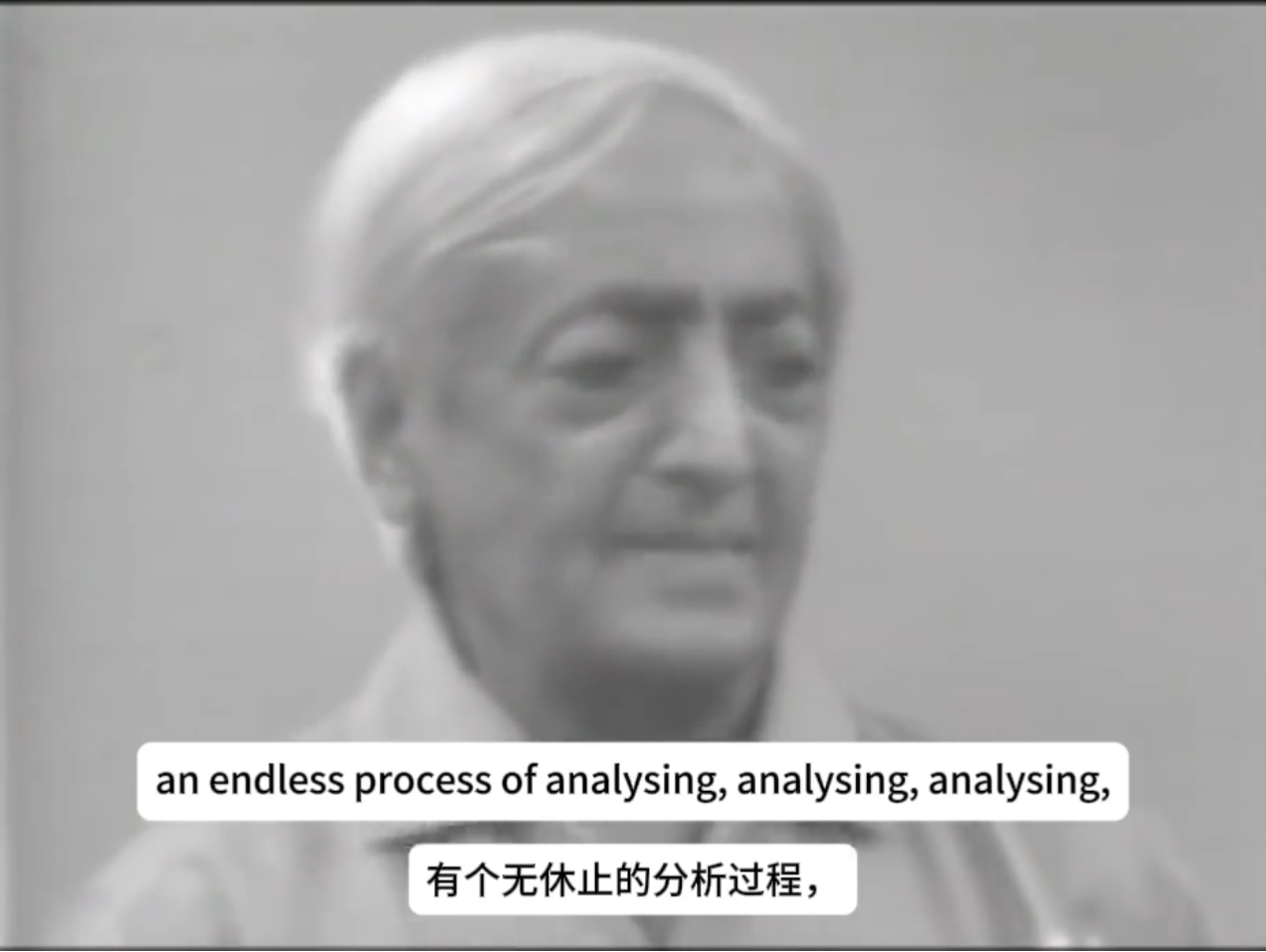
字幕摘录
| 时间 | 英文 | 中文 |
|---|---|---|
| 0:00 | Most of us, probably all of us, in some measure or not, | 我们大多数,也许所有的人, 在某种程度上,或不, |
| 0:09 | we are frightened. | 我们很害怕。 |
| 0:16 | Our life is so uncertain, especially now. | 我们的生活如此不确定,尤其是现在 |
| 0:27 | There is uncertainty of livelihood, uncertainty of wars, | 生活不稳定 战争不确定 |
| 0:33 | uncertainty of these pressures of the world, | 世界这些压力的不确定性, |
| 0:37 | the enormity of two powers, | 两种权力是巨大的, |
| 0:39 | what is all going to come out, and so on, so on, politically. | 政治方面,所有的东西都会出现,等等。 |
| 0:45 | We are anxious. | 我们很焦虑。 |
| 0:47 | That means we are frightened. | 这意味着我们害怕。 |
| 0:51 | You may lose your job. | 你可能会失去你的工作。 |
展开字幕全文(197 条)
| 序号 | 英文 | 中文 |
|---|---|---|
| 1 | Most of us, probably all of us, in some measure or not, | 我们大多数,也许所有的人, 在某种程度上,或不, |
| 2 | we are frightened. | 我们很害怕。 |
| 3 | Our life is so uncertain, especially now. | 我们的生活如此不确定,尤其是现在 |
| 4 | There is uncertainty of livelihood, uncertainty of wars, | 生活不稳定 战争不确定 |
| 5 | uncertainty of these pressures of the world, | 世界这些压力的不确定性, |
| 6 | the enormity of two powers, | 两种权力是巨大的, |
| 7 | what is all going to come out, and so on, so on, politically. | 政治方面,所有的东西都会出现,等等。 |
| 8 | We are anxious. | 我们很焦虑。 |
| 9 | That means we are frightened. | 这意味着我们害怕。 |
| 10 | You may lose your job. | 你可能会失去你的工作。 |
| 11 | Physiologically as well as biologically, one may get ill. | 从生理和生理上来说,人们可能会生病。 |
| 12 | Again, there is fear. | 复有忧惧. |
| 13 | And psychologically, inwardly, there is the fear of loneliness, | 在心理上,在内心里, 孤独的恐惧, |
| 14 | fear of not succeeding, fear of not being loved, | 害怕没有成功 害怕没有被爱 |
| 15 | whatever that may mean, fear of darkness, you know, fear, | 不管那意味着什么 对黑暗的恐惧 你知道 恐惧 |
| 16 | with all its many, many branches. | 和它的许多分支。 |
| 17 | Right? | 对吧? |
| 18 | If you are not afraid, good Lord, there is no guru, | 如果你不怕的话,上帝,没有大师 |
| 19 | there is no authority, there is no search, | 没有权威,没有搜索, |
| 20 | he's a marvellous human being. | 他是一个了不起的人。 |
| 21 | So, we're going to find out, enquiring together, | 所以,我们将发现, 询问一起, |
| 22 | not me alone, find out whether it's possible | 不是我一个人,看看有没有可能 |
| 23 | to have no fear whatsoever, | 毫无畏惧, |
| 24 | both physically as well as psychologically. | 无论是身体上还是心理上 |
| 25 | Are you interested in this? | 你有兴趣吗? |
| 26 | I'm not asking for encouragement, | 我不是在要求鼓励 |
| 27 | because to live under fear is the most appalling thing. | 因为生活在恐惧之中是最可怕的 |
| 28 | It's living in darkness, living in such… | 它生活在黑暗中,生活在这样的... |
| 29 | it brings a sense of shrinking, isolation. | 它带来了一种缩小,孤立的感觉. |
| 30 | You cannot solve this thing, therefore you withdraw. | 你无法解决这个问题,因此你退出。 |
| 31 | And from that withdrawal, fear, all kinds of neurotic actions, | 从这种退缩,恐惧,各种神经行为, |
| 32 | ill health, psychosomatically, it reacts. | 身体不健康,在精神上,它的反应。 |
| 33 | Right? | 对吧? |
| 34 | So, you must, if you're at all serious, go into it very deeply. | 所以,你必须,如果你是认真的, 去非常深刻的。 |
| 35 | You must find out for yourself if fear can end. | 如果恐惧能结束的话,你必须自己找出答案。 |
| 36 | If one may ask, are you aware of your fear? | 如果有人问,你知道你的恐惧吗? |
| 37 | This is not group therapy. | 这不是集体治疗 |
| 38 | You understand? | 你明白吗? |
| 39 | Just enquiring for each one, not a group of us enquiring. | 只是问每个, 不是我们一群人询问。 |
| 40 | That's too meaningless. | 这太无意义了 |
| 41 | I'm asking you, are you aware of your fears? | 我问你,你知道你的恐惧吗? |
| 42 | If you are, do you see the consequences of it, | 如果你是,你会看到它的后果, |
| 43 | the running away from it, rationalising it, suppressing it, | 他们逃避天谴, |
| 44 | or avoiding it and the identification becomes greater and greater, | 或逃避它,而识别 变得越来越大, |
| 45 | and so on. | 诸如来. |
| 46 | Now, what is the root of fear? | 恐惧的根源是什么? |
| 47 | You understand? | 你明白吗? |
| 48 | Not, I'm afraid about something, or because of something, | 不,我害怕什么,或者因为什么, |
| 49 | or I'm afraid that you might do something, | 或者我怕你会做点什么 |
| 50 | but apart from that, at the very root of it. | 但除此之外,它的根本。 |
| 51 | Do you want to find out the root of it, or are you waiting for an answer? | 你想找出它的根, 还是等待一个答案? |
| 52 | I can answer it, but then what happens? | 我可以回答,但会发生什么? |
| 53 | You either see, yes, that is so, you accept it, | 你要么看,是的,这就是,你接受它, |
| 54 | and it becomes an idea, and you have gone away from the fact. | 这成为了一个想法, 你离开了事实。 |
| 55 | So, you have to ask this question for yourself. | 所以,你必须自己问这个问题。 |
| 56 | What is the root of all this enormous sense of fear | 这种巨大的恐惧感的根源是什么? |
| 57 | in our relationship, in our activities, in our jobs, | 在我们的关系, 在我们的活动, 在我们的工作, |
| 58 | in our future life, you know, the whole business of it? | 在我们的未来生活中, 你知道,它的全部业务? |
| 59 | Do you ask the question to totally cut the root, | 你问这个问题是为了彻底割根 |
| 60 | or you are asking intellectually? | 还是你从智力上问? |
| 61 | You follow? | 你明白吗? |
| 62 | I wonder if you understand. | 我想知道你是否理解这一点。 |
| 63 | Look, I'll explain what I mean. | 听着,我会解释我的意思。 |
| 64 | I want to find out why I'm afraid. | 我想找出我为什么害怕 |
| 65 | I can find out the various causes of it. | 能知种种因缘. |
| 66 | That's fairly simple. | 这很简单。 |
| 67 | I'm afraid because I've done something I shouldn't have done. | 我害怕 因为我做了不该做的事 |
| 68 | You might discover it, therefore I'm frightened. | 你可能发现它, 所以我害怕。 |
| 69 | Or I'm afraid I might lose my job, | 或者我担心我可能失业 |
| 70 | I want a better job, and so on, so on. | 我想要一份更好的工作,等等,等等。 |
| 71 | Or I'm so attached to my wife, | 或者我那么依恋我妻子 |
| 72 | I feel she might any moment leave me, and I'm frightened. | 我觉得她随时可能离开我 我很害怕 |
| 73 | You follow? | 你明白吗? |
| 74 | The whole business of fear. | 恐惧的事业 |
| 75 | Am I actually in contact with fear, | 我其实是在与恐惧接触, |
| 76 | or I am in contact with the idea of fear? | 还是我和恐惧的想法有联系? |
| 77 | You understand? | 你明白吗? |
| 78 | Which is it? | 是哪个? |
| 79 | The idea of fear or actual fear? | 恐惧还是真正的恐惧? |
| 80 | Come on, somebody. | 来吧,有人。 |
| 81 | Please, madame, don't take notes for the love of God. | 请夫人不要为上帝的爱做笔记 |
| 82 | If you take notes, you can't listen. | 若作笔记则不能听. |
| 83 | It's your problem. | 这是你的问题。 |
| 84 | The writing down is not at issue now, but to find out. | 写下来现在不是问题,而是为了找出答案。 |
| 85 | Now, I can investigate, analyse the cause – right? | 现在,我可以调查,分析原因,对吧? |
| 86 | – | - 说吧 |
| 87 | the cause and the sequence. | 原因和顺序 |
| 88 | I can analyse it, but analysis doesn't solve the problem. | 我可以分析,但分析并不能解决问题. |
| 89 | You must know that. | 你必须知道这一点。 |
| 90 | Because the analyser thinks he's different from the analysed. | 因为分析家认为他与分析者不同. |
| 91 | Right? | 对吧? |
| 92 | You may have heard this before, | 你可能听过这个 |
| 93 | so don't get bored with it or smile and say, | 所以不要厌烦它 或微笑和说, |
| 94 | yes, he's going back to the old stuff. | 是的,他会回到旧东西。 |
| 95 | But you have to understand this. | 但你必须明白这一点。 |
| 96 | If you understand it, if you see the truth of it, | 如果你理解它,如果你看到它的真实性, |
| 97 | then you will do something. | 然后你会做一些事情。 |
| 98 | We are not analysing, but observing. | 我们不是在分析 而是在观察 |
| 99 | Analysis is entirely different from observation. | 分析与观察完全不同. |
| 100 | Right? | 对吧? |
| 101 | Observation implies, without the observer, to look. | 观察意味着,没有观察者,就能看到。 |
| 102 | Whereas if you analyse the cause, why and the reasons and go on, | 如果你分析原因,原因,然后继续 |
| 103 | analysing, analysing, there is implied several things, | 分析,分析, 有一些暗示, |
| 104 | which is, there's the analyser thinking that he's different from the analysed, | 也就是说 分析器认为他和分析结果不同 |
| 105 | and that involves time, an endless process of analysing, analysing, | 而这涉及到时间, 一个无休止的分析,分析, |
| 106 | at the end of your life, he says you're still analysing, | 在你生命的最后, 他说你仍在分析, |
| 107 | without bringing about fundamental transformation. | 不带来根本的转变 |
| 108 | Whereas if you observe, just to observe, | 如果你观察,只是观察, |
| 109 | that is, without any analysis, just to look, | 也就是说,没有任何分析,只是看看, |
| 110 | which is negative action. | 这是消极的行动。 |
| 111 | The positive action is to look, analyse, do something about it. | 积极行动是研究、分析、采取行动。 |
| 112 | Whereas the negative action, | 鉴于消极行动, |
| 113 | which is totally different from the positive action, | 这与积极行动完全不同, |
| 114 | is to observe. | 是观察。 |
| 115 | Right? | 对吧? |
| 116 | Then that observation not only tells the story of what is being observed, | 然后,这一观察不仅讲述了所观察到的情况, |
| 117 | it tells you the story of what is being observed, | 它告诉你被观察者的故事, |
| 118 | and also that observation itself brings about a movement of change | 以及这一观察本身带来了变革运动 |
| 119 | in that which is being observed. | 以被观察者发誓, |
| 120 | Right? | 对吧? |
| 121 | Do get this. | 接这个 |
| 122 | Even the so-called scientists are agreeing with what we're talking about, | 甚至所谓的科学家也同意我们所说的 |
| 123 | so you're quite safe. | 所以,你相当安全。 |
| 124 | That is, if you watch through a microscope some cell, | 也就是说 如果你通过显微镜看一些细胞 |
| 125 | if you come to it with a conclusion, | 如果你有一个结论, |
| 126 | with wanting to use it for further purposes | 并且想用它做进一步的目的 |
| 127 | and making money or whatever it is, | 和赚钱或任何东西, |
| 128 | then you don't see the movement of the cell itself changing. | 然后,你不会看到细胞本身的移动变化。 |
| 129 | You understand this? | 你明白吗? |
| 130 | So, to observe without any movement of thought, | 所以,在没有任何思想运动的情况下观察, |
| 131 | any movement of trying to change it, any movement to go beyond it, | 任何试图改变它的行动,任何超越它的行动, |
| 132 | just to watch. | 只是为了看。 |
| 133 | When you watch so closely without any sense of direction, motive, | 当你这么密切的看 没有任何方向感,动机, |
| 134 | the thing that you're watching itself | 你看着自己的东西 |
| 135 | undergoes a fundamental change, full stop. | 经历根本的改变,全站。 |
| 136 | Are you doing it? | 你在做吗? |
| 137 | Not agreeing with me. | 不同意我的话 |
| 138 | Can you watch your fear in this manner? | 你能这样看着你的恐惧吗? |
| 139 | It doesn't need practice. | 它不需要练习。 |
| 140 | That's one of our pet theories. | 这是我们的宠物理论之一。 |
| 141 | If you're interested, if you're concerned in the freedom of fear, | 如果你感兴趣 如果你关心恐惧的自由 |
| 142 | you observe, and that observation is passionate, | 你应当观察,而观察是热情的, |
| 143 | it's not just casual, intellectual observation. | 不只是随意的智力观察 |
| 144 | So, can you observe the fear, the root of it, | 所以,你能观察恐惧,它的根源, |
| 145 | which we're going to minute, the root of it, without any analysis? | 我们接下来要谈的是它的根源, 没有任何分析? |
| 146 | Now, what is the root of fear, all fear? | 现在,什么是恐惧的根源,所有的恐惧? |
| 147 | What do you think it is? | 你觉得是什么? |
| 148 | Is it not time? | 现在不是时候吗? |
| 149 | Right? | 对吧? |
| 150 | I might be ill, I might lose my job, | 我可能病了,我可能失业, |
| 151 | I might be discovered at the wrong things which I've done, | 我可能被发现 在错误的事情 我做了, |
| 152 | I am afraid of death, which is in the distance, | 我害怕死亡,这是遥远的, |
| 153 | I'm afraid my wife might get angry. | 我怕我老婆会生气 |
| 154 | Might. | 也许 |
| 155 | Just look at it, I'm not asking you to accept it. | 看吧,我不是要你接受这个 |
| 156 | Just observe it. | 只是观察它。 |
| 157 | First, reason, logic, non-personal, and therefore look. | 首先,理性,逻辑,非个人,因此,看. |
| 158 | Is not fear the movement of time? | 难道不怕时间的移动吗? |
| 159 | Movement means time, from here to there, | 移动意味着时间 从这里到那里 |
| 160 | from the past to the present, from the present to the future, | 从过去到现在 从现在到未来 |
| 161 | all that is movement, which is called time. | 运动就是时间 |
| 162 | Now, is that not movement of time, thought? | 现在,这不是时间的移动,思考? |
| 163 | I think I might lose my job, I think my wife may be angry, | 我想我可能会失去工作, 我想我的妻子可能会生气, |
| 164 | or my wife may discover that I've looked at another woman, | 或者我妻子会发现 我看过另一个女人 |
| 165 | and so on and so on. | 诸如来等. |
| 166 | So, can you observe the movement of time, which is thought, | 所以,你能观察时间的移动吗? |
| 167 | which is the root of fear? | 恐惧的根源是什么? |
| 168 | Observe it without trying to do something about it. | 观察而不欲修行. |
| 169 | It's like a scientist looking through a microscope, | 这就像一个科学家 通过显微镜, |
| 170 | and if he projects what it should be, or what it might be, | 如果他预测它应该是什么,或是什么, |
| 171 | that remains as is, because he is dictating what it should be. | 情况依然如此,因为他正在决定它应该是什么。 |
| 172 | Whereas if he's not dictating, if he has no... | 而如果他不说话,如果他没有... |
| 173 | he's just looking, that very thing at which he's looking | 他只是在看, 就是他正在看的东西 |
| 174 | through a microscope, beginning to change, beginning to move. | 通过显微镜,开始改变,开始移动. |
| 175 | You understand? | 你明白吗? |
| 176 | Are you doing this? | 你这样做吗? |
| 177 | Which means observation implies the absence of the observer, | 这意味着观察意味着没有观察员, |
| 178 | who is the past, who has got theories, conclusions, | 谁是过去,谁得到了理论,结论, |
| 179 | hopes, fears, directions, and so on, so on, so on, | 希望、恐惧、方向等等 |
| 180 | to look without the observer. | 没有观察者。 |
| 181 | That does not need discipline, that does not need practice, | 这不需要纪律 不需要实践 |
| 182 | just to look without your wanting something out of it. | 只是看你没有想要的东西出来。 |
| 183 | Then you will see, if you so look, | 然后,你会看到,如果你这样看, |
| 184 | the very root of fear is beginning to completely change. | 恐惧的根源开始彻底改变。 |
| 185 | That means the root is the observation, | 这意味着根是观察, |
| 186 | the observing so carefully, alertly, with passion, | 仔细观察 敏锐地 充满激情 |
| 187 | the root begins to dissolve, which is the action of negation. | 根开始溶解,这就是否定的行为。 |
| 188 | You understand? | 你明白吗? |
| 189 | Have you got something of this? | 你有这个吗? |
| 190 | You know, this is part of meditation. | 这是冥想的一部分 |
| 191 | Meditation is not repeating some words, | 冥想不重复一些词, |
| 192 | sitting quietly cross-legged, | 静静地坐着, |
| 193 | twenty minutes in the morning, twenty minutes, all that nonsense. | 20分钟的早晨,20分钟, 所有的废话。 |
| 194 | How can a mind meditate if it is full of fears, | 如果心智充满恐惧 怎么会沉思呢? |
| 195 | or is attached to something? | 还是跟什么有关? |
| 196 | The understanding and the freedom from fear is part of meditation. | 理解和免于恐惧是冥想的一部分。 |
| 197 | It is totally, entirely related to daily life. | 它与日常生活完全有关。 |
该视频共有字幕 197 条。解锁更多字幕为会员功能,请移动到 价格