Ellie Anderson:阅读哲学的技巧
共 2 集
剧集目录
| 集 | 标题 | 时长 |
|---|---|---|
| P1 | Ellie Anderson:阅读哲学的技巧 上 | 7:34 |
| P2 | Ellie Anderson:阅读哲学的技巧 下 | 6:29 |
P1 · Ellie Anderson:阅读哲学的技巧 p01 上 (P1)
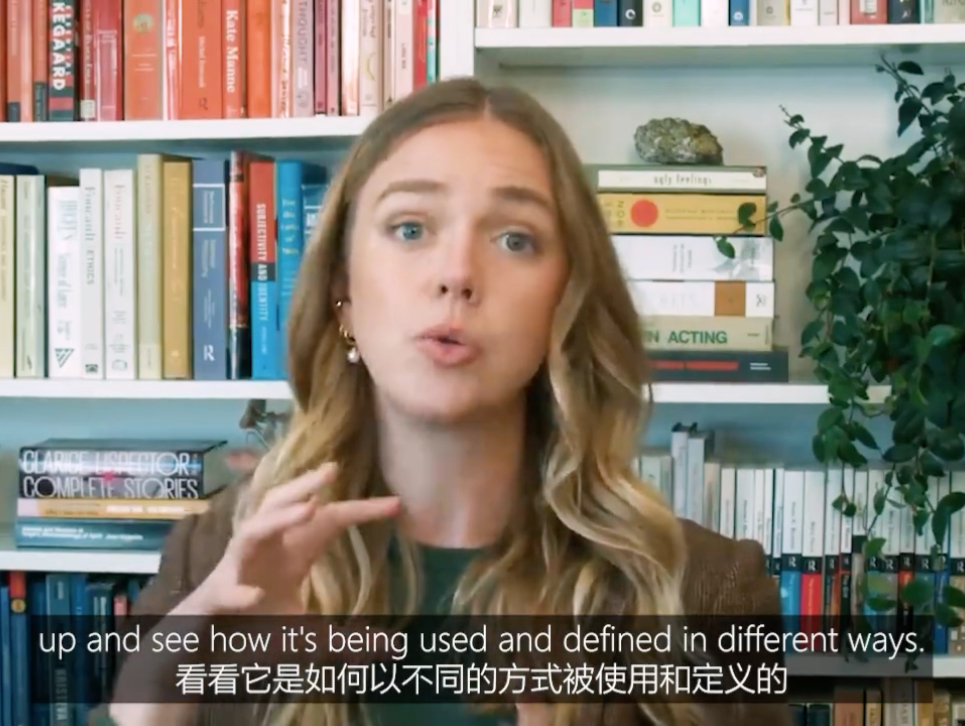
字幕摘录
| 时间 | 英文 | 中文 |
|---|---|---|
| 0:00 | I'm Professor Ellie Anderson, and I'm here to share with you some tips for reading philosophy, | 我是艾莉·安德森教授 我来和你们分享一些 关于阅读哲学的提示 |
| 0:06 | otherwise known as advice for reading texts that seem very boring at first, but are actually | 被称作阅读文本的建议 起初看起来很无聊 但实际上 |
| 0:10 | amazing and very much worth your time. | 令人惊讶,非常值得你的时间。 |
| 0:12 | If you spent any time trying to read philosophy, you may have found that much of it is very, | 如果你花任何时间试图阅读哲学, 你可能已经发现它的大部分是非常, |
| 0:17 | very hard, like way harder than most things you've ever read in your entire life. | 就像你一生读过的东西一样 |
| 0:24 | How could you possibly comprehend what's going on? | 你怎么可能理解 发生了什么事? |
| 0:28 | Here's one of just many possible examples, opening to a random page of Hegel's Phenomenology | 以下是许多可能的例子之一, 打开一个随机的页 黑格尔的外观学 |
| 0:33 | of Spirit. | 灵性 |
| 0:34 | Sensuous singularity, therefore, does indeed vanish in the dialectical movement of immediate | 因此,敏锐的奇异性确实在即时的辩证运动中消失了。 |
| 0:38 | certainty and becomes universality, but it becomes only sensuous universality. | 确定性并成为普遍性,但它只是意义深远的普遍性。 |
展开字幕全文(117 条)
| 序号 | 英文 | 中文 |
|---|---|---|
| 1 | I'm Professor Ellie Anderson, and I'm here to share with you some tips for reading philosophy, | 我是艾莉·安德森教授 我来和你们分享一些 关于阅读哲学的提示 |
| 2 | otherwise known as advice for reading texts that seem very boring at first, but are actually | 被称作阅读文本的建议 起初看起来很无聊 但实际上 |
| 3 | amazing and very much worth your time. | 令人惊讶,非常值得你的时间。 |
| 4 | If you spent any time trying to read philosophy, you may have found that much of it is very, | 如果你花任何时间试图阅读哲学, 你可能已经发现它的大部分是非常, |
| 5 | very hard, like way harder than most things you've ever read in your entire life. | 就像你一生读过的东西一样 |
| 6 | How could you possibly comprehend what's going on? | 你怎么可能理解 发生了什么事? |
| 7 | Here's one of just many possible examples, opening to a random page of Hegel's Phenomenology | 以下是许多可能的例子之一, 打开一个随机的页 黑格尔的外观学 |
| 8 | of Spirit. | 灵性 |
| 9 | Sensuous singularity, therefore, does indeed vanish in the dialectical movement of immediate | 因此,敏锐的奇异性确实在即时的辩证运动中消失了。 |
| 10 | certainty and becomes universality, but it becomes only sensuous universality. | 确定性并成为普遍性,但它只是意义深远的普遍性。 |
| 11 | Or let's open to a random page of Deleuze and Gautiery's A Thousand Plateaus. | 或者让我们打开一个随机的网页 德莱乌兹和高蒂埃利的一千高原。 |
| 12 | Since every articulation is double, there is not an articulation of content and an articulation | 由于每次表达都是双重的,所以没有表达内容和表达 |
| 13 | of an expression. | 一个表达。 |
| 14 | The articulation of content is double in its own right and constitutes a relative expression | 内容的表达本身是双重的,构成相对表达 |
| 15 | within content. | 在内容中。 |
| 16 | The articulation of expression is also double and constitutes a relative content within | 表达方式也具有双重性,构成内部的相对内容。 |
| 17 | expression. | 表达式。 |
| 18 | So, how do we make sense of these? | 那么,我们如何理解这些? |
| 19 | Now the best way to do this is to learn from other people, right? | 现在最好的方法是 向其他人学习,对不对? |
| 20 | Learn from somebody who has expertise in this area. | 从这个领域有专长的人那里学习。 |
| 21 | My YouTube lectures are all well and good, as are those of many others, but it's sometimes | 我的YouTube讲座都很好,还有很多其他讲座,但有时候 |
| 22 | hard to separate what's legit from what's not legit. | 很难区分什么是合法的和什么是不合法的。 |
| 23 | There's a lot of not legit stuff out there. | 外面有很多不合法的东西 |
| 24 | So if you can enroll in some sort of course taught by somebody with expertise in this | 所以,如果你能注册 某种课程 由有专长的人教授 |
| 25 | area, I would highly recommend doing so. | 我强烈建议这样做。 |
| 26 | You can also develop at least some sort of reading group, perhaps, with other people | 你至少可以和别人一起发展某种阅读组 |
| 27 | online. | 在线。 |
| 28 | I also recommend working with online resources that are vetted by the profession. | 我亦建议透过网络资源, |
| 29 | Stanford Encyclopedia of Philosophy and the Internet Encyclopedia of Philosophy are the | 斯坦福哲学百科全书和互联网哲学百科全书是 |
| 30 | two primary open access encyclopedias of philosophy that are available online. | 两个主要开放访问 哲学百科全书,可以在线查阅。 |
| 31 | Please use them rather than Wikipedia, although there's also a lot of good stuff on Wikipedia | 请不要用维基百科,虽然维基百科上也有不少好东西 |
| 32 | too. | 也一样。 |
| 33 | It's just not peer reviewed and peer review is important. | 只是没有同行评审,同行评审很重要. |
| 34 | Now let's get to some specific tips for what to do once you open the book and are trying | 现在,让我们得到一些 具体的提示如何做 当你打开的书 并尝试 |
| 35 | to figure out how to understand it. | 想办法理解它。 |
| 36 | Now one of the tips that I suggest to my students is what I call the skim and slog. | 现在,我向学生们建议的一个提示 就是,我所说的滑雪和口水。 |
| 37 | The skim and slog involves first skimming a portion of a text. | 缩写和缩写包括首先略去文字的一部分。 |
| 38 | Maybe it's a paragraph, maybe it's a couple of pages, maybe it's even an entire chapter, | 也许是一段 可能是几页 甚至整个章节 |
| 39 | and then going back and really closely reading it. | 然后回去仔细阅读 |
| 40 | I sometimes find that this can be more helpful than just slogging through the text from the | 我有时会发现,这比仅仅通过文字的搜索更有用。 |
| 41 | beginning, trying to understand every single sentence, taking forever to do so, because | 开始,试图理解每一个句子, 永远这样做,因为 |
| 42 | it'll help give you a little bit of the shape of where the argument is going even if you | 它会帮助你一点点的形状 辩论将去的地方,即使你 |
| 43 | don't understand the argument itself while you're reading it. | 在你读的时候,不要理解争论本身. |
| 44 | This is especially helpful with philosophical texts that are in the continental tradition | 这对大陆传统哲学著作特别有帮助 |
| 45 | where there's not often a clear definition of a term that's given from the outset. | 从一开始,这个词的定义往往不明确。 |
| 46 | You gather the definition of the term over time through the author's repeated use of | 通过作者反复使用 |
| 47 | it. | 这个 |
| 48 | You get a sense of the shape of what the author is meaning by a particular term. | 你得到一种感觉 作者的形状是什么 由特定的术语。 |
| 49 | So sometimes you can just kind of skim it at first and then go back through it in greater | 所以有时你可以只是 那种滑动它一开始, 然后回到它更大 |
| 50 | detail. | 细节。 |
| 51 | Most philosophical writings are not exactly page turners, so don't worry about the skim | 大多数哲学著作并不完全翻页,所以不用担心滑稽 |
| 52 | and slog giving you spoilers for what's to come, right? | 和slog给你的破坏者 未来,对不对? |
| 53 | Nobody ever gave a spoiler alert for the critique of pure reason. | 从来没有人给破坏者警告 批评纯理性。 |
| 54 | Instead, it can be helpful to know where an author is going and then backtrack and work | 相反,了解作者的去向,然后回溯和工作,可能有所帮助。 |
| 55 | your way through. | 你通过。 |
| 56 | Don't be worried also if you don't even after slogging through it, that second step, understand | 不要担心,如果你甚至没有 浏览它,第二步,明白 |
| 57 | the whole text. | 整个文字。 |
| 58 | That's fine. | 没关系 |
| 59 | I've read Hegel's Phenomenology of Spirit more than once, and I still don't understand | 我不止一次读过黑格尔的"精神现象学" 我仍然不明白 |
| 60 | everything in it. | 里面的所有东西 |
| 61 | I also highly recommend annotating philosophical texts as you're reading them through highlighting | 我也非常建议你读到哲学文本时要注意 |
| 62 | and writing marginal notes, or underlining if you prefer that to highlighting, both those | 写边际笔记,或者如果你想强调,则强调, |
| 63 | equally valid. | 同样有效。 |
| 64 | Okay, so when you are doing that though, I actually recommend waiting until the end of | 好吧,所以当你这样做,虽然, 我实际上建议等待到结束 |
| 65 | a paragraph, sometimes even the end of a page or section. | 一段,有时甚至一页或一节的结尾。 |
| 66 | If you're anything like me, you might, as you're reading a philosophical text, be tempted | 如果你像我一样 你可能会在读哲学文本时 被诱惑 |
| 67 | to underline, highlight, and or write marginal notes on just about everything, and that's | 来强调、突出和或写关于一切的边缘笔记 |
| 68 | not always the best way to do it because then you just have a sea of color on your page | 并不总是最好的方法做到这一点,因为你只是有一个颜色海 在你的页面 |
| 69 | and it's really hard to tell what actually were the most important points versus the | 很难分辨到底什么是 最重要的点与 |
| 70 | less important points. | 不太重要的一点。 |
| 71 | In Jean-Paul Sartre's Being a Nothingness, for instance, some of the first times that | 例如,在让-保罗·萨特的《无所事事》中, |
| 72 | he introduces a word are actually the least helpful and he'll offer the definition later, | 他介绍一个词其实最没有帮助 他稍后会给出定义 |
| 73 | so I'll wait till that definition comes more clearly later and then make an annotation. | 我等下定义更清楚之后再做注释 |
| 74 | That way, as I flip through my book, I have less to focus on in my annotations. | 这样,当我翻翻我的书时,我的注解中就不那么集中了. |
| 75 | This also gives you a chance to take stock at the end of a given paragraph, page, or | 这也使你有机会在某一段落、页或 |
| 76 | section and look back and see what you think was the most important point, or the most | 来看你认为什么是最重要的,或者说 |
| 77 | important points. | 要点。 |
| 78 | In addition to that, and I know this takes a while, but I usually recommend after a reading | 除此之外,我知道这需要一段时间, 但我通常建议在读完之后 |
| 79 | session to take a few notes in a notebook or in an app about what you read, and that | 在笔记本或应用程序中记录你读到的 |
| 80 | can also really help give you a sense of the shape of the argument. | 也可以真正帮助你感受一下争论的形状. |
| 81 | In addition to being helpful for knowing where the author is talking about certain things, | 除了帮助了解作者在说什么 |
| 82 | so if you see a keyword appear early on and you have a note on that in your app, then | 所以,如果你看到一个关键词 早期出现,你有一个注释 在你的应用程序,然后 |
| 83 | you can go back and text search it later when you get to a different section that uses | 您可以返回到另一个使用文字的段落, 稍后再进行文字搜索 |
| 84 | that. | 那个 |
| 85 | You're like, where was that again? | 你好像又说到哪儿了? |
| 86 | How was it defined? | 如何定义? |
| 87 | You can even juxtapose the different places that that keyword comes up and see how it's | 你甚至可以把关键词出现的不同地方 相提并论,看看情况如何 |
| 88 | being used and defined in different ways, but complementary, hopefully, if the author | 以不同方式使用和界定,但希望,如果作者是补充的, |
| 89 | is being consistent, ways throughout the text. | 整个案文始终如一。 |
| 90 | Another recommendation for reading philosophy is to watch out for the logical moves that | 阅读哲学的另一个建议是注意逻辑动作 |
| 91 | are being made. | 正在制作中。 |
| 92 | One of philosophy's greatest assets is its emphasis on the coherence of arguments. | 哲学的最大资产之一是强调论点的一致性. |
| 93 | Arguments should be coherent. | 争论应该一致。 |
| 94 | They should be valid and they should be sound. | 它们应该有效,而且应该健全。 |
| 95 | As you're reading, take note of how the author builds on one point and then moves to another. | 在阅读时,注意作者如何建立在某一点之上,然后移动到另一点. |
| 96 | And you also might want to make a visual map of the list of premises that are being used. | 你也许也要绘制一个 正在使用的建筑的图像图。 |
| 97 | So the author says one thing, then builds on it with a second premise or makes a second | 所以作者说一件事,然后用第二个前提来发展,或者做第二个 |
| 98 | premise that's related, but not even necessarily building on it, and then moves to a conclusion. | 前提是相关的,但 不一定建立在它之上, 然后走向一个结论。 |
| 99 | Really making notes of those, I think, can be helpful. | 我认为,真正记下这些可以有所帮助。 |
| 100 | And also look out for potential errors or logical fallacies, which you can find lists | 同时注意潜在的错误或逻辑错误, 您可以找到列表 |
| 101 | of online. | 在线。 |
| 102 | Philosophers are not perfect. | 哲学家并不完美。 |
| 103 | We definitely make mistakes. | 我们绝对会犯错 |
| 104 | And if you do find an error, then reflect on how much or how little of the argument | 如果你确实发现一个错误, 然后思考 多少或多少争论 |
| 105 | this bears on. | 继续前进 |
| 106 | Does this error that you found in the argument actually undermine the author's whole claim | 您在争论中发现的这个错误是否实际上破坏了提交人的整个诉求? |
| 107 | in a given section or a given text? | 在某个章节中还是某个文本中? |
| 108 | Or is it somewhat minor, undermining a certain point but not really becoming an issue for | 或者说,这有点小, 破坏某一点,但实际上不是一个问题 |
| 109 | other aspects of the argument? | 论点的其他方面? |
| 110 | This really aids critical thinking and forces you to find the parts of the argument that | 这真的帮助了批判性的思考 并迫使你找到 论点的部分 |
| 111 | are doing the heavy lifting. | 正在做举重。 |
| 112 | Alright, let's think about attention. | 好吧,让我们考虑注意。 |
| 113 | It's very common when people are reading philosophy, even seasoned readers of philosophy, | 当人们在阅读哲学, 甚至是哲学的老练读者时, 这是很常见的, |
| 114 | to have the urge periodically to stop reading. | 要求定期停止阅读。 |
| 115 | Maybe you want to check your phone, maybe you actually hear a ding on your phone, or | 也许你想检查你的手机, 也许你真的听到一个叮当在你的手机, |
| 116 | you want to get up and do something else and then come back to it. | 你想起来做别的事 然后回来 |
| 117 | You're just kind of bored or impatient. | 你只是有点无聊或不耐烦 |
该视频共有字幕 117 条。解锁更多字幕为会员功能,请移动到 价格
P2 · Ellie Anderson:阅读哲学的技巧 p02 下 (P2)
字幕摘录
| 时间 | 英文 | 中文 |
|---|---|---|
| 0:00 | It's very common when people are reading philosophy, even seasoned readers of philosophy, | 当人们在阅读哲学, 甚至是哲学的老练读者时, 这是很常见的, |
| 0:05 | to have the urge periodically to stop reading. | 要求定期停止阅读。 |
| 0:08 | Maybe you want to check your phone, maybe you | 也许你想检查你的手机,也许你 |
| 0:10 | actually hear a ding on your phone, or you want to get up and do something else and then come back | 其实听到你手机上的叮当声 或者你想站起来做别的事 然后回来 |
| 0:15 | to it. | 对它。 |
| 0:15 | You're just kind of bored or impatient. | 你只是有点无聊或不耐烦 |
| 0:18 | That's okay. | 没关系 |
| 0:19 | That urge is okay. | 冲动是好的。 |
| 0:22 | I encourage you | 我鼓励你 |
| 0:24 | resist the urge. | 抵制冲动。 |
展开字幕全文(116 条)
| 序号 | 英文 | 中文 |
|---|---|---|
| 1 | It's very common when people are reading philosophy, even seasoned readers of philosophy, | 当人们在阅读哲学, 甚至是哲学的老练读者时, 这是很常见的, |
| 2 | to have the urge periodically to stop reading. | 要求定期停止阅读。 |
| 3 | Maybe you want to check your phone, maybe you | 也许你想检查你的手机,也许你 |
| 4 | actually hear a ding on your phone, or you want to get up and do something else and then come back | 其实听到你手机上的叮当声 或者你想站起来做别的事 然后回来 |
| 5 | to it. | 对它。 |
| 6 | You're just kind of bored or impatient. | 你只是有点无聊或不耐烦 |
| 7 | That's okay. | 没关系 |
| 8 | That urge is okay. | 冲动是好的。 |
| 9 | I encourage you | 我鼓励你 |
| 10 | resist the urge. | 抵制冲动。 |
| 11 | Resist it the first time, resist it the second time. | 第一次抵制,第二次抵制. |
| 12 | Maybe resist it | 也许能抗拒它 |
| 13 | the third time, but I'll leave that to you. | 第三次,但我会留给你。 |
| 14 | Definitely resist it the first two times. | 绝对是头两次抗拒 |
| 15 | Notice it and have a mindful moment of saying, hey, I'm experiencing some resistance to this | 注意一点 注意一点说 我遇到一些阻力 |
| 16 | text right now. | 现在发短信。 |
| 17 | I feel like I'm not really getting it, or I'm bored, or I'm impatient. | 我感到自己没有真正得到它,或者感到无聊,或者感到不耐烦. |
| 18 | Just make a mental note of that and then continue reading. | 记下这个 然后继续读 |
| 19 | Resisting this urge builds up your | 抗拒这种冲动会增强你的能力 |
| 20 | stamina and allows you to get more deeply into the text. | 忍耐力并允许您深入文字。 |
| 21 | There have been studies of marathon | 有马拉松的研究 |
| 22 | runners that show that the body sends signals to the brain saying, I'm done, well before the body | 显示身体向大脑发出信号的跑者 说,我完成了,在身体之前 |
| 23 | has actually run out of energy. | 能量已经耗尽 |
| 24 | We have kind of a hair trigger for challenging tasks, especially in | 我们有一个发型触发器 挑战性的任务,特别是 |
| 25 | this day and age when our attention is often so frenetically oriented in different directions. | 我们的注意力常常是 以不同方向为方向的 |
| 26 | Marathon runners learn to ignore this inner voice of I'm done before the body is actually done and | 马拉松跑者学会了忽略我内心的声音 在身体真正完成之前 |
| 27 | develop a different sort of intuition when their body is actually running out of energy when it | 当他们的身体实际上耗尽能量时, 就会形成另一种直觉 |
| 28 | would be dangerous to continue running. | 继续跑会很危险 |
| 29 | I think you can do the same with philosophical reading. | 我想你也可以用哲学来读 |
| 30 | You can develop stamina. | 你可以培养体力 |
| 31 | You can learn to ignore that inner voice of I'm done and then that will | 你可以学会忽略我内心的声音,然后会 |
| 32 | enable a different kind of intuition to kick in, which is intuition of no, no, no, I'm actually | 使另一种直觉可以启动, 这是一种直觉,不,不,不,我其实 |
| 33 | done now. | 现在完成。 |
| 34 | I'm not going to get anywhere. | 我不会得到任何好处。 |
| 35 | I'm not in the right head space to understand this | 我无法理解 |
| 36 | piece of material at the moment. | 目前是一块材料 |
| 37 | So try powering through the first and second urges to stop reading | 因此,尝试通过动力 通过第一和第二 敦促停止阅读 |
| 38 | and then see where that gets you. | 然后看看这让你得到什么。 |
| 39 | Okay. | 摆 |
| 40 | Also, don't check your phone. | 还有,不要检查你的手机。 |
| 41 | Seriously, don't check | 说真的,不要检查 |
| 42 | your phone. | 你的电话 |
| 43 | This is hard for a lot of us, but we tend to think that a quick break to just respond | 这对我们很多人来说是很难的, 但我们往往认为 短暂的休息只是回应 |
| 44 | to a text or check Google for something won't have any effect on our concentration, but studies show | 到一个文本或检查谷歌的东西 不会对我们的集中有任何影响, 但研究显示 |
| 45 | that they have way bigger differences than we realize. | 他们有更大的差异 比我们意识到。 |
| 46 | Even very short breaks greatly diminish | 即使很短的休息时间也大大缩短 |
| 47 | our concentration. | 我们的注意力。 |
| 48 | I'd suggest leaving your phone potentially an audible level or putting it on do | 我建议你把手机放低一点 或者放高一点 |
| 49 | not disturb, but keeping it out of reach or putting it on silent and stowing it all together for a | 不打扰,但保持它 接触或把它放在静默 并把它一起为一个 |
| 50 | period of at least 25 minutes. | 期限至少25分钟。 |
| 51 | I think 25 minutes is a good goal to set when you're first starting | 我觉得25分钟是第一个开始的时候 设置的好目标 |
| 52 | out reading philosophy. | 阅读哲学。 |
| 53 | And this kind of rewiring is not fun at first, but it's crucial. | 而这种复线最初并不好玩,但至关重要. |
| 54 | The next thing I'm going to suggest might initially seem at odds with what I've just been saying, | 我接下来的建议 可能与我刚刚说的话不一致 |
| 55 | but I don't think is at all. | 但我不认为是。 |
| 56 | And this is to read the text in more than one sitting. | 这是用一个以上的座位来阅读文本。 |
| 57 | Like I said, | 就像我说的, |
| 58 | I think a period of 25 minutes can be a good general rule for people who are first starting | 我觉得25分钟的时间 对于第一个开始的人来说 是个很好的通则 |
| 59 | to read philosophy. | 阅读哲学。 |
| 60 | And then maybe you can build up to a couple of hours over time. | 然后,也许你可以 累积到几个小时的时间。 |
| 61 | But I think | 但我觉得 |
| 62 | you know, it can be good to do even an essay in multiple reading sessions, | 你知道,它可以是很好的 即使做一篇散文 在多次阅读会话, |
| 63 | depending on the length and the level of difficulty. | 取决于长度和难度。 |
| 64 | I sometimes find it helpful to | 我有时会觉得有帮助 |
| 65 | have a short first session where I skim the text and then read the first few pages. | 有个简短的第一课,我先略去文字,然后阅读前几页。 |
| 66 | Then I take | 那我来 |
| 67 | a break and then I can come back to it later to read more thoroughly and take notes on it. | 休息一下,然后我就可以回来 以后读得更透彻 并做笔记。 |
| 68 | And | 还有 |
| 69 | again, this depends a lot on the length of the text, right? | 这又取决于文本的长度 对吧? |
| 70 | What I just said might apply more to | 我刚才说的也许更适用于 |
| 71 | an essay. | 一篇论文 |
| 72 | And if you're reading one of these two texts or something like it, it might take you | 如果你读了这两条短信中的一条 或类似的东西,它可能要你 |
| 73 | a year and that's fine. | 一年就够了 |
| 74 | Another note is learn to swim. | 另一个音符是学会游泳。 |
| 75 | I remember when I was first reading Kant | 我记得我第一次读康德的时候 |
| 76 | and finding it impossible to understand that somebody suggested to me that once you actually | 并发现无法理解 有人向我暗示 一旦你实际上 |
| 77 | figure out the basic rhythms of Kant's movements in the arguments, he's really easy to read. | 找出康德在争论中运动的基本节奏,他真的很容易阅读. |
| 78 | He's actually kind of repetitive and he's pretty consistent. | 他实际上有点重复 而且他相当一致。 |
| 79 | That's pretty consistent. | 这是相当一致的。 |
| 80 | He's | 琌 |
| 81 | unusually consistent, maybe not entirely consistent all the time, but he's a very | 异乎寻常的一致,也许不完全一致,但他是一个非常 |
| 82 | consistent thinker. | 持之以恒的思考者。 |
| 83 | And that really catalyzed my sense of confidence in reading Kant. | 这真的激发了我对读康德语的信心。 |
| 84 | What I found | 我找到的东西 |
| 85 | was that I was learning to swim in the waters of Kant's prose. | 我在康德的传言中学习游泳 |
| 86 | And different thinkers have | 不同的思想家们 |
| 87 | different waters, right? | 不同的水域,对不对? |
| 88 | Some might be really hardcore waves off the coast of Portugal that | 有些可能是葡萄牙海岸的硬核海浪 |
| 89 | you need to learn to stay afloat in. | 你得学着呆在这 |
| 90 | Others might be more of a peaceful, lazy river. | 其他人可能更像是一条和平的懒河。 |
| 91 | That would be | 这将是 |
| 92 | perhaps Heraclitus. | 也许赫拉克利特斯。 |
| 93 | Not a lazy river, but at least not peaceful either actually, but a river. | 虽然不是懒惰的河流,但至少实际上也不是和平的,而是一条河流. |
| 94 | Heraclitus is a river, a rushing, rushing river. | 赫拉克利特斯是一条河流,是一条急流的河流. |
| 95 | Maybe Rousseau is a peaceful, lazy river. | 也许卢梭是一条和平的懒河 |
| 96 | In any | 在任何情况下 |
| 97 | what I've often found is that approaching a text this way means that some of the texts that appear | 我经常发现, 接近一个文本 这样意味着一些文本 出现 |
| 98 | hardest to read at first end up actually being among the easiest over time because they have | 一开始最难读的 最终实际上属于最容易 随着时间的推移,因为他们有 |
| 99 | a consistent pattern, a consistent flow. | 一贯的规律,一贯的流量. |
| 100 | What's necessary is the patience to learn to swim, | 需要的是学习游泳的耐心 |
| 101 | to figure out the flow of a given philosopher's approach. | 找出一个哲学家的方法。 |
| 102 | Once you get used to it, you'll be | 一旦你习惯了,你会 |
| 103 | floating. | 阎浮提. |
| 104 | I want to end just by urging you to read philosophy. | 最后,我要敦促你读哲学。 |
| 105 | Because as wonderful as it is | 因为它是美妙的 |
| 106 | 有YouTube的讲座,有播客, 我联合主持 Overthink 播客, | |
| 107 | accessible for non-specialists, to have different online written resources that help you make sense | 非专家可以使用,可以使用不同的在线书面资源,帮助你讲道理 |
| 108 | of philosophy. | 哲学 |
| 109 | Reading is really important if you're trying to understand the kind of thinkers | 你要是想了解那些思想家的话 阅读就很重要 |
| 110 | that I do lectures about. | 我做讲课。 |
| 111 | People like Nietzsche and Hegel and Beauvoir and Arendt. | 尼采,黑格尔,博沃伊和阿伦特等人物. |
| 112 | TLDR 版本 | |
| 113 | of their philosophy is never going to be the whole story. | 他们的哲学永远不会成为整个故事。 |
| 114 | And so I hope that you can see the | 所以我希望你能看见 |
| 115 | online lectures and other resources as an aid in your reading, perhaps as inspiration to read | 在线讲座和其他资源,作为阅读的辅助,或许是阅读的灵感 |
| 116 | the thinkers, and then start the skim and slog, start swimming in the waters yourself. | 思想家们,然后开始滑雪 和slog,开始游泳 在水中自己。 |
该视频共有字幕 116 条。解锁更多字幕为会员功能,请移动到 价格