攻击性交配和性唤起的神经科学
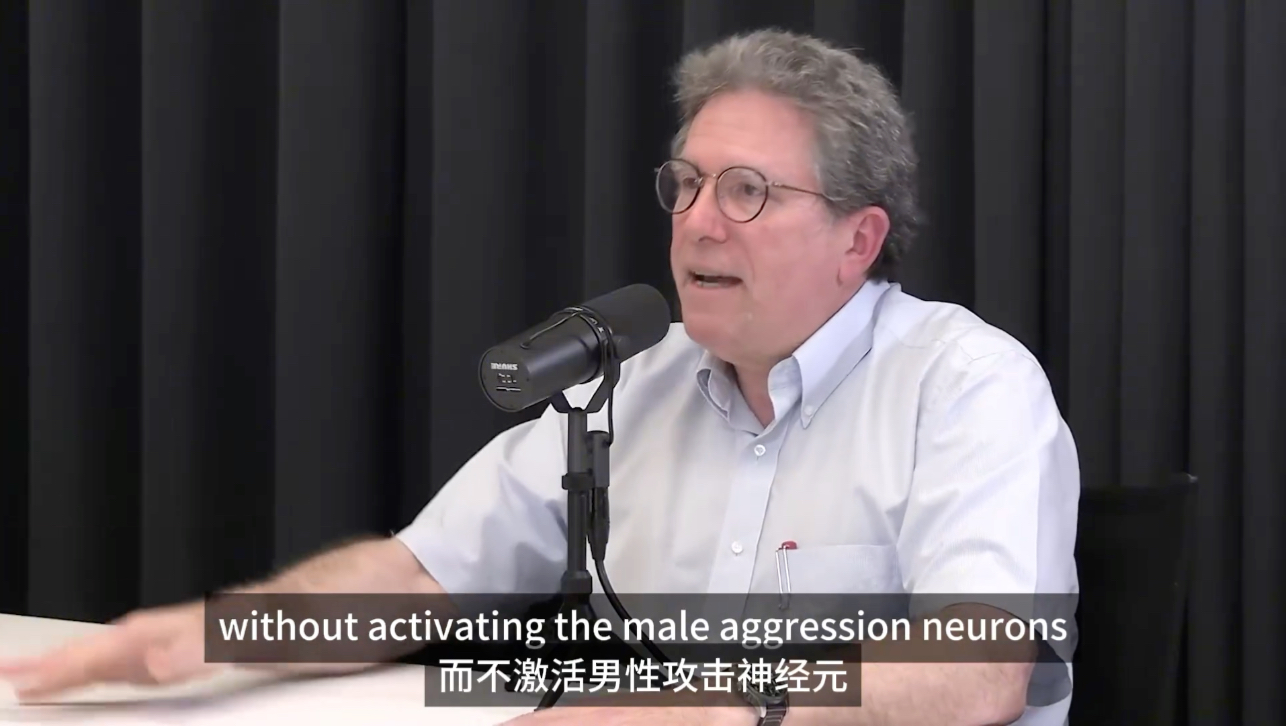
字幕摘录
| 时间 | 英文 | 中文 |
|---|---|---|
| 0:00 | Dr. David Anderson, David, great to be here | 大卫·安德森博士 大卫 很高兴能来 |
| 0:02 | and great to finally sit down and chat with you. | 很高兴终于坐下来和你聊天 |
| 0:04 | Great to be here too, thank you so much. | 很高兴能来,非常感谢 |
| 0:06 | I wanna start with something fairly basic | 我想从基础开始 |
| 0:09 | and that's the difference between emotions and states. | 这就是情感和状态的区别 |
| 0:12 | How should we think about them | 我们该怎么看待他们 |
| 0:14 | and why might states be at least as useful | 以及为什么国家至少可以 |
| 0:18 | a thing to think about, if not more useful? | 考虑一下,如果不是更有用的话? |
| 0:20 | The short answer to your question is that | 你的问题的简短答案是 |
| 0:23 | I see emotions as a type of internal state | 我将情感视为一种内部状态 |
展开字幕全文(660 条)
| 序号 | 英文 | 中文 |
|---|---|---|
| 1 | Dr. David Anderson, David, great to be here | 大卫·安德森博士 大卫 很高兴能来 |
| 2 | and great to finally sit down and chat with you. | 很高兴终于坐下来和你聊天 |
| 3 | Great to be here too, thank you so much. | 很高兴能来,非常感谢 |
| 4 | I wanna start with something fairly basic | 我想从基础开始 |
| 5 | and that's the difference between emotions and states. | 这就是情感和状态的区别 |
| 6 | How should we think about them | 我们该怎么看待他们 |
| 7 | and why might states be at least as useful | 以及为什么国家至少可以 |
| 8 | a thing to think about, if not more useful? | 考虑一下,如果不是更有用的话? |
| 9 | The short answer to your question is that | 你的问题的简短答案是 |
| 10 | I see emotions as a type of internal state | 我将情感视为一种内部状态 |
| 11 | in the sense that arousal's also a type of internal state, | 从arunal也是一种内部状态的意义上来说, |
| 12 | motivation's a type of internal state, | 动机是一种内部状态, |
| 13 | sleep is a type of internal state. | 睡眠是一类内部状态. |
| 14 | They change the input to output transformation of the brain. | 它们将输入改为脑的输出转化. |
| 15 | When you're asleep, you don't hear something | 当你睡着了,你没有听到什么 |
| 16 | that you would hear if you were awake. | 如果你醒了,你会听到。 |
| 17 | So from that broad perspective, | 所以从广义的角度来看 |
| 18 | I see emotion as a class of state that controls behavior. | 我将情感视为一种控制行为的状态。 |
| 19 | The reason I think it's useful to think about it as a state | 考虑一下这个州是有用的 |
| 20 | is it puts the focus on it as a neurobiological process | 它把注意力放在神经生物学上 |
| 21 | rather than as a psychological process. | 而不是作为一个心理过程。 |
| 22 | Many people equate emotion with feeling, | 很多人将情感等同于感觉 |
| 23 | which is a subjective sense that we can only study in humans | 这是一种主观感 我们只能研究人类 |
| 24 | because to find out what someone's feeling, | 因为为了了解别人的感受 |
| 25 | you have to ask them and people are the only animals | 你必须问他们 人是唯一的动物 |
| 26 | that can talk that we can understand. | 我们能理解的谈话 |
| 27 | That's how I think about emotion. | 这就是我对情感的看法。 |
| 28 | If you think of an iceberg, | 如果你想到一个冰山, |
| 29 | it's the part of the iceberg | 这是冰山的一部分 |
| 30 | that's below the surface of the water. | 位于水面下方 |
| 31 | The feeling part is the tip. | 感觉的部分是小费。 |
| 32 | What are some of the other features of states | 各国的其他特征是什么? |
| 33 | that represent below the tip of the iceberg? | 代表冰山一角吗? |
| 34 | There have been people who have thought of emotions | 曾经有人想过情绪 |
| 35 | as having just really two dimensions, | 因为只有两个维度 |
| 36 | an arousal dimension and a valence dimension. | 令人振奋的维度和勇猛的维度 |
| 37 | Ralph Adolphs and I have tried to expand that a little bit | 拉尔夫·阿道夫斯和我试图扩大这一点 |
| 38 | to think about components of emotion, | 想想情感的成分, |
| 39 | particularly those that distinguish emotion states | 特别是那些区分情感的 |
| 40 | from motivational states | 动机状态 |
| 41 | because they are very closely related. | 因为他们关系非常密切 |
| 42 | One of those important properties is persistence. | 这些重要特性之一是持久性。 |
| 43 | This is something that distinguishes | 这件事情可以区分 |
| 44 | state-driven behaviors from simple reflexes. | 国家驱动的行为 简单的反射。 |
| 45 | Reflexes tend to terminate when the stimulus turns off, | 反射往往在刺激关闭时终止, |
| 46 | like the doctor hitting your knee with a hammer. | 就像医生用锤子打你的膝盖一样 |
| 47 | It initiates with the stimulus onset | 它从刺激开始 |
| 48 | and it terminates with the stimulus offset. | 并随着刺激的抵消而终止。 |
| 49 | Emotions tend to outlast often the stimulus that evoke them. | 情感往往比刺激它们的时间长。 |
| 50 | If you're walking along a trail here in Southern California, | 如果你沿着南加州的线索走 |
| 51 | you hear a rattlesnake rattling, | 你听到响尾蛇的叫声, |
| 52 | you're gonna jump in the air, | 你会跳到空中, |
| 53 | your heart is gonna continue to beat | 你的心脏会继续跳动 |
| 54 | and your palms sweat for a while | 你的手掌暂时汗出, |
| 55 | after it's slithered off in the bush | 在树丛里割下来后 |
| 56 | and you're gonna be hypervigilant | 你会兴奋的 |
| 57 | if you see something that even remotely | 如果你看到的东西 甚至远程 |
| 58 | looks snake-like, a stick, you're gonna stop. | 看起来像蛇,一根棍子,你会停下来。 |
| 59 | Not all states have persistence. | 并不是所有各州都有持久性。 |
| 60 | So for example, you think about hunger. | 比如说,你想着饥饿。 |
| 61 | Once you've eaten, the state is gone. | 既食,州废. |
| 62 | You're not hungry anymore. | 你不饿了 |
| 63 | But if you're really angry | 但是如果你真的生气的话 |
| 64 | and you get into a fight with somebody, | 你和别人打架 |
| 65 | even after the fight is over, | 即使战斗结束后, |
| 66 | you may remain riled up for a long time | 你可能会被激怒很长时间 |
| 67 | and it takes you a while to calm down. | 冷静下来需要一段时间 |
| 68 | And then generalization is an important component | 然后概括是一个重要的组成部分 |
| 69 | of emotion states that make them, | 情绪的状态 使他们, |
| 70 | if they have been triggered in one situation, | 如果它们在一个情况中被触发, |
| 71 | they can apply to another situation. | 它们可以适用于另一种情况。 |
| 72 | My favorite example of that is you come home from work | 我最喜欢的例子是你下班回家 |
| 73 | and your kid is screaming. | 你的孩子在尖叫着 |
| 74 | If you had a good day at work, | 如果你工作愉快的话 |
| 75 | you might pick it up and soothe it. | 你可能把它捡起来然后安心 |
| 76 | If you had a bad day at work, | 如果你今天工作不好的话 |
| 77 | you might react very differently to it. | 你可能会对它的反应非常不同 |
| 78 | I'd like to talk a bit about aggression, | 我想谈谈侵略 |
| 79 | the beautiful work of Dayu Lin and others in your lab. | 戴雨林等人在你的实验室里做的漂亮工作 |
| 80 | What are your thoughts on aggression, | 你对侵略有什么想法? |
| 81 | how it's generated, the neural circuit mechanisms, | 神经电路机制 |
| 82 | and some of the variation in what we call aggression? | 以及我们称之为侵略的一些变化? |
| 83 | First of all, the word aggression, | 首先,侵略这个词, |
| 84 | in my mind, refers more to a description of behavior | 在我的脑海中,更多的是描述行为 |
| 85 | than it does to an internal state. | 比它对于一个内部国家。 |
| 86 | Aggression could reflect an internal state | 侵略可以反映内部状态 |
| 87 | that we would call anger in humans | 我们称愤怒为人类 |
| 88 | or could reflect fear or it could reflect hunger | 或能反映恐惧 或能反映饥饿 |
| 89 | if it's predatory aggression. | 如果这是掠夺性的侵略 |
| 90 | The work that Dayu did when she was in my lab, | 戴尤在我的实验室工作时 |
| 91 | she found a way to evoke aggression in mice | 她找到一种方法来激起老鼠的愤怒 |
| 92 | 使用 Optogenetics 激活特定的神经元 | |
| 93 | in a region of the hypothalamus, | 在下丘脑的一个区域, |
| 94 | 下丘脑,VMH。 | |
| 95 | Following first the famous Nobel Prize-winning work | 先是诺贝尔奖得主的作品 |
| 96 | of Walter Hess, in Hess's original experiments, | 在赫斯的原始实验中 |
| 97 | he describes two types of aggression | 他描述了两种类型的侵略 |
| 98 | that he evokes from cats depending on where | 他从猫身上唤起 取决于在哪里 |
| 99 | in the hypothalamus he puts his electrode, | 在下丘脑中 他把电极, |
| 100 | one of which he calls defensive rage, | 其中之一,他称为防暴, |
| 101 | that's the ears laid back, teeth bared, and hissing, | 这是埋在后面的耳朵,牙齿,和嘶嘶声, |
| 102 | and the other one is predatory aggression, | 另一个是掠夺性的侵略, |
| 103 | where the cat has its ears forward | 猫的耳朵向前 |
| 104 | and it's batting with its paw at a mouse-like object | 它用爪子打着老鼠般的物体 |
| 105 | like it wants to catch it and eat it. | 喜欢它想要捕捉和吃它。 |
| 106 | If you think of ventromedial hypothalamus | 如果你想到 通风下丘脑 |
| 107 | like a pear sitting on the ground, | 像梨子坐在地上, |
| 108 | the fat part of the pear near the ground | 靠近地面的梨的脂肪部分 |
| 109 | is where the aggression neurons are, | 是攻击神经元的位置, |
| 110 | but the upper part of the pear has fear neurons. | 但梨的上部有恐惧神经元. |
| 111 | Fast forward from that from a lot of work | 很快地从很多工作开始 |
| 112 | from Dayu now on her own at NYU | 从达尤到纽约大学 |
| 113 | and with her postdoc, Annegret Faulkner, | 和她的博士, 安内格雷特福克纳, |
| 114 | there's evidence that the type of fighting | 有证据表明 战斗的类型 |
| 115 | that we elicit when we stimulate VMH | 当我们刺激 VMH |
| 116 | is offensive aggression that is actually rewarding | 是攻击性侵略 实际上是有回报的 |
| 117 | to male mice. | 对雄性老鼠。 |
| 118 | They like it. | 他们喜欢 |
| 119 | Male mice will learn to poke their nose | 雄性老鼠会学会戳鼻子 |
| 120 | or press a bar to get the opportunity | 或按栏杆以获得机会 |
| 121 | to beat up a subordinate male mouse. | 殴打一个从属的雄性老鼠。 |
| 122 | It has a positive valence. | 它具有积极的价值。 |
| 123 | So it's become clear that if you wanna call it | 所以很明显 如果你想叫它 |
| 124 | the state of aggressiveness is multifaceted. | 侵略状态是多方面的。 |
| 125 | It depends on the type of aggression | 这取决于侵略的类型 |
| 126 | and it involves different sorts of circuits. | 它涉及不同的线路。 |
| 127 | Why do you think there would be such a close positioning | 你为什么认为会有这么近的定位 |
| 128 | of neurons that can elicit such divergent states | 神经元可以引起这种不同状态 |
| 129 | and behaviors? | 和行为? |
| 130 | I mean, you're talking about this pear-shaped structure | 我的意思是,你说的这个梨形的结构 |
| 131 | where the neurons that generate fear are cheek to jowl | 产生恐惧的神经元是脸颊 |
| 132 | with the neurons that generate offensive aggression. | 与产生进攻性的神经元。 |
| 133 | If you think from an evolutionary perspective, | 如果你从进化的角度思考 |
| 134 | it might have been the case that defensive behaviors | 可能是防卫行为 |
| 135 | and fear arose before offensive aggression | 在进攻性侵略之前就产生了恐惧 |
| 136 | because animals first and foremost have to defend themselves | 因为动物首先要保护自己 |
| 137 | from predation by other animals. | 从其他动物的掠夺。 |
| 138 | And maybe it's only when they're comfortable | 也许只有在他们舒服的时候 |
| 139 | with having warded off predation and made themselves safe | 保护了自己的安全 |
| 140 | that they can start to think about | 他们可以开始思考 |
| 141 | who's gonna be the alpha male in my group here. | 谁会是我团队中的阿尔法男性。 |
| 142 | And so it could be that if you think that brain regions | 所以,如果你认为大脑区域 |
| 143 | and cell populations evolve by duplication | 细胞群因重复而变化 |
| 144 | and modification of pre-existing cell populations, | 改变原有细胞群, |
| 145 | that might be the way that those regions wound up | 这也许是那些区域结束的方式 |
| 146 | next to each other. | 相邻. |
| 147 | But I think there must be a functional part as well. | 但我认为也必须有一个功能部分。 |
| 148 | So one thing we know about offensive aggression | 所以有一点我们知道进攻性攻击 |
| 149 | is that strong fear shuts it down. | 是强烈的恐惧 关闭它。 |
| 150 | Whereas defensive aggression, at least in rats, | 而防御性侵略 至少在老鼠身上 |
| 151 | is actually enhanced by fear. | 被恐惧所强化 |
| 152 | It's one of the big differences between defensive aggression | 这是防御性侵略的巨大区别之一 |
| 153 | and offensive aggression. | 和进攻性侵略。 |
| 154 | And maybe these two regions are close to each other | 也许这两个地区彼此很接近 |
| 155 | to facilitate inhibition of aggression by the fear neurons. | 以抑制恐惧神经元的侵犯 |
| 156 | We know for a fact that if we deliberately stimulate | 我们知道一个事实 如果我们故意刺激 |
| 157 | those fear neurons at the top of the pair, | 那些害怕神经元 在对头, |
| 158 | when two animals are involved in a fight, | 当两只动物卷入战斗的时候, |
| 159 | it just stops the fight dead in its tracks | 它只是停止了战斗 死在它的轨道上 |
| 160 | and they go off into the corner and freeze. | 然后他们走进角落 冻结。 |
| 161 | So at least hierarchically, it seems like fear | 所以至少从等级来看 似乎有点害怕 |
| 162 | is the dominant behavior over offensive aggression. | 是攻击性侵略的主导行为。 |
| 163 | I think that's the way I tend to think | 我想这就是我的想法 |
| 164 | about why these neurons are all mixed up together. | 关于为什么这些神经元 被混合在一起。 |
| 165 | And it's not just fight and flight. | 这不仅仅是战斗和飞行。 |
| 166 | There are also metabolic neurons | 还有代谢神经元 |
| 167 | that are mixed together in VMH as well. | 混合在一起的 VMH 。 |
| 168 | One of the concepts that you've raised | 你提出的概念之一 |
| 169 | in your lectures before is this idea | 在你之前的讲座中 这个想法 |
| 170 | of a sort of hydraulic pressure. | 某种液压压力 |
| 171 | Or maybe it was Conrad, I can't speak now, excuse me. | 或者可能是康拉德,我现在不能说话,对不起 |
| 172 | Conrad Lorenz, 恕我冒昧, 谁谈论 | |
| 173 | a kind of hydraulic pressure towards behavior. | 一种液压压力 行为。 |
| 174 | What's really driving hydraulic pressure | 什么是真正的驱动液压 |
| 175 | toward a given state? | 向某个州? |
| 176 | One way that is helpful, at least for me, | 至少对我有帮助 |
| 177 | to break this question apart and think about it | 打破这个问题 并思考它 |
| 178 | is to distinguish homeostatic behaviors | 以区分静态行为 |
| 179 | that is need-based behaviors where the pressure | 即压力所在的基于需要的行为 |
| 180 | is built up because of a need, like I'm hungry, | 是因为有需要,我饿了 |
| 181 | I need to eat, I'm thirsty, I need to drink, | 我要吃饭,我渴了,我要喝酒 |
| 182 | I'm hot, I need to get to a cold place. | 我很热,我得去一个寒冷的地方 |
| 183 | It's basically the thermostat model of your brain. | 这基本上是你大脑的恒温器模型。 |
| 184 | You have a set point, and then if the temperature | 你有一个定点,然后如果温度 |
| 185 | gets too hot, you turn on the AC, | 太热了,你打开空调 |
| 186 | and if the temperature gets too cold, | 如果温度太冷 |
| 187 | you turn on the heater and you put yourself | 你打开加热器,你把自己 |
| 188 | back to the set point. | 回到设定点。 |
| 189 | You can think of this accumulated hydraulic pressure | 你可以想到这种累积的液压 |
| 190 | either being based on something that you were deprived of, | 或是因为你所被剥夺的东西, |
| 191 | creating an accumulating need, | 创造一种积累的需要, |
| 192 | or something that you want to do, | 或你想要做的东西, |
| 193 | building up a drive or a pressure to do that. | 建立驱动器或压力来做到这一点。 |
| 194 | And the natural way to think about that, | 而自然的思考方法, |
| 195 | at least for me, is as gradual increases | 至少对我来说,是逐渐增加 |
| 196 | in neural activity in a particular region of the brain. | 在大脑的特定区域神经活动。 |
| 197 | So for example, in the area of the hypothalamus | 例如,在下丘脑地区 |
| 198 | Scott Stearnson等控制进食的 | |
| 199 | have shown that the hungrier you get, | 已经证明你得到的饥饿, |
| 200 | the higher the level of activity in that region | 本区域的活动水平越高 |
| 201 | in the brain, and then when you eat, | 在大脑,然后当你吃, |
| 202 | boom, the activity goes right back down again. | 爆炸,活动又开始下降。 |
| 203 | And I think in the case of aggression, | 我认为在侵略的情况下 |
| 204 | our data and others show that the more strongly | 我们的数据和其他数据显示, |
| 205 | you drive this region of the brain optogenetically, | 你驱动这个区域 大脑的选择性, |
| 206 | the more of just a hair trigger you need | 你更需要一根头发 |
| 207 | to set the animal off to get it to fight. | 让动物去战斗 |
| 208 | VMH projects to about 30 different regions in the brain, | VMH向大脑的大约30个不同区域进行项目, |
| 209 | and it gets input from about 30 different regions. | 并获得大约30个不同区域的投入。 |
| 210 | So I kind of see it as both an antenna | 所以我把它看作是天线 |
| 211 | and a broadcasting center. | 和一个广播中心。 |
| 212 | It's like a satellite dish that takes in information | 这就像卫星天线 接收信息 |
| 213 | from different sensory modalities, | 从不同的感官模式, |
| 214 | smell, maybe vision, mechanical, mechanosensation, | 闻起来,也许视觉, 机械,机械, |
| 215 | and then it sort of synthesizes and integrates that | 然后,它排序 合成和整合 |
| 216 | into a fairly low dimensional, | 进入一个相当低的维度, |
| 217 | as the computational people call it, | 正如计算者所说的, |
| 218 | representation of this pressure to attack, | 代表这种攻击压力, |
| 219 | and it broadcasts that all over the brain | 它播送 整个大脑 |
| 220 | to trigger all these systems | 启动所有这些系统 |
| 221 | that have to be brought into play | 必须发挥作用 |
| 222 | if the animal is gonna engage in aggression, | 如果动物要进行攻击, |
| 223 | because aggression is a very risky thing | 因为侵略是很危险的 |
| 224 | for an animal to engage in. | 以动物为对象 |
| 225 | It could wind up losing, and it could wind up getting killed, | 可能输了 也可能被杀 |
| 226 | and so its brain constantly has to make | 所以它的大脑必须不断制造 |
| 227 | a cost-benefit analysis of whether to continue | 是否继续的成本效益分析 |
| 228 | on that path or to back off. | 要么走这条路,要么退后 |
| 229 | As we're talking about aggression and mating behavior, | 当我们谈论攻击和交配行为时 |
| 230 | I think hormones. | 我觉得是荷尔蒙 |
| 231 | One of the common myths that's out there, | 一个常见的神话 在那里, |
| 232 | and I think that persists, | 我认为这是持续, |
| 233 | is that testosterone makes animals and humans aggressive, | 睾丸酮使动物和人类具有攻击性 |
| 234 | and estrogen makes animals placid and kind or emotional. | 雌激素使动物变得多乳化 善良或情绪化 |
| 235 | And as we both know, nothing could be further from the truth. | 我们都知道,没有什么比事实更进一步了。 |
| 236 | The specific hormones that are involved | 涉及的具体激素 |
| 237 | in generating aggression via VMH | 通过VMH产生攻击 |
| 238 | are things other than testosterone. | 不只是睾丸酮 |
| 239 | Could you tell us a little bit more about that, | 你能多告诉我们一点吗? |
| 240 | because there's some interesting surprises in there. | 因为里面有些有趣的惊喜 |
| 241 | When we finally identified the neurons in VMH | 当我们终于在VMH发现了神经元 |
| 242 | that control aggression with a molecular marker, | 用分子标记控制攻击, |
| 243 | we found out that that marker was the estrogen receptor. | 我们发现那个标记是雌激素受体 |
| 244 | Other labs have shown that the estrogen receptor | 其他实验室显示雌激素受体 |
| 245 | in adult male mice is necessary for aggression. | 在成年雄性小鼠中,攻击是必要的。 |
| 246 | If you knock out the gene in VMH, they don't fight. | 如果你在VMH中击倒基因,他们不会战斗. |
| 247 | And it's been shown, and a lot of this is work | 并且它已经显示, 很多这是工作 |
| 248 | from your colleague Nir Ausha at Stanford, | 从你的同事尼尔·奥沙 在斯坦福, |
| 249 | who was one of my former PhD students, | 他是我的前博士生之一, |
| 250 | that if you castrate a mouse | 如果你阉了一只老鼠 |
| 251 | and it loses the ability to fight, | 失去战斗的能力, |
| 252 | not only can you rescue fighting with a testosterone implant, | 不仅能拯救战斗 用睾丸酮植入, |
| 253 | but you can rescue it with an estrogen implant. | 但你可以用雌激素植入来挽救它 |
| 254 | So you can bypass completely the requirement for testosterone | 所以你可以完全绕过睾丸酮的要求 |
| 255 | to restore aggressiveness to the mice. | 恢复对老鼠的侵略性 |
| 256 | And as you say, it's because many of the effects | 如你所说 因为很多影响 |
| 257 | of testosterone, although not all, | 睾丸酮,虽然不是全部, |
| 258 | many of them are mediated by its conversion to estrogen | 其中很多都是由雌激素转化而来 |
| 259 | by a process called aromatization. | 被一个叫做异化的过程。 |
| 260 | It's carried out by an enzyme called aromatase. | 由一种称为芳香酶的酶进行. |
| 261 | In fact, people may have, most of your listeners | 事实上,人们也许有, 大多数你的听众 |
| 262 | may have heard of aromatase, | 可能听说过芳香酶, |
| 263 | because aromatase inhibitors are widely used | 因为芳香酶抑制剂被广泛使用 |
| 264 | in female humans as adjuvant chemotherapy for breast cancer. | 在女性人类中,作为乳腺癌的辅助化疗。 |
| 265 | What's involved in female aggression | 与女性侵略有关 |
| 266 | that's unique from the pathways that generate male aggression? | 从产生男性攻击的路径来看,这是独一无二的? |
| 267 | So we and other labs have studied this in both mice | 所以,我们和其他实验室 研究了这两个小鼠 |
| 268 | and also in fruit flies. | 还有果蝇 |
| 269 | One thing in mice that distinguishes aggression | 在老鼠身上有一件事能区分攻击 |
| 270 | in females from males is that male mice | 雄性小鼠在雌性体内 |
| 271 | are pretty much ready to fight at the drop of a hat. | 准备在帽子掉落时战斗 |
| 272 | Female mice only fight when they are nurturing | 雌性老鼠只有在养育的时候才会打架 |
| 273 | and nursing their pups after they've delivered a litter. | 并照顾他们的幼崽 在他们送了一个垃圾。 |
| 274 | And there's a window there where they become hyper aggressive. | 那里有个窗户 他们变得非常凶猛 |
| 275 | After their pups are weaned, that aggressiveness goes away. | 他们的幼崽断奶后 攻击性就消失了 |
| 276 | So this is pretty remarkable | 所以这是相当了不起的 |
| 277 | that you take a virgin female mouse | 你拿一个处女鼠 |
| 278 | and expose it to a male and her response | 并暴露给男性和她的反应 |
| 279 | is to become sexually receptive and to mate with him. | 和他交配。 |
| 280 | And now you let her have her pups | 现在你让她养了小狗 |
| 281 | and you put the same male or another male mouse | 你放同一个雄鼠或者另一个雄鼠 |
| 282 | in the cage with her. | 在笼子里和她。 |
| 283 | And instead of trying to mate with him, she attacks him. | 而不是试图与他交配 她攻击他。 |
| 284 | We recently showed in a paper, | 我们最近在一篇论文中显示, |
| 285 | this is work from one of my students, Mengyu Liu, | 这是我学生刘孟玉的作品 |
| 286 | that within VMH in females, | 在妇幼保健方面, |
| 287 | there are two clearly divisible subsets | 有两个可以分辨的子集 |
| 288 | of estrogen receptor neurons. | 雌激素受体神经元。 |
| 289 | And she showed that one of those subsets controls fighting | 她证明其中一个子集控制着战斗 |
| 290 | and the other one controls mating. | 另一个控制着交配 |
| 291 | This gets into the whole issue of neurons | 这涉及到整个神经元的问题 |
| 292 | that are present in females, but not in males. | 女性,但男性则没有。 |
| 293 | So this is already showing you some complexity. | 这已经显示你有些复杂。 |
| 294 | The male mouse VMH has both male specific aggression neurons | 雄性老鼠VMH有两个雄性特定的攻击神经元 |
| 295 | and generic aggression neurons. | 和一般攻击神经元。 |
| 296 | And then the female VMH, the mating cells | 然后雌性VMH,交配细胞 |
| 297 | are only found in females. | 仅见于女性。 |
| 298 | They are female specific and not found in the male brain. | 它们是女性特有的,在雄性大脑中没有发现. |
| 299 | And so we're trying to find out | 所以我们想找出 |
| 300 | what these sex specific populations of neurons are doing, | 这些特定性别的神经元群正在做什么, |
| 301 | but that indicates that that is some of the mechanism | 但这表明,这是机制的一部分。 |
| 302 | by which different sexes show different behaviors. | 不同的性别表现不同的行为 |
| 303 | If one observes the mating behaviors of different animals, | 如果观察不同动物的交配行为 |
| 304 | we know that there's a tremendous range | 我们知道有巨大的范围 |
| 305 | of mating behaviors in humans. | 人类的交配行为 |
| 306 | There can be no aggressive component, | 没有攻击性的成分 |
| 307 | there could be aggressive component, | 可能有侵略性成分, |
| 308 | humans have all sorts of kinks and fetishes and behaviors, | 人类有各种变态 迷恋和行为 |
| 309 | and most of which probably has never been documented | 并且其中多数可能从未记录过 |
| 310 | because most of this happens in private. | 因为大多数事情都是私下发生的 |
| 311 | With that said, when you look at mating behavior | 说到这个 当你看交配行为时 |
| 312 | of various animals, you see an aggressive component | 各种动物,你可以看到一个攻击性成分 |
| 313 | sometimes, but not always. | 有时,但并不总是。 |
| 314 | Is it species specific? | 是特定物种吗? |
| 315 | Is it context specific? | 具体背景吗? |
| 316 | And more generally, do you think that there is cross talk | 更一般地说,你是否认为有 交叉交谈 |
| 317 | between these different neuronal populations | 这些不同的神经群落之间 |
| 318 | and the animal itself might be kind of confused | 动物本身可能有点困惑 |
| 319 | about what's going on? | 发生了什么事? |
| 320 | I can't really speak to the issue | 我真的不能说这个问题 |
| 321 | of whether this is species specific | 是否属于特定物种 |
| 322 | because I'm not a naturalist or a zoologist. | 因为我不是自然学家或动物学家 |
| 323 | I've seen like you have in the wild, | 我见过你在野外的样子 |
| 324 | for example, lions when they mate, I've seen them in Africa. | 例如,狮子交配时,我在非洲见过它们。 |
| 325 | There's often a biting component of that as well. | 经常还有咬人的成分 |
| 326 | One of the things that surprised us | 令我们惊讶的一件事 |
| 327 | when we identified neurons in VMHVL | 当我们在VMHVL识别神经元时 |
| 328 | that control aggression in males | 控制男性的侵略 |
| 329 | is that within that population, | 是,在人口中, |
| 330 | there is a subset of neurons that is activated by females | 有一种被雌性激活的神经元子 |
| 331 | during male-female mating encounters. | 在男女交配时 |
| 332 | There's some evidence that those female selective neurons | 有证据表明这些女性选择性神经元 |
| 333 | in VMH are part of the mating behavior. | 在VMH中是交配行为的一部分. |
| 334 | If you shut them down, the animals don't mate | 如果你把他们关了 动物就不会交配 |
| 335 | as effectively as they otherwise would. | 以其他方式有效。 |
| 336 | What happens when you stimulate them, we don't yet know | 你刺激他们后会怎样 我们还不知道 |
| 337 | because we don't have a way to specifically do that | 因为我们没有具体的方法 |
| 338 | without activating the male aggression neurons. | 没有激活男性攻击神经元。 |
| 339 | But I think they must be there for a reason | 但我认为他们一定有原因 |
| 340 | because VMH is not traditionally the brain region | 因为VMH不是传统的大脑区域 |
| 341 | to which male sexual behavior has been assigned. | 男性的性行为被分配。 |
| 342 | That's another area called the medial preoptic area. | 那是另一个叫做中线预视的区域 |
| 343 | And there we have shown that there are neurons | 在那里,我们已经证明 有神经元 |
| 344 | that definitely stimulate mating behavior. | 肯定刺激了交配行为 |
| 345 | In fact, if we activate those mating neurons in a male | 事实上 如果我们在雄性体内激活交配神经元 |
| 346 | while it's in the middle of attacking another male, | 当它正在攻击另一个雄性的时候, |
| 347 | it will stop fighting, start singing to that male, | 它会停止战斗, 开始唱歌给那个男性, |
| 348 | and start to try to mount that male | 并开始尝试上载那个雄性 |
| 349 | until we shut those neurons off. | 直到我们关闭那些神经元。 |
| 350 | So those are the make love not war neurons | 这些是做爱而不是战争神经元 |
| 351 | and VMH are the make war not love neurons. | VMH是制造的战争 不爱神经元。 |
| 352 | And there are dense interconnections | 还有密集的连接 |
| 353 | between these two nuclei which are very close | 这两个核之间,非常接近 |
| 354 | to each other in the brain. | 在大脑中互相影响 |
| 355 | But it's also possible that there are some | 但也有可能会有 |
| 356 | cooperative interactions between those structures | 这些机构之间的合作互动 |
| 357 | as well as antagonistic interactions. | 还有对立的相互作用 |
| 358 | And the balance of whether it's the cooperative | 以及是否是合作社的平衡 |
| 359 | or antagonistic interactions that are firing | 或正在引发的对立相互作用 |
| 360 | at any given moment in a mating encounter, | 在交配的某一时刻, |
| 361 | as you suggest, may determine whether a moment | 正如你所建议,也许可以决定 片刻 |
| 362 | of coital bliss among two lions may suddenly turn | 两只狮子之间可能突然转动, |
| 363 | into a snap or a growl and a bearing of fangs. | 进入一个突起或咆哮 和一股尖牙。 |
| 364 | We don't know that, but certainly the substrate, | 我们不知道,但肯定的底部, |
| 365 | the wiring is there for that to happen. | 电线是在那里 发生。 |
| 366 | When we made that discovery initially, | 我们最初发现的时候 |
| 367 | it raised the question in my mind | 它在我脑海中提出了问题 |
| 368 | whether some people that are serial rapists, | 或连环强奸犯, |
| 369 | for example, and engage in sexual violence | 例如,参与性暴力 |
| 370 | might in some level have their wires crossed | 也许在某种程度上 他们的电线交叉 |
| 371 | in some way that these states that are supposed | 在某种程度上,这些应该 |
| 372 | to be pretty much separated and mutually antagonistic | 和彼此对立 |
| 373 | are not and are actually more rewarding and reinforcing. | 并没有,而且实际上更加有回报和加强。 |
| 374 | I'd love to talk about this structure | 我想谈谈这个结构 |
| 375 | because it seems to be involved in everything | 因为它似乎涉及一切 |
| 376 | which is the PAG, the periaqueductal gray. | 这是PAG, 腹部灰色。 |
| 377 | It's been studied in the context of pain. | 于苦境中修习. |
| 378 | It's been studied in the context | 在背景上研究过了 |
| 379 | of the so-called lordosis response, | 所谓的劳改反应, |
| 380 | the receptivity or arching of the back of the female | 雌性背部的受体或顶部 |
| 381 | to receive intramission and mating from the male. | 接受男性的飞行任务和交配。 |
| 382 | In particular, I wanna know, is there some mechanism | 尤其是,我想知道, 有没有某种机制 |
| 383 | of pain modulation and control during fighting and or mating? | 在战斗和交配期间的疼痛调节和控制? |
| 384 | And the reason I ask is that while I'm not a combat sports | 我之所以问,是因为我不是一个战斗运动 |
| 385 | person years ago, I did a little bit of martial arts | 几年前,我练了点武功 |
| 386 | and it always was impressive to me | 总是让我印象深刻 |
| 387 | how little it hurt to get punched during a fight | 打架的时候挨拳打多痛啊 |
| 388 | and how much it hurt afterwards, right? | 之后会有多痛,对吧? |
| 389 | So there clearly is some endogenous pain control | 很明显有内在的疼痛控制 |
| 390 | that then wears off and then you feel beat up. | 然后磨损,然后你感觉被打。 |
| 391 | What's PAG doing vis-a-vis pain | PAG对痛苦做什么? |
| 392 | and what's pain doing vis-a-vis these other behaviors? | 面对这些其他行为 痛苦有什么作用? |
| 393 | So I think of PAG like a old fashioned telephone switchboard. | 所以我觉得PAG就像一个老式的电话交换机。 |
| 394 | There are calls coming in and then the cables have | 有电话打进来,然后有电缆 |
| 395 | to be punched into the right hole | 被打进右洞 |
| 396 | to get the information to be routed | 以获取信息 |
| 397 | to the right recipient on the other end of it | 在另一端给右边的收件人 |
| 398 | because pretty much every type of innate behavior | 因为几乎每一种先天行为 |
| 399 | you can think of has had the PAG implicated. | 你能想到的是PAG被牵连了 |
| 400 | In cross-section, the PAG kinda looks like the water | 截面上,PAG有点像水 |
| 401 | in a toilet when you're standing over an open toilet bowl | 在厕所里 当你站在一个露天的厕所碗上 |
| 402 | and if you imagine a clock face projected onto that, | 如果你想象一个钟面 投射到这个, |
| 403 | it's like the PAG has sectors | 这就像PAG有扇区 |
| 404 | from one to 12, maybe even more of them | 从一到十二,也许更多 |
| 405 | and in each of those sectors you find different neurons | 在每一个区段,你发现不同的神经元 |
| 406 | from the hypothalamus are projecting. | 从下丘脑投影。 |
| 407 | So it could turn out that there is a topographic arrangement | 因此,可以证明,有一个地形安排 |
| 408 | along the dorsal-ventral axis of the PAG | 沿PAG的多脉冲轴 |
| 409 | and the medial lateral axis of the PAG | 和 PAG 的中间横向轴 |
| 410 | that determines the type of behavior | 决定行为类型 |
| 411 | that will be emitted when neurons | 当神经元释放时 |
| 412 | in that region are stimulated | 该地区受到刺激 |
| 413 | and I think sort of all of the evidence | 我觉得所有的证据 |
| 414 | is pointing in that direction | 指向这个方向 |
| 415 | but by no means has it been mapped out. | 但它根本没有被规划出来。 |
| 416 | Now the thing that you mentioned about it not hurting | 现在,你提到的事情 关于它没有伤害 |
| 417 | when you got beat up during martial arts, | 当你在武术中被打的时候 |
| 418 | there is a well-known phenomenon | 有一个众所周知的现象 |
| 419 | called fear-induced analgesia | 称为恐惧引起的止痛药 |
| 420 | where when an animal is in a high state of fear | 当动物处于高度恐惧状态时 |
| 421 | like if it's trying to defend itself, | 就像它想自卫一样 |
| 422 | there is a suppression of pain responses | 疼痛反应有抑制作用 |
| 423 | and I'm not sure completely about the mechanisms | 我并不完全确定机制 |
| 424 | and how well that's understood | 和如何很好地理解 |
| 425 | but for example, the adrenal gland has a peptide in it | 但比如肾上腺的肾上腺有脓肿 |
| 426 | that is released from the adrenal medulla | 从肾上腺中释放出来 |
| 427 | which controls the fight or flight responses | 控制战斗或飞行反应 |
| 428 | and that peptide has analgesic activities. | 镇静剂有镇静剂作用 |
| 429 | Now whether it's called bovine adrenal medullary peptide | 现在它是否叫做牛肾上腺肾上腺素 |
| 430 | of 22 amino acid residues | 22 氨基酸残留物 |
| 431 | and I only know about it because it activates a receptor | 我只知道 因为它激活了受体 |
| 432 | that we discovered many years ago that's involved in pain | 我们发现很多年前, 涉及到痛苦 |
| 433 | and we thought it promoted pain | 我们觉得这会引起痛苦 |
| 434 | but it turns out that this actually inhibits pain. | 但事实证明 这实际上抑制了疼痛。 |
| 435 | It's like an endogenous analgesic. | 如内生止痛药. |
| 436 | Whether this is happening, this type of analgesia | 不管这是否发生, 这种类止痛药 |
| 437 | is happening when an animal is engaged | 当动物订婚时 正在发生 |
| 438 | in offensive aggression or in mating behavior, | 攻击性攻击或交配行为, |
| 439 | I don't know but it certainly is possible | 我不知道,但当然有可能 |
| 440 | and I don't know whether these analgesic mechanisms | 我不知道这些镇痛药是否 |
| 441 | are happening in the PAG. | 正在PAG发生。 |
| 442 | They could also be happening a little further down | 它们也可能在更远的地方发生 |
| 443 | in the spinal cord. | 在脊髓。 |
| 444 | The PAG is really continuous with the spinal cord. | PAG和脊髓是连续的 |
| 445 | If you just follow it down towards the tail of an animal, | 如果你只是跟着它 向着动物的尾巴, |
| 446 | you will wind up in the spinal cord | 你会落到脊髓里 |
| 447 | and so it could be that there are influences acting | 因此,可能存在影响 行动 |
| 448 | at many levels on pain in the PAG | 在PAG中痛苦的很多级别 |
| 449 | and in the spinal cord as well. | 和脊髓也一样。 |
| 450 | And it may well be known, I just don't know it. | 可能已经知道了,我只是不知道 |
| 451 | I wanna distinguish clearly between things | 我想把事情分清一点 |
| 452 | that are not known that I know are unknown | 未知的,我知道是未知的 |
| 453 | which is in a fairly small area where I have expertise | 在一个我拥有专长的小领域 |
| 454 | from things that may be known but I'm ignorant of them | 可能知道的事情, 但我不知道他们 |
| 455 | because I just don't have a broad enough knowledge base | 因为我没有足够的知识基础 |
| 456 | to know that. | 要知道这一点。 |
| 457 | Tell us about tachykinin. | 跟我们说说塔奇金宁 |
| 458 | I've talked about this a couple of times | 我聊过几次了 |
| 459 | on different podcast episodes because of its relationship | 在不同的播客节目中,因为它的关系 |
| 460 | to social isolation. | 到社会隔离。 |
| 461 | My understanding is that tachykinin is present in flies | 我的理解是,塔奇金宁存在于苍蝇中 |
| 462 | and mice and in humans and may do similar things | 和小鼠,和在人类 可能做类似的事情 |
| 463 | in those species. | 在那些物种。 |
| 464 | So tachykinin refers to a family of related neuropeptides. | 因此tachykinin指的是一个由相关神经肽组成的家族. |
| 465 | So these are brain chemicals. | 这些是脑化学物质。 |
| 466 | They're different from dopamine and serotonin | 它们与多巴胺和血清素不同 |
| 467 | in that they're not small organic molecules. | 它们不是小有机分子 |
| 468 | They're actually short pieces of protein | 它们其实是蛋白质的短片 |
| 469 | that are directly encoded by genes | 由基因直接编码 |
| 470 | that are active in specific neurons and not in others. | 它们活跃于特定的神经元中,而不是其他神经元中。 |
| 471 | And when those neurons are active, | 当神经元活跃时 |
| 472 | those neuropeptides are released together | 这些神经管被一起释放 |
| 473 | with classical transmitters like glutamate, whatever. | 古典的发射机 像谷仓,什么的。 |
| 474 | Tachykinins曾因痛苦而出名 | |
| 475 | 特别是被称为物质P的Tachykinin, | |
| 476 | one of the original pain modulating. | 一种最初的疼痛调节。 |
| 477 | This is something that promotes inflammatory pain. | 这是一种煽动性的痛苦。 |
| 478 | And so we did a screen, unbiased screen of peptides | 于是我们做了一个屏幕,没有偏见的屏幕 Peptides |
| 479 | and found indeed that one of the tachykinins, | 我的确发现一个塔奇金人, |
| 480 | Drosophila tachykinin, 那些神经元 当你激活它们 | |
| 481 | strongly promote aggression | 大力鼓吹侵略 |
| 482 | and it depends on the release of tachykinin. | 这取决于塔奇金的释放。 |
| 483 | Now the interesting thing is that in flies, | 现在有趣的是,在苍蝇, |
| 484 | just like in people and practically any other social animal | 就像在人和实际上任何其他社会动物 |
| 485 | that shows aggression, | 显示侵略, |
| 486 | social isolation increases aggressiveness. | 社会孤立增加了攻击性。 |
| 487 | So putting a violent prisoner in solitary confinement | 所以把一个暴力的囚犯单独囚禁 |
| 488 | is absolutely the worst, most counterproductive thing | 绝对是最糟糕最适得其反的东西 |
| 489 | you could do to them. | 你可以做他们。 |
| 490 | And indeed we found in flies that social isolation | 我们确实在苍蝇中发现了社会孤立 |
| 491 | 增加大脑中的Tachykinin水平 | |
| 492 | and if we shut that gene down, | 如果我们关闭基因, |
| 493 | it prevents the isolation from increasing aggression. | 它防止隔离加剧侵略。 |
| 494 | So since my lab also works on mice, | 既然我的实验室也研究老鼠 |
| 495 | it was natural to see whether tachykinins | 自然而然的,看看是否是塔奇金宁 |
| 496 | might be upregulated in social isolation | 可能在社会孤立中加强监管 |
| 497 | and whether they play a role in aggression. | 以及他们是否在侵略中发挥作用。 |
| 498 | And this is work done by a former post-doc, | 这是前任博士的工作 |
| 499 | Moriel Zelikovsky now at University of Salt Lake City in Utah | 现就读于犹他州盐湖城大学 莫里埃尔·泽利科夫斯基 |
| 500 | and she found remarkably that when mice | 她发现当老鼠 |
| 501 | are socially isolated for two weeks, | 被社会隔离两周, |
| 502 | there is this massive upregulation of tachykinin two | 有这种巨大的上升 塔奇金宁2 |
| 503 | in their brain. | 在他们的大脑。 |
| 504 | In fact, if you tag the peptide | 事实上,如果你贴上 p |
| 505 | with a green fluorescent protein | 绿色荧光蛋白 |
| 506 | from a jellyfish genetically, | 从水母基因, |
| 507 | the brain looks green when the mice are socially isolated | 当小鼠被社会隔离时,大脑看起来绿色 |
| 508 | because there's so much of this stuff released. | 因为很多东西都放出来了 |
| 509 | And she went on to show that that increase in tachykinin | 她继续显示, 塔奇基宁的增加 |
| 510 | is responsible for the effect of social isolation | 社会隔离的影响 |
| 511 | to increase aggressiveness and to increase fear | 增加攻击性和增加恐惧 |
| 512 | and to increase anxiety. | 并增加焦虑。 |
| 513 | And in fact, there are drugs that block the receptor | 事实上,有药物阻断受体 |
| 514 | for tachykinin, which were tested in humans | 在人类身上试验过 |
| 515 | and abandoned because they had no efficacy | 被抛弃,因为他们没有功效, |
| 516 | in the tests that they were analyzed for. | 在他们分析过的测试中 |
| 517 | If you give those drugs to a socially isolated mouse, | 如果你把这些药物 给一个社会孤立的老鼠, |
| 518 | it blocks all of the effects of social isolation. | 它封锁了社会孤立的所有影响。 |
| 519 | It blocks the aggression, it blocks the increased fear | 它挡住了侵略,挡住了恐惧 |
| 520 | and the increased anxiety. | 和增加的焦虑。 |
| 521 | And that Moriel described it, the mice just look chill. | Moriel描述的老鼠看起来很冷淡 |
| 522 | It's not a sedative, which is really important. | 这不是镇静剂 这很重要 |
| 523 | It's not that the mice are going to sleep. | 不是老鼠要睡觉 |
| 524 | Most remarkably is once you socially isolate a mouse | 最显著的是,一旦你社会上孤立一只老鼠 |
| 525 | and it becomes aggressive, you can never put it back | 它变得凶猛,你永远不能放回去 |
| 526 | in its cage with its brothers from its litter | 在笼子里与兄弟们一起 |
| 527 | because it will kill them all overnight. | 因为它会杀死他们所有的一夜。 |
| 528 | But if you give it this drug, | 但如果你给它这种药, |
| 529 | which is called osanitant that blocks tachykinin two, | 它叫迷幻剂,它能阻断2个糖粒, |
| 530 | that mouse can be returned to the cage | 鼠标可以回到笼子里 |
| 531 | with its brothers and will not attack them | 与他们的弟兄们同在,他们绝不进攻, |
| 532 | and seems to be happy about that for the rest of the time. | 并似乎高兴 对于剩下的时间。 |
| 533 | So this is an incredibly powerful effect of this drug. | 所以这是这种药物非常强大的效果。 |
| 534 | And I've been really interested in trying | 我非常有兴趣尝试 |
| 535 | to get pharmaceutical companies to test this drug, | 让制药公司测试这种药物 |
| 536 | which has a really good safety profile in humans, | 这在人类中具有非常良好的安全特征, |
| 537 | in testing it in people who are subjected | 在受虐者身上测试 |
| 538 | to social isolation stress or bereavement stress, | 社会隔离压力或丧偶压力, |
| 539 | but it's just very difficult for economic reasons | 但因为经济原因很难 |
| 540 | to find a way to get somebody to test that. | 找到办法让别人测试 |
| 541 | As long as we're talking about humans, | 只要我们谈论人类 |
| 542 | I'd love to get your thoughts | 我很想得到你的想法,你喜欢吗? |
| 543 | about human studies of emotion. | 关于人类对情感的研究 |
| 544 | I know you wrote this book with Ralph Adol, | 我知道你和拉尔夫·阿多尔写了这本书 |
| 545 | so you have this new book. | 所以你有这本新书。 |
| 546 | There are books that are worth reading | 有些书值得阅读 |
| 547 | and then there are books that are important. | 还有书很重要 |
| 548 | And I think this book is truly important | 我觉得这本书很重要 |
| 549 | for the general population to read and understand. | 以便大众阅读和理解。 |
| 550 | There's a heat map diagram in that book | 书里有热图 |
| 551 | of subjective reports that people gave | 主观的报告,人们提供的 |
| 552 | of where they experience an emotion or a feeling, | 他们的感情或感觉, |
| 553 | a somatic feeling in their body or in their head | 身体或头部的生理感觉 |
| 554 | or both when they are angry, sad, calm, lonely, | 当他们生气 悲伤 平静 孤独时 |
| 555 | et cetera, et cetera. | 等经. |
| 556 | And I wouldn't want people to think | 我不想让人觉得 |
| 557 | that those heat maps were generated | 这些热图是生成的 |
| 558 | by any physiological measurement because they were not. | 由任何生理测量 因为它们不是。 |
| 559 | How should we think about the body in terms of states? | 我们应如何从国家的角度来考虑尸体? |
| 560 | And at some point I'd love for you to comment | 在某些时候,我希望你能发表评论 |
| 561 | on that heat map experiment. | 在热图实验。 |
| 562 | This goes back to something called | 这又回到所谓的 |
| 563 | the somatic marker hypothesis | 体标假说 |
| 564 | that was proposed by Antonio de Mazio, | 安东尼奥·德马齐奥提议 |
| 565 | who is a neurologist at USC. | 他是一个神经学家 在USC。 |
| 566 | The idea that our subjective feeling | 我们主观感觉的想法 |
| 567 | of a particular emotion is in part associated | 某种特定的情感是部分关联 |
| 568 | with a sensation of something happening | 有一种感觉 发生了一些事情 |
| 569 | in a particular part of our body, the gut, the heart. | 在我们身体的某一部分, 肠道,心脏。 |
| 570 | If there is a physiology underlying these heat maps, | 如果这些热图背后有生理学 |
| 571 | it could reflect increased blood flow | 它能反映血流的增加 |
| 572 | to these different structures. | 这些不同的结构。 |
| 573 | And that in turn reflects communication | 这反过来又反映了沟通 |
| 574 | between the brain and the body | 在大脑和身体之间 |
| 575 | and its bi-directional communication. | 及其双向交流。 |
| 576 | And it's mediated by the peripheral nervous system, | 它通过边缘神经系统调解 |
| 577 | the sympathetic and the parasympathetic nervous system, | 同情和寄生性神经系统, |
| 578 | which control heart rate, for example, | 控制心率,例如, |
| 579 | blood vessel, blood pressure. | 血管,血压。 |
| 580 | And those neurons receive input from the hypothalamus | 这些神经元接受下丘脑的输入 |
| 581 | and other blood brain regions, central brain regions, | 和其他血液脑区域,中脑区域, |
| 582 | that control their activity. | 控制他们的活动。 |
| 583 | And when the brain is put in a particular state, | 当大脑处于特定状态时, |
| 584 | it activates sympathetic and parasympathetic neurons, | 它能激活同情和寄生虫神经元 |
| 585 | which have effects on the heart and on blood pressure. | 对心脏和血压都有影响 |
| 586 | These in turn feed back onto the brain | 转回大脑 |
| 587 | through the sensory system. | 通过感官系统。 |
| 588 | And a large part of this bi-directional communication | 和大部分的双向交流 |
| 589 | is also mediated through the vagus nerve, | 也通过阴险的神经进行调解, |
| 590 | which many of your listeners and viewers | 你们的许多听众和观众, |
| 591 | may have heard about because it's become a topic | 可能是因为这个话题才听说的 |
| 592 | of intense activity now. | 现在活动激烈 |
| 593 | The vagus nerve is a bundle of nerve fibers | 阴道神经是一捆神经纤维 |
| 594 | that comes out basically of your skull, | 基本上从你的头骨里出来, |
| 595 | out of the central nervous system, | 离开中枢神经系统, |
| 596 | and then sends fibers in to your heart, your gut, | 然后把纤维送进你的心脏和肠道 |
| 597 | all sorts of visceral organs. | 各种内脏 |
| 598 | That information is both afferent and efferent. | 这些信息既丰富又丰富。 |
| 599 | The vagal fibers sense things that are happening | 沼泽纤维能感知到正在发生的事情 |
| 600 | in the body, so when you're, | 在体内,所以当你是, |
| 601 | the reason you feel your stomach tied up in knots | 让你觉得胃被捆绑起来 |
| 602 | if you're tense is that those vagal fibers | 如果你紧张的是那些瓦伽纤维 |
| 603 | are sensing the contraction of the gut muscles. | 感觉到肠道肌肉的收缩 |
| 604 | They're also afferents, which means that information | 他们也是活生生的,这意味着信息 |
| 605 | coming out of the brain can influence | 从大脑中出来会影响 |
| 606 | those peripheral organs as well. | 那些边缘器官也一样 |
| 607 | And there's work from a number of labs | 还有一些实验室的工作 |
| 608 | just in the last six months or so | 过去六个月左右 |
| 609 | where people are starting to decode the components | 人们开始解码组件 |
| 610 | of the different fibers in the vagus nerve. | 在阴道神经的不同纤维。 |
| 611 | And it's amazing how much specificity is. | 而且非常特别 |
| 612 | There are specific vagal nerves that go to the lung, | 有特定的血管神经 进入肺部, |
| 613 | that control breathing responses, | 控制呼吸反应, |
| 614 | that go to the gut, that go to other organs. | 进入肠道 进入其他器官 |
| 615 | It's almost like a set of color-coded lines, | 这几乎像一组颜色编码的线条, |
| 616 | labeled lines for those things. | 那些东西的标签线。 |
| 617 | And now, how those vagal afferents play a role | 现在,那些流浪汉扮演的角色 |
| 618 | in the playing out of emotion states | 在情感状态的游戏中 |
| 619 | is a fascinating question that people are just beginning | 这是一个令人着迷的问题 人们刚刚开始 |
| 620 | to scrape the surface of. | 来刮擦表面。 |
| 621 | But I think what's exciting now | 但我觉得现在很刺激 |
| 622 | is that people are gonna be developing tools | 人们会开发工具 |
| 623 | that will allow us to turn on or turn off | 它可以让我们打开或关闭 |
| 624 | specific subsets of fibers within the vagus nerve | 挥发性神经中的特定纤维子集 |
| 625 | and ask how that affects particular emotional behaviors. | 并询问这如何影响 特定的情感行为。 |
| 626 | So you're absolutely right. | 所以你绝对是对的 |
| 627 | This brain-body connection is critical, | 大脑和身体的联系很关键 |
| 628 | not just for the gut, but for the heart, for the lungs, | 不仅为了肠胃 也是为了心脏 肺 |
| 629 | for all kinds of other parts of your body. | 为了你身体的所有其他部分 |
| 630 | And Darwin recognized that as well. | 达尔文也认识到这一点。 |
| 631 | And I think it's a central feature of emotion state. | 我认为这是情感状态的一个中心特征。 |
| 632 | And I think what underlies are subjective feelings | 我觉得背后的是主观的感情 |
| 633 | of an emotion. | 一种情绪。 |
| 634 | David, I have to say, as a true fan of the work | 大卫,我不得不说,作为一个真正的粉丝 这部作品 |
| 635 | that your lab has been doing over so many decades, | 你的实验室已经做了几十年了 |
| 636 | I know I speak on behalf of a tremendous number of people | 我知道我代表很多人发言 |
| 637 | and I say thank you for taking time | 我感谢你花时间 |
| 638 | out of your important schedule | 离开你的重要日程 |
| 639 | to share with us what you've learned. | 告诉我们你学到了什么 |
| 640 | I really have appreciated your questions. | 我真的很感激你的问题。 |
| 641 | They've all been right on the money. | 他们都是正确的钱。 |
| 642 | You've hit all of the critical, important issues | 你碰到了所有重大的问题 |
| 643 | in this field, and you've uncovered what is known, | 在这个领域, 你发现了已知的, |
| 644 | the little bit is known, and how much is not known. | 一点点是已知的,多少是未知的。 |
| 645 | And I think it's important to emphasize the unknown things | 我认为重要的是要强调未知的事情 |
| 646 | because that's what the next generation | 因为那是下一代 |
| 647 | of neuroscientists has to solve. | 神经科学家必须解决。 |
| 648 | And so I hope this will help to attract young people | 所以我希望这能帮助吸引年轻人 |
| 649 | into this field because it's so important, | 进入这个领域 因为它是如此重要, |
| 650 | particularly for our understanding of mental illness | 特别是我们理解精神疾病 |
| 651 | and mental health and psychiatry. | 心理健康和精神病学。 |
| 652 | We've got to figure out how emotion systems are controlled | 我们必须找出情感系统是如何控制的 |
| 653 | in a causal way if we ever want to improve | 如果我们想改善,就以因果关系 |
| 654 | the psychiatric treatments that we have now. | 我们现在的心理治疗 |
| 655 | And that's gonna require the next generation | 这需要下一代 |
| 656 | of people coming into the field. | 进入战场的人。 |
| 657 | Absolutely, I second that. | 当然,我同意。 |
| 658 | Well, thank you, it's been a delight. | 谢谢,很高兴见到你 |
| 659 | Thank you. | 谢谢 |
| 660 | Great, really appreciate it. | 太好了,真的很感谢。 |
该视频共有字幕 661 条。解锁更多字幕为会员功能,请移动到 价格