【语法进阶】如何构建英语句子 · 从单词到流利表达
共 2 集
剧集目录
| 集 | 标题 | 时长 |
|---|---|---|
| P1 | 【语法进阶】如何构建英语句子 · 从单词到流利表达 中英字幕 | 5:19 |
| P2 | 【语法进阶】如何构建英语句子 · 从单词到流利表达 无字幕 | 5:19 |
P1 · 【语法进阶】如何构建英语句子 · 从单词到流利表达 p01 中英字幕 (P1)
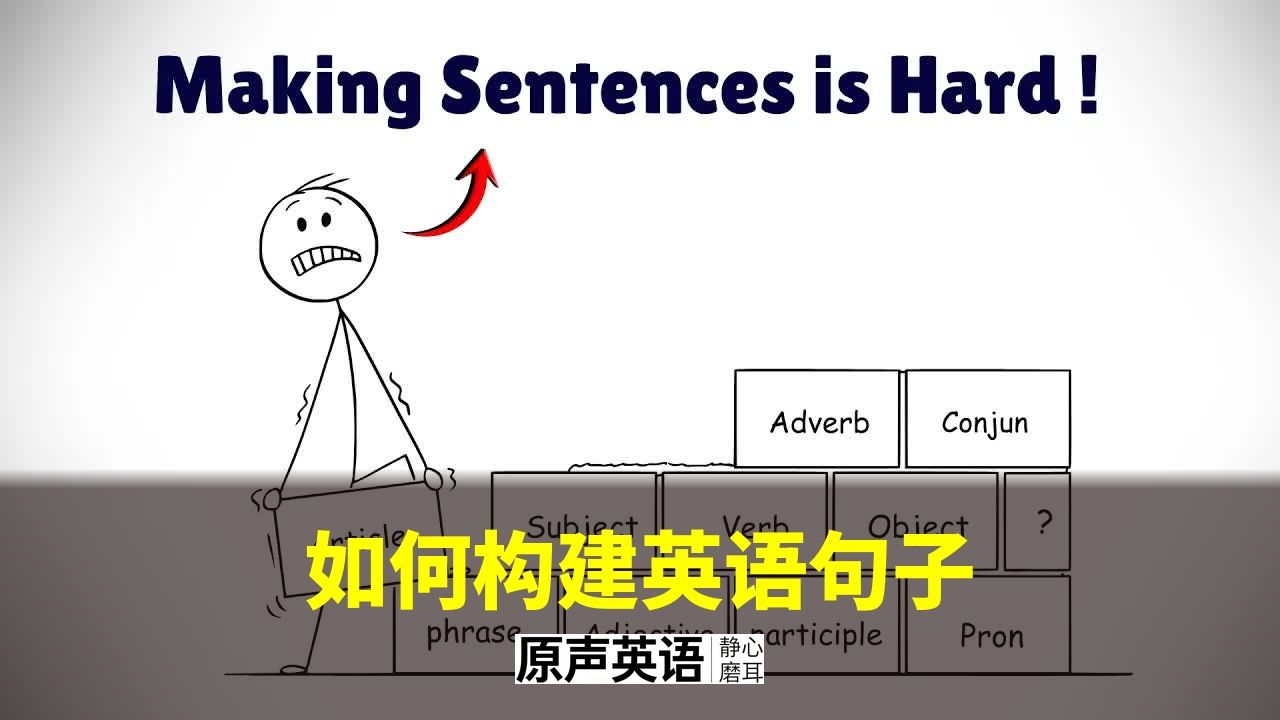
字幕摘录
| 时间 | 英文 | 中文 |
|---|---|---|
| 0:00 | If you do not watch the video until the end, | 如果你直到最后才看视频 |
| 0:02 | you may miss the full method used to build longer English sentences. | 您可能错过用于构建更长的英语句子的全部方法。 |
| 0:06 | Today, I am going to say one long English sentence, | 今天我要说一句英文长句 |
| 0:10 | a sentence made of small phrases, | 一句小句子, |
| 0:12 | a sentence that sounds natural in spoken English, | 句子听起来很自然 用英语说 |
| 0:15 | but may look difficult at first. | 一开始看起来很困难 |
| 0:17 | And then, by the end of this video, | 然后,在这个视频结束时, |
| 0:19 | you will clearly understand how this long sentence is built step by step. | 你会明白这句很长的句子是怎样一步一步地构建的 |
| 0:26 | I am learning English every day at home, | 我每天在家学英语 |
| 0:28 | with full focus and strong motivation to improve my speaking skills. | 全力以赴 大力提升我的演讲能力 |
展开字幕全文(109 条)
| 序号 | 英文 | 中文 |
|---|---|---|
| 1 | If you do not watch the video until the end, | 如果你直到最后才看视频 |
| 2 | you may miss the full method used to build longer English sentences. | 您可能错过用于构建更长的英语句子的全部方法。 |
| 3 | Today, I am going to say one long English sentence, | 今天我要说一句英文长句 |
| 4 | a sentence made of small phrases, | 一句小句子, |
| 5 | a sentence that sounds natural in spoken English, | 句子听起来很自然 用英语说 |
| 6 | but may look difficult at first. | 一开始看起来很困难 |
| 7 | And then, by the end of this video, | 然后,在这个视频结束时, |
| 8 | you will clearly understand how this long sentence is built step by step. | 你会明白这句很长的句子是怎样一步一步地构建的 |
| 9 | I am learning English every day at home, | 我每天在家学英语 |
| 10 | with full focus and strong motivation to improve my speaking skills. | 全力以赴 大力提升我的演讲能力 |
| 11 | Now, do not worry if this sentence looks long or confusing, | 现在,不用担心,如果这句看起来长 或混乱, |
| 12 | because by watching this video till the end, | 因为通过观看这段视频直到最后, |
| 13 | you will learn how to build sentences like this easily, | 你会学会如何轻而易举地构建这样的句子, |
| 14 | naturally and without memorizing grammar rules. | 自然而然地,没有记忆到语法规则. |
| 15 | To build English sentences correctly, | 为了正确构建英语句子, |
| 16 | the first and most important step is to understand the basic sentence pattern. | 第一个也是最重要的步骤是理解基本句子模式。 |
| 17 | Every simple English sentence follows one main pattern. | 每个简单的英语句子都遵循一个主要模式. |
| 18 | Subject plus verb plus information. | 主体加动词加信息. |
| 19 | The subject tells us who is doing the action. | 主题告诉我们是谁在采取行动。 |
| 20 | The verb tells us what action is happening. | 动词告诉我们正在发生什么行动。 |
| 21 | The information tells us more details about the action. | 情报告诉我们更多关于行动的细节。 |
| 22 | For example, in the sentence, | 例如,在句子中, |
| 23 | I learn English. | 我学英语。 |
| 24 | I is the subject. | 我才是目标 |
| 25 | Learn is the verb. | 学是动词. |
| 26 | And English is the information. | 而英语是信息。 |
| 27 | This is a complete and correct English sentence. | 这是一个完整和正确的英文句子. |
| 28 | Now, it is very important to understand | 现在,重要的是要明白 |
| 29 | that if you can build one correct simple sentence, | 如果你能造出一个正确的句子 |
| 30 | you can build hundreds or even thousands of sentences | 你可以造出几百个甚至几千个句子 |
| 31 | by changing only one part of it. | 只需改变其中的一部分 |
| 32 | Let's take the simple sentence, I learn English. | 简言之,我学英语 |
| 33 | If we change the subject, the sentence becomes, | 如果我们改变话题,句子就会变成, |
| 34 | she learns English or they learn English. | 她学英语或者他们学英语。 |
| 35 | If we change the information, the sentence becomes, | 如果我们改变信息, 句子就变成, |
| 36 | I learn English online or I learn English every day. | 我在网上学习英语或每天学习英语. |
| 37 | So, the structure stays the same, but the meaning changes. | 因此,结构保持不变,但含义也发生了变化. |
| 38 | Now, let's move to the most important part of this video, | 现在,让我们转到这个视频最重要的部分, |
| 39 | which is making sentences longer by adding phrases. | 它通过添加短语使句子更长。 |
| 40 | A phrase is a group of words that gives extra information, | 一个短语是一组给出额外信息的词组, |
| 41 | but it does not change the basic structure of the sentence. | 但并不改变句子的基本结构. |
| 42 | First, we start with a very short sentence. | 首先,我们先说一句很短的句子。 |
| 43 | I learn English. | 我学英语。 |
| 44 | Now, we add a short phrase that tells time. | 现在,我们增加一个简短的词,说明时间。 |
| 45 | I learn English every day. | 我每天都学英语 |
| 46 | The sentence is now longer, but the base is still the same. | 句子现在更长,但基数依然不变. |
| 47 | Next, we add a phrase that tells place. | 接下来,我们添加一个能说明地方的短语。 |
| 48 | I learn English every day at home. | 我每天在家学英语 |
| 49 | Now, we add a phrase that tells method or way. | 现在,我们添加一个说明方法或方法的短语。 |
| 50 | I learn English every day at home by watching videos. | 我每天在家里通过观看视频学习英语. |
| 51 | Next, we add a phrase that tells purpose. | 接下来,我们增加一个说明目的的短语。 |
| 52 | I learn English every day at home by watching videos | 我每天在家看视频学英语 |
| 53 | to improve my speaking skills. | 提高我的演讲能力 |
| 54 | You can see that we did not change the subject or the verb. | 你可以看到,我们没有改变主题或动词。 |
| 55 | We only added short phrases one by one. | 我们只逐个添加了短句。 |
| 56 | This is the key to building long and natural English sentences. | 这是建立长而自然的英语句子的关键. |
| 57 | You do not need to think of long sentences at once. | 你不需要马上想出长句子 |
| 58 | You only need to start with a short sentence | 你只需要从短句开始 |
| 59 | and then add small phrases step by step. | 然后逐步添加小短语。 |
| 60 | Let's look at another example. | 再举个例子 |
| 61 | Start with a simple sentence. | 先简句. |
| 62 | She works. | 她工作着 |
| 63 | Now, add a phrase for place. | 现在,添加一个短语的地方。 |
| 64 | She works in an office. | 她在办公室工作 |
| 65 | Now, add a phrase for time. | 现在,加一句时间。 |
| 66 | She works in an office during the day. | 她白天在办公室工作 |
| 67 | Now, add a phrase for reason. | 现在,增加一句理由。 |
| 68 | She works in an office during the day to support her family. | 她白天在一个办公室工作以养家糊口. |
| 69 | This is how short sentences grow into longer, meaningful sentences. | 这就是短句如何成长为更长,有意义的句子. |
| 70 | Let's look at another example. | 再举个例子 |
| 71 | The train arrived. | 火车来了 |
| 72 | Now, we add a phrase that tells place. | 现在,我们添加一个词 讲的地方。 |
| 73 | The train arrived at the station. | 列车抵达车站. |
| 74 | Next, we add a phrase that tells time. | 接下来,我们添加一个说明时间的短语。 |
| 75 | The train arrived at the station early in the morning. | 列车于凌晨抵达车站. |
| 76 | Now, we add a phrase that tells manner. | 现在,我们增加一句讲礼貌的话。 |
| 77 | The train arrived at the station early in the morning without any delay. | 列车于清晨抵达车站,未有任何延误. |
| 78 | Next, we add a phrase that tells reason. | 接下来,我们增加一句讲道理的话。 |
| 79 | The train arrived at the station early in the morning without any delay | 列车在清晨抵达车站,没有延误 |
| 80 | because the weather was clear. | 因为天气晴朗 |
| 81 | Finally, we add a phrase that gives extra detail. | 最后,我们增加一个补充细节的短语。 |
| 82 | The train arrived at the station early in the morning | 火车早早到达车站 |
| 83 | without any delay because the weather was clear and the tracks were empty. | 因为天气晴朗 铁轨空荡荡 |
| 84 | This example shows that we do not change the basic sentence. | 这个例子表明,我们不改变基本句子。 |
| 85 | We only add short phrases to give more information | 我们只添加短句子 以提供更多的信息 |
| 86 | and make the sentence longer and clearer. | 使句子更长,更清晰。 |
| 87 | Now remember one very important rule. | 现在记住一个非常重要的规则。 |
| 88 | In English, phrases usually come after the main sentence, not before it. | 在英语中,短语通常出现在主句之后,而不是之前. |
| 89 | First comes the subject, then the verb, then the main information. | 首先是主题,然后是动词,然后是主要信息. |
| 90 | After that, we add phrases. | 之后,我们增加短语。 |
| 91 | If you follow this order, your sentences will always sound clear and natural. | 如果你遵守这个命令,你的句子总是会听起来清晰而自然. |
| 92 | To practice this skill, you should follow a very simple method. | 要练习这种技能,你应该遵循一种非常简单的方法. |
| 93 | First, say one short sentence. | 第一,说一句话 |
| 94 | Second, ask yourself small questions like | 第二,问你自己一些小问题 |
| 95 | When | 何时 |
| 96 | Where | 何处 |
| 97 | How | 怎么样 |
| 98 | Why | 为什么 |
| 99 | Each answer becomes a phrase. | 每个答案都变成了一个短语。 |
| 100 | And each phrase makes your sentence longer and clearer. | 每句话都让你的句子更长更清晰. |
| 101 | By using this method, you can speak longer sentences without fear, | 通过使用这种方法,你可以说更长的句子,没有恐惧, |
| 102 | without confusion, and without stopping. | 没有混乱,也没有停止。 |
| 103 | So remember, English sentence building is not about memorizing grammar rules. | 所以记住,英语的句子建设并不是关于回忆语法规则. |
| 104 | It is about understanding patterns and adding information step by step. | 它涉及逐步了解规律和增加信息。 |
| 105 | If you master one simple sentence, you can create thousands of sentences. | 如果你掌握一个简单的句子,你可以创造上千个句子. |
| 106 | If you learn how to add phrases, you can speak longer and more fluent English. | 如果你学会添加短语,可以说更长和更流利的英语. |
| 107 | Keep practicing short sentences first and then slowly build them into longer sentences | 继续练习短句,然后慢慢地将短句建为更长的句子 |
| 108 | and very soon, you will notice that your spoken English becomes clearer, stronger, | 很快,你会注意到 你的英语语言变得清晰,更强壮, |
| 109 | and more confident. | 更自信一点 |
该视频共有字幕 109 条。解锁更多字幕为会员功能,请移动到 价格
P2 · 【语法进阶】如何构建英语句子 · 从单词到流利表达 p02 无字幕 (P2)
字幕摘录
| 时间 | 英文 | 中文 |
|---|---|---|
| 0:00 | If you do not watch the video until the end, | 如果你直到最后才看视频 |
| 0:02 | you may miss the full method used to build longer English sentences. | 您可能错过用于构建更长的英语句子的全部方法。 |
| 0:06 | Today, I am going to say one long English sentence. | 今天,我要说一句英文长句。 |
| 0:10 | A sentence made of small phrases. | 以小句为句. |
| 0:12 | A sentence that sounds natural in spoken English, | 句子听起来很自然 用英语说 |
| 0:15 | but may look difficult at first. | 一开始看起来很困难 |
| 0:17 | And then, by the end of this video, | 然后,在这个视频结束时, |
| 0:19 | you will clearly understand how this long sentence is built step by step. | 你会明白这句很长的句子是怎样一步一步地构建的 |
| 0:26 | I am learning English every day at home, | 我每天在家学英语 |
| 0:28 | with full focus and strong motivation to improve my speaking skills. | 全力以赴 大力提升我的演讲能力 |
展开字幕全文(109 条)
| 序号 | 英文 | 中文 |
|---|---|---|
| 1 | If you do not watch the video until the end, | 如果你直到最后才看视频 |
| 2 | you may miss the full method used to build longer English sentences. | 您可能错过用于构建更长的英语句子的全部方法。 |
| 3 | Today, I am going to say one long English sentence. | 今天,我要说一句英文长句。 |
| 4 | A sentence made of small phrases. | 以小句为句. |
| 5 | A sentence that sounds natural in spoken English, | 句子听起来很自然 用英语说 |
| 6 | but may look difficult at first. | 一开始看起来很困难 |
| 7 | And then, by the end of this video, | 然后,在这个视频结束时, |
| 8 | you will clearly understand how this long sentence is built step by step. | 你会明白这句很长的句子是怎样一步一步地构建的 |
| 9 | I am learning English every day at home, | 我每天在家学英语 |
| 10 | with full focus and strong motivation to improve my speaking skills. | 全力以赴 大力提升我的演讲能力 |
| 11 | Now, do not worry if this sentence looks long or confusing, | 现在,不用担心,如果这句看起来长 或混乱, |
| 12 | because by watching this video till the end, | 因为通过观看这段视频直到最后, |
| 13 | you will learn how to build sentences like this easily, | 你会学会如何轻而易举地构建这样的句子, |
| 14 | naturally and without memorizing grammar rules. | 自然而然地,没有记忆到语法规则. |
| 15 | To build English sentences correctly, | 为了正确构建英语句子, |
| 16 | the first and most important step is to understand the basic sentence pattern. | 第一个也是最重要的步骤是理解基本句子模式。 |
| 17 | Every simple English sentence follows one main pattern. | 每个简单的英语句子都遵循一个主要模式. |
| 18 | Subject plus verb plus information. | 主体加动词加信息. |
| 19 | The subject tells us who is doing the action. | 主题告诉我们是谁在采取行动。 |
| 20 | The verb tells us what action is happening. | 动词告诉我们正在发生什么行动。 |
| 21 | The information tells us more details about the action. | 情报告诉我们更多关于行动的细节。 |
| 22 | For example, in the sentence, | 例如,在句子中, |
| 23 | I learn English. | 我学英语。 |
| 24 | I is the subject. | 我才是目标 |
| 25 | Learn is the verb. | 学是动词. |
| 26 | And English is the information. | 而英语是信息。 |
| 27 | This is a complete and correct English sentence. | 这是一个完整和正确的英文句子. |
| 28 | Now, it is very important to understand | 现在,重要的是要明白 |
| 29 | that if you can build one correct simple sentence, | 如果你能造出一个正确的句子 |
| 30 | you can build hundreds or even thousands of sentences | 你可以造出几百个甚至几千个句子 |
| 31 | by changing only one part of it. | 只需改变其中的一部分 |
| 32 | Let's take the simple sentence, I learn English. | 简言之,我学英语 |
| 33 | If we change the subject, the sentence becomes, | 如果我们改变话题,句子就会变成, |
| 34 | she learns English or they learn English. | 她学英语或者他们学英语。 |
| 35 | If we change the information, the sentence becomes, | 如果我们改变信息, 句子就变成, |
| 36 | I learn English online or I learn English every day. | 我在网上学习英语或每天学习英语. |
| 37 | So, the structure stays the same, but the meaning changes. | 因此,结构保持不变,但含义也发生了变化. |
| 38 | Now, let's move to the most important part of this video, | 现在,让我们转到这个视频最重要的部分, |
| 39 | which is making sentences longer by adding phrases. | 它通过添加短语使句子更长。 |
| 40 | A phrase is a group of words that gives extra information, | 一个短语是一组给出额外信息的词组, |
| 41 | but it does not change the basic structure of the sentence. | 但并不改变句子的基本结构. |
| 42 | First, we start with a very short sentence. | 首先,我们先说一句很短的句子。 |
| 43 | I learn English. | 我学英语。 |
| 44 | Now, we add a short phrase that tells time. | 现在,我们增加一个简短的词,说明时间。 |
| 45 | I learn English every day. | 我每天都学英语 |
| 46 | The sentence is now longer, but the base is still the same. | 句子现在更长,但基数依然不变. |
| 47 | Next, we add a phrase that tells place. | 接下来,我们添加一个能说明地方的短语。 |
| 48 | I learn English every day at home. | 我每天在家学英语 |
| 49 | Now, we add a phrase that tells method or way. | 现在,我们添加一个说明方法或方法的短语。 |
| 50 | I learn English every day at home by watching videos. | 我每天在家里通过观看视频学习英语. |
| 51 | Next, we add a phrase that tells purpose. | 接下来,我们增加一个说明目的的短语。 |
| 52 | I learn English every day at home by watching videos | 我每天在家看视频学英语 |
| 53 | to improve my speaking skills. | 提高我的演讲能力 |
| 54 | You can see that we did not change the subject or the verb. | 你可以看到,我们没有改变主题或动词。 |
| 55 | We only added short phrases one by one. | 我们只逐个添加了短句。 |
| 56 | This is the key to building long and natural English sentences. | 这是建立长而自然的英语句子的关键. |
| 57 | You do not need to think of long sentences at once. | 你不需要马上想出长句子 |
| 58 | You only need to start with a short sentence | 你只需要从短句开始 |
| 59 | and then add small phrases step by step. | 然后逐步添加小短语。 |
| 60 | Let's look at another example. | 再举个例子 |
| 61 | Start with a simple sentence. | 先简句. |
| 62 | She works. | 她工作着 |
| 63 | Now, add a phrase for place. | 现在,添加一个短语的地方。 |
| 64 | She works in an office. | 她在办公室工作 |
| 65 | Now, add a phrase for time. | 现在,加一句时间。 |
| 66 | She works in an office during the day. | 她白天在办公室工作 |
| 67 | Now, add a phrase for reason. | 现在,增加一句理由。 |
| 68 | She works in an office during the day to support her family. | 她白天在一个办公室工作以养家糊口. |
| 69 | This is how short sentences grow into longer, meaningful sentences. | 这就是短句如何成长为更长,有意义的句子. |
| 70 | Let's look at another example. | 再举个例子 |
| 71 | The train arrived. | 火车来了 |
| 72 | Now, we add a phrase that tells place. | 现在,我们添加一个词 讲的地方。 |
| 73 | The train arrived at the station. | 列车抵达车站. |
| 74 | Next, we add a phrase that tells time. | 接下来,我们添加一个说明时间的短语。 |
| 75 | The train arrived at the station early in the morning. | 列车于凌晨抵达车站. |
| 76 | Now, we add a phrase that tells manner. | 现在,我们增加一句讲礼貌的话。 |
| 77 | The train arrived at the station early in the morning without any delay. | 列车于清晨抵达车站,未有任何延误. |
| 78 | Next, we add a phrase that tells reason. | 接下来,我们增加一句讲道理的话。 |
| 79 | The train arrived at the station early in the morning without any delay | 列车在清晨抵达车站,没有延误 |
| 80 | because the weather was clear. | 因为天气晴朗 |
| 81 | Finally, we add a phrase that gives extra detail. | 最后,我们增加一个补充细节的短语。 |
| 82 | The train arrived at the station early in the morning | 火车早早到达车站 |
| 83 | without any delay because the weather was clear and the tracks were empty. | 因为天气晴朗 铁轨空荡荡 |
| 84 | This example shows that we do not change the basic sentence. | 这个例子表明,我们不改变基本句子。 |
| 85 | We only add short phrases to give more information | 我们只添加短句子 以提供更多的信息 |
| 86 | and make the sentence longer and clearer. | 使句子更长,更清晰。 |
| 87 | Now remember one very important rule. | 现在记住一个非常重要的规则。 |
| 88 | In English, phrases usually come after the main sentence, not before it. | 在英语中,短语通常出现在主句之后,而不是之前. |
| 89 | First comes the subject, then the verb, then the main information. | 首先是主题,然后是动词,然后是主要信息. |
| 90 | After that, we add phrases. | 之后,我们增加短语。 |
| 91 | If you follow this order, your sentences will always sound clear and natural. | 如果你遵守这个命令,你的句子总是会听起来清晰而自然. |
| 92 | To practice this skill, you should follow a very simple method. | 要练习这种技能,你应该遵循一种非常简单的方法. |
| 93 | First, say one short sentence. | 第一,说一句话 |
| 94 | Second, ask yourself small questions like | 第二,问你自己一些小问题 |
| 95 | When? | 什么时候? |
| 96 | Where? | 哪里? 哪里来的? |
| 97 | How? | 怎么会? |
| 98 | Why? | 为什么? |
| 99 | Each answer becomes a phrase. | 每个答案都变成了一个短语。 |
| 100 | And each phrase makes your sentence longer and clearer. | 每句话都让你的句子更长更清晰. |
| 101 | By using this method, you can speak longer sentences without fear, | 通过使用这种方法,你可以说更长的句子,没有恐惧, |
| 102 | without confusion, and without stopping. | 没有混乱,也没有停止。 |
| 103 | So remember, English sentence building is not about memorizing grammar rules. | 所以记住,英语的句子建设并不是关于回忆语法规则. |
| 104 | It is about understanding patterns and adding information step by step. | 它涉及逐步了解规律和增加信息。 |
| 105 | If you master one simple sentence, you can create thousands of sentences. | 如果你掌握一个简单的句子,你可以创造上千个句子. |
| 106 | If you learn how to add phrases, you can speak longer and more fluent English. | 如果你学会添加短语,可以说更长和更流利的英语. |
| 107 | Keep practicing short sentences first and then slowly build them into longer sentences | 继续练习短句,然后慢慢地将短句建为更长的句子 |
| 108 | And very soon, you will notice that your spoken English becomes clearer, stronger, | 很快,你会注意到,你的英语语言变得清晰,更强壮, |
| 109 | and more confident. | 更自信一点 |
该视频共有字幕 109 条。解锁更多字幕为会员功能,请移动到 价格