【英语方法】不翻译直接用英语思考 · 训练大脑说英语
共 3 集
剧集目录
| 集 | 标题 | 时长 |
|---|---|---|
| P1 | 【英语方法】不翻译直接用英语思考 · 训练大脑说英语 中英字 | 14:42 |
| P2 | 【英语方法】不翻译直接用英语思考 · 训练大脑说英语 英文字 | 14:42 |
| P3 | 【英语方法】不翻译直接用英语思考 · 训练大脑说英语 无字幕 | 14:42 |
P1 · 【英语方法】不翻译直接用英语思考 · 训练大脑说英语 p01 中英字幕 (P1)
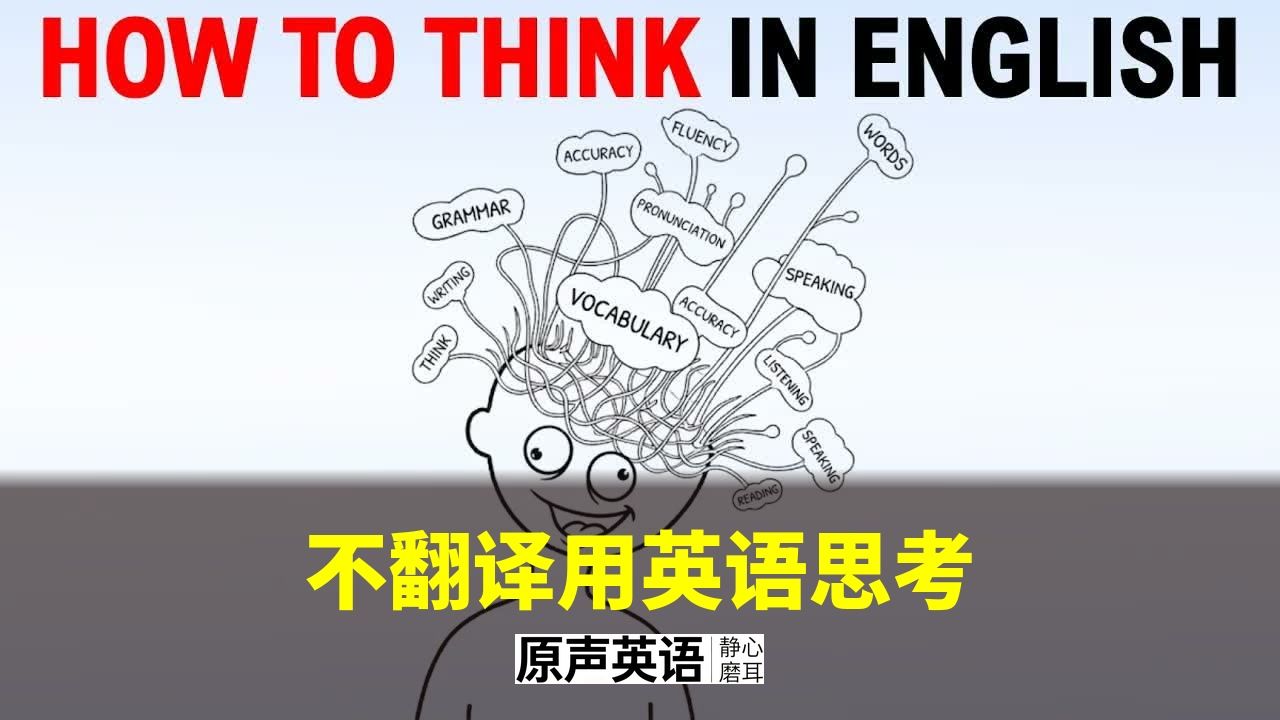
字幕摘录
| 时间 | 英文 | 中文 |
|---|---|---|
| 0:00 | Have you ever had an English sentence in your head, but you couldn't get it out? | 你脑子里有英文句子吗? |
| 0:04 | You know what you want to say. | 你知道你想说什么。 |
| 0:06 | You know the words. | 你知道这些话 |
| 0:07 | You've studied the grammar. | 你研究过语法 |
| 0:09 | You've watched English | 你看了英语 |
| 0:10 | videos for months. | 视频数月。 |
| 0:12 | But when it's time to speak, your brain suddenly switches languages. | 但是当是时候说话的时候 你的大脑会突然切换语言 |
| 0:16 | You think | 你觉得 |
| 0:17 | in your native language first. | 先用你的母语 |
| 0:19 | Then you translate. | 然后你翻译。 |
展开字幕全文(433 条)
| 序号 | 英文 | 中文 |
|---|---|---|
| 1 | Have you ever had an English sentence in your head, but you couldn't get it out? | 你脑子里有英文句子吗? |
| 2 | You know what you want to say. | 你知道你想说什么。 |
| 3 | You know the words. | 你知道这些话 |
| 4 | You've studied the grammar. | 你研究过语法 |
| 5 | You've watched English | 你看了英语 |
| 6 | videos for months. | 视频数月。 |
| 7 | But when it's time to speak, your brain suddenly switches languages. | 但是当是时候说话的时候 你的大脑会突然切换语言 |
| 8 | You think | 你觉得 |
| 9 | in your native language first. | 先用你的母语 |
| 10 | Then you translate. | 然后你翻译。 |
| 11 | Then you check the grammar. | 然后检查语法。 |
| 12 | Then you search for | 礛т |
| 13 | the right word. | 正确的词。 |
| 14 | And by the time you finish building the sentence, the moment is gone. | 等到你完成判决的时候 时机已经过去 |
| 15 | This is one of the most frustrating stages of learning English. | 这是学习英语最令人沮丧的阶段之一. |
| 16 | You can understand English. | 你可以懂英语。 |
| 17 | You can read English. | 你可以读英语。 |
| 18 | You can even speak English. | 你甚至会说英语。 |
| 19 | But English doesn't feel automatic yet. | 但英语还没有自动感. |
| 20 | And here's the important part. | 这是重要的部分。 |
| 21 | The problem may not be that you don't know enough English. | 问题不在于你不懂足够的英语 |
| 22 | The problem may be that your brain has become too dependent on translation. | 问题可能在于你的大脑过于依赖翻译。 |
| 23 | You're training yourself to go through this process. | 你正在训练自己去经历这个过程。 |
| 24 | Native language translation, English. | 土著语言翻译,英语. |
| 25 | But real-time communication needs something faster. | 但是实时的通讯需要更快一些的东西. |
| 26 | Idea, English. | 思想,英语. |
| 27 | So today, we're going | 所以,今天,我们要去 |
| 28 | to work on that. | 来研究一下 |
| 29 | But first, we need to understand what thinking in English actually means. | 但是,首先,我们需要理解英语中的思维到底意味着什么。 |
| 30 | What does | 怎么样? |
| 31 | it really mean to think in English? | 意思是用英语思考? |
| 32 | Let's clear up a common misunderstanding. | 让我们澄清一个共同的误解。 |
| 33 | Thinking in English | 用英语思考 |
| 34 | does not mean that every thought in your head has to sound like a perfect sentence written by | 这并不意味着你脑海中的每一个想法 都得听起来像一句完美的句子 |
| 35 | a native speaker. | 讲母语的 |
| 36 | That's not the goal. | 这不是目标。 |
| 37 | Thinking in English means your brain becomes better at | 用英语思考意味着你的大脑变得更好 |
| 38 | connecting an idea directly to English. | 将一个想法直接连接到英语. |
| 39 | Imagine you're thirsty. | 想象一下你渴吗? |
| 40 | A beginner might think, | 初学者可能会认为, |
| 41 | I'm thirsty in their native language. | 我渴了他们的母语。 |
| 42 | Then search for the English translation. | 然后寻找英文译本. |
| 43 | Then construct the | 然后建造 |
| 44 | sentence. | 句号。 |
| 45 | But with practice, the process becomes much shorter. | 但是,随着实践,这一过程变得短得多。 |
| 46 | Feeling, I'm thirsty. | 感觉好渴 |
| 47 | You see dark | 你看见黑暗 |
| 48 | clouds outside. | 云门外. |
| 49 | It's going to rain. | 会下雨的。 |
| 50 | You look at the clock. | 你看着钟。 |
| 51 | I'm running late. | 我迟到了 |
| 52 | You open the refrigerator. | 你打开冰箱。 |
| 53 | There's nothing to eat. | 食无所着. |
| 54 | You don't consciously translate every word. | 不自觉地翻译一切文字. |
| 55 | The English expression | 英语表达式 |
| 56 | simply appears. | 刚刚出现。 |
| 57 | That's what we're trying to build. | 这就是我们想要建造的。 |
| 58 | Not perfect English thinking. | 不是完美的英语思维。 |
| 59 | Direct English | 直接英语 |
| 60 | thinking. | 考虑。 |
| 61 | And this distinction is extremely important. | 而这种区分是极其重要的. |
| 62 | Because you don't need to think like | 因为你不需要这样想 |
| 63 | a native speaker to communicate well. | 一个讲母语的人来沟通 |
| 64 | You simply need to reduce the amount of mental translation | 你只需要减少精神翻译的数量 |
| 65 | standing between your thoughts and your English. | 站在思想和英语之间 |
| 66 | Why is thinking in English so important? | 为什么用英语思考这么重要? |
| 67 | Imagine two learners having the same conversation. | 想象一下两个学习者有同样的谈话。 |
| 68 | Someone asks, what did you do this weekend? | 有人问,你这个周末做了什么? |
| 69 | Learner A thinks in their native language first. | 学习者A先用他们的母语思考. |
| 70 | They build the complete answer. | 他们建立了完整的答案。 |
| 71 | Then translate | 然后翻译 |
| 72 | it. | 这个 |
| 73 | Then worry about grammar. | 那就担心语法 |
| 74 | Then finally speak. | 那就说吧 |
| 75 | Learner B has practiced retrieving English directly. | 学习者B直接练习英语. |
| 76 | Their answer comes more naturally. | 他们的答案更自然。 |
| 77 | I stayed home on Saturday. | 我星期六在家过夜 |
| 78 | Then I met some friends on Sunday. | 然后我在周日遇到了一些朋友. |
| 79 | Neither answer needs to be advanced. | 这两种答案都需要提出。 |
| 80 | But learner B doesn't have to build the sentence from scratch | 但学习者B不必从头开始建句子 |
| 81 | every time. | 每次都这样 |
| 82 | That's the advantage. | 这就是优势。 |
| 83 | Thinking more directly in English can help you. | 更直接地用英语思考可以帮助你. |
| 84 | Respond faster. | 反应更快 |
| 85 | Reduce hesitation. | 减少犹豫。 |
| 86 | Retrieve vocabulary more easily. | 比较容易检索词汇. |
| 87 | Become more comfortable | 更舒服一点 |
| 88 | with simple English. | 和简单的英语。 |
| 89 | Communicate without translating every sentence. | 交流不译一切句. |
| 90 | And there's another benefit. | 还有另一个好处 |
| 91 | It changes the way you learn English. | 它改变了你学习英语的方式。 |
| 92 | Because instead of only asking, | 因为与其只问, |
| 93 | what does this English word mean in my language? | 这个英文词在我的语言里是什么意思? |
| 94 | You start asking, when would I actually use this? | 你开始问 我什么时候用这个? |
| 95 | That's a completely different relationship with the language. | 这与语言的关系完全不同. |
| 96 | Thinking in English makes learning more natural. | 英语思维使学习更加自然. |
| 97 | Think about how you learned your first language. | 想想你是怎么学会第一语言的 |
| 98 | You didn't begin with a grammar textbook. | 你没有从语法教科书开始 |
| 99 | You didn't memorize 2,000 words before saying your | 你之前没有记住两千字 |
| 100 | sentence. | 句号。 |
| 101 | You heard expressions repeatedly. | 你屡次听到表达 |
| 102 | You connected words with people, objects, actions, | 你把文字和人、物品、行动联系起来 |
| 103 | emotions, and situations. | 情感和情况 |
| 104 | Then eventually those patterns became automatic. | 最终这些图案会自动出现 |
| 105 | Adult English learning | 成人英语学习 |
| 106 | is different, of course. | 当然是不同的 |
| 107 | But we can borrow part of that process. | 但我们可以借用这一进程的一部分。 |
| 108 | Instead of treating every English | 而不是对待每一个英语 |
| 109 | word as a translation exercise, connect it to real experiences. | 单词作为翻译练习,将其连接到真实的经验. |
| 110 | For example, don't only memorize. | 例如,不要只记住。 |
| 111 | Exhausted equals translation. | 竭尽等译. |
| 112 | Imagine finishing a long day at work. | 想象一下工作结束一天 |
| 113 | You're sitting down. | 你坐下来。 |
| 114 | You're tired. | 你累了吗? |
| 115 | And you think, I'm exhausted. | 你觉得我累坏了? |
| 116 | Now the word has a situation attached to it. | 现在,这个词有一个情况附在它身上。 |
| 117 | That's much more useful than memorizing a definition alone. | 这比仅仅回忆一个定义要有用得多. |
| 118 | The more English becomes | 英语越多 |
| 119 | connected to your actual life, the less it feels like a subject you're studying. | 和你的实际生活有关, 越少感觉像一个学科 你正在学习。 |
| 120 | And the more it | 越多越难 |
| 121 | gets complicated. | 变得复杂。 |
| 122 | Let's get practical. | 让我们开始现实吧。 |
| 123 | Nine practical ways to start thinking in English. | 用英语开始思考的九种实用方法. |
| 124 | One. | 一个 |
| 125 | Start with your inner voice. | 先从内声. |
| 126 | Your first practice partner is already inside your head. | 你的第一个练习搭档已经在你的脑海里了 |
| 127 | You. | 你,你来 |
| 128 | Start with tiny thoughts. | 从微细念起. |
| 129 | When you wake up, I'm still tired. | 当你醒来时,我还是累了。 |
| 130 | When you get dressed, | 当你穿好衣服, |
| 131 | where's my shirt? | 我的衬衫呢? |
| 132 | When you leave home, I need to hurry. | 你回家后,我需要快点 |
| 133 | When you're waiting, the bus is late. | 候时公车迟到. |
| 134 | When you see the weather, it looks cloudy. | 当见天气似云. |
| 135 | Don't try to create complicated sentences. | 别试图制造复杂的句子. |
| 136 | That's actually one of the biggest mistakes. | 这是最大的错误之一。 |
| 137 | Your goal isn't to impress yourself. | 你的目标不是给自己留下深刻印象 |
| 138 | Your goal | 你的目标 |
| 139 | is to make English automatic. | 使英语自动。 |
| 140 | Five simple English thoughts repeated every day are more valuable than | 每天重复的五个简单的英国思想比 |
| 141 | one complicated sentence you struggle to construct. | 一个复杂的句子 你努力构建。 |
| 142 | Start small. | 开始小。 |
| 143 | Repeat often. | 屡次重复. |
| 144 | Let your brain adapt. | 让你的大脑适应。 |
| 145 | Two. | 两个 |
| 146 | Turn your surroundings into an English classroom. | 把周围环境变成英语教室 |
| 147 | You don't need special study | 你不需要特别的学习 |
| 148 | materials to practice thinking. | 用于练习思考的材料。 |
| 149 | Look around you. | 看看你周围 |
| 150 | What do you see? | 你看见什么了? |
| 151 | My phone is charging. | 我的手机充电了 |
| 152 | The door is open. | 门开着 |
| 153 | table有杯. | |
| 154 | Now describe actions. | 现在描述行动。 |
| 155 | I'm making coffee. | 我在煮咖啡,我给你弄点咖啡 |
| 156 | I'm looking for my keys. | 我在找钥匙 |
| 157 | I'm checking my email. | 我在查我的邮件 |
| 158 | Now describe what you expect to happen. | 现在描述一下你期望会发生什么 |
| 159 | I need to leave in 10 minutes. | 我十分钟后就要离开 |
| 160 | I'll finish this and then take a break. | 我会完成这个然后休息一下。 |
| 161 | You're taking ordinary | 你变普通了 |
| 162 | moments and turning them into English practice. | 瞬间,把它们变成英语练习 |
| 163 | This is powerful because the ideas are already | 这是强大的,因为 想法已经 |
| 164 | there. | 这里 |
| 165 | You don't have to invent a topic. | 你不必发明一个话题。 |
| 166 | Your environment gives you one. | 你的环境给你一个。 |
| 167 | Three. | 三个 |
| 168 | Stop trying | 别试了 |
| 169 | to translate complicated thoughts. | 翻译复杂的想法。 |
| 170 | This habit can completely change your English. | 这种习惯可以完全改变你的英语. |
| 171 | Many learners | 许多学生 |
| 172 | think, how would I translate this exact sentence? | 我该怎么翻译这句话呢? |
| 173 | That's often the wrong question. | 这常常是错的 |
| 174 | Instead ask, | 而不是问, |
| 175 | how can I express this idea simply? | 我怎么能简单地表达这个想法呢? |
| 176 | Imagine you're exhausted after work. | 想象你下班后累坏了 |
| 177 | You want to express | 你想表达 |
| 178 | a complicated thought. | 一个复杂的想法。 |
| 179 | Don't force yourself to create a sophisticated sentence. | 不要强迫自己制造一个复杂的句子. |
| 180 | Say, I'm really | 我说,我真的 |
| 181 | tired. | 厌倦了。 |
| 182 | Then, work was crazy today. | 然后,今天的工作是疯狂的。 |
| 183 | Then, I just want to go home. | 然后,我只想回家。 |
| 184 | That's natural communication. | 这是自然的沟通。 |
| 185 | Remember, simple English is not bad English. | 记住,简单的英语是不错的英语。 |
| 186 | In fact, simple English is often faster, clearer, | 事实上,简单的英语往往更快,更清晰, |
| 187 | and easier to use. | 和更容易使用。 |
| 188 | Don't translate the sentence. | 别译此句. |
| 189 | Translate the meaning. | 翻译意义. |
| 190 | Or better yet, | 还是更好 |
| 191 | express the meaning directly. | 直接表达意义。 |
| 192 | Four. | 四门. |
| 193 | Practice self-talk. | 练习自言自语. |
| 194 | Now move your English from your mind | 现在把你的英语从你的脑海里移开 |
| 195 | to your mouth. | 对你的嘴。 |
| 196 | Talk to yourself. | 自言自语. |
| 197 | Yes, it may feel strange. | 是的,它可能觉得奇怪。 |
| 198 | Do it anyway. | 随便你 |
| 199 | You're cooking. | 你在做饭。 |
| 200 | I'm cutting the onions. | 我在切洋葱 |
| 201 | I need more water. | 我要多点水 |
| 202 | This smells really good. | 闻起来真香 |
| 203 | You're walking. | 你在走动。 |
| 204 | It's getting dark. | 天色渐黑. |
| 205 | There are a lot of people here. | 这里有很多人 |
| 206 | You're working. | 你在工作吗? |
| 207 | I need to finish this first. | 我要先完成这个 |
| 208 | I'll deal with that later. | 我待会再处理 |
| 209 | The sentences are simple. | 句句简. |
| 210 | That's intentional. | 这是故意的。 |
| 211 | You're training your | 你在训练你 |
| 212 | brain to connect. | 大脑连接。 |
| 213 | Real situation, English thought, English speech. | 真实情况,英语思想,英语演讲. |
| 214 | You don't need a conversation | 你不需要说话 |
| 215 | partner. | 搭档 |
| 216 | You need repetition. | 你需要再重复一次。 |
| 217 | Five. | 五门. |
| 218 | Connect words directly to meaning. | 将单词直接连接到意义. |
| 219 | Here's another way to reduce | 这是另一种减少的方法 |
| 220 | translation. | 翻译。 |
| 221 | When learning concrete vocabulary, create a mental picture. | 在学习混凝土词汇时,创造出一种精神画面. |
| 222 | Take. | 拿着 |
| 223 | Apple. | 苹果报. |
| 224 | Don't | 别 |
| 225 | immediately search for the equivalent word in your native language. | 立即搜索本地语言中的等同词。 |
| 226 | Picture an apple. | 想象一个苹果。 |
| 227 | Maybe it's red. | 或许是红色的 |
| 228 | Maybe you're holding it. | 也许你拿着它。 |
| 229 | Maybe you're eating it. | 也许你在吃它。 |
| 230 | The same works with actions. | 行动也是如此。 |
| 231 | Run. | 运行。 |
| 232 | Picture | 图片 |
| 233 | yourself running. | 自己运行。 |
| 234 | Cold. | 凉. |
| 235 | Imagine standing outside on a cold morning. | 想象一下在寒冷的早晨站在外面 |
| 236 | Laugh. | 笑个甚么. |
| 237 | Imagine someone laughing. | 想象一下有人会笑 |
| 238 | Now your brain begins creating a different connection. | 现在你的大脑开始产生不同的连接。 |
| 239 | English experience. | 英国经历. |
| 240 | Instead of | 代替 |
| 241 | English native language word experience. | 英语本土语词体验. |
| 242 | You won't be able to do this perfectly with every | 你不可能完美地完成这一切 |
| 243 | abstract concept. | 抽象概念. |
| 244 | You don't need to. | 你不需要这样 |
| 245 | Start with simple words. | 起於简言. |
| 246 | Six. | 六门. |
| 247 | Create an English-only zone. | 创建仅限英语的区域. |
| 248 | Here's a challenge. | 这里有一个挑战。 |
| 249 | Choose 10 minutes every day. | 每天选择十分钟 |
| 250 | During those 10 minutes, English only. | 在这10分钟里,只有英语 |
| 251 | No translating if you can avoid it. | 如果你能避免的话,就不用翻译了 |
| 252 | Maybe you're walking. | 也许你在走路 |
| 253 | Maybe you're drinking coffee. | 也许你在喝咖啡 |
| 254 | Maybe | 也许 |
| 255 | you're getting ready for work. | 你准备好上班了 |
| 256 | Describe your thoughts in English. | 用英语描述你的想法。 |
| 257 | I need to leave soon. | 我得马上离开 |
| 258 | I'm looking for my wallet. | 我在找钱包 |
| 259 | I wonder if it will rain. | 不知道会不会下雨 |
| 260 | If you don't know a word, don't immediately | 如果你不知道一个字,不要马上 |
| 261 | open a dictionary. | 打开词典。 |
| 262 | Find another way to describe it. | 寻彼说法. |
| 263 | That's an important skill. | 这是一个重要的技能。 |
| 264 | For example, | 举例来说, |
| 265 | you forget the word umbrella. | 你忘了雨伞这个词 |
| 266 | Instead of stopping completely. | 而不是完全停下来。 |
| 267 | The thing I use when it rains. | 下雨时我用的东西 |
| 268 | You | 你们 |
| 269 | kept the thought moving. | 保持思想的移动。 |
| 270 | That's exactly what you need in real conversations. | 这正是真正的谈话需要的 |
| 271 | Seven. | 七门. |
| 272 | Build | 构建 |
| 273 | mini conversations in your head. | 迷你对话在你的头上。 |
| 274 | Don't wait for someone else to practice speaking with you. | 别等别人跟你说话 |
| 275 | Create imaginary conversations. | 创建虚构的对话 。 |
| 276 | Imagine you're meeting someone new. | 想象一下你正在和新人见面 |
| 277 | They ask, | 他们问, |
| 278 | Where are you from? | 你从哪里来? |
| 279 | Answer. | 答问. |
| 280 | Then. | 那样吧 |
| 281 | What do you do? | 你们是做什么的? |
| 282 | Answer. | 答问. |
| 283 | Then. | 那样吧 |
| 284 | Do you enjoy your job? | 你喜欢你的工作吗? |
| 285 | Answer. | 答问. |
| 286 | Then imagine they disagree with you. | 那就想象他们不同意你 |
| 287 | What would you say? | 你会说什么? |
| 288 | Or imagine a job interview. | 或者想象一下面试 |
| 289 | A restaurant. | 一个餐厅。 |
| 290 | An airport. | 一个机场。 |
| 291 | A hotel. | 旅馆 |
| 292 | A casual conversation with a stranger. | 和陌生人闲聊 |
| 293 | The point isn't to predict the exact conversation. | 重点不是预测确切的对话. |
| 294 | The point is to train your brain to retrieve | 重点是训练你的大脑去取回 |
| 295 | English under pressure. | 压力下英语. |
| 296 | And when you get stuck. | 当你被困住了。 |
| 297 | Simplify. | 简化. |
| 298 | Don't switch languages immediately. | 别马上换语言 |
| 299 | Find another route. | 找另一条路 |
| 300 | Eight. | 八个。 |
| 301 | Replay your day in English. | 用英语重播你的一天。 |
| 302 | Here's a simple evening exercise. | 这是简单的晚上练习 |
| 303 | Before you sleep, spend two or three minutes reviewing your day. | 在你睡觉前 花两三分钟回顾你的一天 |
| 304 | Ask yourself. | 自问. |
| 305 | What happened | 发生了什么事 |
| 306 | today? | 今天吗? |
| 307 | Who did I talk to? | 我和谁谈过了? |
| 308 | What did I enjoy? | 我最喜欢什么? |
| 309 | What was difficult? | 有什么难的? |
| 310 | What do I need to do tomorrow? | 我明天要怎么办? |
| 311 | For example. | 譬如说. |
| 312 | I woke up late this morning. | 我今早醒来很晚 |
| 313 | I had breakfast and went to work. | 我吃早饭去上班了 |
| 314 | The morning was really | 早上确实 |
| 315 | busy. | 忙着呢 |
| 316 | I talked to my friend during lunch. | 我午餐时和我朋友谈过了 |
| 317 | After work, I went home. | 下班后,我回家 |
| 318 | This works especially well | 这特别有效 |
| 319 | because you're talking about things that actually happened. | 因为你在谈论一些实际发生的事情 |
| 320 | You already know the ideas. | 你已经知道这些想法了 |
| 321 | Now you're | 现在你是 |
| 322 | finding the English. | 找到英国人 |
| 323 | And every day, you build another connection between your life and the | 每天,你都在你的生活和 |
| 324 | language. | 语言。 |
| 325 | Nine. | 九门. |
| 326 | Surround yourself with natural English. | 用自然的英语包围自己 |
| 327 | Finally, give your brain more English | 最后,给你的大脑更多的英语 |
| 328 | input. | 输入。 |
| 329 | Not just during study time. | 不只是在学习时间。 |
| 330 | Listen to podcasts. | 听播客说 |
| 331 | Watch interviews. | 观看采访. |
| 332 | Follow English | 跟着英语 |
| 333 | speaking creators. | 创造者说话。 |
| 334 | Watch videos about subjects you actually enjoy. | 看关于你真正喜欢的题材的视频。 |
| 335 | Listen while walking. | 走路的时候听着 |
| 336 | Listen | 听着 |
| 337 | while cooking. | 在做饭的时候 |
| 338 | Read short posts. | 读短帖. |
| 339 | Change some of your digital environment to English. | 将部分数字环境改为英语. |
| 340 | But remember, | 但是记住, |
| 341 | immersion doesn't mean understanding 100%. | 浸润并不意味着理解100%. |
| 342 | At first, you may understand only the general idea. | 一开始,你可能只理解一般的想法。 |
| 343 | That's okay. | 没关系 |
| 344 | Your brain is learning the rhythm, the pronunciation, the common expressions, | 你的大脑正在学习节奏 发音 常见的表达方式 |
| 345 | the sentence patterns, the way ideas are naturally connected. | 句子模式 思想自然联系的方式 |
| 346 | The more familiar these patterns become, | 这些模式越为人熟知, |
| 347 | the easier they are to reproduce later. | 以后繁殖越容易。 |
| 348 | You're not simply studying English. | 你不只是学英语 |
| 349 | You're giving | 你在给 |
| 350 | your brain more English to work with. | 你的大脑更英文的工作。 |
| 351 | The secret. | 秘诀. |
| 352 | Don't try to think in English all day. | 不要整天想着英语 |
| 353 | This is | 这是 |
| 354 | important. | 这很重要 |
| 355 | You don't need to force yourself to think in English from morning until night. | 你不需要强迫自己从早上到晚上用英语思考. |
| 356 | That can become exhausting. | 这会很累的 |
| 357 | Instead, create small pockets of English. | 反之,创造英语小口袋. |
| 358 | Five minutes here, | 五分钟, |
| 359 | ten minutes there. | 十分钟后到 |
| 360 | A few thoughts while walking. | 走路的时候想了一些 |
| 361 | A short self-talk session. | 简短的自言自语 |
| 362 | A two-minute review | 2分钟的审查 |
| 363 | before bed. | 在睡觉前。 |
| 364 | Those moments gradually become habits. | 这些时刻逐渐成为习惯。 |
| 365 | And habits become automatic. | 习惯会自动发生 |
| 366 | Think about it like | 考虑一下吧 |
| 367 | exercise. | 运动。 |
| 368 | You don't become physically stronger by lifting weights once. | 一次举重不会变得更强 |
| 369 | You train repeatedly. | 你反复训练。 |
| 370 | The same principle applies to mental language habits. | 同样的原则也适用于精神语言习惯. |
| 371 | What happens after a few months? | 几个月后会发生什么? |
| 372 | At first, you'll notice something strange. | 一开始你会发现一些奇怪的事情 |
| 373 | You'll still translate. | 你还会翻译的 |
| 374 | But sometimes, you won't. | 但有时,你不会。 |
| 375 | A phrase will appear automatically. | 短语会自动出现 。 |
| 376 | Then another. | 再来一杯 |
| 377 | Eventually, common situations begin | 最终,共同局势开始 |
| 378 | triggering English without conscious effort. | 毫无意识地触发英语。 |
| 379 | You feel tired. | 你感觉累了。 |
| 380 | I'm exhausted. | 我筋疲力尽了 |
| 381 | You need to leave. | 你得离开 |
| 382 | I should get going. | 我该走了 |
| 383 | Someone surprises you. | 有人给你惊喜 |
| 384 | I didn't expect that. | 我没想到 |
| 385 | You make a mistake. | 你犯了一个错误。 |
| 386 | Never mind. | 没关系 |
| 387 | These expressions aren't being translated anymore. | 这些表达方式不再被翻译. |
| 388 | They're becoming part of | 他们正在成为 |
| 389 | your automatic English system. | 您的自动英语系统。 |
| 390 | And that's the real goal. | 这是真正的目标。 |
| 391 | Not perfect thoughts. | 不尽如人意 |
| 392 | Not a native accent. | 不是当地口音 |
| 393 | Not complicated vocabulary. | 不复杂词汇. |
| 394 | Automatic access to English. | 自动访问英语. |
| 395 | So if you constantly translate in | 所以如果你不断翻译 |
| 396 | your head, don't think, I'm bad at English. | 你的头,别想,我不懂英语 |
| 397 | Think. | 考虑一下 |
| 398 | My brain hasn't practiced this pathway enough yet. | 我的大脑还没有实践足够的路径。 |
| 399 | And you can train it. | 你可以训练它。 |
| 400 | Start tomorrow morning. | 明早开始 |
| 401 | Don't memorize another hundred words. | 别再记着一百个字了 |
| 402 | Just look | 看着 |
| 403 | around. | 周围 |
| 404 | Describe what you're doing. | 描述你在做什么。 |
| 405 | Describe what you see. | 描述你所看到的 |
| 406 | Talk to yourself. | 自言自语. |
| 407 | Replay your day. | 重弹你的一天。 |
| 408 | Create imaginary conversations. | 创建虚构的对话 。 |
| 409 | Listen to natural English. | 听自然英语. |
| 410 | And when you don't know a word, | 当你不知道一个字, |
| 411 | don't stop. | 不要停下来。 |
| 412 | Find another way. | 寻别法. |
| 413 | Because fluency isn't only about knowing more English. | 因为流利不仅仅在于了解更多的英语. |
| 414 | It's about being able to access the English you already know when you need it. | 这是关于能够访问 已经知道英语 当你需要它。 |
| 415 | At first, English may feel like a subject. | 起初,英语可能感觉像一个话题. |
| 416 | Then, it becomes a skill. | 然后,它变成了一种技能。 |
| 417 | And eventually, it becomes a | 最后,它变成了一个 |
| 418 | tool. | 工具。 |
| 419 | A tool you can use without constantly thinking about the language itself. | 一个不用不断思考语言本身就可以使用的工具. |
| 420 | So the next | 所以下一个 |
| 421 | time you catch yourself translating, pause. | 时间你发现自己 翻译,暂停。 |
| 422 | Take the idea. | 拿着这个主意 |
| 423 | Make it simpler. | 简单点 |
| 424 | And try again. | 再试一次 |
| 425 | Don't ask, how do I translate this? | 别问了,我该怎么翻译? |
| 426 | Ask, how can I say this in English? | 问,我怎么用英语说? |
| 427 | One thought at a time. | 一一念处. |
| 428 | One day at a time. | 一日一时. |
| 429 | That's how you start building an English-speaking mind. | 这就是你如何开始建立一个讲英语的思想。 |
| 430 | If this video helped you, like it, share it, and subscribe for more simple English lessons. | 如果这段视频有助于你,喜欢它,分享它,订阅更简单的英语课程. |
| 431 | Keep listening. | 继续听 |
| 432 | Keep growing. | 继续增长. |
| 433 | And I'll see you in the next video. | 下部影片见. |
该视频共有字幕 434 条。解锁更多字幕为会员功能,请移动到 价格
P2 · 【英语方法】不翻译直接用英语思考 · 训练大脑说英语 p02 英文字幕 (P2)
字幕摘录
| 时间 | 英文 | 中文 |
|---|---|---|
| 0:00 | Have you ever had an English sentence in your head, but you couldn't get it out? | 你脑子里有英文句子吗? |
| 0:04 | You know what you want to say. | 你知道你想说什么。 |
| 0:06 | You know the words. | 你知道这些话 |
| 0:07 | You've studied the grammar. | 你研究过语法 |
| 0:09 | You've watched English | 你看了英语 |
| 0:10 | videos for months. | 视频数月。 |
| 0:12 | But when it's time to speak, your brain suddenly switches languages. | 但是当是时候说话的时候 你的大脑会突然切换语言 |
| 0:16 | You think | 你觉得 |
| 0:17 | in your native language first. | 先用你的母语 |
| 0:19 | Then you translate. | 然后你翻译。 |
展开字幕全文(433 条)
| 序号 | 英文 | 中文 |
|---|---|---|
| 1 | Have you ever had an English sentence in your head, but you couldn't get it out? | 你脑子里有英文句子吗? |
| 2 | You know what you want to say. | 你知道你想说什么。 |
| 3 | You know the words. | 你知道这些话 |
| 4 | You've studied the grammar. | 你研究过语法 |
| 5 | You've watched English | 你看了英语 |
| 6 | videos for months. | 视频数月。 |
| 7 | But when it's time to speak, your brain suddenly switches languages. | 但是当是时候说话的时候 你的大脑会突然切换语言 |
| 8 | You think | 你觉得 |
| 9 | in your native language first. | 先用你的母语 |
| 10 | Then you translate. | 然后你翻译。 |
| 11 | Then you check the grammar. | 然后检查语法。 |
| 12 | Then you search for | 礛т |
| 13 | the right word. | 正确的词。 |
| 14 | And by the time you finish building the sentence, the moment is gone. | 等到你完成判决的时候 时机已经过去 |
| 15 | This is one of the most frustrating stages of learning English. | 这是学习英语最令人沮丧的阶段之一. |
| 16 | You can understand English. | 你可以懂英语。 |
| 17 | You can read English. | 你可以读英语。 |
| 18 | You can even speak English. | 你甚至会说英语。 |
| 19 | But English doesn't feel automatic yet. | 但英语还没有自动感. |
| 20 | And here's the important part. | 这是重要的部分。 |
| 21 | The problem may not be that you don't know enough English. | 问题不在于你不懂足够的英语 |
| 22 | The problem may be that your brain has become too dependent on translation. | 问题可能在于你的大脑过于依赖翻译。 |
| 23 | You're training yourself to go through this process. | 你正在训练自己去经历这个过程。 |
| 24 | Native language translation, English. | 土著语言翻译,英语. |
| 25 | But real-time communication needs something faster. | 但是实时的通讯需要更快一些的东西. |
| 26 | Idea, English. | 思想,英语. |
| 27 | So today, we're going | 所以,今天,我们要去 |
| 28 | to work on that. | 来研究一下 |
| 29 | But first, we need to understand what thinking in English actually means. | 但是,首先,我们需要理解英语中的思维到底意味着什么。 |
| 30 | What does | 怎么样? |
| 31 | it really mean to think in English? | 意思是用英语思考? |
| 32 | Let's clear up a common misunderstanding. | 让我们澄清一个共同的误解。 |
| 33 | Thinking in English | 用英语思考 |
| 34 | does not mean that every thought in your head has to sound like a perfect sentence written by | 这并不意味着你脑海中的每一个想法 都得听起来像一句完美的句子 |
| 35 | a native speaker. | 讲母语的 |
| 36 | That's not the goal. | 这不是目标。 |
| 37 | Thinking in English means your brain becomes better at | 用英语思考意味着你的大脑变得更好 |
| 38 | connecting an idea directly to English. | 将一个想法直接连接到英语. |
| 39 | Imagine you're thirsty. | 想象一下你渴吗? |
| 40 | A beginner might think, | 初学者可能会认为, |
| 41 | I'm thirsty in their native language. | 我渴了他们的母语。 |
| 42 | Then search for the English translation. | 然后寻找英文译本. |
| 43 | Then construct the | 然后建造 |
| 44 | sentence. | 句号。 |
| 45 | But with practice, the process becomes much shorter. | 但是,随着实践,这一过程变得短得多。 |
| 46 | Feeling, I'm thirsty. | 感觉好渴 |
| 47 | You see dark | 你看见黑暗 |
| 48 | clouds outside. | 云门外. |
| 49 | It's going to rain. | 会下雨的。 |
| 50 | You look at the clock. | 你看着钟。 |
| 51 | I'm running late. | 我迟到了 |
| 52 | You open the refrigerator. | 你打开冰箱。 |
| 53 | There's nothing to eat. | 食无所着. |
| 54 | You don't consciously translate every word. | 不自觉地翻译一切文字. |
| 55 | The English expression | 英语表达式 |
| 56 | simply appears. | 刚刚出现。 |
| 57 | That's what we're trying to build. | 这就是我们想要建造的。 |
| 58 | Not perfect English thinking. | 不是完美的英语思维。 |
| 59 | Direct English | 直接英语 |
| 60 | thinking. | 考虑。 |
| 61 | And this distinction is extremely important. | 而这种区分是极其重要的. |
| 62 | Because you don't need to think like | 因为你不需要这样想 |
| 63 | a native speaker to communicate well. | 一个讲母语的人来沟通 |
| 64 | You simply need to reduce the amount of mental translation | 你只需要减少精神翻译的数量 |
| 65 | standing between your thoughts and your English. | 站在思想和英语之间 |
| 66 | Why is thinking in English so important? | 为什么用英语思考这么重要? |
| 67 | Imagine two learners having the same conversation. | 想象一下两个学习者有同样的谈话。 |
| 68 | Someone asks, what did you do this weekend? | 有人问,你这个周末做了什么? |
| 69 | Learner A thinks in their native language first. | 学习者A先用他们的母语思考. |
| 70 | They build the complete answer. | 他们建立了完整的答案。 |
| 71 | Then translate | 然后翻译 |
| 72 | it. | 这个 |
| 73 | Then worry about grammar. | 那就担心语法 |
| 74 | Then finally speak. | 那就说吧 |
| 75 | Learner B has practiced retrieving English directly. | 学习者B直接练习英语. |
| 76 | Their answer comes more naturally. | 他们的答案更自然。 |
| 77 | I stayed home on Saturday. | 我星期六在家过夜 |
| 78 | Then I met some friends on Sunday. | 然后我在周日遇到了一些朋友. |
| 79 | Neither answer needs to be advanced. | 这两种答案都需要提出。 |
| 80 | But learner B doesn't have to build the sentence from scratch | 但学习者B不必从头开始建句子 |
| 81 | every time. | 每次都这样 |
| 82 | That's the advantage. | 这就是优势。 |
| 83 | Thinking more directly in English can help you. | 更直接地用英语思考可以帮助你. |
| 84 | Respond faster. | 反应更快 |
| 85 | Reduce hesitation. | 减少犹豫。 |
| 86 | Retrieve vocabulary more easily. | 比较容易检索词汇. |
| 87 | Become more comfortable | 更舒服一点 |
| 88 | with simple English. | 和简单的英语。 |
| 89 | Communicate without translating every sentence. | 交流不译一切句. |
| 90 | And there's another benefit. | 还有另一个好处 |
| 91 | It changes the way you learn English. | 它改变了你学习英语的方式。 |
| 92 | Because instead of only asking, | 因为与其只问, |
| 93 | what does this English word mean in my language? | 这个英文词在我的语言里是什么意思? |
| 94 | You start asking, when would I actually use this? | 你开始问 我什么时候用这个? |
| 95 | That's a completely different relationship with the language. | 这与语言的关系完全不同. |
| 96 | Thinking in English makes learning more natural. | 英语思维使学习更加自然. |
| 97 | Think about how you learned your first language. | 想想你是怎么学会第一语言的 |
| 98 | You didn't begin with a grammar textbook. | 你没有从语法教科书开始 |
| 99 | You didn't memorize 2,000 words before saying your | 你之前没有记住两千字 |
| 100 | sentence. | 句号。 |
| 101 | You heard expressions repeatedly. | 你屡次听到表达 |
| 102 | You connected words with people, objects, actions, | 你把文字和人、物品、行动联系起来 |
| 103 | emotions, and situations. | 情感和情况 |
| 104 | Then eventually those patterns became automatic. | 最终这些图案会自动出现 |
| 105 | Adult English learning | 成人英语学习 |
| 106 | is different, of course. | 当然是不同的 |
| 107 | But we can borrow part of that process. | 但我们可以借用这一进程的一部分。 |
| 108 | Instead of treating every English | 而不是对待每一个英语 |
| 109 | word as a translation exercise, connect it to real experiences. | 单词作为翻译练习,将其连接到真实的经验. |
| 110 | For example, don't only memorize. | 例如,不要只记住。 |
| 111 | Exhausted equals translation. | 竭尽等译. |
| 112 | Imagine finishing a long day at work. | 想象一下工作结束一天 |
| 113 | You're sitting down. | 你坐下来。 |
| 114 | You're tired. | 你累了吗? |
| 115 | And you think, I'm exhausted. | 你觉得我累坏了? |
| 116 | Now the word has a situation attached to it. | 现在,这个词有一个情况附在它身上。 |
| 117 | That's much more useful than memorizing a definition alone. | 这比仅仅回忆一个定义要有用得多. |
| 118 | The more English becomes | 英语越多 |
| 119 | connected to your actual life, the less it feels like a subject you're studying. | 和你的实际生活有关, 越少感觉像一个学科 你正在学习。 |
| 120 | And the more it | 越多越难 |
| 121 | gets complicated. | 变得复杂。 |
| 122 | Let's get practical. | 让我们开始现实吧。 |
| 123 | Nine practical ways to start thinking in English. | 用英语开始思考的九种实用方法. |
| 124 | One. | 一个 |
| 125 | Start with your inner voice. | 先从内声. |
| 126 | Your first practice partner is already inside your head. | 你的第一个练习搭档已经在你的脑海里了 |
| 127 | You. | 你,你来 |
| 128 | Start with tiny thoughts. | 从微细念起. |
| 129 | When you wake up, I'm still tired. | 当你醒来时,我还是累了。 |
| 130 | When you get dressed, | 当你穿好衣服, |
| 131 | where's my shirt? | 我的衬衫呢? |
| 132 | When you leave home, I need to hurry. | 你回家后,我需要快点 |
| 133 | When you're waiting, the bus is late. | 候时公车迟到. |
| 134 | When you see the weather, it looks cloudy. | 当见天气似云. |
| 135 | Don't try to create complicated sentences. | 别试图制造复杂的句子. |
| 136 | That's actually one of the biggest mistakes. | 这是最大的错误之一。 |
| 137 | Your goal isn't to impress yourself. | 你的目标不是给自己留下深刻印象 |
| 138 | Your goal | 你的目标 |
| 139 | is to make English automatic. | 使英语自动。 |
| 140 | Five simple English thoughts repeated every day are more valuable than | 每天重复的五个简单的英国思想比 |
| 141 | one complicated sentence you struggle to construct. | 一个复杂的句子 你努力构建。 |
| 142 | Start small. | 开始小。 |
| 143 | Repeat often. | 屡次重复. |
| 144 | Let your brain adapt. | 让你的大脑适应。 |
| 145 | Two. | 两个 |
| 146 | Turn your surroundings into an English classroom. | 把周围环境变成英语教室 |
| 147 | You don't need special study | 你不需要特别的学习 |
| 148 | materials to practice thinking. | 用于练习思考的材料。 |
| 149 | Look around you. | 看看你周围 |
| 150 | What do you see? | 你看见什么了? |
| 151 | My phone is charging. | 我的手机充电了 |
| 152 | The door is open. | 门开着 |
| 153 | table有杯. | |
| 154 | Now describe actions. | 现在描述行动。 |
| 155 | I'm making coffee. | 我在煮咖啡,我给你弄点咖啡 |
| 156 | I'm looking for my keys. | 我在找钥匙 |
| 157 | I'm checking my email. | 我在查我的邮件 |
| 158 | Now describe what you expect to happen. | 现在描述一下你期望会发生什么 |
| 159 | I need to leave in 10 minutes. | 我十分钟后就要离开 |
| 160 | I'll finish this and then take a break. | 我会完成这个然后休息一下。 |
| 161 | You're taking ordinary | 你变普通了 |
| 162 | moments and turning them into English practice. | 瞬间,把它们变成英语练习 |
| 163 | This is powerful because the ideas are already | 这是强大的,因为 想法已经 |
| 164 | there. | 这里 |
| 165 | You don't have to invent a topic. | 你不必发明一个话题。 |
| 166 | Your environment gives you one. | 你的环境给你一个。 |
| 167 | Three. | 三个 |
| 168 | Stop trying | 别试了 |
| 169 | to translate complicated thoughts. | 翻译复杂的想法。 |
| 170 | This habit can completely change your English. | 这种习惯可以完全改变你的英语. |
| 171 | Many learners | 许多学生 |
| 172 | think, how would I translate this exact sentence? | 我该怎么翻译这句话呢? |
| 173 | That's often the wrong question. | 这常常是错的 |
| 174 | Instead ask, | 而不是问, |
| 175 | how can I express this idea simply? | 我怎么能简单地表达这个想法呢? |
| 176 | Imagine you're exhausted after work. | 想象你下班后累坏了 |
| 177 | You want to express | 你想表达 |
| 178 | a complicated thought. | 一个复杂的想法。 |
| 179 | Don't force yourself to create a sophisticated sentence. | 不要强迫自己制造一个复杂的句子. |
| 180 | Say, I'm really | 我说,我真的 |
| 181 | tired. | 厌倦了。 |
| 182 | Then, work was crazy today. | 然后,今天的工作是疯狂的。 |
| 183 | Then, I just want to go home. | 然后,我只想回家。 |
| 184 | That's natural communication. | 这是自然的沟通。 |
| 185 | Remember, simple English is not bad English. | 记住,简单的英语是不错的英语。 |
| 186 | In fact, simple English is often faster, clearer, | 事实上,简单的英语往往更快,更清晰, |
| 187 | and easier to use. | 和更容易使用。 |
| 188 | Don't translate the sentence. | 别译此句. |
| 189 | Translate the meaning. | 翻译意义. |
| 190 | Or better yet, | 还是更好 |
| 191 | express the meaning directly. | 直接表达意义。 |
| 192 | Four. | 四门. |
| 193 | Practice self-talk. | 练习自言自语. |
| 194 | Now move your English from your mind | 现在把你的英语从你的脑海里移开 |
| 195 | to your mouth. | 对你的嘴。 |
| 196 | Talk to yourself. | 自言自语. |
| 197 | Yes, it may feel strange. | 是的,它可能觉得奇怪。 |
| 198 | Do it anyway. | 随便你 |
| 199 | You're cooking. | 你在做饭。 |
| 200 | I'm cutting the onions. | 我在切洋葱 |
| 201 | I need more water. | 我要多点水 |
| 202 | This smells really good. | 闻起来真香 |
| 203 | You're walking. | 你在走动。 |
| 204 | It's getting dark. | 天色渐黑. |
| 205 | There are a lot of people here. | 这里有很多人 |
| 206 | You're working. | 你在工作吗? |
| 207 | I need to finish this first. | 我要先完成这个 |
| 208 | I'll deal with that later. | 我待会再处理 |
| 209 | The sentences are simple. | 句句简. |
| 210 | That's intentional. | 这是故意的。 |
| 211 | You're training your | 你在训练你 |
| 212 | brain to connect. | 大脑连接。 |
| 213 | Real situation, English thought, English speech. | 真实情况,英语思想,英语演讲. |
| 214 | You don't need a conversation | 你不需要说话 |
| 215 | partner. | 搭档 |
| 216 | You need repetition. | 你需要再重复一次。 |
| 217 | Five. | 五门. |
| 218 | Connect words directly to meaning. | 将单词直接连接到意义. |
| 219 | Here's another way to reduce | 这是另一种减少的方法 |
| 220 | translation. | 翻译。 |
| 221 | When learning concrete vocabulary, create a mental picture. | 在学习混凝土词汇时,创造出一种精神画面. |
| 222 | Take. | 拿着 |
| 223 | Apple. | 苹果报. |
| 224 | Don't | 别 |
| 225 | immediately search for the equivalent word in your native language. | 立即搜索本地语言中的等同词。 |
| 226 | Picture an apple. | 想象一个苹果。 |
| 227 | Maybe it's red. | 或许是红色的 |
| 228 | Maybe you're holding it. | 也许你拿着它。 |
| 229 | Maybe you're eating it. | 也许你在吃它。 |
| 230 | The same works with actions. | 行动也是如此。 |
| 231 | Run. | 运行。 |
| 232 | Picture | 图片 |
| 233 | yourself running. | 自己运行。 |
| 234 | Cold. | 凉. |
| 235 | Imagine standing outside on a cold morning. | 想象一下在寒冷的早晨站在外面 |
| 236 | Laugh. | 笑个甚么. |
| 237 | Imagine someone laughing. | 想象一下有人会笑 |
| 238 | Now your brain begins creating a different connection. | 现在你的大脑开始产生不同的连接。 |
| 239 | English experience. | 英国经历. |
| 240 | Instead of | 代替 |
| 241 | English native language word experience. | 英语本土语词体验. |
| 242 | You won't be able to do this perfectly with every | 你不可能完美地完成这一切 |
| 243 | abstract concept. | 抽象概念. |
| 244 | You don't need to. | 你不需要这样 |
| 245 | Start with simple words. | 起於简言. |
| 246 | Six. | 六门. |
| 247 | Create an English-only zone. | 创建仅限英语的区域. |
| 248 | Here's a challenge. | 这里有一个挑战。 |
| 249 | Choose 10 minutes every day. | 每天选择十分钟 |
| 250 | During those 10 minutes, English only. | 在这10分钟里,只有英语 |
| 251 | No translating if you can avoid it. | 如果你能避免的话,就不用翻译了 |
| 252 | Maybe you're walking. | 也许你在走路 |
| 253 | Maybe you're drinking coffee. | 也许你在喝咖啡 |
| 254 | Maybe | 也许 |
| 255 | you're getting ready for work. | 你准备好上班了 |
| 256 | Describe your thoughts in English. | 用英语描述你的想法。 |
| 257 | I need to leave soon. | 我得马上离开 |
| 258 | I'm looking for my wallet. | 我在找钱包 |
| 259 | I wonder if it will rain. | 不知道会不会下雨 |
| 260 | If you don't know a word, don't immediately | 如果你不知道一个字,不要马上 |
| 261 | open a dictionary. | 打开词典。 |
| 262 | Find another way to describe it. | 寻彼说法. |
| 263 | That's an important skill. | 这是一个重要的技能。 |
| 264 | For example, | 举例来说, |
| 265 | you forget the word umbrella. | 你忘了雨伞这个词 |
| 266 | Instead of stopping completely. | 而不是完全停下来。 |
| 267 | The thing I use when it rains. | 下雨时我用的东西 |
| 268 | You | 你们 |
| 269 | kept the thought moving. | 保持思想的移动。 |
| 270 | That's exactly what you need in real conversations. | 这正是真正的谈话需要的 |
| 271 | Seven. | 七门. |
| 272 | Build | 构建 |
| 273 | mini conversations in your head. | 迷你对话在你的头上。 |
| 274 | Don't wait for someone else to practice speaking with you. | 别等别人跟你说话 |
| 275 | Create imaginary conversations. | 创建虚构的对话 。 |
| 276 | Imagine you're meeting someone new. | 想象一下你正在和新人见面 |
| 277 | They ask, | 他们问, |
| 278 | Where are you from? | 你从哪里来? |
| 279 | Answer. | 答问. |
| 280 | Then. | 那样吧 |
| 281 | What do you do? | 你们是做什么的? |
| 282 | Answer. | 答问. |
| 283 | Then. | 那样吧 |
| 284 | Do you enjoy your job? | 你喜欢你的工作吗? |
| 285 | Answer. | 答问. |
| 286 | Then imagine they disagree with you. | 那就想象他们不同意你 |
| 287 | What would you say? | 你会说什么? |
| 288 | Or imagine a job interview. | 或者想象一下面试 |
| 289 | A restaurant. | 一个餐厅。 |
| 290 | An airport. | 一个机场。 |
| 291 | A hotel. | 旅馆 |
| 292 | A casual conversation with a stranger. | 和陌生人闲聊 |
| 293 | The point isn't to predict the exact conversation. | 重点不是预测确切的对话. |
| 294 | The point is to train your brain to retrieve | 重点是训练你的大脑去取回 |
| 295 | English under pressure. | 压力下英语. |
| 296 | And when you get stuck. | 当你被困住了。 |
| 297 | Simplify. | 简化. |
| 298 | Don't switch languages immediately. | 别马上换语言 |
| 299 | Find another route. | 找另一条路 |
| 300 | Eight. | 八个。 |
| 301 | Replay your day in English. | 用英语重播你的一天。 |
| 302 | Here's a simple evening exercise. | 这是简单的晚上练习 |
| 303 | Before you sleep, spend two or three minutes reviewing your day. | 在你睡觉前 花两三分钟回顾你的一天 |
| 304 | Ask yourself. | 自问. |
| 305 | What happened | 发生了什么事 |
| 306 | today? | 今天吗? |
| 307 | Who did I talk to? | 我和谁谈过了? |
| 308 | What did I enjoy? | 我最喜欢什么? |
| 309 | What was difficult? | 有什么难的? |
| 310 | What do I need to do tomorrow? | 我明天要怎么办? |
| 311 | For example. | 譬如说. |
| 312 | I woke up late this morning. | 我今早醒来很晚 |
| 313 | I had breakfast and went to work. | 我吃早饭去上班了 |
| 314 | The morning was really | 早上确实 |
| 315 | busy. | 忙着呢 |
| 316 | I talked to my friend during lunch. | 我午餐时和我朋友谈过了 |
| 317 | After work, I went home. | 下班后,我回家 |
| 318 | This works especially well | 这特别有效 |
| 319 | because you're talking about things that actually happened. | 因为你在谈论一些实际发生的事情 |
| 320 | You already know the ideas. | 你已经知道这些想法了 |
| 321 | Now you're | 现在你是 |
| 322 | finding the English. | 找到英国人 |
| 323 | And every day, you build another connection between your life and the | 每天,你都在你的生活和 |
| 324 | language. | 语言。 |
| 325 | Nine. | 九门. |
| 326 | Surround yourself with natural English. | 用自然的英语包围自己 |
| 327 | Finally, give your brain more English | 最后,给你的大脑更多的英语 |
| 328 | input. | 输入。 |
| 329 | Not just during study time. | 不只是在学习时间。 |
| 330 | Listen to podcasts. | 听播客说 |
| 331 | Watch interviews. | 观看采访. |
| 332 | Follow English | 跟着英语 |
| 333 | speaking creators. | 创造者说话。 |
| 334 | Watch videos about subjects you actually enjoy. | 看关于你真正喜欢的题材的视频。 |
| 335 | Listen while walking. | 走路的时候听着 |
| 336 | Listen | 听着 |
| 337 | while cooking. | 在做饭的时候 |
| 338 | Read short posts. | 读短帖. |
| 339 | Change some of your digital environment to English. | 将部分数字环境改为英语. |
| 340 | But remember, | 但是记住, |
| 341 | immersion doesn't mean understanding 100%. | 浸润并不意味着理解100%. |
| 342 | At first, you may understand only the general idea. | 一开始,你可能只理解一般的想法。 |
| 343 | That's okay. | 没关系 |
| 344 | Your brain is learning the rhythm, the pronunciation, the common expressions, | 你的大脑正在学习节奏 发音 常见的表达方式 |
| 345 | the sentence patterns, the way ideas are naturally connected. | 句子模式 思想自然联系的方式 |
| 346 | The more familiar these patterns become, | 这些模式越为人熟知, |
| 347 | the easier they are to reproduce later. | 以后繁殖越容易。 |
| 348 | You're not simply studying English. | 你不只是学英语 |
| 349 | You're giving | 你在给 |
| 350 | your brain more English to work with. | 你的大脑更英文的工作。 |
| 351 | The secret. | 秘诀. |
| 352 | Don't try to think in English all day. | 不要整天想着英语 |
| 353 | This is | 这是 |
| 354 | important. | 这很重要 |
| 355 | You don't need to force yourself to think in English from morning until night. | 你不需要强迫自己从早上到晚上用英语思考. |
| 356 | That can become exhausting. | 这会很累的 |
| 357 | Instead, create small pockets of English. | 反之,创造英语小口袋. |
| 358 | Five minutes here, | 五分钟, |
| 359 | ten minutes there. | 十分钟后到 |
| 360 | A few thoughts while walking. | 走路的时候想了一些 |
| 361 | A short self-talk session. | 简短的自言自语 |
| 362 | A two-minute review | 2分钟的审查 |
| 363 | before bed. | 在睡觉前。 |
| 364 | Those moments gradually become habits. | 这些时刻逐渐成为习惯。 |
| 365 | And habits become automatic. | 习惯会自动发生 |
| 366 | Think about it like | 考虑一下吧 |
| 367 | exercise. | 运动。 |
| 368 | You don't become physically stronger by lifting weights once. | 一次举重不会变得更强 |
| 369 | You train repeatedly. | 你反复训练。 |
| 370 | The same principle applies to mental language habits. | 同样的原则也适用于精神语言习惯. |
| 371 | What happens after a few months? | 几个月后会发生什么? |
| 372 | At first, you'll notice something strange. | 一开始你会发现一些奇怪的事情 |
| 373 | You'll still translate. | 你还会翻译的 |
| 374 | But sometimes, you won't. | 但有时,你不会。 |
| 375 | A phrase will appear automatically. | 短语会自动出现 。 |
| 376 | Then another. | 再来一杯 |
| 377 | Eventually, common situations begin | 最终,共同局势开始 |
| 378 | triggering English without conscious effort. | 毫无意识地触发英语。 |
| 379 | You feel tired. | 你感觉累了。 |
| 380 | I'm exhausted. | 我筋疲力尽了 |
| 381 | You need to leave. | 你得离开 |
| 382 | I should get going. | 我该走了 |
| 383 | Someone surprises you. | 有人给你惊喜 |
| 384 | I didn't expect that. | 我没想到 |
| 385 | You make a mistake. | 你犯了一个错误。 |
| 386 | Never mind. | 没关系 |
| 387 | These expressions aren't being translated anymore. | 这些表达方式不再被翻译. |
| 388 | They're becoming part of | 他们正在成为 |
| 389 | your automatic English system. | 您的自动英语系统。 |
| 390 | And that's the real goal. | 这是真正的目标。 |
| 391 | Not perfect thoughts. | 不尽如人意 |
| 392 | Not a native accent. | 不是当地口音 |
| 393 | Not complicated vocabulary. | 不复杂词汇. |
| 394 | Automatic access to English. | 自动访问英语. |
| 395 | So if you constantly translate in | 所以如果你不断翻译 |
| 396 | your head, don't think, I'm bad at English. | 你的头,别想,我不懂英语 |
| 397 | Think. | 考虑一下 |
| 398 | My brain hasn't practiced this pathway enough yet. | 我的大脑还没有实践足够的路径。 |
| 399 | And you can train it. | 你可以训练它。 |
| 400 | Start tomorrow morning. | 明早开始 |
| 401 | Don't memorize another hundred words. | 别再记着一百个字了 |
| 402 | Just look | 看着 |
| 403 | around. | 周围 |
| 404 | Describe what you're doing. | 描述你在做什么。 |
| 405 | Describe what you see. | 描述你所看到的 |
| 406 | Talk to yourself. | 自言自语. |
| 407 | Replay your day. | 重弹你的一天。 |
| 408 | Create imaginary conversations. | 创建虚构的对话 。 |
| 409 | Listen to natural English. | 听自然英语. |
| 410 | And when you don't know a word, | 当你不知道一个字, |
| 411 | don't stop. | 不要停下来。 |
| 412 | Find another way. | 寻别法. |
| 413 | Because fluency isn't only about knowing more English. | 因为流利不仅仅在于了解更多的英语. |
| 414 | It's about being able to access the English you already know when you need it. | 这是关于能够访问 已经知道英语 当你需要它。 |
| 415 | At first, English may feel like a subject. | 起初,英语可能感觉像一个话题. |
| 416 | Then, it becomes a skill. | 然后,它变成了一种技能。 |
| 417 | And eventually, it becomes a | 最后,它变成了一个 |
| 418 | tool. | 工具。 |
| 419 | A tool you can use without constantly thinking about the language itself. | 一个不用不断思考语言本身就可以使用的工具. |
| 420 | So the next | 所以下一个 |
| 421 | time you catch yourself translating, pause. | 时间你发现自己 翻译,暂停。 |
| 422 | Take the idea. | 拿着这个主意 |
| 423 | Make it simpler. | 简单点 |
| 424 | And try again. | 再试一次 |
| 425 | Don't ask, how do I translate this? | 别问了,我该怎么翻译? |
| 426 | Ask, how can I say this in English? | 问,我怎么用英语说? |
| 427 | One thought at a time. | 一一念处. |
| 428 | One day at a time. | 一日一时. |
| 429 | That's how you start building an English-speaking mind. | 这就是你如何开始建立一个讲英语的思想。 |
| 430 | If this video helped you, like it, share it, and subscribe for more simple English lessons. | 如果这段视频有助于你,喜欢它,分享它,订阅更简单的英语课程. |
| 431 | Keep listening. | 继续听 |
| 432 | Keep growing. | 继续增长. |
| 433 | And I'll see you in the next video. | 下部影片见. |
该视频共有字幕 434 条。解锁更多字幕为会员功能,请移动到 价格
P3 · 【英语方法】不翻译直接用英语思考 · 训练大脑说英语 p03 无字幕 (P3)
字幕摘录
| 时间 | 英文 | 中文 |
|---|---|---|
| 0:00 | Have you ever had an English sentence in your head, but you couldn't get it out? | 你脑子里有英文句子吗? |
| 0:04 | You know what you want to say. | 你知道你想说什么。 |
| 0:06 | You know the words. | 你知道这些话 |
| 0:07 | You've studied the grammar. | 你研究过语法 |
| 0:09 | You've watched English | 你看了英语 |
| 0:10 | videos for months. | 视频数月。 |
| 0:12 | But when it's time to speak, your brain suddenly switches languages. | 但是当是时候说话的时候 你的大脑会突然切换语言 |
| 0:16 | You think | 你觉得 |
| 0:17 | in your native language first. | 先用你的母语 |
| 0:19 | Then you translate. | 然后你翻译。 |
展开字幕全文(428 条)
| 序号 | 英文 | 中文 |
|---|---|---|
| 1 | Have you ever had an English sentence in your head, but you couldn't get it out? | 你脑子里有英文句子吗? |
| 2 | You know what you want to say. | 你知道你想说什么。 |
| 3 | You know the words. | 你知道这些话 |
| 4 | You've studied the grammar. | 你研究过语法 |
| 5 | You've watched English | 你看了英语 |
| 6 | videos for months. | 视频数月。 |
| 7 | But when it's time to speak, your brain suddenly switches languages. | 但是当是时候说话的时候 你的大脑会突然切换语言 |
| 8 | You think | 你觉得 |
| 9 | in your native language first. | 先用你的母语 |
| 10 | Then you translate. | 然后你翻译。 |
| 11 | Then you check the grammar. | 然后检查语法。 |
| 12 | Then you search for | 礛т |
| 13 | the right word. | 正确的词。 |
| 14 | And by the time you finish building the sentence, the moment is gone. | 等到你完成判决的时候 时机已经过去 |
| 15 | This is one of the most frustrating stages of learning English. | 这是学习英语最令人沮丧的阶段之一. |
| 16 | You can understand English. | 你可以懂英语。 |
| 17 | You can read English. | 你可以读英语。 |
| 18 | You can even speak English. | 你甚至会说英语。 |
| 19 | But English doesn't feel automatic yet. | 但英语还没有自动感. |
| 20 | And here's the important part. | 这是重要的部分。 |
| 21 | The problem may not be that you don't know enough English. | 问题不在于你不懂足够的英语 |
| 22 | The problem may be that your brain has become too dependent on translation. | 问题可能在于你的大脑过于依赖翻译。 |
| 23 | You're training yourself to go through this process. | 你正在训练自己去经历这个过程。 |
| 24 | Native language translation, | 土著语言翻译, |
| 25 | English. | 英语。 |
| 26 | But real-time communication needs something faster. | 但是实时的通讯需要更快一些的东西. |
| 27 | Idea, English. | 思想,英语. |
| 28 | So today, | 所以今天,我们... |
| 29 | we're going to work on that. | 我们会努力的 |
| 30 | But first, we need to understand what thinking in English actually | 但是,首先,我们需要了解什么是英文的想法 |
| 31 | means. | 意味着。 |
| 32 | What does it really mean to think in English? | 用英语思考到底意味着什么? |
| 33 | Let's clear up a common misunderstanding. | 让我们澄清一个共同的误解。 |
| 34 | Thinking in English does not mean that every thought in your head has to sound like a perfect | 用英语思考并不代表你脑中的每一个想法 都得听起来像一个完美的 |
| 35 | sentence written by a native speaker. | 由母语者撰写的句子。 |
| 36 | That's not the goal. | 这不是目标。 |
| 37 | Thinking in English means your brain | 用英语思考意味着你的大脑 |
| 38 | becomes better at connecting an idea directly to English. | 更能直接将一个想法与英语联系起来。 |
| 39 | Imagine you're thirsty. | 想象一下你渴吗? |
| 40 | A beginner might | 初学者可能 |
| 41 | think, I'm thirsty in their native language. | 想想,我渴了 他们的母语。 |
| 42 | Then search for the English translation. | 然后寻找英文译本. |
| 43 | Then construct | 然后构造 |
| 44 | the sentence. | 这句话 |
| 45 | But with practice, the process becomes much shorter. | 但是,随着实践,这一过程变得短得多。 |
| 46 | Feeling, I'm thirsty. | 感觉好渴 |
| 47 | You | 你们 |
| 48 | see dark clouds outside. | 见外黑云. |
| 49 | It's going to rain. | 会下雨的。 |
| 50 | You look at the clock. | 你看着钟。 |
| 51 | I'm running late. | 我迟到了 |
| 52 | You open the | 你打开 |
| 53 | refrigerator. | 电冰箱。 |
| 54 | There's nothing to eat. | 食无所着. |
| 55 | You don't consciously translate every word. | 不自觉地翻译一切文字. |
| 56 | The English | 英语 |
| 57 | expression simply appears. | 表达式仅显示。 |
| 58 | That's what we're trying to build. | 这就是我们想要建造的。 |
| 59 | Not perfect English thinking. | 不是完美的英语思维。 |
| 60 | Direct English thinking. | 直接英语思维. |
| 61 | And this distinction is extremely important. | 而这种区分是极其重要的. |
| 62 | Because you don't need to | 因为你不需要 |
| 63 | think like a native speaker to communicate well. | 像个本地人一样好好交流 |
| 64 | You simply need to reduce the amount of mental | 你只需要减少精神压力 |
| 65 | translation standing between your thoughts and your English. | 翻译在思想和英语之间。 |
| 66 | Why is thinking in English so | 为什么要用英语思考呢? |
| 67 | important? | 重要吗? |
| 68 | Imagine two learners having the same conversation. | 想象一下两个学习者有同样的谈话。 |
| 69 | Someone asks, what did you do this | 有人问,你做了什么? |
| 70 | weekend? | 周末吗? |
| 71 | Learner A thinks in their native language first. | 学习者A先用他们的母语思考. |
| 72 | They build the complete answer. | 他们建立了完整的答案。 |
| 73 | Then | 礛 |
| 74 | translate it. | 翻译它。 |
| 75 | Then worry about grammar. | 那就担心语法 |
| 76 | Then finally speak. | 那就说吧 |
| 77 | Learner B has practiced retrieving | 学习者B练习了检索 |
| 78 | English directly. | 英语直接。 |
| 79 | Their answer comes more naturally. | 他们的答案更自然。 |
| 80 | I stayed home on Saturday. | 我星期六在家过夜 |
| 81 | Then I met some friends | 后来我遇到了一些朋友 |
| 82 | on Sunday. | 在星期天。 (笑声) |
| 83 | Neither answer needs to be advanced. | 这两种答案都需要提出。 |
| 84 | But learner B doesn't have to build the sentence | 但学习者B不需要建句子 |
| 85 | from scratch every time. | 从零开始,每次。 |
| 86 | That's the advantage. | 这就是优势。 |
| 87 | Thinking more directly in English can help you. | 更直接地用英语思考可以帮助你. |
| 88 | Respond faster. | 反应更快 |
| 89 | Reduce hesitation. | 减少犹豫。 |
| 90 | Retrieve vocabulary more easily. | 比较容易检索词汇. |
| 91 | Become more comfortable | 更舒服一点 |
| 92 | with simple English. | 和简单的英语。 |
| 93 | Communicate without translating every sentence. | 交流不译一切句. |
| 94 | And there's another benefit. | 还有另一个好处 |
| 95 | It changes the way you learn English. | 它改变了你学习英语的方式。 |
| 96 | Because instead of only asking, what does this English | 因为不是只问问题,这英语是什么? |
| 97 | word mean in my language? | 用我的语言来说,这个词意味着什么? |
| 98 | You start asking, when would I actually use this? | 你开始问 我什么时候用这个? |
| 99 | That's a completely | 这是完全的 |
| 100 | different relationship with the language. | 与语言的不同关系。 |
| 101 | Thinking in English makes learning more natural. | 英语思维使学习更加自然. |
| 102 | Think about | 考虑一下 |
| 103 | how you learned your first language. | 你如何学会你的第一语言。 |
| 104 | You didn't begin with a grammar textbook. | 你没有从语法教科书开始 |
| 105 | You didn't memorize | 你不记得了 |
| 106 | 2000 words before saying your first sentence. | 两千字先说第一句. |
| 107 | You heard expressions repeatedly. | 你屡次听到表达 |
| 108 | You connected | 你连在一起 |
| 109 | words with people, objects, actions, emotions and situations. | 与人,对象,行动,情绪和情况。 |
| 110 | Then eventually those patterns became | 最终这些模式变成了 |
| 111 | automatic. | 自动。 |
| 112 | Adult English learning is different, of course. | 当然,成人英语学习是不同的。 |
| 113 | But we can borrow part of that process. | 但我们可以借用这一进程的一部分。 |
| 114 | Instead of treating every English word as a translation exercise, | 而不是把每个英文词当作一种翻译练习, |
| 115 | connect it to real experiences. | 把它和真实的经验联系起来。 |
| 116 | For example, don't only memorize. | 例如,不要只记住。 |
| 117 | Imagine finishing a long day at work. | 想象一下工作结束一天 |
| 118 | You're sitting down. | 你坐下来。 |
| 119 | You're tired. | 你累了吗? |
| 120 | And you think, | 你觉得, |
| 121 | I'm exhausted. | 我筋疲力尽了 |
| 122 | Now the word has a situation attached to it. | 现在,这个词有一个情况附在它身上。 |
| 123 | That's much more useful than | 这比 |
| 124 | memorizing a definition alone. | 仅仅纪念一个定义。 |
| 125 | The more English becomes connected to your actual life, the less | 英语与你实际生活的联系越少 |
| 126 | it feels like a subject you're studying. | 感觉就像你在学习的科目 |
| 127 | And the more it becomes something you're using. | 它越成为你正在使用的东西。 |
| 128 | So, how do you train this skill? | 你怎么训练这种技能? |
| 129 | Let's get practical. | 让我们开始现实吧。 |
| 130 | Nine practical ways to start | 九种实际的开始方式 |
| 131 | thinking in English. | 思考英语。 |
| 132 | One, start with your inner voice. | 一,从你内心的声音开始. |
| 133 | Your first practice partner is already | 你的第一个练习搭档已经 |
| 134 | inside your head. | 在你的脑海里 |
| 135 | You, start with tiny thoughts. | 你,从小想法开始 |
| 136 | When you wake up, I'm still tired. | 当你醒来时,我还是累了。 |
| 137 | When you get | 当你得到 |
| 138 | home, I need to hurry. | 回家,我要快点 |
| 139 | When you're waiting, the bus is late. | 候时公车迟到. |
| 140 | When you see the weather, | 当你看到天气, |
| 141 | it looks cloudy. | 看起来很云 |
| 142 | Don't try to create complicated sentences. | 别试图制造复杂的句子. |
| 143 | That's actually one of the biggest | 这其实是最大的 |
| 144 | mistakes. | 错误。 |
| 145 | Your goal isn't to impress yourself. | 你的目标不是给自己留下深刻印象 |
| 146 | Your goal is to make English automatic. | 你的目标是使英语自动。 |
| 147 | Five simple | 五个简单 |
| 148 | English thoughts repeated every day are more valuable than one complicated sentence you | 每天重复的英语思想 比一句复杂的句子更有价值 |
| 149 | construct. | 构造。 |
| 150 | Start small. | 开始小。 |
| 151 | Repeat often. | 屡次重复. |
| 152 | Let your brain adapt. | 让你的大脑适应。 |
| 153 | Two, turn your surroundings into | 二,把你的周围变成 |
| 154 | an English classroom. | 一个英语教室。 |
| 155 | You don't need special study materials to practice thinking. | 练习思考不需要特殊学习材料. |
| 156 | Look around you. | 看看你周围 |
| 157 | What do you see? | 你看见什么了? |
| 158 | My phone is charging. | 我的手机充电了 |
| 159 | The door is open. | 门开着 |
| 160 | table有杯. | |
| 161 | Now describe | 现在描述 |
| 162 | actions. | 行动。 |
| 163 | I'm making coffee. | 我在煮咖啡,我给你弄点咖啡 |
| 164 | I'm looking for my keys. | 我在找钥匙 |
| 165 | I'm checking my email. | 我在查我的邮件 |
| 166 | Now describe what | 现在描述一下 |
| 167 | you expect to happen. | 你期待会发生。 |
| 168 | I need to leave in 10 minutes. | 我十分钟后就要离开 |
| 169 | I'll finish this and then take a break. | 我会完成这个然后休息一下。 |
| 170 | You're taking ordinary moments and turning them into English practice. | 你用普通的瞬间 把它们变成英语练习 |
| 171 | This is powerful because | 这是强大的,因为 |
| 172 | the ideas are already there. | 这些想法已经存在。 |
| 173 | You don't have to invent a topic. | 你不必发明一个话题。 |
| 174 | Your environment gives you one. | 你的环境给你一个。 |
| 175 | Three, stop trying to translate complicated thoughts. | 三,不再试图翻译复杂的思想. |
| 176 | This habit can completely change | 这种习惯可以完全改变 |
| 177 | your English. | 你的英语。 |
| 178 | Many learners think, how would I translate this exact sentence? | 许多学习者认为,我该如何翻译这句话呢? |
| 179 | That's often the wrong question. | 这常常是错的 |
| 180 | Instead ask, how can I express this idea simply? | 而是问,我怎么能简单地表达这个想法呢? |
| 181 | Imagine you're | 想象一下,你是 |
| 182 | exhausted after work. | 下班后筋疲力尽。 |
| 183 | You want to express a complicated thought. | 你想表达一个复杂的想法。 |
| 184 | Don't force yourself to | 不要强迫自己 |
| 185 | create a sophisticated sentence. | 创建一个复杂的句子。 |
| 186 | Say, I'm really tired. | 说,我真的很累了。 |
| 187 | Then, work was crazy today. | 然后,今天的工作是疯狂的。 |
| 188 | Then, I just | 然后,我刚刚 |
| 189 | want to go home. | 想要回家 回家吗? |
| 190 | That's natural communication. | 这是自然的沟通。 |
| 191 | Remember, simple English is not bad English. | 记住,简单的英语是不错的英语。 |
| 192 | In fact, simple English is often faster, clearer, and easier to use. | 事实上,简单的英语往往更快,更清晰,更容易使用. |
| 193 | Don't translate the sentence. | 别译此句. |
| 194 | Translate the meaning. | 翻译意义. |
| 195 | Or better yet, express the meaning directly. | 或者更好,直接表达意义。 |
| 196 | Four, practice self-talk. | 四,练习自言自语. |
| 197 | Now move your English from your mind to your mouth. | 现在把你的英语从你的头脑 转到你的嘴。 |
| 198 | Talk to yourself. | 自言自语. |
| 199 | Yes, it may feel strange. | 是的,它可能觉得奇怪。 |
| 200 | Do it anyway. | 随便你 |
| 201 | You're cooking. | 你在做饭。 |
| 202 | I'm cutting the onions. | 我在切洋葱 |
| 203 | I need more water. | 我要多点水 |
| 204 | This smells really | 闻起来真香 |
| 205 | good. | 不错 |
| 206 | You're walking. | 你在走动。 |
| 207 | It's getting dark. | 天色渐黑. |
| 208 | There are a lot of people here. | 这里有很多人 |
| 209 | You're working. | 你在工作吗? |
| 210 | I need to | 我必须 |
| 211 | finish this first. | 先完成这个 |
| 212 | I'll deal with that later. | 我待会再处理 |
| 213 | The sentences are simple. | 句句简. |
| 214 | That's intentional. | 这是故意的。 |
| 215 | You're training your brain to connect. | 你正在训练你的大脑连接。 |
| 216 | Real situation, English thought, English speech. | 真实情况,英语思想,英语演讲. |
| 217 | You don't need a conversation partner. | 你不需要一个谈话伙伴。 |
| 218 | You need repetition. | 你需要再重复一次。 |
| 219 | Five, connect words directly to | 五,将单词直接连接到 |
| 220 | meaning. | 意义 |
| 221 | Here's another way to reduce translation. | 这里还有另一种减少翻译的方法. |
| 222 | When learning concrete vocabulary, create a mental | 在学习具体词汇时,创造出一种精神 |
| 223 | picture. | 图片。 |
| 224 | Take. | 拿着 |
| 225 | Apple. | 苹果报. |
| 226 | Don't immediately search for the equivalent word in your native language. | 不要马上在你的母语中寻找对应的词. |
| 227 | Picture an apple. | 想象一个苹果。 |
| 228 | Maybe it's red. | 或许是红色的 |
| 229 | Maybe you're holding it. | 也许你拿着它。 |
| 230 | Maybe you're eating it. | 也许你在吃它。 |
| 231 | The same | 一样 |
| 232 | running. | 运行中。 |
| 233 | Cold. | 凉. |
| 234 | Imagine standing outside on a cold morning. | 想象一下在寒冷的早晨站在外面 |
| 235 | Laugh. | 笑个甚么. |
| 236 | Imagine someone laughing. | 想象一下有人会笑 |
| 237 | Now your brain begins creating a different connection. | 现在你的大脑开始产生不同的连接。 |
| 238 | English experience. | 英国经历. |
| 239 | Instead of | 代替 |
| 240 | English native language word experience. | 英语本土语词体验. |
| 241 | You won't be able to do this perfectly with every abstract | 你不可能用每一个抽象来完成 |
| 242 | concept. | 概念。 |
| 243 | You don't need to. | 你不需要这样 |
| 244 | Start with simple words. | 起於简言. |
| 245 | Six, create an English only zone. | 六,创建英语唯一区. |
| 246 | Here's | 给你 |
| 247 | a challenge. | 一个挑战。 |
| 248 | Choose 10 minutes every day. | 每天选择十分钟 |
| 249 | During those 10 minutes, English only. | 在这10分钟里,只有英语 |
| 250 | No translating | 没有翻译 |
| 251 | if you can avoid it. | 如果你可以避开它。 |
| 252 | Maybe you're walking. | 也许你在走路 |
| 253 | Maybe you're drinking coffee. | 也许你在喝咖啡 |
| 254 | Maybe you're getting | 也许你得到 |
| 255 | ready for work. | 准备好工作了 |
| 256 | Describe your thoughts in English. | 用英语描述你的想法。 |
| 257 | I need to leave soon. | 我得马上离开 |
| 258 | I'm looking for my wallet. | 我在找钱包 |
| 259 | I wonder if it will rain. | 不知道会不会下雨 |
| 260 | If you don't know a word, don't immediately open a dictionary. | 如果你一个字都不懂,不要马上打开字典. |
| 261 | Find another way to describe it. | 寻彼说法. |
| 262 | That's an important skill. | 这是一个重要的技能。 |
| 263 | For example, you forget the | 举例来说,你忘了 |
| 264 | word umbrella. | 单词伞。 |
| 265 | Instead of stopping completely. | 而不是完全停下来。 |
| 266 | The thing I use when it rains. | 下雨时我用的东西 |
| 267 | You kept the | 你留着 |
| 268 | thought moving. | 想到动静。 |
| 269 | That's exactly what you need in real conversations. | 这正是真正的谈话需要的 |
| 270 | Seven, build mini conversations | 七,建立小型对话 |
| 271 | in your head. | 在你的头上。 |
| 272 | Don't wait for someone else to practice speaking with you. | 别等别人跟你说话 |
| 273 | Create imaginary | 创建想象 |
| 274 | conversations. | 谈话。 |
| 275 | Imagine you're meeting someone new. | 想象一下你正在和新人见面 |
| 276 | They ask, where are you from? | 他们问,你来自哪里? |
| 277 | Answer. | 答问. |
| 278 | Then. | 那样吧 |
| 279 | What do you do? | 你们是做什么的? |
| 280 | Answer. | 答问. |
| 281 | Then. | 那样吧 |
| 282 | Do you enjoy your job? | 你喜欢你的工作吗? |
| 283 | Answer. | 答问. |
| 284 | Then imagine they disagree with you. | 那就想象他们不同意你 |
| 285 | What would you say? | 你会说什么? |
| 286 | Or imagine a job interview. | 或者想象一下面试 |
| 287 | A restaurant. | 一个餐厅。 |
| 288 | An airport. | 一个机场。 |
| 289 | A hotel. | 旅馆 |
| 290 | A casual | 随便 |
| 291 | conversation with a stranger. | 和一个陌生人谈话 |
| 292 | The point isn't to predict the exact conversation. | 重点不是预测确切的对话. |
| 293 | The point is to | 重点是 |
| 294 | train your brain to retrieve English under pressure. | 训练你的大脑在压力下回收英语。 |
| 295 | And when you get stuck, simplify. | 当你被困住的时候,简化一下 |
| 296 | Don't switch languages immediately. | 别马上换语言 |
| 297 | Find another route. | 找另一条路 |
| 298 | Eight, replay your day in English. | 八,用英语重播你的一天. |
| 299 | Here's a | 这是 |
| 300 | simple evening exercise. | 简单的晚上运动。 |
| 301 | Before you sleep, spend two or three minutes reviewing your day. | 在你睡觉前 花两三分钟回顾你的一天 |
| 302 | Ask | 询问 |
| 303 | What happened today? | 今天发生了什么事? |
| 304 | Who did I talk to? | 我和谁谈过了? |
| 305 | What did I enjoy? | 我最喜欢什么? |
| 306 | What was difficult? | 有什么难的? |
| 307 | What do I need to do | 我该怎么办? |
| 308 | tomorrow? | 明天吗? |
| 309 | For example, I woke up late this morning. | 例如,我早上很晚醒来。 |
| 310 | I had breakfast and went to work. | 我吃早饭去上班了 |
| 311 | The morning was | 早上的时候 |
| 312 | really busy. | 真的很忙,我说... |
| 313 | I talked to my friend during lunch. | 我午餐时和我朋友谈过了 |
| 314 | After work, I went home. | 下班后,我回家 |
| 315 | This works especially | 这特别有用 |
| 316 | well because you're talking about things that actually happened. | 好吧,因为你说的是 事情发生。 |
| 317 | You already know the ideas. | 你已经知道这些想法了 |
| 318 | Now you're simply finding the English. | 现在你只是找到英国人了 |
| 319 | And every day you build another connection between your life | 每天你建立另一个连接 你的生活 |
| 320 | and the language. | 和语言。 |
| 321 | Nine, surround yourself with natural English. | 九,用自然的英语包围自己. |
| 322 | Finally, give your brain more | 最后,给你的大脑更多 |
| 323 | English input. | 英语输入. |
| 324 | Not just during study time. | 不只是在学习时间。 |
| 325 | Listen to podcasts. | 听播客说 |
| 326 | Watch interviews. | 观看采访. |
| 327 | Follow English | 跟着英语 |
| 328 | speaking creators. | 创造者说话。 |
| 329 | Watch videos about subjects you actually enjoy. | 看关于你真正喜欢的题材的视频。 |
| 330 | Listen while walking. | 走路的时候听着 |
| 331 | Listen | 听着 |
| 332 | while cooking. | 在做饭的时候 |
| 333 | Read short posts. | 读短帖. |
| 334 | Change some of your digital environment to English. | 将部分数字环境改为英语. |
| 335 | But remember, | 但是记住, |
| 336 | immersion doesn't mean understanding 100%. | 浸润并不意味着理解100%. |
| 337 | At first, you may understand only the general idea. | 一开始,你可能只理解一般的想法。 |
| 338 | That's okay. | 没关系 |
| 339 | Your brain is learning the rhythm, the pronunciation, the common expressions, | 你的大脑正在学习节奏 发音 常见的表达方式 |
| 340 | the sentence patterns, the way ideas are naturally connected. | 句子模式 思想自然联系的方式 |
| 341 | The more familiar these patterns become, | 这些模式越为人熟知, |
| 342 | the easier they are to reproduce later. | 以后繁殖越容易。 |
| 343 | You're not simply studying English. | 你不只是学英语 |
| 344 | You're giving your brain more English to work with. | 你给了你的大脑更多的英语工作。 |
| 345 | The secret. | 秘诀. |
| 346 | Don't try to think in English | 不要用英语思考 |
| 347 | all day. | 整天都这样 |
| 348 | This is important. | 这很重要。 |
| 349 | You don't need to force yourself to think in English from morning | 你不必强迫自己从早上开始用英语思考 |
| 350 | until night. | 到晚上为止 |
| 351 | That can become exhausting. | 这会很累的 |
| 352 | Instead, create small pockets of English. | 反之,创造英语小口袋. |
| 353 | Five minutes here, 10 minutes there. | 五分钟,十分钟 |
| 354 | A few thoughts while walking. | 走路的时候想了一些 |
| 355 | A short self-talk session. | 简短的自言自语 |
| 356 | A two-minute review before bed. | 睡前两分钟的检讨 |
| 357 | Those moments gradually become habits. | 这些时刻逐渐成为习惯。 |
| 358 | And habits become | 习惯变成 |
| 359 | automatic. | 自动。 |
| 360 | Think about it like exercise. | 思惟如是锻炼. |
| 361 | You don't become physically stronger by lifting weights once. | 一次举重不会变得更强 |
| 362 | You train repeatedly. | 你反复训练。 |
| 363 | The same principle applies to mental language habits. | 同样的原则也适用于精神语言习惯. |
| 364 | What happens after a | 之后会发生什么 |
| 365 | few months? | 几个月? |
| 366 | At first, you'll notice something strange. | 一开始你会发现一些奇怪的事情 |
| 367 | You'll still translate. | 你还会翻译的 |
| 368 | But sometimes, | 但有时 |
| 369 | you won't. | 你不会的 |
| 370 | A phrase will appear automatically. | 短语会自动出现 。 |
| 371 | Then another. | 再来一杯 |
| 372 | Eventually, | 最终 |
| 373 | common situations begin triggering English without conscious effort. | 常见情况开始引发英语,没有自觉的努力. |
| 374 | You feel tired. | 你感觉累了。 |
| 375 | I'm exhausted. | 我筋疲力尽了 |
| 376 | You need to leave. | 你得离开 |
| 377 | I should get going. | 我该走了 |
| 378 | Someone surprises you. | 有人给你惊喜 |
| 379 | I didn't expect that. | 我没想到 |
| 380 | You make a mistake. | 你犯了一个错误。 |
| 381 | Never mind. | 没关系 |
| 382 | These expressions aren't being | 这些表情不是 |
| 383 | translated anymore. | 翻译了 |
| 384 | They're becoming part of your automatic English system. | 他们正在成为你的自动英语系统的一部分。 |
| 385 | And that's the real goal. | 这是真正的目标。 |
| 386 | Not perfect thoughts. | 不尽如人意 |
| 387 | Not a native accent. | 不是当地口音 |
| 388 | Not complicated vocabulary. | 不复杂词汇. |
| 389 | Automatic access to English. | 自动访问英语. |
| 390 | So if you constantly translate in your head, don't think, I'm bad at English. | 所以如果你不停地翻译在你的脑海里, 不要认为,我对英语很不好。 |
| 391 | Think, my brain hasn't | 想想,我的大脑没有 |
| 392 | practiced this pathway enough yet. | 练习了足够多的路径 。 |
| 393 | And you can train it. | 你可以训练它。 |
| 394 | Start tomorrow morning. | 明早开始 |
| 395 | Don't memorize | 不要记住 |
| 396 | another hundred words. | 还有一百个字 |
| 397 | Just look around. | 随便看看 |
| 398 | Describe what you're doing. | 描述你在做什么。 |
| 399 | Describe what you see. | 描述你所看到的 |
| 400 | Talk to | 说话 |
| 401 | yourself. | 你自己来 |
| 402 | Replay your day. | 重弹你的一天。 |
| 403 | Create imaginary conversations. | 创建虚构的对话 。 |
| 404 | Listen to natural English. | 听自然英语. |
| 405 | And when you don't know a word, don't stop. | 且道一字不识时,别停. |
| 406 | Find another way. | 寻别法. |
| 407 | Because fluency isn't only | 因为流利不仅是 |
| 408 | about knowing more English. | 关于了解更多的英语。 |
| 409 | It's about being able to access the English you already know when you | 这是关于能够访问英语 当你已经知道 |
| 410 | At first, English may feel like a subject. | 起初,英语可能感觉像一个话题. |
| 411 | Then it becomes a skill. | 然后它变成一种技能。 |
| 412 | And eventually, | 最终, |
| 413 | it becomes a tool. | 成为工具 |
| 414 | A tool you can use without constantly thinking about the language itself. | 一个不用不断思考语言本身就可以使用的工具. |
| 415 | So the next time you catch yourself translating, pause. | 所以,下一次你发现自己 翻译,暂停。 |
| 416 | Take the idea. | 拿着这个主意 |
| 417 | Make it simpler. | 简单点 |
| 418 | And try | 试试看 |
| 419 | again. | 再来 |
| 420 | Don't ask, how do I translate this? | 别问了,我该怎么翻译? |
| 421 | Ask, how can I say this in English? | 问,我怎么用英语说? |
| 422 | One thought at a time. | 一一念处. |
| 423 | One day at a time. | 一日一时. |
| 424 | That's how you start building an English-speaking mind. | 这就是你如何开始建立一个讲英语的思想。 |
| 425 | If this video helped you, like it, share it, and subscribe for more simple English lessons. | 如果这段视频有助于你,喜欢它,分享它,订阅更简单的英语课程. |
| 426 | Keep listening. | 继续听 |
| 427 | Keep growing. | 继续增长. |
| 428 | And I'll see you in the next video. | 下部影片见. |
该视频共有字幕 429 条。解锁更多字幕为会员功能,请移动到 价格