【学习系统】学得这么快,简直不公平 · MIT毕业CEO的T
共 2 集
剧集目录
| 集 | 标题 | 时长 |
|---|---|---|
| P1 | 【学习系统】学得这么快,简直不公平 · MIT毕业CEO的T | 12:35 |
| P2 | 【学习系统】学得这么快,简直不公平 · MIT毕业CEO的T | 12:35 |
P1 · 【学习系统】学得这么快,简直不公平 · MIT毕业CEO的Three C学习法 p01 中英字幕 (P1)
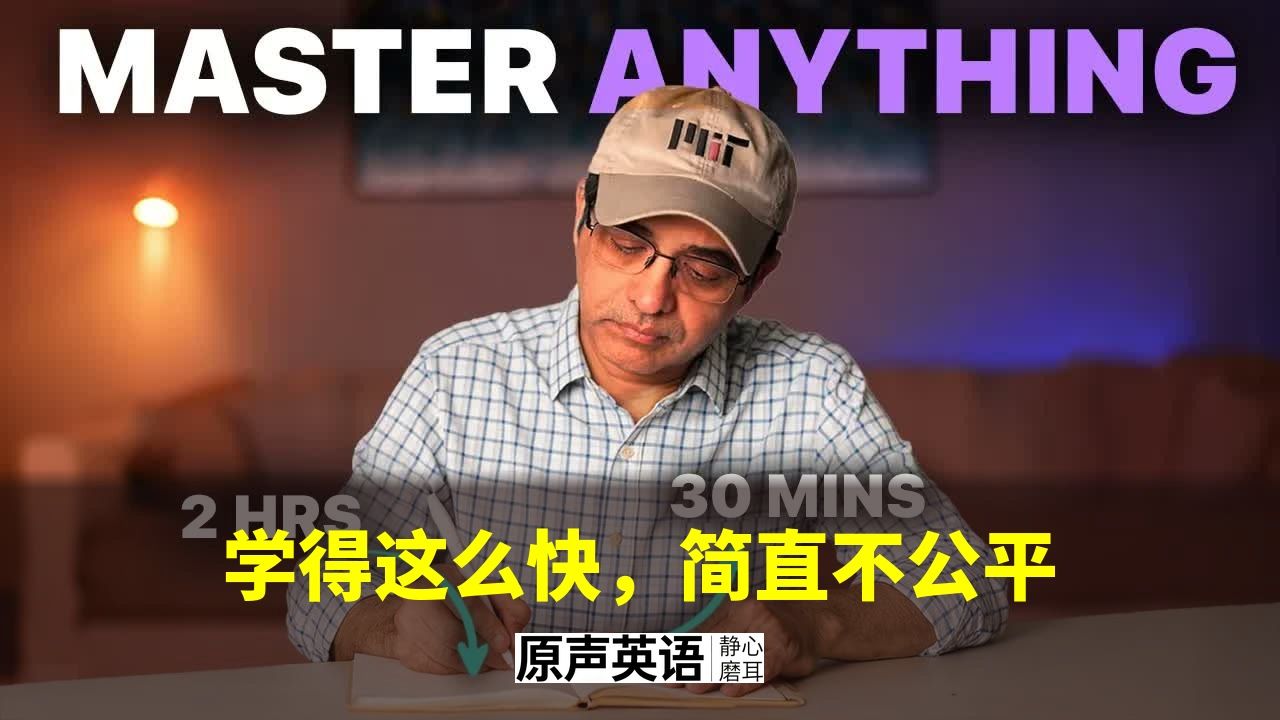
字幕摘录
| 时间 | 英文 | 中文 |
|---|---|---|
| 0:00 | I grew up a poor kid in Mumbai who struggled in school, | 我从小在孟买长大 在学校里挣扎 |
| 0:03 | who struggled with learning. | 他们为学习而挣扎。 |
| 0:05 | Today, I am an MIT grad, former CEO, | 今天,我是麻省理工学院的前首席执行官 |
| 0:08 | and board advisor to billion dollar companies. | 和亿元公司的董事会顾问 |
| 0:11 | And it's not because I'm smarter or read more, | 也不是因为我更聪明或更读书 |
| 0:14 | but because I learn how to learn faster | 因为我学得更快 |
| 0:16 | than everyone around me. | 比我周围的每一个人都好 |
| 0:18 | And here's the truth, intelligence is a commodity | 老实说,情报是一种商品 |
| 0:21 | in the world of AI today. | 在今天的AI世界。 |
| 0:23 | Any skill advantage you have is temporary. | 你的任何技能优势都是暂时的。 |
展开字幕全文(281 条)
| 序号 | 英文 | 中文 |
|---|---|---|
| 1 | I grew up a poor kid in Mumbai who struggled in school, | 我从小在孟买长大 在学校里挣扎 |
| 2 | who struggled with learning. | 他们为学习而挣扎。 |
| 3 | Today, I am an MIT grad, former CEO, | 今天,我是麻省理工学院的前首席执行官 |
| 4 | and board advisor to billion dollar companies. | 和亿元公司的董事会顾问 |
| 5 | And it's not because I'm smarter or read more, | 也不是因为我更聪明或更读书 |
| 6 | but because I learn how to learn faster | 因为我学得更快 |
| 7 | than everyone around me. | 比我周围的每一个人都好 |
| 8 | And here's the truth, intelligence is a commodity | 老实说,情报是一种商品 |
| 9 | in the world of AI today. | 在今天的AI世界。 |
| 10 | Any skill advantage you have is temporary. | 你的任何技能优势都是暂时的。 |
| 11 | The only real edge is how you learn | 唯一真正的优势就是如何学习 |
| 12 | and how fast you can stay ahead. | 和多快你能保持领先。 |
| 13 | So in this video, I'm not gonna give you any hacks. | 所以在这段视频里,我不会给你任何黑客。 |
| 14 | I'll share with you how our brains actually work | 我和你们分享我们的大脑如何运作 |
| 15 | and show you a learning system | 给你看一个学习系统 |
| 16 | that puts you in the top 1%, | 这让你进入了前1% |
| 17 | even if you've always felt like a slow learner. | 即使你总是觉得自己是个慢学习者 |
| 18 | But first, you need to understand why 99% of people | 但首先,你需要明白 为什么99%的人 |
| 19 | fail at learning. | 学习失败。 |
| 20 | Your brain weighs only three pounds, | 你的大脑只有三磅重 |
| 21 | but it burns up to 20% of your body's total fuel. | 但它燃烧 高达你身体总燃料的20%。 |
| 22 | One of its hungriest part is your prefrontal cortex. | 它最饥渴的部分之一是 你的前额皮层。 |
| 23 | This is the CEO function of your brain. | 这是你大脑的首席执行官功能 |
| 24 | Every new theory, every new idea you cram into that region | 每一个新的理论,每一个新的想法 你充斥在这个区域 |
| 25 | spikes up the demand for glucose and oxygen. | 对葡萄糖和氧气的需求激增。 |
| 26 | And that's metabolically very expensive. | 这代谢非常昂贵。 |
| 27 | This region is your tiny cognitive bowl. | 这个区域是你的小认知碗。 |
| 28 | 99% of the learners try to learn by jamming and cramming. | 99%的学习者尝试通过干扰和挤压学习. |
| 29 | Now, if you dump a gallon of theory into a four ounce bowl, | 如果你把一加仑的理论 扔进四盎司的碗里 |
| 30 | how much do you think it will retain? | 你觉得它能保留多少? |
| 31 | Well, exactly four ounces of it, right? | 4盎司,对吧? |
| 32 | And it's a trap that has an almost 100% failure rate. | 而这个陷阱的故障率几乎达到100%. |
| 33 | Today's AI can run millions of processes in parallel, | 今天的AI可以并行运行数百万个进程, |
| 34 | but our human brain cannot do that. | 但我们的大脑不能这样做。 |
| 35 | We're built for serial learning, serial processing, | 我们是为了连环学习 连环处理而建的 |
| 36 | one transfer at a time. | 一次转一次 |
| 37 | So give yourself and your brain a break. | 所以让你自己和你的大脑休息一下。 |
| 38 | Now, the next thing you have to understand | 现在,接下来你必须明白 |
| 39 | if you want to learn like the top 1% | 如果你想学习 像前1% |
| 40 | is that your brain is lying to you. | 你的大脑在骗你 |
| 41 | Carnegie Mellon University tested | 卡内基梅隆大学测试 |
| 42 | an adaptive learning system for its students. | 适合学生的学习系统。 |
| 43 | The material would get increasingly difficult | 材料会越来越难 |
| 44 | based on the student's prior success. | 根据学生以前的成功。 |
| 45 | Now, of course, students at CMU totally hated it, | 当然,CMU的学生完全讨厌它, |
| 46 | but they ended up learning twice as much | 但最终他们学到了两倍 |
| 47 | as those who took the standard test. | 像那些接受标准测试的人一样。 |
| 48 | And that's the point we miss sometimes. | 这也是我们有时忽略的要点。 |
| 49 | We feel friction and we assume failure. | 我们感到摩擦,我们假设失败。 |
| 50 | Neuroscience calls it the generation effect. | 神经科学称之为生成效应. |
| 51 | The harder you work to generate the answer, | 你越努力生成答案 |
| 52 | the deeper it's wired in your brain. | 它在你的大脑中越深。 |
| 53 | 99% of us use AI as a crutch, not as a coach. | 99%的人使用AI作为拐杖,而不是作为教练. |
| 54 | Your brain doesn't hate struggle, it hungers for it. | 你的大脑不讨厌斗争, 它渴望它。 |
| 55 | The real question is, how do you feed it? | 真正的问题是,你怎么养活它? |
| 56 | Well, for that, we have to build a better learning system | 为此,我们必须建立一个更好的学习系统 |
| 57 | and I call it the 3C protocol, | 我称之为3C协议, |
| 58 | compress, compile, and consolidate. | 压缩,编译,合并. |
| 59 | Each step accelerates your learning machine. | 每一步都加速你的学习机器。 |
| 60 | And when you fire all three of them, | 当你把三个人都炒了 |
| 61 | you will break out of the orbit of the ordinary. | 你会脱离正常轨道 |
| 62 | So let's dive into the first C, compress. | 让我们潜入第一个C,压缩。 |
| 63 | The best way to learn that | 最好的学习方法 |
| 64 | is from one of the best chess players. | 是从最好的棋手之一。 |
| 65 | 如果你看着Magnus Carlsen坐在棋盘上 | |
| 66 | he's not thinking about any specific move. | 他没有想任何具体的举动。 |
| 67 | What's happening in his brain is really fascinating. | 他脑子里发生的事情真的很有趣 |
| 68 | Cognitive studies on chess grandmasters | 关于国际象棋大师的认知研究 |
| 69 | estimate that they can internalize 50,000 | 估计它们能够将50,000人内化 |
| 70 | or even 100,000 patterns on the chessboard. | 甚至是棋盘上十万个图案 |
| 71 | But they're not memorizing. | 但他们并没有回忆 |
| 72 | They compress what they have learned into patterns | 他们把学到的东西压缩成规律 |
| 73 | that their brain can actually handle. | 他们的大脑可以处理。 |
| 74 | Now, why do they have to do that? | 现在,他们为什么要这么做? |
| 75 | Because recent research shows that our brain | 因为最近的研究表明我们的大脑 |
| 76 | can only juggle about four independent ideas at a time. | 一次只能玩四个独立的想法 |
| 77 | Any more than that and it drops the ball. | 再多一点,球就会掉下来 |
| 78 | So the first C is compress | 所以第一个C就是压缩 |
| 79 | and it's not about memorizing more. | 这与回忆更多无关 |
| 80 | It is about reducing many ideas | 就是要减少许多想法 |
| 81 | into fewer stronger chunks and patterns | 变成更强大的块和模式 |
| 82 | that your brain can carry. | 你的大脑可以携带。 |
| 83 | So how do you actually compress? | 那你怎么压缩? |
| 84 | The first step is selection. | 第一步是选择。 |
| 85 | Here's an example. | 举个例子 |
| 86 | When I wanna learn from a book, I first compress. | 当我想从一本书中学习时,我首先要压缩。 |
| 87 | I ask, what's the 20% of the book | 我问书的20%是多少 |
| 88 | that I must read that will give me 80% of the benefit? | 我一定要读到那会给我80%的福利? |
| 89 | Most books are just about one single idea. | 大部分书都只有一个想法 |
| 90 | So I read only selective chapters. | 所以我只读有选择性的章节。 |
| 91 | Sometimes I would read them more than once | 有时我会读不止一次 |
| 92 | until it sinks in. | 直到它沉入水中为止 |
| 93 | That is selection. | 这是选择。 |
| 94 | Always pick the 20% that matters. | 总是选择20%的重要。 |
| 95 | Then comes association. | 然后是联系 |
| 96 | A paper in Science Magazine showed | 科学杂志的一篇论文显示 |
| 97 | that you can't learn something new | 你学不到新东西 |
| 98 | until you connect it to something you already know. | 直到你把它连接到你已经知道的东西。 |
| 99 | That's the secret behind mastering how you learn. | 这就是掌握你如何学习的秘密 |
| 100 | You have to ask, where have I seen this idea before? | 你要问,我以前从哪里见过这个主意? |
| 101 | How does it connect to something I already know? | 这和我已经知道的事有什么关系? |
| 102 | 这就是为什么Magnus Carlsen获胜,对不对? | |
| 103 | Because he connects a new move to an old pattern. | 因为他把新动作与旧模式联系起来. |
| 104 | He sees the harmony. | 他看到了和谐 |
| 105 | Then comes chunking. | 然后就出现了大块。 |
| 106 | This is the third step. | 这是第三步。 |
| 107 | You take these ideas and compress them into a simple model. | 你把这些想法压缩成一个简单的模型。 |
| 108 | It could be anything, a drawing, a short summary, | 它可以是任何东西,一个画, 一个简短的总结, |
| 109 | a metaphor you can remember, a song in your head. | 一个比喻,你可以记住, 一首歌在你的头上。 |
| 110 | 99% of us get overloaded, | 我们99%的人被超载, |
| 111 | but the top 1% compress before they consume. | 但前1%的压缩在消耗前。 |
| 112 | But the next C is about how you cut down the tree, compile. | 但接下来的C是 如何砍掉树,编译。 |
| 113 | A lot of you might have watched a movie called Rain Man, | 你们很多人可能都看过电影《雨人》 |
| 114 | and it was actually based on a real person. | 并且实际上是基于一个真实的人。 |
| 115 | His name was Kim Peek. | 他的名字是金皮克。 |
| 116 | Kim grew up in the Midwest. | 金长于中西. |
| 117 | He was a savant, kind of like walking, talking Google. | 他是一个草原, 有点像走路, 说话谷歌。 |
| 118 | He could reportedly recall every word | 据报道,他可以记住每一个字 |
| 119 | of any of the 12,000 books he had read. | 他读过12,000本书 |
| 120 | And he could also add events tied to that day. | 他还可以增加与那天相关的事件。 |
| 121 | He would tell you exactly what happened that day. | 他会告诉你那天究竟发生了什么 |
| 122 | And his unique abilities were linked | 他独特的能力是联系在一起的 |
| 123 | to his brain's unusual design. | 他的大脑的不寻常的设计。 |
| 124 | His brain scans found that the bridge | 他的大脑扫描发现桥 |
| 125 | between his brain's hemispheres | 在大脑的半球之间 |
| 126 | was missing completely from birth. | 出生后就完全失踪了 |
| 127 | But here's the part that broke my heart, | 但这里是伤我的心的部分, |
| 128 | that uniqueness also made his daily life | 独有也使他的日常生活 |
| 129 | very difficult to navigate. | 很难导航 |
| 130 | His father would have to take care of his basic needs | 他父亲必须照顾他的基本需要 |
| 131 | that you and I take for granted. | 你和我认为理所当然。 |
| 132 | He lived with his father until he passed away at 58, | 他和父亲住在一起 直到58岁去世 |
| 133 | never got married. | 从来没有结婚。 |
| 134 | Kim had these incredible gifts, | 金有这些不可思议的礼物, |
| 135 | but he had difficulty mastering simple chores | 但是他很难掌握简单的家务 |
| 136 | and social cues. | 和社交提示。 |
| 137 | It tells you that memory alone is not mastery. | 它告诉你,只有记忆是不能掌握的。 |
| 138 | You can store the entire world | 你可以储存整个世界 |
| 139 | and still struggle to live in it. | 并仍在挣扎着 生活在其中。 |
| 140 | That's Kim's tragedy. | 这是金的悲剧。 |
| 141 | And this is the 99% trap. | 这是99%的陷阱。 |
| 142 | We focus on the goal of hoarding information | 我们的焦点是 囤积信息的目标 |
| 143 | and mistake consumption for learning. | 错误的消费学习。 |
| 144 | And you need three things to do that, | 你需要三件事来做到这一点, |
| 145 | the timer, the test, and the tools. | 计时器,测试,和工具。 |
| 146 | The timer is about managing your learning cadence. | 计时器是管理你的学习节奏。 |
| 147 | This is called the ultradian cycle. | 这叫超常循环 |
| 148 | Your brain operates in 90 minute cycles, | 你的大脑在90分钟的周期里运转 |
| 149 | then it needs to rest. | 然后它需要休息。 |
| 150 | So you get about 90 minutes of peak focus, | 所以,你得到大约90分钟 高峰焦点, |
| 151 | and then your brain must rest for at least about 20 minutes. | 然后大脑必须休息至少20分钟 |
| 152 | So here's something actionable. | 因此,这是一些可操作的。 |
| 153 | Look at your weekly calendar. | 看看你的周历 |
| 154 | Do you have one or two blocks of deep work? | 你有一两个街区的深层工作吗? |
| 155 | If yes, then use this timer. | 如果是,请使用这个计时器。 |
| 156 | 90 minutes of deep work plus 20 minutes of rest. | 90分钟深功加20分钟休息. |
| 157 | Have one or two such blocks per week | 每周有一个或两个这样的街区 |
| 158 | and protect them ruthlessly. | 并无情地保护他们。 |
| 159 | This is how you're going to learn fast. | 这就是你如何快速学习。 |
| 160 | Second, the test. | 二是考证. |
| 161 | Most people learn, learn, learn for six weeks, | 大多数人学习,学习,学习 六周, |
| 162 | for six months, and then there is a big test | 6个月,然后有一个大测试 |
| 163 | and a big presentation at the end. | 并在最后做了个大演示 |
| 164 | This is a giant waste of time. | 这是巨大的浪费时间。 |
| 165 | This is one of the biggest mistakes we make in learning. | 这是我们在学习中最大的错误之一。 |
| 166 | You know, software engineers talk about | 你知道,软件工程师谈论 |
| 167 | agile development all day long. | 一天到晚的敏捷发展。 |
| 168 | Everything is a two week sprint. | 一切都是两星期的短跑 |
| 169 | In fact, in today's AI companies, | 事实上,在今天的AI公司里, |
| 170 | everything is a single day sprint. | 一切只是一天的冲刺 |
| 171 | So why not apply the same concept to learning? | 那么,为什么不应用同样的概念来学习呢? |
| 172 | Build a different loop. | 构建不同的循环. |
| 173 | Learn, test, learn, test, learn, test. | 学,试,试,试,试. |
| 174 | So pick a concept, learn it, and then test. | 所以选择一个概念,学习它,然后测试。 |
| 175 | Then pick another concept. | 然后选择另一个概念。 |
| 176 | And how do you test? | 你怎么测试? |
| 177 | That's where the tools come into play. | 工具也由此而来. |
| 178 | There are three that are my favorite. | 我最喜欢三个 |
| 179 | Tool number one, slow burn. | 工具一,慢烧. |
| 180 | If you're learning something physical, | 如果你正在学习物理的东西, |
| 181 | like playing a guitar, | 就像弹吉他 |
| 182 | do it at an excruciatingly slow pace | 慢慢来 |
| 183 | and do it a lot of times. | 并经常这样做。 |
| 184 | But don't turn off your brain because slow is boring. | 但不要因为慢是无聊而关闭你的大脑. |
| 185 | Focus on every micro move. | 专心一切微动. |
| 186 | The slower you play, the faster you learn. | 玩得越慢 学得越快 |
| 187 | Tool number two, immersion. | 工具二 浸润. |
| 188 | Every musician will tell you this. | 每个音乐家都会告诉你这一点。 |
| 189 | No matter how you practice and rehearse with the band, | 不管你如何练习 和乐队排练, |
| 190 | the moment you start playing on stage, | 当你开始在舞台上演奏, |
| 191 | everything goes haywire. | 一切都会变的 |
| 192 | So you must test in the arena. | 所以你必须在竞技场测试 |
| 193 | Practicing a speech in front of a mirror is a good start, | 在镜子前练习演讲是个好开始, |
| 194 | but practicing it in front of real people, | 却在真人面前练习 |
| 195 | that's even better. | 这样更好 |
| 196 | And the third tool, teach to learn. | 及第三器,教习之. |
| 197 | Now this is the boss tool. | 这是老大的工具 |
| 198 | I do this all the time. | 我总是这样 |
| 199 | Once I learn something, I teach it to someone. | 一旦我学到了什么,我教给别人。 |
| 200 | Sometimes I even lecture the wall | 有时我甚至教墙壁 |
| 201 | as if I'm giving a TED talk. | 就像我在讲TED演讲 |
| 202 | Because I'm learning, I'm internalizing, | 因为我在学习,我在内化, |
| 203 | I'm connecting, I'm reframing. | 我在联动,我正在重新定位。 |
| 204 | And I would do it a few times and try different angles | 我愿意做几次 尝试不同的角度 |
| 205 | until I feel I have learned it well. | 直到我觉得我学到了它。 |
| 206 | We compress the map, we compile the work, | 我们压缩地图 整理工作 |
| 207 | now comes the final C. | 现在来最后的C。 |
| 208 | You have to consolidate it | 你要巩固它 |
| 209 | to retain what you've just learned forever. | 来保留你刚刚学到的一切 |
| 210 | If time was money and you wanted to invest it in learning, | 如果时间是钱,你想投资学习, |
| 211 | then relying on stickies and flashcards | 然后依靠粘贴和闪卡 |
| 212 | will give you short-term gains, | 以便你们获得短期的报酬, |
| 213 | but terrible long-term returns. | 但可怕的长期回报。 |
| 214 | And the most important insight is this. | 最重要的见解就是这个。 |
| 215 | Learning is a two-stage process. | 学习是一个两阶段的过程。 |
| 216 | Stage one is focus. | 第一阶段是焦点。 |
| 217 | You're sending the request to your brain to rewire. | 你要向你的大脑发送请求 以重新连接。 |
| 218 | But stage two is even more important, rest. | 但第二阶段更重要 休息 |
| 219 | This is where the actual consolidation happens. | 这就是实际合并的地方。 |
| 220 | So you've got to leave some room for it. | 所以你得留点空间 |
| 221 | You have to manage your rest as much as you manage your work, | 你要像工作一样管理你的休息 |
| 222 | both at the micro and macro level. | 在微观和宏观层面。 |
| 223 | So think about the learning cycle in terms of work, | 想想学习周期的工作, |
| 224 | rest, work, rest, work, rest. | 休息,工作,休息,休息,休息。 |
| 225 | First, on the micro level, inside your 90-minute block, | 首先,在微观层面, 在你的90分钟块内, |
| 226 | you have to think about taking frequent 10, 20-second breaks. | 你得考虑经常休息10,20秒 |
| 227 | Research shows that after some heavy learning, | 研究表明,经过一些重学后, |
| 228 | if you pause for just 10 seconds, | 如果你暂停10秒 |
| 229 | your brain replays the information you just learned | 你的大脑重播你刚刚学到的信息 |
| 230 | at 10 to 20 times the speed, | 在10到20倍的速度, |
| 231 | and it might fire that sequence 20 times over. | 它可能会发射20倍 |
| 232 | So you're literally getting 20 free reps in your brain | 你脑子里有20个免费代表 |
| 233 | just by taking a break. | 只是通过休息。 |
| 234 | And on the macro level, | 在宏观层面 |
| 235 | we're talking about the ultradian cycle | 我们说的是超度循环 |
| 236 | of 90 minutes of work and 20 minutes of rest again. | 工作90分钟,休息20分钟。 |
| 237 | And what you do in those 20 minutes is also important. | 你在这20分钟里做的事也很重要 |
| 238 | I, for one, do NSDR, which is non-sleep deep rest. | 我,我一个人,做NSDR, 这是不睡觉的深度休息。 |
| 239 | In Sanskrit, it's called yoga nindra, | 在梵语中叫做瑜伽忍者, |
| 240 | which literally means the rest that helps you connect. | 意思是其他帮助你连接的东西 |
| 241 | So what do you have to do | 所以,你必须做什么 |
| 242 | during that 20-minute NSDR period? | 在那20分钟的NSDR期间? |
| 243 | Absolutely nothing. | 什么都没有 |
| 244 | For instance, I just lie down or sit, | 比如说,我躺下或坐下 |
| 245 | close my eyes for 15 minutes, 20 minutes, and do nothing. | 闭上我的眼睛15分钟20分钟 什么都不做 |
| 246 | And sometimes I would go for a leisurely walk if I can. | 有时候,如果可以的话,我会去散步 |
| 247 | But the point is not to distract yourself and do nothing. | 但问题不在于分散你的注意力,而无所作为。 |
| 248 | And the third most macro thing is a good night's sleep. | 第三件最重大的事就是睡个好觉 |
| 249 | There is a lot of research | 还有很多研究 |
| 250 | that suggests that when we're sleeping, | 这说明我们睡觉的时候 |
| 251 | our brain replays the entire thing we learned in reverse. | 我们的大脑重现了我们所学到的一切 |
| 252 | So these three rests are super important. | 所以这三个休息是极为重要的。 |
| 253 | You know, in this post-industrial technological age, | 在这个后工业时代, |
| 254 | we've forgotten what farmers have always intuitively known. | 我们忘记了农民总是直觉地知道的东西 |
| 255 | You can't keep plowing the field every day of the year. | 岂能每年日耕田. |
| 256 | The soil, the ground, it must rest to regain is fertility. | 土壤,地面,要恢复,必须休息的是生育力. |
| 257 | And that's the most important lesson. | 这是最重要的教训 |
| 258 | I struggled with learning when I was growing up. | 我长大后在学习上挣扎 |
| 259 | I failed every single course in college. | 我大学的每一门课程都失败了 |
| 260 | Couldn't focus, couldn't retain anything. | 无法专注,无法保留任何东西。 |
| 261 | But these techniques, they changed my life | 但是这些技巧改变了我的生活 |
| 262 | and they might work for you too. | 他们可能也为你工作。 |
| 263 | Remember three things. | 忆念三事. |
| 264 | First, stop racing other people. | 先别跟别人比赛了 |
| 265 | There will always be someone who learns faster. | 总会有人学得更快 |
| 266 | So what? | 那又怎样? |
| 267 | There is someone faster than them. | 有人比他们快 |
| 268 | That loop never ends. | 这个循环是永不停歇的 |
| 269 | Your only competition is you from yesterday. | 你唯一的竞争对手是昨天的你 |
| 270 | Second, get out of your head. | 第二,离开你的头。 |
| 271 | You cannot be the performer and the critic | 你不能是表演家和评论家 |
| 272 | at the same time. | 同时。 |
| 273 | While you're learning, be the performer, not the critic. | 当你学习的时候,做表演者,而不是评论家. |
| 274 | And finally, give yourself time. | 最后,给自己时间。 |
| 275 | Learning is like an ocean. | 学如大海. |
| 276 | It has its rhythm, it ebbs, it flows. | 它有节奏, 它跳动,它流动。 |
| 277 | Honor that cycle. | 尊重循环 |
| 278 | With enough time, there is nothing you can't learn | 有足够的时间,没有什么是无法学习的 |
| 279 | {\fn黑体\fs22\bord1\shad0\3aHBE\4aH00\fscx67\fscy66\2cHFFFFFF\3cH808080}还有你无法成为的 | |
| 280 | If you like this video, please subscribe. | 如果你喜欢这个视频,请订阅。 |
| 281 | Thank you and I love you. | 谢谢你,我爱你。 |
该视频共有字幕 281 条。解锁更多字幕为会员功能,请移动到 价格
P2 · 【学习系统】学得这么快,简直不公平 · MIT毕业CEO的Three C学习法 p02 无字幕 (P2)
字幕摘录
| 时间 | 英文 | 中文 |
|---|---|---|
| 0:00 | I grew up a poor kid in Mumbai who struggled in school, who struggled with learning. | 我从小在孟买长大的穷孩子在学校里挣扎,在学习上挣扎. |
| 0:05 | Today I am an MIT grad, former CEO, and board advisor to billion dollar companies. | 今天我是麻省理工学院的前首席执行官 和亿万公司的董事会顾问 |
| 0:11 | And it's not because I'm smarter or read more, but because I learn how to learn faster | 这并不是因为我更聪明或更读书 而是因为我学会了更快的学习 |
| 0:16 | than everyone around me. | 比我周围的每一个人都好 |
| 0:18 | And here's the truth. | 则此真言. |
| 0:19 | Intelligence is a commodity in the world of AI today. | 情报是今天AI世界的商品. |
| 0:23 | Any skill advantage you have is temporary. | 你的任何技能优势都是暂时的。 |
| 0:26 | The only real edge is how you learn and how fast you can stay ahead. | 唯一真正的边缘就是如何学习 如何快速前进 |
| 0:32 | So in this video, I'm not going to give you any hacks. | 所以在这段视频里, 我不会给你任何黑客。 |
| 0:35 | I'll share with you how our brains actually work and show you a learning system | 我会和你们分享我们的大脑如何运作 并给你们展示一个学习系统 |
展开字幕全文(282 条)
| 序号 | 英文 | 中文 |
|---|---|---|
| 1 | I grew up a poor kid in Mumbai who struggled in school, who struggled with learning. | 我从小在孟买长大的穷孩子在学校里挣扎,在学习上挣扎. |
| 2 | Today I am an MIT grad, former CEO, and board advisor to billion dollar companies. | 今天我是麻省理工学院的前首席执行官 和亿万公司的董事会顾问 |
| 3 | And it's not because I'm smarter or read more, but because I learn how to learn faster | 这并不是因为我更聪明或更读书 而是因为我学会了更快的学习 |
| 4 | than everyone around me. | 比我周围的每一个人都好 |
| 5 | And here's the truth. | 则此真言. |
| 6 | Intelligence is a commodity in the world of AI today. | 情报是今天AI世界的商品. |
| 7 | Any skill advantage you have is temporary. | 你的任何技能优势都是暂时的。 |
| 8 | The only real edge is how you learn and how fast you can stay ahead. | 唯一真正的边缘就是如何学习 如何快速前进 |
| 9 | So in this video, I'm not going to give you any hacks. | 所以在这段视频里, 我不会给你任何黑客。 |
| 10 | I'll share with you how our brains actually work and show you a learning system | 我会和你们分享我们的大脑如何运作 并给你们展示一个学习系统 |
| 11 | that puts you in the top 1%, even if you've always felt like a slow learner. | 即使你一直觉得自己是个学习迟钝的人 |
| 12 | But first, you need to understand why 99% of people fail at learning. | 但首先,你需要明白为什么99%的人在学习上失败. |
| 13 | Your brain weighs only 3 pounds, but it burns up to 20% of your body's total fuel. | 你的大脑只有3磅重,但燃烧量高达你身体总燃料的20%. |
| 14 | One of its hungriest part is your prefrontal cortex. | 它最饥渴的部分之一是 你的前额皮层。 |
| 15 | This is the CEO function of your brain. | 这是你大脑的首席执行官功能 |
| 16 | Every new theory, every new idea you cram into | 每一个新的理论,每一个你挤进的新想法 |
| 17 | that region spikes up the demand for glucose and oxygen. | 该地区对葡萄糖和氧气的需求激增。 |
| 18 | And that's metabolically very expensive. | 这代谢非常昂贵。 |
| 19 | This region is your tiny cognitive bowl. | 这个区域是你的小认知碗。 |
| 20 | 99% of the learners try to learn by jamming | 99%的学习者试图通过干扰学习 |
| 21 | and cramming. | 和挤压。 |
| 22 | Now, if you dump a gallon of theory into a 4-ounce bowl, | 如果你把一加仑的理论 扔进四盎司的碗里 |
| 23 | how much do you think it will retain? | 你觉得它能保留多少? |
| 24 | Well, exactly 4 ounces of it, right? | 4盎司,对吧? |
| 25 | And it's a trap that has an almost 100% failure rate. | 而这个陷阱的故障率几乎达到100%. |
| 26 | Today's AI can run millions of processes in parallel, but our human brain cannot do that. | 今天的AI可以并行运行数百万个过程,但我们的人类大脑不能做到这一点. |
| 27 | We're built for serial learning, serial processing, one transfer at a time. | 我们是为了连载学习,连载处理,一次一次转移而建造的. |
| 28 | So give yourself and your brain a break. | 所以让你自己和你的大脑休息一下。 |
| 29 | Now, the next thing you have to understand | 现在,接下来你必须明白 |
| 30 | if you want to learn like the top 1% is that your brain is lying to you. | 如果你想学得像前1%一样 就是你的大脑在骗你 |
| 31 | Carnegie Mellon University tested an adaptive learning system for its students. | 卡内基梅隆大学为其学生测试了适应性学习系统. |
| 32 | The material would get increasingly difficult based on the students' prior success. | 根据学生以往的成功情况,教材将变得越来越困难。 |
| 33 | Now, of course, students at CMU totally hated it, but they ended up learning twice as much | 现在,当然,CMU的学生完全讨厌它, 但最后他们学习了两倍 |
| 34 | as those who took the standard test. | 像那些接受标准测试的人一样。 |
| 35 | And that's the point we miss sometimes. | 这也是我们有时忽略的要点。 |
| 36 | We feel friction and we assume failure. | 我们感到摩擦,我们假设失败。 |
| 37 | Neuroscience calls it the generation effect. | 神经科学称之为生成效应. |
| 38 | The harder you work to generate the answer, the deeper it's wired in your brain. | 生成答案的难度越大,它就会在你的大脑中被线束得越深. |
| 39 | 99% of us use AI as a crutch, not as a coach. | 99%的人使用AI作为拐杖,而不是作为教练. |
| 40 | Your brain doesn't hate struggle. | 你的大脑不讨厌挣扎。 |
| 41 | It hungers for it. | 它渴望着它。 |
| 42 | The real question is, how do you feed it? | 真正的问题是,你怎么养活它? |
| 43 | Well, for that, we have to build a better learning system. | 为此,我们必须建立一个更好的学习系统。 |
| 44 | And I call it the 3C protocol. | 我称之为3C协议。 |
| 45 | Compress, compile, and consolidate. | 压缩,编译,合并. |
| 46 | Each step accelerates your learning machine. | 每一步都加速你的学习机器。 |
| 47 | And when you fire all three of them, you will break out of the orbit of the ordinary. | 当你把三个人全部发射时, 你会从普通的轨道上冲出。 |
| 48 | So let's dive into the first C, compress. | 让我们潜入第一个C,压缩。 |
| 49 | The best way to learn that is from one of the | 最好的学习方法是从其中之一 |
| 50 | best chess players. | 最好的围棋手。 |
| 51 | 如果你看着Magnus Carlsen坐在棋盘上 | |
| 52 | he's not thinking about any specific move. | 他没有想任何具体的举动。 |
| 53 | What's happening in his brain is really fascinating. | 他脑子里发生的事情真的很有趣 |
| 54 | Cognitive studies on chess grandmasters estimate that they can internalize | 对围棋大师的认知研究估计他们可以内化 |
| 55 | 50,000 or even 100,000 patterns on the chessboard. | 棋盘上的5万甚至10万图案. |
| 56 | But they're not memorizing. | 但他们并没有回忆 |
| 57 | They compress what they have learned into patterns that their brain can actually handle. | 它们把所学的压缩成大脑能实际处理的规律。 |
| 58 | Now, why do they have to do that? | 现在,他们为什么要这么做? |
| 59 | Because recent research shows that our brain can | 因为最近的研究表明 我们的大脑可以 |
| 60 | only juggle about four independent ideas at a time. | 一次只玩四个独立的想法 |
| 61 | Any more than that, and it drops the ball. | 不止如此,它会掉球 |
| 62 | So the first C is compress. | 所以第一个C就是压缩. |
| 63 | And it's not about memorizing more. | 更不为忆念. |
| 64 | It is about reducing many ideas into fewer, stronger chunks and patterns that your brain | 而是把很多想法 变成更少,更强大的块 和模式,你的大脑 |
| 65 | can carry. | 可以携带。 |
| 66 | So how do you actually compress? | 那你怎么压缩? |
| 67 | The first step is selection. | 第一步是选择。 |
| 68 | Here's an example. | 举个例子 |
| 69 | When I want to learn from a book, I first compress. | 欲学书时先压缩. |
| 70 | I ask, what's the 20% of the book | 我问书的20%是多少 |
| 71 | that I must read that will give me 80% of the benefit? | 我一定要读到那会给我80%的福利? |
| 72 | Most books are just about one single idea. | 大部分书都只有一个想法 |
| 73 | So I read only selective chapters. | 所以我只读有选择性的章节。 |
| 74 | Sometimes I would read them more than once until it sinks in. | 有时候我会念不止一次 直到它沉没 |
| 75 | That is selection. | 这是选择。 |
| 76 | Always pick the 20% that matters. | 总是选择20%的重要。 |
| 77 | Then comes association. | 然后是联系 |
| 78 | A paper in Science Magazine showed that you can't learn something new until you connect it to | "科学杂志"的一篇论文显示,除非你把它连接起来,否则你无法学到新的东西 |
| 79 | something you already know. | 一些你已经知道的。 |
| 80 | That's the secret behind mastering how you learn. | 这就是掌握你如何学习的秘密 |
| 81 | You have to ask, | 你必须问, |
| 82 | where have I seen this idea before? | 我以前从哪里看到这个想法的? |
| 83 | How does it connect to something I already know? | 这和我已经知道的事有什么关系? |
| 84 | This is why | 这就是为什么 |
| 85 | Carlson wins, right? | 卡尔森赢了,对吧? |
| 86 | Because he connects a new move to an old pattern. | 因为他把新动作与旧模式联系起来. |
| 87 | He sees the harmony. | 他看到了和谐 |
| 88 | Then comes chunking. | 然后就出现了大块。 |
| 89 | This is the third step. | 这是第三步。 |
| 90 | You take these ideas and compress them into a simple | 你把这些想法压缩成一个简单的 |
| 91 | model. | 型号。 |
| 92 | It could be anything. | 它可以是任何东西。 |
| 93 | A drawing, a short summary, a metaphor you can remember, a song in | 一个画,一个简短的总结,一个比喻 你可以记得,一首歌在 |
| 94 | your head. | 你的头 |
| 95 | 99% of us get overloaded. | 我们99%的人被超载。 |
| 96 | But the top 1% compress before they consume. | 但前1%在消耗前进行压缩. |
| 97 | But the next C | 但下一个C |
| 98 | is about how you cut down the tree. | 是关于你如何砍倒树。 |
| 99 | Compile. | 编译. |
| 100 | A lot of you might have watched a movie called Rain Man | 你们很多人可能看过一部叫雨人电影 |
| 101 | and it was actually based on a real person. | 并且实际上是基于一个真实的人。 |
| 102 | His name was Kim Peek. | 他的名字是金皮克。 |
| 103 | Kim grew up in the Midwest. | 金长于中西. |
| 104 | He was a savant. | 他是一个草原。 |
| 105 | Kind of like walking talking Google. | 有点像走在谷歌说话。 |
| 106 | He could reportedly recall every word | 据报道,他可以记住每一个字 |
| 107 | of any of the 12,000 books he had read. | 他读过12,000本书 |
| 108 | And he could also add events tied to that day. | 他还可以增加与那天相关的事件。 |
| 109 | He would | 他会 |
| 110 | tell you exactly what happened that day. | 告诉你那天到底发生了什么 |
| 111 | And his unique abilities were linked to his brain's | 他独特的能力与大脑有关 |
| 112 | unusual design. | 不寻常的设计。 |
| 113 | His brain scans found that the bridge between his brain's hemispheres | 他的大脑扫描发现 他的大脑半球之间的桥梁 |
| 114 | was missing completely from birth. | 出生后就完全失踪了 |
| 115 | But here's the part that broke my heart. | 但这是让我心碎的部分 |
| 116 | That uniqueness | 独一无二 |
| 117 | also made his daily life very difficult to navigate. | 也使他的日常生活非常难以导航. |
| 118 | His father would have to take care | 他爸爸会照顾好他的 |
| 119 | of his basic needs that you and I take for granted. | 他的基本需求,你和我认为理所当然。 |
| 120 | He lived with his father until he passed away at | 他和父亲住在一起 直到他去世 |
| 121 | 58. | 58. 联合国 |
| 122 | Never got married. | 从来没有结婚。 |
| 123 | Kim had these incredible gifts. | 金有这些不可思议的礼物。 |
| 124 | But he had difficulty mastering simple | 但他很难掌握简单 |
| 125 | chores and social cues. | 家务和社会提示。 |
| 126 | It tells you that memory alone is not mastery. | 它告诉你,只有记忆是不能掌握的。 |
| 127 | You can store the entire | 你可以储存整个 |
| 128 | world and still struggle to live in it. | 活在这个世界里 |
| 129 | That's Kim's tragedy. | 这是金的悲剧。 |
| 130 | And this is the 99% trap. | 这是99%的陷阱。 |
| 131 | We focus | 我们集中精神 |
| 132 | on the goal of hoarding information and mistake consumption for learning. | 目标 囤积信息 错误的消费学习。 |
| 133 | And you need three things | 你需要三样东西 |
| 134 | to do that. | 这样做。 |
| 135 | The timer, the test, and the tools. | 计时器 测试器 和工具 |
| 136 | The timer is about managing your learning cadence. | 计时器是管理你的学习节奏。 |
| 137 | This is called the ultradian cycle. | 这叫超常循环 |
| 138 | Your brain operates in 90-minute cycles. | 你的大脑运行在90分钟的周期。 |
| 139 | Then it needs to | 那么它必须 |
| 140 | rest. | 休养. |
| 141 | So you get about 90 minutes of peak focus and then your brain must rest for at least about | 所以,你得到大约90分钟 高峰焦点,然后你的大脑必须休息 至少关于 |
| 142 | 20 minutes. | 20分钟 |
| 143 | So here's something actionable. | 因此,这是一些可操作的。 |
| 144 | Look at your weekly calendar. | 看看你的周历 |
| 145 | Do you have one or two | 你有一两个 |
| 146 | blocks of deep work? | 深层工作? |
| 147 | If yes, then use this timer. | 如果是,请使用这个计时器。 |
| 148 | 90 minutes of deep work plus 20 minutes of rest. | 90分钟深功加20分钟休息. |
| 149 | Have one or two such blocks per week and protect them ruthlessly. | 每周有一个或两个这样的街区 并无情地保护他们。 |
| 150 | This is how you're going to learn | 这就是你要如何学习 |
| 151 | fast. | 快点 |
| 152 | Second, the test. | 二是考证. |
| 153 | Most people learn, learn, learn for six weeks, for six months. | 多数人学习,学习,学习6周,6个月. |
| 154 | And then | 礛 |
| 155 | there's a big test and a big presentation at the end. | 结尾有大型测试和大型演示. |
| 156 | This is a giant waste of time. | 这是巨大的浪费时间。 |
| 157 | This is one of | 这是其中之一 |
| 158 | biggest mistakes we make in learning. | 我们在学习中犯了最大的错误。 |
| 159 | You know, software engineers talk about agile development | 你知道,软件工程师 谈论敏捷的开发 |
| 160 | all day long. | 整天都这样 |
| 161 | Everything is a two-week sprint. | 一切都是两星期的冲刺 |
| 162 | In fact, in today's AI companies, everything is | 事实上,在今天的AI公司里,一切都是 |
| 163 | a single day sprint. | 一日冲刺。 |
| 164 | So why not apply the same concept to learning? | 那么,为什么不应用同样的概念来学习呢? |
| 165 | Build a different loop. | 构建不同的循环. |
| 166 | Learn, test, learn, test, learn, test. | 学,试,试,试,试. |
| 167 | So pick a concept, learn it, and then test. | 所以选择一个概念,学习它,然后测试。 |
| 168 | Then pick | 那就选吧 |
| 169 | another concept. | 另一个概念。 |
| 170 | And how do you test? | 你怎么测试? |
| 171 | That's where the tools come into play. | 工具也由此而来. |
| 172 | There are three | 有三个 |
| 173 | that are my favorite. | 这是我最喜欢的 |
| 174 | Tool number one, slow burn. | 工具一,慢烧. |
| 175 | If you're learning something physical, | 如果你正在学习物理的东西, |
| 176 | like playing a guitar, do it at an excruciatingly slow pace. | 就像弹吉他一样, 以极其缓慢的速度完成它。 |
| 177 | And do it a lot of times. | 且作多时. |
| 178 | But don't | 但别 |
| 179 | turn off your brain because slow is boring. | 关掉你的大脑 因为慢是无聊的。 |
| 180 | Focus on every micro move. | 专心一切微动. |
| 181 | The slower you play, | 你弹得越慢 |
| 182 | the faster you learn. | 你学得越快 |
| 183 | Tool number two, immersion. | 工具二 浸润. |
| 184 | Every musician will tell you this. | 每个音乐家都会告诉你这一点。 |
| 185 | No matter how | 无论怎样 |
| 186 | you practice and rehearse with the band, the moment you start playing on stage, everything goes | 你练习和排练乐队, 当你开始在舞台上演奏,一切都去 |
| 187 | haywire. | 干线 |
| 188 | So you must test in the arena. | 所以你必须在竞技场测试 |
| 189 | Practicing a speech in front of a mirror is a good start. | 在镜子前练习演讲是一个好的开始. |
| 190 | But | 不过 |
| 191 | practicing it in front of real people, that's even better. | 在真人面前练习,这样更好 |
| 192 | And the third tool, teach to learn. | 及第三器,教习之. |
| 193 | Now, | 现在, |
| 194 | this is the boss tool. | 这是老板的工具。 |
| 195 | I do this all the time. | 我总是这样 |
| 196 | Once I learn something, I teach it to someone. | 一旦我学到了什么,我教给别人。 |
| 197 | Sometimes I even lecture the wall as if I'm giving a TED talk. | 有时我甚至会教墙壁, 好像我在讲TED演讲一样。 |
| 198 | Because I'm learning, I'm | 因为我在学习,我 |
| 199 | internalizing, I'm connecting, I'm reframing. | 内部化,我在连接,我正在重建。 |
| 200 | And I would do it a few times and try different angles | 我愿意做几次 尝试不同的角度 |
| 201 | until I feel I have learned it well. | 直到我觉得我学到了它。 |
| 202 | We compress the map, we compile the work, now comes the | 我们压缩地图,我们整理工作,现在来了 |
| 203 | final C. You have to consolidate it to retain what you've just learned forever. | 最后C节。 你必须巩固它才能永远保留你刚刚学到的东西. |
| 204 | If time was money, | 如果时间是钱, |
| 205 | and you wanted to invest it in learning, then relying on stickies and flashcards will give | 然后依靠粘贴和闪卡 |
| 206 | you short-term gains, but terrible long-term returns. | 短期收益,但可怕的长期回报。 |
| 207 | And the most important insight is this. | 最重要的见解就是这个。 |
| 208 | Learning is a two-stage process. | 学习是一个两阶段的过程。 |
| 209 | Stage one is focus. | 第一阶段是焦点。 |
| 210 | You're sending the request to your brain | 你向你的大脑发送请求 |
| 211 | to rewire. | 重新连接。 |
| 212 | But stage two is even more important, rest. | 但第二阶段更重要 休息 |
| 213 | This is where the actual consolidation | 这就是实际合并的地方 |
| 214 | happens. | 发生。 |
| 215 | So you've got to leave some room for it. | 所以你得留点空间 |
| 216 | You have to manage your rest as much as you manage | 你要尽你所能 |
| 217 | your work, both at the micro and macro level. | 在微观和宏观层面你的工作。 |
| 218 | So think about the learning cycle in terms of work, | 想想学习周期的工作, |
| 219 | rest, work, rest, work, rest. | 休息,工作,休息,休息,休息。 |
| 220 | First, on the micro level, inside your 90-minute block, | 首先,在微观层面, 在你的90分钟块内, |
| 221 | you have to think about taking frequent 10-20 second breaks. | 你得考虑经常休息10 -20秒 |
| 222 | Research shows that after some | 研究显示,经过一些 |
| 223 | learning, if you pause for just 10 seconds, your brain replays the information you just learned | 学习,如果你暂停10秒, 你的大脑重播你刚刚学到的信息 |
| 224 | at 10 to 20 times the speed, and it might fire that sequence 20 times over. | 速度的10到20倍, 并且它可能会发射 序列超过20倍。 |
| 225 | So you're literally | 原来你就是 |
| 226 | getting 20 free reps in your brain just by taking a break. | 只要休息一下 就能在你的大脑里得到20个免费代表 |
| 227 | And on the macro level, we're talking | 在宏观层面,我们谈论 |
| 228 | about the ultradian cycle of 90 minutes of work and 20 minutes of rest again. | 90分钟的工作和20分钟的休息的超常循环 |
| 229 | And what you do in | 以及你在这里做什么 |
| 230 | 20 minutes is also important. | 20分钟也很重要 |
| 231 | I, for one, do NSDR, which is non-sleep deep rest. | 我,我一个人,做NSDR, 这是不睡觉的深度休息。 |
| 232 | In Sanskrit, | 梵语中. |
| 233 | it's called yoga nindra, which literally means the rest that helps you connect. | 它叫瑜伽忍者, 字面意思是其他帮助你连接。 |
| 234 | So what do you have | 你还有什么 |
| 235 | to do during that 20-minute NSDR period? | 在那20分钟的NSDR期间? |
| 236 | Absolutely nothing. | 什么都没有 |
| 237 | For instance, I just lie down or sit, | 比如说,我躺下或坐下 |
| 238 | close my eyes for 15 minutes, 20 minutes, and do nothing. | 闭上我的眼睛15分钟20分钟 什么都不做 |
| 239 | And sometimes I would go for a leisurely | 有时候我会去闲逛 |
| 240 | walk if I can. | 如果我能走的话 |
| 241 | But the point is not to distract yourself and do nothing. | 但问题不在于分散你的注意力,而无所作为。 |
| 242 | And the third most macro | 也是第三大宏观 |
| 243 | thing is a good night's sleep. | 事情是一个美好的夜晚的睡眠。 |
| 244 | There is a lot of research that suggests that when we're sleeping, | 有很多研究表明 当我们睡觉的时候 |
| 245 | our brain replays the entire thing we learned in reverse. | 我们的大脑重现了我们所学到的一切 |
| 246 | So these three rests are super important. | 所以这三个休息是极为重要的。 |
| 247 | You know, in this post-industrial technological age, we've forgotten what farmers have always | 你知道,在这个后工业技术时代, 我们忘记了农民们一直以来 |
| 248 | intuitively known. | 直觉知之. |
| 249 | You can't keep plowing the field every day of the year. | 岂能每年日耕田. |
| 250 | The soil, | 土壤, |
| 251 | the ground it must rest to regain is fertility. | 它必须重新获得的条件是生育力。 |
| 252 | And that's the most important lesson. | 这是最重要的教训 |
| 253 | I struggled | 我挣扎着 |
| 254 | with learning when I was growing up. | 我小时候学的 |
| 255 | I failed every single course in college. | 我大学的每一门课程都失败了 |
| 256 | Couldn't focus, | 不能专心 |
| 257 | couldn't retain anything. | 无法保留任何东西。 |
| 258 | But these techniques, they changed my life and they might work for you | 但是这些技巧改变了我的生活,也许能为你效劳 |
| 259 | too. | 也一样。 |
| 260 | Remember three things. | 忆念三事. |
| 261 | First, stop racing other people. | 先别跟别人比赛了 |
| 262 | There will always be someone who | 总会有人 |
| 263 | learns faster. | 学得更快 |
| 264 | So what? | 那又怎样? |
| 265 | There is someone faster than them. | 有人比他们快 |
| 266 | That loop never ends. | 这个循环是永不停歇的 |
| 267 | Your only | 只有你一个人 |
| 268 | competition is you from yesterday. | 竞争是你从昨天开始。 |
| 269 | Second, get out of your head. | 第二,离开你的头。 |
| 270 | You cannot be the performer | 你不能当演员 |
| 271 | and the critic at the same time. | 和评论家同时。 |
| 272 | While you're learning, be the performer, not the critic. | 当你学习的时候,做表演者,而不是评论家. |
| 273 | And finally, give yourself time. | 最后,给自己时间。 |
| 274 | Learning is like an ocean. | 学如大海. |
| 275 | It has its rhythm. | 它的节奏。 |
| 276 | It ebbs, | 它的发音, |
| 277 | it flows. | 它会流动。 |
| 278 | Honor that cycle. | 尊重循环 |
| 279 | With enough time, there is nothing you can't learn | 有足够的时间,没有什么是无法学习的 |
| 280 | {\fn黑体\fs22\bord1\shad0\3aHBE\4aH00\fscx67\fscy66\2cHFFFFFF\3cH808080}还有你无法成为的 | |
| 281 | If you like this video, please subscribe. | 如果你喜欢这个视频,请订阅。 |
| 282 | Thank you and I love you. | 谢谢你,我爱你。 |
该视频共有字幕 282 条。解锁更多字幕为会员功能,请移动到 价格