【人类简史】远古人类的一天在做什么? · 颠覆你对「原始生活
共 2 集
剧集目录
| 集 | 标题 | 时长 |
|---|---|---|
| P1 | 【人类简史】远古人类的一天在做什么? · 颠覆你对「原始生活 | 11:12 |
| P2 | 【人类简史】远古人类的一天在做什么? · 颠覆你对「原始生活 | 11:12 |
P1 · 【人类简史】远古人类的一天在做什么? · 颠覆你对「原始生活」的想象 p01 中英字幕 (P1)
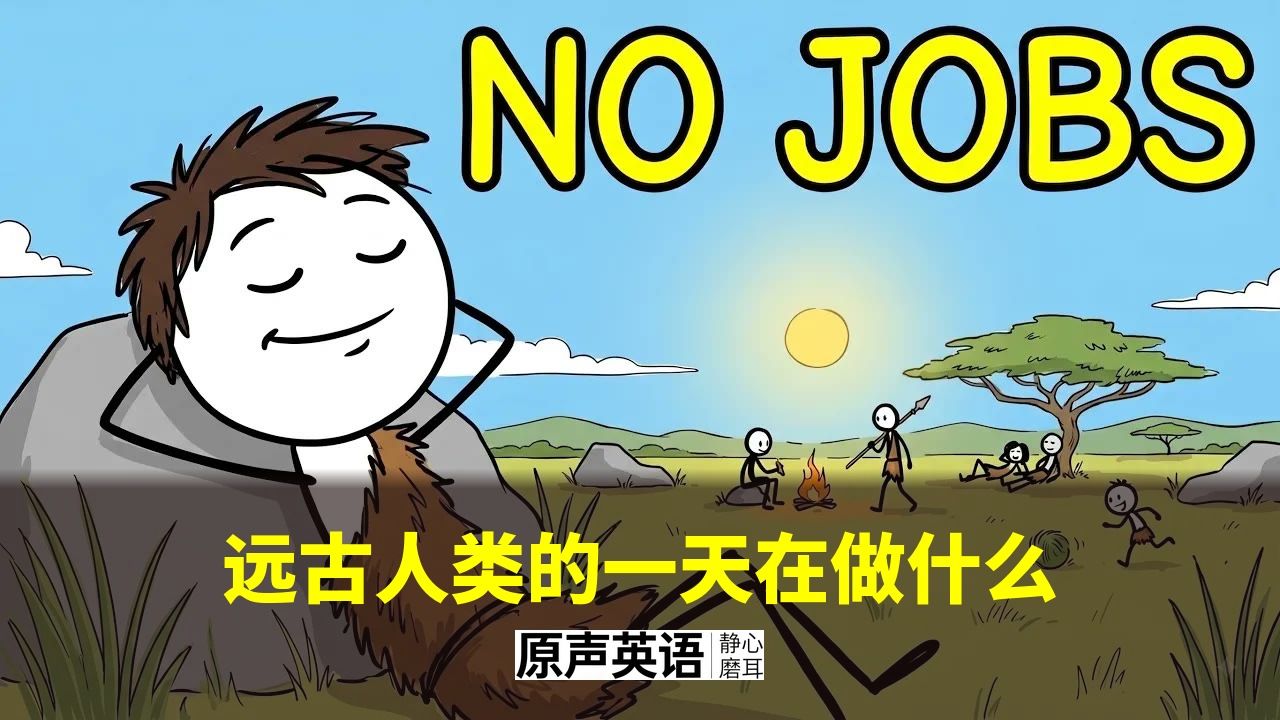
字幕摘录
| 时间 | 英文 | 中文 |
|---|---|---|
| 0:00 | This morning, a machine screamed at you until you woke up, you silenced it, and from that second, | 今天早上,一个机器对你尖叫 直到你醒来,你安静下来, 从那一刻起, |
| 0:04 | your day was already decided. | 你的日子已经决定了 |
| 0:06 | Where you had to be, what you had to finish, how many hours | 你在哪里,你必须完成什么, 多少小时 |
| 0:08 | belonged to someone else. | 是别人的 |
| 0:10 | And tonight, before you sleep, you'll set that same machine to scream at | 今晚,在你睡前,你会设置同一个机器 尖叫着 |
| 0:13 | you again. | 又来了 |
| 0:13 | Now rewind 50,000 years. | 现在倒数五万年。 |
| 0:15 | A man wakes up in the morning light with no alarm, no schedule, | 一个男人在早晨醒来 没有警报,没有时间表, |
| 0:18 | and nowhere he has to be. | 也无处可去 |
| 0:19 | He owns a spear, two animal hides, and a fire. | 他拥有长矛,两只动物藏,还有一只火. |
展开字幕全文(325 条)
| 序号 | 英文 | 中文 |
|---|---|---|
| 1 | This morning, a machine screamed at you until you woke up, you silenced it, and from that second, | 今天早上,一个机器对你尖叫 直到你醒来,你安静下来, 从那一刻起, |
| 2 | your day was already decided. | 你的日子已经决定了 |
| 3 | Where you had to be, what you had to finish, how many hours | 你在哪里,你必须完成什么, 多少小时 |
| 4 | belonged to someone else. | 是别人的 |
| 5 | And tonight, before you sleep, you'll set that same machine to scream at | 今晚,在你睡前,你会设置同一个机器 尖叫着 |
| 6 | you again. | 又来了 |
| 7 | Now rewind 50,000 years. | 现在倒数五万年。 |
| 8 | A man wakes up in the morning light with no alarm, no schedule, | 一个男人在早晨醒来 没有警报,没有时间表, |
| 9 | and nowhere he has to be. | 也无处可去 |
| 10 | He owns a spear, two animal hides, and a fire. | 他拥有长矛,两只动物藏,还有一只火. |
| 11 | And he sits up, stretches, | 他站起来,伸展, |
| 12 | and asks himself a question you have never once been free enough to ask. | 问自己一个你从未有自由过的问题 |
| 13 | What should I do today? | 今天怎么办? |
| 14 | Now, your brain is already fighting this. | 现在,你的大脑已经与这个作斗争了。 |
| 15 | It's telling you no. | 它告诉你没有。 |
| 16 | Ancient life was brutal, | 古老的生活是残酷的, |
| 17 | short, and desperate. | 和绝望。 |
| 18 | Every second was survival. | 每一秒钟都是生存。 |
| 19 | That's what everyone believed. | 人人都这么认为 |
| 20 | For centuries, | 几百年来 |
| 21 | that was the official story. | 这是官方的说法。 |
| 22 | But the proof that it's wrong was lying buried in the ground the | 但证明这是错的 是埋在地里 |
| 23 | entire time. | 整个时间。 |
| 24 | And when scientists finally dug it up, it flipped everything upside down. | 当科学家们终于把它挖出来, 它把一切都翻了过来。 |
| 25 | And that | 还有 |
| 26 | opens up a mystery. | 打开一个神秘。 |
| 27 | Because you live surrounded by machines built to save time. | 因为你住在周围的机器 用来节省时间 |
| 28 | Washing machines, | 洗衣机, |
| 29 | dishwashers, microwaves, cars, every one of them was invented to give you more free hours. | 洗碗机,微波炉,汽车,每个都发明了 让你有更多的免费时间。 |
| 30 | So how does a man with none of that, no technology at all, end up with more free time than you? | 那么一个没有技术的人 怎么会有比你更多的空闲时间呢? |
| 31 | What did he actually do all day that you can't? | 他整天都做什么你做不到的事吗? |
| 32 | And where did all of your time go? | 你所有的时间都去了哪里? |
| 33 | To answer that, | 为了回答这个问题, |
| 34 | we have to start in the ground. | 我们必须从地面开始。 |
| 35 | Because somewhere in the Middle East, archaeologists are digging. | 因为在中东的某个地方,考古学家正在挖掘。 |
| 36 | And over the years, from the same region, they pull up two human skeletons. | 多年来,他们从同一个地区 拔出两个人类骨架。 |
| 37 | They lived a few | 他们住过几个 |
| 38 | thousand years apart. | 相隔千载. |
| 39 | That's close enough to compare them, but far enough that they come | 够接近比较了,但够远了 |
| 40 | from two completely different worlds. | 来自两个完全不同的世界 |
| 41 | The first skeleton is tall. | 第一个骨架是高的。 |
| 42 | The bones are thick and strong. | 骨厚而坚. |
| 43 | The teeth are worn, but healthy. | 牙齿被磨损,但健康。 |
| 44 | Almost no cavities. | 几乎没有腔. |
| 45 | The joints are clean. | 关节清净. |
| 46 | This was a | 这是 |
| 47 | well, moved in varied ways, and never got ground down by one repeated motion. | 好吧,以不同的方式移动, 从来没有得到地面下来 一次反复的动议。 |
| 48 | The second skeleton | 第二个骨架 |
| 49 | tells a harder story. | 讲述了一个更难的故事。 |
| 50 | 齿满齿ities. | |
| 51 | The spine shows arthritis. | 脊椎显示关节炎. |
| 52 | The specific | 具体内容 |
| 53 | damage you get from bending and grinding through the same motion, thousands of times, year after | 你从弯曲和磨磨 通过相同的运动,数千次,一年之后 |
| 54 | year. | 年数。 |
| 55 | And this person died younger. | 这个人死得更年轻 |
| 56 | So which one is which? | 那么哪一个是什么? |
| 57 | Take a guess. | 猜猜看,你觉得呢? |
| 58 | Most people point to the | 大多数人指出, |
| 59 | tall, healthy skeleton and say that's the modern one. | 高,健康的骨架,说这是现代的。 |
| 60 | The farmer with tools and stored food and a | 农夫拿着工具 储存着食物 |
| 61 | roof over his head. | 屋顶在他的头上。 |
| 62 | And the short, broken one. | 和短,破一个。 |
| 63 | That must be the caveman. | 一定是那个洞穴人 |
| 64 | The guy scraping by | 这家伙刮 |
| 65 | But it's the opposite. | 却与么反. |
| 66 | The strong skeleton belonged to the hunter-gatherer. | 坚固的骨架属于猎人-采集者. |
| 67 | The wrecked | 残骸 |
| 68 | one belonged to the farmer, the person from the era we call progress. | 一个是农民的 我们称之为进步的人 |
| 69 | And this isn't one | 这不是一个 |
| 70 | weird pair of bones. | 奇怪的一对骨头。 |
| 71 | Archaeologists have run this comparison at sites all over the world, and wherever | 考古学家在世界各地和任何地方都进行了这种比较。 |
| 72 | farming replaced hunting and gathering, the same pattern shows up in the ground. | 农耕取代了狩猎和采集,同样的模式出现在地面上。 |
| 73 | Generations got | 代代相传 |
| 74 | shorter than the ones before them. | 比前辈还矮 |
| 75 | Their teeth rotted, their spines wore down, and their lives | 他们的牙齿腐烂,脊椎磨损,他们的生活 |
| 76 | ended earlier. | 早点结束。 |
| 77 | Think about what that means. | 想想这是什么意思 |
| 78 | Your skeleton is a diary. | 你的骨架是日记 |
| 79 | It records how hard you worked, | 它记录了你的辛苦工作, |
| 80 | how well you ate, how your body was used, and it holds that record for thousands of years. | 你吃得如何,你的身体是如何使用的, 它保持了几千年的记录。 |
| 81 | And the | 还有 |
| 82 | diaries say the people with nothing but spears were living easier lives than the people who came | 日记上说只有长矛的人 生活比来的人容易 |
| 83 | after them with farms, storage, and villages. | 在他们之后,有庄稼、仓储和村莊。 |
| 84 | But bones can only tell you so much. | 但骨头只能告诉你这么多。 |
| 85 | They can prove the | 他们可以证明 |
| 86 | work was lighter. | 工作比较轻松。 |
| 87 | They can't show you how a normal day actually went. | 他们不能告诉你 正常的一天是怎样的。 |
| 88 | So let me walk you through one. | 让我带你穿过一个。 |
| 89 | You wake up at dawn on your own, because your body got the sleep it needed. | 你在黎明醒来的时候独自一人 因为你的身体得到了它需要的睡眠 |
| 90 | The fire from last night | 昨晚的火灾 |
| 91 | is still burning in the middle of camp. | 仍在营区燃烧 |
| 92 | And people are already sitting around it, eating leftover | 人们已经坐在这里吃剩菜 |
| 93 | meat and nuts, talking about where the water is good and where the animal tracks were spotted. | 说到水的好地方和动物的踪迹 |
| 94 | That's the whole morning plan. | 这就是整个早上的计划。 |
| 95 | And when it's decided, it's decided by everyone. | 且当决定时,皆由众生决定. |
| 96 | And today, | 还有今天 |
| 97 | nobody needs to hunt. | 没有人需要狩猎。 |
| 98 | The last hunt was two days ago, and there's still plenty of food. | 最后一次狩猎是两天前,仍然有大量的食物. |
| 99 | So a few | 所以几个 |
| 100 | people go out to gather plants, and you spend the morning on your tools. | 人们出去采集植物, 你花早晨在工具上。 |
| 101 | You sharpen your spear, | 你磨磨你的长矛, |
| 102 | and you work a stiff hide until it turns soft. | 你将用一个坚硬的藏起来,直到它变成柔软的。 |
| 103 | You do this because skill earns respect here, | 你这样做是因为技能在这里赢得了尊重 |
| 104 | not because someone told you to. | 不是因为有人叫你这么做的 |
| 105 | And by early afternoon, everything that needed doing is | 到了下午,所有需要做的是, |
| 106 | Two days later, the meat runs low, so today you hunt. | 两天后,肉量减少,所以今天你猎杀。 |
| 107 | And real hunting looks nothing like the | 真正的狩猎看起来不像 |
| 108 | movies. | 电影 |
| 109 | You never chase the animal, because it's faster than you, and it always will be. | 你从不追赶动物,因为它比你快,它永远是。 |
| 110 | Instead, | 相反, |
| 111 | you follow it at a steady walking pace for hours. | 跟着它走数小时 |
| 112 | Your body can sweat and cool itself while it moves. | 你的身体在运动时可以汗出和冷却自己. |
| 113 | The animal can't. | 畜不能为. |
| 114 | So it keeps sprinting, keeps overheating, and keeps getting weaker until it | 所以它不停的冲刺 不停的过热 直到它变弱 |
| 115 | finally collapses and you walk up to it. | 终于崩溃了,你走到它。 |
| 116 | You were never the fastest thing out there. | 你从来都不是最快的人 |
| 117 | You were the | 你是那个 |
| 118 | only thing that never has to stop. | 只有一件永远不能停止的事 |
| 119 | The hunt takes the whole day, and it's the hardest work this life | 猎杀要花一整天时间 这一辈子最辛苦的工作 |
| 120 | asks of you. | 问你。 |
| 121 | But one good hunt feeds the camp for days, so tomorrow the free time starts again. | 但一次好猎食喂养了营地几天 所以明天自由时间重新开始 |
| 122 | And at this point, you're probably thinking this sounds too good to be real. | 此时此刻,你可能认为 这听起来太好 真实。 |
| 123 | It sounds like a | 这听起来像一个 |
| 124 | fantasy someone invented about the past. | 幻想有人发明了过去 |
| 125 | So let's deal with that, because one man had the exact same | 所以,让我们来处理, 因为一个人有同样的 |
| 126 | doubt, and he did something about it. | 怀疑,他做了一些事情。 |
| 127 | In 1963, an anthropologist named Richard Lee walked into the | 1963年,一位名叫李理查的人类学家走进 |
| 128 | Kalahari Desert on the edge of Botswana. | 博茨瓦纳边缘的卡拉哈里沙漠. |
| 129 | It's one of the harshest places on Earth a human being can | 这是地球上最严酷的地方之一 一个人类可以 |
| 130 | live. | 活着 |
| 131 | He went there to study the Juhoansi, one of the last groups still living the old way, hunting | 他在那里学习朱万西, 最后一个群体 仍然生活在老路,狩猎 |
| 132 | animals and gathering plants with no farms and no stores. | 动物和采集植物 没有农场和商店。 |
| 133 | Lee expected to find misery. | 李期望找到痛苦 |
| 134 | That was the | 就是那个 |
| 135 | official story in every textbook, that life before farming meant working every daylight hour just to | 每本教科书上的官方报道 农耕前的生活意味着每个白天都工作 |
| 136 | barely survive. | 活下来了 |
| 137 | But instead of assuming it, he decided to count it. | 但他没有假设,而是决定数数. |
| 138 | He followed people around | 他跟着人到处走 |
| 139 | with a notebook and a stopwatch, and he recorded how they spent every single hour, day after day, | 他录下了他们一天又一天的 一小时的时间 |
| 140 | for weeks. | 几个星期。 |
| 141 | Lee came back with a number that nobody believed. | 李带着一个没人相信的号码回来了 |
| 142 | These people were spending about 17 hours | 这些人花了大约17个小时 |
| 143 | a week getting food. | 一周买食物 |
| 144 | And that's not 17 hours a day. | 这不是每天17小时。 |
| 145 | That's 17 hours across the entire week, | 整个星期共17小时 |
| 146 | which comes out to about two and a half days of work. | 大约两天半的工作 |
| 147 | Every hour after that belonged to them. | 之后的每一小时都属于他们 |
| 148 | For comparison, you'll cross 17 hours of work by Wednesday afternoon. | 相比之下,你将在周三下午完成17小时的工作。 |
| 149 | 现在,也许Juhoansi是 | |
| 150 | just one lucky group in one lucky spot. | 在一个幸运的地方 只有一个幸运的团体 |
| 151 | That's a fair doubt, and scientists had it too. | 这是一个相当的怀疑, 科学家也有它。 |
| 152 | So they | 所以他们 |
| 153 | went and ran the same count on other groups still living the old way. | 并运行同样的数 其他群体仍然 生活老路。 |
| 154 | They checked the Hadza in | 他们检查了哈扎 |
| 155 | Tanzania, then the Ache in Paraguay, then the Martu in Australia. | 坦桑尼亚,然后是巴拉圭的阿切人,然后是澳大利亚的马尔图人. |
| 156 | Three groups on three different | 三组不同 |
| 157 | continents. | 大陆。 |
| 158 | And every single time, the answer came back between 15 and 20 hours a week. | 并且每一次,答案都会在每周15到20小时之间回来. |
| 159 | That was the | 就是那个 |
| 160 | cost of staying alive. | 活着的代价 |
| 161 | But here's the part nobody tells you. | 但这里是没有人告诉你的部分。 |
| 162 | The most important hours in that whole | 整个过程中最重要的时间 |
| 163 | week were not the hunting hours. | 一周不是狩猎时间。 |
| 164 | They were the lazy-looking hours that came after, because those | 他们是懒惰的小时 之后,因为那些 |
| 165 | hours were doing a bigger job than food. | 小时的工作比食物还重要 |
| 166 | It's afternoon, and the camp has slowed down. | 今午,营已缓. |
| 167 | People | 人员 |
| 168 | sit in the shade and talk. | 坐在树荫下 说话 |
| 169 | They play with the kids, and they groom each other, picking through hair | 他们和孩子们玩耍, 互相驯服,挑剔头发 |
| 170 | while the conversation drifts. | 而谈话却流逝 |
| 171 | Next to you, someone is drilling tiny holes through seashells to string | 在你旁边 有人在海贝壳上钻小孔 |
| 172 | into a necklace. | 成为一条项链。 |
| 173 | Someone else is carving a design into a piece of bone, and that design has no | 别人正在把设计刻成一块骨头 设计没有 |
| 174 | purpose at all except to look good. | 目的除了看起来不错 |
| 175 | And this isn't a guess about how they filled their time. | 这不是一个猜测 他们是如何填充时间。 |
| 176 | At Blombos Cave in South Africa, archaeologists found shell beads that are over 70,000 years old, | 在南非的Blombos洞穴,考古学家发现了7万多年的贝壳珠, |
| 177 | small sea snail shells with holes carefully drilled through them made to be worn. | 小海螺壳,有孔孔 仔细钻过它们 制成磨损。 |
| 178 | The coast was a long | 海岸很长 |
| 179 | walk from where these people lived. | 从这些人住的地方走出来 |
| 180 | So someone made that trip, collected the shells, carried them home, | 所以有人去旅行 收集炮弹 带他们回家 |
| 181 | and then sat for hours drilling holes with stone tools just to make something beautiful. | 然后坐了好几个小时 用石头工具钻洞 只为了做点漂亮的东西 |
| 182 | And in 2008, | 而在2008年, |
| 183 | in a cave in Germany, researchers dug up a flute carved from a vulture's wing bone. | 在德国的一个洞穴里,研究人员挖出了一只从秃鹰的翅膀骨头上雕刻的笛子. |
| 184 | It's 40,000 | 四万块 |
| 185 | years old, and it has five finger holes spaced for actual musical notes. | 它有5个指孔 用于实际的音乐笔记 |
| 186 | So someone in the Ice Age | 冰河时代的人 |
| 187 | understood music well enough to build an instrument, and someone had enough free time to learn to play | 对音乐的理解足够好 足以制造乐器 有人有足够的空闲时间学习演奏 |
| 188 | it. | 这个 |
| 189 | But the beads and the flute point at something bigger, because this world has no money, no police, | 但珠子和笛子指向更大的东西 因为这个世界没有钱 没有警察 |
| 190 | and no courts. | 没有法庭 |
| 191 | So ask yourself, what actually keeps you alive here when your hunt fails, or when you | 所以问问你自己,什么让你在这里活着 当你的狩猎失败,或者当你 |
| 192 | get sick, or when you break your leg and can't walk for a month? | 生病了 还是你断了腿 一个月不能走路 |
| 193 | The answer is other people. | 答案是别人。 |
| 194 | That's the | 就是这样 |
| 195 | entire safety net. | 整个安全网 |
| 196 | If people like you, they feed you when you have nothing. | 如果像你这样的人 你一无所有 他们就会喂你 |
| 197 | But if they don't like | 但是如果他们不喜欢 |
| 198 | you, then nobody owes you anything, and you starve. | 你,然后没有人欠你任何东西, 而你挨饿。 |
| 199 | So all those lazy afternoon hours of talking and | 所以所有懒惰的下午 聊天和 |
| 200 | joking and grooming were actually an investment in the only insurance this world has. | 开玩笑和调情其实是投资 世界上唯一的保险。 |
| 201 | The | 那个 |
| 202 | anthropologist James Sussman found that Jew-Hawansi adults spend around six hours every single day on | 人类学家詹姆斯·苏斯曼发现,犹太-哈万西成年人每天花费大约6个小时 |
| 203 | pure social time, because in this world, your relationships are your bank account, your hospital, | 纯粹的社交时间 因为在这个世界上 你们的关系是你的银行账户 你的医院 |
| 204 | and your pension all at once. | 和你的养老金 一次。 |
| 205 | Then the sun goes down. | 则阳气下陷. |
| 206 | And here's where it gets really interesting, | 在这里它变得非常有趣, |
| 207 | because the best hours of the day haven't even started yet. | 因为今天最好的时间 还没有开始。 |
| 208 | In 2014, an anthropologist named | 2014年,一位人类学家命名为 |
| 209 | Polly Weissner published a study that might explain where human culture itself comes from. | 波利·魏斯纳(Polly Weissner)发表了一项研究,可能解释人类文化本身的起源. |
| 210 | She had recordings of Jew-Hawansi conversations collected across decades, and she sorted all of | 她有记录 犹太人和哈旺西的对话 收集了数十年, 她整理了所有 |
| 211 | them by one simple thing. | 简而言之, |
| 212 | Was it said during the day, or at night? | 是白天还是晚上? |
| 213 | The daytime talk turned out to | 白天的谈话结果 |
| 214 | be practical. | 实际点 |
| 215 | People discussed where the animal tracks were, which plants were ready to gather, | 人们讨论动物的踪迹在哪里, 哪些植物准备聚集, |
| 216 | and who wasn't sharing fairly. | 和谁没有公平分享。 |
| 217 | It was basically logistics and gossip. | 这基本上是物流和八卦。 |
| 218 | But at night, around the | 但是在晚上,在周围 |
| 219 | fire, the talking changed completely. | 火,说话完全改变了。 |
| 220 | Eighty-one percent of the firelight conversation turned into | 81%的火光对话变成了 |
| 221 | people told myths about how the world began, tales of ancestors who did impossible things, | 人们告诉神话 关于世界是如何开始的, 故事的祖先 谁做了不可能的事情, |
| 222 | and jokes that ran long into the dark. | 和长期陷入黑暗的笑话 |
| 223 | And notice what kind of stories these are. | 注意这些是什么故事。 |
| 224 | Gods and spirits, | 神灵们, |
| 225 | the past and the future, none of that comes out of a scared, hungry mind. | 过去和将来, 没有一个来自一个恐惧,饥饿的头脑。 |
| 226 | Those stories only show up | 那些故事只会出现 |
| 227 | when your stomach is full and your body is safe. | 当腹满而身安. |
| 228 | So the fire was doing more than cooking food and | 所以大火不止做饭 |
| 229 | keeping predators away. | 让掠食者远离。 |
| 230 | It created the first hours in human history where the mind was completely | 它创造了人类历史上的头几个小时, 在那里,心灵是完全的 |
| 231 | free. | 免费。 |
| 232 | And Weissner argued that this is exactly where culture was born. | 而魏斯纳认为,这正是文化诞生的地方. |
| 233 | Not in the middle of | 不是在中间 |
| 234 | work, but in the quiet hours after it. | 工作,但在它之后的安静时间。 |
| 235 | And when the fire burned low, even sleep worked differently. | 而当火烧得很低时,甚至睡眠效果也不同. |
| 236 | Before artificial light existed, humans didn't sleep in one long block. | 在人工光线存在之前,人类并没有在一个长的街区内睡觉. |
| 237 | Historical records and | 历史记录和 |
| 238 | modern sleep experiments both show the same pattern. | 现代睡眠实验都表现出相同的模式. |
| 239 | People slept about four hours, then | 人们大概睡了四个小时 |
| 240 | woke up for an hour or two in the middle of the night, and they stayed calm in that darkness, | 半夜醒来一两个小时 他们在黑暗中保持冷静 |
| 241 | thinking or talking quietly until sleep came back for another four hours. | 静静地思考或说话 直到睡眠又恢复了四个小时 |
| 242 | That quiet hour in the | 那个安静的小时 |
| 243 | middle was completely normal for thousands of generations. | 在数千代人中,中间是完全正常的。 |
| 244 | Today you wake up at 2 a.m. and call | 今天你凌晨2点醒来打电话 |
| 245 | it insomnia. | 是失眠症 |
| 246 | Your body might just be doing the oldest thing it knows. | 你的身体可能只是做它知道的最老的事情。 |
| 247 | So now you've seen the whole | 现在你看到了整个 |
| 248 | picture. | 图片。 |
| 249 | Food took a few hours, people took the afternoon, stories took the night, and sleep came | 食物花了几个小时,人们下午吃,故事夜里吃,睡觉来了 |
| 250 | in two calm halves. | 在两个平静的一半。 |
| 251 | That was the human schedule for hundreds of thousands of years. | 这是人类数十万年的日程 |
| 252 | Then, about | 然后,关于 |
| 253 | 10,000 years ago, somebody planted a seed, and that's the moment your time started disappearing. | 一万年前,有人种了种子, 这就是你开始消失的时刻。 |
| 254 | It happened in the Middle East, in a region called the Fertile Crescent, when humans started planting | 它发生在中东, 在一个叫发酵新月的地区, 当人类开始种植 |
| 255 | grain and keeping animals instead of hunting and gathering. | 谷物和养殖动物 而不是狩猎和采集。 |
| 256 | And on paper, farming sounds like a | 纸上说,农业听起来像 |
| 257 | massive upgrade. | 大规模升级。 |
| 258 | You get more food, you get control, and you never have to follow an antelope | 你得到更多的食物,你得到控制, 你从来没有跟随羚羊 |
| 259 | for six hours again. | 再来6小时 |
| 260 | But farming is a trap. | 但农耕是一个陷阱。 |
| 261 | And here's exactly how it snaps shut. | 这就是它如何关闭。 |
| 262 | Farming produces | 农业生产 |
| 263 | more food. | 再来点吃的 |
| 264 | More food means more babies survive, so the population grows. | 更多的食物意味着更多的婴儿存活下来,因此人口增长. |
| 265 | A bigger population needs | 需要更多的人口 |
| 266 | more food, so you plant more fields. | 更多的食物,所以你种植更多的田地。 |
| 267 | More fields means more work. | 更多的田地意味着更多的工作. |
| 268 | And then the lock clicks. | 然后锁点击。 |
| 269 | Once | 一次 |
| 270 | your group is too big to feed by hunting and gathering, the old life can't carry you anymore. | 你的团体太大了 无法靠狩猎和采集来养活你 旧生活不能再载着你了 |
| 271 | You can never go back. | 你永远不能回去。 |
| 272 | You're in. | 你进去了 |
| 273 | Permanently. | 永远 |
| 274 | And so is every generation born after you. | 在你之后出生的每一代人也一样 |
| 275 | And the | 还有 |
| 276 | workload explodes. | 工作量爆炸。 |
| 277 | Now there's plowing, planting, weeding, harvesting, storing, and guarding it all, | 现在有犁,种植,杂草,收割,储存, 并守护它, |
| 278 | season after season, forever. | 一季又一季,永远。 |
| 279 | And remember the second skeleton from the beginning. | 并记住第二骨架 从一开始。 |
| 280 | The one with | 一个有 |
| 281 | the rotten teeth and the worn-out spine that died young. | 牙齿腐烂 脊椎老化 死了年轻。 |
| 282 | That skeleton is what this new life did to | 这个骨架就是新生命对它所做的 |
| 283 | people. | 人们 |
| 284 | The first farmers worked harder and lived worse than the hunter-gatherers before them, and | 最早的农民比他们之前的狩猎采集者更努力 生活更糟糕 |
| 285 | they couldn't leave. | 他们不能离开。 |
| 286 | And the trap kept tightening. | 陷阱不断收紧。 |
| 287 | Big farming villages produced specialists, | 大型农业村产生了专家, |
| 288 | potters, toolmakers, weavers. | 陶工,工具制造者,织工. |
| 289 | Specialists needed trade, and trade built cities. | 专家需要贸易,贸易需要建设城市。 |
| 290 | Then cities brought | 城市带来了 |
| 291 | soldiers, priests, and tax collectors. | 士兵、牧师和税吏 |
| 292 | And eventually they brought a brand new idea in human | 最后他们给人类带来了全新的想法 |
| 293 | history. | 历史 |
| 294 | For the first time ever, your hours could belong to someone else, sold off in exchange for | 第一次,你的时间可能属于别人, 卖掉交换 |
| 295 | food you no longer knew how to find on your own. | 食物你不再知道 如何自己寻找。 |
| 296 | So nobody stole your time in one dramatic night. | 所以,没有人偷走你的时间在一个戏剧性的夜晚。 |
| 297 | It was traded away slowly, one generation at a time, in a deal that no one alive today ever got | 它被慢慢地交换了, 一代又一代, 在一个交易中,今天没有人活着 |
| 298 | the chance to refuse. | 拒绝的机会。 |
| 299 | The alarm that screamed at you this morning is just the latest payment. | 今早对你大喊大叫的警报只是最新的付款 |
| 300 | For | 对于 |
| 301 | hundreds of thousands of years, humans worked 15 to 20 hours a week, and the skeletons in the ground | 几十万年,人类每周工作15到20小时 地上的骨架 |
| 302 | prove it. | 证明它。 |
| 303 | The afternoons went into craft and beauty, and the relationships that kept everyone | 午后进入手艺和美貌 关系让每个人 |
| 304 | alive. | 活着。 |
| 305 | The nights went into firelight stories, where culture itself was born, and sleep came in | 夜晚进入了火光的故事, 文化本身诞生, 睡觉进来 |
| 306 | two calm halves. | 两个平静的一半。 |
| 307 | Then farming arrived, the population trap locked behind us, and step by step, | 然后,农业到达, 人口陷阱锁定在我们身后, 一步一步地, |
| 308 | our hours stopped being ours. | 我们的时间不再属于我们。 |
| 309 | Today, you'll spend about 90,000 hours of your life working. | 今天,你会花 大约90,000小时你的生活工作。 |
| 310 | You make art only if there's anything left of you after your job. | 只有在你工作完之后 你才能做艺术 |
| 311 | They made art in the middle of an | 他们创作艺术 在中间 |
| 312 | ordinary afternoon, you network for career advantage, they spent six hours a day with people | 平时下午,你这个职业优势的网络 他们每天与人共度六小时 |
| 313 | they loved, and it counted as survival. | 他们爱, 它算作生存。 |
| 314 | You chase success, savings, retirement, some finish line | 你追求成功,储蓄,退休, 一些终点线 |
| 315 | where you finally get your time back. | 在那里你终于得到了你的时间回来。 |
| 316 | They were already standing on that finish line. | 他们已经站在终点线上 |
| 317 | They were | 他们是 |
| 318 | born on it. | 生于其上. |
| 319 | Every morning, they woke up with no alarm and no schedule, and they asked themselves | 每天早上,他们醒来时没有惊慌失措,也没有日程安排,他们自问 |
| 320 | the one question you have never been free enough to ask. | 一个你一直没有自由 问。 |
| 321 | You are working your entire existence to | 你整个存在都是为了 |
| 322 | someday retire into that life. | 总有一天会退休的 |
| 323 | They lived it from their first day to their last, and they would find | 他们从头到尾都活了下来 他们就会发现 |
| 324 | it very strange that you traded it all away for a screaming alarm and a promise. | 奇怪的是你为了一个尖叫的警报和保证 把这些都卖掉了 |
| 325 | You are working your | 你在工作 你的工作吗? |
该视频共有字幕 325 条。解锁更多字幕为会员功能,请移动到 价格
P2 · 【人类简史】远古人类的一天在做什么? · 颠覆你对「原始生活」的想象 p02 无字幕 (P2)
字幕摘录
| 时间 | 英文 | 中文 |
|---|---|---|
| 0:00 | This morning, a machine screamed at you until you woke up, you silenced it, and from that second, your day was already decided. | 今天早上,一个机器对你尖叫 直到你醒来,你沉默了它, 从那一刻起,你的一天已经决定了。 |
| 0:06 | Where you had to be, what you had to finish, how many hours belonged to someone else, | 你在哪里,你必须完成什么, 多少小时属于别人, |
| 0:10 | and tonight, before you sleep, you'll set that same machine to scream at you again. | 今晚,在你睡觉前,你会设置同一台机器 再次对你尖叫。 |
| 0:13 | Now rewind 50,000 years. | 现在倒数五万年。 |
| 0:15 | A man wakes up in the morning light with no alarm, no schedule, and nowhere he has to be. | 一个男人醒来时在晨光中,没有警报,没有时间表,他无处可去. |
| 0:19 | He owns a spear, two animal hides, and a fire. | 他拥有长矛,两只动物藏,还有一只火. |
| 0:22 | And he sits up, stretches, and asks himself a question you have never once been free enough to ask. | 他坐着,伸展, 问自己一个问题 你从来没有 自由过问。 |
| 0:27 | What should I do today? | 今天怎么办? |
| 0:28 | Now, your brain is already fighting this. | 现在,你的大脑已经与这个作斗争了。 |
| 0:30 | It's telling you no. | 它告诉你没有。 |
展开字幕全文(237 条)
| 序号 | 英文 | 中文 |
|---|---|---|
| 1 | This morning, a machine screamed at you until you woke up, you silenced it, and from that second, your day was already decided. | 今天早上,一个机器对你尖叫 直到你醒来,你沉默了它, 从那一刻起,你的一天已经决定了。 |
| 2 | Where you had to be, what you had to finish, how many hours belonged to someone else, | 你在哪里,你必须完成什么, 多少小时属于别人, |
| 3 | and tonight, before you sleep, you'll set that same machine to scream at you again. | 今晚,在你睡觉前,你会设置同一台机器 再次对你尖叫。 |
| 4 | Now rewind 50,000 years. | 现在倒数五万年。 |
| 5 | A man wakes up in the morning light with no alarm, no schedule, and nowhere he has to be. | 一个男人醒来时在晨光中,没有警报,没有时间表,他无处可去. |
| 6 | He owns a spear, two animal hides, and a fire. | 他拥有长矛,两只动物藏,还有一只火. |
| 7 | And he sits up, stretches, and asks himself a question you have never once been free enough to ask. | 他坐着,伸展, 问自己一个问题 你从来没有 自由过问。 |
| 8 | What should I do today? | 今天怎么办? |
| 9 | Now, your brain is already fighting this. | 现在,你的大脑已经与这个作斗争了。 |
| 10 | It's telling you no. | 它告诉你没有。 |
| 11 | Ancient life was brutal, short, and desperate. | 古代的生活是残酷、短暂和绝望的。 |
| 12 | Every second was survival. | 每一秒钟都是生存。 |
| 13 | That's what everyone believed. | 人人都这么认为 |
| 14 | For centuries, that was the official story. | 几个世纪以来,这是正式的故事。 |
| 15 | But the proof that it's wrong was lying buried in the ground the entire time. | 但证明这是错误的 一直埋在地里 |
| 16 | And when scientists finally dug it up, it flipped everything upside down. | 当科学家们终于把它挖出来, 它把一切都翻了过来。 |
| 17 | And that opens up a mystery. | 这打开了一个谜。 |
| 18 | Because you live surrounded by machines built to save time. | 因为你住在周围的机器 用来节省时间 |
| 19 | Washing machines, dishwashers, microwaves, cars, every one of them was invented to give you more free hours. | 洗碗机、洗碗机、微波炉、汽车 每一个都发明出来 让你有更多的空闲时间 |
| 20 | So how does a man with none of that, no technology at all, end up with more free time than you? | 那么一个没有技术的人 怎么会有比你更多的空闲时间呢? |
| 21 | What did he actually do all day that you can't? | 他整天都做什么你做不到的事吗? |
| 22 | And where did all of your time go? | 你所有的时间都去了哪里? |
| 23 | To answer that, we have to start in the ground. | 为了回答这个问题,我们必须从地面开始。 |
| 24 | Because somewhere in the Middle East, archaeologists are digging. | 因为在中东的某个地方,考古学家正在挖掘。 |
| 25 | And over the years, from the same region, they pull up two human skeletons. | 多年来,他们从同一个地区 拔出两个人类骨架。 |
| 26 | They lived a few thousand years apart. | 他们分居了几千年 |
| 27 | That's close enough to compare them, but far enough that they come from two completely different worlds. | 这足以比较它们,但远远足以使它们来自两个完全不同的世界。 |
| 28 | The first skeleton is tall. | 第一个骨架是高的。 |
| 29 | The bones are thick and strong. | 骨厚而坚. |
| 30 | The teeth are worn, but healthy. | 牙齿被磨损,但健康。 |
| 31 | Almost no cavities. | 几乎没有腔. |
| 32 | The joints are clean. | 关节清净. |
| 33 | This was a body that ate well, moved in varied ways, and never got ground down by one repeated motion. | 这是一个吃得好, 以不同的方式移动, 从来没有被一个反复的运动 倒下来。 |
| 34 | The second skeleton tells a harder story. | 第二个骨架讲述了一个更难的故事. |
| 35 | 齿满齿ities. | |
| 36 | The spine shows arthritis. | 脊椎显示关节炎. |
| 37 | The specific damage you get from bending and grinding through the same motion, thousands of times, year after year. | 通过同一运动弯曲和磨磨得到的具体损伤,上千次,年复一年. |
| 38 | And this person died younger. | 这个人死得更年轻 |
| 39 | So which one is which? | 那么哪一个是什么? |
| 40 | Take a guess. | 猜猜看,你觉得呢? |
| 41 | Most people point to the tall, healthy skeleton and say that's the modern one. | 大多数人指向高大,健康的骨架,说这就是现代骨架. |
| 42 | The farmer with tools and stored food and a roof over his head. | 农夫拿着工具,储存着食物,头上有一个屋顶. |
| 43 | And the short, broken one. | 和短,破一个。 |
| 44 | That must be the caveman, the guy scraping by in the wild with a spear. | 一定是那个洞穴人 那个拿着长矛在野外乱刮的人 |
| 45 | But it's the opposite. | 却与么反. |
| 46 | The strong skeleton belonged to the hunter-gatherer. | 坚固的骨架属于猎人-采集者. |
| 47 | The wrecked one belonged to the farmer, the person from the era we call progress. | 残骸是农民的, 我们称之为进步时代的人。 |
| 48 | And this isn't one weird pair of bones. | 这不是一对奇怪的骨头。 |
| 49 | Archaeologists have run this comparison at sites all over the world. | 考古学家在世界各地的遗址都进行了这种比较. |
| 50 | And wherever farming replaced hunting and gathering, the same pattern shows up in the ground. | 而凡农耕取代狩猎和采集的地方,同样的模式出现在地面上. |
| 51 | Generations got shorter than the ones before them. | 几代人比以前还矮 |
| 52 | Their teeth rotted, their spines wore down, and their lives ended earlier. | 他们的牙齿腐烂,脊椎磨损,生命提前结束. |
| 53 | Think about what that means. | 想想这是什么意思 |
| 54 | Your skeleton is a diary. | 你的骨架是日记 |
| 55 | It records how hard you worked, how well you ate, how your body was used, and it holds that record for thousands of years. | 它记录了你是如何努力工作,你吃得如何,你的身体是如何使用的,它保存了几千年的记录. |
| 56 | And the diaries say the people with nothing but spears were living easier lives than the people who came after them with farms, storage, and villages. | 日记上说,只有长矛的人 比那些带着农场、仓库和村庄追赶他们的人 生活得容易。 |
| 57 | But bones can only tell you so much. | 但骨头只能告诉你这么多。 |
| 58 | They can prove the work was lighter. | 他们可以证明工作很轻松 |
| 59 | They can't show you how a normal day actually went. | 他们不能告诉你 正常的一天是怎样的。 |
| 60 | So let me walk you through one. | 让我带你穿过一个。 |
| 61 | You wake up at dawn on your own, because your body got the sleep it needed. | 你在黎明醒来的时候独自一人 因为你的身体得到了它需要的睡眠 |
| 62 | The fire from last night is still burning in the middle of camp. | 昨夜大火仍在营中烧. |
| 63 | And people are already sitting around it, eating leftover meat and nuts, talking about where the water is good and where the animal tracks were spotted. | 人们已经坐在它周围, 吃剩下的肉和坚果, 谈论水是好的, 和动物的踪迹在哪里被发现。 |
| 64 | That's the whole morning plan. | 这就是整个早上的计划。 |
| 65 | And when it's decided, it's decided by everyone. | 且当决定时,皆由众生决定. |
| 66 | And today, nobody needs to hunt. | 今天,没有人需要狩猎。 |
| 67 | The last hunt was two days ago, and there's still plenty of food. | 最后一次狩猎是两天前,仍然有大量的食物. |
| 68 | So a few people go out to gather plants, and you spend the morning on your tools. | 所以有几个人出去采集植物, 你早上花在工具上。 |
| 69 | You sharpen your spear, and you work a stiff hide until it turns soft. | 你磨磨你的长矛, 你工作一个僵硬的皮,直到它变软。 |
| 70 | You do this because skill earns respect here, not because someone told you to. | 你这样做是因为技能在这里赢得了尊重,而不是因为有人叫你这样做. |
| 71 | And by early afternoon, everything that needed doing is already done. | 到了下午,所有需要做的事情都已经完成了。 |
| 72 | Two days later, the meat runs low, so today you hunt. | 两天后,肉量减少,所以今天你猎杀。 |
| 73 | And real hunting looks nothing like the movies. | 真正的狩猎看起来不像电影 |
| 74 | You never chase the animal, because it's faster than you, and it always will be. | 你从不追赶动物,因为它比你快,它永远是。 |
| 75 | Instead, you follow it at a steady walking pace for hours. | 相反,你沿着它稳步走动 几个小时。 |
| 76 | Your body can sweat and cool itself while it moves. | 你的身体在运动时可以汗出和冷却自己. |
| 77 | The animal can't, so it keeps sprinting, keeps overheating, and keeps getting weaker until it finally collapses and you walk up to it. | 动物不能,所以它不停地冲刺,持续过热,并且不断变弱,直到它最终崩溃,你走到上面. |
| 78 | You were never the fastest thing out there. | 你从来都不是最快的人 |
| 79 | You were the only thing that never has to stop. | 你是唯一永远无法停止的 |
| 80 | The hunt takes the whole day, and it's the hardest work this life asks of you. | 猎杀要花一整天时间 这一辈子最难熬的工作 |
| 81 | But one good hunt feeds the camp for days, so tomorrow the free time starts again. | 但一次好猎食喂养了营地几天 所以明天自由时间重新开始 |
| 82 | And at this point, you're probably thinking this sounds too good to be real. | 此时此刻,你可能认为 这听起来太好 真实。 |
| 83 | It sounds like a fantasy someone invented about the past. | 听起来像是有人发明了过去 |
| 84 | So, let's deal with that, because one man had the exact same doubt, and he did something about it. | 所以,让我们来处理, 因为一个人有同样的怀疑, 他做了一些事情。 |
| 85 | In 1963, an anthropologist named Richard Lee walked into the Kalahari Desert on the edge of Botswana. | 1963年,一位名叫理查德·李的人类学家走进了博茨瓦纳边缘的卡拉哈里沙漠. |
| 86 | It's one of the harshest places on Earth a human being can live. | 这是地球上最严酷的地方之一 一个人类可以生活。 |
| 87 | He went there to study the Juhoansi, one of the last groups still living the old way, hunting animals and gathering plants with no farms and no stores. | 他到那里学习朱胡安西族,是最后一批仍然过着老路的族群之一,狩猎动物和采集植物,没有农场和商店. |
| 88 | Lee expected to find misery. | 李期望找到痛苦 |
| 89 | That was the official story in every textbook, that life before farming meant working every daylight hour just to barely survive. | 这是每本教科书中的官方故事, 农耕前的生活意味着每个白天工作小时都勉强生存。 |
| 90 | But instead of assuming it, he decided to count it. | 但他没有假设,而是决定数数. |
| 91 | He followed people around with a notebook and a stopwatch, and he recorded how they spent every single hour, day after day, for weeks. | 他用笔记本和手表跟随人们,他录下了他们如何每时每刻,日复一日,持续数周的时间. |
| 92 | Lee came back with a number that nobody believed. | 李带着一个没人相信的号码回来了 |
| 93 | These people were spending about 17 hours a week getting food. | 这些人每周要花大约17个小时去买食物。 |
| 94 | And that's not 17 hours a day. | 这不是每天17小时。 |
| 95 | That's 17 hours across the entire week, which comes out to about two and a half days of work. | 整个一周一共需要17个小时, 大约需要两天半的工作。 |
| 96 | Every hour after that belonged to them. | 之后的每一小时都属于他们 |
| 97 | For comparison, you'll cross 17 hours of work by Wednesday afternoon. | 相比之下,你将在周三下午完成17小时的工作。 |
| 98 | Now, maybe the Juhoansi were just one lucky group in one lucky spot. | 也许Juhoansi只是幸运的组合 在一个幸运的地方。 |
| 99 | That's a fair doubt, and scientists had it too. | 这是一个相当的怀疑, 科学家也有它。 |
| 100 | So they went and ran the same count on other groups still living the old way. | 因此,他们去运行 同样的计数 其他群体仍然 生活老路。 |
| 101 | They checked the Hadza in Tanzania, then the Ache in Paraguay, then the Martu in Australia. | 他们检查了坦桑尼亚的哈扎人,然后检查了巴拉圭的阿切人,然后检查了澳大利亚的马尔图人. |
| 102 | Three groups on three different continents. | 三组在三大洲. |
| 103 | And every single time, the answer came back between 15 and 20 hours a week. | 并且每一次,答案都会在每周15到20小时之间回来. |
| 104 | That was the full cost of staying alive. | 这是活着的全部代价。 |
| 105 | But here's the part nobody tells you. | 但这里是没有人告诉你的部分。 |
| 106 | The most important hours in that whole week were not the hunting hours. | 那整个星期最重要的时间不是狩猎时间。 |
| 107 | They were the lazy-looking hours that came after. | 他们是懒惰的小时 之后。 |
| 108 | Because those hours were doing a bigger job than food. | 因为这些时间的工作比食物还重要 |
| 109 | It's afternoon, and the camp has slowed down. | 今午,营已缓. |
| 110 | People sit in the shade and talk. | 人坐荫而谈. |
| 111 | They play with the kids, and they groom each other, | 他们和孩子们玩, 和他们互相新婚, |
| 112 | picking through hair while the conversation drifts. | 在谈话流逝的时候 挑头发 |
| 113 | Next to you, someone is drilling tiny holes through seashells to string into a necklace. | 在你旁边有人在钻小孔 通过海贝壳 串成一条项链 |
| 114 | Someone else is carving a design into a piece of bone, | 有人在把设计切成一块骨头 |
| 115 | and that design has no purpose at all except to look good. | 设计完全没有目的 除了看起来好。 |
| 116 | And this isn't a guess about how they filled their time. | 这不是一个猜测 他们是如何填充时间。 |
| 117 | At Blombos Cave in South Africa, | 在南非的布伦博斯洞穴 |
| 118 | archaeologists found shell beads that are over 70,000 years old. | 考古学家发现的贝壳珠有7万多年的历史. |
| 119 | Small sea snail shells with holes carefully drilled through them made to be worn. | 小型的海螺壳,有孔仔细钻穿,制成磨损. |
| 120 | The coast was a long walk from where these people lived. | 海岸是从这些人住的地方走出来的 |
| 121 | So someone made that trip, collected the shells, carried them home, | 所以有人去旅行 收集炮弹 带他们回家 |
| 122 | and then sat for hours drilling holes with stone tools just to make something beautiful. | 然后坐了好几个小时 用石头工具钻洞 只为了做点漂亮的东西 |
| 123 | And in 2008, in a cave in Germany, | 2008年 在德国的一个洞穴里 |
| 124 | researchers dug up a flute carved from a vulture's wing bone. | 研究人员从秃鹰的翅膀骨头上挖出一枝笛子. |
| 125 | It's 40,000 years old, and it has five finger holes spaced for actual musical notes. | 它已有4万年历史,它有5个指孔间隙,用于实际的音乐音符. |
| 126 | So someone in the Ice Age understood music well enough to build an instrument, | 所以冰河时代的某个人对音乐的理解 足以制造乐器 |
| 127 | and someone had enough free time to learn to play it. | 有人有足够的空闲时间学习演奏 |
| 128 | But the beads and the flute point at something bigger, | 但珠子和笛子 点在更大的东西, |
| 129 | because this world has no money, no police, and no courts. | 因为这个世界没有钱 没有警察 没有法庭 |
| 130 | So ask yourself, what actually keeps you alive here when your hunt fails, | 所以问问你自己 猎杀失败时 是什么让你活着的 |
| 131 | or when you get sick, or when you break your leg and can't walk for a month? | 或者你生病了 或者你断了腿 不能走路一个月? |
| 132 | The answer is other people. | 答案是别人。 |
| 133 | That's the entire safety net. | 这是整个安全网。 |
| 134 | If people like you, they feed you when you have nothing. | 如果像你这样的人 你一无所有 他们就会喂你 |
| 135 | But if they don't like you, then nobody owes you anything, and you starve. | 但是如果他们不喜欢你, 那么没有人欠你任何东西, 而你挨饿。 |
| 136 | So all those lazy afternoon hours of talking and joking and grooming | 所以,所有懒惰的下午时间 谈话,开玩笑和培养 |
| 137 | were actually an investment in the only insurance this world has. | 其实是投资 世界上唯一的保险。 |
| 138 | The anthropologist James Sussman found that Jew-Hawansi adults | 人类学家詹姆斯·苏斯曼(James Sussman)发现犹太人-哈万西人成年人 |
| 139 | spend around six hours every single day on pure social time, | 每天在纯社交时间上花费6小时左右, |
| 140 | because in this world, your relationships are your bank account, | 因为在这个世界上 你们的关系是你的银行账户 |
| 141 | your hospital, and your pension, all at once. | 你的医院, 你的养老金, 一次。 |
| 142 | Then the sun goes down. | 则阳气下陷. |
| 143 | And here's where it gets really interesting, | 在这里它变得非常有趣, |
| 144 | because the best hours of the day haven't even started yet. | 因为今天最好的时间 还没有开始。 |
| 145 | In 2014, an anthropologist named Polly Weissner published a study | 2014年,一位名叫波利·魏斯纳的人类学家发表了一份研究报告. |
| 146 | that might explain where human culture itself comes from. | 这也许可以解释人类文化本身来自何处。 |
| 147 | She had recordings of Jew-Hawansi conversations collected across decades, | 她有记录 犹太人-哈旺西的对话 收集了几十年, |
| 148 | and she sorted all of them by one simple thing. | 她用一个简单的东西来整理所有的东西. |
| 149 | Was it said during the day or at night? | 是白天还是晚上? |
| 150 | The daytime talk turned out to be practical. | 白天的谈话结果是实用的. |
| 151 | People discussed where the animal tracks were, | 人们讨论动物的踪迹, |
| 152 | which plants were ready to gather, and who wasn't sharing fairly. | 植物已经准备好聚集, 而谁没有公平分享。 |
| 153 | It was basically logistics and gossip. | 这基本上是物流和八卦。 |
| 154 | But at night, around the fire, the talking changed completely. | 但到了晚上,在大火周围,说话完全变了. |
| 155 | Eighty-one percent of the firelight conversation turned into stories. | 81%的火光对话变成故事. |
| 156 | People told myths about how the world began, | 人们告诉神话 关于世界是如何开始的, |
| 157 | tales of ancestors who did impossible things, | 传说祖先做了不可能的事 |
| 158 | and jokes that ran long into the dark. | 和长期陷入黑暗的笑话 |
| 159 | And notice what kind of stories these are. | 注意这些是什么故事。 |
| 160 | Gods and spirits, the past and the future, | 神灵,过去和未来, |
| 161 | none of that comes out of a scared, hungry mind. | 这一切都不是来自一个害怕,饥饿的头脑。 |
| 162 | Those stories only show up when your stomach is full and your body is safe. | 那些故事只有在你肚子满了 身体安全的时候才会出现 |
| 163 | So the fire was doing more than cooking food and keeping predators away. | 于是大火不止于烹饪食物,让掠食者远离. |
| 164 | It created the first hours in human history where the mind was completely free. | 它创造了人类历史上最初的几小时 心灵完全自由 |
| 165 | And Weissner argued that this is exactly where culture was born, | 而魏斯纳认为,这正是文化诞生的地方, |
| 166 | not in the middle of the work, but in the quiet hours after it. | 不是在工作中间, 而是在它之后的安静时间。 |
| 167 | And when the fire burned low, even sleep worked differently. | 而当火烧得很低时,甚至睡眠效果也不同. |
| 168 | Before artificial light existed, humans didn't sleep in one long block. | 在人工光线存在之前,人类并没有在一个长的街区内睡觉. |
| 169 | Historical records and modern sleep experiments both show the same pattern. | 历史记录和现代睡眠实验都显示出相同的模式. |
| 170 | People slept about four hours, then woke up for an hour or two in the middle of the night, | 人们睡了四个小时 然后半夜醒来一两个小时 |
| 171 | and they stayed calm in that darkness, | 他们在黑暗中保持冷静, |
| 172 | thinking or talking quietly until sleep came back for another four hours. | 静静地思考或说话 直到睡眠又恢复了四个小时 |
| 173 | That quiet hour in the middle was completely normal for thousands of generations. | 中间那个安静的小时是成千上万代人完全正常的。 |
| 174 | Today you wake up at 2 a.m. and call it insomnia. | 今天你凌晨2点醒来 称之为失眠症 |
| 175 | Your body might just be doing the oldest thing it knows. | 你的身体可能只是做它知道的最老的事情。 |
| 176 | So now you've seen the whole picture. | 所以,现在你看到了整个画面。 |
| 177 | Food took a few hours, people took the afternoon, stories took the night, | 食物花了几个小时,人们下午,故事夜里, |
| 178 | and sleep came in two calm halves. | 睡了两半 |
| 179 | That was the human schedule for hundreds of thousands of years. | 这是人类数十万年的日程 |
| 180 | Then, about 10,000 years ago, somebody planted a seed, | 大约一万年前 有人种了种子 |
| 181 | and that's the moment your time started disappearing. | 这就是你开始消失的时刻 |
| 182 | It happened in the Middle East, in a region called the Fertile Crescent, | 发生在中东地区 一个叫"发酵新月"的地区 |
| 183 | when humans started planting grain and keeping animals instead of hunting and gathering. | 当人类开始种植谷物 养殖动物而不是狩猎和采集 |
| 184 | And on paper, farming sounds like a massive upgrade. | 而在纸面上,农业听起来像是大规模升级. |
| 185 | You get more food, you get control, and you never have to follow an antelope for six hours again. | 你得到更多的食物,你得到控制,你再也不用跟随羚羊6小时了. |
| 186 | But farming is a trap. | 但农耕是一个陷阱。 |
| 187 | And here's exactly how it snaps shut. | 这就是它如何关闭。 |
| 188 | Farming produces more food. | 农耕生产更多的粮食. |
| 189 | More food means more babies survive, so the population grows. | 更多的食物意味着更多的婴儿存活下来,因此人口增长. |
| 190 | A bigger population needs more food, so you plant more fields. | 更多的人需要更多的食物,所以你种植更多的田地。 |
| 191 | More fields means more work. | 更多的田地意味着更多的工作. |
| 192 | And then the lock clicks. | 然后锁点击。 |
| 193 | Once your group is too big to feed by hunting and gathering, | 一旦你的团队太大 无法通过狩猎和采集来养活 |
| 194 | the old life can't carry you anymore. | 旧生活已经无法承受你了 |
| 195 | You can never go back. | 你永远不能回去。 |
| 196 | You're in, permanently. | 你是永远的。 |
| 197 | And so is every generation born after you. | 在你之后出生的每一代人也一样 |
| 198 | And the workload explodes. | 工作量会爆炸 |
| 199 | Now there's plowing, planting, weeding, harvesting, storing, and guarding it all. | 现在有耕耕,种植,杂草,收割,贮藏,守护一切. |
| 200 | Season after season, forever. | 季节又一个,永远。 |
| 201 | And remember the second skeleton from the beginning. | 并记住第二骨架 从一开始。 |
| 202 | The one with the rotten teeth and the worn-out spine that died young. | 牙齿腐烂 脊椎老化 死年轻。 |
| 203 | That skeleton is what this new life did to people. | 这个骨架就是这种新生活对人们所做的. |
| 204 | The first farmers worked harder and lived worse than the hunter-gatherers before them. | 最早的农民比他们之前的狩猎采集者更努力,生活更糟糕. |
| 205 | And they couldn't leave. | 他们不能离开 |
| 206 | And the trap kept tightening. | 陷阱不断收紧。 |
| 207 | Big farming villages produced specialists, potters, toolmakers, weavers. | 大农村生产专家,陶工,工具匠,织工. |
| 208 | Specialists needed trade, and trade built cities. | 专家需要贸易,贸易需要建设城市。 |
| 209 | Then cities brought soldiers, priests, and tax collectors. | 之后,各城市都带来了士兵,牧师,以及收税者. |
| 210 | And eventually they brought a brand new idea in human history. | 最终他们带来了人类历史上全新的思想. |
| 211 | For the first time ever, your hours could belong to someone else. | 第一次,你的时间可能属于别人。 |
| 212 | Sold off in exchange for food you no longer knew how to find on your own. | 卖掉以换取食物 你不再知道如何自己找到。 |
| 213 | So nobody stole your time in one dramatic night. | 所以,没有人偷走你的时间在一个戏剧性的夜晚。 |
| 214 | It was traded away slowly, one generation at a time, | 它被慢慢交易掉 一代又一代 |
| 215 | in a deal that no one alive today ever got the chance to refuse. | 在一个交易中,今天活着的人从来没有机会拒绝。 |
| 216 | The alarm that screamed at you this morning is just the latest payment. | 今早对你大喊大叫的警报只是最新的付款 |
| 217 | For hundreds of thousands of years, humans worked 15 to 20 hours a week. | 数十万年来,人类每周工作15至20小时. |
| 218 | And the skeletons in the ground prove it. | 且地中骨架证明. |
| 219 | The afternoons went into craft and beauty, and the relationships that kept everyone alive. | 午后进入手艺和美貌,关系让所有人都活着. |
| 220 | The nights went into firelight stories, where culture itself was born. | 夜晚进入了火光故事,文化本身诞生的地方. |
| 221 | And sleep came in two calm halves. | 睡了两个平静的一半。 |
| 222 | Then farming arrived, the population trap locked behind us, | 然后,农业到达, 人口陷阱锁定在我们身后, |
| 223 | and step by step, our hours stopped being ours. | 一步一步地 我们的时间不再是我们的了 |
| 224 | Today, you'll spend about 90,000 hours of your life working. | 今天,你会花 大约90,000小时你的生活工作。 |
| 225 | You make art only if there's anything left of you after your job. | 只有在你工作完之后 你才能做艺术 |
| 226 | They made art in the middle of an ordinary afternoon. | 他们在一个平凡的下午做艺术。 |
| 227 | You network for career advantage. | 职业优势的网络 |
| 228 | They spent six hours a day with people they loved, and it counted as survival. | 他们每天花六个小时和他们爱的人在一起,这算作生存. |
| 229 | You chase success, savings, retirement, some finish line where you finally get your time back. | 你追求成功,储蓄,退休, 一些终点线 你终于得到了你的时间回来。 |
| 230 | They were already standing on that finish line. | 他们已经站在终点线上 |
| 231 | They were born on it. | 他们出生在它。 |
| 232 | Every morning, they woke up with no alarm and no schedule. | 每天早上,他们醒来时没有警报,也没有时间表。 |
| 233 | And they asked themselves the one question you have never been free enough to ask. | 他们问自己一个问题 你从来没有自由过问。 |
| 234 | You are working your entire existence to someday retire into that life. | 你为了过上那种生活而努力 |
| 235 | They lived it from their first day to their last. | 他们从头到尾都活下来了 |
| 236 | And they would find it very strange that you traded it all away for a screaming alarm and a promise. | 他们会觉得很奇怪 你为了一个尖叫的警报和保证而把它全卖掉 |
| 237 | You are working your entire existence to someday retire into that life. | 你为了过上那种生活而努力 |
该视频共有字幕 237 条。解锁更多字幕为会员功能,请移动到 价格