【英语方法】英语写作没思路?快速解决
共 3 集
剧集目录
| 集 | 标题 | 时长 |
|---|---|---|
| P1 | 【英语方法】英语写作没思路?快速解决 中英字幕 | 6:58 |
| P2 | 【英语方法】英语写作没思路?快速解决 英文字幕 | 6:58 |
| P3 | 【英语方法】英语写作没思路?快速解决 无字幕 | 6:58 |
P1 · 【英语方法】英语写作没思路?快速解决 p01 中英字幕 (P1)
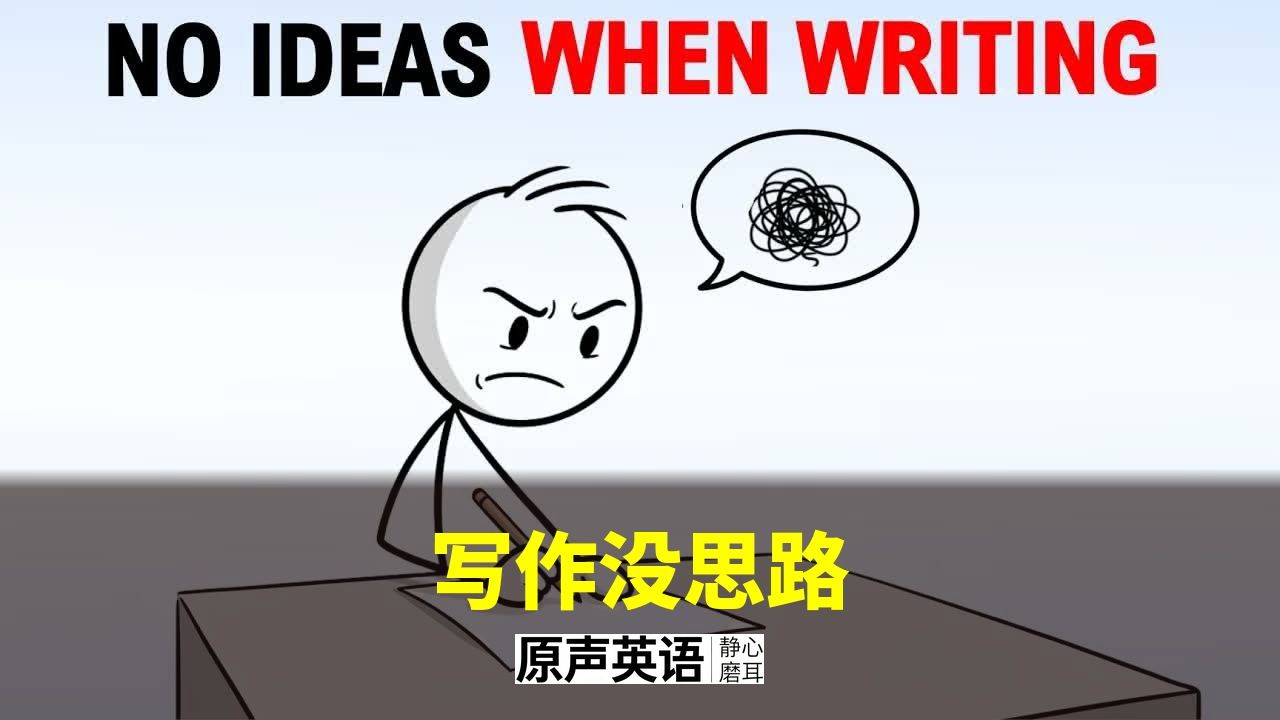
字幕摘录
| 时间 | 英文 | 中文 |
|---|---|---|
| 0:00 | Have you ever stared at a blank page? | 你看过空白的一页吗? |
| 0:02 | Trying to write something in English, but nothing comes out? | 试图用英语写东西,但什么都没有出来? |
| 0:06 | You know words. | 你懂话 |
| 0:08 | You know grammar. | 你知道语法。 |
| 0:09 | But when it's time to write, your mind goes completely blank. | 但到了写作的时候 你的头脑就完全空白了 |
| 0:13 | No ideas, no sentences, no flow. | 无念无句无流. |
| 0:16 | If that sounds familiar, here's the truth. | 如果这听起来很熟悉,这是事实。 |
| 0:19 | Your problem is not English. | 你的问题不是英语 |
| 0:22 | Your problem is how you think. | 你的问题是你的想法 |
| 0:24 | And in this video, I'll show you exactly why this happens. | 在录像里,我会告诉你为什么会发生这种事。 |
展开字幕全文(199 条)
| 序号 | 英文 | 中文 |
|---|---|---|
| 1 | Have you ever stared at a blank page? | 你看过空白的一页吗? |
| 2 | Trying to write something in English, but nothing comes out? | 试图用英语写东西,但什么都没有出来? |
| 3 | You know words. | 你懂话 |
| 4 | You know grammar. | 你知道语法。 |
| 5 | But when it's time to write, your mind goes completely blank. | 但到了写作的时候 你的头脑就完全空白了 |
| 6 | No ideas, no sentences, no flow. | 无念无句无流. |
| 7 | If that sounds familiar, here's the truth. | 如果这听起来很熟悉,这是事实。 |
| 8 | Your problem is not English. | 你的问题不是英语 |
| 9 | Your problem is how you think. | 你的问题是你的想法 |
| 10 | And in this video, I'll show you exactly why this happens. | 在录像里,我会告诉你为什么会发生这种事。 |
| 11 | And how to fix it. | 及如何修习. |
| 12 | You're trying to be perfect. | 你试图完美。 |
| 13 | The first reason you have no ideas is simple. | 你没有想法的第一个原因很简单。 |
| 14 | You're trying to write perfectly. | 你试图写得完美。 |
| 15 | Before you even finish your first sentence, | 在你完成第一句话之前 |
| 16 | you're already thinking, | 你已经在想了 |
| 17 | is this grammar correct? | 语法正确吗? |
| 18 | Is this word natural? | 这个词自然吗? |
| 19 | What if this sounds stupid? | 如果这听起来很愚蠢呢? |
| 20 | So what happens? | 发生什么了? |
| 21 | You stop. | 你停下来。 |
| 22 | Your brain becomes a judge, not a creator. | 你的大脑变成了法官 而不是创造者 |
| 23 | And when your brain is busy correcting, | 当你的大脑忙着纠正, |
| 24 | it cannot generate ideas. | 它不能产生想法。 |
| 25 | Writing is a creative process. | 写作是一个创造性的过程. |
| 26 | But perfection kills creativity. | 但完美会杀死创造力 |
| 27 | That's why you feel stuck. | 这就是为什么你觉得卡住了。 |
| 28 | You think in your native language first. | 你首先用母语思考 |
| 29 | Here's the second big mistake. | 这是第二个大错误。 |
| 30 | You think in your native language, then try to translate. | 用你的母语思考,然后尝试翻译。 |
| 31 | So your process looks like this. | 所以,你的过程是这样的。 |
| 32 | Idea, translate, fix. | 思想,翻译,修复. |
| 33 | Grammar, write. | 语法,写. |
| 34 | That's too slow. | 这太慢了。 |
| 35 | And too heavy for your brain. | 和太重你的大脑。 |
| 36 | By the time you try to translate your idea, | 当你试图翻译你的想法时, |
| 37 | you already lost it. | 你已经失去了它。 |
| 38 | Or worse, you feel like... | 或者更糟,你觉得... |
| 39 | I don't know how to say this in English. | 我不知道怎么用英语说 |
| 40 | So instead of writing something simple, | 因此,与其写一些简单的东西, |
| 41 | you write nothing. | 你什么都不写 |
| 42 | The more you depend on translation, | 你越依赖翻译 |
| 43 | the harder writing becomes. | 写得越难 |
| 44 | You don't have enough input. | 你没有足够的投入。 |
| 45 | Let's be honest. | 老实说 |
| 46 | You can't write what you've never seen. | 不可写无所见. |
| 47 | If you don't read, | 如果你不读书 |
| 48 | if you don't listen, | 如果你不听的话 |
| 49 | if you don't see how English is used, | 如果你看不出英语是如何使用的, |
| 50 | then your brain has nothing to copy from. | 那你的大脑就没什么可复制的了 |
| 51 | And writing is not about inventing new language. | 而写作与发明新语言无关. |
| 52 | It's about reusing patterns you've already seen. | 这是关于重用你已经看到的模式。 |
| 53 | Think about it. | 考虑一下 |
| 54 | Native speakers don't create every sentence from zero. | 原声不从零创造出每一句. |
| 55 | They reuse structures. | 它们的再利用结构。 |
| 56 | They reuse phrases. | 它们重复使用短语。 |
| 57 | They reuse patterns. | 他们的再利用模式。 |
| 58 | But if your brain has no patterns, | 但如果你的大脑没有规律 |
| 59 | you will feel like you have no ideas. | 你会觉得你没有任何想法。 |
| 60 | You're waiting for good ideas. | 你在等好点子 |
| 61 | Another hidden reason. | 另一个隐藏的原因。 |
| 62 | You're waiting for something interesting to write. | 你等着写些有趣的东西 |
| 63 | You think, | 你觉得 |
| 64 | my idea is too simple. | 我的想法太简单了。 |
| 65 | This is boring. | 这太无聊了 |
| 66 | This is not good enough. | 这还不够好。 |
| 67 | So again, | 再说一遍 |
| 68 | you don't write. | 你不写。 |
| 69 | But here's the truth. | 但这是事实 |
| 70 | Simple ideas create powerful writing. | 简单的想法创造了强大的写作能力. |
| 71 | You don't need amazing ideas. | 你不需要惊人的想法。 |
| 72 | You need clear ideas. | 你需要明确的想法。 |
| 73 | Even something like, | 即使是这样 |
| 74 | today I felt tired. | 今天我感觉很累 |
| 75 | I watched a movie. | 我看过电影 |
| 76 | I had a difficult day. | 我有一个艰难的一天。 |
| 77 | That's enough. | 够了 |
| 78 | Fluency starts with simplicity. | 流利始于简洁. |
| 79 | How to fix it. | 如何是修义. |
| 80 | Now let's fix this. | 现在,让我们解决这个问题。 |
| 81 | Write first, edit later. | 先写,后编辑. |
| 82 | One of the biggest mistakes learners make | 学习者最大的错误之一 |
| 83 | is trying to fix every sentence while they write. | 试图在他们写作时修正每一句。 |
| 84 | They stop. | 他们停下来了。 |
| 85 | They think too much. | 他们想太多。 |
| 86 | They lose their flow. | 他们失去了他们的流量。 |
| 87 | That slows everything down. | 减慢了一切 |
| 88 | Instead, focus on writing first. | 相反,首先注重写作. |
| 89 | Let your ideas come out freely. | 让你的想法自由出来。 |
| 90 | Don't worry about grammar. | 别担心语法 |
| 91 | Don't worry about mistakes. | 不要担心错误。 |
| 92 | Just keep writing. | 继续写 |
| 93 | Even if your sentences are not perfect, | 即使你的句子不够完美 |
| 94 | even if they sound simple, | 即使听起来很简单 |
| 95 | that's okay. | 没关系。 |
| 96 | Because writing is a process. | 因为写作是一个过程。 |
| 97 | First, you express your thoughts. | 首先,你表达你的想法。 |
| 98 | Then, you improve them. | 然后,你改善他们。 |
| 99 | So don't stop yourself. | 故别自止. |
| 100 | Write now, fix later. | 现在写,以后修。 |
| 101 | Two, think in simple English. | 二,用简单的英语思考. |
| 102 | Many learners try to translate complex ideas | 许多学习者试图翻译复杂的想法 |
| 103 | from their native language. | 从他们的母语。 |
| 104 | That makes everything harder. | 这使得一切更难。 |
| 105 | It slows your thinking and creates confusion. | 它会减缓你的思考 并制造混乱。 |
| 106 | Instead, keep it simple. | 相反,保持简单。 |
| 107 | Use the English you already know. | 用你已经知道的英语 |
| 108 | Short sentences. | 短句经. |
| 109 | Clear ideas. | 清楚点 |
| 110 | For example, don't try to say something long and complicated. | 例如,不要试图说一些长而复杂的话. |
| 111 | Break it down. | 击破之. |
| 112 | Say one simple idea at a time. | 说一个简单的想法一次。 |
| 113 | I'm tired. | 疲劳无厌. |
| 114 | Today was busy. | 今天忙着呢 |
| 115 | Simple English is not weak. | 简单的英语不是软弱的。 |
| 116 | It's powerful. | 其势甚大. |
| 117 | Because it helps you think faster, | 因为这能帮助你更快思考 |
| 118 | speak easier, | 说得简单点 |
| 119 | and communicate clearly. | 并明确沟通。 |
| 120 | Start simple. | 开始简单。 |
| 121 | You can always improve later. | 你以后可以随时改善 |
| 122 | Three, read more. | 三,多读读. |
| 123 | Reading is one of the easiest ways to improve your English. | 阅读是最容易改进英语的方法之一。 |
| 124 | The more you read, | 你读得越多 |
| 125 | the more you are exposed to new words, | 你接触新词越多 |
| 126 | sentence patterns, and ideas. | 句子图案,和想法。 |
| 127 | Your brain starts to collect useful expressions without effort. | 你的大脑开始不费力地收集有用的表达. |
| 128 | You don't need difficult books. | 你不需要困难的书 |
| 129 | Start with simple content. | 以简单的内容开始. |
| 130 | Articles, short stories, | 文章,短篇小说, |
| 131 | or even social media posts. | 甚至是社交媒体的帖子 |
| 132 | Pay attention to how sentences are formed. | 注意判决的形成方式. |
| 133 | How ideas are expressed. | 如何表达思想. |
| 134 | Over time, you'll notice something interesting. | 随着时间的推移,你会发现一些有趣的东西。 |
| 135 | You start using those same patterns in your own writing. | 你开始用同样的模式 在自己的写作。 |
| 136 | So, don't just read for meaning. | 所以,不要只是读的意义。 |
| 137 | Read to learn how English works. | 阅读学习英语如何工作. |
| 138 | That's how your ideas grow. | 这就是你的想法如何成长。 |
| 139 | Four, use templates. | 四,使用模板. |
| 140 | Starting from zero can feel difficult. | 从零开始会觉得很困难 |
| 141 | So don't start from zero. | 所以不要从零开始。 |
| 142 | Use simple sentence patterns. | 使用简单的句子图案. |
| 143 | These are your templates. | 这些是你的模板。 |
| 144 | For example, | 举例来说, |
| 145 | Today I, | 今天,我,我,我,我,我,我,我,我,我,我, |
| 146 | I think that, | 我觉得 |
| 147 | in my opinion, | 在我看来, |
| 148 | they give you a structure to begin. | 他们给你一个开始的结构。 |
| 149 | You don't need to think too much. | 你不需要想太多,你不需要考虑太多 |
| 150 | Just fill in the idea. | 刚刚填写的想法。 |
| 151 | At first, keep it simple. | 起初,保持简单. |
| 152 | Then slowly add more details. | 然后慢慢地增加更多细节。 |
| 153 | Make your sentences longer. | 更长句. |
| 154 | Make your ideas clearer. | 让你的想法更清晰。 |
| 155 | Over time, these templates become natural. | 随着时间的推移,这些模板变得自然. |
| 156 | And you won't need to rely on them anymore. | 你不再需要依赖他们了 |
| 157 | But at the beginning, | 但从一开始 |
| 158 | they make everything easier. | 他们让一切变得更容易。 |
| 159 | Five, write every day. | 五,每日写字. |
| 160 | Even five minutes. | 甚至五分钟 |
| 161 | You don't need to write long essays to improve. | 你不需要写长篇散文来改进. |
| 162 | In fact, short writing is enough. | 事实上,短篇写作就够了. |
| 163 | What matters is doing it every day. | 重要的是每天都这样做。 |
| 164 | Even just five minutes. | 甚至只有五分钟 |
| 165 | Write a few sentences about your day. | 写几句关于你的日子。 |
| 166 | Your thoughts. | 稱猭 |
| 167 | Or something simple around you. | 或你身边简单的东西。 |
| 168 | Keep it easy. | 少顷. |
| 169 | Don't make it complicated. | 别让事情变得复杂 |
| 170 | The goal is not perfection. | 目标不是完美的。 |
| 171 | The goal is consistency. | 目标是一致性。 |
| 172 | Because small writing, | 因为小写作 |
| 173 | done daily, | 每天都会完成 |
| 174 | builds a strong habit. | 建立强烈的习惯. |
| 175 | And that habit makes everything easier over time. | 这种习惯让一切都随时间推移变得容易一些。 |
| 176 | So don't wait for free time. | 故不待闲时. |
| 177 | Just start with a few lines. | 先说几行. |
| 178 | So, if you feel like you have no ideas, | 所以 如果你觉得自己没有主意 |
| 179 | it's not because you're not creative. | 不是因为你没有创造力 |
| 180 | It's not because your English is bad. | 不是因为你的英语不好 |
| 181 | It's because | 因为 |
| 182 | you're overthinking. | 你太过份了 |
| 183 | You're translating too much. | 你翻译的太多了 |
| 184 | You're not getting enough input. | 你没有得到足够的投入。 |
| 185 | Fix these, | 修补这些 |
| 186 | and everything changes. | 一切都变了 |
| 187 | Remember this. | 记住这一点。 |
| 188 | You don't run out of ideas. | 你没有失去想法。 |
| 189 | You run out of simple ways to express them. | 你没有简单的表达方式了 |
| 190 | Start simple. | 开始简单。 |
| 191 | Write every day. | 每天写字 |
| 192 | And your ideas will come. | 你的想法会来的 |
| 193 | If this video helped you, | 如果这视频能帮助你 |
| 194 | like it, | 喜欢 |
| 195 | share it, | 分享它, |
| 196 | and subscribe for more simple English lessons. | 并订阅更简单的英语课程。 |
| 197 | Keep listening. | 继续听 |
| 198 | Keep growing. | 继续增长. |
| 199 | And I'll see you in the next video. | 下部影片见. |
该视频共有字幕 199 条。解锁更多字幕为会员功能,请移动到 价格
P2 · 【英语方法】英语写作没思路?快速解决 p02 英文字幕 (P2)
字幕摘录
| 时间 | 英文 | 中文 |
|---|---|---|
| 0:00 | Have you ever stared at a blank page? | 你看过空白的一页吗? |
| 0:02 | Trying to write something in English, but nothing comes out? | 试图用英语写东西,但什么都没有出来? |
| 0:06 | You know words. | 你懂话 |
| 0:08 | You know grammar. | 你知道语法。 |
| 0:09 | But when it's time to write, your mind goes completely blank. | 但到了写作的时候 你的头脑就完全空白了 |
| 0:13 | No ideas, no sentences, no flow. | 无念无句无流. |
| 0:16 | If that sounds familiar, here's the truth. | 如果这听起来很熟悉,这是事实。 |
| 0:19 | Your problem is not English. | 你的问题不是英语 |
| 0:22 | Your problem is how you think. | 你的问题是你的想法 |
| 0:24 | And in this video, I'll show you exactly why this happens. | 在录像里,我会告诉你为什么会发生这种事。 |
展开字幕全文(199 条)
| 序号 | 英文 | 中文 |
|---|---|---|
| 1 | Have you ever stared at a blank page? | 你看过空白的一页吗? |
| 2 | Trying to write something in English, but nothing comes out? | 试图用英语写东西,但什么都没有出来? |
| 3 | You know words. | 你懂话 |
| 4 | You know grammar. | 你知道语法。 |
| 5 | But when it's time to write, your mind goes completely blank. | 但到了写作的时候 你的头脑就完全空白了 |
| 6 | No ideas, no sentences, no flow. | 无念无句无流. |
| 7 | If that sounds familiar, here's the truth. | 如果这听起来很熟悉,这是事实。 |
| 8 | Your problem is not English. | 你的问题不是英语 |
| 9 | Your problem is how you think. | 你的问题是你的想法 |
| 10 | And in this video, I'll show you exactly why this happens. | 在录像里,我会告诉你为什么会发生这种事。 |
| 11 | And how to fix it. | 及如何修习. |
| 12 | You're trying to be perfect. | 你试图完美。 |
| 13 | The first reason you have no ideas is simple. | 你没有想法的第一个原因很简单。 |
| 14 | You're trying to write perfectly. | 你试图写得完美。 |
| 15 | Before you even finish your first sentence, | 在你完成第一句话之前 |
| 16 | you're already thinking, | 你已经在想了 |
| 17 | is this grammar correct? | 语法正确吗? |
| 18 | Is this word natural? | 这个词自然吗? |
| 19 | What if this sounds stupid? | 如果这听起来很愚蠢呢? |
| 20 | So what happens? | 发生什么了? |
| 21 | You stop. | 你停下来。 |
| 22 | Your brain becomes a judge, not a creator. | 你的大脑变成了法官 而不是创造者 |
| 23 | And when your brain is busy correcting, | 当你的大脑忙着纠正, |
| 24 | it cannot generate ideas. | 它不能产生想法。 |
| 25 | Writing is a creative process. | 写作是一个创造性的过程. |
| 26 | But perfection kills creativity. | 但完美会杀死创造力 |
| 27 | That's why you feel stuck. | 这就是为什么你觉得卡住了。 |
| 28 | You think in your native language first. | 你首先用母语思考 |
| 29 | Here's the second big mistake. | 这是第二个大错误。 |
| 30 | You think in your native language, then try to translate. | 用你的母语思考,然后尝试翻译。 |
| 31 | So your process looks like this. | 所以,你的过程是这样的。 |
| 32 | Idea, translate, fix. | 思想,翻译,修复. |
| 33 | Grammar, write. | 语法,写. |
| 34 | That's too slow. | 这太慢了。 |
| 35 | And too heavy for your brain. | 和太重你的大脑。 |
| 36 | By the time you try to translate your idea, | 当你试图翻译你的想法时, |
| 37 | you already lost it. | 你已经失去了它。 |
| 38 | Or worse, you feel like... | 或者更糟,你觉得... |
| 39 | I don't know how to say this in English. | 我不知道怎么用英语说 |
| 40 | So instead of writing something simple, | 因此,与其写一些简单的东西, |
| 41 | you write nothing. | 你什么都不写 |
| 42 | The more you depend on translation, | 你越依赖翻译 |
| 43 | the harder writing becomes. | 写得越难 |
| 44 | You don't have enough input. | 你没有足够的投入。 |
| 45 | Let's be honest. | 老实说 |
| 46 | You can't write what you've never seen. | 不可写无所见. |
| 47 | If you don't read, | 如果你不读书 |
| 48 | if you don't listen, | 如果你不听的话 |
| 49 | if you don't see how English is used, | 如果你看不出英语是如何使用的, |
| 50 | then your brain has nothing to copy from. | 那你的大脑就没什么可复制的了 |
| 51 | And writing is not about inventing new language. | 而写作与发明新语言无关. |
| 52 | It's about reusing patterns you've already seen. | 这是关于重用你已经看到的模式。 |
| 53 | Think about it. | 考虑一下 |
| 54 | Native speakers don't create every sentence from zero. | 原声不从零创造出每一句. |
| 55 | They reuse structures. | 它们的再利用结构。 |
| 56 | They reuse phrases. | 它们重复使用短语。 |
| 57 | They reuse patterns. | 他们的再利用模式。 |
| 58 | But if your brain has no patterns, | 但如果你的大脑没有规律 |
| 59 | you will feel like you have no ideas. | 你会觉得你没有任何想法。 |
| 60 | You're waiting for good ideas. | 你在等好点子 |
| 61 | Another hidden reason. | 另一个隐藏的原因。 |
| 62 | You're waiting for something interesting to write. | 你等着写些有趣的东西 |
| 63 | You think, | 你觉得 |
| 64 | my idea is too simple. | 我的想法太简单了。 |
| 65 | This is boring. | 这太无聊了 |
| 66 | This is not good enough. | 这还不够好。 |
| 67 | So again, | 再说一遍 |
| 68 | you don't write. | 你不写。 |
| 69 | But here's the truth. | 但这是事实 |
| 70 | Simple ideas create powerful writing. | 简单的想法创造了强大的写作能力. |
| 71 | You don't need amazing ideas. | 你不需要惊人的想法。 |
| 72 | You need clear ideas. | 你需要明确的想法。 |
| 73 | Even something like, | 即使是这样 |
| 74 | today I felt tired. | 今天我感觉很累 |
| 75 | I watched a movie. | 我看过电影 |
| 76 | I had a difficult day. | 我有一个艰难的一天。 |
| 77 | That's enough. | 够了 |
| 78 | Fluency starts with simplicity. | 流利始于简洁. |
| 79 | How to fix it. | 如何是修义. |
| 80 | Now let's fix this. | 现在,让我们解决这个问题。 |
| 81 | Write first, edit later. | 先写,后编辑. |
| 82 | One of the biggest mistakes learners make | 学习者最大的错误之一 |
| 83 | is trying to fix every sentence while they write. | 试图在他们写作时修正每一句。 |
| 84 | They stop. | 他们停下来了。 |
| 85 | They think too much. | 他们想太多。 |
| 86 | They lose their flow. | 他们失去了他们的流量。 |
| 87 | That slows everything down. | 减慢了一切 |
| 88 | Instead, focus on writing first. | 相反,首先注重写作. |
| 89 | Let your ideas come out freely. | 让你的想法自由出来。 |
| 90 | Don't worry about grammar. | 别担心语法 |
| 91 | Don't worry about mistakes. | 不要担心错误。 |
| 92 | Just keep writing. | 继续写 |
| 93 | Even if your sentences are not perfect, | 即使你的句子不够完美 |
| 94 | even if they sound simple, | 即使听起来很简单 |
| 95 | that's okay. | 没关系。 |
| 96 | Because writing is a process. | 因为写作是一个过程。 |
| 97 | First, you express your thoughts. | 首先,你表达你的想法。 |
| 98 | Then, you improve them. | 然后,你改善他们。 |
| 99 | So don't stop yourself. | 故别自止. |
| 100 | Write now, fix later. | 现在写,以后修。 |
| 101 | Two, think in simple English. | 二,用简单的英语思考. |
| 102 | Many learners try to translate complex ideas | 许多学习者试图翻译复杂的想法 |
| 103 | from their native language. | 从他们的母语。 |
| 104 | That makes everything harder. | 这使得一切更难。 |
| 105 | It slows your thinking and creates confusion. | 它会减缓你的思考 并制造混乱。 |
| 106 | Instead, keep it simple. | 相反,保持简单。 |
| 107 | Use the English you already know. | 用你已经知道的英语 |
| 108 | Short sentences. | 短句经. |
| 109 | Clear ideas. | 清楚点 |
| 110 | For example, don't try to say something long and complicated. | 例如,不要试图说一些长而复杂的话. |
| 111 | Break it down. | 击破之. |
| 112 | Say one simple idea at a time. | 说一个简单的想法一次。 |
| 113 | I'm tired. | 疲劳无厌. |
| 114 | Today was busy. | 今天忙着呢 |
| 115 | Simple English is not weak. | 简单的英语不是软弱的。 |
| 116 | It's powerful. | 其势甚大. |
| 117 | Because it helps you think faster, | 因为这能帮助你更快思考 |
| 118 | speak easier, | 说得简单点 |
| 119 | and communicate clearly. | 并明确沟通。 |
| 120 | Start simple. | 开始简单。 |
| 121 | You can always improve later. | 你以后可以随时改善 |
| 122 | Three, read more. | 三,多读读. |
| 123 | Reading is one of the easiest ways to improve your English. | 阅读是最容易改进英语的方法之一。 |
| 124 | The more you read, | 你读得越多 |
| 125 | the more you are exposed to new words, | 你接触新词越多 |
| 126 | sentence patterns, and ideas. | 句子图案,和想法。 |
| 127 | Your brain starts to collect useful expressions without effort. | 你的大脑开始不费力地收集有用的表达. |
| 128 | You don't need difficult books. | 你不需要困难的书 |
| 129 | Start with simple content. | 以简单的内容开始. |
| 130 | Articles, short stories, | 文章,短篇小说, |
| 131 | or even social media posts. | 甚至是社交媒体的帖子 |
| 132 | Pay attention to how sentences are formed. | 注意判决的形成方式. |
| 133 | How ideas are expressed. | 如何表达思想. |
| 134 | Over time, you'll notice something interesting. | 随着时间的推移,你会发现一些有趣的东西。 |
| 135 | You start using those same patterns in your own writing. | 你开始用同样的模式 在自己的写作。 |
| 136 | So, don't just read for meaning. | 所以,不要只是读的意义。 |
| 137 | Read to learn how English works. | 阅读学习英语如何工作. |
| 138 | That's how your ideas grow. | 这就是你的想法如何成长。 |
| 139 | Four, use templates. | 四,使用模板. |
| 140 | Starting from zero can feel difficult. | 从零开始会觉得很困难 |
| 141 | So don't start from zero. | 所以不要从零开始。 |
| 142 | Use simple sentence patterns. | 使用简单的句子图案. |
| 143 | These are your templates. | 这些是你的模板。 |
| 144 | For example, | 举例来说, |
| 145 | Today I, | 今天,我,我,我,我,我,我,我,我,我,我, |
| 146 | I think that, | 我觉得 |
| 147 | in my opinion, | 在我看来, |
| 148 | they give you a structure to begin. | 他们给你一个开始的结构。 |
| 149 | You don't need to think too much. | 你不需要想太多,你不需要考虑太多 |
| 150 | Just fill in the idea. | 刚刚填写的想法。 |
| 151 | At first, keep it simple. | 起初,保持简单. |
| 152 | Then slowly add more details. | 然后慢慢地增加更多细节。 |
| 153 | Make your sentences longer. | 更长句. |
| 154 | Make your ideas clearer. | 让你的想法更清晰。 |
| 155 | Over time, these templates become natural. | 随着时间的推移,这些模板变得自然. |
| 156 | And you won't need to rely on them anymore. | 你不再需要依赖他们了 |
| 157 | But at the beginning, | 但从一开始 |
| 158 | they make everything easier. | 他们让一切变得更容易。 |
| 159 | Five, write every day. | 五,每日写字. |
| 160 | Even five minutes. | 甚至五分钟 |
| 161 | You don't need to write long essays to improve. | 你不需要写长篇散文来改进. |
| 162 | In fact, short writing is enough. | 事实上,短篇写作就够了. |
| 163 | What matters is doing it every day. | 重要的是每天都这样做。 |
| 164 | Even just five minutes. | 甚至只有五分钟 |
| 165 | Write a few sentences about your day. | 写几句关于你的日子。 |
| 166 | Your thoughts. | 稱猭 |
| 167 | Or something simple around you. | 或你身边简单的东西。 |
| 168 | Keep it easy. | 少顷. |
| 169 | Don't make it complicated. | 别让事情变得复杂 |
| 170 | The goal is not perfection. | 目标不是完美的。 |
| 171 | The goal is consistency. | 目标是一致性。 |
| 172 | Because small writing, | 因为小写作 |
| 173 | done daily, | 每天都会完成 |
| 174 | builds a strong habit. | 建立强烈的习惯. |
| 175 | And that habit makes everything easier over time. | 这种习惯让一切都随时间推移变得容易一些。 |
| 176 | So don't wait for free time. | 故不待闲时. |
| 177 | Just start with a few lines. | 先说几行. |
| 178 | So, if you feel like you have no ideas, | 所以 如果你觉得自己没有主意 |
| 179 | it's not because you're not creative. | 不是因为你没有创造力 |
| 180 | It's not because your English is bad. | 不是因为你的英语不好 |
| 181 | It's because | 因为 |
| 182 | you're overthinking. | 你太过份了 |
| 183 | You're translating too much. | 你翻译的太多了 |
| 184 | You're not getting enough input. | 你没有得到足够的投入。 |
| 185 | Fix these, | 修补这些 |
| 186 | and everything changes. | 一切都变了 |
| 187 | Remember this. | 记住这一点。 |
| 188 | You don't run out of ideas. | 你没有失去想法。 |
| 189 | You run out of simple ways to express them. | 你没有简单的表达方式了 |
| 190 | Start simple. | 开始简单。 |
| 191 | Write every day. | 每天写字 |
| 192 | And your ideas will come. | 你的想法会来的 |
| 193 | If this video helped you, | 如果这视频能帮助你 |
| 194 | like it, | 喜欢 |
| 195 | share it, | 分享它, |
| 196 | and subscribe for more simple English lessons. | 并订阅更简单的英语课程。 |
| 197 | Keep listening. | 继续听 |
| 198 | Keep growing. | 继续增长. |
| 199 | And I'll see you in the next video. | 下部影片见. |
该视频共有字幕 199 条。解锁更多字幕为会员功能,请移动到 价格
P3 · 【英语方法】英语写作没思路?快速解决 p03 无字幕 (P3)
字幕摘录
| 时间 | 英文 | 中文 |
|---|---|---|
| 0:00 | Have you ever stared at a blank page? | 你看过空白的一页吗? |
| 0:02 | Trying to write something in English, but nothing comes out? | 试图用英语写东西,但什么都没有出来? |
| 0:06 | You know words. | 你懂话 |
| 0:08 | You know grammar. | 你知道语法。 |
| 0:09 | But when it's time to write, your mind goes completely blank. | 但到了写作的时候 你的头脑就完全空白了 |
| 0:13 | No ideas, no sentences, no flow. | 无念无句无流. |
| 0:16 | If that sounds familiar, here's the truth. | 如果这听起来很熟悉,这是事实。 |
| 0:19 | Your problem is not English. | 你的问题不是英语 |
| 0:22 | Your problem is how you think. | 你的问题是你的想法 |
| 0:24 | And in this video, I'll show you exactly why this happens. | 在录像里,我会告诉你为什么会发生这种事。 |
展开字幕全文(213 条)
| 序号 | 英文 | 中文 |
|---|---|---|
| 1 | Have you ever stared at a blank page? | 你看过空白的一页吗? |
| 2 | Trying to write something in English, but nothing comes out? | 试图用英语写东西,但什么都没有出来? |
| 3 | You know words. | 你懂话 |
| 4 | You know grammar. | 你知道语法。 |
| 5 | But when it's time to write, your mind goes completely blank. | 但到了写作的时候 你的头脑就完全空白了 |
| 6 | No ideas, no sentences, no flow. | 无念无句无流. |
| 7 | If that sounds familiar, here's the truth. | 如果这听起来很熟悉,这是事实。 |
| 8 | Your problem is not English. | 你的问题不是英语 |
| 9 | Your problem is how you think. | 你的问题是你的想法 |
| 10 | And in this video, I'll show you exactly why this happens. | 在录像里,我会告诉你为什么会发生这种事。 |
| 11 | And how to fix it. | 及如何修习. |
| 12 | You're trying to be perfect. | 你试图完美。 |
| 13 | The first reason you have no ideas is simple. | 你没有想法的第一个原因很简单。 |
| 14 | You're trying to write perfectly. | 你试图写得完美。 |
| 15 | Before you even finish your first sentence, | 在你完成第一句话之前 |
| 16 | you're already thinking, | 你已经在想了 |
| 17 | is this grammar correct? | 语法正确吗? |
| 18 | Is this word natural? | 这个词自然吗? |
| 19 | What if this sounds stupid? | 如果这听起来很愚蠢呢? |
| 20 | So what happens? | 发生什么了? |
| 21 | You stop. | 你停下来。 |
| 22 | Your brain becomes a judge, not a creator. | 你的大脑变成了法官 而不是创造者 |
| 23 | And when your brain is busy correcting, | 当你的大脑忙着纠正, |
| 24 | it cannot generate ideas. | 它不能产生想法。 |
| 25 | Writing is a creative process. | 写作是一个创造性的过程. |
| 26 | But perfection kills creativity. | 但完美会杀死创造力 |
| 27 | That's why you feel stuck. | 这就是为什么你觉得卡住了。 |
| 28 | You think in your native language first. | 你首先用母语思考 |
| 29 | Here's the second big mistake. | 这是第二个大错误。 |
| 30 | You think in your native language, then try to translate. | 用你的母语思考,然后尝试翻译。 |
| 31 | So your process looks like this. | 所以,你的过程是这样的。 |
| 32 | Idea, translate, fix. | 思想,翻译,修复. |
| 33 | Grammar, write. | 语法,写. |
| 34 | That's too slow. | 这太慢了。 |
| 35 | And too heavy for your brain. | 和太重你的大脑。 |
| 36 | By the time you try to translate your idea, | 当你试图翻译你的想法时, |
| 37 | you already lost it. | 你已经失去了它。 |
| 38 | Or worse, you feel like... | 或者更糟,你觉得... |
| 39 | I don't know how to say this in English. | 我不知道怎么用英语说 |
| 40 | So instead of writing something simple, | 因此,与其写一些简单的东西, |
| 41 | you write nothing. | 你什么都不写 |
| 42 | The more you depend on translation, | 你越依赖翻译 |
| 43 | the harder writing becomes. | 写得越难 |
| 44 | You don't have enough input. | 你没有足够的投入。 |
| 45 | Let's be honest. | 老实说 |
| 46 | You can't write what you've never seen. | 不可写无所见. |
| 47 | If you don't read, | 如果你不读书 |
| 48 | if you don't listen, | 如果你不听的话 |
| 49 | if you don't see how English is used, | 如果你看不出英语是如何使用的, |
| 50 | then your brain has nothing to copy from. | 那你的大脑就没什么可复制的了 |
| 51 | And writing is not about inventing new language. | 而写作与发明新语言无关. |
| 52 | It's about reusing patterns you've already seen. | 这是关于重用你已经看到的模式。 |
| 53 | Think about it. | 考虑一下 |
| 54 | Native speakers don't create every sentence from zero. | 原声不从零创造出每一句. |
| 55 | They reuse structures. | 它们的再利用结构。 |
| 56 | They reuse phrases. | 它们重复使用短语。 |
| 57 | They reuse patterns. | 他们的再利用模式。 |
| 58 | But if your brain has no patterns, | 但如果你的大脑没有规律 |
| 59 | you will feel like you have no ideas. | 你会觉得你没有任何想法。 |
| 60 | You're waiting for good ideas. | 你在等好点子 |
| 61 | Another hidden reason. | 另一个隐藏的原因。 |
| 62 | You're waiting for something interesting to write. | 你等着写些有趣的东西 |
| 63 | You think, | 你觉得 |
| 64 | my idea is too simple. | 我的想法太简单了。 |
| 65 | This is boring. | 这太无聊了 |
| 66 | This is not good enough. | 这还不够好。 |
| 67 | So again, | 再说一遍 |
| 68 | you don't write. | 你不写。 |
| 69 | But here's the truth. | 但这是事实 |
| 70 | Simple ideas create powerful writing. | 简单的想法创造了强大的写作能力. |
| 71 | You don't need amazing ideas. | 你不需要惊人的想法。 |
| 72 | You need clear ideas. | 你需要明确的想法。 |
| 73 | Even something like, | 即使是这样 |
| 74 | today I felt tired. | 今天我感觉很累 |
| 75 | I watched a movie. | 我看过电影 |
| 76 | I had a difficult day. | 我有一个艰难的一天。 |
| 77 | That's enough. | 够了 |
| 78 | Fluency starts with simplicity. | 流利始于简洁. |
| 79 | How to fix it? | 如何修补. |
| 80 | Now let's fix this. | 现在,让我们解决这个问题。 |
| 81 | Write first, | 先写 |
| 82 | edit later. | 稍后编辑。 |
| 83 | One of the biggest mistakes learners make | 学习者最大的错误之一 |
| 84 | is trying to fix every sentence while they write. | 试图在他们写作时修正每一句。 |
| 85 | They stop. | 他们停下来了。 |
| 86 | They think too much. | 他们想太多。 |
| 87 | They lose their flow. | 他们失去了他们的流量。 |
| 88 | That slows everything down. | 减慢了一切 |
| 89 | Instead, | 相反, |
| 90 | focus on writing first. | 首先注重写作。 |
| 91 | Let your ideas come out freely. | 让你的想法自由出来。 |
| 92 | Don't worry about grammar. | 别担心语法 |
| 93 | Don't worry about mistakes. | 不要担心错误。 |
| 94 | Just keep writing. | 继续写 |
| 95 | Even if your sentences are not perfect, | 即使你的句子不够完美 |
| 96 | even if they sound simple, | 即使听起来很简单 |
| 97 | that's okay. | 没关系。 |
| 98 | Because writing is a process. | 因为写作是一个过程。 |
| 99 | First, you express your thoughts. | 首先,你表达你的想法。 |
| 100 | Then, you improve them. | 然后,你改善他们。 |
| 101 | So don't stop yourself. | 故别自止. |
| 102 | Write now. | 现在写 |
| 103 | Fix later. | 待会再修 |
| 104 | Think in simple English. | 用简单的英语思考. |
| 105 | Many learners try to translate complex ideas from their native language. | 许多学习者试图从母语翻译复杂的思想. |
| 106 | That makes everything harder. | 这使得一切更难。 |
| 107 | It slows your thinking and creates confusion. | 它会减缓你的思考 并制造混乱。 |
| 108 | Instead, | 相反, |
| 109 | keep it simple. | 很简单 |
| 110 | Use the English you already know. | 用你已经知道的英语 |
| 111 | Short sentences. | 短句经. |
| 112 | Clear ideas. | 清楚点 |
| 113 | For example, | 举例来说, |
| 114 | don't try to say something long and complicated. | 不要试图说 长和复杂的东西。 |
| 115 | Break it down. | 击破之. |
| 116 | Say one simple idea at a time. | 说一个简单的想法一次。 |
| 117 | I'm tired. | 疲劳无厌. |
| 118 | Today was busy. | 今天忙着呢 |
| 119 | Simple English is not weak. | 简单的英语不是软弱的。 |
| 120 | It's powerful. | 其势甚大. |
| 121 | Because it helps you think faster, | 因为这能帮助你更快思考 |
| 122 | speak easier, | 说得简单点 |
| 123 | and communicate clearly. | 并明确沟通。 |
| 124 | Start simple. | 开始简单。 |
| 125 | You can always improve later. | 你以后可以随时改善 |
| 126 | Three. | 三个 |
| 127 | Read more. | 详读. |
| 128 | Reading is one of the easiest ways to improve your English. | 阅读是最容易改进英语的方法之一。 |
| 129 | The more you read, | 你读得越多 |
| 130 | the more you are exposed to new words, | 你接触新词越多 |
| 131 | sentence patterns, | 句子图案, |
| 132 | and ideas. | 和想法。 和点子。 |
| 133 | Your brain starts to collect useful expressions without effort. | 你的大脑开始不费力地收集有用的表达. |
| 134 | You don't need difficult books. | 你不需要困难的书 |
| 135 | Start with simple content. | 以简单的内容开始. |
| 136 | Articles, | 文章, |
| 137 | short stories, | 简短的故事, |
| 138 | or even social media posts. | 甚至是社交媒体的帖子 |
| 139 | Pay attention to how sentences are formed. | 注意判决的形成方式. |
| 140 | How ideas are expressed. | 如何表达思想. |
| 141 | Over time, | 随着时间的推移, |
| 142 | you'll notice something interesting. | 你会发现一些有趣的事 |
| 143 | You start using those same patterns in your own writing. | 你开始用同样的模式 在自己的写作。 |
| 144 | So, don't just read for meaning. | 所以,不要只是读的意义。 |
| 145 | Read to learn how English works. | 阅读学习英语如何工作. |
| 146 | That's how your ideas grow. | 这就是你的想法如何成长。 |
| 147 | Four. | 四门. |
| 148 | Use templates. | 使用模板。 |
| 149 | Starting from zero can feel difficult. | 从零开始会觉得很困难 |
| 150 | So don't start from zero. | 所以不要从零开始。 |
| 151 | Use simple sentence patterns. | 使用简单的句子图案. |
| 152 | These are your templates. | 这些是你的模板。 |
| 153 | For example, | 举例来说, |
| 154 | today I, | 今天,我,我,我,我,我,我,我, |
| 155 | I think that, | 我觉得 |
| 156 | in my opinion, | 在我看来, |
| 157 | they give you a structure to begin. | 他们给你一个开始的结构。 |
| 158 | You don't need to think too much. | 你不需要想太多,你不需要考虑太多 |
| 159 | Just fill in the idea. | 刚刚填写的想法。 |
| 160 | At first, | 刚开始 |
| 161 | keep it simple. | 很简单 |
| 162 | Then slowly add more details. | 然后慢慢地增加更多细节。 |
| 163 | Make your sentences longer. | 更长句. |
| 164 | Make your ideas clearer. | 让你的想法更清晰。 |
| 165 | Over time, | 随着时间的推移, |
| 166 | these templates become natural. | 这些模板自然而然。 |
| 167 | And you won't need to rely on them anymore. | 你不再需要依赖他们了 |
| 168 | But at the beginning, | 但从一开始 |
| 169 | they make everything easier. | 他们让一切变得更容易。 |
| 170 | Five. | 五门. |
| 171 | Write every day, | 每天写 |
| 172 | even five minutes. | 甚至五分钟 |
| 173 | You don't need to write long essays to improve. | 你不需要写长篇散文来改进. |
| 174 | In fact, | 事实上, |
| 175 | short writing is enough. | 短写就够了。 |
| 176 | What matters is doing it every day. | 重要的是每天都这样做。 |
| 177 | Even just five minutes. | 甚至只有五分钟 |
| 178 | Write a few sentences about your day, | 写几句关于你的日子, |
| 179 | your thoughts, | 你们的想法, |
| 180 | or something simple around you. | 或你身边简单的东西。 |
| 181 | Keep it easy. | 少顷. |
| 182 | Don't make it complicated. | 别让事情变得复杂 |
| 183 | The goal is not perfection. | 目标不是完美的。 |
| 184 | The goal is consistency. | 目标是一致性。 |
| 185 | Because small writing, | 因为小写作 |
| 186 | done daily, | 每天都会完成 |
| 187 | builds a strong habit. | 建立强烈的习惯. |
| 188 | And that habit makes everything easier over time. | 这种习惯让一切都随时间推移变得容易一些。 |
| 189 | So don't wait for free time. | 故不待闲时. |
| 190 | Just start with a few lines. | 先说几行. |
| 191 | So, | 这么说 |
| 192 | if you feel like you have no ideas, | 如果你觉得自己没有想法 |
| 193 | it's not because you're not creative. | 不是因为你没有创造力 |
| 194 | It's not because your English is bad. | 不是因为你的英语不好 |
| 195 | It's because | 因为 |
| 196 | you're overthinking. | 你太过份了 |
| 197 | You're translating too much. | 你翻译的太多了 |
| 198 | You're not getting enough input. | 你没有得到足够的投入。 |
| 199 | Fix these, | 修补这些 |
| 200 | and everything changes. | 一切都变了 |
| 201 | Remember this. | 记住这一点。 |
| 202 | You don't run out of ideas. | 你没有失去想法。 |
| 203 | You run out of simple ways to express them. | 你没有简单的表达方式了 |
| 204 | Start simple. | 开始简单。 |
| 205 | Write every day. | 每天写字 |
| 206 | And your ideas will come. | 你的想法会来的 |
| 207 | If this video helped you, | 如果这视频能帮助你 |
| 208 | like it, | 喜欢 |
| 209 | share it, | 分享它, |
| 210 | and subscribe for more simple English lessons. | 并订阅更简单的英语课程。 |
| 211 | Keep listening. | 继续听 |
| 212 | Keep growing. | 继续增长. |
| 213 | And I'll see you in the next video. | 下部影片见. |
该视频共有字幕 213 条。解锁更多字幕为会员功能,请移动到 价格