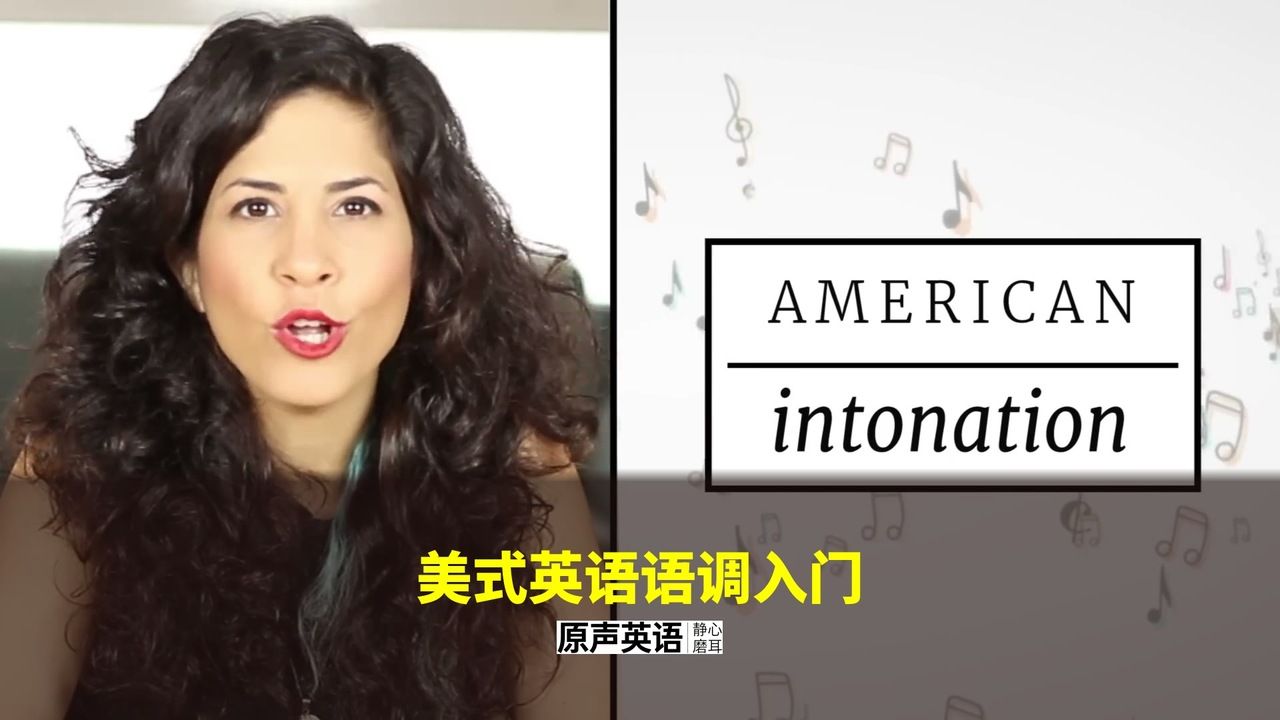
【美式发音】美式英语语调入门 · 旋律节奏重音三要素 中英字
共 1 集
剧集目录
| 集 | 标题 | 时长 |
|---|---|---|
| P1 | 【美式发音】美式英语语调入门 · 旋律节奏重音三要素 中英字 | 15:32 |
P1 · 【美式发音】美式英语语调入门 · 旋律节奏重音三要素 p01 中英字幕 (P1)
字幕摘录
| 时间 | 英文 | 中文 |
|---|---|---|
| 0:00 | Hi, what's up? | 嗨,你好吗? |
| 0:02 | How are you? | 你好吗? |
| 0:03 | 嘿,伙计们,这是Hadar 这是Accent的路。 | |
| 0:09 | Today we are going to talk about American intonation. | 今天我们要谈谈美国民族问题。 |
| 0:13 | Now I know that usually in this channel I talk about pronunciation, but don't get me wrong. | 现在我知道,我通常在这个频道里 谈论发音,但不要误会。 |
| 0:19 | American intonation is not less important and sometimes more important than pronunciation. | 美国的内化并不比发音重要,有时也更重要. |
| 0:27 | And this is why I figured it is time to talk about American intonation. | 所以我觉得是时候谈谈美国的融合了 |
| 0:33 | So today I'm going to open the wonders of American intonation so you can start listening to English rather differently. | 所以今天我要打开美国融合的奇观, 这样你就可以开始用不同的语言听英语。 |
| 0:41 | When we talk about intonation, we are talking about three things. | 当我们谈论融合时,我们谈论的是三件事。 |
| 0:45 | One is the melody, the music of the language, when I go up in pitch, when I go down. | 一个是旋律,语言的音乐, 当我去投球,当我去下。 |
展开字幕全文(228 条)
| 序号 | 英文 | 中文 |
|---|---|---|
| 1 | Hi, what's up? | 嗨,你好吗? |
| 2 | How are you? | 你好吗? |
| 3 | 嘿,伙计们,这是Hadar 这是Accent的路。 | |
| 4 | Today we are going to talk about American intonation. | 今天我们要谈谈美国民族问题。 |
| 5 | Now I know that usually in this channel I talk about pronunciation, but don't get me wrong. | 现在我知道,我通常在这个频道里 谈论发音,但不要误会。 |
| 6 | American intonation is not less important and sometimes more important than pronunciation. | 美国的内化并不比发音重要,有时也更重要. |
| 7 | And this is why I figured it is time to talk about American intonation. | 所以我觉得是时候谈谈美国的融合了 |
| 8 | So today I'm going to open the wonders of American intonation so you can start listening to English rather differently. | 所以今天我要打开美国融合的奇观, 这样你就可以开始用不同的语言听英语。 |
| 9 | When we talk about intonation, we are talking about three things. | 当我们谈论融合时,我们谈论的是三件事。 |
| 10 | One is the melody, the music of the language, when I go up in pitch, when I go down. | 一个是旋律,语言的音乐, 当我去投球,当我去下。 |
| 11 | If I take away the words and I just play it, it's just like a song or a tune that I'm playing. | 如果我把词取掉,只弹它, 它就像一首歌或一首曲子,我正在演奏。 |
| 12 | So when you're listening to English or when you're speaking English, you also want to consider the melody, the notes that you're using. | 所以当你在听英语或者说英语的时候,你还想考虑你的旋律,你使用的音符. |
| 13 | We're also going to talk about stress. | 我们还要谈谈压力 |
| 14 | Stress is what words you choose to stress in a given sentence. | 压力是您选择在某一句子中强调的词。 |
| 15 | What are you doing or what are you doing? | 你们在干嘛? |
| 16 | What versus doing? | 怎么样? |
| 17 | While there are some patterns and a neutral way of saying things, there's also a lot of freedom. | 虽然有些规律和一种中性的说法方式,但也有很多自由. |
| 18 | Of course, it depends on the context, the attitude and many other things. | 当然,这取决于背景、态度和许多其他方面。 |
| 19 | But you first need to know the building blocks and the basis of what words are usually stressed and what words are not stressed for the most part. | 但是,你首先需要知道构件和什么字通常被强调,什么字大部分没有被强调的基础. |
| 20 | Now, lastly, we have rhythm. | 最后,我们有节奏 |
| 21 | Rhythm is the real deal. | 诵经是真言. |
| 22 | It's the feel of the language. | 语言之感. |
| 23 | It's really owning it once you start using American rhythm. | 它真的拥有它 一旦你开始使用美国节奏。 |
| 24 | Now, you have to understand that English is a perfect balance between the long versus short, the high versus low, the stressed versus the effortless. | 现在,你必须明白,英语是长对短,高对低, 压力对无功的完美平衡。 |
| 25 | And when you are able to balance between all these things in an effortless and clear way, | 当你们能分辨一切事物的时候, |
| 26 | this is when you become a strong speaker who is able to communicate their message in a clear and confident way. | 这时,你成为一位强有力的演说家,能够以明确和自信的方式传达他们的信息。 |
| 27 | Now, today we're going to discuss all of these elements. | 今天,我们将讨论所有这些因素。 |
| 28 | But in the future, I will release more in-depth videos about each and every subject with many, many examples and more explanation. | 但在未来,我将发布关于每个主题的更深入的视频,其中包含许多,许多例子和更多的解释. |
| 29 | Before we talk about these elements, I want to talk about the different types of words. | 在谈论这些元素之前,我想谈谈不同类型的词. |
| 30 | So in English, actually in any language, the words in the language are divided into two main groups. | 因此在英语中,实际上在任何语言中,语言中的单词被分为两大类. |
| 31 | Content words and function words. | 内容词和函数词。 |
| 32 | Content words are words that deliver the content. | 内容词是传达内容的词. |
| 33 | Nouns like sister, table, school, verbs, go, run, swim, think, adjectives, beautiful, red, clean, and adverbs, slowly, sometimes, beautifully, and fast. | 名词如姐姐,桌,学,动词,去,跑,游,思,形容词,美,红,清,和副词,慢,有时,美,快. |
| 34 | The other group is function words. | 另一个组是函数词. |
| 35 | These are all the small words that connect content words. | 这些都是连接内容词的小词. |
| 36 | They're essential to create a grammatically correct sentence. | 它们对于创造语法上正确的句子至关重要. |
| 37 | But when they stand alone, they don't signify anything. | 但当他们单独存在时,他们并不表示什么. |
| 38 | We don't know exactly what they mean. | 我们不知道他们到底是什么意思 |
| 39 | We are talking here about prepositions like on, in, at, verb B, M is R, articles, A, and determiners like the, this, that. | 我们在这里谈论的是诸如B,在,在,在,在,在,在动词B,M是R,在文章,在A, 和决定者像这个,在那个。 |
| 40 | These are the words that non-native seekers struggle with when they're trying to construct a sentence, because is it have been, has been, had been. | 这些是非本土寻求者在试图构建一个句子时 所挣扎的词, 因为它曾经,曾经,曾经。 |
| 41 | So when we speak, there is always a strong preference towards stressing content words. | 因此,当我们发言时,人们总是强烈倾向于强调内容词。 |
| 42 | Content words are the important words. | 内容词是重要的词. |
| 43 | If you say had been versus have been, the message is still going to be clear. | 如果你说已经对质了 信息还是会明白的 |
| 44 | But if you say red instead of blue, that's something completely different. | 但如果你说的是红色而不是蓝色,那就完全不同了。 |
| 45 | So content words are always more important, and that's how we treat them when we think about intonation. | 因此,内容词总是更重要,这就是我们思考进化时如何对待它们. |
| 46 | Because content words are the words that are stressed usually, whereas function words are unstressed. | 因为内容单词是通常被强调的单词,而功能单词则不受强调. |
| 47 | And not only that they're unstressed, they're reduced to a point that it's even not clear anymore. | 不仅他们不紧张,还被贬低到甚至不再清楚的地步. |
| 48 | And I'll give you a few more examples in a second. | 再举几个例子 |
| 49 | Let's take, for example, the sentence and I'm going to say it broken down a little bit. | 以句子为例,我略说其解. |
| 50 | The glass is on the table. | 杯子在桌子上,请 |
| 51 | And now I'm going to talk about all three elements, melody, word stress and rhythm. | 现在我要谈谈所有三个元素,旋律,词性压力和节奏. |
| 52 | So first of all, stress. | 所以,首先,压力。 |
| 53 | We need to decide what are the stressed words in the sentence. | 我们需要决定句子中强调的词是什么。 |
| 54 | So let's first recognize what are the content words. | 因此,让我们首先认识到内容词是什么。 |
| 55 | The glass is on the table. | 杯子在桌子上,请 |
| 56 | We have glass and table, two nouns. | 我们有玻璃和桌子 两个名词 |
| 57 | And these are the words that I'm going to stress in this sentence. | 这些是我要在这句话中强调的词。 |
| 58 | Not every content word is stressed the same. | 并不是每个内容的词都得到同样的强调。 |
| 59 | But for now, let's agree that these two words are the words that I choose to stress. | 但是现在,让我们同意,这两个词是我选择强调的词. |
| 60 | This is where melody and rhythm comes into play. | 旋律和节奏也由此而来. |
| 61 | Stressed words are higher in pitch and longer. | 压力的语句音调更高,音调更长. |
| 62 | Higher in pitch, so they get a higher note. | 音量较高,所以他们得到更高的音符. |
| 63 | The first note was higher in pitch. | 第一个音符的音量更高 |
| 64 | And they're longer, okay? | 而且他们更长,好吗? |
| 65 | The glass is on the table. | 杯子在桌子上,请 |
| 66 | So notice that I raised the pitch for glass and table. | 注意,我提了玻璃和桌子的投手。 |
| 67 | The glass is on the table, okay? | 玻璃放在桌上,好吗? |
| 68 | So in terms of melody, when words are stressed, they're also higher in pitch. | 因此,在旋律方面,当文字被强调时,其音调也更高. |
| 69 | Now one more thing I want to tell you about melody is that every syllable receives a different note in English. | 关于旋律,我想告诉你的另外一件事 就是每个音节都收到不同的英文音符。 |
| 70 | It is not the glass is on the table. | 这不是玻璃放在桌上。 |
| 71 | The glass is on the table. | 杯子在桌子上,请 |
| 72 | It's not the glass is on the table. | 不是杯子放在桌子上,是没有 |
| 73 | Not every word is going up and down. | 不是每个字都上下 |
| 74 | But I choose the stressed words and then these are the words that are going to be higher in pitch. | 但我选择了有压力的词,然后这些词在音量上会更高。 |
| 75 | And from there I either go down or I go up. | 我要么下去,要么上去 |
| 76 | Every syllable takes me one step lower or higher. | 每个音节都让我低一点或更高一点 |
| 77 | In this case, the glass is on the... | 这样的话,玻璃就在... |
| 78 | So I keep going down because these are not stressed words. | 所以我继续下去,因为这些话不是强调的。 |
| 79 | I'm starting a new word that is stressed, so I'm going to go high in pitch. | 我开始用一个压力很大的新词 所以我要高高地投球 |
| 80 | Table表. | |
| 81 | The glass is on the table. | 杯子在桌子上,请 |
| 82 | So that's melody. | 这就是旋律。 |
| 83 | What words I choose to stress and go high in pitch for. | 我选择用什么语句来强调和高调的表达。 |
| 84 | Now while we choose to shine on the content words, the words that bring the content, in this case glass and table, | 现在,当我们选择闪耀 内容的词, 带来内容的词, 在这种情况下,玻璃和桌子, |
| 85 | by going higher in pitch and prolonging them, function words play a smaller role in this show. | 通过在投注中提高并延长它们,函数词在这个节目中起到较小的作用. |
| 86 | They are reduced. | 他们减少了。 |
| 87 | We kind of want to hide them. | 我们想把它们藏起来 |
| 88 | We want to reduce them to a point where they don't interfere or they don't compete with content words. | 我们想把它们缩小到他们不干预或者不与内容词竞争的地步. |
| 89 | So if we're going back to the glass is on the table, function words are the, is, on and another the. | 所以,如果我们回到玻璃上, 功能词是,是,是,是,是,是另一个。 |
| 90 | We reduce the vowel in those words to a schwa. | 我们把这些单词中的元音简化为schwa. |
| 91 | A schwa is a really reduced vowel sound. | schwa是真正减少的元音. |
| 92 | It sounds something like this. | 听起来是这样的 |
| 93 | To make the sound, we just drop the jaw a little bit. | 为了发出声音,我们只是放下下巴一点点。 |
| 94 | The tongue rests on the bottom of the mouth. | 舌卧于口下. |
| 95 | The lips are relaxed and we release sound. | 嘴唇放松,我们释放声音。 |
| 96 | So the vowels in the function words reduce through this sound. | 因此函数词中的元音通过这个声音减小. |
| 97 | Therefore, the word the, okay, we don't say the glass, we say the glass. | 因此,这个词, 好吧, 我们不说玻璃, 我们说玻璃。 |
| 98 | So the vowel there is a schwa sound, the, the, and we connect it. | 所以这里的元音是schwa的声音, 那个,那个,我们把它连接起来。 |
| 99 | It feels as if it's one word. | 觉如一字. |
| 100 | The glass is turns into is. | 玻璃变了 |
| 101 | On turns into an. | 转身变成一个。 |
| 102 | And again, we have another the. | 再说一遍,我们还有另一个 |
| 103 | So it's not is on the, it's zon the, zon the. | 所以,它不是在上, 它的音响,音响。 |
| 104 | We reduce the vowel and we connect the words together. | 我们减少元音,把词连接在一起。 |
| 105 | Zon the, zon the. | 赞 赞 |
| 106 | The glasses on the table, the glass on the table, the glass on the table. | 桌上的眼镜,桌上的玻璃,桌上的玻璃. |
| 107 | Now notice what happens. | 现在注意情况 |
| 108 | The is merges with the glass. | 与玻璃结合 |
| 109 | The glass on becomes, the glass, the an and th connect, the glass on the. | 玻璃变成,玻璃,连接,玻璃。 |
| 110 | Okay, so we kind of like took these three words and squeezed them into one utterance. | 好吧,所以我们有点喜欢把这三个词 挤成一个词。 |
| 111 | Zon the, zon the. | 赞 赞 |
| 112 | The glass on the table. | 桌上的杯子。 。 。 |
| 113 | So you get a sentence that is a perfect balance between the high and the low. | 所以,你得到一个句子 一个完美的平衡 在高和低。 |
| 114 | Glasses on the. | 眼镜上。 |
| 115 | Between the long and the short. | 长与短之间. |
| 116 | Glasses, right? | 眼镜,对不对? |
| 117 | Glass is long, although it's one syllable. | 玻璃虽然是一个音节,但很长. |
| 118 | And is really reduced. | 并真正减少。 |
| 119 | And also the stress. | 还有压力 |
| 120 | So I invest more energy and I say a little louder. | 所以我投入更多的精力,我说大声一点。 |
| 121 | Glass zon the. | 玻璃松开。 |
| 122 | To be able to connect the words and to reduce them, I have to say the consonants softer too. | 为了能够连接这些词语并减少其数量,我还必须说这些词语比较软。 |
| 123 | Okay, it's not enough. | 好吧,这还不够。 |
| 124 | So I have to invest less energy in those function words to be able to go through them smoothly. | 因此,我必须在这些功能词上投入更少的精力,才能顺利地通过它们。 |
| 125 | And then be ready for the next content word where I'm going to go higher in pitch and I'm going to prolong them. | 然后准备好下一个内容词, 在那里,我要去高点的投注, 我要延长它们。 |
| 126 | Let's look at another example. | 再举个例子 |
| 127 | What if I told you that five words can be shorter than one word with one syllable? | 如果我告诉你,五个字可以短于一个字和一个音节的字呢? |
| 128 | Five words are going to be shorter than one word with one syllable. | 五个字将短于一个字和一个音节. |
| 129 | How? | 怎么会? |
| 130 | Let's look at the next example. | 举下譬喻. |
| 131 | What are you going to do? | 你打算怎么办? |
| 132 | The do is the verb here. | 这是动词 |
| 133 | And that's the word that I'm going to stress. | 这就是我要强调的词。 |
| 134 | Okay, stress. | 好吧,压力。 |
| 135 | Check. | 检查。 |
| 136 | I know what word I'm stressing. | 我知道我在强调什么词 |
| 137 | Then I know that in terms of melody, this word is going to be higher in pitch. | 然后我知道,在旋律方面,这个词在音调上会更高. |
| 138 | So that's the word I want to stress. | 这就是我要强调的词。 |
| 139 | Do. | 动手 |
| 140 | So I already know the ending. | 我已经知道结局了 |
| 141 | The beginning is a bunch of function words. | 开头是一组函数词. |
| 142 | So I'm going to reduce them. | 所以我要减少它们。 |
| 143 | What turns into. | 变成什么. |
| 144 | R turns into. | R变成。 |
| 145 | R. | R. (英语). |
| 146 | U turns into. | U变成。 |
| 147 | Going to turns into. | 将变成。 |
| 148 | Gonna. | 会的。 |
| 149 | So instead of saying, what are you going to? | 所以,与其说,你打算怎么办? |
| 150 | We say, what are you gonna? | 我们说,你打算怎么办? |
| 151 | What are you gonna? | 你要怎么办? |
| 152 | What are you gonna do? | 你打算怎么办? |
| 153 | So the do is longer than the entire first part of the sentence. | 因此,做比整个句子的第一部分更长. |
| 154 | It's longer than the entire sentence. | 长于全句. |
| 155 | Because five words versus one. | 因为五言对一. |
| 156 | One word with one syllable is longer than the first five. | 单词加一个音节,比前五个词长. |
| 157 | And this is why it's important to remember that rhythm is a result of your message. | 这就是为什么必须记住 节奏是您的讯息的结果 |
| 158 | What you're trying to say. | 你想说什么? |
| 159 | The words that you stress are going to be longer and louder and higher in pitch. | 你所强调的话语会越长越响越高 |
| 160 | The words that are less important for delivering your message are going to be reduced. | 对传达你的信息来说不那么重要的话将减少。 |
| 161 | To allow everything else to stick out. | 以令一切众生悉能坚固. |
| 162 | In many languages, every syllable has the same beat. | 在许多语言中,每个音节都有相同的节奏. |
| 163 | It doesn't matter if it's a content word or a function word. | 无论内容词还是功能词. |
| 164 | If it's stressed or unstressed, it receives the same length. | 如果有压力或没有压力,则得到相同的长度. |
| 165 | So a sentence like this is going to sound something like. | 这样的句子会听起来有点像 |
| 166 | What are you going to do? | 你打算怎么办? |
| 167 | Okay, so do is going to be super short. | 好吧,这是要去是超级短。 |
| 168 | What is going to have the same length? | 什么会有相同的长度? |
| 169 | To is going to have the same length as do. | 其长短将同. |
| 170 | What are you going to do? | 你打算怎么办? |
| 171 | And then it's hard to understand what is the important part here. | 然后很难理解这里的重要部分是什么。 |
| 172 | Okay? | 好吗? |
| 173 | Of course, it's a simple sentence, but if we're talking about more complex sentences | 当然,这句子很简单 但如果我们说的是更复杂的句子 |
| 174 | and there is no hierarchy between the words, it's really hard to get your point. | 而词之间没有等级, 这真的很难得到你的观点。 |
| 175 | What are you gonna do? | 你打算怎么办? |
| 176 | What are you going to do? | 你打算怎么办? |
| 177 | What are you gonna do? | 你打算怎么办? |
| 178 | Let's take a look at a sentence with several content words. | 让我们看看一个有多个内容词的句子. |
| 179 | There are three coins in the box. | 盒子里有三个硬币 |
| 180 | Here, I chose to stress coins and box. | 在这里,我选择强调硬币和盒子。 |
| 181 | So these words are high in pitch. | 因此这些词在投注中是高的. |
| 182 | There are three coins in the box. | 盒子里有三个硬币 |
| 183 | There are... | 还有... |
| 184 | That's reduced. | 即减. |
| 185 | There are three coins in the box. | 盒子里有三个硬币 |
| 186 | And the... also reduced. | 还有... 也减少了 |
| 187 | There are three coins in the box. | 盒子里有三个硬币 |
| 188 | I can also say, there are three coins in the box. | 我也可以说,盒子里有三个硬币 |
| 189 | And when you hear that, you know that maybe someone else thinks that there are five coins. | 当你听到这个,你知道,也许别人认为有五枚硬币。 |
| 190 | No, there are three coins in the box. | 不,盒子里有三枚硬币 |
| 191 | Why are you confusing me? | 你为什么让我困惑? |
| 192 | There are three coins. | 有三枚硬币. |
| 193 | Why did you say there were five? | 你为什么说有五个? |
| 194 | Okay? | 好吗? |
| 195 | So it's the same sentence, but stressing a different word means something slightly different. | 所以这句是相同的,但强调一个不同的单词意味着一些略有不同的东西. |
| 196 | Now, I want you to listen up here, and this is really important. | 现在,我要你在这里听, 这是非常重要的。 |
| 197 | When we speak with a foreign accent, what we do is we apply patterns that we know from our native tongue into English. | 当我们用外国口音说话时,我们要做的就是将我们从母语中知道的规律应用到英语中. |
| 198 | We don't do it consciously. | 我们不是自觉的 |
| 199 | It's just that's what comes out organically. | 这才是有机的 |
| 200 | Now, if we do that, if the patterns of our native tongue are different from English, | 现在,如果我们这样做, 如果我们的母语模式 不同于英语, |
| 201 | and sometimes contradictory to the patterns of English, | 有时与英语模式相矛盾, |
| 202 | the result is that the stress is not going to be clear. | 结果是压力不会明显。 |
| 203 | The message is not going to be clear. | 信息是不会明白的。 |
| 204 | Because if you're applying external intonation and stressing things, let's say, at the beginning rather than the end, | 因为如果你在施展外感 和强调事物, 让我们说,在开始而不是结束, |
| 205 | and in English you want to stress the ending usually, | 在英语中你想要强调 结局通常, |
| 206 | then what happens is that you end up stressing the wrong words. | 结果是你强调错了词 |
| 207 | Although you know how to construct the sentence, the words are accurate. | 尽管你知道如何构建句子,但词句是准确的. |
| 208 | You don't make any grammar mistakes. | 你不会犯任何文法错误的 |
| 209 | But if you don't distinguish the right words, if you don't stress the right words, | 但是,如果你不区分正确的词, 如果你不强调正确的词, |
| 210 | if you don't put the emphasis on the words that are stressed, | 如果你不把重点放在那些 被强调, |
| 211 | then you become unclear. | 然后你变得不明朗。 |
| 212 | Then people may get something that is a little different from what you mean. | 然后人们可能会得到的东西 有点不同于你的意思。 |
| 213 | So understanding that, recognizing your patterns, and listening to how native speakers speak | 所以,理解这一点,承认你的规律, 并倾听当地人如何说话 |
| 214 | really helps you understand how English should be spoken | 真的很帮助你理解 如何使用英语 |
| 215 | and advances you in becoming a stronger, a more confident, and a clear speaker. | 他使你变成一个更强壮、更自信、更明白的发言者。 |
| 216 | Now I want to ask you, what from everything that I discussed today, | 我想问你 我今天讨论的所有事情 |
| 217 | melody, rhythm, stress, is the most challenging for you? | 旋律 节奏 压力 对你最具挑战性吗? |
| 218 | What are you still struggling with? | 你还在挣扎什么? |
| 219 | Please let me know in the comments below and don't forget to tell me where you're from | 请在下面的评论中告诉我 别忘了告诉我你来自哪里 |
| 220 | and what is your native tongue. | 你的母语是什么? |
| 221 | And I will do my best to create more content and lessons | 我会尽力创造更多的内容和教训 |
| 222 | that will help you resolve all the issues that you're facing. | 帮助你解决你所面临的所有问题 |
| 223 | Thank you so much for watching. | 谢谢你的观看 |
| 224 | Please share the video with your friends if you liked it | 如果你喜欢,请和朋友分享录像 |
| 225 | and you think that they may benefit from it. | 你猜想他们会从中获益。 |
| 226 | And don't forget to subscribe to my YouTube channel | 别忘了订阅我的YouTube频道 |
| 227 | and click on the bell to get notifications so you know when I'm releasing a new video. | 点击铃声得到通知 这样你就能知道 当我发布一个新的视频。 |
| 228 | Have a wonderful week and I will see you next week in the next video. | 祝你一周愉快,下周见 |
该视频共有字幕 236 条。解锁更多字幕为会员功能,请移动到 价格