【TED】信息过载时代如何学习 · 认知科学家谈提问的力量
共 3 集
剧集目录
| 集 | 标题 | 时长 |
|---|---|---|
| P1 | 【TED】信息过载时代如何学习 · 认知科学家谈提问的力量 | 15:54 |
| P2 | 【TED】信息过载时代如何学习 · 认知科学家谈提问的力量 | 15:54 |
| P3 | 【TED】信息过载时代如何学习 · 认知科学家谈提问的力量 | 15:54 |
P1 · 【TED】信息过载时代如何学习 · 认知科学家谈提问的力量 p01 中英字幕 (P1)
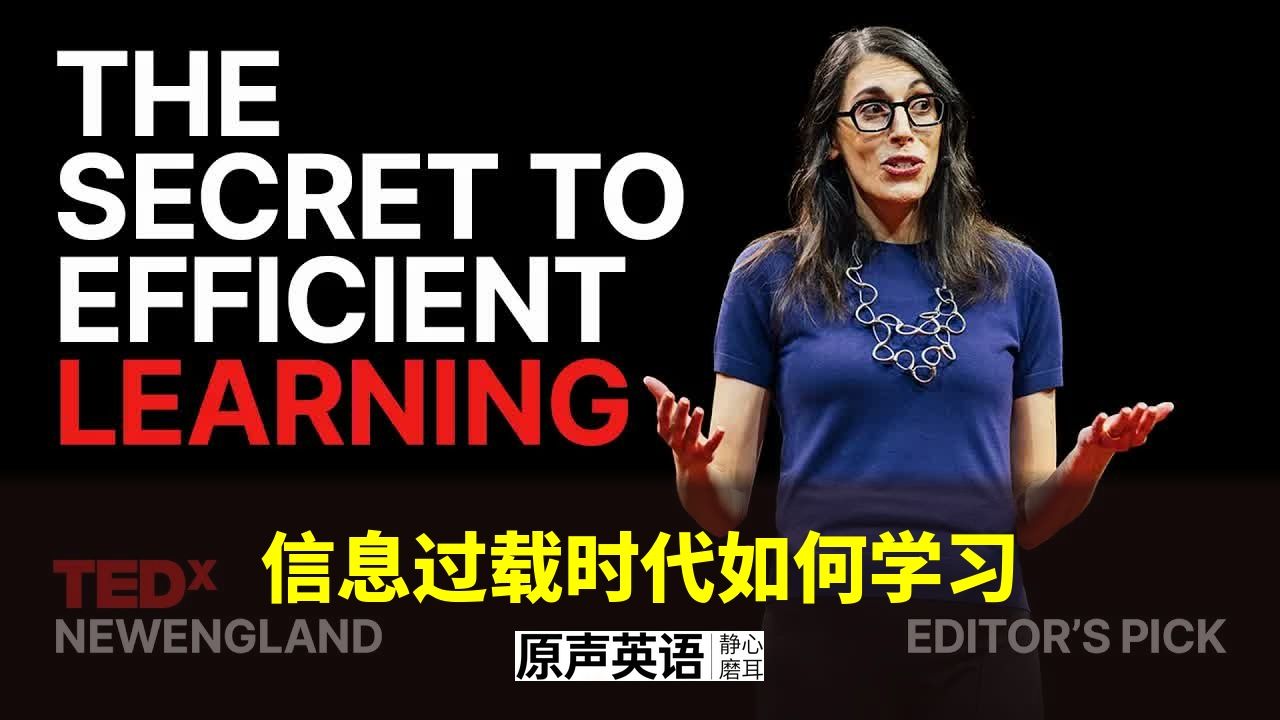
字幕摘录
| 时间 | 英文 | 中文 |
|---|---|---|
| 0:11 | Software engineers have a delightful practice called rubber ducking. | 软件工程师有一个令人愉快的做法,叫橡皮鸭. |
| 0:17 | When they run into a problem with their code, they'll explain it to a rubber duck. | 当他们遇到代码问题时,他们会向橡胶鸭解释. |
| 0:24 | They'll work step by step, line by line, and some of the time, they'll learn something | 他们会一步一步地工作,一行一行, 有些时候,他们会学到一些东西 |
| 0:31 | new. | 新来的 |
| 0:32 | But how can this work? | 但是这怎么行呢? |
| 0:34 | The ducks don't talk back, so the programmers are explaining to themselves. | 鸭子们不回声,所以程序员正在向自己解释. |
| 0:41 | They're not getting any new information. | 他们没有得到任何新信息。 |
| 0:45 | And yet, something about this process helps them learn. | 然而,关于这个过程的一些东西帮助他们学习。 |
| 0:51 | Rubber ducking is an example of what I call learning by thinking. | 橡皮鸭是我所谓的通过思考学习的例子。 |
| 0:58 | And understanding how learning by thinking works is the key to becoming a better learner. | 而通过思考来理解学习是如何发挥作用的,是成为更好的学习者的关键. |
展开字幕全文(164 条)
| 序号 | 英文 | 中文 |
|---|---|---|
| 1 | Software engineers have a delightful practice called rubber ducking. | 软件工程师有一个令人愉快的做法,叫橡皮鸭. |
| 2 | When they run into a problem with their code, they'll explain it to a rubber duck. | 当他们遇到代码问题时,他们会向橡胶鸭解释. |
| 3 | They'll work step by step, line by line, and some of the time, they'll learn something | 他们会一步一步地工作,一行一行, 有些时候,他们会学到一些东西 |
| 4 | new. | 新来的 |
| 5 | But how can this work? | 但是这怎么行呢? |
| 6 | The ducks don't talk back, so the programmers are explaining to themselves. | 鸭子们不回声,所以程序员正在向自己解释. |
| 7 | They're not getting any new information. | 他们没有得到任何新信息。 |
| 8 | And yet, something about this process helps them learn. | 然而,关于这个过程的一些东西帮助他们学习。 |
| 9 | Rubber ducking is an example of what I call learning by thinking. | 橡皮鸭是我所谓的通过思考学习的例子。 |
| 10 | And understanding how learning by thinking works is the key to becoming a better learner. | 而通过思考来理解学习是如何发挥作用的,是成为更好的学习者的关键. |
| 11 | Now, most of us want to be better learners. | 现在,我们大多数人都想成为更好的学习者。 |
| 12 | That's because we want to make our minds better, more effective and more informed. | 这是因为我们希望使我们的头脑更好,更有效,更知情. |
| 13 | But learning can be hard. | 但学习可能很困难。 |
| 14 | And in the years ahead, we'll have access to more and more tools and to more and more | 在未来的岁月里,我们将获得 越来越多的工具 和越来越多的 |
| 15 | information through the internet and social media and AI. | 通过互联网、社交媒体和大赦国际提供的信息。 |
| 16 | And more information can make learning harder rather than easier. | 而更多的信息可以使学习更加困难而不是更容易. |
| 17 | We run the risk of information overwhelm. | 我们冒着信息泛滥的风险 |
| 18 | Part of the problem is that we tend to approach learning by looking outside of ourselves for | 问题的一部分是,我们倾向于通过寻找自己以外的人来学习。 |
| 19 | more information. | 更多信息。 |
| 20 | But that can just exacerbate the overwhelm. | 但是,这只会加剧负担。 |
| 21 | Instead, we could be learning by thinking. | 相反,我们可以通过思考来学习。 |
| 22 | We could be starting with the information we already have. | 我们可以从已经掌握的信息开始 |
| 23 | I'm a cognitive scientist, and I've been studying learning for over 25 years. | 我是个认知科学家,我学习了25年多。 |
| 24 | One thing I've come to appreciate is that our minds are richer and deeper than we often | 有一件事我开始欣赏的是, 我们的头脑 比我们经常更丰富和深入 |
| 25 | give them credit for. | 给他们的信用。 |
| 26 | In fact, our minds contain vast repositories of knowledge, knowledge that's contained | 事实上,我们的思想中蕴藏着 大量的知识,知识 |
| 27 | in our memories and our skills. | 我们的记忆和技能 |
| 28 | Learning by thinking is the process of tapping into that knowledge to become a better learner. | 思考学习是利用这种知识成为更好的学习者的过程。 |
| 29 | To give you a sense for learning by thinking in action, I'd like to ask you a few questions. | 为了给大家一种通过行动思考来学习的感觉,我想问你几个问题. |
| 30 | As soon as you have an answer, please raise your hand. | 一有答请举手. |
| 31 | You ready? | 你准备好了吗? |
| 32 | How many windows are along the front of your house or apartment? | 你家或公寓的前面有几个窗户? |
| 33 | What is the fifth letter of the alphabet? | 字母表的第五个字母是什么? |
| 34 | Is the letter Z on the left or the right side of a typical keyboard? | 是典型键盘左侧还是右侧的字母Z? |
| 35 | I'll bet that many of you didn't know the answers to these questions immediately. | 我敢打赌,你们很多人 并不知道 这些问题的答案立即。 |
| 36 | But you had the knowledge you needed to figure them out. | 但你有你需要的知识 找出他们。 |
| 37 | You could use your visual memories to count the number of windows along the front of your home. | 你可以用你的视觉记忆来计算 你家门口的窗户数量 |
| 38 | You could use your auditory memories to figure out that E is the fifth letter of the alphabet. | 你可以用你的听觉记忆来判断E是字母表的第五个字母. |
| 39 | And you could use your motor skills to figure out that the letter Z is on the left side | 你可以用你的运动能力 找出字母Z在左边 |
| 40 | of a typical keyboard. | 一个典型的键盘。 |
| 41 | These simple examples highlight the richness in depth of the knowledge you already have. | 这些简单的例子突出了你已有的丰富知识。 |
| 42 | And they illustrate the process of learning by thinking. | 它们说明了通过思考学习的过程。 |
| 43 | But recognizing that you have untapped knowledge is not enough to become a better learner. | 但承认你拥有尚未开发的知识不足以成为更好的学习者. |
| 44 | That's because you also need to know how to extract that knowledge when you need it. | 那是因为你还需要知道 当需要时如何去获取知识。 |
| 45 | Suppose you decide to bake chocolate chip cookies. | 如果你决定烤巧克力片饼干。 |
| 46 | But the recipe calls for chocolate chips and for salted butter, neither of which you already have. | 但食谱上要求巧克力片和盐黄油,你还没有。 |
| 47 | Fortunately, you can transform that bar of chocolate you do have into the chocolate pieces | 幸运的是,你可以把巧克力块 变成巧克力块 |
| 48 | you need for the recipe. | 你需要食谱。 |
| 49 | And you can combine unsalted butter with salt to get salted butter. | 也可以将无盐黄油与盐结合,得到盐黄油. |
| 50 | This is probably familiar. | 这也许是熟悉的。 |
| 51 | When we're cooking, we often transform and combine the ingredients we have to get the ingredients we need. | 当我们做饭的时候,我们经常转化和结合我们必需的成分来获得所需要的成分. |
| 52 | It's just the same for learning. | 修习亦复如是. |
| 53 | When we're learning by thinking, we transform and combine the information we already have. | 当我们通过思考来学习时, 我们转变和综合了我们已经掌握的信息。 |
| 54 | To see how this works, consider that information can be represented in all sorts of ways. | 要了解如何运作,应考虑以各种方式反映信息。 |
| 55 | Until today, you've probably represented the windows along the front of your home, | 直到今天 你可能一直代表着 你家门口的窗户 |
| 56 | not in the form of a single number, but as a series of visual memories. | 不是单数的形式,而是一系列的视觉记忆. |
| 57 | So when you transform and combine those memories to extract a single number, you learn something new. | 所以当你转换和结合这些记忆来提取一个单一的数字, 你就会学到一些新的东西。 |
| 58 | You learn how many windows are along the front of your home. | 你知道你家门口有多少窗户 |
| 59 | And so you can answer a question that you couldn't answer before. | 你可以回答一个你以前无法回答的问题。 |
| 60 | That's the magic of learning by thinking. | 这就是通过思考学习的魔法. |
| 61 | There is a catch, though. | 但还是有收获的 |
| 62 | Not all learning can be done by thinking alone. | 并不是所有的学习都是靠单独思考才能完成的. |
| 63 | If I've never been to your home, I can't think my way to how many windows you have. | 如果我从来没有去过你家, 我不能想到我的方法 有多少窗口你有。 |
| 64 | I need new information. | 我需要新情报 |
| 65 | But asking myself how many windows you have sets me up to learn, | 但问自己你为我设置了多少窗户 |
| 66 | so that when I do make it to your home, I know precisely what information to look for. | 所以当我到你们家时, 我确切地知道需要什么信息。 |
| 67 | That's why learning by thinking is so often the best place to start. | 所以通过思考来学习,常常是开局的最好地方. |
| 68 | Going back to our chocolate chip cookies, it makes sense to look at the ingredients you have already | 回到我们的巧克力片饼干里, 看看你已经做的配料是有意义的 |
| 69 | before you start making a shopping list. | 在你开始做购物清单之前 |
| 70 | Unfortunately, though, when it comes to learning, we don't have a recipe. | 但不幸的是,在学习方面,我们没有食谱。 |
| 71 | There's no single strategy for learning that guarantees the best outcome in every case. | 没有单一的学习策略可以保证每个案例的最佳结果. |
| 72 | But there is one strategy that comes close. | 但有一个战略接近。 |
| 73 | It's a version of learning by thinking that involves seeking explanations. | 这是一种通过思考来学习的版本,它涉及寻求解释. |
| 74 | In the late 1980s, scientists wanted to understand what it is that differentiates | 在20世纪80年代后期,科学家们想了解 是什么区别 |
| 75 | the most successful students from their less successful peers. | 最成功的学生 来自他们不太成功的同伴。 |
| 76 | Even when students have access to exactly the same information, the same textbooks, | 即使学生能够获得完全相同的信息,同样的教科书, |
| 77 | the same passage of text on an exam, | 考试的同一段文字, |
| 78 | how much they learn can vary enormously. | 他们能学到多少东西? |
| 79 | So what sets those best learners apart can't just be the information available outside their heads. | 因此,将那些最好的学习者分开的 不仅仅是他们大脑之外的信息。 |
| 80 | It has to be something about what they do with that information. | 一定是他们用这个信息做什么的 |
| 81 | The scientists found that many of the most successful students had something in common. | 科学家们发现,许多最成功的学生都有共同之处. |
| 82 | As they studied, they explained to themselves. | 当他们学习时,他们向自己解释。 |
| 83 | They asked themselves questions and they did their best to offer good replies. | 他们自问了问题,并尽了最大努力提供了好的答复。 |
| 84 | They were their own rubber ducks. | 他们是他们自己的橡皮鸭。 |
| 85 | Since then, lots of studies have found that explaining to yourself can have a dramatic | 从那时起,很多研究发现 向自己解释可以有一个戏剧性的 |
| 86 | impact on learning across a range of contexts and a range of domains. | 对一系列背景和领域学习的影响。 |
| 87 | When children or adults explain to themselves, they tend to learn better and can apply what | 当儿童或成年人向自己解释时,他们往往学习得更好,并能应用什么 |
| 88 | they learn more broadly than those who don't explain. | 他们的学习比那些不解释的人要广泛. |
| 89 | This is known as the self-explanation effect, and it is a powerful strategy for learning by thinking. | 这被称为自我阐释效应,是用思维学习的强大策略. |
| 90 | Let me give you an example from my own research. | 让我举个例子,从我自己的研究。 |
| 91 | It's an example that shows how children can transform the way they represent information by explaining. | 这是一个实例,表明儿童如何通过解释来改变他们代表信息的方式. |
| 92 | Just for fun, we'll illustrate with ducks. | 为了好玩 我们用鸭子来说明 |
| 93 | I'd like you to imagine a card with two ducks on it. | 我希望你能想象一张牌 上面有两只鸭子 |
| 94 | We'll call it the reference card. | 我们称之为参考卡。 |
| 95 | Now imagine two new cards. | 现在想象一下两张新牌 |
| 96 | One has two frogs. | 一有两青蛙. |
| 97 | The other has one duck and one fox. | 另一只鸭子和一只狐狸 |
| 98 | You have to choose which of the two new cards goes with the reference card. | 您必须选择两种新卡的哪一种与参考卡同时使用. |
| 99 | Take a moment to consider which you would choose. | 考虑一下你会选哪一个 |
| 100 | Most research, including my own, finds that in a case like this one, adults will typically | 大多数研究,包括我自己的研究, 发现在这样的情况下, 成年人通常会 |
| 101 | choose the card with two frogs to go with a card with two ducks. | 选择使用两只青蛙的卡片与使用两只鸭的卡片. |
| 102 | That's because they don't only represent the cards as having a frog and a frog and a duck and a duck. | 这是因为他们不仅代表牌上有青蛙和青蛙,还有鸭子和鸭子. |
| 103 | They also represent them as having the same objects and the same objects. | 它们也代表它们具有相同的物体和物体。 |
| 104 | When you represent the cards in this way, it's natural to pair the two sets of matching objects together. | 以这种方式代表牌时,自然会将两组匹配对象组合在一起. |
| 105 | So what about kids? | 那孩子们呢? |
| 106 | Five and six-year-old children will typically choose the card with one duck and one fox to go with a card with two ducks. | 5岁和6岁的孩子一般会选择使用1只鸭和1只狐狸的卡片去使用2只鸭的卡片. |
| 107 | That's because they represent the reference card as having a duck and a duck. | 这是因为他们代表参考卡是拥有鸭子和鸭子. |
| 108 | So a card with one duck on it will be more similar to it than a card with no ducks at all will. | 因此,一张上面有一只鸭子的牌会比一张完全没有鸭子的牌更类似. |
| 109 | Children do this even when they're shown plenty of examples to make it clear that in this task, | 孩子们这样做,即使他们被展示 大量的例子来表明 在这个任务, |
| 110 | the right answer is the adult pattern of matching same with same. | 正确的答案是成年人对等的图案。 |
| 111 | But in one of our studies, we were able to make five and six-year-old children think like adults by prompting them to explain. | 但是,在我们的一个研究中,我们能够通过促使5岁和6岁的儿童解释,让他们像成年人一样思考。 |
| 112 | After seeing examples equivalent to the card with two frogs being paired with a card with two ducks, | 在看到相当于两只青蛙与两只鸭的牌对齐的牌后, |
| 113 | we prompted half the children to explain why those cards went together. | 我们促使一半的孩子 解释为什么这些卡在一起。 |
| 114 | We didn't give them any feedback, so they didn't have any new information. | 我们没有给他们任何反馈,所以他们没有任何新的信息. |
| 115 | Yet those kids who explained went on to pair new sets of cards just like adults matching same with same. | 然而那些解释的孩子们却继续把新的卡片配对, 就像成年人一样。 |
| 116 | By explaining, they changed the way they represented the information to solve the task. | 通过解释,他们改变了他们代表信息的方式,以解决任务. |
| 117 | Explaining has another remarkable property. | 解释有另一个显著的财产。 |
| 118 | It's one I've hinted at already. | 我已经暗示过了 |
| 119 | Explaining sets you up to learn. | 解释让你学习。 |
| 120 | My friend Roxanna has a young son who asked her one day how tornadoes start. | 我朋友罗克珊娜有个小儿子 有一天她问龙卷风是怎么开始的 |
| 121 | She'd taken a class on climate and natural disasters in college, so she thought she could explain it pretty well. | 她在大学里上过气候和自然灾害课,所以她觉得自己可以很好的解释. |
| 122 | She started to describe how there's a difference in pressure, and then she drew a blank. | 她开始描述压力的不同,然后她画了一个空白. |
| 123 | What sets it off? | 是什么引发的? |
| 124 | She didn't know. | 她不知道,她不会知道 |
| 125 | How exactly does low pressure produce a funnel? | 低压如何产生漏斗? |
| 126 | She couldn't say. | 她不能说。 |
| 127 | She told me that she realized she knew nothing. | 她告诉我她意识到自己什么都不知道 |
| 128 | I suspect that all of us have had an experience like this one, an experience of trying to explain something | 我怀疑我们所有人都有过这样的经历 尝试解释一些事情 |
| 129 | and realizing in the course of doing so that we understand much less than we thought we did. | 并意识到,在这样做的过程中,我们理解的程度远远低于我们想象的。 |
| 130 | It's a phenomenon called the illusion of explanatory depth. | 这是一种叫做解释性深度的幻觉的现象. |
| 131 | And this illusion points to another reason why it's so valuable to start the process of learning from within, | 而这种幻觉又指出了另一个原因,为什么开始从内部学习的过程如此重要, |
| 132 | with the information we have already. | 我们掌握的信息。 |
| 133 | When we start to transform and combine what we know, or what we think we know, to craft an explanation, | 当我们开始转变和结合我们所知道或认为我们所知道的东西, 来制定一个解释, |
| 134 | we often uncover gaps that point us to the information we're missing. | 我们经常发现差距 指出我们缺少的信息。 |
| 135 | So we know what questions to ask and how to connect the answers to what we know already. | 因此,我们知道要问什么问题,以及如何将答案与我们已经知道的联系起来。 |
| 136 | By trying to explain, Roxanna identified a gap, something she needed to know. | 罗克珊娜试图解释 发现了一个漏洞 她需要知道的 |
| 137 | How it is that low pressure relates to a tornado's funnel. | 低气压是如何与龙卷风漏斗有关的 |
| 138 | She knew what needed to go on her information shopping list. | 她知道信息购物名单上需要什么 |
| 139 | Knowing what we're missing, what to look for, can be a first step in navigating information overwhelm. | 了解我们所缺少的,寻找什么,可以成为导航信息覆盖的第一步. |
| 140 | That's crucial because in the years ahead, that overwhelm will only become worse. | 这很关键,因为在未来的岁月里, 过度负担只会变得更糟。 |
| 141 | Tools for getting and synthesizing information will be all the more pervasive | 获取和合成信息的工具将更加普及 |
| 142 | and we'll be tempted to solve problems by turning first to the information available outside our heads. | 并且我们会被诱惑去解决问题 首先转向我们脑外的信息。 |
| 143 | We'll be tempted to rely on AI generated responses to our search queries and on the explanations we can get from chatbots. | 我们只能依靠人工智能 对我们的搜索询问 和我们从聊天人那里得到的解释 |
| 144 | These are incredible tools, but they shouldn't replace learning by thinking. | 这些是不可思议的工具,但不应该用思考来取代学习. |
| 145 | If we don't start with the information we have already, | 如果我们不从我们已有的信息开始 |
| 146 | we outsource the process of transforming and combining that information that sets us up to seek the right information | 我们把转变和合并这些信息的过程外包出去,使我们得以寻找正确的信息 |
| 147 | and to make sense of that information when we get it. | 并且当我们得到这个信息的时候, 能够理解它。 |
| 148 | We become poor at policing the boundaries between what we know inside our heads and what we merely have access to outside them. | 我们变得穷困不堪,不能控制我们所知道的东西与我们所了解的东西之间的界限。 |
| 149 | We fall prey to illusions of understanding. | 我们成为理解幻觉的猎物 |
| 150 | But now you know how to break free from those illusions by seeking explanations. | 但是现在你知道如何通过寻求解释来摆脱这些幻觉。 |
| 151 | When you explain to yourself, you transform and combine the information you have to answer new questions. | 当你向自己解释时,你转变和结合你必须回答的新问题的信息. |
| 152 | When you explain to yourself, you're more likely to recognize what it is you don't know. | 当你向自己解释时,你更容易认识到你不知道的是什么. |
| 153 | And so you know what to look for when it's time to shift from learning by thinking to learning from new information. | 所以当从思考学习到学习新信息的时候,你知道需要寻找什么。 |
| 154 | Unfortunately, learning by thinking will not make learning easy. | 不幸的是,通过思考学习并不容易。 |
| 155 | But it means your effort isn't wasted. | 但这意味着你的努力并没有白费 |
| 156 | It gives you a path through information overwhelmed to insight. | 它给你一条通向信息的道路 无法洞察。 |
| 157 | And learning by thinking won't eliminate the need for new information, at least in lots of cases. | 而且通过思考学习不会消除对新信息的需求,至少在很多情况下. |
| 158 | But it helps you know where to look. | 但它帮助你知道 在哪里寻找。 |
| 159 | It helps you know what you're missing and what to do with new information when you get it. | 它帮助你知道你错过了什么 以及你得到新信息后该做什么 |
| 160 | So to be a better learner, don't start with the information outside your head. | 因此,为了成为更好的学习者,不要从脑外的信息开始. |
| 161 | Look inside first. | 先看内. |
| 162 | Take a moment to ask yourself questions to explain to yourself. | 花点时间问自己问题 向自己解释 |
| 163 | Be your own rubber duck. | 做你自己的橡皮鸭。 |
| 164 | Thank you. | 谢谢 |
该视频共有字幕 164 条。解锁更多字幕为会员功能,请移动到 价格
P2 · 【TED】信息过载时代如何学习 · 认知科学家谈提问的力量 p02 英文字幕 (P2)
字幕摘录
| 时间 | 英文 | 中文 |
|---|---|---|
| 0:11 | Software engineers have a delightful practice called rubber ducking. | 软件工程师有一个令人愉快的做法,叫橡皮鸭. |
| 0:17 | When they run into a problem with their code, they'll explain it to a rubber duck. | 当他们遇到代码问题时,他们会向橡胶鸭解释. |
| 0:24 | They'll work step by step, line by line, and some of the time, they'll learn something | 他们会一步一步地工作,一行一行, 有些时候,他们会学到一些东西 |
| 0:31 | new. | 新来的 |
| 0:32 | But how can this work? | 但是这怎么行呢? |
| 0:34 | The ducks don't talk back, so the programmers are explaining to themselves. | 鸭子们不回声,所以程序员正在向自己解释. |
| 0:41 | They're not getting any new information. | 他们没有得到任何新信息。 |
| 0:45 | And yet, something about this process helps them learn. | 然而,关于这个过程的一些东西帮助他们学习。 |
| 0:51 | Rubber ducking is an example of what I call learning by thinking. | 橡皮鸭是我所谓的通过思考学习的例子。 |
| 0:58 | And understanding how learning by thinking works is the key to becoming a better learner. | 而通过思考来理解学习是如何发挥作用的,是成为更好的学习者的关键. |
展开字幕全文(164 条)
| 序号 | 英文 | 中文 |
|---|---|---|
| 1 | Software engineers have a delightful practice called rubber ducking. | 软件工程师有一个令人愉快的做法,叫橡皮鸭. |
| 2 | When they run into a problem with their code, they'll explain it to a rubber duck. | 当他们遇到代码问题时,他们会向橡胶鸭解释. |
| 3 | They'll work step by step, line by line, and some of the time, they'll learn something | 他们会一步一步地工作,一行一行, 有些时候,他们会学到一些东西 |
| 4 | new. | 新来的 |
| 5 | But how can this work? | 但是这怎么行呢? |
| 6 | The ducks don't talk back, so the programmers are explaining to themselves. | 鸭子们不回声,所以程序员正在向自己解释. |
| 7 | They're not getting any new information. | 他们没有得到任何新信息。 |
| 8 | And yet, something about this process helps them learn. | 然而,关于这个过程的一些东西帮助他们学习。 |
| 9 | Rubber ducking is an example of what I call learning by thinking. | 橡皮鸭是我所谓的通过思考学习的例子。 |
| 10 | And understanding how learning by thinking works is the key to becoming a better learner. | 而通过思考来理解学习是如何发挥作用的,是成为更好的学习者的关键. |
| 11 | Now, most of us want to be better learners. | 现在,我们大多数人都想成为更好的学习者。 |
| 12 | That's because we want to make our minds better, more effective and more informed. | 这是因为我们希望使我们的头脑更好,更有效,更知情. |
| 13 | But learning can be hard. | 但学习可能很困难。 |
| 14 | And in the years ahead, we'll have access to more and more tools and to more and more | 在未来的岁月里,我们将获得 越来越多的工具 和越来越多的 |
| 15 | information through the internet and social media and AI. | 通过互联网、社交媒体和大赦国际提供的信息。 |
| 16 | And more information can make learning harder rather than easier. | 而更多的信息可以使学习更加困难而不是更容易. |
| 17 | We run the risk of information overwhelm. | 我们冒着信息泛滥的风险 |
| 18 | Part of the problem is that we tend to approach learning by looking outside of ourselves for | 问题的一部分是,我们倾向于通过寻找自己以外的人来学习。 |
| 19 | more information. | 更多信息。 |
| 20 | But that can just exacerbate the overwhelm. | 但是,这只会加剧负担。 |
| 21 | Instead, we could be learning by thinking. | 相反,我们可以通过思考来学习。 |
| 22 | We could be starting with the information we already have. | 我们可以从已经掌握的信息开始 |
| 23 | I'm a cognitive scientist, and I've been studying learning for over 25 years. | 我是个认知科学家,我学习了25年多。 |
| 24 | One thing I've come to appreciate is that our minds are richer and deeper than we often | 有一件事我开始欣赏的是, 我们的头脑 比我们经常更丰富和深入 |
| 25 | give them credit for. | 给他们的信用。 |
| 26 | In fact, our minds contain vast repositories of knowledge, knowledge that's contained | 事实上,我们的思想中蕴藏着 大量的知识,知识 |
| 27 | in our memories and our skills. | 我们的记忆和技能 |
| 28 | Learning by thinking is the process of tapping into that knowledge to become a better learner. | 思考学习是利用这种知识成为更好的学习者的过程。 |
| 29 | To give you a sense for learning by thinking in action, I'd like to ask you a few questions. | 为了给大家一种通过行动思考来学习的感觉,我想问你几个问题. |
| 30 | As soon as you have an answer, please raise your hand. | 一有答请举手. |
| 31 | You ready? | 你准备好了吗? |
| 32 | How many windows are along the front of your house or apartment? | 你家或公寓的前面有几个窗户? |
| 33 | What is the fifth letter of the alphabet? | 字母表的第五个字母是什么? |
| 34 | Is the letter Z on the left or the right side of a typical keyboard? | 是典型键盘左侧还是右侧的字母Z? |
| 35 | I'll bet that many of you didn't know the answers to these questions immediately. | 我敢打赌,你们很多人 并不知道 这些问题的答案立即。 |
| 36 | But you had the knowledge you needed to figure them out. | 但你有你需要的知识 找出他们。 |
| 37 | You could use your visual memories to count the number of windows along the front of your home. | 你可以用你的视觉记忆来计算 你家门口的窗户数量 |
| 38 | You could use your auditory memories to figure out that E is the fifth letter of the alphabet. | 你可以用你的听觉记忆来判断E是字母表的第五个字母. |
| 39 | And you could use your motor skills to figure out that the letter Z is on the left side | 你可以用你的运动能力 找出字母Z在左边 |
| 40 | of a typical keyboard. | 一个典型的键盘。 |
| 41 | These simple examples highlight the richness in depth of the knowledge you already have. | 这些简单的例子突出了你已有的丰富知识。 |
| 42 | And they illustrate the process of learning by thinking. | 它们说明了通过思考学习的过程。 |
| 43 | But recognizing that you have untapped knowledge is not enough to become a better learner. | 但承认你拥有尚未开发的知识不足以成为更好的学习者. |
| 44 | That's because you also need to know how to extract that knowledge when you need it. | 那是因为你还需要知道 当需要时如何去获取知识。 |
| 45 | Suppose you decide to bake chocolate chip cookies. | 如果你决定烤巧克力片饼干。 |
| 46 | But the recipe calls for chocolate chips and for salted butter, neither of which you already have. | 但食谱上要求巧克力片和盐黄油,你还没有。 |
| 47 | Fortunately, you can transform that bar of chocolate you do have into the chocolate pieces | 幸运的是,你可以把巧克力块 变成巧克力块 |
| 48 | you need for the recipe. | 你需要食谱。 |
| 49 | And you can combine unsalted butter with salt to get salted butter. | 也可以将无盐黄油与盐结合,得到盐黄油. |
| 50 | This is probably familiar. | 这也许是熟悉的。 |
| 51 | When we're cooking, we often transform and combine the ingredients we have to get the ingredients we need. | 当我们做饭的时候,我们经常转化和结合我们必需的成分来获得所需要的成分. |
| 52 | It's just the same for learning. | 修习亦复如是. |
| 53 | When we're learning by thinking, we transform and combine the information we already have. | 当我们通过思考来学习时, 我们转变和综合了我们已经掌握的信息。 |
| 54 | To see how this works, consider that information can be represented in all sorts of ways. | 要了解如何运作,应考虑以各种方式反映信息。 |
| 55 | Until today, you've probably represented the windows along the front of your home, | 直到今天 你可能一直代表着 你家门口的窗户 |
| 56 | not in the form of a single number, but as a series of visual memories. | 不是单数的形式,而是一系列的视觉记忆. |
| 57 | So when you transform and combine those memories to extract a single number, you learn something new. | 所以当你转换和结合这些记忆来提取一个单一的数字, 你就会学到一些新的东西。 |
| 58 | You learn how many windows are along the front of your home. | 你知道你家门口有多少窗户 |
| 59 | And so you can answer a question that you couldn't answer before. | 你可以回答一个你以前无法回答的问题。 |
| 60 | That's the magic of learning by thinking. | 这就是通过思考学习的魔法. |
| 61 | There is a catch, though. | 但还是有收获的 |
| 62 | Not all learning can be done by thinking alone. | 并不是所有的学习都是靠单独思考才能完成的. |
| 63 | If I've never been to your home, I can't think my way to how many windows you have. | 如果我从来没有去过你家, 我不能想到我的方法 有多少窗口你有。 |
| 64 | I need new information. | 我需要新情报 |
| 65 | But asking myself how many windows you have sets me up to learn, | 但问自己你为我设置了多少窗户 |
| 66 | so that when I do make it to your home, I know precisely what information to look for. | 所以当我到你们家时, 我确切地知道需要什么信息。 |
| 67 | That's why learning by thinking is so often the best place to start. | 所以通过思考来学习,常常是开局的最好地方. |
| 68 | Going back to our chocolate chip cookies, it makes sense to look at the ingredients you have already | 回到我们的巧克力片饼干里, 看看你已经做的配料是有意义的 |
| 69 | before you start making a shopping list. | 在你开始做购物清单之前 |
| 70 | Unfortunately, though, when it comes to learning, we don't have a recipe. | 但不幸的是,在学习方面,我们没有食谱。 |
| 71 | There's no single strategy for learning that guarantees the best outcome in every case. | 没有单一的学习策略可以保证每个案例的最佳结果. |
| 72 | But there is one strategy that comes close. | 但有一个战略接近。 |
| 73 | It's a version of learning by thinking that involves seeking explanations. | 这是一种通过思考来学习的版本,它涉及寻求解释. |
| 74 | In the late 1980s, scientists wanted to understand what it is that differentiates | 在20世纪80年代后期,科学家们想了解 是什么区别 |
| 75 | the most successful students from their less successful peers. | 最成功的学生 来自他们不太成功的同伴。 |
| 76 | Even when students have access to exactly the same information, the same textbooks, | 即使学生能够获得完全相同的信息,同样的教科书, |
| 77 | the same passage of text on an exam, | 考试的同一段文字, |
| 78 | how much they learn can vary enormously. | 他们能学到多少东西? |
| 79 | So what sets those best learners apart can't just be the information available outside their heads. | 因此,将那些最好的学习者分开的 不仅仅是他们大脑之外的信息。 |
| 80 | It has to be something about what they do with that information. | 一定是他们用这个信息做什么的 |
| 81 | The scientists found that many of the most successful students had something in common. | 科学家们发现,许多最成功的学生都有共同之处. |
| 82 | As they studied, they explained to themselves. | 当他们学习时,他们向自己解释。 |
| 83 | They asked themselves questions and they did their best to offer good replies. | 他们自问了问题,并尽了最大努力提供了好的答复。 |
| 84 | They were their own rubber ducks. | 他们是他们自己的橡皮鸭。 |
| 85 | Since then, lots of studies have found that explaining to yourself can have a dramatic | 从那时起,很多研究发现 向自己解释可以有一个戏剧性的 |
| 86 | impact on learning across a range of contexts and a range of domains. | 对一系列背景和领域学习的影响。 |
| 87 | When children or adults explain to themselves, they tend to learn better and can apply what | 当儿童或成年人向自己解释时,他们往往学习得更好,并能应用什么 |
| 88 | they learn more broadly than those who don't explain. | 他们的学习比那些不解释的人要广泛. |
| 89 | This is known as the self-explanation effect, and it is a powerful strategy for learning by thinking. | 这被称为自我阐释效应,是用思维学习的强大策略. |
| 90 | Let me give you an example from my own research. | 让我举个例子,从我自己的研究。 |
| 91 | It's an example that shows how children can transform the way they represent information by explaining. | 这是一个实例,表明儿童如何通过解释来改变他们代表信息的方式. |
| 92 | Just for fun, we'll illustrate with ducks. | 为了好玩 我们用鸭子来说明 |
| 93 | I'd like you to imagine a card with two ducks on it. | 我希望你能想象一张牌 上面有两只鸭子 |
| 94 | We'll call it the reference card. | 我们称之为参考卡。 |
| 95 | Now imagine two new cards. | 现在想象一下两张新牌 |
| 96 | One has two frogs. | 一有两青蛙. |
| 97 | The other has one duck and one fox. | 另一只鸭子和一只狐狸 |
| 98 | You have to choose which of the two new cards goes with the reference card. | 您必须选择两种新卡的哪一种与参考卡同时使用. |
| 99 | Take a moment to consider which you would choose. | 考虑一下你会选哪一个 |
| 100 | Most research, including my own, finds that in a case like this one, adults will typically | 大多数研究,包括我自己的研究, 发现在这样的情况下, 成年人通常会 |
| 101 | choose the card with two frogs to go with a card with two ducks. | 选择使用两只青蛙的卡片与使用两只鸭的卡片. |
| 102 | That's because they don't only represent the cards as having a frog and a frog and a duck and a duck. | 这是因为他们不仅代表牌上有青蛙和青蛙,还有鸭子和鸭子. |
| 103 | They also represent them as having the same objects and the same objects. | 它们也代表它们具有相同的物体和物体。 |
| 104 | When you represent the cards in this way, it's natural to pair the two sets of matching objects together. | 以这种方式代表牌时,自然会将两组匹配对象组合在一起. |
| 105 | So what about kids? | 那孩子们呢? |
| 106 | Five and six-year-old children will typically choose the card with one duck and one fox to go with a card with two ducks. | 5岁和6岁的孩子一般会选择使用1只鸭和1只狐狸的卡片去使用2只鸭的卡片. |
| 107 | That's because they represent the reference card as having a duck and a duck. | 这是因为他们代表参考卡是拥有鸭子和鸭子. |
| 108 | So a card with one duck on it will be more similar to it than a card with no ducks at all will. | 因此,一张上面有一只鸭子的牌会比一张完全没有鸭子的牌更类似. |
| 109 | Children do this even when they're shown plenty of examples to make it clear that in this task, | 孩子们这样做,即使他们被展示 大量的例子来表明 在这个任务, |
| 110 | the right answer is the adult pattern of matching same with same. | 正确的答案是成年人对等的图案。 |
| 111 | But in one of our studies, we were able to make five and six-year-old children think like adults by prompting them to explain. | 但是,在我们的一个研究中,我们能够通过促使5岁和6岁的儿童解释,让他们像成年人一样思考。 |
| 112 | After seeing examples equivalent to the card with two frogs being paired with a card with two ducks, | 在看到相当于两只青蛙与两只鸭的牌对齐的牌后, |
| 113 | we prompted half the children to explain why those cards went together. | 我们促使一半的孩子 解释为什么这些卡在一起。 |
| 114 | We didn't give them any feedback, so they didn't have any new information. | 我们没有给他们任何反馈,所以他们没有任何新的信息. |
| 115 | Yet those kids who explained went on to pair new sets of cards just like adults matching same with same. | 然而那些解释的孩子们却继续把新的卡片配对, 就像成年人一样。 |
| 116 | By explaining, they changed the way they represented the information to solve the task. | 通过解释,他们改变了他们代表信息的方式,以解决任务. |
| 117 | Explaining has another remarkable property. | 解释有另一个显著的财产。 |
| 118 | It's one I've hinted at already. | 我已经暗示过了 |
| 119 | Explaining sets you up to learn. | 解释让你学习。 |
| 120 | My friend Roxanna has a young son who asked her one day how tornadoes start. | 我朋友罗克珊娜有个小儿子 有一天她问龙卷风是怎么开始的 |
| 121 | She'd taken a class on climate and natural disasters in college, so she thought she could explain it pretty well. | 她在大学里上过气候和自然灾害课,所以她觉得自己可以很好的解释. |
| 122 | She started to describe how there's a difference in pressure, and then she drew a blank. | 她开始描述压力的不同,然后她画了一个空白. |
| 123 | What sets it off? | 是什么引发的? |
| 124 | She didn't know. | 她不知道,她不会知道 |
| 125 | How exactly does low pressure produce a funnel? | 低压如何产生漏斗? |
| 126 | She couldn't say. | 她不能说。 |
| 127 | She told me that she realized she knew nothing. | 她告诉我她意识到自己什么都不知道 |
| 128 | I suspect that all of us have had an experience like this one, an experience of trying to explain something | 我怀疑我们所有人都有过这样的经历 尝试解释一些事情 |
| 129 | and realizing in the course of doing so that we understand much less than we thought we did. | 并意识到,在这样做的过程中,我们理解的程度远远低于我们想象的。 |
| 130 | It's a phenomenon called the illusion of explanatory depth. | 这是一种叫做解释性深度的幻觉的现象. |
| 131 | And this illusion points to another reason why it's so valuable to start the process of learning from within, | 而这种幻觉又指出了另一个原因,为什么开始从内部学习的过程如此重要, |
| 132 | with the information we have already. | 我们掌握的信息。 |
| 133 | When we start to transform and combine what we know, or what we think we know, to craft an explanation, | 当我们开始转变和结合我们所知道或认为我们所知道的东西, 来制定一个解释, |
| 134 | we often uncover gaps that point us to the information we're missing. | 我们经常发现差距 指出我们缺少的信息。 |
| 135 | So we know what questions to ask and how to connect the answers to what we know already. | 因此,我们知道要问什么问题,以及如何将答案与我们已经知道的联系起来。 |
| 136 | By trying to explain, Roxanna identified a gap, something she needed to know. | 罗克珊娜试图解释 发现了一个漏洞 她需要知道的 |
| 137 | How it is that low pressure relates to a tornado's funnel. | 低气压是如何与龙卷风漏斗有关的 |
| 138 | She knew what needed to go on her information shopping list. | 她知道信息购物名单上需要什么 |
| 139 | Knowing what we're missing, what to look for, can be a first step in navigating information overwhelm. | 了解我们所缺少的,寻找什么,可以成为导航信息覆盖的第一步. |
| 140 | That's crucial because in the years ahead, that overwhelm will only become worse. | 这很关键,因为在未来的岁月里, 过度负担只会变得更糟。 |
| 141 | Tools for getting and synthesizing information will be all the more pervasive | 获取和合成信息的工具将更加普及 |
| 142 | and we'll be tempted to solve problems by turning first to the information available outside our heads. | 并且我们会被诱惑去解决问题 首先转向我们脑外的信息。 |
| 143 | We'll be tempted to rely on AI generated responses to our search queries and on the explanations we can get from chatbots. | 我们只能依靠人工智能 对我们的搜索询问 和我们从聊天人那里得到的解释 |
| 144 | These are incredible tools, but they shouldn't replace learning by thinking. | 这些是不可思议的工具,但不应该用思考来取代学习. |
| 145 | If we don't start with the information we have already, | 如果我们不从我们已有的信息开始 |
| 146 | we outsource the process of transforming and combining that information that sets us up to seek the right information | 我们把转变和合并这些信息的过程外包出去,使我们得以寻找正确的信息 |
| 147 | and to make sense of that information when we get it. | 并且当我们得到这个信息的时候, 能够理解它。 |
| 148 | We become poor at policing the boundaries between what we know inside our heads and what we merely have access to outside them. | 我们变得穷困不堪,不能控制我们所知道的东西与我们所了解的东西之间的界限。 |
| 149 | We fall prey to illusions of understanding. | 我们成为理解幻觉的猎物 |
| 150 | But now you know how to break free from those illusions by seeking explanations. | 但是现在你知道如何通过寻求解释来摆脱这些幻觉。 |
| 151 | When you explain to yourself, you transform and combine the information you have to answer new questions. | 当你向自己解释时,你转变和结合你必须回答的新问题的信息. |
| 152 | When you explain to yourself, you're more likely to recognize what it is you don't know. | 当你向自己解释时,你更容易认识到你不知道的是什么. |
| 153 | And so you know what to look for when it's time to shift from learning by thinking to learning from new information. | 所以当从思考学习到学习新信息的时候,你知道需要寻找什么。 |
| 154 | Unfortunately, learning by thinking will not make learning easy. | 不幸的是,通过思考学习并不容易。 |
| 155 | But it means your effort isn't wasted. | 但这意味着你的努力并没有白费 |
| 156 | It gives you a path through information overwhelmed to insight. | 它给你一条通向信息的道路 无法洞察。 |
| 157 | And learning by thinking won't eliminate the need for new information, at least in lots of cases. | 而且通过思考学习不会消除对新信息的需求,至少在很多情况下. |
| 158 | But it helps you know where to look. | 但它帮助你知道 在哪里寻找。 |
| 159 | It helps you know what you're missing and what to do with new information when you get it. | 它帮助你知道你错过了什么 以及你得到新信息后该做什么 |
| 160 | So to be a better learner, don't start with the information outside your head. | 因此,为了成为更好的学习者,不要从脑外的信息开始. |
| 161 | Look inside first. | 先看内. |
| 162 | Take a moment to ask yourself questions to explain to yourself. | 花点时间问自己问题 向自己解释 |
| 163 | Be your own rubber duck. | 做你自己的橡皮鸭。 |
| 164 | Thank you. | 谢谢 |
该视频共有字幕 164 条。解锁更多字幕为会员功能,请移动到 价格
P3 · 【TED】信息过载时代如何学习 · 认知科学家谈提问的力量 p03 无字幕 (P3)
字幕摘录
| 时间 | 英文 | 中文 |
|---|---|---|
| 0:11 | Software engineers have a delightful practice called rubber ducking. | 软件工程师有一个令人愉快的做法,叫橡皮鸭. |
| 0:17 | When they run into a problem with their code, they'll explain it to a rubber duck. | 当他们遇到代码问题时,他们会向橡胶鸭解释. |
| 0:24 | They'll work step by step, line by line, and some of the time, they'll learn something new. | 他们会一步一步地工作,一行一行,有些时候,他们会学到新的东西. |
| 0:32 | But how can this work? | 但是这怎么行呢? |
| 0:34 | The ducks don't talk back, so the programmers are explaining to themselves. | 鸭子们不回声,所以程序员正在向自己解释. |
| 0:41 | They're not getting any new information. | 他们没有得到任何新信息。 |
| 0:45 | And yet, something about this process helps them learn. | 然而,关于这个过程的一些东西帮助他们学习。 |
| 0:51 | Rubber ducking is an example of what I call learning by thinking. | 橡皮鸭是我所谓的通过思考学习的例子。 |
| 0:58 | And understanding how learning by thinking works is the key to becoming a better learner. | 而通过思考来理解学习是如何发挥作用的,是成为更好的学习者的关键. |
| 1:05 | Now, most of us want to be better learners. | 现在,我们大多数人都想成为更好的学习者。 |
展开字幕全文(148 条)
| 序号 | 英文 | 中文 |
|---|---|---|
| 1 | Software engineers have a delightful practice called rubber ducking. | 软件工程师有一个令人愉快的做法,叫橡皮鸭. |
| 2 | When they run into a problem with their code, they'll explain it to a rubber duck. | 当他们遇到代码问题时,他们会向橡胶鸭解释. |
| 3 | They'll work step by step, line by line, and some of the time, they'll learn something new. | 他们会一步一步地工作,一行一行,有些时候,他们会学到新的东西. |
| 4 | But how can this work? | 但是这怎么行呢? |
| 5 | The ducks don't talk back, so the programmers are explaining to themselves. | 鸭子们不回声,所以程序员正在向自己解释. |
| 6 | They're not getting any new information. | 他们没有得到任何新信息。 |
| 7 | And yet, something about this process helps them learn. | 然而,关于这个过程的一些东西帮助他们学习。 |
| 8 | Rubber ducking is an example of what I call learning by thinking. | 橡皮鸭是我所谓的通过思考学习的例子。 |
| 9 | And understanding how learning by thinking works is the key to becoming a better learner. | 而通过思考来理解学习是如何发挥作用的,是成为更好的学习者的关键. |
| 10 | Now, most of us want to be better learners. | 现在,我们大多数人都想成为更好的学习者。 |
| 11 | That's because we want to make our minds better, more effective and more informed. | 这是因为我们希望使我们的头脑更好,更有效,更知情. |
| 12 | But learning can be hard. | 但学习可能很困难。 |
| 13 | And in the years ahead, we'll have access to more and more tools and to more and more information | 在未来的岁月里,我们将获得 越来越多的工具 和越来越多的信息 |
| 14 | through the internet and social media and AI. | 通过互联网和社交媒体以及大赦国际。 |
| 15 | And more information can make learning harder rather than easier. | 而更多的信息可以使学习更加困难而不是更容易. |
| 16 | We run the risk of information overwhelm. | 我们冒着信息泛滥的风险 |
| 17 | Part of the problem is that we tend to approach learning by looking outside of ourselves for more information. | 问题的一部分是,我们倾向于通过寻找更多的信息来学习。 |
| 18 | But that can just exacerbate the overwhelm. | 但是,这只会加剧负担。 |
| 19 | Instead, we could be learning by thinking. | 相反,我们可以通过思考来学习。 |
| 20 | We could be starting with the information we already have. | 我们可以从已经掌握的信息开始 |
| 21 | I'm a cognitive scientist, and I've been studying learning for over 25 years. | 我是个认知科学家,我学习了25年多。 |
| 22 | One thing I've come to appreciate is that our minds are richer and deeper than we often give them credit for. | 我开始欣赏的一件事是,我们的思想比我们经常给他们的功劳更加丰富和深入. |
| 23 | In fact, our minds contain vast repositories of knowledge, knowledge that's contained in our memories and our skills. | 事实上,我们的思想中蕴藏着丰富的知识,知识蕴藏在我们记忆和技能中. |
| 24 | Learning by thinking is the process of tapping into that knowledge to become a better learner. | 思考学习是利用这种知识成为更好的学习者的过程。 |
| 25 | To give you a sense for learning by thinking in action, I'd like to ask you a few questions. | 为了给大家一种通过行动思考来学习的感觉,我想问你几个问题. |
| 26 | As soon as you have an answer, please raise your hand. | 一有答请举手. |
| 27 | You ready? | 你准备好了吗? |
| 28 | How many windows are along the front of your house or apartment? | 你家或公寓的前面有几个窗户? |
| 29 | What is the fifth letter of the alphabet? | 字母表的第五个字母是什么? |
| 30 | Is the letter Z on the left or the right side of a typical keyboard? | 是典型键盘左侧还是右侧的字母Z? |
| 31 | I'll bet that many of you didn't know the answers to these questions immediately. | 我敢打赌,你们很多人 并不知道 这些问题的答案立即。 |
| 32 | But you had the knowledge you needed to figure them out. | 但你有你需要的知识 找出他们。 |
| 33 | You could use your visual memories to count the number of windows along the front of your home. | 你可以用你的视觉记忆来计算 你家门口的窗户数量 |
| 34 | You could use your auditory memories to figure out that E is the fifth letter of the alphabet. | 你可以用你的听觉记忆来判断E是字母表的第五个字母. |
| 35 | And you could use your motor skills to figure out that the letter Z on the left side of a typical keyboard. | 你可以用你的运动技能 找出典型键盘左侧的字母Z。 |
| 36 | These simple examples highlight the richness and depth of the knowledge you already have. | 这些简单的例子突出了你已经掌握的知识的丰富性和深度。 |
| 37 | And they illustrate the process of learning by thinking. | 它们说明了通过思考学习的过程。 |
| 38 | But recognizing that you have untapped knowledge is not enough to become a better learner. | 但承认你拥有尚未开发的知识不足以成为更好的学习者. |
| 39 | That's because you also need to know how to extract that knowledge when you need it. | 那是因为你还需要知道 当需要时如何去获取知识。 |
| 40 | Suppose you decide to bake chocolate chip cookies. | 如果你决定烤巧克力片饼干。 |
| 41 | But the recipe calls for chocolate chips and for salted butter, neither of which you already have. | 但食谱上要求巧克力片和盐黄油,你还没有。 |
| 42 | Fortunately, you can transform that bar of chocolate you do have into the chocolate pieces you need for the recipe. | 幸运的是,你可以把巧克力条 变成你需要的巧克力片 配方。 |
| 43 | And you can combine unsalted butter with salt to get salted butter. | 也可以将无盐黄油与盐结合,得到盐黄油. |
| 44 | This is probably familiar. | 这也许是熟悉的。 |
| 45 | When we're cooking, we often transform and combine the ingredients we have to get the ingredients we need. | 当我们做饭的时候,我们经常转化和结合我们必需的成分来获得所需要的成分. |
| 46 | It's just the same for learning. | 修习亦复如是. |
| 47 | When we're learning by thinking, we transform and combine the information we already have. | 当我们通过思考来学习时, 我们转变和综合了我们已经掌握的信息。 |
| 48 | To see how this works, consider that information can be represented in all sorts of ways. | 要了解如何运作,应考虑以各种方式反映信息。 |
| 49 | Until today, you've probably represented the windows along the front of your home, not in the form of a single number, but as a series of visual memories. | 直到今天,你可能一直代表着家门口的窗户,不是单数的形式,而是一系列的视觉记忆. |
| 50 | So when you transform and combine those memories to extract a single number, you learn something new. | 所以当你转换和结合这些记忆来提取一个单一的数字, 你就会学到一些新的东西。 |
| 51 | You learn how many windows are along the front of your home. | 你知道你家门口有多少窗户 |
| 52 | And so you can answer a question that you couldn't answer before. | 你可以回答一个你以前无法回答的问题。 |
| 53 | That's the magic of learning by thinking. | 这就是通过思考学习的魔法. |
| 54 | There is a catch, though. | 但还是有收获的 |
| 55 | Not all learning can be done by thinking alone. | 并不是所有的学习都是靠单独思考才能完成的. |
| 56 | If I've never been to your home, I can't think my way to how many windows you have. | 如果我从来没有去过你家, 我不能想到我的方法 有多少窗口你有。 |
| 57 | I need new information. | 我需要新情报 |
| 58 | But asking myself how many windows you have sets me up to learn so that when I do make it to your home, I know precisely what information to look for. | 但问自己你给我设置了多少个窗口来学习, 这样当我到达你家的时候,我就能确切知道需要找什么信息。 |
| 59 | That's why learning by thinking is so often the best place to start. | 所以通过思考来学习,常常是开局的最好地方. |
| 60 | Going back to our chocolate chip cookies, it makes sense to look at the ingredients you have already | 回到我们的巧克力片饼干里, 看看你已经做的配料是有意义的 |
| 61 | before you start making a shopping list. | 在你开始做购物清单之前 |
| 62 | Unfortunately, though, when it comes to learning, we don't have a recipe. | 但不幸的是,在学习方面,我们没有食谱。 |
| 63 | There's no single strategy for learning that guarantees the best outcome in every case. | 没有单一的学习策略可以保证每个案例的最佳结果. |
| 64 | But there is one strategy that comes close. | 但有一个战略接近。 |
| 65 | It's a version of learning by thinking that involves seeking explanations. | 这是一种通过思考来学习的版本,它涉及寻求解释. |
| 66 | In the late 1980s, scientists wanted to understand what it is that differentiates the most successful students from their less successful peers. | 在1980年代后期,科学家们想了解是什么将最成功的学生与不太成功的同学区分开来. |
| 67 | Even when students have access to exactly the same information, the same textbooks, the same passage of text on an exam, | 即使学生能拿到完全一样的信息 同样的教科书 同样的考试内容 |
| 68 | how much they learn can vary enormously. | 他们能学到多少东西? |
| 69 | So what sets those best learners apart can't just be the information available outside their heads. | 因此,将那些最好的学习者分开的 不仅仅是他们大脑之外的信息。 |
| 70 | It has to be something about what they do with that information. | 一定是他们用这个信息做什么的 |
| 71 | The scientists found that many of the most successful students had something in common. | 科学家们发现,许多最成功的学生都有共同之处. |
| 72 | As they studied, they explained to themselves, they asked themselves questions, and they did their best to offer good replies. | 当他们学习时,他们向自己解释,问自己问题,并尽了最大努力,给出了很好的回答. |
| 73 | They were their own rubber ducks. | 他们是他们自己的橡皮鸭。 |
| 74 | Since then, lots of studies have found that explaining to yourself can have a dramatic impact on learning across a range of contexts and a range of domains. | 从那时起,许多研究发现,向自己解释可能会对一系列背景和领域的学习产生巨大的影响. |
| 75 | When children or adults explain to themselves, they tend to learn better and can apply what they learn more broadly than those who don't explain. | 当儿童或成年人向自己解释时,他们往往学习得更好,并且可以比不解释的人更广泛地应用他们学到的东西. |
| 76 | This is known as the self-explanation effect, and it is a powerful strategy for learning by thinking. | 这被称为自我阐释效应,是用思维学习的强大策略. |
| 77 | Let me give you an example from my own research. | 让我举个例子,从我自己的研究。 |
| 78 | It's an example that shows how children can transform the way they represent information by explaining. | 这是一个实例,表明儿童如何通过解释来改变他们代表信息的方式. |
| 79 | Just for fun, we'll illustrate with ducks. | 为了好玩 我们用鸭子来说明 |
| 80 | I'd like you to imagine a card with two ducks on it. | 我希望你能想象一张牌 上面有两只鸭子 |
| 81 | We'll call it the reference card. | 我们称之为参考卡。 |
| 82 | Now imagine two new cards. | 现在想象一下两张新牌 |
| 83 | One has two frogs. | 一有两青蛙. |
| 84 | The other has one duck and one fox. | 另一只鸭子和一只狐狸 |
| 85 | You have to choose which of the two new cards goes with the reference card. | 您必须选择两种新卡的哪一种与参考卡同时使用. |
| 86 | Take a moment to consider which you would choose. | 考虑一下你会选哪一个 |
| 87 | Most research, including my own, finds that in a case like this one, adults will typically choose the card with two frogs to go with a card with two ducks. | 大多数研究,包括我自己的研究发现,在这样的情况下,成年人一般会选择有两只青蛙的卡片去配有两只鸭的卡片. |
| 88 | That's because they don't only represent the cards as having a frog and a frog and a duck and a duck. | 这是因为他们不仅代表牌上有青蛙和青蛙,还有鸭子和鸭子. |
| 89 | They also represent them as having the same objects and the same objects. | 它们也代表它们具有相同的物体和物体。 |
| 90 | When you represent the cards in this way, it's natural to pair the two sets of matching objects together. | 以这种方式代表牌时,自然会将两组匹配对象组合在一起. |
| 91 | So what about kids? | 那孩子们呢? |
| 92 | Five and six-year-old children will typically choose the card with one duck and one fox to go with a card with two ducks. | 5岁和6岁的孩子一般会选择使用1只鸭和1只狐狸的卡片去使用2只鸭的卡片. |
| 93 | That's because they represent the reference card as having a duck and a duck. | 这是因为他们代表参考卡是拥有鸭子和鸭子. |
| 94 | So a card with one duck on it will be more similar to it than a card with no ducks at all will. | 因此,一张上面有一只鸭子的牌会比一张完全没有鸭子的牌更类似. |
| 95 | Children do this even when they're shown plenty of examples to make it clear that in this task, the right answer is the adult pattern of matching same with same. | 孩子们这样做,即使他们被展示出很多例子来表明,在这个任务中,正确的答案是成人模式的相同匹配. |
| 96 | But in one of our studies, we were able to make five and six-year-old children think like adults by prompting them to explain. | 但是,在我们的一个研究中,我们能够通过促使5岁和6岁的儿童解释,让他们像成年人一样思考。 |
| 97 | After seeing examples equivalent to the card with two frogs being paired with a card with two ducks, | 在看到相当于两只青蛙与两只鸭的牌对齐的牌后, |
| 98 | we prompted half the children to explain why those cards went together. | 我们促使一半的孩子 解释为什么这些卡在一起。 |
| 99 | We didn't give them any feedback, so they didn't have any new information. | 我们没有给他们任何反馈,所以他们没有任何新的信息. |
| 100 | Yet those kids who explained went on to pair new sets of cards just like adults matching same with same. | 然而那些解释的孩子们却继续把新的卡片配对, 就像成年人一样。 |
| 101 | By explaining, they changed the way they represented the information to solve the task. | 通过解释,他们改变了他们代表信息的方式,以解决任务. |
| 102 | Explaining has another remarkable property. | 解释有另一个显著的财产。 |
| 103 | It's one I've hinted at already. | 我已经暗示过了 |
| 104 | Explaining sets you up to learn. | 解释让你学习。 |
| 105 | My friend Roxana has a young son who asked her one day how tornadoes start. | 我的朋友罗克萨娜有一个年轻的儿子,他问她有一天龙卷风是如何开始的. |
| 106 | She'd taken a class on climate and natural disasters in college, so she thought she could explain it pretty well. | 她在大学里上过气候和自然灾害课,所以她觉得自己可以很好的解释. |
| 107 | She started to describe how there's a difference in pressure, and then she drew a blank. | 她开始描述压力的不同,然后她画了一个空白. |
| 108 | What sets it off? | 是什么引发的? |
| 109 | She didn't know. | 她不知道,她不会知道 |
| 110 | How exactly does low pressure produce a funnel? | 低压如何产生漏斗? |
| 111 | She couldn't say. | 她不能说。 |
| 112 | She told me that she realized she knew nothing. | 她告诉我她意识到自己什么都不知道 |
| 113 | I suspect that all of us have had an experience like this one. | 我怀疑我们每个人都有过这样的经历. |
| 114 | An experience of trying to explain something and realizing in the course of doing so that we understand much less than we thought we did. | 尝试解释一些事情和在这样做的过程中实现的体验,使我们理解的远不如我们想象的少. |
| 115 | It's a phenomenon called the illusion of explanatory depth. | 这是一种叫做解释性深度的幻觉的现象. |
| 116 | And this illusion points to another reason why it's so valuable to start the process of learning from within with the information we have already. | 而这种幻觉又指出了另一个原因,为什么用我们已经掌握的信息开始从内部学习的过程是如此宝贵。 |
| 117 | When we start to transform and combine what we know or what we think we know to craft an explanation, | 当我们开始转变和结合我们所知道或我们所认为知道的东西来解释, |
| 118 | we often uncover gaps that point us to the information we're missing. | 我们经常发现差距 指出我们缺少的信息。 |
| 119 | So we know what questions to ask and how to connect the answers to what we know already. | 因此,我们知道要问什么问题,以及如何将答案与我们已经知道的联系起来。 |
| 120 | By trying to explain, Roxana identified a gap, something she needed to know. | 通过试图解释,罗克萨娜发现了一个漏洞,这是她需要知道的. |
| 121 | How it is that low pressure relates to a tornado's funnel. | 低气压是如何与龙卷风漏斗有关的 |
| 122 | She knew what needed to go on her information shopping list. | 她知道信息购物名单上需要什么 |
| 123 | Knowing what we're missing, what to look for, can be a first step in navigating information overwhelm. | 了解我们所缺少的,寻找什么,可以成为导航信息覆盖的第一步. |
| 124 | That's crucial because in the years ahead, that overwhelm will only become worse. | 这很关键,因为在未来的岁月里, 过度负担只会变得更糟。 |
| 125 | Tools for getting and synthesizing information will be all the more pervasive | 获取和合成信息的工具将更加普及 |
| 126 | And we'll be tempted to solve problems by turning first to the information available outside our heads. | 并且我们会被诱惑去解决问题,首先转向我们脑以外的信息。 |
| 127 | We'll be tempted to rely on AI generated responses to our search queries and on the explanations we can get from chat bots. | 我们只能依靠人工智能对搜索请求的答复 和我们从聊天室得到的解释 |
| 128 | These are incredible tools, but they shouldn't replace learning by thinking. | 这些是不可思议的工具,但不应该用思考来取代学习. |
| 129 | If we don't start with the information we have already, | 如果我们不从我们已有的信息开始 |
| 130 | we outsource the process of transforming and combining that information that sets us up to seek the right information | 我们把转变和合并这些信息的过程外包出去,使我们得以寻找正确的信息 |
| 131 | and to make sense of that information when we get it. | 并且当我们得到这个信息的时候, 能够理解它。 |
| 132 | We become poor at policing the boundaries between what we know inside our heads and what we merely have access to outside them. | 我们变得穷困不堪,不能控制我们所知道的东西与我们所了解的东西之间的界限。 |
| 133 | We fall prey to illusions of understanding. | 我们成为理解幻觉的猎物 |
| 134 | But now you know how to break free from those illusions by seeking explanations. | 但是现在你知道如何通过寻求解释来摆脱这些幻觉。 |
| 135 | When you explain to yourself, you transform and combine the information you have to answer new questions. | 当你向自己解释时,你转变和结合你必须回答的新问题的信息. |
| 136 | When you explain to yourself, you're more likely to recognize what it is you don't know. | 当你向自己解释时,你更容易认识到你不知道的是什么. |
| 137 | And so you know what to look for when it's time to shift from learning by thinking to learning from new information. | 所以当从思考学习到学习新信息的时候,你知道需要寻找什么。 |
| 138 | Unfortunately, learning by thinking will not make learning easy. | 不幸的是,通过思考学习并不容易。 |
| 139 | But it means your effort isn't wasted. | 但这意味着你的努力并没有白费 |
| 140 | It gives you a path through information overwhelmed to insight. | 它给你一条通向信息的道路 无法洞察。 |
| 141 | And learning by thinking won't eliminate the need for new information, at least in lots of cases. | 而且通过思考学习不会消除对新信息的需求,至少在很多情况下. |
| 142 | But it helps you know where to look. | 但它帮助你知道 在哪里寻找。 |
| 143 | It helps you know what you're missing and what to do with new information when you get it. | 它帮助你知道你错过了什么 以及你得到新信息后该做什么 |
| 144 | So to be a better learner, don't start with the information outside your head. | 因此,为了成为更好的学习者,不要从脑外的信息开始. |
| 145 | Look inside first. | 先看内. |
| 146 | Take a moment to ask yourself questions to explain to yourself. | 花点时间问自己问题 向自己解释 |
| 147 | Be your own rubber duck. | 做你自己的橡皮鸭。 |
| 148 | Thank you. | 谢谢 |
该视频共有字幕 148 条。解锁更多字幕为会员功能,请移动到 价格