【英语方法】深度记忆词汇的方法 · 记得牢忘得慢 中英字幕
共 1 集
剧集目录
| 集 | 标题 | 时长 |
|---|---|---|
| P1 | 【英语方法】深度记忆词汇的方法 · 记得牢忘得慢 中英字幕 | 3:08 |
P1 · 【英语方法】深度记忆词汇的方法 · 记得牢忘得慢 p01 中英字幕 (P1)
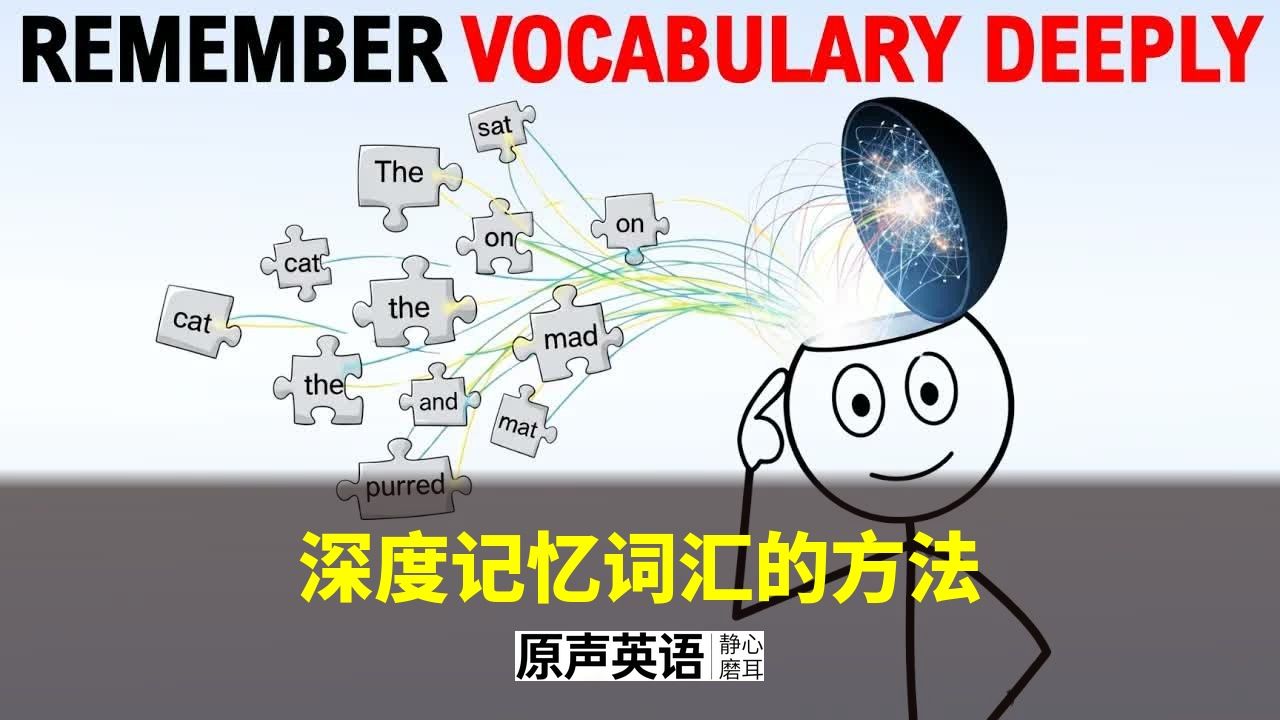
字幕摘录
| 时间 | 英文 | 中文 |
|---|---|---|
| 0:00 | Why do some people remember vocabulary so easily, while others forget everything the next day? | 为什么有些人那么容易记得词汇,而其他人则在第二天忘记了一切? |
| 0:06 | You study, you repeat, you review, but still, the words disappear. | 你学习,重复,你回顾, 但是,字消失了。 |
| 0:12 | Now here's something interesting. | 现在有件事很有趣 |
| 0:14 | Many successful learners don't try to memorize words at all. | 许多成功的学习者完全不试图记住文字. |
| 0:18 | Instead, they use a completely different method. | 相反,它们采用了完全不同的方法。 |
| 0:21 | And today, I'll show you that method. | 今天,我给你看那个方法。 |
| 0:23 | The real problem? | 真正的问题? |
| 0:25 | Most people learn vocabulary like this. | 大多数人学习这样的词汇. |
| 0:28 | They write a word, they translate it, they repeat it again and again. | 他们写一个词,翻译,反复重复. |
| 0:33 | But the result? | 但结果呢? |
展开字幕全文(79 条)
| 序号 | 英文 | 中文 |
|---|---|---|
| 1 | Why do some people remember vocabulary so easily, while others forget everything the next day? | 为什么有些人那么容易记得词汇,而其他人则在第二天忘记了一切? |
| 2 | You study, you repeat, you review, but still, the words disappear. | 你学习,重复,你回顾, 但是,字消失了。 |
| 3 | Now here's something interesting. | 现在有件事很有趣 |
| 4 | Many successful learners don't try to memorize words at all. | 许多成功的学习者完全不试图记住文字. |
| 5 | Instead, they use a completely different method. | 相反,它们采用了完全不同的方法。 |
| 6 | And today, I'll show you that method. | 今天,我给你看那个方法。 |
| 7 | The real problem? | 真正的问题? |
| 8 | Most people learn vocabulary like this. | 大多数人学习这样的词汇. |
| 9 | They write a word, they translate it, they repeat it again and again. | 他们写一个词,翻译,反复重复. |
| 10 | But the result? | 但结果呢? |
| 11 | You remember today, and forget tomorrow. | 你记得今天,忘记明天。 |
| 12 | Why? | 为什么? |
| 13 | Because your brain doesn't store isolated information well. | 因为你的大脑不存储 孤立的信息。 |
| 14 | Your brain remembers meaning, not random words. | 你的大脑记得意思,不是随意的字。 |
| 15 | The truth about memory. | 关于记忆的真相. |
| 16 | Here's the key idea. | 这是关键的想法。 |
| 17 | Memory is not about repetition. | 记忆与重复无关。 |
| 18 | Memory is about connection. | 记忆是连接。 |
| 19 | The more connections a word has, the stronger it becomes in your brain. | 一个词的联系越多,它就越在你的大脑里变得强大. |
| 20 | Think about it. | 考虑一下 |
| 21 | Do you remember random numbers easily? | 你很容易记得随机数字吗? |
| 22 | No. | 没有 |
| 23 | But you remember. | 但你记得 |
| 24 | Stories. | 故事 故事 故事 故事 |
| 25 | Emotions. | 情绪。 |
| 26 | Personal experiences. | 个人经历. |
| 27 | That's how real memory works. | 真实记忆就是这样运作的. |
| 28 | The deep memory method. | 深记法. |
| 29 | This method has three simple steps. | 这种方法有三个简单的步骤. |
| 30 | Step 1. | 步骤1。 |
| 31 | Learn words in context. | 在上下文中学习词语. |
| 32 | Never learn a word alone. | 永不独学一字. |
| 33 | Don't learn. | 别学. |
| 34 | Decision equals a choice. | 决定等于选择。 |
| 35 | Learn. | 学. |
| 36 | I made a big decision yesterday. | 我昨天做了个大决定 |
| 37 | Now the word has meaning, structure, and emotion. | 现在这个词具有意义,结构,和情感. |
| 38 | Step 2. | 步骤2。 |
| 39 | Personalize the word. | 个性化字. |
| 40 | Make it about you. | 说说你吧 |
| 41 | Ask yourself, when did I make a decision? | 问问你自己 我什么时候决定的? |
| 42 | What decision changed my life? | 什么决定改变了我的生活? |
| 43 | Then say, I made a difficult decision last year. | 那说去年我做了个艰难的决定 |
| 44 | When a word connects to your life, it becomes unforgettable. | 当一个词连接到你的生活, 它变得难忘。 |
| 45 | Step 3. | 步骤3。 |
| 46 | Use the word immediately. | 即时用字. |
| 47 | Don't wait. | 别等了 |
| 48 | Use it right now. | 现在就用 |
| 49 | Speak it. | 说吧 |
| 50 | Write it. | 写作. |
| 51 | Repeat it in different ways. | 复说种种法. |
| 52 | Example. | 实例。 |
| 53 | I made a bad decision. | 我做了一个不好的决定。 |
| 54 | I made a smart decision. | 我做了一个明智的决定。 |
| 55 | I'm making a decision now. | 我现在在做决定 |
| 56 | The more you use it, the deeper it stays. | 你用得越多 就越深 |
| 57 | Why this method works. | 为甚么此法行. |
| 58 | This method works because it uses | 这种方法有效,因为它使用 |
| 59 | context, how the word is used, | 上下文,这个词是如何使用的, |
| 60 | emotion, your personal connection, | 情感,你的个人联系, |
| 61 | action, real usage. | 动作,真正的使用。 |
| 62 | This activates multiple parts of your brain. | 这能激活大脑的多个部分 |
| 63 | And that's why you don't just remember the word. | 故不只记字. |
| 64 | You own the word. | 你拥有这个字。 |
| 65 | Common mistake. | 常见的错误。 |
| 66 | Most learners chase quantity. | 多数学习者追逐数量. |
| 67 | Ten new words a day. | 每日十种新语. |
| 68 | One hundred words a week. | 礼拜一百言. |
| 69 | But more words is not equal to better memory. | 但是,更多的文字并不等于更好的记忆. |
| 70 | Fewer words plus deeper learning equals real progress. | 字数少加上更深的学习等于真正的进步. |
| 71 | So remember, don't try to memorize vocabulary. | 所以记住,不要试图记住词汇。 |
| 72 | Try to experience vocabulary. | 尝试体验词汇. |
| 73 | Because you don't remember words by repeating them. | 因为你重复的话就不记得了 |
| 74 | You remember them by using them in your life. | 你用它来记住他们 |
| 75 | If this video helped you, like it, share it, | 如果这段视频有助于你,喜欢它,分享它, |
| 76 | and subscribe for more simple English lessons. | 并订阅更简单的英语课程。 |
| 77 | Keep listening. | 继续听 |
| 78 | Keep growing. | 继续增长. |
| 79 | And I'll see you in the next video. | 下部影片见. |
该视频共有字幕 79 条。解锁更多字幕为会员功能,请移动到 价格