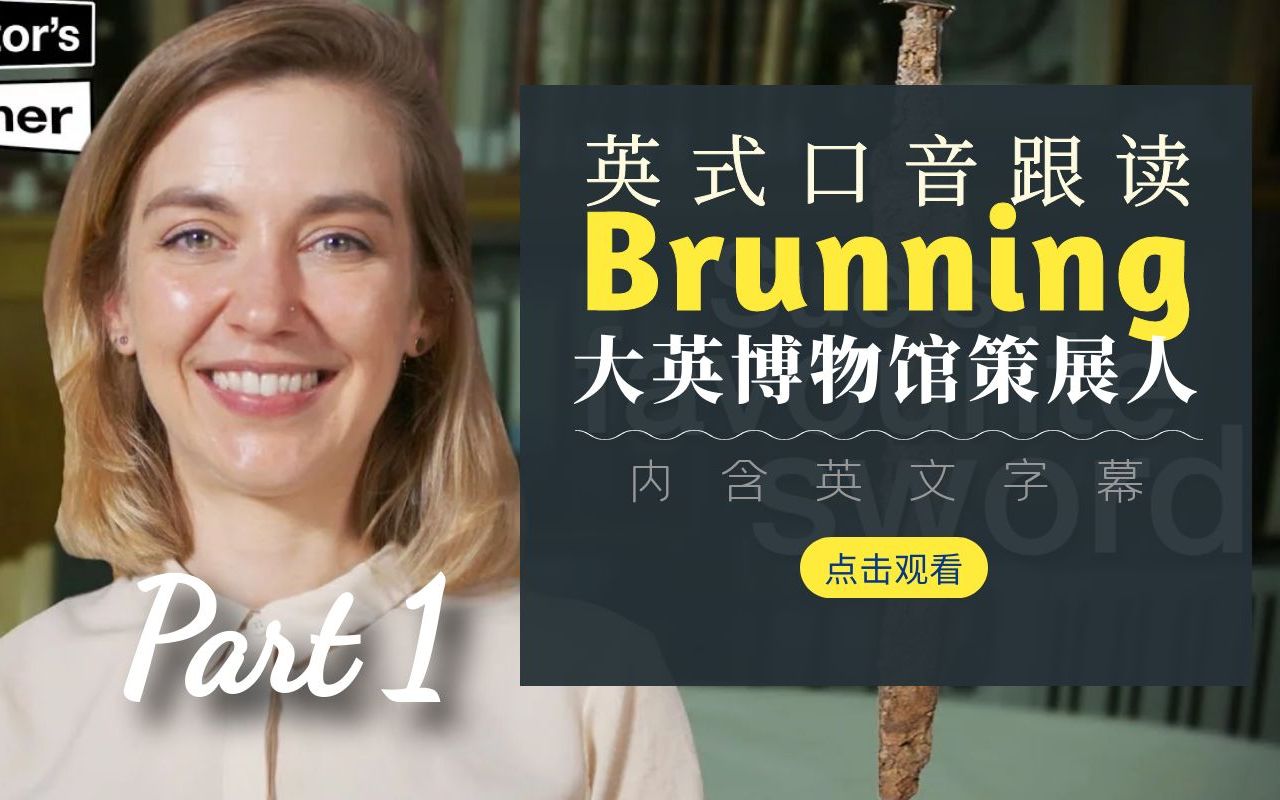
英式口音有多好听!每日英音跟读:大英博物馆-策展人的角落(古
字幕摘录
| 时间 | 英文 | 中文 |
|---|---|---|
| 0:23 | One of these swords is my absolute favourite sword in any museum anywhere in the world. | 其中一把剑是我最喜欢的剑 在世界上任何地方的博物馆里 |
| 0:28 | I'm Sue Brunning, I'm curator of the European Early Medieval Collections, and this is my corner. | 我是苏布伦宁,欧洲早期中世纪收藏馆馆长,这是我的角落. |
| 0:38 | So today I'm going to talk to you about my favourite artefacts in the museum, which are early Anglo-Saxon swords. | 今天我要和你们谈谈我最喜欢的 博物馆里的艺术品, 那是早期的盎格鲁-撒克逊剑。 |
| 0:44 | So I've got three swords here to talk to you about. | 所以我有三把剑要跟你说 |
| 0:47 | They all come from the 6th to early 7th century, so this is the Anglo-Saxon period in Britain. | 它们都来自6世纪到7世纪早期,所以这是英国的盎格鲁-撒克逊时期. |
| 0:53 | In the early Anglo-Saxon period, swords were really the only weapon that was made and used exclusively for warfare. | 在盎格鲁-撒克逊早期,剑是真正唯一制造并专门用于战争的武器. |
| 1:01 | So spears could be used for hunting, for instance, same with arrows, and axes were kind of related conceptually also to tools, | 因此,矛可以用来狩猎, 例如,与箭一样, 斧头在概念上也与工具有关, |
| 1:08 | whereas swords were the only weapon that were basically made for killing other human beings. | 而剑是唯一可以杀死其他人的武器。 |
| 1:13 | Swords were also the most prestigious weapon, most prestigious type of fighting implement for the early Anglo-Saxons, | 剑也是早期盎格鲁-撒克逊人最有声望的武器,最有声望的战斗类型, |
| 1:21 | and we see this in the art and literature from the time, but we also see it in particular from the archaeology, which is what I'm particularly interested in. | 我们从当时的艺术和文献中看到这一点, 但我们也特别从考古学中看到这一点, 这就是我特别感兴趣的。 |
展开字幕全文(39 条)
| 序号 | 英文 | 中文 |
|---|---|---|
| 1 | One of these swords is my absolute favourite sword in any museum anywhere in the world. | 其中一把剑是我最喜欢的剑 在世界上任何地方的博物馆里 |
| 2 | I'm Sue Brunning, I'm curator of the European Early Medieval Collections, and this is my corner. | 我是苏布伦宁,欧洲早期中世纪收藏馆馆长,这是我的角落. |
| 3 | So today I'm going to talk to you about my favourite artefacts in the museum, which are early Anglo-Saxon swords. | 今天我要和你们谈谈我最喜欢的 博物馆里的艺术品, 那是早期的盎格鲁-撒克逊剑。 |
| 4 | So I've got three swords here to talk to you about. | 所以我有三把剑要跟你说 |
| 5 | They all come from the 6th to early 7th century, so this is the Anglo-Saxon period in Britain. | 它们都来自6世纪到7世纪早期,所以这是英国的盎格鲁-撒克逊时期. |
| 6 | In the early Anglo-Saxon period, swords were really the only weapon that was made and used exclusively for warfare. | 在盎格鲁-撒克逊早期,剑是真正唯一制造并专门用于战争的武器. |
| 7 | So spears could be used for hunting, for instance, same with arrows, and axes were kind of related conceptually also to tools, | 因此,矛可以用来狩猎, 例如,与箭一样, 斧头在概念上也与工具有关, |
| 8 | whereas swords were the only weapon that were basically made for killing other human beings. | 而剑是唯一可以杀死其他人的武器。 |
| 9 | Swords were also the most prestigious weapon, most prestigious type of fighting implement for the early Anglo-Saxons, | 剑也是早期盎格鲁-撒克逊人最有声望的武器,最有声望的战斗类型, |
| 10 | and we see this in the art and literature from the time, but we also see it in particular from the archaeology, which is what I'm particularly interested in. | 我们从当时的艺术和文献中看到这一点, 但我们也特别从考古学中看到这一点, 这就是我特别感兴趣的。 |
| 11 | So, for example, during this period when these swords were made in the 6th and 7th centuries, the Anglo-Saxons were burying their dead with grave goods, | 例如,在6世纪和7世纪的这段时期 盎格鲁-撒克逊人用坟品埋葬他们的死者 |
| 12 | and that meant that the dead person was placed inside the ground surrounded by an array of artefacts. | 这意味着死者被埋在地里 周围是一系列文物 |
| 13 | We find with swords that they're often buried very close to the body. | 我们用剑发现他们经常被埋在离尸体非常近的地方. |
| 14 | Sometimes they're overlaying part of the body, like the arm and the shoulder, | 有时它们会覆盖身体的一部分 就像手臂和肩膀 |
| 15 | and sometimes they're actually cradled into the arm as if they're sort of being hugged like a really beloved possession. | 有时它们被摇到手臂上 就像被拥抱一样 |
| 16 | So we have this closeness between the dead person and the sword, | 因此,我们有这种接近 死者与剑, |
| 17 | and I think that's because swords were particularly important to that dead person's identity. | 我想这是因为剑对死者的身份来说特别重要 |
| 18 | They said something about the person that was in the grave. | 他们提到坟墓里的人 |
| 19 | One of these swords is my absolute favourite sword in any museum anywhere in the world. | 其中一把剑是我最喜欢的剑 在世界上任何地方的博物馆里 |
| 20 | I'm Sue Brunning, I'm curator of the European Early Medieval Collections, and this is my corner. | 我是苏布伦宁,欧洲早期中世纪收藏馆馆长,这是我的角落. |
| 21 | So today I'm going to talk to you about my favourite artefacts in the museum, which are early Anglo-Saxon swords. | 今天我要和你们谈谈我最喜欢的 博物馆里的艺术品, 那是早期的盎格鲁-撒克逊剑。 |
| 22 | So I've got three swords here to talk to you about. | 所以我有三把剑要跟你说 |
| 23 | They all come from the 6th to early 7th century, so this is the Anglo-Saxon period in Britain. | 它们都来自6世纪到7世纪早期,所以这是英国的盎格鲁-撒克逊时期. |
| 24 | In the early Anglo-Saxon period, swords were really the only weapon that was made and used exclusively for warfare. | 在盎格鲁-撒克逊早期,剑是真正唯一制造并专门用于战争的武器. |
| 25 | So spears could be used for hunting, for instance, same with arrows, | 因此,矛可以用来狩猎, 例如,同样与箭, |
| 26 | and axes were kind of related conceptually also to tools, | 斧头在概念上也与工具有关, |
| 27 | whereas swords were the only weapon that were basically made for killing other human beings. | 而剑是唯一可以杀死其他人的武器。 |
| 28 | Swords were also the most prestigious weapon, most prestigious type of fighting implement for the early Anglo-Saxons, | 剑也是早期盎格鲁-撒克逊人最有声望的武器,最有声望的战斗类型, |
| 29 | and we see this in the art and literature from the time, | 我们在艺术和文学中看到这一点 从那时起, |
| 30 | but we also see it in particular from the archaeology, which is what I'm particularly interested in. | 但我们也特别从考古学中看到它, 这就是我特别感兴趣的。 |
| 31 | So for example, during this period when these swords were made in the 6th and 7th centuries, | 例如,在6世纪和7世纪这些剑的时期, |
| 32 | the Anglo-Saxons were burying their dead with grave goods, | 盎格鲁-撒克逊人用坟墓将死者埋葬, |
| 33 | and that meant that the dead person was placed inside the ground surrounded by an array of artefacts. | 这意味着死者被埋在地里 周围是一系列文物 |
| 34 | We find with swords that they're often buried very close to the body. | 我们用剑发现他们经常被埋在离尸体非常近的地方. |
| 35 | Sometimes they're overlaying part of the body, like the arm and the shoulder, | 有时它们会覆盖身体的一部分 就像手臂和肩膀 |
| 36 | and sometimes they're actually cradled into the arm as if they're sort of being hugged like a really beloved possession. | 有时它们被摇到手臂上 就像被拥抱一样 |
| 37 | So we have this closeness between the dead person and the sword, | 因此,我们有这种接近 死者与剑, |
| 38 | and I think that's because swords were particularly important to that dead person's identity. | 我想这是因为剑对死者的身份来说特别重要 |
| 39 | They said something about the person that was in the grave. | 他们提到坟墓里的人 |
该视频共有字幕 39 条。解锁更多字幕为会员功能,请移动到 价格