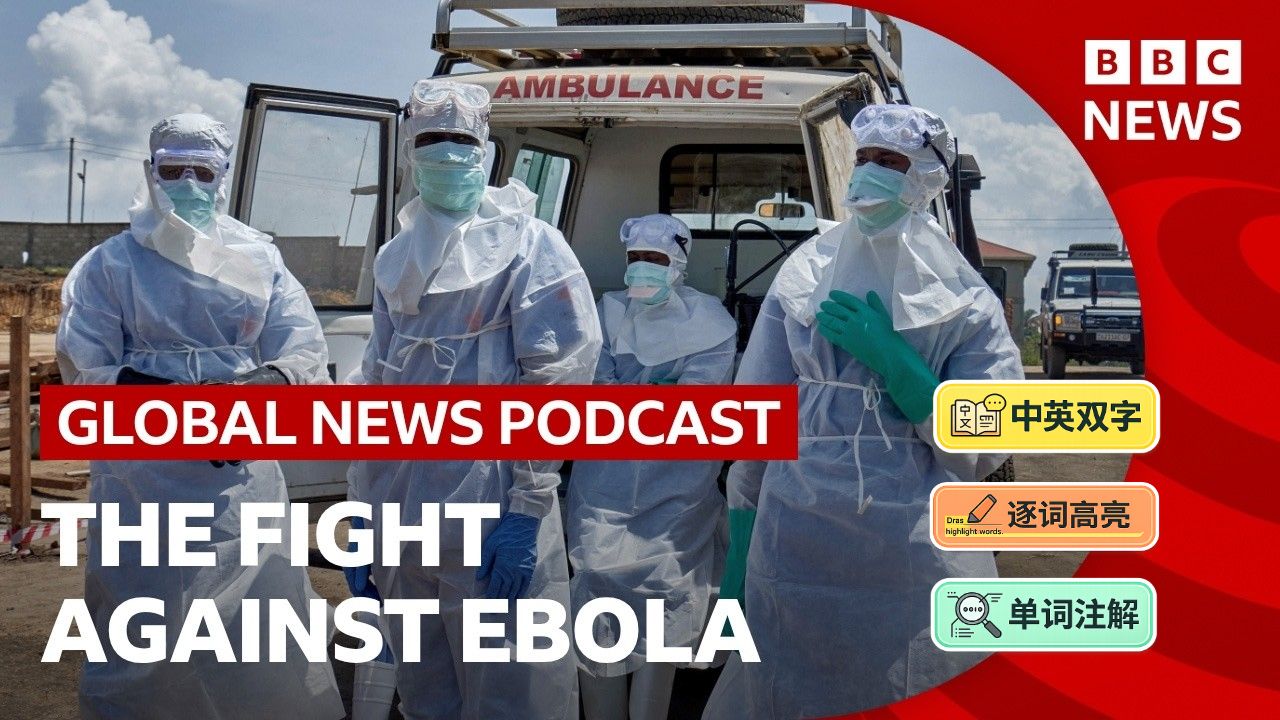
6-17 在刚果抗击埃博拉疫情的第一线 | BBC全球新闻播
字幕摘录
| 时间 | 英文 | 中文 |
|---|---|---|
| 0:00 | Welcome to the Global News podcast from the BBC. | 欢迎来到英国广播公司的全球新闻播客。 |
| 0:03 | 我是Jonat Jaleel 我加入我们的行列 | |
| 0:05 | correspondent Anne Soy, who's been on the front line in the fight against Ebola in the | 记者Anne Soy,他一直在前线 与埃博拉做斗争 |
| 0:10 | Democratic Republic of Congo. | 刚果民主共和国。 |
| 0:12 | And Anne, tell us what you've seen. | 还有安妮 告诉我们你见过什么 |
| 0:15 | I have been to the epicenter of this outbreak of Ebola, which so far is the third largest in | 我去过这场埃博拉疫情的发源地 目前为止是第三大 |
| 0:21 | history on record. | 历史记载. |
| 0:23 | And that is the that is Bunia in the northeast province of Ituri. | 这就是伊图里东北部省的布尼亚。 |
| 0:28 | And then | 礛 |
| 0:29 | 另有两个城镇,Rwampara,离布尼亚约15、20分钟,Mungwalu, |
展开字幕全文(204 条)
| 序号 | 英文 | 中文 |
|---|---|---|
| 1 | Welcome to the Global News podcast from the BBC. | 欢迎来到英国广播公司的全球新闻播客。 |
| 2 | 我是Jonat Jaleel 我加入我们的行列 | |
| 3 | correspondent Anne Soy, who's been on the front line in the fight against Ebola in the | 记者Anne Soy,他一直在前线 与埃博拉做斗争 |
| 4 | Democratic Republic of Congo. | 刚果民主共和国。 |
| 5 | And Anne, tell us what you've seen. | 还有安妮 告诉我们你见过什么 |
| 6 | I have been to the epicenter of this outbreak of Ebola, which so far is the third largest in | 我去过这场埃博拉疫情的发源地 目前为止是第三大 |
| 7 | history on record. | 历史记载. |
| 8 | And that is the that is Bunia in the northeast province of Ituri. | 这就是伊图里东北部省的布尼亚。 |
| 9 | And then | 礛 |
| 10 | 另有两个城镇,Rwampara,离布尼亚约15、20分钟,Mungwalu, | |
| 11 | which is quite remote, surrounded by a forest. | 它很遥远,被森林包围 |
| 12 | It's a mining town without a tarmac, no paved roads. | 是一个矿镇,没有柏油路,没有铺路. |
| 13 | And it is believed that this is where the outbreak started. | 据信,这是爆发的开始。 |
| 14 | But the teams, the response teams, | 但是,团队,反应团队, |
| 15 | scientists are still trying to trace the first patient, patient zero, to try and figure out where | 科学家仍然试图追踪第一个病人,病人0, 试图找出在哪里 |
| 16 | this started. | 这开始。 |
| 17 | So I have been to those three hotspots. | 我去过这三个热点 |
| 18 | And what I saw is a community in shock, | 我所看到的是一个受惊的社区, |
| 19 | just cramming to terms with this outbreak that was simmering for weeks, if not months, | 刚刚挤在条件 这场爆发 燃烧几个星期,如果不是几个月, |
| 20 | before they discovered it. | 在他们发现之前 |
| 21 | And when they discovered it, families had lost their loved ones. | 而当他们发现了它, 家庭失去了他们的亲人。 |
| 22 | I spoke to a man at the cemetery in Bunia, who said that he buried his mother the day before | 我与布尼亚墓地的一位男子交谈,他说前一天埋葬了他的母亲。 |
| 23 | he had come back to bury, or rather he buried his father the day before. | 他回来埋葬, 或者说,他埋葬了他的父亲前一天。 |
| 24 | He had come back to bury | 他回来埋了 |
| 25 | his mother. | 他的母亲。 |
| 26 | He had already lost three sisters. | 他已经失去了三个姐妹。 |
| 27 | And two more sisters were in hospital with Ebola. | 还有两个姐妹在医院里和埃博拉在一起 |
| 28 | And he was just devastated. | 他只是伤心欲绝 |
| 29 | And throughout that interview, he kept saying Ebola is real. | 在整个采访中,他一直说埃博拉是真实的。 |
| 30 | People | 人员 |
| 31 | need to know that Ebola is real. | 需要知道埃博拉是真实的。 |
| 32 | He was really shaken. | 他被吓坏了。 |
| 33 | And that is because at the beginning of | 那是因为一开始 |
| 34 | this outbreak, there was a lot of resistance from parts of the community. | 这场暴发, 有许多来自社区部分的抵抗。 |
| 35 | Some were not believing | 有些人不认为 |
| 36 | the message of Ebola. | 埃博拉的讯息。 |
| 37 | There were myths, myths about how it came about. | 有神话,神话 关于它是如何来的。 |
| 38 | Some thought it was | 有人觉得是 |
| 39 | poisoning. | 毒药 |
| 40 | Others thought it was witchcraft. | 其他人认为这是巫术。 |
| 41 | And that is what helped it to spread. | 这就是它传播的原因。 |
| 42 | So there are all kinds of questions we need to unpack here. | 所以我们需要在这里解开各种各样的问题。 |
| 43 | First of all, why are people so | 首先,为什么人们是这样 |
| 44 | suspicious? | 可疑? |
| 45 | What's the background to this? | 这有什么背景? |
| 46 | We were told of a story about this young man | 我们听说了一个关于这个年轻人的故事 |
| 47 | who died in the capital, Bunia. | 他死于首都布尼亚。 |
| 48 | And his family transported his body in a coffin | 他的家人把他的尸体装进棺材里 |
| 49 | to Mongbualu, that remote mining town without paved roads. | 到蒙布阿卢,那个没有铺路的偏远矿区 |
| 50 | And the road is very bumpy. | 这条路很颠簸 |
| 51 | And I | 还有我 |
| 52 | saw the lorries that people use in convoys to travel there, convoys because of insecurity. | 看到人们在车队中用来旅行的卡车,车队,因为不安全。 |
| 53 | And because of the bumpy road and its people and luggage in lorries, the coffin broke. | 并且由于道路崎岖,车厢里的人和行李,棺材破碎. |
| 54 | And when the | 当 |
| 55 | coffin broke, they just took his body and buried it. | 棺材破了,他们就把他的尸体埋了 |
| 56 | And then they burned that coffin. | 然后他们烧了棺材 |
| 57 | It is thought | 这是思想 |
| 58 | that this was one of the first mass infection events. | 这是第一次大规模感染事件 |
| 59 | Because after that funeral, many of the | 因为葬礼之后,很多 |
| 60 | people who were telling the funeral caught Ebola and died. | 那些告诉葬礼的人 抓住了埃博拉,死了。 |
| 61 | And people then came up with this rumor | 然后人们想出了这个谣言 |
| 62 | that it is the coffin curse. | 这是棺材诅咒。 |
| 63 | The ancestors were not happy because they burned the coffin. | 祖先因为烧棺材不高兴. |
| 64 | And they had come back to punish them for burning that coffin. | 他们回来惩罚他们烧棺材 |
| 65 | And so they were using stories like | 所以他们用的故事像 |
| 66 | these to explain it away while Ebola was spreading. | 这些是用来解释埃博拉病毒传播时的 |
| 67 | Ebola is most infectious when a person who has | 埃博拉病毒最有感染性 当一个人有 |
| 68 | contracted it has died. | 合同已经失效了 |
| 69 | And funerals in this part of the world involve a lot of contact, | 在这个地方的葬礼 涉及到很多接触, |
| 70 | washing of the body as a show of love to the departed. | 把尸体洗掉 以示对死者的爱 |
| 71 | They escorting them on a journey to | 他们护送他们去 |
| 72 | the next life. | 来世 |
| 73 | And so people come and touch the body as they are mourning to wash that body | 所以人们来抚摸身体 当他们哀悼去洗身体 |
| 74 | communally. | 在社区。 |
| 75 | And that is exactly how Ebola spreads. | 这正是埃博拉传播的方式。 |
| 76 | And Anne, historically there has been suspicion of | 还有安妮 历史上一直怀疑 |
| 77 | aid organizations, medical professionals that come in from outside Africa. | 来自非洲以外的援助组织、医疗专业人员。 |
| 78 | But you, while you were | 但你,当你是 |
| 79 | in the epicenter of this outbreak, met a patient who got Ebola but then fully recovered. | 在这场疫情的震中,遇见了一个感染了埃博拉病毒但随后完全康复的病人. |
| 80 | And he | 还有他 |
| 81 | had a message that he wanted to send out to other people who might be caught up by this. | 他有一个信息,他想要 向其他人发送 谁可能陷入这个。 |
| 82 | He did. | 没错 |
| 83 | That was Daniel Kalambata. | 那是丹尼尔·卡兰巴塔 |
| 84 | And he was so happy to recover from Ebola. | 他很高兴能从埃博拉病毒中恢复过来。 |
| 85 | And when he came out, | 当他出来时, |
| 86 | I asked him how he was feeling. | 我问他感觉如何 |
| 87 | And he said that he was very happy and relieved that he had recovered. | 他说,他非常高兴,并感到欣慰,他已经康复。 |
| 88 | The hospital director told me that he was also happy. | 医院院长告诉我,他也很开心。 |
| 89 | One, because it was such a moral boost | 其一,因为它是如此的道德刺激 |
| 90 | for his staff. | 为他的手杖。 |
| 91 | They had lost five medics in that hospital. | 他们在医院里失去了5名医生。 |
| 92 | And then two, because once he goes back | 第二,因为一旦他回去 |
| 93 | to his community, people can see that when they come to the Ebola treatment centers, they can | 人们可以看到,当他们来到埃博拉治疗中心时, |
| 94 | recover. | 没事了 |
| 95 | They can get cured and go back to their community. | 他们可以治愈,回到自己的社区。 |
| 96 | One of the rumors that had been | 谣言之一曾经是 |
| 97 | circulating previously, because partly based on fact, when people came to the Ebola treatment | 以前,因为部分基于事实,人们来到埃博拉治疗 |
| 98 | units, many of them died. | 单位,他们中许多人死亡。 |
| 99 | And this was only the second person in that community to recover. | 这仅仅是那个社区中第二个康复的人。 |
| 100 | So it was changing that narrative. | 所以它正在改变这个叙述。 |
| 101 | And that is why it is so important. | 这就是为什么它如此重要。 |
| 102 | And the health care | 还有医疗 |
| 103 | workers came out escorting him with song and dance because of that. | 工人们出来护送他 歌舞,因为。 |
| 104 | That is really a great story to hear amid all this pain and suffering. | 在所有这些痛苦和苦难中听到这个故事确实非常棒。 |
| 105 | And the medical | 还有医疗 |
| 106 | professionals treating these patients are also taking other measures to try to | 治疗这些病人的专业人员也正在采取其他措施,试图 |
| 107 | inspire confidence. | 激发信心。 |
| 108 | For instance, having glass windows in isolation units so relatives can see | 例如,在隔离单元中设有玻璃窗,使亲属能看到 |
| 109 | what is happening. | 发生了什么事。 |
| 110 | That is right. | 没错 |
| 111 | This glass window that you are talking about is in one of | 你说的这个玻璃窗就在一个 |
| 112 | the Ebola treatment units. | 埃博拉治疗单位。 |
| 113 | They have over time tried to modify how they care for patients of Ebola | 他们逐渐尝试改变如何照顾埃博拉病人 |
| 114 | to keep health care workers safe, because usually they are the group that is most at risk, | 保持保健工作者的安全,因为他们通常是风险最大的群体, |
| 115 | because they are in contact with the patients. | 因为他们和病人有联系 |
| 116 | They are touching the patients' | 他们正在接触病人 |
| 117 | fluids. | 液体。 |
| 118 | And those are the agents of infection. | 这些是感染的药剂。 |
| 119 | So they have created these wards that are typical | 所以他们创造了典型的病房 |
| 120 | wards. | 医院。 |
| 121 | But then on the outside, they have large windows, like the glass window that you have | 但是在外边 他们有大窗户 就像你的玻璃窗 |
| 122 | in banks, where tellers sit behind a desk and you talk to them through some glass. | 在银行里,出纳员坐在桌子后面 你通过玻璃跟他们说 |
| 123 | So something like that. | 类似的东西。 |
| 124 | So families can come and visit them and see them and talk to them. | 故诸家可来访之,见之而与之. |
| 125 | So they are humanising the patients. | 因此,他们正在人性化病人。 |
| 126 | Previously, it was not possible to do that because the | 以前,不可能这样做,因为 |
| 127 | patients needed to be under isolation. | 病人需要被隔离。 |
| 128 | They are infectious and they did not think it was | 他们有感染性 他们认为不是 |
| 129 | safe for families to come and see them. | 安全地让家人来看他们 |
| 130 | And that made it very difficult for families to process | 这使得家庭很难处理 |
| 131 | all this. | 所有这一切。 |
| 132 | Once their patients went to hospital, they never got to see them. | 他们的病人一进医院 就再也见不到他们了 |
| 133 | And if they did not | 如果他们没有 |
| 134 | make it, they even did not get to see the bodies to confirm that their relatives have died. | 他们甚至没有看到尸体 证实他们的亲属已经死亡。 |
| 135 | And | 还有 |
| 136 | that made it very difficult during previous outbreaks. | 这使得它非常困难 在之前的爆发。 |
| 137 | Anne, as you say, it took weeks, | 安妮,正如你说的, 花了几个星期, |
| 138 | possibly even months, before this latest Ebola outbreak was detected. | 在埃博拉最新疫情被检测到之前 甚至几个月 |
| 139 | Why did it take so long? | 为什么这么长时间? |
| 140 | Is it partly down to the Trump administration's severe cuts of international aid? | 部分原因是否是特朗普政府严重削减国际援助?. |
| 141 | American funding has played a big role for decades across the African continent, | 几十年来,美国的资助在整个非洲大陆发挥了重要作用, |
| 142 | supporting health care, supporting response to outbreaks of disease, supporting epidemics. | 支持保健,支持应对疾病爆发,支持流行病。 |
| 143 | For example, HIV and AIDS, for a long time, USAID was supporting that in a very big way. | 例如,长期以来,美援署一直大力支持艾滋病毒和艾滋病。 |
| 144 | I reported that earlier in my career. | 我职业生涯早些时候就报告了这一点。 |
| 145 | I was reporting on HIV for seven years and I saw the | 我七年来一直在报告艾滋病毒,我看到了 |
| 146 | difference antiretroviral treatment brought, even to alleviate stigma. | 提供不同的抗逆转录病毒治疗,甚至减轻耻辱感。 |
| 147 | Because in my country, Kenya, | 因为在我国,肯尼亚, |
| 148 | it was called slim because people just became more and more emaciated and then they died because | 被称作"瘦子",因为人们只是变得 越来越发火,然后他们死了,因为 |
| 149 | there was no medication. | 没有药物。 |
| 150 | But when the treatment was discovered and funded by American money, | 但当治疗被发现 并由美国钱资助, |
| 151 | it gave people a dose of life and people living with HIV became productive. | 它为人们提供了一剂生命,感染艾滋病毒的人变得富有生产力。 |
| 152 | They could take care | 他们可以照顾 |
| 153 | of their families. | 他们的家人。 |
| 154 | So it had made a huge difference in the community. | 因此,它给社区带来了巨大的变化。 |
| 155 | And when it was suddenly cut, | 当它突然被切断时, |
| 156 | you can imagine the impact that it has had on communities across the continent. | 你可以想象它给整个大陆的社区带来什么影响。 |
| 157 | And so in a | 所以,在一个 |
| 158 | big way, the thinking now is that if it had continued, the systems would have been in a | 在很大程度上,现在的想法是,如果它继续下去,这些系统将处于 |
| 159 | position to detect this early. | 提前发现的位置 |
| 160 | The surveillance would have been able to pick it up earlier and | 监视器本来可以早点取到的 |
| 161 | they would have managed to control it. | 他们本可以控制它 |
| 162 | This is a country, the Democratic Republic of Congo, | 这是一个国家,刚果民主共和国, |
| 163 | that has dealt with, this is the 17th outbreak of Ebola. | 这是埃博拉第17次爆发 |
| 164 | They have the experience, they have | 他们有经验,他们有 |
| 165 | the know-how, they know how to deal with it. | 他们知道怎么应付 |
| 166 | But also, it is a country where people are very poor | 但是,这个国家的人民非常贫穷 |
| 167 | and that makes it very challenging. | 这使得它非常具有挑战性。 |
| 168 | And there is armed conflict. | 还有武装冲突。 |
| 169 | It's also a vast country. | 亦是广大国土. |
| 170 | And we've now got this warning from the Red Cross that this Ebola outbreak may not have even peaked | 我们现在从红十字会得到这个警告 这场埃博拉疫情甚至没有达到顶峰 |
| 171 | yet and it could last for a year. | 然而,它可能持续一年。 |
| 172 | That's right. | 没错 |
| 173 | Experts believe that they are behind the curve. | 专家认为它们位于曲线后方. |
| 174 | So what they mean is that the worst is yet to come. | 所以,他们的意思是,最糟糕的 还没有到来。 |
| 175 | But also, in a typical outbreak, | 但是,在典型的爆发中, |
| 176 | usually when the testing picks up, then more and more people are discovered to have the disease. | 通常当测试开始后,就会发现越来越多的人患有这种疾病. |
| 177 | So the numbers will go up, but it isn't necessarily a bad thing because it means that | 所以数字会上升 但不一定是坏事 因为这意味着 |
| 178 | many more infections are being detected and can be taken care of. | 更多的感染正在被检测出来,并且可以得到治疗。 |
| 179 | People can be referred for | 人可以参考 |
| 180 | treatment rather than continuing to spread it in the community. | 而不是继续在社区传播。 |
| 181 | So that is what the health care | 这就是医疗 |
| 182 | workers are saying, that for the next few weeks, the numbers will continue to rise before they get | 工人们在说 接下来的几周里 人数会继续上升 |
| 183 | to a point where they feel that their response is catching up and is bringing this under control. | 以至于他们觉得他们的反应正在赶上,正在控制。 |
| 184 | Anand, there have been a few cases outside Congo. | 阿南德,刚果境外发生了几起病例. |
| 185 | A question that a lot of people are asking is, | 很多人问的一个问题是, |
| 186 | could Ebola cause the next pandemic? | 埃博拉会引发下一次大流行吗? |
| 187 | The outbreak has been detected in the capital | 首都发现疫情 |
| 188 | of neighbouring Uganda. | 乌干达。 |
| 189 | Many of those cases having come from the epicentre | 其中许多案件来自震中 |
| 190 | here in the Democratic Republic of Congo in the northeast province of Ituri, which borders Uganda. | 在与乌干达接壤的伊图里省东北部的刚果民主共和国。 |
| 191 | And that's because when people were falling ill and they were not getting the care that they needed | 这是因为当人们生病了 他们没有得到他们需要的护理 |
| 192 | in their country, then they went to the next best place, which was Kampala. | 在他们的国家, 然后他们去了下一个最好的地方, 即坎帕拉。 |
| 193 | But that seems | 但看起来 |
| 194 | to be under control, the outbreak in Ebola, which really speaks to the ability of countries | 埃博拉病毒的爆发 真正证明了各国的能力 |
| 195 | to bring this under control when they catch it very early on. | 当他们很早就抓住它时 就能控制住它 |
| 196 | The World Health Organisation says | 世界卫生组织说: |
| 197 | that the neighbouring countries, that is Uganda, the countries that surround the Democratic Republic | 邻国,即乌干达、民主共和国周边国家 |
| 198 | of Congo, including South Sudan, because it borders Ituri province, the epicentre, are at high risk | 包括南苏丹在内的刚果,由于与伊图里省接壤,处于高风险之中 |
| 199 | of getting cases. | 处理案件。 |
| 200 | But in the countries beyond the region, the risk of infection is low. | 但在该区域以外国家,感染风险较低。 |
| 201 | Anne 谢谢你 | |
| 202 | That was Anne Soi. | 那是安妮苏 |
| 203 | And if you'd like to hear more from the Global News podcast, | 如果你想听听全球新闻播客的更多消息 |
| 204 | please click on the link below. | 请点击以下链接。 |
该视频共有字幕 204 条。解锁更多字幕为会员功能,请移动到 价格