全球气候治理忽略了哪些“中国智慧”?耶鲁历史学家认为是时候向
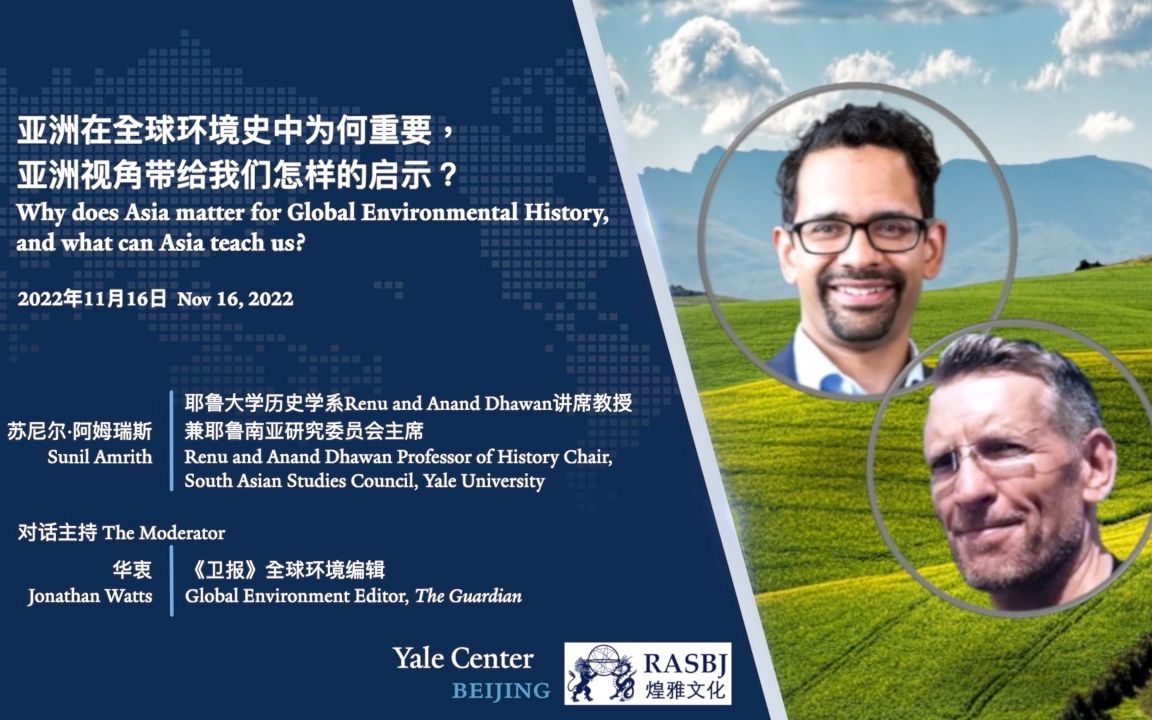
字幕摘录
| 时间 | 英文 | 中文 |
|---|---|---|
| 0:04 | Good day to everyone, wherever you are around the globe, | 日安,每个人, 无论你在全球, |
| 0:08 | and especially to our speaker, Professor Sunil Amrith, | 特别是发言者苏尼尔·阿姆里斯教授, |
| 0:13 | our moderator, Jonathan Watts, | 我们的主持人 乔纳森·瓦兹 |
| 0:16 | and co-host, Alan Babington Smith | 艾伦·巴宾顿·史密斯 |
| 0:18 | from the Royal Asiatic Society of Beijing, or RASBJ, | 来自北京皇家亚洲学会,或RASBJ, |
| 0:24 | with whom we have collaborated on other events as well, | 我们在其他事件中也与他合作, |
| 0:29 | featuring Yale faculty speakers. | 以耶鲁大学教师为主讲人。 |
| 0:31 | Welcome to this talk on why does Asia matter | 欢迎来到这个演讲 关于为什么亚洲很重要 |
| 0:36 | for global environmental history, | 全球环境史 |
| 0:39 | and what can Asia teach us, | 以及亚洲能教给我们什么 |
展开字幕全文(1374 条)
| 序号 | 英文 | 中文 |
|---|---|---|
| 1 | Good day to everyone, wherever you are around the globe, | 日安,每个人, 无论你在全球, |
| 2 | and especially to our speaker, Professor Sunil Amrith, | 特别是发言者苏尼尔·阿姆里斯教授, |
| 3 | our moderator, Jonathan Watts, | 我们的主持人 乔纳森·瓦兹 |
| 4 | and co-host, Alan Babington Smith | 艾伦·巴宾顿·史密斯 |
| 5 | from the Royal Asiatic Society of Beijing, or RASBJ, | 来自北京皇家亚洲学会,或RASBJ, |
| 6 | with whom we have collaborated on other events as well, | 我们在其他事件中也与他合作, |
| 7 | featuring Yale faculty speakers. | 以耶鲁大学教师为主讲人。 |
| 8 | Welcome to this talk on why does Asia matter | 欢迎来到这个演讲 关于为什么亚洲很重要 |
| 9 | for global environmental history, | 全球环境史 |
| 10 | and what can Asia teach us, | 以及亚洲能教给我们什么 |
| 11 | which is co-hosted by RASBJ and Yale Center Beijing. | 它由RASBJ和耶鲁中心北京联合主办. |
| 12 | I am Carol Lee Rafferty, | 我是卡罗尔·李·拉费蒂 |
| 13 | managing director of Yale Center Beijing, | 北京耶鲁中心总经理 |
| 14 | which is Yale University's only university-wide center | 这是耶鲁大学唯一的大学中心 |
| 15 | outside of its US campus. | 在美国校园外 |
| 16 | For those of you who might not be familiar with the center, | 你们中那些对中央不熟悉的人, |
| 17 | throughout a year, we host events like these | 一整年,我们举办这样的活动 |
| 18 | that convene thought leaders from academia, businesses, | 召集学术界、商界的思想领袖, |
| 19 | politics, arts, and sciences, | 政治、艺术和科学 |
| 20 | to discuss the most important questions facing our world. | 讨论我们世界面临的最重要的问题。 |
| 21 | Climate change is one of the most pressing challenges | 气候变化是最紧迫的挑战之一 |
| 22 | that humanity needs to tackle, | 人类需要应对, |
| 23 | and today's talk cannot be more timely and relevant, | 今天的谈话是及时的,是切题的, |
| 24 | as delegates from the public and private sector | 作为公共和私营部门的代表 |
| 25 | are meeting from around the world in Egypt for COP 27. | 将在埃及举行来自世界各地的缔约方会议。 |
| 26 | I am especially excited to hear more about climate change | 我特别兴奋地听到更多关于气候变化的消息 |
| 27 | from a distinctively Asian and a historical perspective | 从独特的亚洲和历史角度看 |
| 28 | from Yale professor Sunil Amrith, | 来自耶鲁教授苏尼尔·阿姆里斯, |
| 29 | whom we recently had the pleasure of hosting earlier | 我们最近有幸接待他 |
| 30 | this year when he spoke about his book, | 今年他谈到他的书时 |
| 31 | Crossing the Bay of Bengal. | 穿越孟加拉湾. |
| 32 | I am also delighted to welcome our co-host, | 我也高兴地欢迎我们的共同主办者, |
| 33 | Alan Badenton-Smith from RASBJ, | 艾伦・巴登顿・史密斯 来自RASBJ, |
| 34 | who will give a more thorough introduction | 将作更详尽的介绍 |
| 35 | on the topic and the moderator, | 关于这个专题和主持人, |
| 36 | and the Guardian's Jonathan Watts, our moderator, | 卫报主持人乔纳森·瓦兹 |
| 37 | who will introduce our speaker in more detail. | 他将更详细地介绍我们的发言者。 |
| 38 | In addition, I am thrilled that we have Yale alumni | 此外,我很高兴我们有耶鲁校友 |
| 39 | and young leaders from Yale Center Beijing's Smart Talks | 以及耶鲁中心的年轻领袖 北京的智能会谈 |
| 40 | on Climate Change program joining this talk | 参加这次演讲 |
| 41 | from around throughout China. | 来自中国各地 |
| 42 | Without further ado, let's welcome Alan Badenton-Smith | 不用多说了,欢迎艾伦·巴登顿-史密斯 |
| 43 | from RASBJ to provide a more detailed introduction | 提供更详细的导言 |
| 44 | about today's event. | 关于今天的活动。 |
| 45 | Thank you very much. | 谢谢 |
| 46 | Thank you, Carol. | 谢谢你,卡罗尔。 |
| 47 | And thank you very much Yale for co-hosting this event. | 非常感谢耶鲁共同主持这次活动. |
| 48 | I should mention that of the 100 odd people | 一百个怪人 |
| 49 | who have registered, it's split almost equally | 他们已经注册, 它几乎平分 |
| 50 | between members of the RASBJ in Beijing and elsewhere, | 在北京和其他地方的俄罗斯伊斯兰法院联盟成员之间, |
| 51 | our branches of RAS in Asia and in London, and Yale. | 我们RAS在亚洲、伦敦和耶鲁的分部 |
| 52 | So that's tremendous spread of participants. | 因此,这是巨大的参与者分布。 |
| 53 | And thank you all very much for coming along. | 非常感谢大家的光临。 |
| 54 | As Carol said, this is wonderfully topical. | 正如卡罗尔所说,这是非常热门的话题。 |
| 55 | You've all been following COP27, | 你们一直跟踪COP27, |
| 56 | but I haven't heard mentioned | 但我还没听说 |
| 57 | what we're gonna be talking about, | 我们将要谈论的, |
| 58 | which is the key question of can the world change its focus | 这是世界能否改变重点的关键问题 |
| 59 | from looking to sort of transatlantic climate change | 从寻找到某种跨大西洋气候变化 |
| 60 | to what is happening in Asia? | 在亚洲发生了什么? |
| 61 | Here we are in Asia. | 在这里,我们在亚洲。 |
| 62 | We are home to half the world's population, | 我们是世界人口的一半的家园, |
| 63 | how you define it. | 如何定义它。 |
| 64 | And it just isn't taken as a serious factor or consideration. | 它只是不是一个严肃的因素或考虑。 |
| 65 | So we're incredibly lucky to have two real experts | 所以我们非常幸运 有两位真正的专家 |
| 66 | talking about it and to add special flavor | 谈论它,并加入特殊的味道 |
| 67 | to Sunil's tremendous work on the Indian Ocean. | 苏尼尔在印度洋上所做的巨大工作 |
| 68 | It is a happy coincidence that Jonathan Watts, | 乔纳森·瓦兹是个巧合 |
| 69 | our moderator is based in central Brazil in the rainforest. | 我们的主持人 总部在巴西中部雨林。 |
| 70 | So if I may quickly introduce him | 如果我能迅速介绍一下他 |
| 71 | before he introduces Sunil, | 在他介绍苏尼尔之前, |
| 72 | Jonathan has been a global environmental journalist | 乔纳森是一位全球环境记者 |
| 73 | for as long as anyone can remember | 只要有人记得 |
| 74 | and has written a wonderful book about | 写了一本关于 |
| 75 | particularly the environmental impact of China | 特别是中国对环境的影响 |
| 76 | when he was here as a journalist | 他在这里当记者的时候 |
| 77 | who won a billion Chinese jump. | 他赢得了十亿中国人跳跃。 |
| 78 | And now he is based in the middle of the rainforest | 现在他住在雨林中央 |
| 79 | where with his wife he is producing amongst other things, | 他和他的妻子一起生产, |
| 80 | a wonderful new newsletter called Summa Uma, | 一份美妙的新通讯,叫苏玛·乌玛 |
| 81 | which not only deals with the physical destruction | 不仅涉及实际破坏 |
| 82 | of the rainforest. | 在雨林里, 雨林里, |
| 83 | And in passing, I might mention that under Bolsonaro, | 顺便提一下,博尔索纳罗 |
| 84 | Brazil has lost 4 billion trees with a B, | 巴西损失了40亿棵树的B, |
| 85 | billion, 4 billion trees. | 10亿,40亿棵树。 |
| 86 | But also the life of many of the indigenous peoples, | 但许多土著人民的生活, |
| 87 | particularly the Yanomami near him | 特别是他身边的 Yan美 |
| 88 | is under constant threat. | 不断受到威胁 |
| 89 | So John is very much in the middle | 所以约翰很在行 |
| 90 | of this hurricane of the global environmental destruction. | 这场飓风造成全球环境破坏。 |
| 91 | So John, may I leave you please to introduce Sunil? | 约翰,我可以请你介绍苏尼尔吗? |
| 92 | And before you do, can I just mention some house rules | 之前,我可以只提一些房子规则 |
| 93 | as it were for our talks? | 就像我们谈话一样? |
| 94 | First of all, this talk is recorded. | 首先,这次谈话被录下来了。 |
| 95 | Second, everyone will be muted except the speakers. | 第二,除发言者外,所有人都会沉默。 |
| 96 | And third, questions, | 第三,问题 |
| 97 | we hope we'll have lots of time for questions. | 我们希望我们有足够的时间来提问。 |
| 98 | Please post them on the chat function, | 请放在聊天功能上 |
| 99 | addressed to everyone. | 请大家注意 |
| 100 | And Jonathan and I will pick them up | 我和乔纳森去接他们 |
| 101 | and try to make sure that we are all answered. | 并尝试确保 我们所有人都得到答案。 |
| 102 | With that, John, over to you please. | 有了这个,约翰,请。 |
| 103 | Thank you very much indeed, Alan. | 非常感谢,艾伦 |
| 104 | And thank you, Carol. | 谢谢你,卡罗尔。 |
| 105 | It's a great pleasure to be here. | 极乐如来. |
| 106 | I guess some of the old timers in the audience | 我想是观众里的一些老家伙 |
| 107 | might remember me from my China days. | 也许记得我在中国的日子 |
| 108 | That was 10 years ago, unbelievably. | 那是十年前的事了 难以置信 |
| 109 | It was a really important time in my life. | 那是我生命中一个非常重要的时刻。 |
| 110 | And as well as from memories, | 以及从记忆, |
| 111 | it helped to shape my views about the environment, | 它帮助塑造了我对环境的看法, |
| 112 | about the global environment. | 全球环境。 |
| 113 | In fact, it's where I became an environment correspondent. | 事实上,这是我成为一名环境通讯员的地方。 |
| 114 | I sort of entered the country as someone interested | 我以有兴趣的人的身份进入这个国家 |
| 115 | in football and politics and economics | 足球、政治和经济领域 |
| 116 | and ended it as someone who was totally obsessed | 以一个完全痴迷的人的身份结束 |
| 117 | with the climate and what was happening to biodiversity. | 气候和生物多样性正在发生的情况。 |
| 118 | It was really in China that I started to see the environment | 正是在中国 我开始看到环境 |
| 119 | not as a separate subject, | 不是作为一个单独的主题, |
| 120 | but as a prism to see everything. | 但作为一棱镜来观察一切 |
| 121 | As you will all know, generally speaking, | 你们都知道,总的来说, |
| 122 | newspapers, especially 10 years ago, | 报纸,特别是十年前, |
| 123 | and certainly a lot now, | 肯定很多现在, |
| 124 | tend to put the environment in its own department. | 往往把环境放在自己的部门。 |
| 125 | Like in governments, you have the environment minister. | 就像政府一样,你有环境部长。 |
| 126 | But instead of, I've always argued, | 但我一直争吵 |
| 127 | well, since I went to China, | 自从我去了中国 |
| 128 | that instead of making a ghetto for the environment | 而不是为环境建造一个贫民窟 |
| 129 | as a separate subject, | 作为单独的课题, |
| 130 | it should be a subject that crosses all boundaries, | 应该是一个跨越所有边界的主体, |
| 131 | political boundaries and boundaries inside newspapers | 政治界限和报纸内部界限 |
| 132 | between departments and boundaries between departments | 部门之间的界限 |
| 133 | inside governments. | 政府内部。 |
| 134 | And so I have China to thank for that | 所以我要感谢中国 |
| 135 | and the insights that I gained there. | 还有我在那里获得的洞察力 |
| 136 | Because I really felt that East Asia, | 因为我真的觉得东亚, |
| 137 | but certainly China in particular was the frontline. | 但中国是第一线 |
| 138 | That may have changed. | 这可能已经改变了。 |
| 139 | And we'll hear from our guest speaker | 我们会听到我们的客座演讲 |
| 140 | who will introduce very shortly about whether, | 他将很快介绍, |
| 141 | maybe India is closer now. | 也许印度现在更接近了 |
| 142 | Just before I introduce Sonil properly, | 在我正式介绍索尼尔之前 |
| 143 | just a few numbers just to set the perspective. | 只是几个数字来设定视角。 |
| 144 | Yesterday was the day officially | 昨天是正式开始的一天 |
| 145 | that the world's population hit 8 billion, | 世界人口高达80亿, |
| 146 | which is a staggering number. | 这是一个惊人的数字。 |
| 147 | I mean, it was a billion, | 我的意思是,这是十亿, |
| 148 | less than a billion at the turn of the century. | 世纪之交不到十亿 |
| 149 | 50 years ago, it was 3.7 billion. | 50年前是37亿 |
| 150 | So we've doubled in 50 years. | 所以我们在50年里翻了一番。 |
| 151 | And of course, in that time, | 当然,在那段时间里 |
| 152 | we also recently heard that in that 50 years, | 我们最近还听说在这50年里 |
| 153 | 70% of the world's wild animals | 世界70%的野生动物 |
| 154 | have been wiped out. | 已经消灭。 |
| 155 | That doesn't mean made extinct. | 这并不意味着已经灭绝。 |
| 156 | It just means their populations reduced by 70% | 就是说他们的人口减少了70% |
| 157 | as ours more than doubled. | 作为我们的两倍多。 |
| 158 | And of course, where is humanity concentrated most? | 当然,人类集中在哪里? |
| 159 | In Asia of those 8 billion, | 在80亿的亚洲, |
| 160 | I think something about 4.5 billion or in Asia, | 我想大概是45亿 或者在亚洲 |
| 161 | mostly in China and India. | 主要分布于中国和印度. |
| 162 | But the environment is much more | 但环境要好得多 |
| 163 | than a population question. | 而不是人口问题。 |
| 164 | We can discuss that later, of course. | 当然,我们可以稍后再讨论这个问题。 |
| 165 | But it's one of the factors without a doubt. | 但它无疑是其中一个因素. |
| 166 | So I haven't been in Asia, as I said, for 10 years, | 所以我已经十年没去过亚洲了 |
| 167 | at least not for work. | 至少不是因为工作 |
| 168 | And so I will leave the expert analysis | 所以我离开专家分析 |
| 169 | to our great guest today, Sunil Amrith, | 给今天伟大的客人 苏尼尔·阿姆里斯 |
| 170 | who it's my great pleasure to be talking to | 我很高兴能和谁说话 |
| 171 | and to introduce. | 并介绍。 |
| 172 | Sunil is the Renu and Anand Dhawan. | 苏尼尔是雷努人和阿南德达万人. |
| 173 | Professor of history at Yale University. | 耶鲁大学历史系教授. |
| 174 | He's chair of the South Asian Studies Council, | 他是南亚研究会主席 |
| 175 | also at Yale University. | 也在耶鲁大学就读. |
| 176 | And he's an author of several books, | 他是几本书的作者 |
| 177 | all with an environmental theme, | 所有的环境主题, |
| 178 | at least all the ones that I've seen online. | 至少我在网上见过的所有的 |
| 179 | In 2013, he wrote a book about environment and migration, | 2013年,他写了一本关于环境与移民的书, |
| 180 | a book called Crossing the Bay of Bengal, | 一本名为"穿越孟加拉湾"的书, |
| 181 | the Furies of Nature and the Fortunes of Migrants. | 自然之怒和移民之福 |
| 182 | Then a few years ago, | 然后几年前, |
| 183 | he wrote another book called Unruly Waters, | 他又写了一本书,叫做《不鲁利·沃特斯》, |
| 184 | which is a focus on environmental history | 关注环境历史 |
| 185 | with a very strong, from an Indian in particular, | 一个非常强壮的印度人, |
| 186 | Asian more generally perspective, | 亚洲的视角, |
| 187 | that focuses on water and the monsoons | 以水和季风为重点 |
| 188 | and understanding the monsoons | 和了解季风 |
| 189 | and how to control the monsoons. | 如何控制季风 |
| 190 | We will discuss that, I hope, later. | 我希望稍后我们将讨论这个问题。 |
| 191 | And now he's working on another book, | 现在他正在写另一本书 |
| 192 | which will be called, I understand, Ruins of Freedom, | 我理解 自由的毁灭 |
| 193 | that should look on an even broader perspective. | 应该从更广泛的角度看问题。 |
| 194 | That's my understanding of it. | 这就是我的理解。 |
| 195 | But I will leave the man himself to tell you all about it. | 但我会让那个人亲自告诉你一切 |
| 196 | 今与尔同 pleasure,苏尼尔. | |
| 197 | All yours now. | 现在全归你了 |
| 198 | Thank you so much. | 非常感谢 |
| 199 | Huge thanks to Carol and to Alan for this invitation. | 非常感谢卡罗尔和艾伦的邀请 |
| 200 | I'm really excited to be here. | 我在这里真的很兴奋。 |
| 201 | And what a pleasure to be in conversation | 谈话的乐趣 |
| 202 | with Jonathan Watts, whose work has shaped my thinking | 与乔纳森·瓦茨, 他的作品塑造了我的想法 |
| 203 | and really sort of been pivotal | 并且真的有点关键 |
| 204 | to how I've thought about contemporary environmental | 我对当代环境的看法 |
| 205 | problems for the decade or so | 十年左右的问题 |
| 206 | since he's been in Beijing, if not longer. | 自从他去了北京,如果不是更长。 |
| 207 | So this is a pleasure. | 很高兴见到你 |
| 208 | I'll talk for about half an hour, | 我会谈大约半小时, |
| 209 | but I'm really looking forward to the part of this | 但我真的很期待 这部分 |
| 210 | where Jonathan and I get to talk to each other | 我和乔纳森可以互相交谈 |
| 211 | and also to involve all of you. | 还有你们所有人 |
| 212 | So something that Jonathan just said | 乔纳森刚才说的话 |
| 213 | is really central to my perspective. | 对我的观点很重要 |
| 214 | And that is to see the environment, | 这就是看到环境, |
| 215 | not as a separate subject, but as a prism to see everything. | 不是作为一个单独的主题,而是作为一个棱镜来看到一切。 |
| 216 | And I can't think of a better way to convey | 我无法想出更好的方式来传达 |
| 217 | the kind of history that I'm trying to write, | 那种历史 我试图写, |
| 218 | which is that environmental history has, | 环境史上 |
| 219 | for a long time, for about 20, 30 years, | 在很长一段时间, 大约20,30年, |
| 220 | been a flourishing subfield of history, | 是一个繁荣的子领域的历史, |
| 221 | but always a specialized subfield. | 但总是一个专门的子领域。 |
| 222 | And to this day, wherever you are in the world, | 直到今天,无论你身在何处, |
| 223 | and I know you're joining us from many places, | 我知道你从很多地方加入我们 |
| 224 | if you walk into a good bookshop, | 如果你走进一个好书店 |
| 225 | go to the history section, | 去历史科, |
| 226 | you won't find a lot of environmental history. | 你不会发现很多环境历史。 |
| 227 | And what you particularly won't find | 你特别会发现的 |
| 228 | is the environment integrated | 环境整合 |
| 229 | into general accounts of global history. | 全球历史概况。 |
| 230 | And this is actually the very first time | 这其实是第一次 |
| 231 | that I'm previewing a little bit of the new book | 我在预览新书 |
| 232 | that I'm currently maybe halfway through writing. | 我现在可能已经写完了一半 |
| 233 | I hope my editor's not watching this. | 我希望我的编辑没有看这个。 |
| 234 | I would like to share some of the key ideas in the book, | 我想分享书中的一些关键想法, |
| 235 | and I'd love to get all of your thoughts. | 我很想得到你的所有想法。 |
| 236 | Amitav Ghosh, in a book he wrote a few years ago | 阿米塔夫·戈什(Amitav Ghosh),在几年前写的一本书中 |
| 237 | called The Great Derangement, | 称为大乱者, |
| 238 | this is the Indian novelist and anthropologist, | 这是印度小说家和人类学家 |
| 239 | Amitav Ghosh, is his first non-fiction book | 阿米塔夫·戈什(Amitav Ghosh)是他第一本非虚构的书 |
| 240 | on climate change, there's been a more recent one. | 关于气候变化,最近有一次 |
| 241 | He started his chapter on history | 他开始他的篇章 关于历史 |
| 242 | with a very nice encapsulation | 封装得很漂亮 |
| 243 | of why Asia matters for the climate crisis. | 亚洲对气候危机的重要性。 |
| 244 | And there were two answers. | 则有二种解. |
| 245 | One was quite simply the sheer weight of numbers, | 一个很简单 数字的重量, |
| 246 | because it's not just now, | 因为它不是刚刚, |
| 247 | but really for the past thousand years or more | 但实际上在过去的一千多年里 |
| 248 | that Asia has been home to about half of humanity. | 亚洲是人类的一半的家园。 |
| 249 | Asia can't but matter for how human beings | 亚洲对人来说很重要 |
| 250 | have inhabited this planet, | 曾居住于这个星球, |
| 251 | even before anthropogenic climate change. | 甚至在人为气候变化之前 |
| 252 | The second is really in the realm of ideas. | 第二个是真正的思想领域。 |
| 253 | Ghosh suggests that Asia is important | Ghosh认为亚洲很重要 |
| 254 | for how we think about the climate crisis, | 我们如何思考气候危机, |
| 255 | because he pinpoints a particular tradition | 因为他确定了一种特殊的传统 |
| 256 | of political thinking in Asia in the 20th century. | 20世纪亚洲的政治思想 |
| 257 | And he's thinking mostly of India, | 他主要想着印度 |
| 258 | but perhaps also of China, | 但也许还有中国 |
| 259 | where there was a powerful strain of thought | {\fn华文楷体\fs16\1cHE0E0E0}有强大的思想压力 |
| 260 | that resisted or aimed to slow down | 抵制或旨在减速 |
| 261 | the move to a fully industrial society. | 走向一个完全工业社会。 |
| 262 | And the thinker that Ghosh had primarily in mind | 而Ghosh主要想着的这个思想家 |
| 263 | is Mahatma Gandhi in India. | 是印度的圣雄甘地。 |
| 264 | And we'll talk about that a little bit. | 我们再谈这个 |
| 265 | I think my own view is a little bit different. | 我认为我自己的观点有点不同. |
| 266 | I'm a little more skeptical | 我有点怀疑 |
| 267 | of how much anti-industrial sentiment | 多少反工业情绪 |
| 268 | there really has been in 20th century Asia. | 20世纪的亚洲确实发生过 |
| 269 | If anything, I think it's the opposite. | 如果有什么,我认为恰恰相反。 |
| 270 | I think that we'll come to this, | 我认为我们会来做这个, |
| 271 | but I think that the legacy of colonialism | 但我认为 殖民主义的遗产 |
| 272 | left Asian political leaders, | 离开亚洲的政治领导人, |
| 273 | and indeed most citizens, | 和大多数公民, |
| 274 | with an urgent sense of needing to catch up, | 急迫地需要追赶, |
| 275 | of needing to speed up, | 需要加速, |
| 276 | of needing to join the modern world as they saw it. | 他们需要加入现代世界 |
| 277 | So I agree with Ghosh that actually ideas | 所以我同意Ghosh的观点 |
| 278 | are very important, | 这很重要 |
| 279 | but I'm not sure that I put the same emphasis on | 但我不确定我是否同样重视 |
| 280 | thinkers like Gandhi, | 像甘地这样的思想家, |
| 281 | whom I see as really quite idiosyncratic | 我觉得他很特别 |
| 282 | and very influential politically, | 和非常有政治影响力, |
| 283 | but actually not that influential economically. | 但实际上经济影响不大 |
| 284 | That, I think, has a longer life than I've given it. | 比我给它的时间更长 |
| 285 | By the end of the 20th century, | 到20世纪末, |
| 286 | Gandhi actually becomes very much an influence | 甘地实际上 变得非常有影响力 |
| 287 | on the Indian environmental movement | 印度环境运动 |
| 288 | and on environmentalists elsewhere. | 以及其他地方的环保主义者。 |
| 289 | So perhaps that influence is there, | 所以也许有这种影响, |
| 290 | but sort of takes a couple of generations to be felt. | 但需要几代人来感受 |
| 291 | But I just wanted to start with Amitav Ghosh, | 但我只想从阿米塔夫·戈什开始 |
| 292 | because I think it's a very interesting take | 因为我认为这是一个非常有趣的选择 |
| 293 | on why Asia matters. | 亚洲为何重要。 |
| 294 | And it's an intervention that I would like | 我想做个干预 |
| 295 | to sort of develop and think through | 发展并思考 |
| 296 | and perhaps provide a slightly different perspective | 并可能提供一个稍有不同的观点 |
| 297 | on in conversation. | 在谈话中。 |
| 298 | But let me start in the vein of a fairy tale, | 但让我从童话故事开始 |
| 299 | because once upon a time, | 因为从前, |
| 300 | all history was environmental history, | 所有的历史都是环境历史, |
| 301 | which is to say that the climate, the weather, | 也就是说,气候,天气, |
| 302 | the land really determined | 土地真的决定了 |
| 303 | what human beings could and could not do. | 人类能做什么和不能做什么 |
| 304 | This isn't to say that there hasn't, | 这不是说没有, |
| 305 | over millennia, been enormous ingenuity | 千百年来 有着巨大的智慧 |
| 306 | in how human societies have tried to adapt to | 人类社会如何试图适应 |
| 307 | and use and harness and channel their environments. | 利用、利用和引导环境。 |
| 308 | But until very, very recently in human history, | 但直到最近人类历史上 |
| 309 | I think the idea that we could achieve freedom | 我认为我们可以实现自由 |
| 310 | from nature would have been absurd. | 从自然会是荒谬的。 |
| 311 | And I think that's the first point I want to make | 我想这是我想表达的第一点 |
| 312 | is how late in human history, | 人类历史上有多晚 |
| 313 | that idea that we might actually be free | 我们可能真正自由的想法 |
| 314 | from the climate, from the rest of nature, | 从气候, 从其他自然, |
| 315 | was even imaginable. | 甚至是可以想象的 |
| 316 | And it was only ever imaginable | 它只是永远想象 |
| 317 | for a small slice of humanity. | 为了一小片人性。 |
| 318 | For most people who live in the world today, | 对于大多数生活在当今世界的人来说, |
| 319 | that is still an absurdity. | 这仍然是荒谬的。 |
| 320 | The idea that one might be liberated | 一个可能解放的想法 |
| 321 | from the vagaries of the monsoon, | 从季风的变迁, |
| 322 | if you're talking about South Asia, | 如果你说的是南亚, |
| 323 | or of storms, droughts, floods. | 或风暴、干旱、洪水。 |
| 324 | And perhaps all of us are now starting to see that, | 也许我们所有人现在都开始看到, |
| 325 | but I think there was a period of time | 但我觉得有一段时间 |
| 326 | from maybe around 1800 to perhaps quite recently | 从1800年左右到最近 |
| 327 | when a slice of humanity, | 当人性的一部分, |
| 328 | the most powerful and privileged slice of humanity | 最强大和最有特权的人类 |
| 329 | believed that they no longer depended on nature. | 相信他们不再依赖自然 |
| 330 | They believed that science and progress | 他们相信科学与进步 |
| 331 | had changed everything, | 改变了一切 |
| 332 | and that the human battle against nature, | 而人类与自然的战斗, |
| 333 | framed in that way as a battle against nature, | 以此为框架 与大自然的战斗, |
| 334 | could be won, would be won, | 可以赢得,可以赢得, |
| 335 | and maybe for the second half of the 20th century, | 也许20世纪下半叶 |
| 336 | people believed it had been won. | 人们相信它已经赢了。 |
| 337 | I'm gonna just share a couple of pictures | 我要分享几张照片 |
| 338 | to sort of illustrate this point, if that's okay. | 来说明这一点,如果可以的话。 |
| 339 | So this is an ad for carrier air conditioning in the 1940s. | 因此,这是1940年代航空公司空调的广告. |
| 340 | It's called The Weather Maker. | 其名称为"天气制造者". |
| 341 | And in a whole series of ads | 在一系列广告中 |
| 342 | that the carrier air conditioning company | 航空公司空调公司 |
| 343 | put out around this time, | 这次出去 |
| 344 | one of them said, | 其中一个说, |
| 345 | cheat the atmospheric winds of mother nature. | 欺骗大自然的大气风 |
| 346 | And in some sense, this was a culmination, | 从某种意义上说,这是个高潮, |
| 347 | this idea that people could control | 这个想法,人们可以控制 |
| 348 | the very weather around them. | 周围的天气 |
| 349 | We take air conditioning for granted | 我们把空调视为理所当然 |
| 350 | as a sort of everyday technology, | 作为一种日常技术, |
| 351 | those of us who are lucky enough to do so. | 我们这些幸运的人会这么做的。 |
| 352 | But what an amazing idea. | 真是个好主意 |
| 353 | The idea that the American consumer, initially, | 美国消费者最初的想法 |
| 354 | could control the very atmosphere in which they lived. | 能够控制他们生活的氛围 |
| 355 | And this is an idea that of course, | 这当然是一个想法, |
| 356 | had a very important role in shaping Asia's future. | 在塑造亚洲未来方面发挥了非常重要的作用。 |
| 357 | I grew up in Singapore. | 我在新加坡长大的 |
| 358 | And towards the end of his life, | 在他生命的尽头 |
| 359 | Lee Kuan Yew, Singapore's first | 李宽耀 新加坡第一位 |
| 360 | and longest serving prime minister was asked | 和最长的总理被问及 |
| 361 | what he thought was the most important invention | 他认为是最重要的发明 |
| 362 | of the 20th century. | 在20世纪。 |
| 363 | And he didn't hesitate. | 他毫不犹豫 |
| 364 | He said, air conditioning is the most important invention | 他说空调是最重要的发明 |
| 365 | of the 20th century. | 在20世纪。 |
| 366 | Lee Kuan Yew believed that climate was destiny | 李宽 Yew认为气候是命运 |
| 367 | and that air conditioning had actually | 而空调实际上 |
| 368 | changed Singapore's destiny. | 改变了新加坡的命运。 |
| 369 | It changed the nature of civilization, he said, | 他说,这改变了文明的性质 |
| 370 | by making development possible in the tropics. | 在热带地区发展 |
| 371 | And I think that over the past 200 years, | 我想在过去200年里 |
| 372 | a great rift has divided those human beings | 伟大的裂痕把这些人分开 |
| 373 | who could insulate themselves | 他们可以自我隔离 |
| 374 | against the atmospheric winds of mother nature | 对抗母性大气风 |
| 375 | and those who could never dream of doing so. | 和那些从未想过这样做的人。 |
| 376 | And I think this existential inequality | 我认为这种存在的不平等 |
| 377 | has in many ways shaped the modern world | 在许多方面塑造了现代世界 |
| 378 | and it has certainly shaped the climate crisis. | 这无疑是造成气候危机的因素。 |
| 379 | But I wanna stay with air conditioning | 但我想留在空调 |
| 380 | because I've called my book, The Ruins of Freedom. | 因为我叫我的书《自由的毁灭》 |
| 381 | And the fundamental idea at the root of that | 根本思想的本质 |
| 382 | is that all of the freedoms that we hold dear. | 这就是我们珍视的所有自由。 |
| 383 | And I'm not talking about party political freedoms, | 我不是说党的政治自由 |
| 384 | but I mean sort of the fundamental ones. | 但我指的是一些基本的东西。 |
| 385 | Freedom to live our lives in a certain level of comfort | 自由过着舒适的生活 |
| 386 | and dignity and security. | 尊严与安全。 |
| 387 | Those dreams are at risk from the climate crisis, | 这些梦想受到气候危机的威胁, |
| 388 | from the environmental crisis, | 从环境危机, |
| 389 | from the lack of biodiversity. | 由于缺乏生物多样性。 |
| 390 | It has traditionally been the case that, | 传统上, |
| 391 | for example, certain people on the left in the West | 比如说,在西方左边的某些人 |
| 392 | don't actually, | 其实, |
| 393 | haven't taken environmental questions that seriously | 还没有认真对待环境问题 |
| 394 | because they're seen as almost an indulgence. | 因为他们几乎被视为一种宽恕。 |
| 395 | That first you deal with the questions of poverty | 这首先你处理 贫穷的问题 |
| 396 | and inequality. | 和不平等。 |
| 397 | And then yes, perhaps we can deal | 然后是的,也许我们可以交易 |
| 398 | with these environmental questions. | 与这些环境问题。 |
| 399 | The great literary critic Edward Said, for example, | 例如伟大的文学评论家爱德华·赛义德 |
| 400 | who's shaped literary criticism post-colonial theory. | 他塑造了后殖民时代的文学批评 |
| 401 | He was very skeptical and rather dismissive | 他非常怀疑 相当不屑一顾 |
| 402 | of environmental thinking. | 环境思维。 |
| 403 | 这是Naomi Klein指出的 | |
| 404 | in an essay she gave the Edward Said lecture | 在一篇论文中 她给爱德华·赛义德讲课 |
| 405 | a few years ago. | 数年前. |
| 406 | And she said, you know, he saw it as a bourgeois indulgence. | 她说 他认为这是资产阶级的宽恕 |
| 407 | And I think what's striking is the fact | 我觉得令人惊讶的是 |
| 408 | that all of the most humanist freedoms, | 所有最人道的自由, |
| 409 | freedom from racial discrimination, | 免于种族歧视, |
| 410 | the freedom of gender equality, | 男女平等的自由, |
| 411 | all of those struggles across different political systems, | 所有这些斗争 跨越不同的政治制度, |
| 412 | I think are imperiled by the state of our planet. | 我认为,我们星球的状况是危险的。 |
| 413 | And that is the key idea. | 这是关键的想法。 |
| 414 | And I want to stay with that as a paradox | 我想保持这个悖论 |
| 415 | because in fact, many of the things that brought us | 因为事实上,很多东西带给我们 |
| 416 | to this brink that we currently stare at | 来到我们眼中的边缘 |
| 417 | have been liberatory, have been progressive. | 已经解放, 已经进步。 |
| 418 | Yes, there is a story we could tell about the greed | 是的,有一个故事我们可以说 关于贪婪 |
| 419 | of a small number of people leading us here. | 少数人带领我们来到这里。 |
| 420 | And I think that's an important story. | 我认为这是一个重要的故事。 |
| 421 | I think that's not an inaccurate story, | 我认为这不是一个不准确的故事, |
| 422 | but there's also a much more awkward story to be told | 但也有一个更尴尬的故事 |
| 423 | about the realization of a whole lot of human freedoms | 关于实现许多人类自由 |
| 424 | in the 20th century. | 在20世纪。 |
| 425 | And the question is how dependent have those been | 问题是如何依赖这些 |
| 426 | upon a carbon-intensive economy | 碳密集经济 |
| 427 | and upon certain ways of treating nature | 以及某些对待自然的方式 |
| 428 | as really sort of separate from human beings | 和人类分离 |
| 429 | or human beings rather as completely separate from nature. | 或人类 而不是完全与自然分离 |
| 430 | So those are the kinds of questions I'm playing with. | 这就是我在玩的问题 |
| 431 | And the first question to me | 我第一个问题 |
| 432 | is really what scale of history matters? | 历史的尺度真的重要吗? |
| 433 | Because that's another paradox. | 因为这是另一个悖论。 |
| 434 | Jonathan's statistics, I think, made that point very well. | 我认为,乔纳森的统计数据非常清楚地说明了这一点。 |
| 435 | Because on the one hand, | 因为一方面, |
| 436 | we're actually aware that the climate crisis is very recent. | 我们意识到气候危机是最近才发生的。 |
| 437 | That is to say that it is really only in the last 30 | 这就是说,它实际上只是在过去30年 |
| 438 | or 40 years that we have seen a dramatic acceleration | 或40年,我们已经看到 一个戏剧性的加速 |
| 439 | of just about every measure of impact that we have, | 几乎是每一度影响, |
| 440 | we human beings have on the planet, | 我们人类在地球上, |
| 441 | whether that's indicators of biodiversity, carbon emissions. | 这是否是生物多样性、碳排放的指标。 |
| 442 | I cannot remember the statistic exactly, | 我无法确切记得统计 |
| 443 | but a huge proportion of all carbon emissions ever | 但却占所有碳排放的很大比例 |
| 444 | have been emitted since the 1980s or 1990s. | 自1980年代或1990年代开始排放。 |
| 445 | So on the one hand, it seems to me that the conclusion is, | 因此,一方面,在我看来,结论是, |
| 446 | in fact, the history that matters is a very recent history. | 事实上,重要的历史是一个非常近的历史。 |
| 447 | It's a history that is within the living memory | 它的历史是活的记忆 |
| 448 | of most of us here in this room. | 大部分人都在这里 |
| 449 | And yet I think at the same time, | 但我同时认为, |
| 450 | if we're thinking about the fundamental parts | 如果我们在考虑基本部分 |
| 451 | or the many roads that brought us to the climate crisis, | 或导致气候危机的众多道路, |
| 452 | it's also important to take a much, much longer view. | 同样重要的是要用更长的视角 |
| 453 | And what I'm trying to do in this book | 我在这本书里想做的事 |
| 454 | is actually to put those two scales together. | 实际上是把这两个尺度放在一起。 |
| 455 | That on the one hand, this is a story of half a century. | 一方面,这是半个世纪的故事。 |
| 456 | This is a story of a very intensive | 这是一个非常密集的故事 |
| 457 | and utterly transformative half century | 半个世纪以来 |
| 458 | since the 1960s or 1970s. | 从1960年代或1970年代开始。 |
| 459 | And then at the same time, sort of nesting that, | 与此同时, 那种筑巢, |
| 460 | within, you know, a thousand year history, | 在一千年的历史里 |
| 461 | which I don't think is in the end of paradox. | 我不认为这是在悖论的结尾。 |
| 462 | I think that we need to look at both these sort of | 我认为我们需要看看 这两种类型的 |
| 463 | long durée, very slow moving, | 时间很长 动作很慢 |
| 464 | often cultural shifts in how human beings have thought | 人类的思维方式经常发生文化转变 |
| 465 | about themselves as part of or not part of nature | 作为自然的一部分或不属于自然的一部分 |
| 466 | and the technological shifts, | 以及技术变革, |
| 467 | which have happened at a much faster pace, | 以更快的速度发生的, |
| 468 | arguably without the corresponding | 可以说没有相应的 |
| 469 | cultural adaptations and shifts that we now, | 我们现在的文化适应和转变, |
| 470 | I think, badly need. | 我想,急需帮助。 |
| 471 | I'm often asked what the humanities can offer | 人们常问我人文学科能提供什么 |
| 472 | these conversations about the climate crisis, | 这些关于气候危机的对话, |
| 473 | about the environmental crisis. | 关于环境危机。 |
| 474 | And I think often that lies not in the realm of solutions. | 我认为,这常常不在于解决办法。 |
| 475 | I have no solutions to offer those of you | 我没有办法给你的 |
| 476 | who are engineers or climate scientists or policy makers. | 工程师或气候科学家或决策者。 |
| 477 | I think what the humanities has to offer | 我认为人文学科可以提供 |
| 478 | is a focus on capital C culture, | 专注于首都文化, |
| 479 | on the habits, the values, the dreams, | 习惯,价值,梦想, |
| 480 | the expectations that human beings pursue. | 人类追求的期望。 |
| 481 | Because I think those remain at the heart | 因为我认为这些仍然是核心 |
| 482 | of the decisions that we make that have brought us here. | 我们做出的决定 把我们带到这里。 |
| 483 | And that will determine what sort of ecological future | 这将决定 什么样的生态未来 |
| 484 | we all face. | 我们都面对。 |
| 485 | So one of the big questions in my work is | 所以我工作中的一个大问题是 |
| 486 | what is the relationship between colonialism, | 殖民主义之间的关系是什么? |
| 487 | particularly European imperialism | 特别是欧洲帝国主义 |
| 488 | and the global environmental crisis? | 全球环境危机? |
| 489 | And I think there are two answers to that. | 我认为有两个答案。 |
| 490 | There's a simple answer. | 有一个简单的答案。 |
| 491 | And the simple answer is that it's pivotal. | 简单的答案是,这是关键。 |
| 492 | And that simple answer is also true. | 这个简单的答案也是事实。 |
| 493 | There is a sense in which one can see | 有一种感觉,人们可以看到 |
| 494 | that a particular mode of exploitation | 特定剥削方式 |
| 495 | that had to do with conquest of both people and nature, | 与征服人和大自然有关 |
| 496 | that had to do with an ideology of endless growth, | 这和无尽增长的意识形态有关 |
| 497 | that had to do with a hierarchy of different peoples, | 这与不同民族的等级有关, |
| 498 | some of whom could be sacrificed. | 有些人可以牺牲 |
| 499 | I think all of those features of global imperialism, | 我认为全球帝国主义的所有这些特征, |
| 500 | beginning with the Iberians and then the British, | 首先是伊比利亚人,然后是英国人, |
| 501 | the Dutch, the French, left a profound legacy | 荷兰人 法国人留下了深刻的遗产 |
| 502 | upon the climate crisis. | 气候危机。 |
| 503 | At the same time, I think we need to remember | 同时,我想我们需要记住 |
| 504 | that as we said, half of all the people in the world | 正如我们所说 世界上一半的人 |
| 505 | have always lived in Asia, | 一直生活在亚洲, |
| 506 | but not all of Asia was conquered, | 但并不是所有的亚洲都被征服了 |
| 507 | that there were different relationships | 有不同的关系 |
| 508 | that different parts of Asia had | 亚洲不同地区 |
| 509 | with this project of European global domination. | 与这个欧洲全球统治计划。 |
| 510 | And that that period was in the end, | 而那个时期最终, |
| 511 | a defined historical period that came to an end | 历史时期结束 |
| 512 | at some point in the 20th century. | 在20世纪的某个时候 |
| 513 | So I think the sort of what happened before | 所以我觉得以前发生的事 |
| 514 | and what happened after is equally important to think about | 之后发生的事同样重要 |
| 515 | as a way of contextualizing that period. | 作为将这一时期背景化的一种方式。 |
| 516 | So in many narratives of global history, | 因此,在全球历史的许多叙述中, |
| 517 | of course, 1492 is year zero, | 当然,1492是0年, |
| 518 | when Christopher Columbus crosses the Atlantic | 当克里斯托弗·哥伦布穿越大西洋时 |
| 519 | and stumbles upon the Americas. | 并绊倒在美洲。 |
| 520 | There are many other ways we can think about it. | 还有其他许多办法我们可以考虑。 |
| 521 | Another year I could suggest | 我建议再过一年 |
| 522 | as a starting point for global history, | 作为全球历史的起点, |
| 523 | if we're particularly interested | 如果我们特别感兴趣 |
| 524 | in global environmental history, is the year 1012. | 在全球环境史上,是1012年。 |
| 525 | Why the year 1012? | 为什么是1012年? |
| 526 | Well, the year 1012 was the year | 嗯,1012年是当年 |
| 527 | when the Chinese imperial government at that time | 当时的中国帝国政府 |
| 528 | deliberately distributed Champa rice | 故意分发香帕大米 |
| 529 | to farmers in the Southern provinces | 对南方各省的农民 |
| 530 | on direct orders from the emperor. | 奉皇帝的直接命令 |
| 531 | Hardy and resistant to drought, | 难以抗旱, |
| 532 | Champa seed doubled the area under rice in China | 香柏种子是中国水稻种植面积的两倍 |
| 533 | in a very short period of time. | 在很短的时间内 |
| 534 | I can actually think of few more pivotal transformations | 其实我还能想到几个更关键的转变 |
| 535 | in how human beings have inhabited the planet than that. | 人类在地球上的栖息方式 |
| 536 | But if we take a very Eurocentric perspective on history | 但是如果我们从欧洲的角度看待历史 |
| 537 | and we see that this is, it all begins with Columbus, | 我们看到,这是, 所有这一切从哥伦布开始, |
| 538 | no, I actually think that not just in environmental terms, | 不,我实际上认为 不仅仅是在环境方面, |
| 539 | but in terms of global history, | 但就全球历史而言, |
| 540 | this fundamental agricultural transformation, | 这一根本的农业转型, |
| 541 | which first of all leads to a shift | 首先导致转变 |
| 542 | in the balance of China's population towards the South, | 中国人口对南方的平衡 |
| 543 | and second of all, doubles the area under Paddy, | 第二,把帕迪的面积翻一番 |
| 544 | really shapes what this heartland | 真正塑造了这个心脏地带 |
| 545 | of human civilization in the world imagines can be possible. | 人类文明在世界上是可能的。 |
| 546 | It makes a more stable and secure future imaginable | 它使未来更加稳定和安全 |
| 547 | in a way that perhaps in many parts of the world, | 也许在世界许多地方, |
| 548 | it still wasn't, and in many parts of China, | 在中国的许多地方, |
| 549 | it wasn't until this moment of fundamental transformation. | 直到这个根本转变的时刻 |
| 550 | Rice, I think, changed the environmental history | 我认为,稻米改变了环境历史 |
| 551 | of the world, perhaps more than any other crop. | 也许比其他作物还要多 |
| 552 | And that's one of the ideas, | 这是其中的一个想法, |
| 553 | that's one of the reasons I think it is important | 这也是我认为很重要的原因之一 |
| 554 | to go back in history. | 回到历史。 |
| 555 | And this is a very interesting article | 这篇文章很有趣 |
| 556 | by a larger group of archeologists | 由更多考古学家组成 |
| 557 | called Used Planet, A Global History, | 叫做旧星球,全球历史, |
| 558 | suggesting that we need to actually put into perspective | 说明我们需要真正考虑 |
| 559 | our modern transformations of the environment | 我们的现代环境转变 |
| 560 | in relation to a longer, in this case, | 关于更长的时间,在本案中, |
| 561 | a better sort of three to 3000 year history | 更好的三到三千年历史 |
| 562 | of how human beings have actually, | 人类的本质 |
| 563 | if I may put it this way, | 如果我可以这么说, |
| 564 | made the planet habitable for human beings. | 让地球适合人类居住 |
| 565 | And that of course often meant making the planet | 当然,这往往意味着使地球 |
| 566 | less habitable for other species | 较不适于其他物种居住 |
| 567 | and redistributing biodiversity, as we now call it, | 正如我们现在所说的, |
| 568 | in very fundamental and significant ways. | 在非常根本性和重大方面。 |
| 569 | Many of you have visited Angkor, what? | 你们很多人都去过安哥,什么? |
| 570 | Angkor was the largest city in the world in around 1300. | 昂戈尔在1300年左右是世界上最大的城市. |
| 571 | There were one or two cities in China, | 中国有一两个城市 |
| 572 | which are probably about the same size, | 可能大小一样, |
| 573 | but yeah, Angkor is one of the largest cities in the world. | 但安哥是世界上最大的城市之一 |
| 574 | Archeologists now believe that some 700,000, 800,000 people | 考古学家认为 大约70万80万人 |
| 575 | lived in Angkor when the population of London | 住在吴哥,当时伦敦的人口 |
| 576 | was about 10 to 20,000 people. | 大约10到2万人。 |
| 577 | And so much of this is about rice cultivation. | 这其中很多是关于水稻种植的. |
| 578 | We all know that Angkor's triumph | 我们都知道安哥的胜利 |
| 579 | and perhaps its eventual failure | 也许最终失败 |
| 580 | had to do with its ability to engineer its environment. | 和它设计环境的能力有关 |
| 581 | There's amazing aqueducts | 有惊人的水管 |
| 582 | that you can still see archeological traces of. | 你仍然可以看到考古的痕迹 |
| 583 | And there is increasing evidence | 还有越来越多的证据 |
| 584 | that very familiar infrastructural collapses, | 那个非常熟悉的基础设施崩溃, |
| 585 | like dam failures, had a lot to do | 像水坝故障一样,有很多事情要做 |
| 586 | with the decline of that extraordinary civilization. | 与那个非凡文明的衰落。 |
| 587 | So in China, we see a fundamental intensification | 所以在中国,我们看到一个根本的强化 |
| 588 | of human habitation. | 人类居住。 |
| 589 | In Cambodia, we see a royalist project | 在柬埔寨,我们看到一个保皇党项目 |
| 590 | of infrastructural transformation. | 基础设施转型。 |
| 591 | India, I think, offers us another configuration, | 我认为,印度为我们提供了另一个配置, |
| 592 | which is worth thinking about. | 值得考虑 |
| 593 | India is probably the place in the world | 印度大概是世界之地 |
| 594 | where a great density of human population, | 其中人口密度很大, |
| 595 | India's population in around 1500 and 1600 | 1500年和1600年左右的印度人口 |
| 596 | was pretty much the same as China's. | 和中国差不多 |
| 597 | India gives us a configuration | 印度给我们一个配置 |
| 598 | where that density of human habitation | 人类居住密度 |
| 599 | is sustained with much more ecological diversity. | 生态多样性大为增强。 |
| 600 | And this is a picture from the Chronicle | 这是《纪事》的一张照片 |
| 601 | of the Indian Mughal Emperor Akbar | 印度莫卧儿皇帝阿克巴尔 |
| 602 | of an elephant going into battle. | 大象的战斗。 |
| 603 | And I point to elephants, Jonathan, | 我指的是大象 乔纳森 |
| 604 | and I had a quick conversation about this yesterday. | 我昨天聊了一会儿 |
| 605 | You all know the famous book by Mark Elvin, | 你们都知道马克·埃尔文的名著 |
| 606 | The Retreat of the Elephants, | 大象们的撤退, |
| 607 | which is a beautiful, long-dure environmental history | 这是一个美丽的,漫长的环境历史 |
| 608 | of China. | 中国。 |
| 609 | And he uses the elephant almost as an index | 他几乎把大象当作索引 |
| 610 | for how thoroughly human beings had engineered the landscape | 人类如何彻底设计了整个地貌 |
| 611 | to make it habitable for large concentrations of humanity. | 让它适合大量人类居住。 |
| 612 | The elephants never disappeared in India, | 大象从未在印度消失 |
| 613 | or at least not until the later 19th century. | 或者至少直到19世纪后期 |
| 614 | And I think one of the contrasts in India and China | 我认为印度和中国的对比之一 |
| 615 | is they're both home to comparable concentrations of people, | 他们都是相似的聚居地 |
| 616 | but with very different configurations. | 但配置很不一样 |
| 617 | Political power in India | 印度的政治权力 |
| 618 | has always been more decentralized. | 一直以来,权力更加分散。 |
| 619 | And the environmental historian Mahesh Rangarajan | 环境历史学家马赫什·兰加拉扬 |
| 620 | actually makes quite an interesting link | 连结起来很有趣 |
| 621 | between political decentralization | 在政治权力下放之间 |
| 622 | and ecological diversity. | 和生态多样性。 |
| 623 | The fact that, in fact, in India, | 事实上,在印度 |
| 624 | pasture and nomadic groups | 牧场和游牧群体 |
| 625 | are not on the frontiers of the empire, | 不在帝国的边界, |
| 626 | but really all the way through it. | 但实际上一直通过它。 |
| 627 | So it's not a core and periphery sort of geography | 所以它不是一个核心和外围的地理类型 |
| 628 | you have in India. | 你在印度也有过 |
| 629 | Again, until the British really changed things | 再说一遍,直到英国人真的改变了一切 |
| 630 | in the middle or late 19th century, | 在19世纪中后期 |
| 631 | what you have is a real patchwork, more like a mosaic, | 你有一个真正的补丁, 更像马赛克, |
| 632 | where the frontier between settled agriculture | * 定居农业之间的边界 |
| 633 | and more mobile forms of life | 和更具流动性的生活形式 |
| 634 | are distributed all the way down | 一直向下分布着 |
| 635 | to the southern tip of the peninsula. | 到半岛的南端 |
| 636 | So I think India and China | 所以我认为印度和中国 |
| 637 | and many Southeast Asian societies, | 和许多东南亚社会, |
| 638 | Java is another one, | 爪哇是另一个 |
| 639 | are really models of how intensively human beings | 真正的模型 人类的密集度 |
| 640 | over a much longer period of time | 更长时间 |
| 641 | predating European imperialism, | 预示着欧洲帝国主义, |
| 642 | certainly predating the Industrial Revolution, | 在工业革命之前 |
| 643 | have managed to intensify their habitation of the earth. | 已经设法加强了他们在地球的居住。 |
| 644 | And to have done so in a way | 和已经这样做的方式 |
| 645 | that I think we can now see as relatively frugal. | 我认为,我们现在可以看到相对节约。 |
| 646 | I mean, that is the word | 我的意思是,这就是这个词 |
| 647 | that the historian Ken Pomerantz uses, and I like it. | 我很喜欢 |
| 648 | These are frugal societies where very little is wasted. | 这些都是节俭的社会,很少浪费。 |
| 649 | That's the extraordinary thing | 这是很不寻常的事情 |
| 650 | about Chinese rice agriculture | 中国水稻农业 |
| 651 | over a very long period of time. | 在很长的一段时间。 |
| 652 | Francesca Bray wrote an amazing long text about this | 弗朗西斯卡 Bray写了这么长的文字 |
| 653 | as part of Joseph Needham's | 作为约瑟夫·尼达姆的一部分 |
| 654 | Science and Civilization series. | 科学与文明丛书. |
| 655 | And we talk a lot about recycling now. | 我们现在谈论了很多关于回收利用的问题。 |
| 656 | Nobody was better at recycling | 没有人比回收更好 |
| 657 | than Chinese rice cultivators | 比中国大米种植者 |
| 658 | in that period after the expansion of Champa rice | 在那段时期 香帕米的扩张 |
| 659 | and that sort of integration of fertilizer | 以及这种肥料的整合 |
| 660 | and cultivation and silk cultivation. | 种植和丝绸。 |
| 661 | There was an incredible sort of agro economy | 有种不可思议的农业经济 |
| 662 | that was in some ways very frugal. | 这在某些方面是非常节俭的。 |
| 663 | So the footprint, if we use a very contemporary term | 所以,足迹,如果我们使用 一个非常当代的术语 |
| 664 | of this massive expansion in human civilization, | 人类文明的大规模扩张, |
| 665 | human numbers was relatively modest. | 人数相对较少。 |
| 666 | And I think that is something worth bearing in mind | 我认为这是值得铭记的 |
| 667 | if we think about what's really new, | 如果我们想到什么是真正新的, |
| 668 | what shifts fundamentally in a later period of history. | 是什么在后来的历史时期发生了根本的变化。 |
| 669 | But the first point I wanna make | 但我想说的第一点 |
| 670 | is we need to think about rice. | 我们需要考虑米饭。 |
| 671 | We need to think about rice. | 我们要考虑一下米饭 |
| 672 | And there are ways in which rice offers | 还有米饭供应的方式 |
| 673 | different possibilities for human community than wheat does. | 人类社会的可能性与小麦不同。 |
| 674 | And that contrast between rice and wheat | 和米和小麦的对比 |
| 675 | is something that sort of historical sociologists | 是那种历史社会学家 |
| 676 | have actually thought quite a lot about. | 已经考虑了很多 |
| 677 | Rice agriculture is actually far more productive | 水稻农业的产量要高得多 |
| 678 | than wheat agriculture. | 比小麦农业。 |
| 679 | That in a paradoxical sense | 这是一种自相矛盾的感觉 |
| 680 | spurred certain kinds of innovation in Europe, | 刺激了欧洲的某些创新 |
| 681 | which tended to and ultimately gave Europeans | 最终给予欧洲人 |
| 682 | for a period of historical time and advantage. | 在历史时期和优势时期。 |
| 683 | But let me jump forward | 让我跳下去 |
| 684 | because we all know where this leads. | 因为我们都知道这会导致什么 |
| 685 | At the beginning of the 19th century, | 19世纪初, |
| 686 | income levels in Western Europe were about level | 西欧的收入水平约为水平 |
| 687 | with coastal China, Pomeranians and others estimate, | 与中国沿海、波美拉尼亚人及其他人的估计, |
| 688 | and perhaps twice those of South Asia. | 或许是南亚的两倍 |
| 689 | By the end of the 19th century, | 到19世纪末, |
| 690 | that gap had widened to a factor of 10. | 这一差距已扩大到10倍。 |
| 691 | This is of course Pomeranians of great divergence. | 这当然是颇有分歧的波美拉尼亚人。 |
| 692 | And it's really striking encapsulation | 这真是惊人的封装 |
| 693 | of what that transformation meant. | 改变意味着什么 |
| 694 | In the British economist John Maynard Keynes' work | 在英国经济学家约翰·梅纳德·凯恩斯的作品中 |
| 695 | that he wrote just after the First World War, | 第一次世界大战之后他写道: |
| 696 | looking back at the world that had at that point | 回顾当时的世界 |
| 697 | just fallen apart during the First World War. | 第一次世界大战时就崩溃了 |
| 698 | And Keynes looked back and he said, | 凯恩斯回头说 |
| 699 | he looked at this world where he's described | 他看着他描述的世界 |
| 700 | even a middle-class Londoner, he said, | 即使是中产阶级伦敦人,他说, |
| 701 | and this is just before the First World War, | 这是在第一次世界大战之前, |
| 702 | enjoyed conveniences, comforts and amenities | 享受便利、舒适和便利 |
| 703 | beyond the compass of the richest | 超越最富的指南针, |
| 704 | and most powerful monarchs of the whole earth. | 以及全世界最强大的君主 |
| 705 | So Keynes I think very perceptively sees | 所以,凯恩斯我觉得非常洞察 |
| 706 | that over the course of the 19th century, | 在19世纪, |
| 707 | so really in a century, one part of the world, | 在一个世纪里,世界的一部分, |
| 708 | in this case, the middle classes of Britain | 在这种情况下,英国的中产阶级 |
| 709 | had so transformed their conditions of living | 改变了他们的生活条件 |
| 710 | that they enjoyed conveniences, comforts, amenities | 他们享受便利、舒适、便利, |
| 711 | beyond the compass of the richest monarchs | 超越最富有的君主的指南针 |
| 712 | of other ages. | 其他年龄的人。 |
| 713 | And very interestingly, with an environmental twist to it, | 非常有趣的是, 环境的扭曲, |
| 714 | Keynes wrote that sipping his morning tea in bed, | 凯恩斯写道 在床上喝茶 |
| 715 | this middle-class Londoner could order | 这个中产阶级伦敦人可以订购 |
| 716 | the various products of the earth | 大地的各种产物; |
| 717 | by just picking up the phone. | 只要接起电话 |
| 718 | And so this is really a fundamental transformation | 所以这真的是个根本性的转变 |
| 719 | in the nature of human life on earth. | 在地球上人类生命的本质。 |
| 720 | And of course, Keynes is writing this | 当然,凯恩斯正在写这个 |
| 721 | when the slums of London, | 当伦敦的贫民窟, |
| 722 | let alone the lives of most people in Asia, | 更别说是亚洲大多数人的生活了 |
| 723 | Africa and Latin America are not lives of comfort, | 非洲和拉丁美洲不是舒适的生活, |
| 724 | amenity or convenience at all. | 谦虚或方便。 |
| 725 | So this is also a moment where fundamental inequality | 因此,这也是一个根本不平等的时刻 |
| 726 | is also shaping the way in which | 也正在塑造一种 |
| 727 | the earth is being transformed. | 地球正在被改变 |
| 728 | And I think it is that very inequality, | 我认为这是非常不平等的, |
| 729 | that very magnitude of inequality | 不平等的程度 |
| 730 | that opened up in the 19th century, | 开放于19世纪, |
| 731 | that then shapes things, | 以物配主, |
| 732 | the trajectory of Asia in the 20th, | 20世纪亚洲的轨迹, |
| 733 | which is to say, if we think about political history | 也就是说,如果我们想到政治历史 |
| 734 | of Asia in the 20th century, | 二十世纪的亚洲, |
| 735 | the struggle against imperialism is clearly central. | 反帝国主义的斗争显然是核心的. |
| 736 | And that's true whether we're talking about China, | 不管我们谈论的是中国, |
| 737 | whether we're talking about India, | 不管我们是在谈论印度, |
| 738 | whether we're talking about any part of Southeast Asia. | 我们是否在谈论东南亚的任何地方。 |
| 739 | And the struggle against imperialism | 和反对帝国主义的斗争 |
| 740 | is partly a struggle for sovereignty and rights, | 一部分是争夺主权和权利, |
| 741 | but partly it is a struggle against that level | 但部分地,这是与这一级的斗争 |
| 742 | of global inequality, | 全球不平等现象, |
| 743 | where a middle-class Londoner | 一个中产阶级伦敦人 |
| 744 | could command all the products of the world, | 可以支配世界所有的产品, |
| 745 | whereas most people in Asia and Africa lived in poverty. | 在亚洲和非洲,大多数人生活在贫困之中。 |
| 746 | And I think the very magnitude of that inequality | 我认为这种不平等的程度 |
| 747 | produced a sense, | 产生了一种感觉, |
| 748 | and this is where I think I have a slightly different view | 我觉得我的观点有点不同 |
| 749 | from Amitav Ghosh, | 从阿米塔夫高什, |
| 750 | I think it produced a sense in Asia | 我觉得它在亚洲产生了一种感觉 |
| 751 | that only using the whole range | 只使用整个范围 |
| 752 | of fossil fuel powered technologies, | 矿物燃料发电技术, |
| 753 | the technologies that had opened up that rift | 打开裂缝的技术 |
| 754 | in the first place, | 首先, |
| 755 | could the newly free countries of Asia ultimately close it. | 新自由的亚洲国家可以最终关闭它。 |
| 756 | I mean, this explains, for example, | 我的意思是,这解释了,例如, |
| 757 | why Soviet communism for some time, | 为什么苏联共产主义一段时间, |
| 758 | the dominant rival to Western capitalism | 西方资本主义的主要对手 |
| 759 | embarked on one of the most environmentally catastrophic | 进入环境最灾难的 |
| 760 | of all paths to industrialization. | 实现工业化的所有途径。 |
| 761 | Similarly, very few post-colonial states, | 同样,少数殖民后国家, |
| 762 | I think it's very different if we're talking about | 我觉得这很不一样 如果我们谈论 |
| 763 | particularly indigenous groups in post-colonial countries, | 特别是后殖民国家的土著群体, |
| 764 | but very few post-colonial states | 但很少有后殖民国家 |
| 765 | ever broke from that idea | 曾经打破这个想法 |
| 766 | that nature was fundamentally a resource to be exploited. | 本质上,这种性质是一种有待利用的资源。 |
| 767 | It's no surprise that if we look at the list | 我们看看名单就不足为奇了 |
| 768 | recently produced of the 20 corporations | 最近生产的20家公司 |
| 769 | that are cumulatively most responsible for global warming, | 累积起来对全球变暖负有最大责任, |
| 770 | responsible between them, just 20 companies | 他们之间,只有20家公司 |
| 771 | for a third of all emissions since the 1960s. | 占1960年代以来所有排放量的三分之一。 |
| 772 | The uncomfortable thing is more than half of that list | 令人不快的是 超过名单的一半 |
| 773 | are state owned oil companies from the global South. | 是全球南方的国有石油公司。 |
| 774 | We do have some of the US and European oil companies | 我们有美国和欧洲的一些石油公司 |
| 775 | that I think are rightly faulted | 我觉得是错的 |
| 776 | for their climate change denialism, | 他们否认气候变化, |
| 777 | for their misinformation, for their lobbying, | 因为他们的谬误,和他们的游说, |
| 778 | but it's a slightly difficult and different equation | 但这个方程式有点困难和不同 |
| 779 | to take into account that more than half of these companies | 考虑到其中一半以上的公司 |
| 780 | are state owned energy corporations, global South, | 是国有能源公司,全球南方, |
| 781 | often set up with very laudable goals in mind, | 常常以非常值得称道的目标设定, |
| 782 | often set up with precisely that aim | 经常是为了这个目的 |
| 783 | of using this wealth to free people from poverty, | 利用这些财富使人民摆脱贫困, |
| 784 | to catch up so that the world that Keynes described | 追赶凯恩斯描述的世界 |
| 785 | circa 1914 would no longer apply. | 大约1914年将不再适用。 |
| 786 | Seen from the point of the post-colonial world, | 从后殖民世界的观点来看, |
| 787 | I think the so-called great acceleration | 我认为所谓的大加速 |
| 788 | which climate scientists use to describe | 气候科学家用来描述的 |
| 789 | sort of sharp uptick in all of the indicators | 在所有指标中都有明显的上升 |
| 790 | of human anthropogenic environmental impacts since 1945, | 人类活动对环境的影响, |
| 791 | for most of the post-colonial world, | 对于大多数后殖民世界, |
| 792 | the great acceleration, the problem with it | 巨大的加速,它的问题 |
| 793 | was it wasn't going fast enough. | 速度不够快 |
| 794 | It was an aspiration as much as an observation | 和观察一样是愿望 |
| 795 | of what needed to happen. | 需要发生的事情。 |
| 796 | I'm gonna just say a couple more things | 我要多说几句话 |
| 797 | and then I look forward to sort of discussing | 我期待着讨论 |
| 798 | some of these things with Jonathan and then with all of you. | 和乔纳森还有你们这些家伙 |
| 799 | The first is that already by the 1970s, | 首先是在1970年代之前, |
| 800 | the most prescient post-colonial leaders | 最有先见之明的后殖民领袖 |
| 801 | already knew that they might have arrived | 已经知道他们可能已经到了 |
| 802 | too late to the party. | 来不及了 |
| 803 | Bear in mind that the very first UN conference | 铭记第一次联合国会议 |
| 804 | on the global environment, | 关于全球环境, |
| 805 | the Indian Prime Minister Indira Gandhi | 印度总理英迪拉·甘地 |
| 806 | was actually one of only two heads of state | 其实是两个国家元首之一 |
| 807 | to take it seriously enough to be there. | 认真对待它 足够在那里。 |
| 808 | And Indira Gandhi's speech at that was, | 英迪拉·甘地的演讲是 |
| 809 | and I think remains pivotal, | 我觉得还是很关键 |
| 810 | it was actually the earliest | 其实是最早的 |
| 811 | and one of the most eloquent statements | 和最有说服力的发言之一, |
| 812 | of what we now think of as the position | 我们现在所认为的位置 |
| 813 | of environmental justice. | 环境正义。 |
| 814 | And she argued that for the past quarter century, | 她认为在过去四分之一世纪里 |
| 815 | she's talking in the early 1970s, | 她在1970年代早期说话, |
| 816 | we in India have been engaged in an enterprise | 我们印度人一直从事一个企业 |
| 817 | unparalleled in human history, | 人类历史上无与伦比 |
| 818 | I'm quoting Indira Gandhi, | 我在引用英迪拉·甘地的话 |
| 819 | which is the provision of basic needs | 满足基本需要 |
| 820 | to one sixth of mankind within the span of two generations. | 在两代人的时间里... |
| 821 | She conveyed that sense of urgency | 她表达了这种紧迫感 |
| 822 | coupled with a fear that India's search for economic freedom | 再加上对印度寻求经济自由的恐惧 |
| 823 | was taking place when many of the planet's resources | 发生在地球的许多资源 |
| 824 | had already been exhausted by others. | 其他人已经精疲力尽了 |
| 825 | The riches and labor of the colonized countries | 殖民地国家的财富和劳动力 |
| 826 | played no small part in the industrialization | 在工业化中扮演了很重要的角色 |
| 827 | and prosperity of the West, she pointed out. | 她指出西方的繁荣和繁荣。 |
| 828 | But now she didn't suggest therefore | 但是现在她没有建议 |
| 829 | that India didn't need to pay any attention | 印度不需要重视 |
| 830 | to the environment. | 环境。 |
| 831 | I mean, I think this is one of the interesting things | 我的意思是,我认为这是一个有趣的事情 |
| 832 | about her speech. | 关于她的演讲。 |
| 833 | She said, we do not wish to impoverish the environment | 她说我们不想让环境贫瘠 |
| 834 | any further. | 任何进一步。 |
| 835 | In fact, she was one of the first to acknowledge the crisis. | 事实上,她是第一个承认危机的国家之一。 |
| 836 | And yet her conclusion was, | 然而,她的结论是, |
| 837 | we cannot for a moment forget the grim poverty | 我们暂时不能忘记严峻的贫困 |
| 838 | of large numbers of people. | 大量人口,他们都是 |
| 839 | And it ends with that memorable phrase, | 结尾是那个难忘的短语, |
| 840 | which we still hear today, | 我们今天仍然听到, |
| 841 | isn't poverty the greatest polluter. | 贫穷不是最大的污染者。 |
| 842 | And so I think that this unparalleled quest | 所以我认为这一无与伦比的追求 |
| 843 | for social justice, for equality, | 促进社会正义、平等、 |
| 844 | housing, for security, | 住房,用于保障, |
| 845 | has underpinned the transformation of Asia | 支撑着亚洲的转型 |
| 846 | in the late 20th century. | 在20世纪后期。 |
| 847 | Even today, the per capita consumption of energy, | 即使在今天,人均能源消耗, |
| 848 | emissions that has enabled that transformation of Asia | 推动亚洲转型的排放量 |
| 849 | has been much, much, much smaller than in the United States | 远比美国小得多 |
| 850 | or in most countries of Western Europe, | 在西欧大多数国家, |
| 851 | certainly cumulatively over the long term. | 当然是长期累积的。 |
| 852 | But nevertheless, I think this is why for me, | 但是,我想这就是为什么我, |
| 853 | the question of environmental justice | 环境公正问题 |
| 854 | has to be at the heart of this. | 这件事情必须处于核心 |
| 855 | What does environmental justice mean? | 环境公正意味着什么? |
| 856 | And when do we reach the point | 什么时候我们才能达到目的 |
| 857 | where the crisis is so grave | 危机如此严重 |
| 858 | that we need to think differently | 我們需要不同的思考 |
| 859 | about environmental justice, | 关于环境正义, |
| 860 | going beyond thinking about historical responsibility | 超越对历史责任的思考 |
| 861 | and starting to perhaps sort of invoke other registers | 并开始援引其他登记册 |
| 862 | of what that justice might mean, justice for whom, | 正义可能意味着什么 对于谁, |
| 863 | which groups of people in a sense | 从某种意义上说,哪些人群 |
| 864 | have throughout this story been excluded | 整个故事被排除在外 |
| 865 | from the technologies, from the advances, | 从技术, 从进步, |
| 866 | from the domination over the natural world | 从对自然世界的统治中 |
| 867 | that has also led us to this kind of crisis. | 这也导致了这种危机。 |
| 868 | I'll stop there and see where we go in conversation, | 我停在那里,看看我们要去哪里 在谈话, |
| 869 | but we're happy to come back to any part of this later on, | 但是我们很高兴以后再回到这件事上 |
| 870 | but let me just stop sharing my screen. | 但让我停止分享我的屏幕。 |
| 871 | Thank you, Sunil. | 谢谢你,苏尼尔。 |
| 872 | That was incredible to the force. | 这是不可思议的 力量。 |
| 873 | I learned a lot and there was a lot where I found myself | 我学到了很多, 有很多我发现自己的地方 |
| 874 | nodding my head in full agreement. | 我完全同意点头 |
| 875 | There are a million different potential lines | 有一百万条潜在的线 |
| 876 | that I could follow up on, but maybe firstly, | 我可以跟进 但也许首先 |
| 877 | I think a lot of environmental histories, | 我认为很多环境历史, |
| 878 | I think you could divide them in two different ways. | 我想你可以把它们分成两种 |
| 879 | There's on one side, they try to explain the past | 有一方,他们试图解释过去 |
| 880 | in a different way, | 以另一种方式, |
| 881 | instead of about the great figures of history, | 而不是关于伟大的历史人物, |
| 882 | they really see sort of history determined by environment. | 他们真的看到了由环境决定的历史 |
| 883 | So as people like the Hughes book | 所以人们喜欢休斯书 |
| 884 | and Mark Elvin to a degree, | 和马克埃尔文的学位, |
| 885 | I think Hughes said, for example, | 我认为休斯说,例如, |
| 886 | Alexander the Great set off on his conquests, | 亚历山大大帝开始他的征服, |
| 887 | not because he was a particularly brilliant general, | 不是因为他是个特别聪明的将军 |
| 888 | but because his land at that time was so degraded | 但因为那时他的土地如此退化 |
| 889 | that he had to cross the border and he had to be aggressive | 他必须越过边境,他必须具有攻击性 |
| 890 | and that, you know, there's that sense | 那种感觉 |
| 891 | of how people are driven by their environments | 人类如何受到环境的驱使 |
| 892 | rather than vice versa or as well as vice versa. | 而不是反之或反之亦然。 |
| 893 | And then you have, like you mentioned Mark Elvin | 然后你,像你提到马克・埃尔文 |
| 894 | and Retreat of the Elephants, | 和大象的撤退, |
| 895 | which is such an incredible book. | 这本书真不可思议 |
| 896 | But one of the things, you know, | 但其中一件事,你知道的, |
| 897 | he explains history in environmental terms | 他用环境术语解释历史 |
| 898 | in many different ways, | 在许多不同方面, |
| 899 | but one of them is that China and Mongolia, | 但其中之一是中国和蒙古 |
| 900 | you know, that's that key relationship | 你知道,这是关键的关系 |
| 901 | of the last thousand years, | 过去一千年中, |
| 902 | well, one of many key relationships | 嗯,许多关键关系之一 |
| 903 | of the last thousand years | 过去千年 |
| 904 | and that China generally flourished | 以及中国普遍繁荣 |
| 905 | when the climate was hot and wet, | 当气候炎热湿润的时候, |
| 906 | because that allowed for an expansion | 因为这样可以扩大 |
| 907 | of rice cultivation further north. | 更北边的水稻种植 |
| 908 | Whereas Mongolians, Mongolian culture tend to, | 而蒙古人,蒙古文化倾向于, |
| 909 | I would say flourish, | 我会说繁荣, |
| 910 | but they tend to become more likely to invade | 但是他们更容易入侵 |
| 911 | when the temperatures became cold and dry | 当温度变得寒冷和干燥 |
| 912 | because Mongolia became less habitable | 因为蒙古变得不适宜居住 |
| 913 | and so Mongolians moved south | 于是蒙古人南迁 |
| 914 | and a lot of the worst tensions | 和许多最严重的紧张局势 |
| 915 | were during the Little Ice Age. | 在小冰河时代 |
| 916 | So he kind of looks at this key relationship. | 所以他看这种关键的关系。 |
| 917 | So there's that side of environmental history | 所以环境史的这一面 |
| 918 | that explains the past by connecting it | 这解释了过去 通过连接它 |
| 919 | to climatic and natural forces. | 气候和自然力量。 |
| 920 | And then I think you were addressing | 礛и谋眔弧 |
| 921 | the other main thread, | 另一条主线, |
| 922 | which is to look back at the past, | 就是回顾过去 |
| 923 | to see the origins of how we behave today, | 看看我们今天表现的起源 |
| 924 | the cultural and intellectual origins. | 文化和知识的起源。 |
| 925 | How do we get into this mess | 我们怎样才能陷入这场混乱 |
| 926 | is how I would sort of summarize it. | 就是这样总结的 |
| 927 | And I've spent the past 12 years looking at this or more. | 过去12年里我一直在看这个 |
| 928 | First in China, | 中国第一 |
| 929 | looking at the different Chinese lines of thought. | 看着不同的中国思想线. |
| 930 | Although, unfortunately, | 虽然,不幸的是, |
| 931 | you can see them becoming gradually less environmental, | 你可以看到他们 逐渐减少环境, |
| 932 | starting with Dongba and Daoism, | 从东巴和道森开始 |
| 933 | which was very connected to nature. | 这与自然息息相关 |
| 934 | In Confucianism, | 在儒学中, |
| 935 | which is much more about society and hierarchies, | 这更涉及社会和等级, |
| 936 | but humans, very anthropocentric. | 但是人类,非常以人类为中心 |
| 937 | And legalism, | 还有法律主义, |
| 938 | which is all about building the state of power. | 这都是为了建立权力状态 |
| 939 | And then, of course, Maoism, | 然后,当然,毛主义, |
| 940 | which was a very similar environmental disaster to that | 与那场灾难类似 |
| 941 | that was seen in the Soviet Union. | 这是在苏联看到的。 |
| 942 | And yeah, what we have now, | 是的,我们现在有, |
| 943 | please forgive my dogs, I'm sorry, | 请原谅我的狗,我很抱歉, |
| 944 | they're very good guard dogs, | 他们是非常好的警犬, |
| 945 | but very noisy guard dogs. | 但非常吵闹的警犬。 |
| 946 | I've kept the two noisiest ones here with me | 我留了两个最有声的 |
| 947 | in the hopes that they won't go out of control, | 希望他们不会失控 |
| 948 | but I can't manage all of them. | 但我不能管理他们的全部。 |
| 949 | So I'll try to talk over them. | 所以,我会试着谈论他们。 |
| 950 | Please excuse me. | 请原谅我。 |
| 951 | Yes, now, of course, we have Xi Jinping | 是的,当然,我们有习近平 |
| 952 | talking about ecological civilization. | 谈论生态文明。 |
| 953 | And yes, I mean, I think it's definitely good rhetorically | 是的,我的意思是,我觉得这绝对是很好的言辞 |
| 954 | and there's been some important developments | 有一些重要的发展 |
| 955 | in terms of policy. | 在政策方面。 |
| 956 | But yes, I think the trend of our environment | 但是是的,我认为我们的环境趋势 |
| 957 | is still quite bad outside of China's borders. | 在中国境外仍然相当糟糕。 |
| 958 | It's getting better within China's borders. | 在中国境内逐渐好转. |
| 959 | The other thing I would raise before | 我之前想提起的另一件事 |
| 960 | asking for your comments | 询问您的评论 |
| 961 | would be one of the fascinating things about your approach | 这将是一个迷人的东西 关于你的手法 |
| 962 | is, as you said, | 就像你说的, |
| 963 | the Asia perspective is different | 亚洲观点不同 |
| 964 | from the European perspective. | 从欧洲角度看。 |
| 965 | If we read James Lovelock | 如果我们读詹姆斯·洛夫洛克 |
| 966 | or if we read Alexander Humboldt, | 或者,如果我们读亚历山大・洪堡, |
| 967 | I don't know if there's a fantastic new biography | 我不知道有没有一部很棒的新传记 |
| 968 | of Alexander Humboldt, | 亚历山大・洪堡, |
| 969 | the invention of nature that's just come out | 自然的发明才刚刚出来 |
| 970 | and just wonderful thinking, | 和美妙的思维, |
| 971 | but very Eurocentric, of course. | 当然是欧洲中心 |
| 972 | And then you're quite rightly saying | 然后你说得很对 |
| 973 | that when you start to look at Asia, | 当你开始看亚洲, |
| 974 | particularly the influence of rice culture, | 特别是水稻文化的影响, |
| 975 | you look at the world in a different way | 你以不同的方式看待这个世界 |
| 976 | and maybe it's because of rice culture | 可能是因为水稻文化 |
| 977 | that Asia does have more than half the world's population | 亚洲有一半以上的人口 |
| 978 | because it's just more efficient. | 因为它只是更有效率。 |
| 979 | That's certainly one thing. | 这当然是一回事。 |
| 980 | And it was fascinating to hear your comparison | 听到你的比喻很迷人 |
| 981 | as we discussed yesterday about elephants | 我们昨天讨论大象的时候 |
| 982 | and the fact that, | 而事实上, |
| 983 | whereas Mark Elvin describes the retreat of the elephants, | 而马克·埃尔文则描述了大象的撤退, |
| 984 | the title of the book is because elephants used to be | 书名是因为大象曾经是 |
| 985 | in Beijing, it's hard to imagine now. | 在北京,现在很难想象. |
| 986 | And there were vast forests that stretched from Beijing | 有广阔的森林 从北京伸展 |
| 987 | all the way down to Southern Asia and Southeast Asia. | 一直到南亚和东南亚 |
| 988 | But these were steadily cleared over time. | 但随着时间的推移,这些地雷已经稳定清除。 |
| 989 | And when you lost the forests, | 当你失去森林时 |
| 990 | you lost the elephants | 你丢了大象 |
| 991 | and a lot of the other wildlife, of course. | 当然还有很多其它野生动物 |
| 992 | The reason, the driving force of this | 原因,这个的驱动力 |
| 993 | was rice cultivation, to make space for rice cultivation. | 是水稻的种植,为水稻的种植创造空间。 |
| 994 | That was the main driver for forest clearance. | 这是清除森林的主要动力。 |
| 995 | And I think I was fascinated that in India, | 我觉得我在印度很着迷 |
| 996 | there was another model, if you like, | 还有一个模特,如果你喜欢, |
| 997 | that didn't involve quite so much destruction. | 这并不涉及太多的破坏。 |
| 998 | And my final point would be that this event | 我最后要说的是 这件事情 |
| 999 | we are having here today is truly global | 我们今天在这里是真正全球性的 |
| 1000 | because you're in the United States. | 因为你在美国 |
| 1001 | Most of our audience, I guess, are in China. | 我们的观众大多是中国人 |
| 1002 | I presume there are some in Europe, | 我想欧洲也有 |
| 1003 | but I know I'm in the Amazon rainforest. | 但我知道我在亚马逊雨林 |
| 1004 | So we really do have this global event, | 所以我们真的有这个全球活动, |
| 1005 | but my perspective has changed since I moved here | 但自从我搬来以后,我的观点就变了 |
| 1006 | to Brazil in the rainforest, | 来到雨林中的巴西 |
| 1007 | because I'm starting to read some of the really good | 因为我开始读一些真正的好 |
| 1008 | Brazilian archeologists and anthropologists | 巴西考古学家和人类学家 |
| 1009 | like Eduardo Neves, who really are transforming | 就像爱德华多·尼维斯,他真的在改变 |
| 1010 | the way we think about indigenous culture in South America. | 我们思考南美洲土著文化的方式。 |
| 1011 | For so long it's been, oh, it was just backward | 这么长时间,它一直, 哦,它只是落后 |
| 1012 | or the Amazon was uninhabited or very sparsely inhabited. | 或者亚马逊无人居住 或人烟稀少 |
| 1013 | And this is bunkum. | 这是铺位。 |
| 1014 | This was just something we heard | 这是我们听到的 |
| 1015 | that was very convenient for us and gave us as in, | 这对我们来说是非常方便的, 给了我们像在, |
| 1016 | I'm sorry, I really shouldn't say that, | 对不起,我真的不应该说, |
| 1017 | but I'm British. | 但我是英国人 |
| 1018 | I wanted to do the colonial mindset | 我想做殖民地的思维 |
| 1019 | that I hope I'm trying to release myself off, | 我希望我试图释放自己, |
| 1020 | but it's definitely where I come from. | 但绝对是我从哪里来的 |
| 1021 | It's definitely my cultural background. | 这绝对是我的文化背景。 |
| 1022 | But in fact, people like Neves are describing | 但事实上 像Neves这样的人在描述 |
| 1023 | how the Amazon was hugely populated | 亚马逊人多 |
| 1024 | and had a thriving civilization that was | 一个繁荣的文明 |
| 1025 | in terms of sort of life expectancy | 预期寿命 |
| 1026 | was right up there with anywhere in the world. | 和世界上任何一处都在那里 |
| 1027 | And that the Amazon, far from being this great wilderness | 亚马逊河 远非这片大荒野 |
| 1028 | that needs to be tamed, | 需要驯服, |
| 1029 | as colonialists inevitably think of it, | 正如殖民者们不可避免地想到的那样, |
| 1030 | the Amazon is in fact about 40% anthropogenic, 40%. | 亚马逊的人类活动占40% 40% |
| 1031 | I mean, it's an estimate, but Eduardo Neves, | 我的意思是,这是一个估计, 但爱德华多·内维斯, |
| 1032 | he looks at like the dark soil, | 他看着像黑暗的土壤, |
| 1033 | which is evidence of human cultivation. | 这是人类种植的证据。 |
| 1034 | He looks at signs of where humans live from pots, | 他从锅里看到人类生活的迹象 |
| 1035 | but mostly he looks at the type of species you get | 但主要是他看着你的物种类型 |
| 1036 | throughout the Amazon rainforest. | 整个亚马逊雨林 |
| 1037 | And you find that there is a huge disproportion, | 你发现有巨大的不相称, |
| 1038 | there's a disproportionately large share | 比例过大 |
| 1039 | of trees that are useful to humans, | 有对人类有用的树木, |
| 1040 | fruit trees, medicinal trees, | 果树,药树, |
| 1041 | trees that are useful for construction. | 用于建筑的树木。 |
| 1042 | And these have been planted. | 这些是种的 |
| 1043 | So in fact, far from being sort of backward | 所以事实上 远非落后 |
| 1044 | as they were always seen, perhaps noble sandwiches, | 正如人们常看到的,也许高贵的三明治, |
| 1045 | but certainly not as advanced technologically | 但肯定没有先进技术 |
| 1046 | as how they were seen, | 和他们所见的一样, |
| 1047 | especially during the earlier periods of colonization. | 特别是在殖民时期。 |
| 1048 | The indigenous communities had learned to live | 土著社区学会了生活 |
| 1049 | with the forest, to be managers of the forest, | 以森林为管理者, |
| 1050 | not just guardians, but like experts on how to live | 不只是守护者,而且像专家 如何生活 |
| 1051 | as part of the forest. | 作为森林的一部分。 |
| 1052 | And then getting to my point, which was, | 然后说到我的观点,那就是, |
| 1053 | you go back to the origin of ideas, the seed, as you put it, | 你回到思想的起源, 种子,如你所说, |
| 1054 | where is the seed? | 种子呢? 种子呢? 种子在哪里? |
| 1055 | I also like to think of it as a fire, | 我也喜欢把它当成火 |
| 1056 | like the world is on fire. | 就像世界着火了一样 |
| 1057 | And I always read that firefighters must find the origin | 我常读到消防员必须找到来源 |
| 1058 | of the fire in order to put out the fire. | 以灭火。 |
| 1059 | So where was the seed where we went wrong? | 种子在哪里 我们错了? |
| 1060 | I clearly, Britain had a large part to do with it. | 显然,英国与此事有很大关系。 |
| 1061 | So industrial capitalism, fossil fuels, | 所以工业资本主义,化石燃料, |
| 1062 | capital-driven, an industrial model, | 资本驱动,一种工业模式, |
| 1063 | but also the thinking, going back to what you said | 以及你所说的话 |
| 1064 | about the thinking. | 关于思考。 |
| 1065 | And it seems that at this period, | 看来在这段时期 |
| 1066 | there was up until the very early industrialization, | 直到早期的工业化, |
| 1067 | philosophy, culture was part of nature. | 哲学,文化是自然的一部分。 |
| 1068 | It was very much, we are within nature. | 本来非常的,我们属于大自然。 |
| 1069 | It was very holistic. | 这是非常全面的。 |
| 1070 | And then once we hit this industrial period, | 然后一旦我们进入这个工业时期 |
| 1071 | we started to other nature. | 我们开始了其他的自然。 |
| 1072 | There was a great othering of nature. | 自然界有种伟大的变化 |
| 1073 | And this was connected to an enlightenment dualism | 这跟启蒙主义有关 |
| 1074 | of self and other, which allowed, | 自我和其他,允许, |
| 1075 | in a sense, I mean, there's a huge discussion there, | 从某种意义上说,我的意思是, 有一个巨大的讨论, |
| 1076 | but essentially it allowed, | 但基本上它允许, |
| 1077 | it justified the maltreatment of the other | 它证明虐待他人是合理的 |
| 1078 | because you think it's not gonna affect you. | 因为你认为这不会影响你 |
| 1079 | You're not part of that. | 你不参与其中。 |
| 1080 | It's other colonies, other species, far away places. | 它是其他殖民地,其他物种,远处的地方. |
| 1081 | When you start to other things | 当你开始其他的事情 |
| 1082 | rather than feel part of them, | 而不是感觉到他们的一部分, |
| 1083 | it makes you think that you can use them | 它让你觉得你可以使用它们 |
| 1084 | without consequences for yourself. | 不给自己带来任何后果。 |
| 1085 | And I think 250 years later, | 我认为250年后 |
| 1086 | we're starting to see the consequences of that. | 我们开始看到后果了 |
| 1087 | So for me, this seed or the source of the fire is there. | 因此,对我来说,这个种子或者火源就在那里. |
| 1088 | It's around that period. | 就在那个时期 |
| 1089 | My hunch, and it's a hunch rather than anything else, | 我的直觉,这是直觉 而不是其他任何东西, |
| 1090 | is that up to that point, | 到那时为止 |
| 1091 | most cultures in the world had some kind of holistic view | 世界上大多数文化都有某种整体观点 |
| 1092 | of humans as part of nature. | 人类是自然的一部分。 |
| 1093 | And it was only around that point | 就在那点上 |
| 1094 | that we really started, we, | 我们真的开始了,我们, |
| 1095 | or at least a part of the world, | 或至少世界的一部分, |
| 1096 | the capitalist, colonialist part of the world, | 世界的资本主义、殖民主义者, |
| 1097 | really started to almost, yes, | 真的开始几乎,是的, |
| 1098 | see ourselves outside of nature | 在大自然之外看到我们 |
| 1099 | or trying to control nature. | 或试图控制自然 |
| 1100 | And then, yes, trying even to have a war against nature | 然后,是的,甚至试图对大自然开战 |
| 1101 | as Mao and others tried to do in catching up. | 就像毛泽东等人在追赶时试图做的一样. |
| 1102 | So I'd be really interested to hear where you think, | 所以,我真的很感兴趣 听到你认为, |
| 1103 | whether you think there is a source of this fire | 你觉得有火源吗? |
| 1104 | or a seed, to put it in a more benign way, | 或一株种子,以至结实, |
| 1105 | or is this something that's just sort of grown | 还是这个只是种的 |
| 1106 | throughout history and it's etched into our DNA | 并刻入我们的DNA |
| 1107 | and there's nothing we can do about it? | 我们对此无能为力吗? |
| 1108 | What a wonderful question. | 多么美妙的问题。 |
| 1109 | And what a wonderful way of putting it, Jonathan, as well. | 说得真好 乔纳森 |
| 1110 | Isn't that amazing, that archaeological work | 这太神奇了 考古研究 |
| 1111 | you're talking about on the Amazon? | 你在说亚马逊河吗? |
| 1112 | I've been following it as best I can. | 我尽我所能跟踪它。 |
| 1113 | And it's truly remarkable because I think | 真的很了不起,因为我觉得 |
| 1114 | it actually aligns very well with the kinds of work | 它实际上非常配合 工作的类型 |
| 1115 | that's been also done on various parts of Asia. | 也已经在亚洲各地做了。 |
| 1116 | And I suspect what they have in common | 我怀疑他们有什么共同点 |
| 1117 | is really just this idea that it was that piece | 真的只是这个想法, 它是那个作品 |
| 1118 | that I put up, you know, used planet, | 我提出,你知道, 用地球, |
| 1119 | and it's one of the fundamental environmentalist ideas | 这是基本的环境主义思想之一 |
| 1120 | that I think comes out of the North American context, | 我认为,从北美的背景, |
| 1121 | which just doesn't have any resonance outside, | 它只是没有任何共鸣 外面, |
| 1122 | as particularly in Asia, and I suspect not in Latin America, | 特别是在亚洲 我怀疑不是在拉丁美洲 |
| 1123 | is the wilderness idea. | 是荒野的想法。 |
| 1124 | I mean, if you think of the history | 我的意思是,如果你想到历史 |
| 1125 | of American environmentalism, so much of that is, | 美国的环境主义, 如此之多的是, |
| 1126 | wedded to this idea of untouched wilderness. | 坚持这种未受破坏的荒野思想. |
| 1127 | And of course, what we're finding | 当然,我们发现的 |
| 1128 | from a lot of the archaeological work | 从很多考古工作 |
| 1129 | that's being done on indigenous communities around the world, | 正在对世界各地的土著社区做, |
| 1130 | including North America, South America, Asia too, | 包括北美、南美、亚洲, |
| 1131 | is that's just the wrong way to think about it. | 这是错误的思考方式。 |
| 1132 | That these landscapes that we think of as untouched wilderness | 这些景观,我们认为是未触及的荒野 |
| 1133 | are actually managed, but, you know, | 被实际管理, 但是,你知道, |
| 1134 | to use an anachronistic modern term, sustainably managed, | 使用过时的现代术语, 可持续管理, |
| 1135 | managed in ways that sort of allow them to last | 管理方式允许它们持续 |
| 1136 | and last and last and kind of sustain human life. | 以及最后的和最后的 一种维持人的生命。 |
| 1137 | And I think that's remarkable. | 我认为这是惊人的。 |
| 1138 | And I think it does make us think the problem | 我觉得这确实让我们思考问题 |
| 1139 | is probably not to take the most important | 可能不会采取最重要的 |
| 1140 | and then sort of hardest of your question. | 然后有点困难 你的问题。 |
| 1141 | I don't think the problem is that there is something | 我觉得问题不在于有什么 |
| 1142 | in human DNA that leads us | 在人类的DNA中 引导我们 |
| 1143 | to want to use the nature around us. | 想利用我们周围的大自然 |
| 1144 | There may well be something in human DNA that does that. | 人类的DNA里可能有些东西会这样做。 |
| 1145 | That isn't the spark, I don't think, | 这不是火花,我不认为, |
| 1146 | because I think for a very long time, | 因为我认为很长一段时间, |
| 1147 | that was compatible with the flourishing | 与繁荣相适应 |
| 1148 | of many forms of life, including, | 包括: |
| 1149 | but not exclusively human life. | 但不只是人的生命。 |
| 1150 | So I think, you know, I think there is a transformation. | 所以我认为,你知道, 我认为有一个转变。 |
| 1151 | I think there is a spark. | 我觉得有火花 |
| 1152 | I see it where you see it, | 我看见你看见的地方, |
| 1153 | which is a sort of maybe late 18th, early 19th century. | 这大概是18世纪末,19世纪初 |
| 1154 | Interestingly enough, the more I think about it, | 有趣的是,我越想它, |
| 1155 | the more I think that, yes, it's about fossil fuels. | 我更认为,是的,这是关于化石燃料。 |
| 1156 | It's about industrial technology. | 论工业技术. |
| 1157 | I think one particular kind of industrial technology | 我认为一种特殊的工业技术 |
| 1158 | is more central than we've perhaps given it credit for. | 这比我们可能承认的要重要 |
| 1159 | And that's actually industrialized weaponry. | 这其实是工业化武器。 |
| 1160 | I feel like the destructive power | 我感觉自己有破坏力 |
| 1161 | that comes out of the industrial revolution. | 这是工业革命的结果 |
| 1162 | We know that it's what allows | 我们知道这是允许 |
| 1163 | for the domination over the world | 对世界的统治 |
| 1164 | of a relatively small number of European powers, | 欧洲少数强国, |
| 1165 | but I don't know that we've thought through | 但我不知道我们已经想通了 |
| 1166 | what that does to a sense of human exceptionalism. | 这对人类特殊主义的感觉有何影响? |
| 1167 | It allows for the destruction, of course, | 它允许破坏,当然, |
| 1168 | not just of one's opponents and of local people, | 不仅是反对者和当地人 |
| 1169 | but of all forms of life. | 但是,所有生命形式。 |
| 1170 | I mean, if you think about the massive, massive expansion | 我的意思是,如果你考虑 大规模,大规模扩张 |
| 1171 | in species loss and hunting that happens sort of very much | 在物种损失和狩猎中 发生的非常多 |
| 1172 | because of the very same kinds of technologies. | 因为同样的技术 |
| 1173 | And then if you think about the impact of nuclear weapons | 如果你想到核武器的影响 |
| 1174 | in the 20th century and just how fundamentally | 在20世纪 如何从根本上 |
| 1175 | they give a sense for good and of course for ill | 他们有善感,当然有病 |
| 1176 | and in a way that's terrifying, | 以一种可怕的方式, |
| 1177 | that human beings control a planet. | 人类控制着一个星球 |
| 1178 | They can end life very quickly. | 他们可以很快结束生命 |
| 1179 | And so I wonder if there's one, | 所以我想,如果有一个, |
| 1180 | this is just an idea that I'm working through | 这只是一个想法,我的工作 通过 |
| 1181 | that one particular manifestation | 一种特别的表现 |
| 1182 | of the kind of fossil fueled industrialized technology | 矿物燃料技术 |
| 1183 | that has a lot to answer for is I think | 这有很多需要回答的是 我想 |
| 1184 | the sort of the destructive technologies, | 那种破坏性技术, |
| 1185 | technologies of killing that sort of came out of it. | 杀死这种人的技术就出来了 |
| 1186 | So that's one, but the other is the paradox. | 所以这是一个,但另一个是悖论。 |
| 1187 | It's actually the technologies of life. | 这其实是生命的技术。 |
| 1188 | I think that the transformation in life expectancy | 我认为,预期寿命的变化 |
| 1189 | in Europe in the 19th century, | 19世纪的欧洲 |
| 1190 | which comes often from very, very humble technologies | 这往往来自非常,非常谦卑的技术 |
| 1191 | of water purification and vaccination. | 净水和疫苗接种。 |
| 1192 | It doubles the human lifespan | 它使人类寿命翻倍 |
| 1193 | in a very short period of time | 在很短的时间内 |
| 1194 | as then happens in Asia in the 20th century. | 20世纪的亚洲就是如此 |
| 1195 | And I think that too probably at some deep level | 我认为这是太 可能在某个深层 |
| 1196 | brings an idea of a sort of unshackling | 带来一种让人松懈的想法 |
| 1197 | from certain kinds of not the boundaries of mortality, | 从某些种类的死亡界限, |
| 1198 | but certainly certain levels of interdependency | 但肯定存在某种程度的相互依存关系 |
| 1199 | with the air, the water and everything else around us, | 空气、水和周围的一切 |
| 1200 | just because it becomes possible to control these things. | 只是因为有可能控制这些东西 |
| 1201 | And if you think about malaria control with DDT | 如果你考虑用滴滴涕控制疟疾 |
| 1202 | across the global South in 1950s and 60s, | 1950年代和60年代全球南方 |
| 1203 | I mean, in the end that fails, | 我的意思是,最终失败, |
| 1204 | but for a while it seems like totally miraculous. | 但有一阵子 似乎完全奇迹般 |
| 1205 | In 1950s, you know, if you look at the malaria cases | 1950年代,你知道, 如果你看看疟疾病例 |
| 1206 | in India in the 1950s, | 1950年代在印度, |
| 1207 | when DDT looked like it was working, | 当DDT看起来很有效时 |
| 1208 | it goes down from millions of cases a year | 它从每年数百万个病例下降 |
| 1209 | to tens of thousands. | 到数万人。 |
| 1210 | And this is a massive expansion | 这是一次大规模扩张 |
| 1211 | and suddenly it does feel like the conquest of death. | 突然感觉就像征服了死亡 |
| 1212 | It feels like the conquest of death. | 感觉就像征服死亡 |
| 1213 | And I wonder if it's, you know, it's both of those things. | 我在想,是不是,你知道的, 这都是这些东西。 |
| 1214 | It's the conquest of death and the ability | 是征服死亡的能力 |
| 1215 | to cause mass death that have fundamentally reshaped | 导致大规模死亡 从根本上重塑 |
| 1216 | how powerful people around the world | 全世界有多么强大的人 |
| 1217 | and you know, not all of humanity | 你知道,不是所有的人类 |
| 1218 | have thought about human exceptionalism. | 曾经想过人类的特异性 |
| 1219 | And the only other thing I'd say is I'm very interested | 我唯一想说的就是 我很感兴趣 |
| 1220 | in the sort of minority and discrepant traditions. | 属于少数和分歧的传统。 |
| 1221 | So I don't think this is really a story | 所以我不认为这是个故事 |
| 1222 | of European culture versus Asian culture. | 欧洲文化对亚洲文化的影响。 |
| 1223 | I think what's interesting is that even in Europe, | 我认为有趣的是 即使在欧洲, |
| 1224 | a lot of work by European cultural historians, | 许多欧洲文化史学家的作品, |
| 1225 | even just thinking about Britain suggests actually | 甚至只是想着英国 其实暗示 |
| 1226 | that those kinds of shifts often don't take place | 那种轮班往往不会发生 |
| 1227 | in all sectors of society. | 在社会所有部门。 |
| 1228 | That there's a continued, | 继续 |
| 1229 | whether it's the fervency of religious belief | 无论是宗教信仰的狂热 |
| 1230 | in 19th century Britain, or whether it is, you know, | 在19世纪的英国, 或者它是否,你知道, |
| 1231 | wonderful work by Keith Thomas and others on, you know, | Keith Thomas和其他人的出色工作,你知道, |
| 1232 | magic in early modern Europe at the very same time | 魔法在现代欧洲早期的同一时间 |
| 1233 | that sort of enlightenment dualism is setting in. | 那种启蒙的二元论正在形成。 |
| 1234 | Very large groups of people all over the world | 全世界非常众多的人 |
| 1235 | that I think live differently, | 我认为生活不同, |
| 1236 | have different worldview, different cosmology. | 有不同的世界观,不同的宇宙学。 |
| 1237 | And of course that's true all over the world. | 当然,这是真实的 全世界。 |
| 1238 | That's definitely true in Asia. | 这绝对是在亚洲。 |
| 1239 | So one of the things I think history can do is to remind us | 所以,我认为历史可以做的一件事 就是提醒我们 |
| 1240 | that dominant traditions are always, | 主导传统总是, |
| 1241 | are never the only ones. | 从来不是唯一一个。 |
| 1242 | And dominant ways of seeing the world | 和主宰世界的方式 |
| 1243 | are never the only ones. | 从来不是唯一一个。 |
| 1244 | And I think that remains the case in the world | 我认为这仍然是 世界上的情况 |
| 1245 | that we live in today. | 说我们今天住在这里 |
| 1246 | Unmute myself. | 释我身. |
| 1247 | Yes, thank you. | 是的,谢谢你。 |
| 1248 | I see we are actually, we've only got like 15 minutes left. | 我们只有15分钟了 |
| 1249 | So I'll get into the questions really shortly. | 所以,我很快会进入问题。 |
| 1250 | I just want to ask you one last thing. | 我只想问你最后一件事 |
| 1251 | Maybe you could give me a short answer | 也许你可以给我一个简短的答案 |
| 1252 | so we've got some time for questions. | 所以我们有时间提问了 |
| 1253 | But when we look at ways we can start to rethink, | 但是,当我们看的方式 我们可以开始反思, |
| 1254 | it's clear that Western science or sort of, | 很明显,西方科学或那种, |
| 1255 | what started as Western science and now it's global science has turned the corner | 开始于西方科学 现在全球科学已经转弯 |
| 1256 | and that it realizes there are planetary boundaries and that these need to be responded to | 并且它认识到有行星边界 并且这些需要应对 |
| 1257 | and we need to rein back these economic forces so there's that sort of modern intellectual thought | 我们需要抑制这些经济力量 所以有那种现代的知识思想 |
| 1258 | then there's as you say there are a number of thinkers from the past that we can cite | 正如你说的 有很多来自过去的思想家 我们可以引用 |
| 1259 | to show that there are different ways of thinking about our relationship with the world | 以表明我们与世界的关系有不同的想法 |
| 1260 | the Humboldts and the Lovelocks and others that we've discussed and I wonder from a sort of and | 洪堡人和洛夫洛克人 还有我们讨论过的其他人 |
| 1261 | we've discussed from the from the Chinese perspective that Daoism in particular is a | 我们从中国的角度讨论过 达奥西姆尤其是一个 |
| 1262 | rich source of that kind of thinking in India I just wondered if you could briefly say like a | 在印度这种思想的丰富来源 我只是想知道你能不能简单说说 |
| 1263 | couple of something about who might give this alternative to the sort of the modi let's catch | 说说谁能给这种莫迪的替代品 让我们抓住 |
| 1264 | up and overtake the West doing what the West did and has proved to be wrong | 超越西方 做西方所做的事 并证明是错的 |
| 1265 | what would be the tradition that an opponent's that would come from is there a stream of thought | 对手的传统是 思想流传 |
| 1266 | that the reformers changes could tap into great question I think there's two or three and I'll | 改革者们的改变可能会引起大问题 我认为有两三个,我会 |
| 1267 | make it brief one of them is the Gandhian tradition I think whether or not Gandhi himself | 简言之 甘地的传统是 我想甘地本人是不是 |
| 1268 | was very clearly committed to the environment in a way that we would recognize it now I think the | 现在,我认为,我们非常明确地致力于环境。 |
| 1269 | ideas have definitely gone in that direction so by the end of the 20th century if you think of the | 想法肯定已经朝着这个方向发展,所以在20世纪末,如果你想到 |
| 1270 | Narmada movement in India one of the largest social movements in global history actually | 印度纳玛达运动是全球历史上最大的社会运动之一。 |
| 1271 | that was very Gandhian and its inspiration I think a second thread is is common with with South | 甘地人和它的灵感 我认为第二线与南方是共同的 |
| 1272 | America which is indigenous ideas I mean the ideas of Adivasi communities in India who have | 我指的是印度的Adivasi社区 |
| 1273 | who have increasingly resisted the ways in which they've been their lands have been taken away from | 他们越来越抗拒 他们的土地被夺走了 |
| 1274 | them that they have been displaced by say large dam projects etc and the third is I think profoundly | 第三个是,我深思熟虑。 |
| 1275 | contemporary in modern it's it's coming from a younger generation it's an Indian inflected | 现代是年轻一代的印度人 |
| 1276 | 你认识Greta Thunberg到Fridays for the Future的每个人 我指的是 | |
| 1277 | I think there are manifestations of that just determination on the part of young people that | 我认为,青年人有这种公正的决心,即 |
| 1278 | wherever the inspiration comes from that we live in a global crisis and that we need a sort of | 只要灵感来源于我们生活在全球危机中,我们需要一种 |
| 1279 | global genuinely global approach just to trying to think through them yeah indeed yes maybe nations | 全球真正的全球方法 只是试图通过它们思考 是的,也许各国 |
| 1280 | are sort of problem it is much more global way of thinking I'm looking at the questions and by the | 有点问题,它是一个 更全球性的方式思考 我看着的问题和 |
| 1281 | way and please do add questions to the messages most of the questions that I can see seem to | 请在留言中增加问题 大部分问题,我似乎看到 |
| 1282 | relate to wheat and rice a lot of interest in you know if if if rice is really better how comes | 与小麦和大米有关 有很多兴趣 你知道如果大米真的好一点的话 |
| 1283 | Europe kind of took off with wheat now I suspect I know the answer to that question but could you | 现在欧洲有点用小麦跑了 我怀疑我知道这个问题的答案 但你能不能 |
| 1284 | talk a little about the the difference between wheat and rice societies and why one might | 谈谈小麦和稻谷社会之间的区别 以及为什么人们可能 |
| 1285 | advantage it's a great question something I'm fascinated by and and and I should credit really | 优势,这是一个伟大的问题 我迷上的东西,我应该 功劳真的 |
| 1286 | this uh oh the wonderful historian and anthropologist Francesca Bray for I think the | 伟大的历史学家和人类学家弗朗切斯卡·布雷 我觉得 |
| 1287 | most clear sighted take on this she wrote a book of 1986 called The Rice Economies of Asia which I | 她写了一本1986年的书 《亚洲的稻米经济》 |
| 1288 | think is a masterpiece I think it's an overlooked masterpiece in which she really kind of spells | 认为这是杰作 我认为这是一个被忽略的杰作 她真的有点咒语 |
| 1289 | this out and the basic issue is that wheat crop you need to keep a lot more back for seed than | 基本的问题是,麦类作物 你更需要保持 更多的种子后期 比 |
| 1290 | rice rice is in that sense just a lot more efficient but the other thing and this may be | 从这个意义上来说,米饭只是效率更高, 但另外一件事,这也许是 |
| 1291 | the reason why in the end while wheat is less efficient at feeding people that might have | 最终小麦在喂养可能 |
| 1292 | contributed to certain technological developments that gave Europe in the end some sort of advantage | 有助于某些技术发展,最终使欧洲获得某种优势 |
| 1293 | is that wheat lends itself to both mechanization and economies of scale more so than rice um rice | 小麦本身在机械化和规模经济方面都比大米多 |
| 1294 | is very labor intensive which works in Asia I mean in a sense there's a self-reinforcing cycle of | 我意思是,从某种意义上说,它是一个自我强化的循环。 |
| 1295 | rice is labor intensive it sustains larger populations it needs larger populations and | 大米是劳力密集型的,它维持着更多的人口,需要更多的人口, |
| 1296 | there is no advantage it's a very skilled craft rice cultivation there's no advantage in expanding | 没有优势,它是一个很熟练的 人工水稻种植 没有优势扩大 |
| 1297 | one's land holdings uh beyond a certain point and I think that was just never the case when | 一个土地拥有量,呃,超过某一点 我认为这从来没有发生过 |
| 1298 | comes to Europe and wheat and you have a very different structure of land ownership you have | 来到欧洲和小麦 你拥有一个完全不同的土地所有权结构 |
| 1299 | these larger states in Europe which you really don't see to anything like the same extent | 这些在欧洲的大国,你实际上没有看到 类似的程度 |
| 1300 | certainly in southern China or in India um so so in a way you could say that rice is very um efficient | 当然在中国南部或印度 所以可以说大米很有效率 |
| 1301 | but that wheat the challenges of wheat spur certain kinds of technological innovations | 但小麦的挑战刺激了某些技术创新 |
| 1302 | and I'd say the one thing about rice that we are now coming to realize is not so good for the | 我想说关于米的一件事,我们现在来 发现不是那么好 |
| 1303 | methane um this is something which people are starting to um scientists are trying to | 甲烷,嗯,这是人们开始 科学家试图 |
| 1304 | reconstruct what what is the impact of of massive expansion of rice cultivation in Asia on atmospheric | 重建大规模扩大亚洲水稻种植对大气层的影响 |
| 1305 | methane and I think the early results suggest that it that it was substantial and that there | 甲烷和我认为 早期的结果表明,它是实质性的,在那里 |
| 1306 | are sort of definite planetary impacts that come from rice which are which are quite specific to | 某种肯定的行星撞击 来自于水稻 这些水稻非常特殊 |
| 1307 | that thank you uh yeah really interesting especially about the mechanization versus | 谢谢,嗯,是啊 真正有趣的是 机械化与 |
| 1308 | labor intensity of the of the two and how they shaped populations that were shaped by populations | 两者的劳动强度以及它们如何塑造人口 |
| 1309 | and one more quick one actually it's nothing but quick um this is the last question here | 再快一点 其实只是快一点 这是最后一个问题 |
| 1310 | what is the difference between religion and environment I mean that's that's a massive | 宗教和环境有什么区别? 我的意思是,这是一个巨大的 |
| 1311 | philosophical question but perhaps I'll get into maybe maybe you could talk a little bit about | 哲学问题,但也许我会进入 或许你可以谈谈 |
| 1312 | again perhaps to refer to India and whether there is sort of that religious side of things | 以及是否有那种宗教方面的东西 |
| 1313 | that could could be tapped into whether it's useful whether we can solve the environmental | 我们能否解决环境问题 |
| 1314 | crisis just with technology or whether we need to approach it through values through religion | 我们是否需要通过宗教的价值观来应对这种危机? |
| 1315 | through education um I'd be you know a huge it's a huge question and I have some very different | 通过教育,嗯,我会是你知道一个巨大的 这是一个巨大的问题,我有一些非常不同的 |
| 1316 | approaches to this so you know on the one hand there's this classic work um by Lynn White the | 处理这件事的方法 一方面你知道 有个经典的作品 由林恩怀特 |
| 1317 | medievalist going back to the 1960s and it was actually one of the first big picture attempts | 中世纪主义者回到20世纪60年代 这实际上是第一次大局尝试 |
| 1318 | it was called the origins was an essay in science in 1967 it's called the origins of our ecological | 它被称为起源 是1967年的一篇科学论文 它被称为我们的生态起源 |
| 1319 | crisis and his answer is clearly the problem is Christianity that Christianity um leads to a kind | 他的答案显然是基督教 基督教导致一种 |
| 1320 | of dualism um that allows for the conquest of nature I'm very skeptical about such a sort of | 我非常怀疑这种二元论 |
| 1321 | that actually religion is the problem and that the more one sort of secularizes and the more one | 宗教才是问题所在 越是世俗化越多 |
| 1322 | thinks about um in scientific and technological terms perhaps the better a chance one has of | 从科技角度来说,也许最好 |
| 1323 | reframing and then you have completely the opposite point of view which is that the problem | 重新思考,然后你完全相反的观点 那就是问题 |
| 1324 | is alienation is secularization is our alienation from nature that comes from the dualism that you | 异化就是世俗化 也就是我们与自然的异化 源于二元论 |
| 1325 | were talking about John from thinking about nature as as other um and again I think as a blanket | 在谈论约翰 从思考 自然作为其他的嗯, 和再次我想作为一个毯子 |
| 1326 | explanation that that makes no more sense but what I think we need to do is we need to think | 解释,这没有更多的意义 但我认为我们需要做的是 我们需要思考 |
| 1327 | about how these different traditions work together and I don't think they're binary | 关于这些不同的传统如何合作 我觉得它们不是二进制 |
| 1328 | alternatives you know let me speak from India um secularization never happens in India um really | 让我从印度说说... 世俗化从不在印度发生... |
| 1329 | um that way India is quite different from China um you know maybe it happens amongst a tiny tiny | 嗯,这样,印度是相当不同的中国... 你知道,也许它发生在一个很小的 |
| 1330 | slice of the Indian middle class but um religious ideas are fundamental to how people in India have | 印度中产阶级的一部份 但宗教思想是印度人的根本 |
| 1331 | always and continue to this day to see nature to see the environment um whether this can be | 永远,一直到今天,看大自然 看环境,嗯,这是否可以 |
| 1332 | harnessed towards ecological ends is a very delicate and I think a difficult thing because | 被利用到生态目的是一个非常微妙的, 我认为一个困难的事情,因为 |
| 1333 | at the moment in India religious nationalism goes hand in glove with accelerated environmental | 目前印度的宗教民族主义 伴随着环境加速发展 |
| 1334 | 宗教学者Diana Eck指出, | |
| 1335 | which is that India's rivers are probably the most sacred in the world in terms of the number of | 印度的河流在数量上可能是世界上最神圣的 |
| 1336 | who worship them and genuinely think of them as divine and they're also the most polluted in the | 他们崇拜他们, 并真正认为他们是神圣的, 他们也是最污染在 |
| 1337 | world and how do we square these things and can we perhaps harness the fact that they're seen as | 我们如何平整这些东西 也许我们可以利用它们被视为 |
| 1338 | sacred to encourage a different way of using them and I think it's an open question so far the answer | 圣洁的鼓励 不同的方式使用它们 我认为这是一个未决问题 到目前为止,答案 |
| 1339 | is no I don't think so at the moment in India um the politics of religious revival have actually | 不,我不这么认为 现在在印度... ... |
| 1340 | gone with uh together with it with a negative rather than a positive sort of direction of | 与呃 一起 与一个消极而不是积极的方向 |
| 1341 | in relation to environmental protection but I think in other places that's not been the case | 在环境保护方面,我想其他地方的情况并非如此 |
| 1342 | if we think about all of the uh courts around the world particularly in South America that have | 如果我们想一想世界各地 特别是南美洲所有的法院 |
| 1343 | started to recognize the rights of nature um that's often drawing on religious ideas the idea that | 开始承认自然的权利,嗯, 这经常借鉴宗教思想 |
| 1344 | that rivers have personhood because in some sense they're also divine that they're also worshiped | 河流有个性,因为从某种意义上说,它们也是神圣的,它们也受崇拜 |
| 1345 | that they're also important to people I mean in India and an earlier generation uh before the | 它们对印度人和早期人也很重要 |
| 1346 | government the supreme court recognized um sacred groves as places to be protected | 最高法院承认神圣的树林是需要保护的地方 |
| 1347 | actually as part of the constitutional right to freedom of belief so so in fact showing that | 事实上,这是《宪法》规定的信仰自由权的一部分,所以事实上表明 |
| 1348 | because this is important to people's beliefs and cosmologies therefore these environments need to | 因为这对于人们的信仰和宇宙感很重要 因此这些环境需要 |
| 1349 | be protected so I think it can kind of work in many different ways but the very last question | 被保护,所以我认为它可以 在许多不同的方式工作 但最后一个问题 |
| 1350 | um from Nikki I think it was Nikki Gerard I'll check back but it's definitely Nikki who was | 嗯,从尼基,我想是尼基杰拉德 我会检查回来,但绝对是尼基是谁 |
| 1351 | saying what are your views of the two leaders of India and China at present and their ability to | 说你们现在对印度和中国两国领导人的看法是什么? |
| 1352 | balance the immense needs of feeding and raising the living standards of such huge populations | * 平衡供餐和提高如此众多人口的生活水平的巨大需求; |
| 1353 | with the growing concerns and evident uh damage caused by climate change | 气候变化带来的日益严重的关注和明显的破坏 |
| 1354 | um I think the immensity of their need and the challenges is worth acknowledging I think in both | 嗯,我想他们的需求和挑战的庞大性 是值得承认的,我想在这两个方面 |
| 1355 | cases um I know more about India and I'm not I'm not heartened by the direction in which | 我对印度更了解,对印度不满意 |
| 1356 | environmental protection has been going in India over the last decade or so I think things have | 过去十年来,印度的环境保护一直在进行,所以我认为, |
| 1357 | been getting worse rather than better but I think the way I'd qualify that is if you look at how the | 越来越糟了 而不是更好 但我认为我有资格 |
| 1358 | leadership of India and China speak about climate change and about environmental issues whatever | 印度和中国领导人谈论气候变化和环境问题,不管是什么 |
| 1359 | their political complexion I think there has been an honesty in acknowledging these problems which | 我认为他们的政治面貌是诚实的 |
| 1360 | is totally absent from the United States for example I I think there's a real way in which | 以美国为例 我认为有种真正的方法 |
| 1361 | whatever the government and and you know how much is rhetoric how much is action is a separate | 不管是政府还是你都知道 夸夸其谈是多少 行动是单独的 |
| 1362 | question probably don't have time to get into that but there's an acknowledgement on the part | 问题可能没有时间 进入,但有一个确认 |
| 1363 | of governments of just about any political complexion in most parts of Asia that this | 亚洲大部分地区的政坛 |
| 1364 | is real climate change is happening that we need to think about it um and I'm afraid that's not | 真正的气候变化正在发生 我们需要考虑一下 嗯 恐怕不是 |
| 1365 | true of the country I live in that's not true of the country I live in at all and it hasn't been | 我所生活的国家的真面目与我所生活的国家完全不一样 |
| 1366 | since the 1980s and so I think what you don't see is kind of denialism and that might be a low bar | 从20世纪80年代开始 所以我觉得你看不到的 是那种否定主义 可能是一个低级酒吧 |
| 1367 | but I'm glad you know I I think that's a good place to begin that that need in neither India | 但我很高兴你知道 我觉得那是个好开始的地方 无论是印度还是印度 |
| 1368 | nor China do you see anything that looks like climate change denialism and that is an enormous | 也看不到任何像气候变化否定主义的东西, |
| 1369 | problem in this country in the US and I think the fact that it is such a big problem in the US | 这个国家的问题,在美国 我认为事实是, 这是一个大的问题在美国 |
| 1370 | is a problem for the world so I'll probably end on that fantastic I thank you very much I've | 这对世界来说是个问题 所以我可能会结束 在那个美妙的,我非常感谢你,我已经 |
| 1371 | enjoyed talking to you and hope we can continue this dialogue on another occasion I'll pass over | 很高兴和你交谈 希望我们能在另一个场合继续对话 |
| 1372 | to Alan now we must also thank you for organizing this and bringing us all together thank you | 现在,我们也必须感谢你安排了这次活动,把我们召集在一起。 |
| 1373 | what an extraordinary conversation thank you both so much really mind-broadening and challenging | 多么了不起的谈话 感谢你们两个 如此的心灵的宽广和挑战 |
| 1374 | thank you very very much indeed | 非常感谢 |
该视频共有字幕 1374 条。解锁更多字幕为会员功能,请移动到 价格