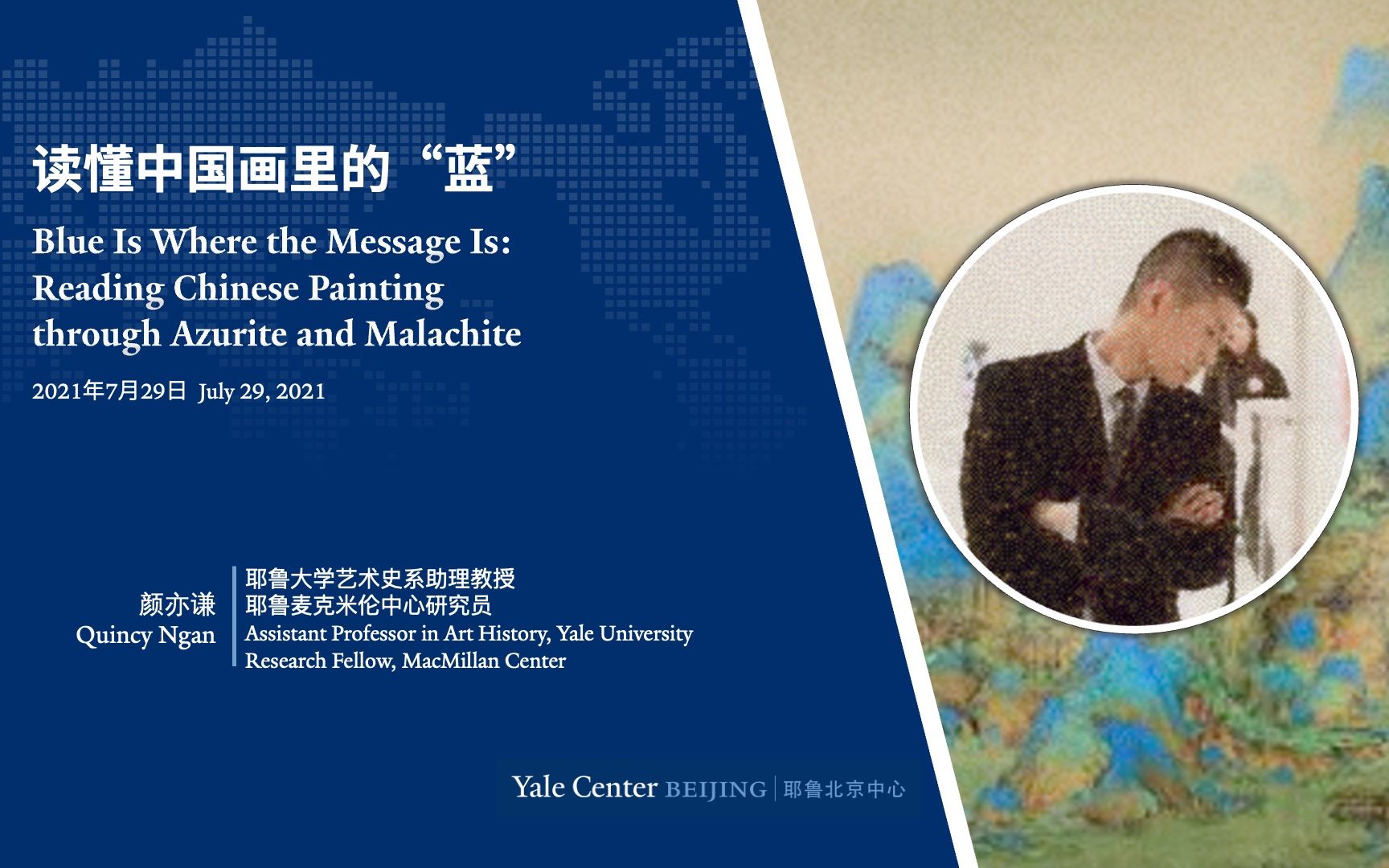
读懂中国画里的“蓝”
字幕摘录
| 时间 | 英文 | 中文 |
|---|---|---|
| 0:04 | Good morning from those of you guys joining from the US and good evening to everyone in China. | 早上好,你们这些家伙从美国加入, 晚上好,中国的每一个人。 |
| 0:12 | And I see we have some people from elsewhere in the world. | 我看到我们有一些来自世界其他地方的人。 |
| 0:15 | So hello to you as well. | 也给你打个招呼吧 |
| 0:17 | Thank you, everyone, for joining us. | 感谢大家加入我们 |
| 0:20 | And I'm sure we have more people trickling in as well. | 我敢肯定,我们有更多的人 溜进来。 |
| 0:24 | My name is Devin Lau. | 我叫刘德文 |
| 0:25 | I am the Assistant Director of Yale Center Beijing. | 我是耶鲁北京中心助理主任. |
| 0:28 | And by way of introduction, since we have some new people here today, joining us for the first time for today's event. | 并且作为介绍,由于我们今天有一些新人在这里,今天的活动首次加入我们。 |
| 0:35 | Yale Center Beijing is Yale's first and only university wide center that spans all of its 14 schools. | 耶鲁北京中心是耶鲁第一个也是唯一的大学宽中心,横跨其14所学校. |
| 0:43 | And we work with the professors of Yale to promote their wonderful cutting edge research and to highlight all that's going on throughout campus. | 我们与耶鲁大学的教授们合作, 推动他们的优秀的前沿研究, 并突出整个校园正在发生的一切。 |
展开字幕全文(593 条)
| 序号 | 英文 | 中文 |
|---|---|---|
| 1 | Good morning from those of you guys joining from the US and good evening to everyone in China. | 早上好,你们这些家伙从美国加入, 晚上好,中国的每一个人。 |
| 2 | And I see we have some people from elsewhere in the world. | 我看到我们有一些来自世界其他地方的人。 |
| 3 | So hello to you as well. | 也给你打个招呼吧 |
| 4 | Thank you, everyone, for joining us. | 感谢大家加入我们 |
| 5 | And I'm sure we have more people trickling in as well. | 我敢肯定,我们有更多的人 溜进来。 |
| 6 | My name is Devin Lau. | 我叫刘德文 |
| 7 | I am the Assistant Director of Yale Center Beijing. | 我是耶鲁北京中心助理主任. |
| 8 | And by way of introduction, since we have some new people here today, joining us for the first time for today's event. | 并且作为介绍,由于我们今天有一些新人在这里,今天的活动首次加入我们。 |
| 9 | Yale Center Beijing is Yale's first and only university wide center that spans all of its 14 schools. | 耶鲁北京中心是耶鲁第一个也是唯一的大学宽中心,横跨其14所学校. |
| 10 | And we work with the professors of Yale to promote their wonderful cutting edge research and to highlight all that's going on throughout campus. | 我们与耶鲁大学的教授们合作, 推动他们的优秀的前沿研究, 并突出整个校园正在发生的一切。 |
| 11 | Of course, most of the world is still in some form of COVID lockdown. | 当然,世界上大部分地区仍然处于某种形式的COVID封禁状态. |
| 12 | And so we've been able to do a lot of events via Zoom in the last year and a half. | 因此,我们在过去的一年半里通过Zoom 做了很多活动。 |
| 13 | And so today we are honored to have Professor Quincy An join us to talk about Chinese painting. | 今天我们很荣幸 昆西安教授能加入我们讨论中国的绘画 |
| 14 | Professor An is assistant professor in the history of art at Yale University, as well as a research fellow at the McMillan Center of International Studies. | 教授 一名是耶鲁大学艺术史助理教授,以及麦克米兰国际研究中心的研究员. |
| 15 | He received his bachelor's from the Chinese University of Hong Kong and his PhD from the University of Chicago. | 他获得了香港中文大学的学士学位和芝加哥大学的博士学位. |
| 16 | He's a co-recipient of the 2018 Luce ACLS Reading Workshop Grant. | 他是2018年Luce ACLS阅读工作坊赠款的联合接受者. |
| 17 | And his research focuses on color, pigments and materiality in traditional Chinese painting, as well as representations of skin in Chinese art from the pre-modern era and thereafter. | 而他的研究重点是中国传统绘画中的色彩,颜料和物质性,以及中国艺术中从前现代到后时期的表皮表现. |
| 18 | His articles have appeared in the Metropolitan Museum Journal, Yishu Journal of Contemporary Chinese Art, and the Ming Qing Yanjiong. | 他的文章曾出现于"都市博物馆学报","宜修当代中国艺术学报","明清燕江画报". |
| 19 | And I've had the privilege of listening to many of Professor An's lectures. | 我有幸听取了安教授的许多演讲。 |
| 20 | He's always very enthusiastic and very engaging. | 他总是非常热情,非常投入. |
| 21 | So I can think of no better person to talk to us about today's topic. | 因此,我可以想到没有更好的人可以和我们谈论今天的主题。 |
| 22 | And so with that, I will turn it over to him. | 因此,我会把它交给他。 |
| 23 | I see that many of you have already turned on your webcams, which is great. | 我看到你们很多人已经打开了你们的摄像头,这太棒了。 |
| 24 | If as many of you as possible can turn on your webcams so that we can be engaging in person as much as possible during the lecture, that's always nice. | 如果你们中尽可能多的人可以打开你的网络摄像头 这样我们就可以在演讲期间尽可能多地接触个人,那总是很好的. |
| 25 | Instead of having Professor An talk to, you know, just a blank screen of names, it's always nice to see some people. | 没有教授 聊天,你知道,只是一个空白 屏幕的名字, 它总是很高兴看到一些人。 |
| 26 | So without further ado, here is Professor An. | 所以,不用再多说,这里是安教授。 |
| 27 | Thank you, Davin. | 谢谢你,达文。 |
| 28 | Thank you so much. | 非常感谢 |
| 29 | Let me share my screen. | 让我分享我的屏幕。 |
| 30 | So thank you, Davin, for the kind introduction and thank you all for attending this talk. | 因此,谢谢你,达文, 和感谢大家出席这次演讲。 |
| 31 | Let me just start. | 让我开始吧 |
| 32 | So this talk is an excerpt of the chapter one of my book manuscript. | 所以这个演讲是我书稿第一章的节选. |
| 33 | I, in chapter one, outlined a methodology for unpacking the communicative power of color in Chinese painting. | 在第一章中,我概述了一种解开中国绘画中色彩的交流力的方法。 |
| 34 | So this talk will be about methodological approach, the approach to look at Chinese paintings through color. | 因此,这个演讲将涉及方法方法,即用颜色看中国画的方法. |
| 35 | So that is the main goal of this talk. | 因此,这是这次谈话的主要目标。 |
| 36 | So my manuscript is completed and the book proposal and two chapters are currently being revealed by our university press. | 所以,我的手稿已经完成了, 书提案和两章目前正被我们的大学出版社披露。 |
| 37 | So let me just start. | 让我开始吧 |
| 38 | Scholars Jerome Silbergeil and Amy Moller have once addressed the general lack of evidence in research on color in Chinese painting. | 学者杰罗姆·西尔贝盖尔(Jerome Silbergeil)和艾米·莫勒(Amy Moller)曾经谈到中国绘画中色彩研究普遍缺乏证据的问题. |
| 39 | They said very little has been written about the use of color in Chinese painting. | 他们说中国画中鲜有使用彩色的文字. |
| 40 | Over the centuries, many artists and writers about the art of painting cultivated an unspoken prejudice against any prominent use of or even discussions of color in painting. | 几个世纪以来,许多关于绘画艺术的艺术家和作家对绘画中任何显著的用色甚至对色的讨论,培养了一种不言而喻的偏见. |
| 41 | The intellectual outlook of the literati class helped shape this aesthetic sensibility, which was derived from the great value they laid on detachment from worldly things and the stealing of human emotions on harmony and simplicity. | 利特拉蒂阶级的智力观帮助塑造了这种审美感知力,这种感知力来源于他们从世界事物中分离出来的巨大价值,以及人类情感在和谐与简洁上的窃取. |
| 42 | These scholars, referring to the literati, who monopolized the writing of art history, art theory and criticism, should have found it similarly displeasing to discourse on the techniques of painting in color. | 这些学者提到Literati,他垄断了艺术史的写作,艺术理论和批评,应该也发现它同样地对色彩绘画技巧的论述感到不满. |
| 43 | So this passage aptly captures the contours of color's historiography in traditional China. | 因此,这一段恰当地抓住了传统中国中色彩的直径轮廓. |
| 44 | Today, over 30 years after Silbergeil and Moller made this statement, I want to problematize the notion that there is a lack of discourse on color in traditional China. | 今天,在Silbergeil和Moller发表这一声明30多年之后,我想对传统中国缺乏关于肤色的论述这一概念提出质疑。 |
| 45 | Spirotic accounts reveal that informed painters have long considered the choice and placement of color within a composition. | spirotic的叙述表明,知情的画家长期以来一直考虑在成分中选择和放置颜色. |
| 46 | In other words, today I want to show that there are other modes of discourse on colors that lie beyond our theory and criticism. | 换句话说,今天我想表明,还有其他关于色彩的讨论方式,它们超出了我们的理论和批评。 |
| 47 | Recent scholarship has already corroborated this. | 最近的奖学金已经证实了这一点。 |
| 48 | For example, in his clearing weather after the sudden snowfall, the Yuan dynasty painter and towers practitioner Huang Gongwang uses cinnabar to color the sun over snow-laden terrain. | 例如,在突然降雪后的清风天气中,元朝画家和塔师黄贡旺利用辛那巴将太阳涂在雪地上空. |
| 49 | As scholar Susan Huang speculates that this contrast between a bright red sun and vast snowscape resonates with the contrast between yin and yang and fire and water, crucial aspects in the theory of towers' alchemical practices. | 正如学者苏珊·黄(Susan Huang)所推测的那样,这种明亮的红太阳与广阔的雪景之间的对比,与阴阳和火与水的对比有着共鸣,是塔的炼金术理论中的关键方面. |
| 50 | Also in the self-portrait, Shang Chunhua draws himself entirely with ink but situates himself in a landscape completely painted red, thus creating an unusual visual contrast. | 也是在自画像中,香春华完全用墨水画自己,但将自己定位在一个完全漆成红色的景观中,从而形成了不寻常的视觉对比. |
| 51 | The poems inscribed on the painting comment on the fall of the Ming dynasty. | 画上刻有明朝沦陷的诗歌评论. |
| 52 | Based on these poems, scholars Jonathan He and Chu Chenli point out that the overwhelming red of the landscape is a visual pun. | 基于这些诗歌,学者乔纳森·贺和楚陈利指出,景色的压倒性红色是视觉的双关语. |
| 53 | Red or Zhu in Chinese refers to the Ming dynasty, the Zhu imperial family. | 红色或朱在汉语中是指明朝,朱帝国家族. |
| 54 | Scholars hold that by situating himself in a red landscape. | 学者们认为,通过将自己定位于一个红色的景观。 |
| 55 | Shang Chunhua is reviewing his loyalty to the Zhu family regime. | 香春华审查忠于朱家政权. |
| 56 | The same sentiment clearly runs through Shang Chunhua's own poems and the other two inscribed on the portrait by his contemporaries. | 同样的情绪显然贯穿于香春华本人的诗歌中,以及由他的同時代人刻在肖像上的另外两首. |
| 57 | Similarly, the painting on the left, the loyalist and descendant of the Ming royal house Ba Da Shan Ran, used the red in a similar way. | 同样,左侧的绘画,明皇室的忠臣和后裔巴大山兰也以类似方式使用红色. |
| 58 | As scholar Li Hui Shu has shown, he painted bamboo in red, hinting at the homophones Zhu red and Zhu bamboo. | 正如学者李惠舒所显示的,他用红色涂竹子,暗示了同音的朱红和朱竹. |
| 59 | These scholars show us an important approach for understanding colour. | 这些学者向我们展示了理解颜色的重要方法. |
| 60 | It is that an artist's choice of where in a composition a colour is applied or on which motif it is used are potential clues for unpacking the meaning of colour. | 艺术家选择一种颜色在什么成分中应用,或者在什么动机上应用,是解开颜色含义的潜在线索。 |
| 61 | However, there's no study to the best of my knowledge that synthesises these scholars' brilliant works into a unified approach to study Chinese painting colour. | 然而,对于我所知的将这些学者的辉煌作品合成一个研究中国绘画色彩的统一方法,还没有研究. |
| 62 | To do just this, today we will first look at a host of textual records that attest to and demonstrate the pervasiveness of the positional significance of colour in the history of Chinese painting. | 为了做到这一点,今天我们将首先审查一系列文字记录,这些记录证明并表明,彩色在中国绘画史上具有普遍的地位意义。 |
| 63 | Then my talk will be divided into three parts. | 然后,我的发言将分为三个部分。 |
| 64 | We will then look at three paintings focusing on the placements of Azerite and Malachi in the composition. | 然后,我们将研究三幅绘画,重点介绍阿塞拜疆人和马拉奇人在组成中的位置。 |
| 65 | Second, I will show that the Yuan master Zhao Mengfu in his self-portrait manipulated the location of Azerite and Malachi in the composition to reinforce the messages connected by other pictorial motifs, | 第二,我要表明,袁师傅赵孟福在自画像中操纵了阿泽里特和马拉奇在组成中的位置,以强化其他图象动因相联的信息, |
| 66 | namely the orchid and bamboo. | 就是兰花和竹子 |
| 67 | Third, I will show that in his Taogu presenting a poem, Tang Yin uses Azerite blue and the direction of a houseboy's gaze and posture to draw viewers' attention to the wine flask, reinforcing the significance of wine in Taogu's fiasco. | 第三,我要表明,唐渊在介绍一首诗时,用阿泽里特蓝色和一个居家男孩的凝视和姿势方向来吸引观众对酒瓶的注意,强化了酒在陶古败坏中的重要性. |
| 68 | Fourth, finally, I will show that Wen Zhengming likewise uses Azerite and Malachi to guide viewers and connect different scenes in his hand scroll, heavy snow in mountain passes. | 第四,最后,我将显示,文正明同样利用阿泽里特和马拉奇来引导观众,并连接他手卷中的不同场景,山上大雪. |
| 69 | Altogether, I argue that these works bespeak the three scholars' attentions to where a particular colour is applied and how colours work with specific motifs to conduct intended messages. | 总而言之,我主张这些著作可以表达三位学者对某种颜色的应用以及颜色如何与特定动机配合来进行预期信息的关注。 |
| 70 | In other words, colour can deepen our understanding of paintings and their artists. | 换句话说,色彩可以加深我们对绘画及其艺术家的理解. |
| 71 | While scientific analysis of pigments can, of course, deepen our understanding of colour, I want to add that the inscriptions, the specific motifs bearing the colour in question, and the unique formats of Chinese painting are all parts of the discourse of | 虽然对色素的科学分析当然可以加深我们对色素的理解,但我想补充的是,铭文,带有有关色素的具体动机,以及中国绘画的独特形式,都是色彩论述的一部分. |
| 72 | To begin, let me start with the first part, a host of textual records attest to and demonstrate the pervasiveness of the positional significance of colour in the history of Chinese painting. | 首先,首先让我从第一部分开始,大量文字记录证明并表明彩色在中国画史上的地位意义是普遍的. |
| 73 | Guo Kaizhi, one of the earliest masters of Chinese paintings, wrote that when depicting figures in faraway mountains, one should use lighter and subtler colours, as opposed to the thicker and more intense ones reserved for the foreground. | 中国绘画最早的主人公之一郭启志写道,在描绘远山的人物时,应该使用较轻,细腻的颜色,而不是为前方预留的更厚,更密集的颜色. |
| 74 | So here, the planted variegation of colours thus reinforces and corresponds to compositional design. | 因此,在这里,植入的色彩变异 强化并对应组成设计。 |
| 75 | This awareness of colour and its placement continued through the Ming dynasty. | 这种对色彩的认识及其布置一直延续到明朝. |
| 76 | For example, the art critic Zhang Jingfeng was particularly interested in where and how azurite, malachite, and brushwork were applied. | 例如,美术评论家张静芬尤其关注到如何应用azulite,恶作剧和刷子. |
| 77 | He described in detail how these elements work together to construct the landscape, serving as the basis for his evaluation of a painting's authenticity. | 他详细描述了这些元素如何合作构建地貌,作为他评价一幅画的真实性的基础. |
| 78 | Such meticulous descriptions of technique pervade his painting treatise, The Thoughts of Dongtu. | 他的画作《东图的思想》中充满了对技巧的细心描述。 |
| 79 | In addition, colour can cultivate a focal point that channels viewers' attention to particular motifs, whether it is a painter's intention or not. | 此外,色彩还可以培养一个焦点,将观众的注意力输送到特定的动机上,无论是否是画家的意图. |
| 80 | For example, in a passage where the 15th century painter Dai Jin is said to have used red to colour the robe of a fisherman. | 例如,在15世纪画家戴锦据说曾用红色来涂一个渔夫的长袍的一段话中. |
| 81 | The colour captured the attention of the painter-cum-government official, Xie Tingxun, as well as the emperor, who was overseeing his inspection of submissions by court painters. | 色彩吸引了画家兼政府官员谢廷un以及皇帝的注意,皇帝当时正在监督他对宫廷画家呈文的检查. |
| 82 | Dai Jin's painting was likely executed in his signature ink monochromatic style, which would have made a figure in red stand out. | 戴锦的画作很可能是用他签名的墨水单色风格执行的,这本会用红色的突出形象来做一个数字. |
| 83 | While the emperor was amazed by Dai Jin's colouring to need, Xie Tingxun, who was jealous of Dai Jin's talent, reminded the emperor that red could not have been worn by a fisherman. | 皇帝虽然对戴振的色彩需要感到惊讶,但嫉妒戴振的才华的谢廷臣却提醒皇帝,红色不可能是渔民穿的. |
| 84 | As it was reserved for government officials, Xie Tingxun and the emperor discard all of the paintings that Dai Jin has presented to them for enjoyment. | 由于是留给政府官员的,谢廷un和皇帝丢弃了戴锦赠送给他们的所有画作供其欣赏. |
| 85 | As these textual records reveal, and all these texts reveal, the colour chosen and the motif to which it was applied, each has specific meanings that shape viewers' perception of the work and the painter. | 正如这些文字记录所揭示的,以及所有这些文本所揭示的,所选择的颜色及其应用的动机,每个文字都有特定的含义来塑造观众对作品和画家的看法. |
| 86 | Now, the second part of this talk, Zhao Mengfu's self-portrait. | 现在,这段话的第二部分是赵孟福的自画像. |
| 87 | To celebrate a scholar, painter, and calligrapher, Zhao Mengfu was in the royal line of the Falun South and Song dynasty. | 为庆祝学者,画家,书法家,赵孟福曾任法轮南道和宋朝的御史. |
| 88 | He also held a government position before the events of the Yuan dynasty in 1279. | 他还在1279年元朝事变前担任政府职务. |
| 89 | Being one of the most talented scholars in the country at that time, he was summoned to serve in the Mongol court. | 作为当时国内最有才华的学者之一,被召入蒙古朝廷任职. |
| 90 | Although holding high positions, he was criticised and doubted by both Mongol government officials and left-over citizens due to his relation to the former dynasty. | 他虽然担任要职,但由于与前王朝的关系,受到蒙古政府官员和左翼公民的批评和怀疑. |
| 91 | During his time serving at the Mongol court, Zhao Mengfu painted this painting, The Mind Landscape of Xie Youyu, as a work expressing a complex mix of emotion. | 在蒙古宫廷任职期间,赵孟福绘画了这幅画"谢汝瑜的心灵景观",是一部表达复杂的情感组合的作品. |
| 92 | In that, Zhao Mengfu appropriates an anecdote about the ancient Xie Youyu. | 由此可见,赵孟福对古代谢汝玉的传闻进行了批判. |
| 93 | So this anecdote is about when asked by Emperor Ming of the Eastern Jin dynasty to compare himself to Yu Liang, which is another government official, | 所以这个传闻是当东晋王朝明皇帝要求自己与另一位政府官员余良比较时, |
| 94 | Xie Youyu replied that he was better than Yu Liang in terms of lodging one's mind in nature, implying yearning for reclusion. | 谢汝瑜回答说,在自然界中安顿一个人的心灵方面,他比余良强,暗示着对收敛的渴望. |
| 95 | Zhao Mengfu also chose reclusion, but Emperor Shizhu or Kubla Khan summoned him and forced him into government service. | 赵孟福也选择了封地,但皇帝世祖或忽必烈可汗召见他,强迫他为政. |
| 96 | By 1299, while Zhao Mengfu painted the self-portrait, he had already resigned from this unwanted position. | 到了1299年,虽然赵孟福画了自画像,但他已经辞去了这个不想要的职位. |
| 97 | While The Mind Landscape of Xie Youyu revealed his intention to withdraw from serving the Mongol court, his self-portrait reveals a mixture of sentiments more complex. | 虽然谢友玉的心灵景观揭示了他退出为蒙古宫廷服务的意向,但是他的自画像却揭示出一种更为复杂的混合情感. |
| 98 | In his self-portrait, as you can see here, Zhao Mengfu painted himself walking with a staff by a bamboo grove. | 赵孟福在自画像中,如这里所见,用竹林旁的杖子把自己画了出来. |
| 99 | A boulder in thick azurite appears in the lower left, standing out from the green landscape and small rocks washed in faint azurite along the river. | 一块厚厚的黄石块出现在左下方, 站在绿色的地貌上, |
| 100 | Next to the prominent blue rock, there grows an orchid swinging toward Zhao Mengfu as he passes, and I'm sure you can see the orchid right here. | 紧挨着突出的蓝岩,一过赵孟福就长出一朵摇摆的兰花,我相信你们可以在这里看到兰花. |
| 101 | He gazed his gaze room, roaming back over it. | 他凝视他的凝视室, 漫步在它的后面。 |
| 102 | The coloration differs from his use of the two minerals in The Mind Landscape of Xie Youyu, the previous painting that I showed you, in which azurite and malachite are more mixed. | 配色不同于他在"谢尤尤的心灵景观"(The Mind Landscape of Xie Youyu)中对两种矿物的运用,这之前我给你看的画作中,黄石和恶性achi更混合. |
| 103 | This emphasis of the blue rock, or more importantly, the orchid, which is a multivalent trope in Chinese literature, prompts viewers, prompts us to discover the specific meanings at this point in Zhao Mengfu's life. | 蓝岩的这种强调,或者更重要的是,兰花是中国文学中的一种多值的曲折,它促使观众,促使我们在赵孟福生命的这个时刻发现了具体的意义. |
| 104 | As scholars, Dr. Sean McCoslin speculates that the self-portrait represents Zhao Mengfu's new role as the director of Confucian education in 1295. | 作为学者,西恩·麦考斯林博士推测,自画像代表了1295年赵孟福作为儒家教育总监的新角色. |
| 105 | He proposes that the portrait with the motif of bamboo and orchid stands as a kind of preemptive response to the questions self and society may have had about the direction his academic leadership was to take. | 他提出,用竹子和兰花的动机描绘的肖像是一种先发制人的反应,是对自我和社会可能对其学术领导的方向所持的问题的先发制人。 |
| 106 | That's to quote him. | 即为引他. |
| 107 | In the following, I would like to offer a more nuanced opinion by unpacking the specific meanings of bamboo and orchid by the poems composed by Zhao Mengfu himself and his friends around the time when the portrait was made. | 在下文中,我想提出更细微的意见,用赵孟福本人和朋友在肖像制作前后所编的诗作来整理竹子和兰花的具体含义. |
| 108 | Let's go back to a year before he painted the self-portrait in 1298. | 回到1298年他画自画像之前的一年. |
| 109 | Zhao Mengfu was invited to copy the diamond sutra in the court in today's Beijing, and his journey to taking this task comprised a complex internal struggle. | 赵孟福受邀在今天北京的朝廷抄袭钻石苏特拉,他承担这项任务的旅程包括复杂的内部斗争. |
| 110 | As Zhao Mengfu took up this task in the third month, his friend Fang Hui wrote him a poem titled Seeing of Zhao Mengfu who was appointed to copy the diamond sutra. | 当赵孟福在第三个月承担这项任务时,他的朋友方慧为他写了一首诗,题为"见赵孟福",他被任命为复制钻石苏特拉. |
| 111 | Fang Hui's poem begins by mentioning Zhao Mengfu's resignation from his position in the court and transferred to a local position in 1295. | 方惠的诗词开头提到赵孟福辞去朝廷职务,1295年转任地方职. |
| 112 | Fang Hui states that Zhao Mengfu's talent in art has cost him his freedom and dignity, and it caused him to become inundated with requests from vulgar people. | 方慧表示,赵孟福的艺术天赋使他失去了自由和尊严,使他被粗俗百姓的要求淹没. |
| 113 | Fang Hui's poem then praises Zhao Mengfu's appearance and his achievement in calligraphy and speculates that Zhao Mengfu, like many ancient great calligraphers, will soon become a prominent figure in the country. | 方惠的诗随后称赞了赵孟福的外表和他在书法上的成就,并推测赵孟福和许多古代大书法家一样,很快就会成为全国的著名人物. |
| 114 | Not unexpectedly, while Zhao Mengfu was in the court, he was offered a position in the Imperial Academy, which he then declined. | 并非出乎意料,虽然赵孟福在朝廷任职,却在朝廷授职,后来被朝廷拒绝. |
| 115 | In the same year, Zhao Mengfu compels a poem that packages the sentiments of Fang Hui's poem. | 同年,赵孟福逼迫一首诗,包罗了方惠诗的感情. |
| 116 | Zhao Mengfu's poem mentions his young son grabbing his clothing and refusing to let him go. | 赵孟孚的诗中提到他年幼的儿子抓着衣服,拒绝放他走. |
| 117 | His poem reveals that Zhao Mengfu feels sad about the lonely fate of his wife. | 他的诗揭示赵孟福对妻子的孤独命运感到悲伤. |
| 118 | Zhao Mengfu continues to say that his peaceful and reclusive life was hindered by his talent, echoing Fang Hui's poem. | 赵孟福继续说,他的平和隐居生活受到其才华的阻碍,与方惠的诗歌相呼应. |
| 119 | So it seems that he felt working for the Mongol regime was a burden. | 因此,他似乎觉得为蒙古政权工作是一个负担. |
| 120 | Yes, that is true, but of course his feeling was not so simple. | 是的,这是真的, 但他的感受当然不是那么简单。 |
| 121 | So let's take a look at another poem that he composed in 1298. | 让我们再看看他于1298年创作的另一首诗. |
| 122 | In 1298, Zhao Mengfu also composed the prose poem on the elegant bamboo. | 1298年,赵孟福还在优雅的竹子上创作了散文诗. |
| 123 | It was written just one month after he had returned from writing the Diamond Sutra in the capital, which is, I believe, very important for understanding the motif bamboo in his self-portrait painted just one year after this. | 这是在他刚回到首都写《钻石苏特拉》一个月之后写的,我认为,这对理解他一年之后所画的自画像中的竹子非常重要。 |
| 124 | The first line of his poem places the delicate, slender and elegant appearance of bamboo, which equates his renditions of bamboo in self-portrait, as you can see on the top of the screen. | 他的诗首第一行将竹子的细腻,细腻,优雅的外观,这相当于他自画像中的对竹子的引渡,你可以看到屏幕的顶部. |
| 125 | Zhao Mengfu's prose poem then places at length the many aspects of bamboo, from the historical locations of its growth to the aromatic sentiments that it conveys. | 赵孟福的散文诗,然后将竹子的许多方面,从竹子生长的历史地点,到它所传达的芳香情感,细细地写下来. |
| 126 | Importantly, Zhao Mengfu evokes Wei Nü or Lady Xu Mu from the 7th century BCE, who was married to the King of Mu of Xu. | 重要的是,赵孟福引用了7世纪BCE时期的魏纽或许穆夫人,许穆夫人嫁给了许穆王. |
| 127 | So loyal to her home country, Wei Nü lamented that she could not go back to Wei after it was invaded and her current country, Xu, was not strong enough to help. | 如此忠于故乡,魏纽哀叹说,魏国被侵略后不能回魏国,而她现在的国度徐国也不够强大,难以帮助. |
| 128 | This lament over the fall of the country mirrors Zhao Mengfu's situation as a descendant of the Song dynasty, who then became a subject of the Mongol Yuan. | 这种对国陷的哀叹,反映了赵孟福作为宋朝后裔的境遇,宋朝后成为蒙古元的臣民. |
| 129 | So continuing the trip of Wei Nü, Zhao Mengfu mentions Qi Ao, which refers to the meandering Qi River, a branch of the Wei River, and a song describing the scenery of the Wei recorded in the Book of Songs. | 于是继续魏努之行,赵孟福提到齐奥,指淮河的一个支系,还有一首描述"宋书"中记载的魏国的景色的歌曲. |
| 130 | The song Qi Ao also uses the elegant appearance of the bamboo along the Qi River to glorify the virtual of a gentleman. | 歌曲"齐爱奥"还采用了沿齐河的竹子的优雅外观来颂扬绅士的虚拟. |
| 131 | So here as you see in self-portrait, Zhao Mengfu also painted the bamboo. | 故在此,自画像中,赵孟福也画竹. |
| 132 | The bamboo growth where Zhao Mengfu emerges also borders a river, plausibly or definitely, hinting at this trip of the gentleman in his prose poem and Qi Ao. | 赵孟孚出现时的竹生长也与一条河流接壤,有理有据或肯定,暗示了这位绅士在他的散文诗和齐青的这段旅程. |
| 133 | Zhao Mengfu prose poem that evokes the renowned scholar Zhong Xuan, that is Wang Chang, who after the fall of the Han dynasty, defected to serve the warlord, Qiao Qiao. | 赵孟福传诗引著名学者钟uan,即汉朝灭亡后叛变为军阀的王昌. |
| 134 | Zhao Mengfu probably used Zhong Xuan, who is also a lover of bamboo, as a comparison, as a foil, implying that they both had served more than one lord. | 赵孟福可能利用同样是竹子爱好者的钟X,作为比较,作为 fo,暗示两人都服务过不止一位领主. |
| 135 | Zhao Mengfu's prose poem thus reveals a complex sentiment. | 因此,赵孟福的散文诗揭示了一种复杂的情绪. |
| 136 | On the one hand, he laments the fall of the Southern Song dynasty, and as a descendant of the Song's royal house upholds the virtual symbolized by bamboo. | 一方面,他感叹南宋王朝的衰落,作为宋王室的后裔,坚持以竹子为象征的虚拟. |
| 137 | But on the other hand, he yearns for the opportunity to serve, just like Zhong Xuan. | 但另一方面,他也渴望有机会服务,就像钟uan一样. |
| 138 | The bamboo in his self-portrait likely conveys the same conflicted sentiments. | 自画像中的竹子可能传达出同样的矛盾情绪. |
| 139 | The orchid in self-portrait, emphasized by the blue rock, seems to reinforce Zhao Mengfu's yearning in the prose poem. | 自画像中的兰花,由蓝岩强调,似乎强化了赵孟福在散文诗中的渴望. |
| 140 | Well, of course, there are many, many meanings associated with an orchid, but a single orchid, a single branch of orchids, as you can see in the painting, in the portrait, a single branch of orchid is a trope, referring to Confucius' melody of the delicat | 当然,与一朵兰花有关的含义有很多,很多,但一朵兰花,一朵兰花的枝条,从画中可以看到,在肖像画中,一朵兰花的枝条是一种 tr,指的是孔子对微妙兰花的旋律. |
| 141 | In this song, Confucius is frustrated by his failure in seeking employment in various vassal states. | 在这首歌中,孔子因未能在各巫州谋职而感到沮丧. |
| 142 | As he sees a single orchid growing in solitude, just like here you can see a single branch of orchid growing in solitude, Confucius finds that the plant mirror his situation, in that he is not among the worthies. | 当他看到一个单一的兰花在孤独中生长时,就像在这里,你可以看到一个单一的兰花分支在孤独中生长时,孔子发现植物反映了他的处境,因为他不在价值之列. |
| 143 | The plant, like him, is isolated and unrecognized, despite having a fragrance that befits a king. | 植物和他一样,虽然有与国王相配的香气,但还是被孤立和不被承认. |
| 144 | By placing a conspicuous azurite rock besides a single orchid that would otherwise have been ignored, Zhao Mengfu guides viewers to experience the very, very moment when the disheartened Confucius discovers the soluble plant. | 赵孟福通过在一朵兰花之外放置一块显着的黄石岩来引导观众体验心灰意冷的孔子发现可溶植物的那一刻。 |
| 145 | Zhao Mengfu's portrait thus conveys a desperate longing for recognition. | 赵孟福的肖像由此传达了渴望被承认的绝望渴望. |
| 146 | Not unexpectedly, Zhao Mengfu accepted an offer to serve the Mongol regime as the supervisor of Confucian schools in the southern region in 1299, the very same year that he painted this portrait. | 并非出乎意料的是,赵孟福于1299年接受了为蒙古政权服务的提议,担任南部地区的儒学监督,同年他画了这幅肖像. |
| 147 | So more importantly, the foregoing discussions reveals that Zhao Mengfu in his self-portrait manipulated the locations of azurite and its counterpart malachite in the composition to reinforce the messages connected by orchid and bamboo roofs. | 更为重要的是,上述讨论表明,赵孟福在自画像中操纵了zu石的位置及其构成中的对应恶作剧,以加强兰花和竹子屋顶相连的信息. |
| 148 | It is not entirely clear who is the intended audience of Zhao Mengfu's self-portrait, the small size of the work as well as lack of inscriptions by other painters or poets. | 尚不完全清楚谁是赵孟福自画像的预定对象,作品规模小,其他画家或诗人也没有铭文. |
| 149 | He speaks a private or limited viewership rather than public display. | 他讲的是私人或有限的观众席,而不是公开展示. |
| 150 | Other than functioning as a self-expression with Zhao Mengfu himself as the sole audience, the work may have been painted for his wife and Zhao Mengfu's second son, who was just less than 10 years old in 1299. | 作品除了以赵孟福本人为唯一观众的自我表现外,还可能是为妻子和赵孟福的次子画的,1299年时年仅不到10岁. |
| 151 | Zhao Mengfu's wife Guan Daosheng also painted bamboo roofs, indicating her understanding of this time-honored trope. | 赵孟福的妻子关大生也画了竹子屋顶,表明她对这段时尚优雅的吊坠的理解. |
| 152 | In fact, in the accompanying enchromium, as you can see on the screen, written by Song Lian from the early Ming dynasty, Song Lian stated that Zhao Mengfu's grandson asked him to write the enchromium, so implying that the painting has always been in the f | 事实上,在随笔的" en"中,如您在银幕上所见,宋莲自明朝早期写成的" en"中,宋莲表示赵孟福的孙子请他写" en",从而暗示这幅画始终是晚元至明初的家产,从而暗示了一家人的观赏. |
| 153 | As you can see here on the screen highlighted that I've highlighted this text. | 正如你们在屏幕上看到的 我强调过这个文字 |
| 154 | Now, let's move on to the third part of this talk and look at another example that shows painters pay attention to which color and where it is applied in a composition. | 现在,让我们继续讲这个演讲的第三部分,看看另一个例子, 显示画家们关注哪种颜色, 以及它应用在某种成分中。 |
| 155 | Tang Yin was one of the most promising scholars in the 15th century. | 唐殷是15世纪最有前途的学者之一. |
| 156 | In 1498, Tang Yin came first in the regional exam and attempted to take the national exam the following year. | 1498年,唐渊在地区考试中名列第一,并于次年试图参加全国考试. |
| 157 | However, his prospect of taking the national exam disappeared due to his involvement in a cheating scandal surrounding Chen Mingzhong, an examiner who under torture involuntarily admitted selling the national exam questions. | 然而,他参加国家考试的前景却因参与围绕陈明忠的欺骗丑闻而消失,陈明忠是一名在酷刑下非自愿地承认出售国家考试问题的考官. |
| 158 | Tang Yin has visited Chen Mingzhong just before the scandal exploded. | 唐殷在丑闻爆炸前就曾拜访陈明忠. |
| 159 | So seemingly involved in the scandal despite his innocence, Tang Yin went through a trial and his regional degree was received. | 因此,唐渊虽然清白,但似乎还是卷入了丑闻,经过了一次审判,他的地区学位获得. |
| 160 | Tang Yin then made a living through his paintings and calligraphy. | 唐殷之后通过他的绘画和书法谋生. |
| 161 | In his Taogu presenting a poem, as you can see on the screen, Tang Yin used mineral pigments to color not only the two key figures, Taogu and courtesan Qin Erlang, at the center, but also a seemingly unimportant house boy and wine flask. | 唐渊在他介绍一首诗时,在银幕上可以看到,唐渊不仅用矿物色素来调色中心的两个关键人物——陶渊明和侍从秦尔朗,还用一个看似不重要的宅男和酒瓶. |
| 162 | The house boy clothing and the wine flask were washed with azurite. | 屋内男孩的衣服和酒瓶被菊花冲洗. |
| 163 | Situated in the lower left, the two motifs, which are relatively small in size and located at the edge of the composition, stand out from the large garden rocks and banana trees in ink and muted colors that dominate the painting's lower half. | 分布于左下部,两块摩蒂夫,体型相对较小,位于构成的边缘,与大花园岩石和香蕉树的墨水以及支配画的下半部的哑色相隔绝. |
| 164 | As scholars observe, the painting illustrates a scene from the story of later official Taogu on a diplomatic mission to the state of Southern Tang. | 学者们观察到,这幅画描绘了后来的官道古在前往南唐的外交使团中的故事中的一个场景. |
| 165 | When the Southern Tang official Han Sizai finds out that Taogu has fallen in love with a young woman, he sends a courtesan Qin Erlang to impersonate her. | 南唐官员韩思泽发现陶固爱上了一位年轻女子后,便派侍郎秦尔朗假扮她. |
| 166 | One night, Taogu meets the courtesan and mistaken her for the woman, presents a poem to her. | 一夕,道固见礼部侍郎,误以为妇人,赠诗一首. |
| 167 | The next day, when Taogu attends a banquet, Han Sizai summons the courtesan and asks her to sing the poem. | 次日,道光参加宴会,韩锡泽召见礼部侍郎,请她唱诗. |
| 168 | Taogu is deeply humiliated. | 陶固深为羞辱. |
| 169 | However, the story of Taogu has multiple versions. | 然而,陶古的故事有多个版本. |
| 170 | While the overall plots are similar, the details vary. | 虽然总体地块相似,但细节各异. |
| 171 | So more importantly, there is no study on the relationship between this painting and these different versions. | 所以更重要的是,没有研究这幅画与这些不同版本之间的关系. |
| 172 | So we don't have time to go through each of these four major versions of the story. | 因此,我们没有时间逐一通过这四大版本的故事. |
| 173 | But while the overall plots are similar, they are different in terms of their details. | 但总体地块虽然相似,但细节不同. |
| 174 | So in all these texts, the courtesan is portrayed as wearing torn clothing or meeting Taogu in a way station doing all kinds of cleaning chores. | 所以在所有这些文本中, 宫女被描绘为穿着撕裂的衣服, 或与陶古在路站相遇, 做各种清洁杂务。 |
| 175 | All these details do not match the scenery or the details depicted in the painting. | 所有这些细节都与画中描绘的景色或细节不符. |
| 176 | However, wine, which is highlighted with Azeri in Tang's painting, plays an important role in the versions written by the playwright Dai Shangfu, which is right here in the Yuan dynasty. | 然而,唐代画中以阿泽里语突出的酒,在剧作家戴翔甫所写的版本中扮演了重要角色,这些版本就在元朝这里. |
| 177 | So in other words, the placement of blue reveals the relationship between the painting and the play, proving the significance of color. | 因此换句话说,蓝色的放置揭示了绘画与剧情的关系,证明了色彩的意义. |
| 178 | Wine, drinking, and intoxication serves as the threads of the drama's plot. | 酒,酒,醉是戏剧情节的线索. |
| 179 | In the play, Taogu is a lecturer disguised as an aloof diplomat. | 在剧中,陶古是一名伪装成落空外交官的讲师. |
| 180 | In Act 1, courtesan Qin Ruonan is introduced by Han Sizai to Taogu at the banquet. | 在第一幕中,秦若南的礼仪由汉·西泽在宴会上介绍给陶古. |
| 181 | Han Sizai orders Qin Ruonan to serve some wine to Taogu. | 汉西斋命秦鲁南将一些酒服给陶固. |
| 182 | Since Han Sizai is present, Taogu refuses to be served by a courtesan, stating that a gentleman like him should refrain their company of women. | 由于韩世泽在场,陶固拒绝由侍从侍从侍从侍从侍从侍从侍从侍从侍从侍郎侍郎侍郎侍郎侍郎侍郎侍郎侍郎侍郎侍郎侍郎侍郎侍郎侍郎侍郎侍郎侍郎侍郎侍郎侍郎侍郎侍郎侍郎侍郎侍郎侍郎侍郎侍郎侍郎侍郎侍郎侍郎女侍郎侍郎侍郎侍郎侍郎侍郎侍郎侍郎侍郎侍郎侍郎侍郎侍郎侍郎侍郎侍郎侍郎侍郎侍郎侍郎侍郎侍郎侍郎侍郎侍郎侍郎侍郎侍郎侍郎侍郎侍郎侍郎侍郎侍郎侍郎侍郎侍郎侍郎侍郎侍郎侍郎侍郎侍郎侍郎侍郎侍郎侍郎侍郎侍郎侍郎侍郎侍郎侍郎侍郎侍郎侍郎侍郎侍郎侍郎侍郎侍郎侍郎侍郎侍郎侍郎侍郎侍郎侍郎侍郎侍郎侍郎侍郎侍郎侍郎侍郎侍郎侍郎侍郎侍郎侍 |
| 183 | As Han Sizai and Qin Ruonan seek to intoxicate Taogu, Taogu pretends to be drunk and fall asleep. | 由于汉西斋和秦留南寻求陶古醉酒,陶古假装醉酒沉睡. |
| 184 | In the play, Han Sizai leaves the banquet, a point discovering a riddle that Taogu secretly wrote on the wall. | 在剧中,韩西斋离开宴会,这一点发现了陶古在墙上秘密写下的谜题. |
| 185 | In Act 2, Han Sizai solves the riddle and comes to know the location of the inn where Taogu is staying. | 在第二幕中,韩西斋解了谜语,开始知道陶古所住客栈的位置. |
| 186 | Han Sizai then sends Qin Ruonan to seduce Taogu. | 韩世泽于是派秦汝南去勾引陶固. |
| 187 | At night, Qin Ruonan wears ordinary clothing and arrives at the inn by the way station. | 晚上,秦鲁南穿着普通服装,经车站到达客栈. |
| 188 | The two encounter each other in the inn's garden, which coheres with the settings in Tan Yin's painting. | 两人在客栈的花园里相遇,与谭殷画中的设置相配合. |
| 189 | Also, the lit candle, as I pointed out with that blue arrow, the lit candle, which signifies this nighttime, also coheres with the temporality of the play. | 另外,点燃的蜡烛,正如我用蓝箭指出的,点燃的蜡烛,象征着这个夜晚的时间,也与剧情的时间性一致. |
| 190 | Qin Ruonan tells Taogu that she was the wife of a way station servant who has passed away. | 秦若南说 陶古说她是已经去世的车站仆人的妻子. |
| 191 | The play implies that due to darkness, Taogu cannot recognize that this woman in disguise is the same courtesan as the one he met before. | 剧中暗示由于黑暗,陶古无法承认这个伪装中的女人和他之前遇到的那个是同一位的宫女. |
| 192 | So Taogu then invites her to sleep with him. | 所以陶古邀请她跟他上床 |
| 193 | In the next scene, Taogu swears to marry Qin Ruonan as she demands a token of his love. | 在接下来的场景中,陶古发誓要与秦若南结婚,因为陶古要求得到他爱的象征. |
| 194 | Taogu then composes a prose program titled Happy Time on a piece of paper and signed it. | Taugu在一张纸上写了一个名为"快乐时光"的散文节目, |
| 195 | As Qin Ruonan receives the program, she read it out loud and here the translation is on the screen. | 当秦若南收到程序时,她大声读出来,这里的翻译在屏幕上. |
| 196 | So here Phoenix glue refers to a glue made from the mythical bird that can repair any broken string. | 因此这里的凤凰胶指的是用神话鸟类制成的胶水,可以修复任何破碎的弦. |
| 197 | It also refers to the act of marrying a widow. | 它还提到了与寡妇结婚的行为。 |
| 198 | So the song thus implies that Taogu is Qin Ruonan's true listener and he is determined to marry her. | 所以这首歌就暗示道固是秦若南的忠实听众,他决心娶她为妻. |
| 199 | In Tan Yin's painting, courtesan Qin sits at the center facing Taogu as she plays the pipa lute, echoing exactly the lyrics of the third line. | 在谭殷的画作中,侍郎秦s在她演奏皮帕露特时坐在面对陶古的中心,恰好呼应了第三行的歌词. |
| 200 | Also in the painting, a piece of paper, brush and inkstone with ink are placed next to Taogu, mirroring the scenarios of the play. | 同样在画中,将一张纸,刷和墨石与墨水放在陶古旁边,映射出剧情的情景. |
| 201 | Toward the end of act two, Taogu willfully drinks the wine presented by Qin Ruonan as they sit and enjoy each other's company. | 第二幕即将结束时,陶古在坐着享受对方的陪伴时,随意饮用秦若南赠送的酒. |
| 202 | Taogu then decides to marry, determined to marry this widow. | 陶固后来决定结婚,决心嫁给这个寡妇. |
| 203 | So wine and the paper bearing Taogu's program continues to play important roles in the third and the fourth acts, but here in the interest of time, I will just go through it very quickly. | 葡萄酒和印有陶古计划的文件 在第三幕和第四幕中继续扮演着重要角色, 但为了时间的考虑,我将很快地通过它。 |
| 204 | A point learning that Qin Ruonan obtained a love song from Taogu, Han Shizai decides to invite Taogu to her banquet and have Qin Ruonan sing it for everyone. | 一分得知秦鲁南从陶国得到了一首情歌,韩世泽决定邀请陶国参加她的宴会,让秦鲁南为大家演唱. |
| 205 | So in the banquet, Taogu still cannot recognize that the courtesan is actually the widow that he met at the inn because it was very dark there. | 所以在宴会上,陶古仍然无法意识到 礼仪女其实是他在客栈遇到的寡妇 因为那里很黑 |
| 206 | And by refusing and he refused to drink the wine served by her or any courtesan because he just tried to maintain his image as a disciplined gentleman. | 而他拒绝并拒绝喝她或任何贵宾提供的酒,因为他只是试图保持他作为一个有纪律的绅士的形象. |
| 207 | So Han Shizai then orders Qin Ruonan to sing the salacious lyrics that Taogu wrote to her. | 于是,韩世泽于是命令秦若南演唱陶古写给她的雅雅歌词. |
| 208 | As Qin Ruonan finishes, Taogu criticized her for singing such a licentious song. | 随着秦鲁南的完结,陶古批评她唱了这么一首百花齐放的歌. |
| 209 | So presenting the token, Qin Ruonan reveals that the lyrics was written by Taogu and that they have enjoyed each other the other night. | 于是呈上代号,秦若南透露歌词由陶古作词,两人在前一晚享受. |
| 210 | As the handwritten lyrics is shown to everyone, Taogu becomes furious as Johnny delines the accusation. | 正如手写歌词被展示给大家,陶古变得愤怒 因为约翰尼德林斯的指控。 |
| 211 | So he is trying to save his face. | 所以他想救他的脸 |
| 212 | Qin Ruonan then complains about Taogu's ingratitude and reveals more embarrassing details. | 秦若南随后抱怨道固的忘恩负义,透露出更多尴尬的细节. |
| 213 | So with the goal of humiliating Taogu achieved, Han Shizai then said he can marry the couples on the spot. | 因此,以羞辱道固的目标实现了,韩世泽随后表示可以当场与夫妇结婚. |
| 214 | So Taogu then blames the current fiasco on being drunk the night they met. | 于是陶古就怪罪目前的恶作剧在他们相遇的夜晚喝醉. |
| 215 | So admit Qin Ruonan what Qin Ruonan has said was true. | 所以承认秦鲁南所说的是真实的. |
| 216 | At the same time, Taogu pretends to be intoxicated and faint asleep. | 同时,陶古假装醉酒昏睡. |
| 217 | So here you can see being drunk, the wine definitely play a very important role in the play, as you can see in the painting. | 在这里,你可以看到醉酒, 酒在剧中肯定扮演着非常重要的角色, 正如你在画中看到的。 |
| 218 | So in the last act, act four, Qin Ruonan re-encounters Taogu. | 因此在最后一幕,第四幕中,秦若南重逢陶古. |
| 219 | Qin Ruonan like Taogu seeks refuge from gentleman Qian who is a local warlord. | 秦若南像陶固一样向当地军阀的绅士Q求庇. |
| 220 | The two men drink wine and gentleman Qian summons the courtesan to accompany and sing with them. | 二人饮酒,君子Q召礼士陪之,并与之歌. |
| 221 | And when Qin Ruonan and Taogu meet each other, Taogu once again pretends not to know Qin Ruonan. | 而当秦鲁南与陶固相遇时,陶固再次假装不认识秦鲁南. |
| 222 | So she then presents the piece of paper bearing the dissentious song and signature and threatens to kill herself. | 于是她出示了一张纸,上面写着异议歌曲和签名,并威胁要自杀. |
| 223 | So the play ends with gentleman Qian marrying the couple. | 故戏以君子Q娶夫妇为终. |
| 224 | So here, as you can see, surrounded by the large decorative rocks executed with ink, washes, and brushwork, the azurite blue of the houseboy's clothing and wine flask are arresting. | 这儿,你们可以看到, 被用墨水、洗涤和刷子 执行的大型装饰岩石包围着, 家庭男孩的衣物和酒瓶的黄褐色蓝色正在被捕。 |
| 225 | His body, including his face, is partly concealed by the stove. | 他的身体,包括他的脸,部分被炉子隐藏. |
| 226 | He's shown bending toward the stove while using his left hand to support himself like a contortionist. | 他向着炉子弯腰,同时用左手像调压器一样支撑自己. |
| 227 | He is riveted on the blue wine flask, warming in a basin above the stove, and apparently Tang Yin uses azurite blue and the houseboy's gaze and posture to draw attention to the wine flask, reinforcing the significance of wine in Taogu's fiasco as portraye | 他热身于蓝色的酒瓶上,在炉子上方的盆子里变暖,显然唐渊使用黄琉璃蓝色和宅男的凝视和姿势来引起人们对酒瓶的注意,强化了酒在剧中描绘的陶古错乱中的意义. |
| 228 | So Tang Yin's poem, inscribed on the paintings, further strengthens his allegiance to the play. | 于是唐殷的诗,刻在画作上,进一步强化了对戏曲的忠诚. |
| 229 | It reads, | 上面写着: |
| 230 | One night's intimacy at the inn, a mere short song, can already prove our encounter. | 一晚在客栈的亲密关系,只是一首短曲,已经可以证明我们的遭遇. |
| 231 | If I were Tao Changzi, Tao Gu, I would not blush in front of you. | 如果我是陶昌子,陶国,我不会在你们面前脸红 |
| 232 | So while he situates himself in the shoes of Tao Gu in the second part of the inscriptions, Tang Yin clearly points to the scenario in which the narrative is driven by the inn and a piece of paper bearing the song. | 因此,虽然他在碑文的第二部分将自己放在了陶古的鞋子中,但唐殷清楚地指出了由客栈驱动的叙事情节和一张纸上印着歌曲的情节. |
| 233 | He's clearly referring to the play. | 他明显是指剧情. |
| 234 | The use of azurite blue in Tang Yin's painting thus reveals a complex network of meaning. | 在唐殷的画中使用黄琉璃蓝,由此揭示了一个复杂的意义网络. |
| 235 | He uses blue motifs to construct a narrative that mirrors the narrative of the play. | 他用蓝色的调子来构筑一个与本剧的叙事相对应的叙事. |
| 236 | So I have talked about the placement of blue in two paintings, so now let's move on to the last painting, the last part of this talk. | 因此,我谈到了在两幅画中放置蓝色的问题, 所以现在让我们继续说最后一幅画, 也就是这段话的最后一部分。 |
| 237 | So other than Tang Yin, the great painter and calligrapher Wen Zhengming also uses color to guide viewers and connect different scenes. | 所以除了唐渊外,伟大的画家和书法家文正明也使用颜色来引导观众,连接不同的场景. |
| 238 | Completed in 1532, Wen Zhengming's Heavy Snow in Mountain Passes depicts a red-robed scholar traveling across snowy mountainous terrain. | 1532年完成,文正明的"山口重雪"描绘了一位红衣学者穿越雪山地形. |
| 239 | According to his inscriptions, which appear at the end of the scroll right here, Wen Zhengming painted the scroll at intervals over the span of five years. | 根据他的铭文,在卷轴的尽头就在这里出现,文正明在5年的时间里每隔一段时间画了卷轴. |
| 240 | It begins with a journey that he took with his friend, Wang Chong, during the winter of 1527. | 开始于1527年冬与友人王 Chong一起踏上了一段旅程. |
| 241 | Wen Zhengming mentions he and Wang Chong sojourned to a monastery not far from Suzhou, where they are based. | 文正明提到他和王崇在离苏州不远的一座寺院住过,他们都住在苏州. |
| 242 | At that time, the snow had piled up several inches. | 当时,雪堆积了几英寸. |
| 243 | Wen Zhengming said at that time, myriad mountain cliffs lost their verdant foliage while 10,000 trees petrified and fell. | 文正明当时说,无数的山崖在一万棵树木被石化和倒塌时,失去了其腐朽的叶片. |
| 244 | At this particular moment, his friend, Wang Chong, presented to him some fine paper and asked him to paint. | 在这个特殊的时刻,他的朋友王 Chong向他出示一些精美的纸,请他作画. |
| 245 | Cheered by the moment, Wen Zhengming began to depict the snowy landscape. | 此时欢欣鼓舞,文正明开始描写雪景. |
| 246 | In this painting, Wen Zhengming successfully conveyed how myriad mountain cliffs lost their verdant foliage. | 在这幅画中,文正明成功地传达了无数的山崖失去其藤叶的景象. |
| 247 | In five out of the six appearances of the red-robed scholar, who is also the painter himself, there are mountainous ridges lightly touched by Azerite and Malachi. | 在红衣学者的6个外表中,有5个也是画家本人,有山脊被阿泽里人和马拉奇轻轻地触动. |
| 248 | These few areas of blue and green follow the scholar as he travels, marking the moment of his appearance. | 这些蓝色和绿色的少数地区跟随学者旅行,标志着他出现的时刻. |
| 249 | And yet, the instances of Azerite and Malachi green are so spot and faint that they strongly imply a loss of verdant foliage. | 然而,阿泽里特人和马拉奇人绿化的事例非常明显和昏厥,这强烈地意味着失去植被。 |
| 250 | So, in other words, examining the placements of Azerite and Malachi in this scroll reveals how color acts in accordance with the intermittent viewing experience of a traditional hand scroll and also reveal the artist's intended message. | 因此,换句话说,通过对阿泽里人和马拉奇人在此卷轴中的位置进行考察,可以发现色彩是如何按照传统手卷卷的间歇性观看经验行事的,同时也揭示艺术家的意向信息. |
| 251 | Blue is where the message is. | 蓝是消息所在. |
| 252 | In his first appearance, the red-robed figure is riding a black donkey, crossing mountain valleys on a wooden bridge. | 初出场时,红衣人物骑着一只黑驴,在木桥上横跨山谷. |
| 253 | Of all the snowy mountains behind him, only one is touched by Azerite and Malachi. | 在他身后的所有雪山中,只有一座被阿泽里人和马拉奇人触动. |
| 254 | As I have pointed out by the arrow, the scholar is here, the blue mountain, the colored mountain cliff is right here. | 如我箭指之,学者在此,青山,彩山悬崖就在此. |
| 255 | So the triangular shape of this mountain form looks to be pointing toward the scholar. | 因此,这种山形的三角形状看起来正指向学者. |
| 256 | Following his direction, our gazes follow a meandering path through groves of bamboo and pine trees across a frozen river and the valley until we see him again in his second appearance, as you can see here. | 沿着他的方向,我们的目光沿着一条明亮的路径,穿过冰冻的河和河谷的竹木和松树,直到我们再次看到他的第二次外表,你可以看到这里。 |
| 257 | In his second appearance, the red-robed figure is still riding a black donkey amid a grove of pine trees directly above the red-robed scholar. | 在第二次出场时,红衣画像仍然骑着一只黑驴在红衣学者正上方的林木林中. |
| 258 | Two mountain ridges are touched with Azerite and Malachi, again marking the location of the scholar in this snowy landscape. | 两座山脊与阿泽里特和马拉奇相接,再次标志着学者在这个雪地景观中的位置. |
| 259 | He and his friends approach a small village at the shore of a frozen river. | 他和他的朋友在冰冻的河岸靠近一个小村庄. |
| 260 | They reappear later, crossing the river. | 他们后来再次出现,渡河. |
| 261 | As the entourage crosses, the thin ice starts to break. | 随着随行者的交叉,薄冰开始破裂. |
| 262 | At the far shore, a red-robed scholar has arrived safely. | 在远岸,一位红衣学者安全抵达. |
| 263 | A pine tree bends toward him, over him, in greeting. | 一棵松树朝他弯腰, |
| 264 | Directly above the pine trees and the scholar, several ridges of the downward sloping mountain are touched with Azerite and Malachi. | 在松树和学者的正上方,下坡山的几座山脊被阿泽里特和马拉奇触动. |
| 265 | In each of these three appearances of the scholar, a thin layer of the two minerals is applied to a mountain ridge close to him, tracking his journey's progress. | 在学者的这三面外观中,每面都用薄薄的两层矿物应用到靠近他的山脊上,跟踪他的旅程进展. |
| 266 | So among the six appearances of the red-robed scholar, only the fourth is unmarked by blue-green ridges, as you can see here. | 因此,在红衣学者的六种外表中,只有第四种被蓝绿色的山脊标记,你可以看到这里. |
| 267 | In this fourth scenario, we see the scholar riding a black donkey along a path again. | 在这第四种情景中,我们看到学者再次骑着一只黑驴沿着一条道路前进. |
| 268 | He has passed through steep mountains and a village hidden deep in the valley. | 他穿过了陡峭的山峰和山谷深处的一个村庄。 |
| 269 | Before him, the path turns narrower, and the mountain steepens. | 在他之前,道路变窄,山势陡峭. |
| 270 | On the path, vertical cliffs emerge from the right, while a frozen river appears on the left. | 在路径上,垂直的悬崖从右侧出现,而左侧出现一条冰冻的河流. |
| 271 | So obviously, this lack of Azerite and Malachi in these sessions imparts a strong sense of barrenness, connecting the loss of virgin foliage. | 因此很明显,这些课程中缺乏阿泽里人和马拉奇人,从而产生了一种强烈的不育感,将处女叶的丧失联系在一起。 |
| 272 | So next to this terrain of formidable mountain ranges, the red scholar reappears in a tashed hut surrounded by a dense grove of pines, as I pointed out with the blue arrow. | 红色学者重新出现在一个被茂密的松树林包围的破烂小屋里 正如我用蓝箭指出的 |
| 273 | So sitting by the window, the scholar contemplates the landscape in the front. | 所以坐在窗边,学者设想了前面的景观. |
| 274 | Here, two mountain ridges bend toward him, as you can see here, and they are touched by Azerite and Malachi. | 这里,两座山脊向着他弯曲,你们可以看到这里,它们被阿泽里特人和马拉奇人所触动。 |
| 275 | And again, the two minerals mark the fifth appearance of the scholar. | 并且,这两种矿物也标志着学者的第五次出现. |
| 276 | After the scroll unrolls further, the scholar's journey continued. | 卷轴进一步翻滚后,学者的旅程继续. |
| 277 | He has passed a towering mountain and a series of red-warded buildings. | 他经过一座高耸的山和一系列红色的建筑. |
| 278 | Among oblique frosting petals that erupt from the ground, we see the red-robed scholar for the sixth and final time, as I pointed out by the blue arrow. | 在从地面喷出的斜纹霜花瓣中,我们第六,也是最后一回看到红衣学者,我用蓝箭指出这一点. |
| 279 | Here, he appears at the end of the zigzag path to the city gates. | 在这里,他出现在Zigzag通往城门之路的尽头. |
| 280 | The tininess of his optical size in these sessions enhances the remoteness of the scene. | 他的光学尺寸在这些会话中微小,加剧了场景的偏僻. |
| 281 | Not unexpectedly, the scholar is flanked by two mountains, mountain cliffs, both of which features ridges touched by Azerite and Malachi. | 并非出人意料的是,学者被两座山,山崖所包围,这两座山崖都具有阿泽里特和马拉奇触碰的山脊特征. |
| 282 | It's so obvious that I don't have to point out that they are right here. | 很明显,我不必指出他们就在这里。 |
| 283 | Again, faint applications of the two minerals correlate with the scenes in which the scholar appears during this long, snowy journey. | 同样,两种矿物的微弱应用与学者在这漫长的雪漫漫旅程中出现的场景有关。 |
| 284 | Toward the end of the scroll, all traces of the scholar's vanish is nowhere to be found. | 在卷轴的尽头 学者消失的所有痕迹 都找不到 |
| 285 | Instead, we see a range of snow-capped mountains and a line of geese flying over the gate. | 相反,我们看到一系列雪盖山和一行鹅飞过山门. |
| 286 | At the end, the craggy landscape becomes a vast slope of snow. | 最终,繁华的地貌变成了一片广阔的雪坡. |
| 287 | In fact, the snow is so thick that it blots out all the features of the landscape. | 事实上,雪的厚度 使得地貌的所有特征都模糊不清 |
| 288 | It is on this vast expanse that Wang Jingming inscribed recollections of his journey with Wang Chong five years prior. | 正是在这个广阔的狭长地带上,王静明在五年前就刻下了与王崇的旅程的回忆. |
| 289 | So to conclude, the foregoing discussions on paintings and textual records reveals that the practices of using color to create a focal point. | 最后,关于绘画和文字记录的上述讨论表明,使用彩色来建立一个联络点的做法。 |
| 290 | These focal points aim to guide viewers to important motifs that reinforce the narratives constructed by other pictorial motifs and inscriptions. | 这些焦点旨在引导观众了解重要的动机,这些动机强化了由其他图片的动机和铭文构建的叙事. |
| 291 | The Yuan master Zhang Mengfu manipulated the locations of Azerite and Malachi in the composition to reinforce the messages connected by the orchids and bamboo in his self-portrait. | 袁师傅张孟福操纵了构成中的阿泽里特和马拉奇的位置,强化了自画像中兰花和竹子相连的信息. |
| 292 | In his Taigu presenting a poem, the painting in the middle, Tang Ying used Azerite blue and the direction of the houseboy gaze and posture to draw viewers' attention to the wine flask, which reinforces the significance of wine in Taigu's fiasco, which is | 在他介绍一首诗,中间的画作中,唐英用阿泽里特蓝色和居家男孩的目光和姿势方向来吸引观众对酒瓶的注意,这强化了酒在台古虚构中的意义,而酒瓶是基于剧情. |
| 293 | Wang Jingming likewise used Azerite and Malachi to guide viewers and connect different senses in a hand script. | 王静明同样使用阿泽里特和马拉奇来指导观众,并在手稿中连接不同的感官. |
| 294 | So the inscription, the specific motifs bearing color in question, and the unique formats of Chinese painting are all clues for understanding the communicative power of color in traditional Chinese painting. | 因此铭文,铭文中标注着颜色的具体动机,以及中国绘画的独特格式,都是了解中国传统绘画中色彩的交流力的线索. |
| 295 | So of course while not all colors connect meanings beyond sheer coloration, and not all painters attend to where a color is applied, the potential of this way of looking at color for deepening our understanding of painting is reasonably persuasive. | 当然,虽然并非所有的颜色都连接着超越纯色化的意义, 并非所有的画家都关注着一种颜色的应用, 但是这种看待颜色的方法 能够加深我们对绘画的理解, 是有说服力的。 |
| 296 | Thank you. | 谢谢 |
| 297 | Thank you so much. | 非常感谢 |
| 298 | That was so fascinating and so many interesting and varied examples. | 这是如此令人着迷和如此多有趣和多样的例子。 |
| 299 | We have some time for Q&A, so anybody in the audience who has questions now is a good time to get ready to ask them. | 我们有一些时间去参加"QQA",所以观众中现在有疑问的任何人都是准备问他们的好时机. |
| 300 | So we can do this either way, so you can either enter the questions directly in the chat box and I can read it aloud for everybody and Professor Anh can of course answer them. | 这样我们也可以这样, 你可以直接把问题输入聊天箱, 我可以大声读给大家听, 安教授当然可以回答。 |
| 301 | The other option is you can raise your hand. | 另一种选择是,你可以举起手来。 |
| 302 | And so if you look at the participants section, there should be a raise hand function that I will be able to call on you and unmute you and you can actually directly ask your question to Professor Anh. | 所以,如果你看看参与者部分, 应该有一个提升的手功能, 我将能够召唤你, 并解除你, 你可以直接向安教授提问。 |
| 303 | So anybody with questions, please feel free to either enter them in the chat box or raise your hand and we'd be happy to have some time for discussion. | 所以任何有问题的人,请随意进入聊天箱或者举手,我们很乐意有时间讨论。 |
| 304 | Usually takes people to warm up a little bit or to type out their question. | 通常会带人去取暖一点或打出他们的问题. |
| 305 | So I, as the moderator, have the privilege of asking the first question I guess to help people warm up here. | 因此,作为主持人,我有幸提出我猜想的第一个问题,帮助人们在这里热身. |
| 306 | Professor Anh, can you talk a little bit about the use of Malachi and Azurite as a, I guess the cultural significance of that and sort of the materiality of it and why those colors and why those materials? | 教授 安,你能不能谈谈使用玛拉奇和阿祖丽特 作为一种,我想它的文化意义 以及它的物质性, 为什么这些颜色,为什么那些材料? |
| 307 | Well, so this is a part of my book chapter and in another chapter I have demonstrated Azurite is a very special color in the Ming dynasty. | 因此,这是我的书章的一部分,在另一章中,我展示了Azulite在明朝是一种非常特殊的颜色. |
| 308 | It was a tax and because of the constructions of the new capital in Beijing and other architectural projects in the whole country in the 15th century, Azurite has been very expensive during the 15th century. | 原为税制,由于15世纪北京新都的建设以及全国其他建筑项目,15世纪的阿祖列特费用非常昂贵. |
| 309 | And I argue that supply and demand has draw viewers and painters in the 16th century draw the awareness of where the Azurite is applied and other symbolic meanings of Azurite. | 而且我认为,供求在16世纪吸引了观众和画家,吸引了人们对"亚述"的应用地点和其他象征意义的认识. |
| 310 | And so this is why Azurite is more invested than other color in the two paintings that I showed you. | 这就是为什么Azulite比其他颜色更投入 我给你看的两幅画。 |
| 311 | As for in the Yuan dynasty, in Zhang Mengfu's paintings and Azurite has long been a color that has many literary references. | 至于元朝时,在张孟甫的画作和阿祖列特的画作中,长期以来都是一种色彩,有许多文学参考. |
| 312 | There are some, for example, there is Rhapsody written by Zhang Yan also compared their talent, the cultivations of a gentleman to Azurite. | 例如,有张 Yan所写的Rhapsody也比较了他们的才华,一种绅士的栽培与Azulite. |
| 313 | So that's why Azurite is a very well known color loaded with different kinds of symbolic meaning. | 因此,Azulite是一种非常广为人知的颜色,上面装有不同种类的象征意义. |
| 314 | Thank you. | 谢谢 |
| 315 | Great, thanks. | 很好 谢谢 |
| 316 | And it looks like Alfredo also had a similar question, which was, is there any connection between the importance of these colors as well as to the connection between the importance of jade throughout Chinese culture and Chinese history? | 看来阿尔弗雷多也有一个相似的问题,那就是,这些颜色的重要性,以及玉器在整个中国文化中的重要性与中国历史之间是否有联系? |
| 317 | Right, and I guess this is a wonderful questions and we can answer these questions in many different ways. | 是的,我想这是一个很好的问题, 我们可以以许多不同的方式回答这些问题。 |
| 318 | From a methodological perspective, the answer is yes. | 从方法角度来看,答案是肯定的。 |
| 319 | Rocks, many different rocks all has meaning in traditional China. | 岩石,许多不同的岩石在中国传统中都有意义. |
| 320 | And we know from Azurite to jade to other different kinds of rock, they are associated with the scholar studios. | 我们从Azulite到玉石到其他不同种类的岩石 他们与学者工作室有关 |
| 321 | There are scholars rock, the cultivation of the scholars. | 有学者岩,学者的栽培. |
| 322 | And so this is a broad general answer to that. | 因此,这是一个广泛的一般答案。 |
| 323 | But in particular, we should look at each artworks, we should unpack the meanings of a color or a particular rock in its original context. | 但是,我们尤其应该审视每一件艺术品,我们应当解开某种颜色或某一块岩石在最初背景下的含义。 |
| 324 | So in a painting, a color has specific meaning. | 因此在画中,一种颜色有具体的含义. |
| 325 | And if we look at Azurite as a scholar rock in a different context, not painted in the painting, not used in the painting, it will have different meanings and even different artworks. | 如果我们把Azulite当作学者的岩石, 放在不同的上下文中, 不在画里画画, 不在画里用, 它会有不同的含义, 甚至不同的艺术品。 |
| 326 | Different painter will evoke or appropriate different aspects of the symbolic values of Azurite. | 不同的画家会激发或适当运用Azulite的象征价值的不同方面. |
| 327 | So there is no one answer to that question. | 因此,没有人回答这个问题。 |
| 328 | Thank you. | 谢谢 |
| 329 | Great. | 不错 |
| 330 | And keep those questions coming and feel free to raise your hand. | 并且让那些问题来 并感觉自由 举起你的手。 |
| 331 | That way you can. | 这样你就可以了。 |
| 332 | I don't you don't have to just hear me asking these questions. | 你不必只是听我问这些问题 |
| 333 | Anita asked, what is the significance of the red color among the trees? | 安妮塔问,树上红色有什么意义? |
| 334 | Great. | 不错 |
| 335 | And I think I have the same questions for myself. | 我想我也有同样的问题 |
| 336 | And then I noticed that it probably means wintertime. | 后来我注意到 可能是冬天 |
| 337 | The red usually signify the change of colors in wintertime. | 红色通常表示冬季颜色的变化. |
| 338 | So I guess those red reinforce the winter landscape. | 我想这些红色会强化冬天的风景 |
| 339 | Thank you. | 谢谢 |
| 340 | Great. | 不错 |
| 341 | And then Nishi asks, have you been able to look into Malachi and Azurite as depiction of mountains in maps and whether aside from indicating that these are luxe products, but are there other kind of uses maybe in maps or other other kinds of depictions be | 然后西问,你是否能够把马拉奇和阿祖里特 当作地图中的山地画, 除了表明这些是奢侈品之外, 是否还有其他的用途, 除了绘画之外, 在地图或其他类型的描绘中? |
| 342 | Well, Lizzy, nice to meet you again and thank you for your wonderful questions. | 丽西 很高兴再次见到你 感谢你的精彩提问 |
| 343 | And there are some ways to answer these questions. | 有些方法可以回答这些问题。 |
| 344 | The answer is no, I have not looked at maps. | 答案是没有 我没有看过地图 |
| 345 | I focus so primarily on paintings. | 我主要关注绘画 |
| 346 | So, but if we think border, like Qianyi Zhangshan Tuo, the Wang Shimeng painting, there is some panorama landscape there. | 所以,如果我们认为边疆,如临沂张山图,王世民画,那里有一些全景景观. |
| 347 | And if it is a luxurious product, and of course I cannot comment on individual map, but we know maps are no, of course we know they are no ordinary objects. | 如果这是一个奢侈的产品, 当然我不能评论个人地图, 但我们知道地图不是, 当然我们知道它们不是普通的物体。 |
| 348 | So, in particular for luxurious products, I guess that word luxurious is also loaded with, it's very vested, right. | 所以,特别是对于奢侈品,我想奢侈品这个词也是被装满的,它非常被赋予了,是的。 |
| 349 | So, for example, that exhibition by the National Palace Museum, Wei Hao Wo, the fineries of forgeries. | 例如,国家宫廷博物馆的展览,魏豪沃,伪造的精细. |
| 350 | Of course, those objects with many Azurites and Malachi, they are not cheap, not too cheap to make, and there are texture records mentioned that they are expensive, there are nouveau riches, spend 1000 pieces of gold to buy a paintings like that attribute | 当然,那些拥有许多阿祖尔人和马拉奇人的物品,它们不便宜,也不太便宜,而且有纹理记录提到它们很贵,有新财富,花1000块黄金购买一幅像李 和李Q田一样的画作. |
| 351 | So, | 这么说 |
| 352 | whether that is a luxury is in the eyes of beholders, how deep your pork cut is. | 这是否是一种奢侈 在观众的眼中, 你的猪肉切割有多深。 |
| 353 | But it is definitely has certain tenor in it. | 但它肯定有 某些主语。 |
| 354 | It has the valorization power to valorize | 它有价值的力量 价值 |
| 355 | their social standing of the owner. | 他们的社会地位 主人。 |
| 356 | Thank you. | 谢谢 |
| 357 | Great. | 不错 |
| 358 | And it looks like I think there is a hand on the screen. | 我觉得屏幕上有一只手 |
| 359 | Shall we take Iris' question first? | 我们先回答艾瑞丝的问题好吗? |
| 360 | Then we can go back to the questions that she was just going to do that. | 然后我们可以回到她正打算做的那些问题。 |
| 361 | So Iris, I'm going to unmute | 爱丽丝,我要去解密 |
| 362 | you. | 你们 |
| 363 | Okay. | 摆 |
| 364 | Hi, Professor. | 嗨,教授,你好吗? |
| 365 | I'm Iris. | 我叫爱丽丝 |
| 366 | So I just came up with a question. | 所以我想出一个问题 |
| 367 | In English, blue has the meaning | 在英语中,蓝色的含义 |
| 368 | of melancholy and sadness or sorrow. | 悲伤或悲伤 |
| 369 | But I'm just wondering, does blue in Chinese painting | 但我在想,中国画里画蓝色 |
| 370 | have an emotional expression? | 有情感表现吗? |
| 371 | Well, I generally will say color as a huge is different from | 嗯,我一般会说 颜色作为一个巨大的是不同的 |
| 372 | pigments as a powder form, right? | 颜料是粉末,对吧? |
| 373 | So there are two very different things. | 所以有两件事非常不同 |
| 374 | And I am not aware of | 我却不知道 |
| 375 | a painting that used Azurite to convey melancholy. | 用Azulite来传达忧郁的画 |
| 376 | But perhaps there is some sense of melancholy | 但也许有些忧郁 |
| 377 | in Zhang Manfu's self-portraits as well. | 在张文富的自画像中也. |
| 378 | So not to discourage you from looking at or discourage us | 所以不要劝阻你 看着我们或劝阻我们 |
| 379 | from exploring melancholy and blue, which I believe is also a very Western | 从探索忧郁和蓝色, 我认为它也是一个非常西方的 |
| 380 | perception of color in China, right? | 中国对颜色的看法,对吧? |
| 381 | But not to discourage this direction to look at Chinese. | 但不要阻止这个方向看中国人. |
| 382 | I would say melancholy is also a possible theme in Chinese paintings. | 我想说忧郁也是中国画中可能的主题。 |
| 383 | It's just there's no | 只是没有 |
| 384 | painting come on top of my head that is about that. | 画在我的头上,这就是关于。 |
| 385 | But I would take a look. | 但我会看看。 |
| 386 | And I also encourage you | 我也鼓励你 |
| 387 | continue to look at this color. | 继续看这个颜色。 |
| 388 | Thank you. | 谢谢 |
| 389 | Great. | 不错 |
| 390 | That's a great question. | 问曰. |
| 391 | So anybody that has | 所以,任何拥有 |
| 392 | more questions, feel free to continue to raise your hand and ask that way. | 继续举手问问题 |
| 393 | Anita also asked, | 安妮塔还问, |
| 394 | how long would such scrolls that we've looked at, or you know, especially the long scrolls | 我们看过的卷轴会持续多久, 或者你知道,特别是长卷轴 |
| 395 | that we looked at, how long would something like that take to paint? | 我们所看到的, 什么样的东西需要多久 这样的画? |
| 396 | Well, so for the Wen Zhengming | 那么,对于文正明 |
| 397 | painting, he said the inscription said it took him five years to paint. | 他说碑文上写着 他花了5年才画出来 |
| 398 | And he has some very | 他有一些非常,非常,非常,非常,非常,非常,非常,非常 |
| 399 | meticulous paintings, like those in the two paintings in the National Palace Museum that | 细心的绘画 就像国立宫殿博物馆的两幅绘画 |
| 400 | he wrote on the inscription that he painted scrolls, hanging scrolls intermittently. | 他写在铭文上 他画的卷轴, 挂的卷轴断断续续。 |
| 401 | It | 这个 |
| 402 | sometimes some scrolls, they can be painted in very fast, the very expressive style, | 有时一些卷轴,它们可以被画得非常快,非常表现的风格, |
| 403 | right? | 对吧? |
| 404 | And in fact, this is not something that we can tell, because otherwise, if the painter | 事实上,这不是我们可以告诉的, 因为否则,如果画家 |
| 405 | did not wrote down how much time or when he paint, then it is impossible to gauge how long it takes. | 没有记下他画画的时间和时间, 那么不可能衡量它需要多长时间。 |
| 406 | Thank you. | 谢谢 |
| 407 | All right. | 好吧,我们走。 |
| 408 | And it looks like Siming has a wonderful question. | 看来西明有个好问题 |
| 409 | The question is, | 问题是, |
| 410 | regarding the usage of Malachite and Azerite, is it prevalent among all of Chinese painters | 在马拉奇特和阿泽里特的用法上 在中国画家中是否盛行 |
| 411 | in similar periods? | 在类似时期? |
| 412 | Or is it a preferred method only by a small group of elite painters? | 还是只有一小撮精英画家才喜欢这个方法? |
| 413 | So | 这么说 |
| 414 | I guess the prevalence of this usage of Malachite and Azerite, and what is the social implication | 我想马拉奇特和阿泽里特的这种用法很普遍,社会含义是什么? |
| 415 | and ramification of using such colors? | 使用这种颜色的放大? |
| 416 | Well, I guess my book has explored these questions. | 我想我的书已经探讨了这些问题。 |
| 417 | I focused on 16th century, the 50 years of the first half of the 16th century. | 我专注于16世纪,16世纪上半叶的50年. |
| 418 | So I guess your | 所以我猜你的吗? |
| 419 | questions already explained it or answered your questions, right? | 问题已经解释了 或者回答了你的问题,对不对? |
| 420 | Your question is self-explanatory, | 你的问题不言自明 |
| 421 | right? | 对吧? |
| 422 | So when we look at the meaning of pigments in Chinese painting, or perhaps when we look at | 所以,当我们看颜料在中国画中的意义, 或者当我们看 |
| 423 | pigments in the art in different cultures, other formats, we should not assume that is | 艺术中的颜料 在不同文化,其他格式, 我们不应该假设, |
| 424 | one definition fit all, right? | 一个定义适合所有,对不对? |
| 425 | So different time periods will have different understanding | 所以不同的时间段会有不同的理解 |
| 426 | of the same colors. | 颜色相同。 |
| 427 | Different social classes, as Siming has mentioned, will consider the colors | 不同的社会阶层,如西明提到的, 会考虑颜色 |
| 428 | differently. | 不一样 |
| 429 | For example, for an emperor, Azerite and Malachite is not too expensive for him. | 例如,对于一位皇帝来说,阿泽里特和马拉奇特对他来说并不昂贵. |
| 430 | But for an ordinary citizen, it will be very different. | 但对于一个普通公民来说,它将会非常不同. |
| 431 | It will be the contrary, | 情况恰恰相反 |
| 432 | right? | 对吧? |
| 433 | So different social classes will look at the meaning of a color in a different way. | 因此不同的社会阶层会以不同的方式看待一种颜色的意义. |
| 434 | So as I said, the meaning of a color must be contextualized in Chinese painting. | 因此,正如我所说的,一种颜色的含义必须在中国绘画中被背景化. |
| 435 | So I also | 我也一样 |
| 436 | mentioned earlier to answer that particular question on a small group of elite painters, | 前面提到回答关于少数精英画家的这个具体问题, |
| 437 | yes, of course, like Zhang Mengfu and perhaps he is aware of the literary reference of Azerite, | 是的,当然,和张孟福一样 也许他知道阿塞拜疆人的文学参考 |
| 438 | which is related to Zhang Yan, the Rhapsody of Kongqing Azerite. | 与张燕,孔庆阿泽里特的拉普索迪有关 |
| 439 | I talk about this in a publication | 我在一本刊物上谈这个 |
| 440 | already. | 已经。 |
| 441 | And I also, as I answer perhaps a little questions earlier today during the late Ming, | 我也在今天早些时候在明末 回答几个问题时 |
| 442 | Azerite and Malachite, paintings with Azerite and Malachite are also | 阿泽里人和马拉奇特人 还有阿泽里人和马拉奇特人的画作 |
| 443 | popular and expensive, Nouveau, which uses these paintings to valorize their social standing. | 广受欢迎且昂贵的Nouveau,它利用这些画来评价他们的社会地位. |
| 444 | So | 这么说 |
| 445 | is period by period and should not use one interpretation to decipher the works | 是按时期划分的,不应使用一种解释来破译作品 |
| 446 | from other time period. | 其他时间段。 |
| 447 | Thank you. | 谢谢 |
| 448 | And I'm sure you talk a little bit about this in your book as | 我敢肯定,你在你的书里 谈到这个一点点 |
| 449 | well, or maybe even a lot about this. | 好吧,也许甚至很多关于这个。 |
| 450 | But can you explain a little bit more about the actual like | 但是,你能解释 更多一些关于实际的像 |
| 451 | Malachite and Azerite and the production of these colors? | 马拉奇特和阿泽里特 以及这些颜色的制作? |
| 452 | How do they come about and | 他们是怎么来的 |
| 453 | where it fits into kind of the social economic trade networks as well? | 与某种社会经济贸易网络也相适应? |
| 454 | So there were China has Azerite and Malachite mines deposit, right? | 中国有阿泽里特和马拉奇特的矿床,对吧? |
| 455 | And in their early Ming, | 在他们早期的明, |
| 456 | Hongwu and Yongle periods, Azerite and Malachite were mined | 洪武和永乐时期、阿泽里特和马拉奇特被埋设地雷 |
| 457 | using the, they are mined by the government and they are also collected as tax. | 他们被政府开采 也作为税收征收 |
| 458 | And so here from | 所以这里 |
| 459 | the tax records in Daming, Huidian and other missive written by government officials, | 达明、惠迪安的税务记录 以及政府官员写的其他错误文章 |
| 460 | we know there is a high demand of Azerite and also Malachite at that time in the early Ming | 我们知道阿泽里人和马拉奇特 在明清早期的需求很高 |
| 461 | dynasty. | 诏曰. |
| 462 | And these minerals were mined by, of course, the poor citizens being exploited by | 这些矿物的开采,当然是由贫困公民开采的。 |
| 463 | local government officials. | 地方政府官员。 |
| 464 | And then these minerals will be collected at a local region and then | 然后这些矿物会被收集到一个地方 然后 |
| 465 | to Beijing for the constructions. | 到北京建业. |
| 466 | And later in the Ming dynasty, the single whip policy, | 明朝以后,单鞭政策, |
| 467 | that taxation policy, and Azerite and Malachite purchased at Beijing. | 以及阿泽里特和马拉奇特在北京购买的 |
| 468 | And so you can see the | 让你能看到 |
| 469 | minerals were mined locally and then citizens or merchants transport their minerals to Beijing | 矿产在当地开采,然后公民或商人将矿产运往北京 |
| 470 | and the government will purchase the mineral in Beijing so that the government do not need to buy, | 政府会在北京买矿产品 这样政府就不用买了 |
| 471 | do not need to pay their transportation tax for the pigments. | 不需要为颜料缴纳运输税。 |
| 472 | So there is also, | 所以,还有, |
| 473 | there are many can be said about all this | 这一切有很多可以说 |
| 474 | process of how to obtain the pigments is a very good question. | 如何获得颜料是一个很好的问题。 |
| 475 | And the other aspect is that | 另一个方面是 |
| 476 | their constructions dwindle, the demand dwindle starting from the 16th century. | 从16世纪开始 他们的建筑逐渐萎缩 需求逐渐萎缩 |
| 477 | And there are some | 还有一些 |
| 478 | records say that there are too much pigments, too many pigments in their imperial storage. | 记录说,在帝国的储存中,颜料过多,颜料过多。 |
| 479 | And so that's why toward the late Ming, Azerite and Malachite become more available to the general | 所以明末,阿泽里特和马拉奇特 都更适合将军 |
| 480 | public. | 大众. |
| 481 | Thank you. | 谢谢 |
| 482 | Anita has many great questions. | 安妮塔有很多问题 |
| 483 | Another one, I'm going to ask them in actually | 又一个,我要问他们 |
| 484 | to help transition a little bit better. | 帮助过渡更好一点。 |
| 485 | So are artifacts from the Song dynasty relatively rare? | 宋朝的文物比较少见吗? |
| 486 | And I guess to expand that question, when we're looking at these Chinese paintings, | 我想当我们看这些中国画的时候, 要扩大这个问题, |
| 487 | because I think many people in the audience are not as familiar with Chinese artwork, | 因为我觉得观众中很多人 对中国的艺术不太熟悉 |
| 488 | how rare are these pieces that we're looking at? | 我们所看到的这些碎片有多罕见? |
| 489 | And I guess it's, I mean, it's hard not to have | 我想这是,我的意思是, 这是很难没有 |
| 490 | that like comparison to the Western art tradition as a comparison, but maybe just how rare are these | 和西方的艺术传统作比较 但也许这些东西很少 |
| 491 | pieces and help us put this into context of what we're looking at? | 并且帮助我们把这个 的背景,我们正在看到的? |
| 492 | Right. | 对 |
| 493 | First of all, the Song | 首先,歌声 |
| 494 | dynasty has long been considered as the golden age of Chinese paintings. | 朝代长期被认为是中国绘画的黄金时代. |
| 495 | And there are some study | 还有一些研究 |
| 496 | that talk about this paradigm, Song dynasty painting is the best, how this assumption has obscure | 宋朝画画是最好的, 这个假设如何模糊不清 |
| 497 | our understanding, have blocked our understanding in the entire development of Chinese painting. | 我们的理解,阻碍了我们对中国画的整个发展的理解. |
| 498 | And then even some scholarship, some scholars say anything after the Song, they are just | 即使是一些奖学金,一些学者在"宋会"之后说什么,他们只是 |
| 499 | decline, the Chinese painting decline after the Song dynasty. | 衰落,宋朝后中国画的衰落. |
| 500 | So I think that is very unfair view. | 所以我认为这很不公平。 |
| 501 | There is a view that privileged the Song, but I also see where that ideas come from. | 有一种观点赋予宋人特权,但我也知道这种想法来自何处。 |
| 502 | So first, Song dynasty paintings are rare, for sure. | 所以首先,宋朝的绘画是罕见的,是肯定的. |
| 503 | They are less Song painting | 他们不是宋画 |
| 504 | than Qing paintings because of the ravages of time. | 胜过清画 因为时间的破坏 |
| 505 | But also Song painting has long been | 但宋江画画也早已 |
| 506 | considered as the paradigm, not just in existing scholarship, but also in the Ming dynasty, Yuan | 被认为是范式,不仅在现有奖学金中,而且在明朝,元朝也被认为是范式. |
| 507 | dynasty. | 诏曰. |
| 508 | So that's how I would answer that question. | 所以我才会回答这个问题。 |
| 509 | Thank you. | 谢谢 |
| 510 | And then also a question about the characters, they themselves are so beautiful. | 还有一个关于角色的问题, 他们自己是如此美丽。 |
| 511 | Are they | 难道他们 |
| 512 | considered to be art? | 被认为是艺术? |
| 513 | I mean, yes. | 我是说,是的。 |
| 514 | But how can we sort of understand, especially for people who don't | 但是我们怎么理解 尤其是对于不理解的人 |
| 515 | understand how to actually read the characters, how can we understand characters as art within | 理解如何实际阅读字符, 我们如何理解字符 艺术内部 |
| 516 | Chinese painting? | 中国画? |
| 517 | Right. | 对 |
| 518 | And I guess there is a word that is Chinese calligraphy, and they are | 我想有个词是中国书法的 |
| 519 | art, of course. | 当然是艺术 |
| 520 | And calligraphy has been an art since the fourth century, when there are treatises | 从第四世纪开始 书法就是一种艺术 |
| 521 | about how to write, how to appreciate, how to collect, what to collect writing. | 如何写作,如何欣赏,如何收集,如何收集写作。 |
| 522 | And is | 还有 |
| 523 | here with the rise of scholars, this social class. | 在这里,随着学者的崛起, 这个社会阶层。 |
| 524 | Lothar Lathros, his book Mi Fu, has talked about | 洛塔尔·拉斯罗斯,他的书"美孚"已经谈到过 |
| 525 | this. | 这个 |
| 526 | Craig Kunis, in his book Art in China, also has a very, very wonderful summary on that. | Craig Kunis在"中国的艺术"一书中也对此作了非常,非常精彩的总结. |
| 527 | The | 那个 |
| 528 | historical precedence before the Wen Zhengming painting that I showed you. | 我给你看的那幅文正明画之前的历史优先 |
| 529 | But as to answer | 但对于回答 |
| 530 | Davin's questions, and of course, we don't need to, well, sometimes we do need to know the characters | Davin的问题,当然, 我们不需要,嗯,有时我们确实需要知道 人物 |
| 531 | in order to completely understand the meaning of the characters, right? | 为了完全理解角色的意义,对不对? |
| 532 | To understand the art, | 为了理解艺术, |
| 533 | right? | 对吧? |
| 534 | But we can also look at the brushwork, right? | 但我们也可以看看刷子,对不对? |
| 535 | The abstract quality of the brushwork, | 画笔的抽象品质, |
| 536 | how to manipulate the brush, the dexterity of the calligrapher. | 如何操纵刷子,书法家的狡猾性. |
| 537 | And to look at, just to compare two | 看,只是比较两个 |
| 538 | pieces of calligrapher. | 书法家 |
| 539 | So for example, how Shen Zhou, the Ming dynasty painters and calligraphy, | 例如沈周,明朝画家和书法家, |
| 540 | how his work, how his calligraphy were inspired by Wang Tingjian, something like that. | 他的作品如何,他的书法如何受到王廷ian的启发,类似的东西. |
| 541 | How Dong | 怎么样董 |
| 542 | was inspired by Mi Fu. | 受到美孚的启发. |
| 543 | So we can look at these formal relationships between different works by | 因此,我们可以看 不同作品之间的正式关系 通过 |
| 544 | different painters, calligraphers, without necessarily knowing the contents of calligraphy. | 不同的画家,书法家,不一定知道书法的内容. |
| 545 | But of course, if we know Chinese characters, it will help. | 但是,当然,如果我们知道中国的人物,那会有所帮助. |
| 546 | It can allow us to understand | 它能让我们明白 |
| 547 | words and images. | 语言和图像。 |
| 548 | You know, Chinese painters from time to time inscribe their poems onto their | 你知道,中国画家 时不时地把他们的诗写在他们的身上 |
| 549 | paintings. | 绘画 |
| 550 | And the words, the inscriptions, sometimes as it's a poem, work together with | 文字,铭文,有时像诗一样,与 |
| 551 | the picture, and together they form, have additional meaning. | 图片,和它们一起形成, 有额外的意义。 |
| 552 | Yes. | 对 |
| 553 | Thank you. | 谢谢 |
| 554 | Thank you so much, Professor An, for a fantastic presentation. | 非常感谢你,安教授, 精彩的介绍。 |
| 555 | Wonderful information, especially for many of | 非常好的信息,特别是很多 |
| 556 | the people in the audience who may not be as familiar with Chinese painting. | 观众中可能不太熟悉中国画的人。 |
| 557 | And of course, | 当然 |
| 558 | your book is coming out soon, hopefully. | 希望你的书很快出版 |
| 559 | Do you want to do a quick plug for that? | 你想做一个快速的插头吗? |
| 560 | Well, the manuscript is completed, and my proposal and two chapters are currently being | 手稿已经写好了 我的提议和两章 |
| 561 | reviewed by University Press. | 大学出版社审查。 |
| 562 | And the COVID year has caused quite a bit of delay. | 而COVID这一年造成了相当的延迟. |
| 563 | I got the time to | 我有时间 |
| 564 | write, because I don't have to travel to office. | 写,因为我不用去办公室 |
| 565 | But at the same time, everything is sort of just | 但与此同时,一切都有点 |
| 566 | delayed. | 延迟。 |
| 567 | And I think I probably will get a contract next year. | 我想我明年会拿到一份合同 |
| 568 | Yes. | 对 |
| 569 | Thank you. | 谢谢 |
| 570 | All right. | 好吧,我们走。 |
| 571 | So very much looking forward to that book. | 非常期待那本书。 |
| 572 | Based on this talk, I know that it will be | 根据这段话,我知道这将是 |
| 573 | fascinating. | 令人着迷。 |
| 574 | And this is a very unique look at this field. | 这是对这个领域非常独特的观察。 |
| 575 | And I think many people are very excited | 我觉得很多人都很兴奋 |
| 576 | for the unique work that Professor An is doing. | 安教授所做的独特的工作 |
| 577 | So all right. | 所以没事 |
| 578 | So with that, thank you so much, | 有了这个,非常感谢 |
| 579 | everybody, for joining us. | 各位,请加入我们 |
| 580 | And I will unmute everybody so that we all have a chance to personally | 我会揭开每个人的怒火 这样我们都有机会亲自 |
| 581 | thank Professor An. | 谢谢安教授 |
| 582 | And also, as per our tradition, if you are willing to turn on your cameras, | 还有 按照我们的传统 如果你愿意打开摄像机 |
| 583 | this is a good time to do so, so that we can have a group picture of sorts | 这是一个很好的时机这样做, 这样我们就可以有 组合图片类型 |
| 584 | while we say goodbye. | 当我们说再见。 |
| 585 | So thank you, everybody, for joining us. | 感谢大家加入我们 |
| 586 | Thank you, Professor An. | 谢谢你,安教授 |
| 587 | Thank you. | 谢谢 |
| 588 | That was wonderful. | 真不错 |
| 589 | Thank you. | 谢谢 |
| 590 | Thank you very much. | 谢谢 |
| 591 | I appreciate it. | 谢谢 |
| 592 | Thank you. | 谢谢 |
| 593 | Be well, everyone. | 保重,大家好。 |
该视频共有字幕 593 条。解锁更多字幕为会员功能,请移动到 价格