隔代亲、育儿观冲突、父母介入婚姻…耶鲁教授与社会学专家带你深
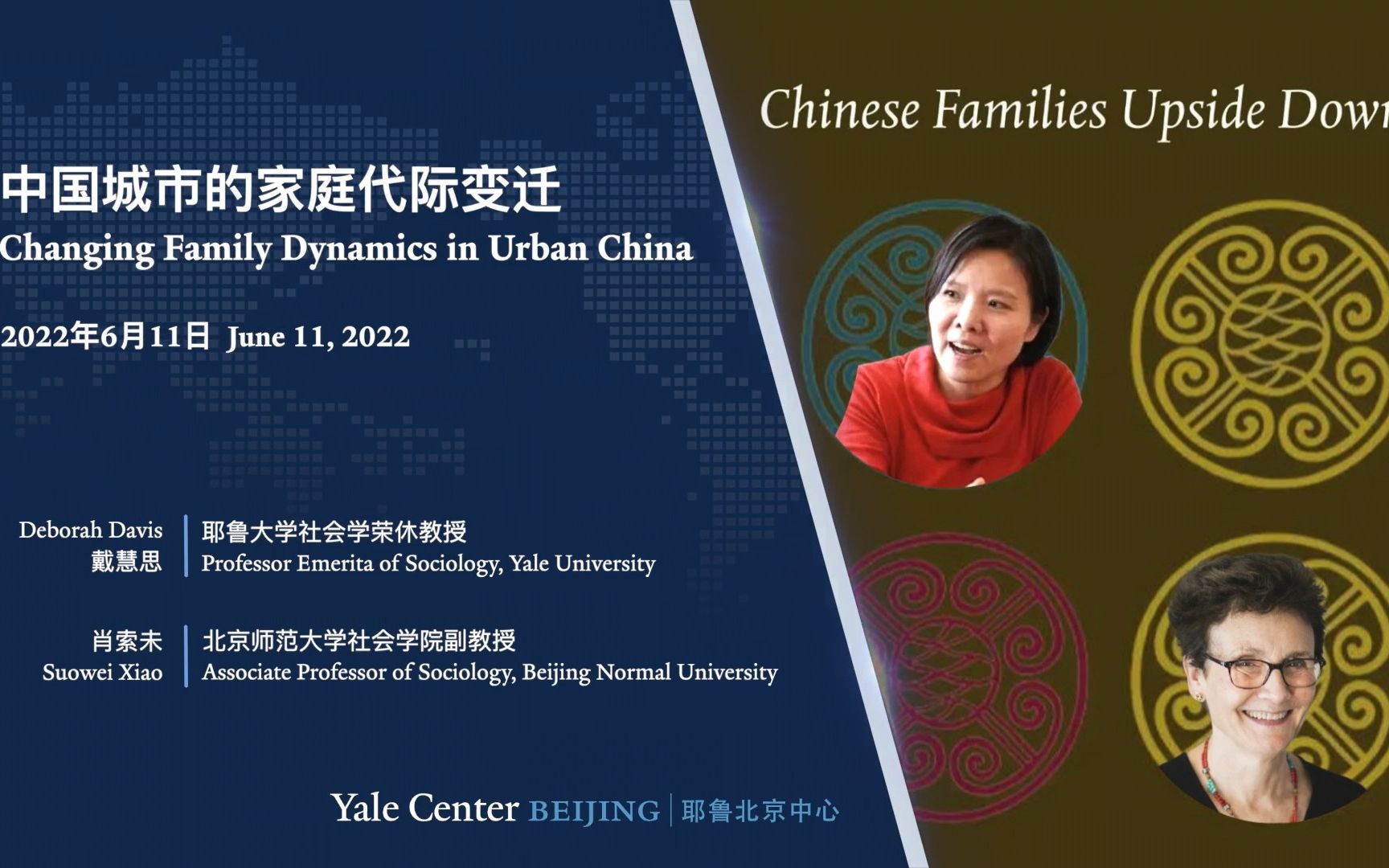
字幕摘录
| 时间 | 英文 | 中文 |
|---|---|---|
| 0:04 | Good morning, or good evening, everyone, whether joining from China, Asia, or North America, and especially to our distinguished speakers Professor Deborah Davis and so a show from the Beijing Normal University. | 大家早上好或晚上好,无论是来自中国、亚洲或北美,特别是我们尊敬的演讲者Deborah Davis教授,以及北京普通大学的节目。 |
| 0:21 | Welcome to this Yale Center Beijing event. | 欢迎来到耶鲁中心北京活动 |
| 0:24 | I am Carol Lee Rafferty, Yale College alumna, as well as the managing director of the Yale Center Beijing. | 我是耶鲁大学校友卡罗尔·李·拉费蒂 以及耶鲁北京中心总经理 |
| 0:32 | Before we begin, I'll give a really brief introduction about the center for those of you who are new to these types of events, and also introduce our wonderful speakers for today. | 在我们开始之前,我将作一个非常简短的介绍,介绍你们中那些对此类活动有新意的人的中心,同时也介绍我们今天精彩的演讲者. |
| 0:45 | Founded in 2014, the Yale Center Beijing is Yale University's only university wide center outside of its US campus, and we host events such as these where we where we convene leaders from academia, business, government, the arts and sciences for dialogues | 北京耶鲁中心创建于2014年,是耶鲁大学唯一的大学宽中心,位于美国校园外,我们主办诸如此类的活动,聚集学术界、商界、政府、艺术界和科学界的领导人进行对话。 |
| 1:06 | on the most important and interesting issues on the world, almost every other day, since we were founded so we have since hosted thousands of events. | 自从我们成立以来,几乎每隔一天,我们曾主持过数千次活动。 |
| 1:17 | Today, I'm really delighted to be able to host this panel discussion on changing family dynamics and urban China as part of the Greenberg | 今天,我非常高兴能主持这次关于改变家庭动态和中国城市的小组讨论,作为格林伯格的一部分。 |
| 1:27 | Distinguished Colloquium, where we're honored to have professors to Denver Davis and so a show, who are both sociologists studying contemporary Chinese urban family dynamics to introduce their work and their research overall. | 杰出的学术讨论会,我们很荣幸能有教授到丹佛戴维斯那里来, 以及这样一场演出, 他们都是研究当代中国城市家庭动态的社会学家, 来介绍他们的工作和他们的研究。 |
| 1:46 | Some feature already featured in Chinese families upside down, and from the generational dynamics and neo them some feminism and early 21st century, which is a volume edited by Professor Yunsheng Yan. | 中国家庭倒挂着一些特征,从代代动力学和新事物中可以看出一些女性主义和21世纪初,这是由Yunsheng Yan教授编辑的一卷. |
| 2:02 | I believe our participants have already received copies of the chapters and I hope you've had a chance to review them, or will be able to go back to them after this talk. | 我相信我们的参与者已经收到了各章的复制件,我希望你们有机会再审一下,或者在本次谈话结束后能够再回到他们身边. |
展开字幕全文(760 条)
| 序号 | 英文 | 中文 |
|---|---|---|
| 1 | Good morning, or good evening, everyone, whether joining from China, Asia, or North America, and especially to our distinguished speakers Professor Deborah Davis and so a show from the Beijing Normal University. | 大家早上好或晚上好,无论是来自中国、亚洲或北美,特别是我们尊敬的演讲者Deborah Davis教授,以及北京普通大学的节目。 |
| 2 | Welcome to this Yale Center Beijing event. | 欢迎来到耶鲁中心北京活动 |
| 3 | I am Carol Lee Rafferty, Yale College alumna, as well as the managing director of the Yale Center Beijing. | 我是耶鲁大学校友卡罗尔·李·拉费蒂 以及耶鲁北京中心总经理 |
| 4 | Before we begin, I'll give a really brief introduction about the center for those of you who are new to these types of events, and also introduce our wonderful speakers for today. | 在我们开始之前,我将作一个非常简短的介绍,介绍你们中那些对此类活动有新意的人的中心,同时也介绍我们今天精彩的演讲者. |
| 5 | Founded in 2014, the Yale Center Beijing is Yale University's only university wide center outside of its US campus, and we host events such as these where we where we convene leaders from academia, business, government, the arts and sciences for dialogues | 北京耶鲁中心创建于2014年,是耶鲁大学唯一的大学宽中心,位于美国校园外,我们主办诸如此类的活动,聚集学术界、商界、政府、艺术界和科学界的领导人进行对话。 |
| 6 | on the most important and interesting issues on the world, almost every other day, since we were founded so we have since hosted thousands of events. | 自从我们成立以来,几乎每隔一天,我们曾主持过数千次活动。 |
| 7 | Today, I'm really delighted to be able to host this panel discussion on changing family dynamics and urban China as part of the Greenberg | 今天,我非常高兴能主持这次关于改变家庭动态和中国城市的小组讨论,作为格林伯格的一部分。 |
| 8 | Distinguished Colloquium, where we're honored to have professors to Denver Davis and so a show, who are both sociologists studying contemporary Chinese urban family dynamics to introduce their work and their research overall. | 杰出的学术讨论会,我们很荣幸能有教授到丹佛戴维斯那里来, 以及这样一场演出, 他们都是研究当代中国城市家庭动态的社会学家, 来介绍他们的工作和他们的研究。 |
| 9 | Some feature already featured in Chinese families upside down, and from the generational dynamics and neo them some feminism and early 21st century, which is a volume edited by Professor Yunsheng Yan. | 中国家庭倒挂着一些特征,从代代动力学和新事物中可以看出一些女性主义和21世纪初,这是由Yunsheng Yan教授编辑的一卷. |
| 10 | I believe our participants have already received copies of the chapters and I hope you've had a chance to review them, or will be able to go back to them after this talk. | 我相信我们的参与者已经收到了各章的复制件,我希望你们有机会再审一下,或者在本次谈话结束后能够再回到他们身边. |
| 11 | Let me give a brief introduction to our distinguished guests. | 让我向我们的贵宾作一个简短的介绍。 |
| 12 | Deborah Davis is a professor emerita of sociology at Yale University, where she served as director of academic programs at the Yale Center for study of globalization was chair of the Department of | Deborah Davis是耶鲁大学社会学教授Emerita,她曾担任耶鲁大学全球化研究中心学术课程主任。 |
| 13 | Society and methods of field work. | 社会和实地工作方法。 |
| 14 | She previously served six terms as a trustee of the Yale China Association, which was founded back in 1905, and shared the advisory board of the university's service center library at the Chinese University of | 她此前曾六届担任1905年创办的耶鲁中国协会的理事,并共享中国大学服务中心图书馆咨询委员会. |
| 15 | Hong Kong. | 香港报. |
| 16 | Currently she is on the editorial boards of the China Quarterly, the China Review, and the Chinese sociological review, and if it weren't for covert, she would also be teaching at the Schwarzman College in Beijing and really hope to see her back. | 目前她还在"中国季刊","中国评论","中国社会学评论"等编辑部任职,如果不是隐蔽的,她也会在北京施瓦兹曼学院任教,并真正希望见到她回来. |
| 17 | In our neck of the woods. | 在树林的脖子上 |
| 18 | Professor show a show is associate professor of sociology at Beijing Normal University. | 教授展出为北京师范大学社会学副教授. |
| 19 | She earned her PhD in sociology at UC Berkeley, and her BA in Chinese literature at Peking University. | 她在UC伯克利大学获得社会学博士学位,在北京大学获得中国文学学士学位. |
| 20 | She is the author of desire and dignity class gender and intimacy and in transitional China, and a number of articles on gender intergenerational intergenerational relations, family change and class formation. | 她是渴望和尊严阶级性别、亲密关系和转型中国的作者,以及一些关于代际关系、家庭变化和阶级形成的文章。 |
| 21 | Now today's event will proceed as follows. | 今天的活动将如下。 |
| 22 | Deborah and so away will each give a presentation, based on their research for about 20 minutes, and then the two of them will have a discussion among among themselves about each of their work. | 黛博拉和这样远的地方将各自根据他们的研究作一个介绍,大约20分钟,然后他们两人将就各自的工作展开讨论. |
| 23 | And, and then we'll open up the floor for questions from our audience, and depending on the timing. | 然后,我们将打开地板 问来自我们的观众, 取决于时间。 |
| 24 | I may post them or I may unmute each of you to post them. | 我可以张贴他们 或者可以解除你们每个人的指责 |
| 25 | You're more than welcome to type your questions in the chat box throughout the talk, although we're already grateful that we've collected many many many questions before the event. | 我们非常欢迎你在整个谈话过程中在聊天框中输入你的问题,尽管我们已经感谢我们在活动前收集了许多问题. |
| 26 | So without further ado, let's welcome Professor Deborah Davis. | 所以不用多费心了 我们来欢迎Deborah Davis教授 |
| 27 | Thank you very much. | 谢谢 |
| 28 | Thank you, Carol for this opportunity as you said it's a disappointment not to be in Beijing. | 谢谢你,卡罗尔,你所说的这个机会 不在北京是令人失望的。 |
| 29 | I left in January, January 10 2020 expecting to be back in March, and I'm still waiting. | 2020年1月,1月10日离队,期待3月复出,我还在等待. |
| 30 | You've read the chapter at least you have the chapter. | 你至少读过这章 你有章子 |
| 31 | So what I thought I'd do first is I'm going to talk a little bit about the issues and themes that were in that chapter and then I'm going to share some more academic material and to look at this question of | 所以我想先谈一下那章里的问题和主题 然后我再分享一些更多的学术材料 |
| 32 | Where is China going. | 中华何处去. |
| 33 | Our work is looking at the past, and we all are thinking about what comes next. | 我们的工作是回顾过去,我们都在思考接下来会发生什么。 |
| 34 | So I'm going to start now on very briefly, I'm saying something about this chapter, we do parental involvement in the marriages of urban sons and daughters. | 因此,我现在要简短地开始, 我谈到这一章, 我们做父母参与城市儿女的婚姻。 |
| 35 | I have been working in Shanghai since 1981. | 1981年起在上海工作. |
| 36 | And initially, I focused on the elderly and on pensions, and I did that for three or four years in the early 80s, and as my main subjects were new newly retired women, textile workers but also other kinds of blue collar workers | 一开始,我专注于老人和养老金, 我在80年代初做了3到4年, 因为我的主要科目是新退休的女性,纺织工人, 还有其他种类的蓝领工人 |
| 37 | I was learning a great deal about their family life. | 我学到了很多关于他们的家庭生活的知识。 |
| 38 | And so at the end of that decade, one of the things that struck me was how one generation had been lost, and I was very interested to find out how they were going to go forward in their lives. | 因此,在这个十年结束时, 使我印象深刻的一件事是, 一代人是如何失去的, 我非常感兴趣地发现他们如何在生活中前进。 |
| 39 | So I was already engaged with looking at how parents and adult children experience life, what they share. | 所以我已经着手研究父母和成年子女 如何体验生活,他们分享什么。 |
| 40 | Then in 90s, I did a lot of field work in China, mostly in Shanghai again because the conditions were good and I had partners. | 90年代,我在中国做了很多实地工作,多半是在上海,因为当时的条件很好,我也有搭档. |
| 41 | And we were became very interested in consumption and issues of occupational mobility and entrepreneurship. | 我们开始对消费和职业流动性和创业问题非常感兴趣。 |
| 42 | And again this issue of family was there, if not the focus, because it was through family that people found their jobs was through family that people | 家庭问题同样存在,如果不是焦点, 因为人们通过家庭找到工作, |
| 43 | raised capital to start small firms. | 筹集资本创办小型企业。 |
| 44 | And then after 2000, I worked more and more at the micro level for large scale urban development, particularly of real estate and housing, but at the same time, I was able to do field working in Yunnan province in poverty | 2000年后,我越来越多地在微观一级从事大规模城市发展,特别是房地产和住房发展,但同时,我能够在云南省贫困地区从事实地工作。 |
| 45 | And again, information on families, how families decide to live together, how they pool resources, and in the issue of marriage, how spouses find each other. | 同样,关于家庭的信息,家庭如何决定共同生活,如何汇集资源,在婚姻问题上,配偶如何找到彼此。 |
| 46 | Are they relying on their parents? | 他们依赖父母吗? |
| 47 | Do they make their own decision? | 他们自己做决定吗? |
| 48 | Do they need parental approval? | 他们需要父母批准吗? |
| 49 | And then as these young adults become parents and their lives become more complicated, what kind of family ties develop? | 然后,随着这些年轻的成年人成为父母,他们的生活变得更加复杂,什么样的家庭联系发展起来? |
| 50 | So this is the long sweep of these decades of work. | 这就是这几十年工作的漫长历程。 |
| 51 | This particular essay, if you read it, is based on the field work I did in Shanghai in between 2015 and 2018. | 这篇特别的散文,如果你读了的话,就是根据我在2015年至2018年间在上海所做的实地工作. |
| 52 | And there are several articles and you'll see reference to them if you want to think about them. | 还有几篇文章,如果你想考虑的话,你会看到这些文章的引用. |
| 53 | What I'm now going to do is briefly hit some of the highlights and give you some illustrations. | 我现在要做的是 简短地点亮一些亮点 给你们一些插图 |
| 54 | Excuse me. | 对不起。 |
| 55 | The first is this famous English they call it the matchmaking corner, which is in People's Park. | 第一种是这种著名的英语,他们称之为"火柴角",位于人民公园. |
| 56 | There are similar parks in almost every large city in China, where parents come on the weekends to find a spouse for their child. | 中国几乎每个大城市都有类似的公园,父母周末来为孩子寻找配偶. |
| 57 | In fact, what they're doing is trying to find a family, it's like theirs, and it's a process of matching families. | 事实上,他们所做的是试图找到一个家庭,这就像他们的家庭,这是一个家庭匹配的过程. |
| 58 | I'm not going to go into detail, we can pick it up. | 我不会细说,我们可以拿起它。 |
| 59 | This focus on the wedding turned out to be a terrific way to get in at the grassroots. | 这种对婚礼的关注 证明是进入基层的好方法 |
| 60 | This is not a family that I interviewed. | 这不是我采访过的家庭 |
| 61 | These are people in a promotional shot from a hotel, but they are very much like many of the weddings I went to, and the many tens of tens of videos that I watched with my interview subjects, in which the young couple has a very elaborate performance. | 这些人在酒店的促销镜头中,但他们非常像我参加过的许多婚礼,还有我用采访题材观看的几十个视频,其中年轻夫妇的表演非常细致. |
| 62 | And so the first article I wrote on this was called Performing Happiness for Self and Others. | 因此,我写的关于这篇文章的第一篇文章 叫做“自我和他人的幸福”。 |
| 63 | The wedding was central to the parents. | 婚礼是父母的核心 |
| 64 | Young couples often really did not want a fancy wedding in a hotel. | 年轻夫妇往往真的不想在酒店里举行一场漂亮的婚礼。 |
| 65 | They wanted to take a long honeymoon, they wanted a destination wedding, but they couldn't do it because the wedding was so important for their parents. | 他们想度长蜜月,想参加目的地婚礼,但由于婚礼对父母如此重要,所以不能进行. |
| 66 | So that celebration was a celebration of the parental success. | 因此,这一庆祝活动是庆祝父母的成功。 |
| 67 | And this is a picture I think that captures very well the multiple trends and feelings that are running through families as they pass through this important transformation. | 这是一张图片,我认为它非常清楚地反映了 家庭经历这一重要转变时的多重趋势和感受。 |
| 68 | Fathers becoming father-in-laws, mothers becoming mother-in-laws, as well as younger men and women becoming a husband and wife. | 父亲成为岳父,母亲成为岳母,年轻男女成为夫妻. |
| 69 | The third picture, this is mentioned in the article, but there's no picture, is this somewhat new ceremony for urban people. | 第三张照片,这在文章中提到,但是没有图片,是这个对城市人来说有些新的仪式. |
| 70 | It is not a new ceremony for rural people. | 这不是对农村人民的新仪式。 |
| 71 | Many rural families continued a version of this, where the young bride, when she reaches her husband's family, | 许多农村家庭继续采用这种形式,年轻新娘在接近丈夫家庭时, |
| 72 | kneels before the parents, the parents give a hongbao, and she is welcomed into the household. | 跪在父母面前,父母给一个洪宝,她被欢迎入户. |
| 73 | But what we have now with this gai kou fei is a new tradition for urban families. | 但是,我们现在拥有的这个gai kou fei是城市家庭的新传统。 |
| 74 | And again, this picture is from an advertisement from a video company, which specializes in | 这张照片也是从一家视频公司的广告上拍的, |
| 75 | videos for weddings. | 婚礼录像 |
| 76 | Again, I witnessed many such ceremonies, attending them, and I also was part of the standard interview I ask all my interviewees. | 我再次目睹许多这样的仪式,参加这些仪式,我也是我向所有受访者要求的标准访谈的一部分。 |
| 77 | And I interviewed in that 2017, 100 men and women from three generations. | 我在2017年的采访中,从三代开始的100名男女. |
| 78 | So I was interested in the marriages of the parents in the late 70s and 80s, the marriages of siblings in the 90s, and the marriages of my younger generation. | 所以我对70年代末80年代父母的婚姻,90年代兄弟姐妹的婚姻,以及我年轻一代的婚姻感兴趣. |
| 79 | So you can see that in the article and in these pictures, the way in which a sociologist tries to get into | 在文章和这些图片中可以看到 社会学家试图进入 |
| 80 | the reality of what a marriage means in urban China. | 婚姻在都市中国的意义。 |
| 81 | And then from reading the article and the other things, you know that what a sociologist is doing is by closely looking at this one ritual, this one ceremony, probing to see what are the dynamics of these families. | 然后从阅读文章和其他的东西, 你知道一个社会学家正在做的是 仔细观察这个仪式,这个仪式, 探究这些家庭的动态。 |
| 82 | How does it vary by class? | 班级有什么不同? |
| 83 | Something that Professor Xiao will talk about also. | 萧教授也会谈的 |
| 84 | How does it vary by region? | 如何因地区而异? |
| 85 | Even when we're looking at urban, we look across different kinds of cities, northern cities, southern cities, etc. | 纵观城市,纵观不同种类的城市,北方城市,南方城市等. |
| 86 | One of the findings when I did all the work on the advertising was that the wedding, the package wedding in the hotels is remarkably similar across all of China. | 我做广告时的发现之一是 婚礼 酒店的包裹婚礼 在中国各地都非常相似 |
| 87 | And it's even seeping down so that those who marry in the village, they have something quite similar in a county town. | 甚至在村里结婚的人 在县城里也有类似的东西 |
| 88 | So there's a homogenization, even as the society as a whole becomes more unequal economically and certain class difference is powerful. | 因此存在同质化现象,即使整个社会在经济上变得更加不平等,某些阶级差异也很强大. |
| 89 | The next slide is from a advertisement in the Shanghai subways. | 下一张幻灯片来自上海地铁的广告. |
| 90 | And again, I took it off of the web. | 再说一遍,我把它从网上拿下来了。 |
| 91 | And this is the normative ideal at the moment. | 这就是目前规范的理想。 |
| 92 | What's an ideal urban family look like? | 一个理想的城市家庭是什么样子? |
| 93 | It's the parents with the son or the daughter. | 是父母与子或女. |
| 94 | But I think in this case, the way the man's holding on the older woman's shoulder, if the ideal is a couple in their 60s, a son in the early mid 30s, with his wife and now two children, a boy and a girl. | 但我认为,在这种情况下,男人抱着老年妇女肩上的方式,如果理想是60多岁的一对夫妇,30年代初期的儿子,和他的妻子和现在的两个孩子,一个男孩和一个女孩. |
| 95 | So this is the what we call the normative idea. | 这就是我们所谓的规范思想。 |
| 96 | What I want to do in my remaining time is to talk about the future of the reality of what family life might be like, but also the norms. | 在我剩下的时间里,我想做的是谈谈家庭生活可能是什么现实的未来,以及规范。 |
| 97 | What is it that young people and their parents want for a family relationship? | 年轻人及其父母想要的家庭关系是什么? |
| 98 | And here I'm going to bring in Yan Yunqiang's book to which both of us contributed. | 在这里,我要把燕云强的书带进我们两人都贡献的书中. |
| 99 | And I want to say something a little bit about Yunqiang. | 我想说点关于云强的事 |
| 100 | This is a picture was taken two years ago in Beijing. | 这是两年前在北京拍摄的照片。 |
| 101 | He was born in Beijing. | 他出生于北京. |
| 102 | He has his PhD from Harvard. | 他有哈佛大学的博士学位 |
| 103 | He now teaches. | 他现在教书。 |
| 104 | He's a professor at UCLA. | 他是加州大学洛杉矶分校的教授. |
| 105 | And he was one of the very first people based on 10 years of field work in Heilongjiang Village to show that what happened under collectivization was an empowerment of young women and an empowerment of the couple. | 而他也是以黑龙江村10年田野工作为基础,最先显示集体化下发生的事情是赋予女青年权力和夫妇权力的人物之一. |
| 106 | The young couple had access to certain private space and also private resources, even if the economy was collectivized. | 这对年轻夫妇可以进入某些私人空间和私人资源,即使经济被集体化。 |
| 107 | And then he proceeds to follow that through. | 然后,他开始跟随 通过。 |
| 108 | The first book was called Flow of Gifts. | 第一本书名为"礼物之流". |
| 109 | The next one was called Private Life Under Socialism. | 下一个叫做社会主义下的私人生活。 |
| 110 | And then he's written most recently a lot about individuation. | 然后他最近写了很多关于异化的文章. |
| 111 | So Chinese families upside down, his last edited volume, means that today, particularly in urban China, the flow of aid goes from the upper generation to the lower generation, in particular toward the grandchildren. | 因此,中国家庭倒挂,他最后的编辑卷,意味着今天,特别是在中国城市,援助从上一代流向下一代,特别是流向孙辈。 |
| 112 | So that in these families of four grandparents, two husband and wife, and any number of whether it's two children or three children, the flow is downward, and everyone is, in some ways, living and planning their lives through the children. | 这样,在这些有四个祖父母,两个夫妻的家庭里, 不论是两个孩子还是三个孩子, 流量都在下降, 在某些方面,每个人都通过孩子来生活和规划自己的生活。 |
| 113 | And for him, this is families upside down. | 而对他来说,这是家庭颠倒。 |
| 114 | And the normative argument would be that this is also the emerging norm of what makes a happy family. | 而规范的论点是, 这也是一个幸福家庭的新规范。 |
| 115 | He and I don't entirely agree, in part because in my work, because of the marriage focus in my research recently, I'm very focused on young men and women, and middle aged men and women, and the kind of horizontal, intimate and sexual ties that they have, | 他和我并不完全认同, 部分原因是在我的工作中, 由于我的婚姻重点 最近的研究, 我非常专注于青年男女, 和中年男女, 以及他们的那种横向,亲密和性联系, |
| 116 | which create tension with this more vertical downward movement. | 造成这种垂直向下运动的紧张。 |
| 117 | And that's the future, and it's the present but it's also the future. | 这就是未来,它是现在,但它也是未来。 |
| 118 | This question of how the vertical loyalties which flow from the grandparent to the grandchild intersect with these competing horizontal loyalties of husbands and wives. | 关于从祖父母到孙子的纵向忠诚与丈夫和妻子之间的横向忠诚如何交织的问题。 |
| 119 | Now, very quickly, five minutes, I'm going to just give you some material, some of which may be very familiar with, some of it will not be. | 现在,非常快,五分钟,我给你一些材料, 有些材料可能非常熟悉,有些材料不会。 |
| 120 | And that is, as a sociologist, I almost always go first to population data and concerns of change at the population level or demographic trends. | 也就是说,作为一个社会学家,我几乎总是首先谈到人口数据和人口层面的变化或人口趋势。 |
| 121 | So I'm going to just flag for you six that I feel are really important for both explaining the changes in the last 10 years, but also where I think we might be looking in the near future. | 所以我要为你们标上六条旗, 我觉得这对解释过去10年的变化非常重要, 但也对解释我们在不久的将来可能要寻找的地方很重要。 |
| 122 | So the first is, again, well known to you, birth rates and death rates, birth numbers and death numbers, and we go all the way back to 1950, the period we're most interested in since 1980 since the one child policy. | 因此,第一种情况也是众所周知的, 出生率和死亡率, 出生率和死亡率, 我们一直追溯到1950年, 也就是我们自1980年以来最感兴趣的时期。 |
| 123 | And what you can see in this graph, of course, is that by 2015 rates are rather similar. | 当然,从这个图中可以看到, 到2015年, 比率相当相似。 |
| 124 | What's perhaps even more dramatic are looking at the numbers. | 可能更戏剧化的是数字。 |
| 125 | This is the number of births in China, and we can see since 2016 there's been this dramatic decline in the number of births, so that in 2021 last year we estimate we estimate the Chinese government estimates that it's 10.6 million babies were born. | 这是中国的出生数量,我们可以看到,自2016年以来,出生数量急剧下降,因此我们估计在去年的2021年,中国政府估计出生的婴儿有1060万. |
| 126 | What is really important is that in the previous year 10.6 million deaths were registered. | 真正重要的是,去年登记的死亡人数为1 060万人。 |
| 127 | So China has reached an extremely rapidly a situation in which number of breath deaths is equal to the number of births. | 因此,中国的呼吸死亡数量与出生数量相当的情况极为迅速。 |
| 128 | This is very rare. | 这是非常罕见的。 |
| 129 | Certainly it's nowhere near like this in the United States or in any country in Latin, North America, or Africa or the Middle East. | 当然,在美国或拉丁美洲、北美、非洲或中东的任何国家,它都离这不远。 |
| 130 | There are a few places in Europe, which has reached this level, and Japan is the other place we look at for this rapid aging. | 欧洲有几个地方,已经达到这个水平,而日本是另一个我们看待这种迅速老龄化的地方。 |
| 131 | But what I'm focusing on today is this intergenerational dynamic, so that the reason this ratio of birth to deaths is so important going forward is this question of dependency ratios. | 但我今天所关注的就是这种代际动态, 所以这个出生与死亡的比例 如此重要的原因就是这个受抚养比率问题。 |
| 132 | And that is quite simply defined here by age, the degree to which those over 65, we think of the elderly dependence, what is the ratio of that age group to the blue and the green, those who are 20 and under, or it can even be often the blue, meaning the v | 这里非常简单地按照年龄来定义,65岁以上的人, 我们认为老年人的依赖程度, 这个年龄组与蓝色和绿色的比例是多少, 20岁和20岁以下的人, 或者甚至可能常常是蓝色的, 意思是需要很多照顾的非常年轻的人, 而65岁以上的人也需要很多照顾。 |
| 133 | And what we can see is China is moving to a situation in which the dependency ratio is radically changing. | 我们所看到的是,中国正在走向一种依赖比率正在发生根本变化的局面。 |
| 134 | So in this next quick slide, which is what we use for the lecture I gave on in the fall for Schwarzman, is that we see the crossover point in about 2013, where if we look at the dependency ratio, it is no longer children, but it's elders. | 因此,在接下来的快速幻灯片中, 也就是我们在秋天为施瓦兹曼演讲时使用的, 就是我们在2013年左右看到了交叉点, 如果我们看看受抚养人的比例, 它不再是孩子,而是长者。 |
| 135 | So if we think about the upside down family, this issue of the ratio of the elders to children and families in the future is going to be different than it was in the past. | 所以,如果我们想一想颠倒的家庭,这个关于未来长者与子女和家庭之比的问题将会与过去不同. |
| 136 | It also has implications for the society. | 它还对社会产生影响。 |
| 137 | The next thing, three slides all relate, these are trends four and five, the divorce and marriage, so you've read that in the article, but I just want to flag it for you. | 接下来,三个幻灯片都有关, 这些是趋势四和趋势五, 离婚和婚姻, 所以,你已经读了 在文章中, 但我只是想标注它给你。 |
| 138 | The blue shows quite high numbers, these are numbers, not rates, of people marrying across the whole country. | 蓝色显示的是相当高的数字,这些是全国范围内结婚的人数,而不是比率。 |
| 139 | The orange line on the bottom shows, especially after 2003, when it was no longer necessary to get the permission of your employer to register for a divorce, the dramatic rise in the number of divorces. | 底部的橙线显示,特别是在2003年之后,当不再需要得到雇主的允许登记离婚时,离婚数量急剧上升。 |
| 140 | And most recently, paralleling the drop in births, although it has a different determinant, is this dramatic drop in the number of marriages. | 最近,虽然出生率下降有不同的决定因素,但与此同时,婚姻数量急剧下降。 |
| 141 | Now when marriages drop, we don't know whether people are just delaying. | 现在,当婚姻下降,我们不知道 人们是否只是拖延。 |
| 142 | And in the past, that's generally what we thought was happening in the United States, in China. | 过去,我们一般认为 发生在美国,中国。 |
| 143 | But there's something else I want to say before I talk about younger people delaying marriage, and that's about remarriage. | 但是,在我谈论年轻人推迟结婚之前,我还有话要说,这就是再婚. |
| 144 | Because when you see numbers like this, declining numbers of marrying, high numbers, ever higher, increasing numbers of divorces, and in 2020, it continued in that direction. | 因为当你看到这样的数字, 结婚数量下降, 高数字, 越来越高, 越来越多的离婚, 在2020年, 它继续朝着这个方向发展。 |
| 145 | You can see that a very high percentage, or not percentage, the ratio of people who are marrying, remarrying for the second time is also very high. | 你可以看到,一个非常高的百分比,或者说不是百分比,第二次结婚,再婚人口的比例也非常高. |
| 146 | And this is Shanghai, which is where we can really track it quite, you can do it nationally, but I'm focusing on the city data. | 而这里是上海, 在那里,我们可以真正地追踪它, 你可以在全国进行, 但我专注于城市数据。 |
| 147 | You can see that actually people are not giving up on marriage. | 人们不会放弃婚姻 |
| 148 | They may be giving up on the partner, but they're not giving up on marriage. | 他们可能放弃了伴侣,但他们并没有放弃婚姻. |
| 149 | And here is data that I took from the census. | 这是人口普查的数据。 |
| 150 | I don't yet have access to the 2020 census, of course I'm interested. | 我还没有机会参加2020年人口普查,当然我很感兴趣. |
| 151 | And this looks at people who have never married men and women, and it's the blue line, and the peak is the men, and the low number is the women. | 然此观人,未娶男女,其为蓝线,高峰为男,少数为女. |
| 152 | And this is extremely hot. | 这是非常热的。 |
| 153 | And so this 25 to 29. | 25到29岁 |
| 154 | In the past, we would think they were possibly not delaying. | 过去,我们认为他们不可能拖延。 |
| 155 | We now know that people in China, in urban China, are delaying both men and women to their late 20s to commit to marriage. | 我们现在知道,在中国,在城市中国,人们正在把男女双方推迟到20年代末,以承诺结婚. |
| 156 | They are cohabiting. | 他们在同居 |
| 157 | They are sexually active in their early 20s and mid 20s. | 她们20多岁和20多岁时性活跃。 |
| 158 | They are not only sexually active with a person they'll marry. | 他们不仅和他们要结婚的人有性关系 |
| 159 | So there's been a sexual revolution, and that impacts the institution of marriage. | 所以发生了性革命, 这影响了婚姻制度。 |
| 160 | And this is just illustrations to show why I'm keeping, how I'm keeping track. | 这只是一些插图 来说明我为什么保持,我是如何保持追踪。 |
| 161 | In Q&A, we can talk more about why it's important or what you in the audience think I may have missed. | 在"QQA"中,我们可以更多地谈论为什么这很重要,或者你认为我错过了什么. |
| 162 | So the last slide is about this urbanization issue, migration out of villages. | 最后一张幻灯片是关于这个城市化问题, 迁移出村庄。 |
| 163 | You can see in this slide, which I did for the lecture, which I went to the World Bank for, China has one of the fastest rates of people moving from the countryside to the city. | 在这张幻灯片中,我做了演讲,我去了世界银行。 中国从农村迁移到城市的速度最快。 |
| 164 | And in fact, the percentage is much higher than this orange line would indicate, because as we know, a very significant percentage, maybe 20%, are not changing their hukou. | 事实上,这个百分比比这个橙线要高得多, 因为据我们所知,一个非常大的百分比,也许20%, 并没有改变它们的口罩。 |
| 165 | So when they say 50% is living in urban areas right now, it's closer to 65%. | 所以当他们说50%的人现在生活在城市地区时, 接近65%。 |
| 166 | And if we're looking at young adults, unmarried young adults or recently married young adults, it's probably somewhere between 70 and 75%. | 如果我们看年轻成年人,未婚的年轻成年人, 或者最近结婚的年轻成年人, 很可能在70%到75%之间。 |
| 167 | So when I talk about the dynamic of urban family life. | 当我谈论城市家庭生活的动态时。 |
| 168 | In the past, we segregated it, urban people who worked in that way had urban hukou, like urban jobs, blue collar and white collar, and their lives were very different than those in the villages. | 过去,我们把它隔离开来,以这种方式工作的城市人有城市的户口,如城市工作,蓝领和白领,他们的生活与村庄里的人有很大不同. |
| 169 | This is no longer true. | 这已经不是事实了。 |
| 170 | It's not true that life in the village isn't different than life in the city, it is, but the people are moving. | 村里的生活与市里的生活并不不同,这是不真实的,但是人们在移动. |
| 171 | So young adults and the families that are being built in China now are built in the context of one of the largest peacetime map migrations ever seen in human history. | 因此,现在中国正在建设的青壮年和家庭都是在人类历史上见过的最大的和平时期地图迁移的背景下建成的. |
| 172 | So that, for example, in the last five years, 40% of all children are living with one or no parent during the school year. | 因此,例如,在过去5年中,40%的儿童在学年中与父母一方生活在一起。 |
| 173 | So we've got urban kids, we've got rural kids, but the largest single group are kids who are in these migrating families. | 所以,我们有城市的孩子,我们有农村的孩子, 但是最大的一个群体是那些在移民家庭里的孩子。 |
| 174 | So if we're talking about Chinese families going forward, we need to be really sensitive to the centrality of this outward migration for the village. | 所以,如果我们谈论中国家庭前进, 我们需要真正敏感地注意这个向外迁移对乡村的中心位置。 |
| 175 | Okay. | 摆 |
| 176 | This is the last slide I've returned to the overview, and it asks about predictions on what comes next. | 这是我返回的最后一张幻灯片, 它询问了接下来的预测。 |
| 177 | And I think we're going to save that for the discussion. | 我想我们会留 讨论。 |
| 178 | But the simple answer is, of course, we don't know. | 但简单的答案是,当然,我们不知道。 |
| 179 | What we do know, as I said, is that people are marrying later. | 正如我所说,我们所知道的是,人们晚点结婚。 |
| 180 | There is a small number of people who are deciding they don't want to marry, very small. | 少数人决定不想结婚,很小。 |
| 181 | There's a growing group, again, a minority, and higher among women who don't want to be parents. | 还有一个日益增长的群体,再次是少数,在不想做父母的妇女中更高. |
| 182 | They want to marry, but they don't want children. | 他们想结婚,但不想要孩子. |
| 183 | And this is very important for understanding the future. | 这对理解未来非常重要。 |
| 184 | The older generation, and values may not perfectly align, but the reality right now in urban China is that it is almost impossible for young adults to build a household and raise their children without intense engagement by their parents. | 年长的一代和价值观可能并不完全一致,但目前中国城市的现实是,没有父母的大力参与,年轻人几乎不可能建立家庭和抚养子女。 |
| 185 | So that on one hand, there are these demographic drivers, value drivers, making young adults want to have a different life than their parents wanting to live separately and have greater autonomy. | 所以一方面,这些人口驱动力,价值驱动力, 使得年轻的成年人想要过着与父母不同的生活, 并且拥有更大的自主权。 |
| 186 | And then there's the reality that they can't survive unless the two generations, the word that Yunqiang used, are entangled. | 而后来的实际情况是,除非两代人,即云强所用的" word"字被缠绕,否则他们无法生存. |
| 187 | And I'll now move onward, hand it over to Professor Xiao, who is expert in this particular area. | 现在我继续前进,把它交给萧教授, 萧教授是这个特定领域的专家。 |
| 188 | Thank you so much, Deborah. | 谢谢你,黛博拉 |
| 189 | So Wei, please, we look forward to hearing your presentation as well. | 因此,魏,请,我们期待着听到你的介绍。 |
| 190 | All right, I'll share the screen. | 好吧,我会分享屏幕。 |
| 191 | I'm so Wei from Beijing New Normal University, and thanks for everyone for sharing up at early Saturday morning or late Friday night. | 我是北京新常大学的伟人,感谢大家周六清晨或周五深夜分享. |
| 192 | So, thanks for Deborah for sharing this macro background for the changing intergenerational dynamics in contemporary China. | 因此,感谢德博拉分享当代中国代际动态变化的宏观背景. |
| 193 | So my presentation will be focused on us kind of more case study. | 因此,我的发言将侧重于我们更多的案例研究。 |
| 194 | It's kind of, we're looking to the family to understand what's going on there by looking at this intergenerational collaboration in raising the child. | 这是一种,我们期待家庭 了解那里发生了什么 通过看这种代际协作 抚养孩子。 |
| 195 | So this is actually not a new thing for grandparents to be, for grandparents to be involved, for grandparents to be involved in their adult child, their adult children's family affairs particularly help them to raise a child. | 因此,这实际上对祖父母来说并不是一件新事情,对祖父母来说,对于祖父母来说,对于祖父母来说,对于祖父母来说,对于他们来说,对于他们的成年子女,对于他们的成年子女家庭事务来说,这特别有助于他们抚养孩子。 |
| 196 | So that's, that's a kind of a long lasting tradition. | 所以,这是一种长久的传统。 |
| 197 | But statistics show that more than half of the couples, mostly the urban couples have received help in childcare from their parents. | 但统计数据显示,超过一半的夫妇,大多是城市夫妇从父母那里得到了儿童保育方面的帮助. |
| 198 | It seems that this long lasting tradition sustains, but there's a change in meanings. | 似乎这种长久的传统是维持下去的,但意义却有所改变. |
| 199 | Scholars find that there are a lot of conflicts between parents and grandparents regarding parenting styles, how to raise the third generation, and there's also competition | 学者发现父母和祖父母在养育子女风格,如何抚养第三代,也有很多冲突,也有竞争. |
| 200 | between them for making, for building this intimate bonds with the third generation. | 和第三代人建立亲密联系 |
| 201 | And also, there's a kind of new phenomenon that grandparents become nineties, rather than someone who actually simply enjoying playing with us enjoying playing with having fun with grandchildren. | 另外,还有一种新现象, 祖父母会变成90年代, 而不是一个真正喜欢和我们一起玩的人。 |
| 202 | That's like kind of the convention image that will emerge when we thinking about the kind of the grandparents, like, involved in this, the grandparents taking care of children, it's kind of fun for them, but now they become nannies, they do a lot of house | 这就像一种会议的形象 将出现 当我们思考 那种祖父母,喜欢, 参与这件事, 祖父母照顾孩子, |
| 203 | voices in the decision making concerning the child development. | 在有关儿童发展的决策中发表意见。 |
| 204 | So, I think this is becoming a very key site to understand the changing intergenerational dynamic there. | 所以,我认为这正在成为一个非常关键的地方 来理解那里不断变化的代际动态。 |
| 205 | So I'm in my research, I was asking very simple questions to understand what's going on there. | 所以我在研究,我问了一些非常简单的问题 来了解那里发生了什么。 |
| 206 | First, I was trying to understand what's the division of labor in child rearing between parents and grandparents in contemporary Chinese urban families. | 首先,我试图了解当代中国城市家庭中父母与祖父母在抚养子女方面的劳动分工. |
| 207 | And also, does this reveal a new pattern of power dynamics between them. | 这是否揭示了它们之间新的动力动态模式。 |
| 208 | If so, what are the characteristics of features of this new power dynamic family dynamic. | 如果是的话,这种新的动力动态家族动态的特点是什么. |
| 209 | So to do this, I conducted qualitative research, which includes in depth interviews with parents from 13 families and eight grandparents, they are live in Beijing and the grandparents and the parents they live under the same rules at a time of the intervi | 为此,我进行了定性研究,包括深入采访来自13个家庭和8个祖父母的父母,他们住在北京,祖父母和他们的父母在接受采访时都生活在同样的规则之下. |
| 210 | And most of the participants in my study are middle class families. | 我的研究参与者大多是中产阶级家庭. |
| 211 | The father's hold managerial professional jobs and the mother's most commercial or like academic jobs. | 父亲从事管理专业工作,母亲从事商业或学术类工作。 |
| 212 | And they have children between three to 10. | 他们有3到10个孩子。 |
| 213 | Most of them are pre school age children. | 大多数是学龄前儿童。 |
| 214 | So that's the period that the young couples need help most from their, from the grandparents, and also did observation with seven families. | 这就是年轻夫妇最需要的时期, 祖父母的帮助, 也确实观察了七个家庭。 |
| 215 | I visit their homes, participate in family gatherings, or go on shopping with them, try to observe and better understand the interactions between the generations. | 我拜访他们的家,参加家庭聚会,或与他们一起购物,试图观察和更好地了解几代人之间的相互作用。 |
| 216 | And before I get into the details from my findings, I'll talk a little bit about what what I perceive the changing our practices of child rearing contemporary China, what I would argue that like reading a child becomes a very complicated and labor and mon | 在我从调查结论中了解细节之前, 我会谈谈我所认为的 改变我们养育当代中国儿童的做法 |
| 217 | expensive and labor intensive family project. | 昂贵的劳动密集型家庭项目。 |
| 218 | There's a few reasons for this. | 其原因有几处. |
| 219 | There's emergence of like so called scientific parenting. | 出现了所谓的科学育儿 |
| 220 | That's kind of expert oriented so you have to learn from experts rather than rely on your previous or past experiences, and it's also child centered. | 这是一种专家导向 所以,你必须学习专家 而不是依赖你以前或过去的经验, 而且它也是以儿童为中心的。 |
| 221 | That means the parents should to should develop a child's talents and try to build good characters and try to cultivate their multiple, their multiple, their multiple quality, their multiple talents, rather than exam oriented or exam driven. | 这意味着父母应当培养孩子的才能,努力培养好角色,努力培养他们的多,多,多品质,多才多艺,而不是以考试为导向或以考试为驱动. |
| 222 | So it's, it's kind of the roles of parents have extended, and they are not a good parents are not only caretakers of the children, but they also have to be learners of this expert knowledge of scientific parenting. | 因此,父母的作用已经扩大, 他们不是一个好父母 不仅是孩子的照顾者, 而且他们也必须学习科学的育儿知识。 |
| 223 | Also, they have to be consumers of this emerging markets for childcare and education, so they have to choose the best schools for their children, the best talented cultivating programs, toys, food, clothes, just to just to make it possible for the childre | 此外,他们必须成为这个新兴的儿童保育和教育市场的消费者,所以他们必须为其子女选择最好的学校,最好的有才华的种植计划,玩具,食物,衣服,只是为了让孩子们能够适当成长。 |
| 224 | So it becomes very expensive. | 所以它变得非常昂贵。 |
| 225 | For example, that in the families, I intervene, I interviewed the expenses the families spend on the children on their preschools or schools, school, and the kind of cultivating programs usually exceed the income of the mother. | 例如,在家庭里,我干预,我询问了家庭在学前班或学校、学校上为子女支付的费用,以及种植方案的类型通常超过母亲的收入。 |
| 226 | So it's extremely expensive, and it's labor intensive to solve the tasks have been divided into different parts, the manual job that the, the, the manual job, the mental job that is too big plans for the child development to learn the most updated informa | 因此,它非常昂贵, 和劳动密集型 解决这些任务 已经分为不同部分, 手工工作, 手工工作,精神工作 |
| 227 | child development and to educate the child and the manual manual labor that is like to take physical care of the child, and also the accessory job that is to do in household chores. | 培养儿童,教育儿童,进行体力劳动,如体力劳动,以及从事家务劳动。 |
| 228 | So that's being divided between different family members. | 因此,这被分成了不同的家庭成员。 |
| 229 | So I think some of readers probably have seen these cartoons. | 所以我认为一些读者可能看过这些漫画。 |
| 230 | These pictures are like jokes online. | 这些照片就像网上的笑话 |
| 231 | And there's a interesting thing that captures the kind of the division of labor inside a family which is in Chinese is mama | 有件有趣的事情 记录了中国人家庭的劳动分工 |
| 232 | The mother skippers and grandparents, the maternal grandparents raise a kid, and the father actually were mostly absent, but when he comes home he's basically surfing online, and grandparents they occasionally visit to see the child. | 母亲的跳伞手和祖父母, 母亲的祖父母养育一个孩子, 而父亲实际上大多缺席, 但是当他回家时, 他基本上在网络上冲浪, 祖父母偶尔会来看孩子。 |
| 233 | So that's the kind of the joke there. | 这就是那种笑话。 |
| 234 | It captures partial truth of what's going on in the family, but what I found is more complicated than that. | 它捕捉了部分真实的 发生在家庭中的事情, 但我发现的比这更复杂。 |
| 235 | So I found a pattern, what I call grandparents take care and mothers take charge in Chinese | 所以我找到了一个模式,我叫祖父母照顾,母亲用中文来管理 |
| 236 | So that's an adaptation from the traditional that again foods to move like mothers actually giving a nutrient care and fathers actually providing discipline and education to the child in traditional Chinese societies. | 这是传统食物的适应, 食物又像母亲一样移动, 真正给予养分照顾, 父亲实际上为中国传统社会的孩子提供纪律和教育。 |
| 237 | So I perceive this as an intergenerational division of labor inside of the family. | 因此,我认为这是家庭内部的代际分工。 |
| 238 | That is, mothers become this manager of this child rearing project that said like child rearing have become a very complicated family project there. | 也就是说,母亲们成为了这个养育孩子项目的管理者, 说这个项目就像养育孩子一样, 已经成为一个非常复杂的家庭项目。 |
| 239 | So what mothers do is that they actually make plans for the children. | 所以,母亲所做的是 他们实际上为孩子们做了计划。 |
| 240 | So they have to make decisions for the child development from choosing educational institutions to arrange daily activities, including choosing preschool, early child education programs leisure activities, making | 因此,他们必须作出儿童发展的决定,选择教育机构安排日常活动,包括选择学前教育、早期儿童教育方案、休闲活动。 |
| 241 | arrangements for weekend and holidays, shopping for food, clothes, toys that are age and gender appropriate, and to make good decisions. | 安排周末和节日,购买食物、衣服、适合年龄和性别的玩具,并作出良好的决定。 |
| 242 | They also have to learn a lot from experts from online from serving online reading books talking to other mothers, consulting experts, things like that. | 他们也得从网上专家那里学到很多东西, 从在线阅读书籍, 与其他母亲交谈,咨询专家, 类似的事情。 |
| 243 | And they also engage in kind of cultivate intellectual and moral development of the children. | 他们还参与培养儿童的智力和道德发展。 |
| 244 | So they usually read to the child assess the child's talents and developing relationships with preschools and training centers, then they also kind of involve themselves into this | 因此,他们通常向儿童阅读评估儿童的才能,并与学前和培训中心发展关系,然后他们也参与其中。 |
| 245 | character building of the child, they emphasize on self just discipline, emotional management and the communications skills and good habits in the children. | 他们强调儿童的自我公正纪律、情感管理以及沟通技巧和良好习惯。 |
| 246 | So that means they, but most of those lot of these activities were not only something they do to the child is also immersed in the daily care of the | 因此,这意味着他们, 但这些活动中的大多数 不仅仅是他们做的 给孩子, |
| 247 | of this children. | 这些孩子。 |
| 248 | So they not only do these by themselves, they also have to supervise on what how others do this. | 因此,他们不仅要自己做这些事情,而且还要监督其他人如何这样做。 |
| 249 | And they are in addition to these they also take a partial daily care of the children for the grandparents, they become the primary nutrient caregiver, that's you that that used to be the mother's role in traditional Chinese societies. | 除了这些之外,他们还为祖父母每天提供部分的照顾,他们成为主要的养分照顾者,这就是你曾经是母亲在中国传统社会中的角色. |
| 250 | So they take daily physical care of the children. | 所以他们每天要照顾孩子 |
| 251 | They cook for the children feed them, take them to schools and bring them back. | 他们为孩子们做饭喂他们,带他们去学校,带他们回来. |
| 252 | Sometimes they give birth to the children and they kind of put on closes, things like that they also do the lunch | 有时他们生孩子, 和他们种 关闭,类似的事情,他们也做午餐 |
| 253 | share of household chores, cooking, cleaning, washing clothes, things like that. | 家务、做饭、打扫、洗衣服 |
| 254 | For fathers, they are mostly absent from the daily life of the children, because they are super busy, they have to work overtime. | 对于父亲来说,他们大多不在孩子的日常生活中,因为他们超忙,必须加班. |
| 255 | And when they come back home, it's usually the children already in bed. | 而当他们回家时,通常是已经躺在床上的孩子. |
| 256 | And then when they get up in the morning, the children were already sent to school. | 然后当他们早上起床时,孩子们已经被送到学校了. |
| 257 | But their primary role is to be the provider for this very expensive family project to raise a child. | 但他们的主要作用是 成为这个非常昂贵的家庭项目 抚养孩子的提供者。 |
| 258 | They earn a lot to support this and that excuses for their absence from the daily life of the children. | 他们挣了很多钱来支持这一点,这些是他们离开儿童日常生活的借口。 |
| 259 | And they, they perform another role as a playmate, that usually there's a quality time reserved for them for the family, including the father over the weekend on the holidays, and the father's playing with kids like on vacations at home. | 而且,他们扮演另一个角色,作为玩伴, 通常有一个质量 时间为他们留给家庭, 包括周末的父亲在节假日, 父亲玩孩子 像在家里度假。 |
| 260 | And then they, they build a kind of a friend, a relationship, like a friend with the children rather than this very authoritarian paternal figure. | 然后,他们建立了一种朋友,一种关系, 像一个朋友与孩子们,而不是这个非常专制的家长人物。 |
| 261 | So I would also argue this pattern of grandparents take care and mothers take charge. | 因此,我还要指出,这种模式是祖父母照顾,母亲负责。 |
| 262 | It's not only a division of labor, it is a kind of a new pattern of power relations within the family. | 这不仅仅是分工,而是家庭内部权力关系的一种新模式. |
| 263 | So no mother stands at the center of the power. | 所以没有母亲站在权力的中心. |
| 264 | She's a primary decision maker, and she's also the supervisor of others who's taking care of the child. | 她是主要的决策者,同时也是照顾孩子的其他人的主管. |
| 265 | And for the grandparents, they are marginalized helpers in the family. | 对于祖父母来说,他们是家庭中被边缘化的帮手。 |
| 266 | So they do a lot of work, but they have very little voice in the decision making regarding | 因此,他们做了很多工作,但他们在决策方面几乎没有发言权。 |
| 267 | the child's development. | 儿童的发展。 |
| 268 | So when the parents decide which school to send the kids to, which cultivation program to enroll their children, their child in, their child in, they will not solicit opinion or consult the grandparents in general. | 因此,当父母决定送孩子去哪个学校、哪个种植方案让孩子、孩子、孩子入学时,他们不会征求意见,也不会征求祖父母的意见。 |
| 269 | But the grandparents have some autonomy in handling the household chores that they take care of. | 但是,祖父母在处理他们处理的家务方面有一定的自主权。 |
| 270 | For the father, he's no longer this kind of the authority in the family, and the primary decision maker for family affairs. | 对于父亲来说,他不再是家庭的权威,也是家庭事务的主要决策者. |
| 271 | In concerning the decisions for child development, now he is a participant in the decision making, and usually the mothers will consult for the consult them in regarding the import decisions, for example, which preschools to send to the kids to think like | 在有关儿童发展的决定方面,他现在是决策的参与者,通常母亲会就进口决定咨询他们的意见,例如,哪些学龄前儿童会送孩子这样思考。 |
| 272 | But their opinion only matters when mothers eyeing to them. | 但是她们的意见只有在母亲看着她们时才重要。 |
| 273 | So why so? | 为什么? |
| 274 | Why there's emergence of this new pattern of power relations in the family that puts a mother at the center, the young mother at center of the decision regarding child development issues. | 为何在家庭中出现这种新的权力关系模式,将母亲放在中心,年轻母亲放在儿童发展问题决定的中心. |
| 275 | So I think there are tried to provide three reasons for this. | 因此,我认为有人试图为此提供三个理由。 |
| 276 | First, as we just mentioned, there's a changing discourse on parenting. | 首先,正如我们刚才提到的那样,关于养育子女的说法正在改变。 |
| 277 | With the emergence of scientific notions of parenting and the education practices, all the activities arranged for children have been changed. | 随着养育子女科学观念和教育实践的出现,为儿童安排的所有活动都发生了变化。 |
| 278 | So the grandparents, previous experiences of grandparents for raising the kids have been outdated. | 所以祖父母,祖父母以前抚养孩子的经历已经过时了. |
| 279 | So they were not familiar with what's going on, what's going on at the current period. | 所以他们并不熟悉这段时期发生的事情,以及目前发生的事情. |
| 280 | And that's why the experience become devalued at the operational level. | 这也是经验在操作层面上被贬低的原因. |
| 281 | But at the same time, the scientific notions of scientific parenting and that's been promoted by the education industry also devalued to the grandparents' experiences at a symbolic value. | 但与此同时,科学为人父母的科学观念以及教育界提倡的这种观念,也以象征性的价值贬低了祖父母的经历. |
| 282 | They usually set the grandparents at the bad example. | 他们通常把祖父母树立在坏榜样。 |
| 283 | So they will say, oh, this is the right way to do not like what the grandparents did. | 所以他们会说,哦,这是正确的方法 不喜欢祖父母所做的。 |
| 284 | So they devalued the grandparents' experiences at the symbolic level. | 所以他们贬低了祖父母的象征性经历. |
| 285 | And this also intergenerational social mobility in the families I studied. | 这也是我所研究家庭的代际社会流动性。 |
| 286 | So most of my participants, like the younger generation, the young middle class parents, they have achieved approval mobility through education. | 因此,我的大多数参与者, 像年轻一代,年轻的中产阶级父母, 他们已经通过教育获得了认可。 |
| 287 | So they were usually the first generation of college graduates in the family. | 所以他们通常是家中第一代大学毕业生. |
| 288 | And they earn more than their parents. | 他们赚的比父母多 |
| 289 | They have better education and higher socioeconomic status compared to their parents. | 与父母相比,她们受教育程度更高,社会经济地位更高。 |
| 290 | So they were regarded as more knowledgeable and capable for making decisions for their own children. | 因此,他们被认为更了解情况,更有能力为自己的子女作出决定。 |
| 291 | And also there is a transformation in the family structure. | 家庭结构也发生了变化。 |
| 292 | So when we were thinking about three generations living under the same roof in traditional Chinese society, it's usually the house of the grandparents. | 所以,当我们想到三代人在中国传统社会中生活在同一个屋檐下时,通常是祖父母的家. |
| 293 | So the grandparents is the master of the house. | 故祖父母为家主. |
| 294 | But in this newly formed intergenerational family for collaborating in child rearing, it's an extension of the nuclear family. | 但在这个新成立的代际家庭中,因为合作抚养孩子,这是核心家庭的延伸. |
| 295 | That is like most of the grandparents actually leave their homes to move into their adult children's households to better take care of the grandchildren. | 这就像大多数祖父母实际上离开家,搬进成年子女家庭,更好地照顾孙子女。 |
| 296 | So it's kind of the young couple are the masters of this nuclear family. | 年轻夫妇是这个核心家庭的主人 |
| 297 | And the grandparents become the guests and helpers in this family. | 而祖父母成为这个家族的客人和帮手. |
| 298 | So this changing family structure in this intergenerational collaborations also matters for why the young mothers become the center of the power while the grandparents remain marginalized in this setting. | 因此,这种代际协作中不断变化的家庭结构也关系到为什么年轻母亲成为权力中心,而祖父母却在这种环境中仍然被边缘化。 |
| 299 | But why? | 为什么? |
| 300 | Why do grandparents want to do this? | 祖父母为什么要这么做? |
| 301 | So what are their perspectives? | 他们有什么观点? |
| 302 | What do they expect from this relationship, from this collaboration and from this relationships? | 他们从这种关系、合作和这种关系中期望什么? |
| 303 | So why do they help? | 他们为什么要帮忙? |
| 304 | So in my interviews with these grandparents say normally they seek to maintain mutual assistance and with their children, the adult children, and they also want to build this emotional bonds with their children as well as with the grandchildren. | 因此,在我对这些祖父母的采访中,他们通常说,他们寻求保持互助,与他们的孩子,成年的孩子,他们也想要与孩子以及孙子们建立这种情感纽带. |
| 305 | Practically, they understand that the payback from the adult children is delayed and it depends on the ongoing positive interactions between them. | 实际上,他们知道,成年儿童的回报被拖延,这取决于他们之间正在进行的积极互动。 |
| 306 | So they want to maintain this. | 所以他们想维持这个 |
| 307 | And also, emotionally, they give a hand value on this emotional bonds with their children and grandchildren. | 而且,在情感上,他们给与孩子和孙子的这种情感纽带以手值. |
| 308 | They all say, oh, I enjoy doing this. | 他们都说,哦,我喜欢这样做。 |
| 309 | I enjoy taking care of my grandchildren. | 我喜欢照顾我的孙子 |
| 310 | It gives me a very important meaning of living. | 它给了我一个非常重要的生活的意义。 |
| 311 | So with this in mind, they actually, when they have conflicts or when they have disputes with the mothers, they will be more tolerant. | 因此,考虑到这一点,他们实际上,当他们有冲突,或者当他们与母亲发生纠纷时,他们会更加宽容。 |
| 312 | In order to maintain this good relationship, a harmonious relationship in the family, they relinquish their power contestation or they concede in struggles. | 为了保持这种良好的关系,在家庭中和谐的关系,他们放弃了权力竞争,或者在斗争中让步. |
| 313 | They concede in family disputes for the purpose of maintaining this intergenerational intimacy and support. | 为了保持这种代际亲密关系和支持,他们在家庭纠纷中让步。 |
| 314 | So it's not that they actually accept the authority of the young mother, it's that they understand as their tolerance and understanding for the young generation. | 所以他们实际上不是接受年轻母亲的权威,而是理解他们对于年轻一代的宽容和理解. |
| 315 | But what do they expect? | 但他们期望什么? |
| 316 | They also, while they being kind of tolerant and understanding, they also expect the same thing from their adult children. | 他们还在一种宽容和理解的同时,期望成年子女也这样做。 |
| 317 | So they expect for mutual respect and care from their children. | 因此,他们期望其子女相互尊重和照顾。 |
| 318 | And as well, I think there's one quote that's revealing, that's very revealing. | 还有,我想有一句引文 说明,非常说明。 |
| 319 | As one grandparent said, we old people do not want money from them. | 正如一位祖父母所说,我们老人不想要他们的钱。 |
| 320 | We want kind words. | 我们要好话 |
| 321 | For instance, when they return home, they will say, oh mom, you're still up. | 例如,当他们回家, 他们会说,哦,妈妈,你还醒着。 |
| 322 | What did you eat today? | 你今天吃过什么? |
| 323 | As simple as that. | 就这么简单 |
| 324 | So she wants to receive care from the children, and she wants the children to be mutually tolerant to them, not picking on them. | 因此她想得到孩子们的照顾,她希望孩子们能够互相宽容,而不是挑剔他们. |
| 325 | But there's a challenge there. | 但那里有挑战 |
| 326 | As I just said, the young mother becomes the supervisor of the child care activities. | 正如我刚才所说,年轻母亲成为儿童保育活动的监督者。 |
| 327 | Sometimes she will intervene when she sees other family members do not take care of the child in a proper way. | 有时,当她看到其他家庭成员没有以适当方式照顾孩子时,她会进行干预。 |
| 328 | So she will intervene, she will try to kind of, she will try to teach how grandparents do this. | 因此,她会干预,她会尝试 那种,她会试图教 如何祖父母这样做。 |
| 329 | Sometimes it's kind of a challenge to the grandparents' face and dignity, a sense, and it's a challenge to this intergenerational bonds building upon mutual respect and care. | 有时这有点是对祖父母的容貌和尊严的挑战,是一种感觉,也是对这种建立在相互尊重和关怀基础上的代际纽带的挑战. |
| 330 | So how do mothers cope with it? | 那么,母亲怎么应付呢? |
| 331 | There are different ways for mothers to cope with it, particularly in terms of different parenting styles and different lifestyles. | 母亲们有不同的应对方法,特别是在不同的养育方式和不同的生活方式方面. |
| 332 | So for some mothers, they actually strategized to build a close tie with grandparents to fulfill their intergenerational expectations. | 所以对于一些母亲来说,他们实际上有策略 与祖父母建立紧密的纽带, 以满足他们世代之间的期望。 |
| 333 | So they will show care. | 所以他们会很小心的 |
| 334 | They will very tentatively show care to the grandparents, like buying their favorite food, shopping for their clothes, and taking them on vacations. | 他们暂时会照顾祖父母,比如购买他们最喜欢的食物,购买衣服,以及度假。 |
| 335 | And they also do things that matters to the grandparents, such as helping the relatives. | 他们也会做对祖父母很重要的事,比如帮助亲戚。 |
| 336 | And that helps to help the grandparents to gain face and status among the relatives. | 这有助于祖父母在亲戚中获得面貌和地位。 |
| 337 | That's very important to the grandparents. | 这对祖父母很重要 |
| 338 | They're also yielding partially to the grandparents in minor affairs, daily affairs. | 他们还在小事,日常事务上部分地向祖父母屈服. |
| 339 | They let the grandchildren to pick clothes for the children and cook for the children. | 他们让孙子们为孩子们挑衣服,为孩子们做饭. |
| 340 | They do not intervene in these minor affairs, but they will take charge in this major, major affairs, such as when they discipline the child. | 他们不干预这些次要事务,但将负责这一重大事务,例如他们管教儿童时。 |
| 341 | They do not want the grandparents to get in and to protect the child from the disciplining. | 他们不希望祖父母进入并保护孩子免受管教。 |
| 342 | So they also adopted some sort of ritualized apologize when they have disputes, when they have arguments. | 所以他们也采取了某种仪式性的道歉 当他们有争议, 当他们有争论。 |
| 343 | And the mother will not kind of, she will stare to her stance, but she will apologize to the grandparents later on for her inappropriateness, the way she speaks to the grandparents. | 母亲不会,她会盯着自己的姿势,但她稍后会向外祖父母道歉,因为她对外祖父母的言辞不适当. |
| 344 | And they will sometimes arrange family meetings to inform the grandparents, the decisions they made for the child. | 他们有时会安排家庭会议,告知祖父母,他们为儿童作出的决定。 |
| 345 | And also they let the grandparents to speak out what they think, what their opinions on child for the grandchildren. | 也让祖父母说出他们的想法, 他们对于孙子子女的看法。 |
| 346 | Even though the grandparents' opinions will not be taken into consideration in the final decision, will not weigh that much in the final decision, but it gives a chance for the grandparents to share their opinions. | 尽管在最后决定中不会考虑祖父母的意见,但在最后决定中也不会如此权衡,但它给了祖父母分享其意见的机会. |
| 347 | So in these cases, these mothers actually maintain the status of the power center in child rearing. | 因此,在这种情况下,这些母亲在抚养子女方面实际上维持了权力中心的地位。 |
| 348 | She's able to discipline the child to give some sort of advices to the grandparents when she sees it's inappropriate for them to do this. | 她可以教孩子当她看到外祖父母这样做不合适时,给外祖父母一些建议. |
| 349 | But in other cases, particularly in the cases between mothers and in-laws, it's not easy to build intimate bonds, particularly in the beginning of the co-residence, there's due to different parenting styles and lifestyles, there's open conflicts going on. | 但在其他情况下,特别是在母亲和姻亲之间的情况,建立亲密的纽带并不容易,特别是在同居开始的时候,由于父母养育的风格和生活方式不同,一直有公开的冲突. |
| 350 | To avoid these open conflicts, some mothers maintain a polite but distant relationship with the grandparents. | 为了避免这些公开冲突,一些母亲与祖父母保持一种礼貌但遥远的关系。 |
| 351 | So they functionally collaborate collaborative, and they basically they work on their own, they keep a very clear boundary on the things they did. | 因此,他们在功能上合作, 基本上,他们自己工作, 他们对所做的事情有非常明确的界限。 |
| 352 | And they collaborate, they collaborate with each other, but they're emotionally detached. | 他们互相配合,互相配合,但感情上却疏远. |
| 353 | The mother does not show much care for grandparents. | 母亲不怎么关心祖父母。 |
| 354 | And in this way, in this case, in these cases, and the grandparents, they usually mute themselves in affairs that they're not involved, they do not share their opinions on where the children go on the weekend, on the family vacation, but they take total c | 这样,在这种情况下, 和这些祖父母, 他们通常在他们没有参与的事务中自言自语, 他们不分享他们对孩子周末去的地方, 家庭度假的看法, 但是他们完全控制他们处理的事情。 |
| 355 | So what they cook, what they, how they do the household chores, how they treat the child. | 所以他们做什么 做什么 做家务 如何对待孩子 |
| 356 | And they also tighten bonds with the grandchildren. | 他们也收紧了与孙子们的关系。 |
| 357 | So that is usually the case that when the mother tried to discipline the kid and the kid cried out for help, the | 因此,通常情况是,当母亲试图惩罚孩子时,孩子呼救, |
| 358 | It doesn't seem appropriate, doesn't seem as appropriate, and try to stop, but the grandparents will ignore the mother's opinion and just try, just to satisfy the demands, to satisfy the needs of the child. | 这似乎不合适,似乎不合适,并试图停止,但祖父母会无视母亲的意见,只是试图,只是为了满足要求,满足孩子的需要. |
| 359 | So in this way, they build this very close ties with the grandchildren by protecting and satisfying their needs. | 因此,通过这种方式,他们通过保护和满足孙子们的需求,建立了与孙子们非常紧密的联系. |
| 360 | This is a way they try to achieve their status and emotional satisfaction, emotional fulfillment in the family. | 这是他们试图在家庭中实现地位和情感满足、情感满足的方式。 |
| 361 | So I would perceive this kind of intergenerational power, new pattern of intergenerational power relations as uninstitutionalized hierarchy, even though the mother is kind of put in the center of the power relation, but it's not institutionalized, more li | 所以我会把这种代际权力,代际权力关系的新模式看作是没有制度化的等级制度,尽管母亲有点被置于权力关系的中心,但它不是制度化的,更像是传统的宗法家庭. |
| 362 | So it leaves room for negotiation over power between family members, and it is manifested as operation of intimate power, which means the formation of intimate relations provides basis for the function of power in the family. | 因此,它为家庭成员之间就权力进行谈判留下了空间,它表现为亲密权力的运作,这意味着亲密关系的形成为家庭权力的功能提供了基础. |
| 363 | An individual's exercise of power is conditioned, mediated by intergenerational intimacy. | 个人行使权力受代际密切关系的制约。 |
| 364 | And in a lot of cases, these intergenerational intimacy serve as a buffer in this power contestation in the family. | 而在很多情况下,这些代际亲密关系在家庭中的这种权力竞争中起到缓冲作用. |
| 365 | So I'll come to a very short conclusion. | 所以我要得出一个非常简短的结论。 |
| 366 | So I think what I presented concerning the intergenerational collaboration in child rearing provides a very revealing case for the concepts and theories that Professor Yan has coined in this added volume, that is inverted family and the post patriarchal i | 所以我认为,我所介绍的关于养育子女方面的代际协作,为燕教授在这个增加的卷子里所构思的概念和理论,即颠倒的家庭和父权时代后代间现实,提供了非常有启发性的例子。 |
| 367 | So there's like, there are a few features for these include the significance of intergenerational solidarity sustains. | 所以说,有一些特征 包括代际团结的重要性。 |
| 368 | We see that the grandparents and the parents, they rely on each other for practical and emotional meanings. | 我们看到,祖父母和父母在实际和情感上彼此依赖。 |
| 369 | And there, but there's change there. | 那里,但那里有变化。 |
| 370 | So intergenerational interactions have become contingent more on individual agencies, negotiations. | 因此,代际互动更多地取决于个别机构、谈判。 |
| 371 | Yeah, then establish rules like in previous Chinese patriarchal families. | 是啊,然后建立规则 像以前的中国父权家庭。 |
| 372 | And there's a transformation or even inversion of generational hierarchy. | 而代代相传的等级结构也有转变甚至倒置. |
| 373 | In the previous era, it's usually the senior generation have more power and have more power in the family. | 在前一个时代,通常是高龄一代拥有更多的权力,在家庭中拥有更多的权力. |
| 374 | But now we have seen that the younger generation seem to obtain more power and authority in its family. | 但现在我们看到,年轻一代似乎在家庭中获得了更多的权力和权威。 |
| 375 | And the meaning of the family and as Yan has argued, the third generation has become the locus or the focus of the whole, the meaning of the whole family. | 而世家之义,亦如颜氏所辩,第三代已成蝗虫,或为全家之焦点,谓之全家之义. |
| 376 | And there's also an intimate turn in this intergenerational relations. | 这种代际关系也有亲密的转折。 |
| 377 | As I just said, intimacy serves the basis for their power struggle, power function there, and also becomes a buffer in this power confrontation. | 正如我刚才所说,亲密关系是他们权力斗争的基础,权力在那里发挥功能,也成为这种权力对抗的缓冲剂. |
| 378 | So okay, I'll stop here. | 好吧,我在这里停留。 |
| 379 | I think I've already taken more than enough time. | 我想我已经花了很多时间了 |
| 380 | So yeah, so I'll stop here. | 所以,是的,所以我会停止在这里。 |
| 381 | And I'm very, I'm expecting for questions and in the Q&A and discussions with Professor Davis. | 我非常,我期待着问题 和在QQA 和讨论 戴维斯教授。 |
| 382 | Wonderful. | 真不错 |
| 383 | Thank you to both of you for your fascinating talks and observations. | 感谢你们俩的精彩谈话和观察 |
| 384 | And invite the two of you to have a brief exchange with one another about each other's work before we head to Q&A. | 并且邀请两位在前往QQA之前,就彼此的工作进行简短的交流. |
| 385 | Sure, I think I'll just briefly comment, Professor Xiao and I have already talked a little bit, just catching up. | 当然,我想我只作简短的评论,萧教授和我已经谈了一点,只是赶上. |
| 386 | I think what she's observed fits with what many people have observed, not with her care about highly educated families in the capital city. | 我认为她所观察到的与许多人所观察到的相符合,而不是她对首都高学历家庭的关心. |
| 387 | As I said in my comment at the end, I think since most children are in migrant households, the actual futures we're going forward would be very different. | 我最后在评论中说,我认为由于大多数儿童都是移民家庭,我们今后的实际未来将大不相同. |
| 388 | And I think my question to Professor Xiao, I was wondering if she would like to say something about not only class difference among families, because she has done a lot of work, not only this study, but I'm also interested in variation by the age of the c | 我想,我向萧教授提出的问题, 我在想她是否想说一些关于 家庭之间的阶级差异的问题, 因为她做了很多工作, 不仅仅是这个研究, 我对孩子的年龄的变化也感兴趣。 |
| 389 | In my presentation, I focused on young adults at the point at which they're marrying and how their parents are involved. | 在我的发言中,我着重讲述了年轻成年人在结婚的时候,以及父母是如何参与的. |
| 390 | And so I think that most of the examples that Professor Xiao just used now involve preschool children. | 所以我认为,萧教授刚才使用的大多数例子 都涉及到学龄前儿童。 |
| 391 | And even though I know that there's some school age ones in the sample. | 尽管我知道样本里有些学龄的 |
| 392 | So my question, I'd like her to say something more about possible difference by class, economic class, and also possible variation by the age of the child. | 所以,我的问题,我希望她能多讲一些关于 可能的阶级差异,经济阶级差异, 以及儿童年龄差异。 |
| 393 | So my understanding of your question is that you will say if the grandparent involvement in the collaboration in the child rearing project varies by the age of the grandchildren. | 所以,我理解你的问题, 你会说,如果祖父参与 合作抚养孩子项目 取决于孙子的年龄。 |
| 394 | And by the class of the family. | 及以诸眷属阶级. |
| 395 | The class of the family. | 家之类也. |
| 396 | I think, yeah, to them, class definitely matters, because I think a lot in the samples in the families I study, if there's one case that the grandparents have a higher status, like they are actually like the grandpa is actually a retired | 我认为,对他们来说,课堂绝对很重要, 因为我认为很多样本 我研究的家庭, 如果有一个案例 祖父母的地位更高, |
| 397 | General, like, but the thing is that they, they actually, they leave their hometowns in Jiangsu province to take care of the grandchildren in Beijing. | 将军,喜欢,但问题是,他们,实际上,他们离开家乡江苏省,去照顾北京的孙子们. |
| 398 | So the grandparents actually have a very high status and they have very high economic. | 因此,祖父母实际上地位很高,经济地位很高。 |
| 399 | They have a very high economic status and social status. | 他们的经济地位和社会地位都很高。 |
| 400 | So they retain more power in the family, vis-a-vis the mother compared to other families like the younger generation actually achieve higher upward social intergenerational mobility compared to their grandparents. | 因此,相对于母亲而言,她们比年轻一代等其他家庭在家庭中保留了更多的权力,实际上,与祖父母相比,她们的社会代际流动性更高。 |
| 401 | I think that definitely like the comparative social class backgrounds of the grandparents and the parents matters in this power contestation in the family, concerning the intergenerational collaboration in child rearing and for the age. | 我认为,与祖父母和父母的相对社会阶级背景一样,在家庭权力争斗中,在养育子女和年龄方面进行代际协作至关重要。 |
| 402 | I think that's interesting thing like most in the most cases, the grandparents will leave when the children old enough. | 我觉得这很有趣 就像大多数情况下一样 祖父母会在孩子长大后离开 |
| 403 | So, a lot of times when the children actually when the grandchildren are old enough to attend school. | 所以,很多时候,当孩子们的孙子们 已经够大可以上学的时候。 |
| 404 | The grandparents will leave their child's family the adult child child, the adult children's family and back to their hometown. | 祖父母将离开子女家庭、成年子女家庭并返回家乡。 |
| 405 | So, they were not like they were they were get less involved, they will get less involved in this affairs. | 所以,他们并不像他们 少参与, 他们会少参与这个事务。 |
| 406 | So I would, I would say so that's why like a lot of sociologists in China cause this is a very temporary kind of formation of this extend extended family. | 所以,我要说,这就是为什么像许多中国社会学家一样, 因为这是一种非常临时的 大家庭的形成。 |
| 407 | Yeah, that's my sort of quick answer to your question. | 对,这是我对你问题的快速回答 |
| 408 | Yeah, I was actually very interested in | 是啊,我其实很感兴趣 |
| 409 | Professor Davis presentation regarding parental inference involvement in the marriage of young daughters and sons in urban China. | Davis教授关于父母推断参与中国城市年轻女儿和儿子的婚姻的发言。 |
| 410 | And actually, I have seen that the parents have multiple ways to intervene in the children's, in the children's marriage, like | 事实上,我看到父母有多种方式 来干预孩子的婚姻 |
| 411 | in children's marriage. | 在孩子的婚姻中。 |
| 412 | And one thing that they actually actively try to find spouses for their parents for their children, as you observed at matchmaking corners in Shanghai. | 正如你们在上海的交配地点所看到的, 有一件事,他们实际上 积极尝试为父母寻找配偶,为孩子寻找配偶。 |
| 413 | high and elsewhere in China. | 在中国境内和其他地方。 |
| 414 | And I think there are other ways for the parents | 我想父母还有别的办法 |
| 415 | to intervene in their children's marriage | 干涉其子女的婚姻 |
| 416 | and have impact on who the children were married to, | 并影响谁与子女结婚, |
| 417 | how they would get married. | 他们怎么结婚? |
| 418 | Would you please share with us some of your other | 请你和我们分享你其他的 |
| 419 | visitation regarding other ways that they get involved? | 关于他们参与的其他方式的访问? |
| 420 | In the citation that went with the marriage corner picture, | 在与婚姻角照片有关的引用中 |
| 421 | we have a survey of a random sample of all people born | 我们有一个随机抽样调查 所有出生的人 |
| 422 | after 1980 and between 1980 and 1989, | 1980年以后和1980年至1989年期间 |
| 423 | currently living in Shanghai, 40% are migrants. | 目前居住在上海的移民占40%. |
| 424 | And there are many pieces of that survey. | 这个调查有很多部分。 |
| 425 | The part that I analyzed and wrote up with Tian Feng | 我和天凤一起分析并写的那部分 |
| 426 | was looking at marriage, how people met their spouses. | 看着婚姻 人们是如何认识配偶的 |
| 427 | Approximately half meet their spouse on their own | 大约一半人单独与配偶见面 |
| 428 | of that group. | 是那个团体的 |
| 429 | And then another 20% have an introduction from a friend | 还有20%的朋友做了介绍 |
| 430 | and the others have an introduction | 其他人有一个介绍 |
| 431 | of a parents and close kin. | 父母和至亲。 |
| 432 | So even among this group who are not leftover, | 所以,即使这群人不是闲人, |
| 433 | these people are the ones who married on time, | 他们是按时结婚的, |
| 434 | we found 25% met their spouse through the introduction | 我们发现25%通过介绍认识了他们的配偶 |
| 435 | of their parents. | 他们的父母。 |
| 436 | And this is higher than what survey showed | 这比调查显示的要高 |
| 437 | urban in Chengdu in the 1950s. | 1950年代成都市区. |
| 438 | And we weren't completely surprised | 我们并不完全惊讶 |
| 439 | since we've been following this issue, | 既然我们一直在关注这个问题 |
| 440 | but this gave us a quantitative number. | 但这给了我们一个数量。 |
| 441 | And now as we extend the survey, | 现在随着调查的展开 |
| 442 | which is supposed to happen, | 这是应该发生的, |
| 443 | obviously it didn't happen this year, | 显然这年没有发生 |
| 444 | but it should be next year, | 但应该是明年 |
| 445 | we'll be able to capture them up to the age of 35. | 我们35岁之前就能抓到他们 |
| 446 | And then we expect to have reliance on parents | 然后我们期望依靠父母 |
| 447 | to be even stronger, | 更坚强, |
| 448 | because it's those who don't find a spouse on their own | 因为那些找不到配偶的人 |
| 449 | by age 30 who become more open | 30岁开始开放 |
| 450 | to their parents making introductions. | 介绍他们的父母 |
| 451 | As you said, there are many ways | 正如你说的,有很多方法 |
| 452 | in which parents steer people. | 父母引导他人 |
| 453 | So we found in our survey, | 所以我们在调查中发现 |
| 454 | and everybody else who's written on this, | 和其他所有写在这件事上的人 |
| 455 | very few people in China in the last five years | 过去五年来中国很少有人 |
| 456 | or even further will marry someone their parents oppose | 或者更进一步会嫁给他们父母反对的人 |
| 457 | so that the parents have a vetting opportunity. | 这样父母就有机会接受审查。 |
| 458 | Those who go to the corner, | 那些去角落的人, |
| 459 | that first picture, are very extreme. | 第一张图片,非常极端。 |
| 460 | They are a minority. | 他们是少数族群。 |
| 461 | And what I've said at the end of the article, | 我在文章结尾说的话 |
| 462 | what I was very clear, | 我所讲得很清楚 |
| 463 | we did surveys, we did all kinds of different ways | 我们做了调查,我们做了各种各样的方法 |
| 464 | of interviewing and observing, | 面试和观察, |
| 465 | as well as larger survey, | 以及更大的调查, |
| 466 | is parents, as one man said to me | 就像一个男人对我说的那样 |
| 467 | when I was there in 2019, | 当我在2019年在那里, |
| 468 | he said, they're not here to find a husband or a wife. | 他说他们不是来找丈夫或妻子的 |
| 469 | They're there to find a family like theirs. | 他们在那里寻找一个像他们一样的家庭. |
| 470 | So parents are trying to match on status. | 因此,父母试图匹配地位。 |
| 471 | So weng dang hu de. | 故文当五德. |
| 472 | Let's have the gates match. | 让我们的大门匹配。 |
| 473 | This is, and this is a glass thing I'll say, | 这是,这是一个玻璃的事情,我会说, |
| 474 | this is not unique to China. | 这并非中国独有。 |
| 475 | The idea that marriage is a way | 婚姻是一种方式的想法 |
| 476 | in which families match social class | 符合社会阶层的家庭 |
| 477 | is pretty much universal. | 相当普遍。 |
| 478 | And the idea that marry women up | 还有把女人嫁出去的想法 |
| 479 | when it's on education is true. | 当它的教育是真实的。 |
| 480 | That is the preference is that a woman | 偏爱的是女人 |
| 481 | have less education or a lower ranked job. | 受教育程度较低或职位排名较低。 |
| 482 | So she's quote, marrying up. | 这么说她是引言 结婚 |
| 483 | But in most cultures and China's like that, | 但是在大多数文化中 和中国一样, |
| 484 | the family background of households generally match | 家庭家庭背景一般相符 |
| 485 | and it is normative. | 这是规范的。 |
| 486 | To marry far beyond your social class | 远超社会阶层的婚姻 |
| 487 | or below your social class is less desirable. | 或低于你的社会阶层 是不可取的。 |
| 488 | Doesn't mean it doesn't happen, | 不代表它不会发生 |
| 489 | but it's not the norm. | 但这不是常规 |
| 490 | So yes, parents play a big role, | 所以,是的,父母扮演一个大角色, |
| 491 | but what's striking because we have surveys from the 50s | 但有什么令人惊讶的,因为我们有 50年代的调查 |
| 492 | and then I did all this work in the early 80s | 80年代初我做了这些工作 |
| 493 | looking at family histories, a thousand of them. | 看家庭历史,一千个 |
| 494 | People had more autonomy. | 人们有更多的自主权。 |
| 495 | Urban young adults had more autonomy before 1980 | 1980年以前,城市青年拥有较多的自主权。 |
| 496 | in finding their partners. | 找到他们的搭档 |
| 497 | That is the autonomous of their parents. | 这是他们父母的自主。 |
| 498 | They still relied on introductions | 他们仍然依赖介绍 |
| 499 | because dating was not very widely accepted. | 因为约会没有被广泛接受 |
| 500 | So what they would rely on would be the union head. | 他们所依赖的就是工会领袖 |
| 501 | And because I was working in factories | 因为我在工厂工作 |
| 502 | and interviewing union heads, I also observed this. | 我也注意到这一点。 |
| 503 | And I even was caught up in these various enterprises. | 我甚至被卷入了各种企业。 |
| 504 | So I think the striking counterfactual | 所以,我认为惊人的反事实 |
| 505 | in many of these cases is that parents | 在许多情况下,父母 |
| 506 | who are so deeply involved in their children's lives, | 他们深深卷入了孩子的生活, |
| 507 | playing this critical role in approving a spouse | 在批准配偶方面发挥关键作用; |
| 508 | themselves had more autonomy when they were young parents. | 自己在年轻父母时期拥有更多的自主权。 |
| 509 | First up, Diana Slin, who's a counselor at Walton Counseling | 首先 戴安娜·斯林 他是沃顿律师事务所的顾问 |
| 510 | who submitted one of the questions | 提出一个问题的人 |
| 511 | that we've collected prior to the event. | 我们在活动前收集到的 |
| 512 | And I'm gonna unmute you, Diana, to ask the questions. | 我要揭穿你 Diana 问你的问题 |
| 513 | Thank you, Carol. | 谢谢你,卡罗尔。 |
| 514 | Thank you, Professor Davis. | 谢谢你 戴维斯教授 |
| 515 | Thank you, Professor Xiao. | 谢谢你,萧教授 |
| 516 | Actually, I attended Professor Davis' class | 其实我上过戴维斯教授的课 |
| 517 | when I was in Peking University, physiology major. | 我在北京大学时 修生理学 |
| 518 | Now I become a psychotherapist. | 现在我成了心理治疗师 |
| 519 | I work with family therapists. | 我为家庭治疗师工作 |
| 520 | So I really enjoyed your observations | 所以我很喜欢你的观察 |
| 521 | and that really matched what was happening | 这真的符合发生的情况 |
| 522 | in the therapy room. | 在治疗室。 |
| 523 | So my question is like this. | 所以我的问题就像这样 |
| 524 | According to a survey in Shenzhen, | 据深圳调查, |
| 525 | from Shenzhen University in a school | 来自深圳大学的学校 |
| 526 | with a sample of 1,300 junior school students, | 抽样调查了1 300名初中学生, |
| 527 | 17% suffer from serious depressive symptoms. | 17%患有严重的抑郁症. |
| 528 | So how do you think the changing family dynamic | 所以,你如何认为 变化的家庭动态 |
| 529 | in urban China is affecting children's mental health, | 在中国城市影响着儿童的心理健康, |
| 530 | especially adolescents' mental health? | 特别是青少年的精神健康? |
| 531 | Because from what I've heard from Professor Xiao, | 因为根据萧教授的传闻 |
| 532 | you talk about the power division, | 你谈论的权力划分, |
| 533 | the power distribution in the family. | 家庭的权力分配。 |
| 534 | So I think the parents, grandparents are sharing | 所以我觉得父母,祖父母在分享 |
| 535 | all the powers and little room is left | 所有的力量和空间都剩了 |
| 536 | for this one child in the family. | 对于这个孩子的家庭。 |
| 537 | So how do you think it's affecting their mental health? | 你觉得这如何影响他们的精神健康? |
| 538 | So Professor Xiao, you're gonna take that? | 那么,萧教授,你会接受吗? |
| 539 | Okay, yeah. | 好吧,没错。 |
| 540 | So that's a very good question. | 所以,这是一个非常好的问题。 |
| 541 | Actually, I talked about grandparents and the parents. | 事实上,我谈到祖父母和父母。 |
| 542 | I didn't talk much about the children | 我对孩子们没说什么 |
| 543 | and particularly what the impact on this collaboration, | 特别是对这种合作的影响, |
| 544 | this family project of raising child on the children. | 这一家庭项目是抚养子女。 |
| 545 | So one thing is that actually when the grandparents | 所以有一点是,其实当祖父母 |
| 546 | and parents invest so much on the children | 父母为孩子投资这么多 |
| 547 | and they invest money and labor in this raising child, | 他们为这个孩子投入钱财和劳动, |
| 548 | they have very high expectations for this child. | 他们对这个孩子的期望很高 |
| 549 | And the child actually can sense it. | 而孩子实际上可以感觉到它。 |
| 550 | The child actually can sense it, | 孩子真的能感觉到 |
| 551 | especially when they achieve like school age | 特别是当他们达到学龄年龄的时候 |
| 552 | and the mothers will actually, | 母亲们, |
| 553 | I think the kind of rise of this educational industry | 我认为这种教育产业的兴起 |
| 554 | and those cultivating programs, | 和种植计划, |
| 555 | the talent cultivating programs are like other pushy band. | 培养人才的程序就像其他的冲动乐队 |
| 556 | So all this actually, they take up much of the child's time | 所以事实上 他们占用了孩子的大部分时间 |
| 557 | and also put a lot of pressure on the children | 给孩子们带来很大压力 |
| 558 | regarding he understands all the sacrifice | 关于他理解所有牺牲 |
| 559 | that grandparents made and all the sacrifice the mother made. | 祖父母的牺牲和母亲的牺牲 |
| 560 | She sometimes sacrificed her own career development | 她有时牺牲自己的事业发展 |
| 561 | in order to cultivate this, | 为了培育这个, |
| 562 | the perfect child have put on this children. | 完美的孩子让这些孩子。 |
| 563 | So I were thinking it has a huge impact | 所以我觉得这影响很大 |
| 564 | on the children's psychological wellbeing | 儿童心理健康 |
| 565 | by having too much attention on this kid | 对这个孩子太重视了 |
| 566 | and by recognizing and noticing too much sacrifice | 并承认和注意到太多的牺牲 |
| 567 | from the parental and grandparent generations. | 父母和祖父母的后代。 |
| 568 | I think there's, I do not have data on this, | 我觉得,我没有这方面的数据, |
| 569 | but from my observation, there's a big impact on this. | 但从我的观察来看 这件事有很大的影响 |
| 570 | Yeah. | 对 |
| 571 | Thank you. | 谢谢 |
| 572 | Thank you, Diana and thank you, Suowei. | 谢谢你 戴安娜 谢谢你 秀威 |
| 573 | Next up we have Bella, | 接下来是贝拉 |
| 574 | who's from a middle school in Beijing. | 北京中学校出身 |
| 575 | I want to ask Professor Xiao, | 我想问萧教授 |
| 576 | what do you think the advantages and disadvantages are | 你觉得什么是利弊 |
| 577 | for the children nowadays when they are raised up | 当孩子们长大的时候, |
| 578 | and also educated in this kind of conflict? | 还受过这种冲突教育? |
| 579 | There are the grandparents | 祖父母来了 |
| 580 | and then there are also their parents | 还有他们的父母 |
| 581 | and maybe their sisters and brothers impacting them. | 或许是他们的兄弟姐妹影响着他们。 |
| 582 | Actually I was wondering, | 其实我在想 |
| 583 | can you share your opinion with us? | 你能跟我们分享你的看法吗? |
| 584 | Did you, were you raised in such a family | 你是在这样一个家庭长大的吗? |
| 585 | that you were like your mother's, | 你就像你妈妈一样 |
| 586 | like I described that your mother make plans for you | 就像我描述的 你妈妈为你做了计划 |
| 587 | and your grandparents actually care for you. | 和你的祖父母 实际上关心你。 |
| 588 | Could you, is that true for you? | 你能这样吗? |
| 589 | Is that like the situation? | 是这样吗? |
| 590 | Could you share what you think about, okay, Bella? | 你能分享你的想法吗,贝拉? |
| 591 | So like, actually in my family, | 所以,实际上,在我的家人, |
| 592 | I have a younger brother | 我有个弟弟 |
| 593 | and then also my grandma lives with me. | 还有我奶奶和我住在一起 |
| 594 | So when I was small, actually like I stayed | 所以当我很小的时候,实际上就像我留下来一样 |
| 595 | with my grandma more, maybe probably than my parents | 可能比我父母还多 |
| 596 | and they have different opinions on like education. | 他们对教育有不同的看法 |
| 597 | So maybe grandparents, they want the kid | 所以也许祖父母想要孩子 |
| 598 | to maybe have fun and play more | 玩得开心点 |
| 599 | or they like when the kids, when I wanted something, | 或者他们喜欢当孩子们, 当我想要的东西, |
| 600 | maybe my grandma will buy it for me for no reason. | 也许我奶奶会无缘无故地买给我 |
| 601 | And then maybe the parents, | 然后也许父母 |
| 602 | the parents' opinion maybe is to like educate the kid | 父母的意见也许是喜欢教育孩子 |
| 603 | in a different way because the grandparents, | 另一种方式是因为祖父母 |
| 604 | they have their opinions differently | 他们的看法不同 |
| 605 | because they live like, maybe they have more experience | 因为他们的生活像, 也许他们有更多的经验 |
| 606 | but it was the kind of education like in the 19, | 但它是一种教育 像在19。 |
| 607 | 70s, 80s back then. | 70岁,80岁 |
| 608 | So when the, so the community and the society is changing. | 因此,当社区和社会正在发生变化。 |
| 609 | So probably that's one of the factors | 所以也许这就是其中之一 |
| 610 | that influence how parents and grandparents | 如何影响父母和祖父母 |
| 611 | have different opinions on educating and raising up children. | 对教育和抚养儿童有不同的看法。 |
| 612 | Okay, thanks very much for sharing your experiences. | 好吧,非常感谢分享你的经验。 |
| 613 | I think it is true that you like, | 我认为你确实喜欢 |
| 614 | for the children grew up in such a family | 在这样的家庭中长大的孩子 |
| 615 | that what Professor Yang would call | 杨教授会怎么说? |
| 616 | as four to one structure family. | 作为四到一个结构的家庭。 |
| 617 | And the children actually receive a lot of resources | 孩子们实际上得到了很多资源 |
| 618 | especially for middle-class urban children. | 特别是中产阶级城市儿童。 |
| 619 | I think they receive a lot of resources, | 我认为他们得到了很多资源, |
| 620 | material resources, educational resources, | 物质资源、教育资源、 |
| 621 | love, attention, things like that. | 爱,注意,类似的东西。 |
| 622 | They will not be neglected. | 他们不会被忽视。 |
| 623 | That's the advantage these children receive | 这就是孩子们的优势 |
| 624 | in this kind of family environment. | 在这样的家庭环境中。 |
| 625 | And I think a lot of times they did have a chance | 我觉得很多时候他们确实有机会 |
| 626 | to cultivate their talents. | 培养他们的才能。 |
| 627 | But the disadvantage is that I would think, | 但缺点是我想, |
| 628 | I would think that one thing is we've just mentioned | 我觉得有件事我们刚刚提到 |
| 629 | that they have too much attention. | 他们有太多的注意力。 |
| 630 | It's also turning into a lot of pressure on them. | 同时也变成对他们施加很大压力. |
| 631 | And that might actually affect their psychological being. | 这可能会影响他们的心理。 |
| 632 | And the other thing is that I'm not sure | 还有一件事,我不确定 |
| 633 | like what's your feelings towards your parents | 就像你对父母的感觉 |
| 634 | and your grandparents. | 还有你的祖父母 |
| 635 | But when observing the mother actually, | 但观察母亲的时候 |
| 636 | the marginalized positions of the grandparents, | 祖父母处于边缘地位, |
| 637 | some of the children actually do not respect | 有些孩子实际上不尊重 |
| 638 | their grandparents that much from my observation. | 他们的祖父母,我从我的观察。 |
| 639 | So they somehow seeing themselves | 因此,他们不知何故看到自己 |
| 640 | as the center of the family | 作为家庭的中心 |
| 641 | and also perceiving like they gradually adopt the views | 也觉得他们逐渐接受观点 |
| 642 | of the mothers and perceiving their grandparents | 母亲及其祖父母 |
| 643 | as outdated to traditional and not much knowledgeable. | 已经过时于传统,而且知识不足。 |
| 644 | So that somehow kind of contributes | 因此,不知何故,某种贡献 |
| 645 | to this inverted generational hierarchies in the family. | 以这个家族中世代相传的等级。 |
| 646 | Yeah, that's something I think kind of failed | 是啊,我认为这是 一种失败 |
| 647 | to the expectations on the grandparents. | 对祖父母的期望 |
| 648 | And that's a kind of disadvantage on this. | 这一点也是一种缺点。 |
| 649 | That's my response, yeah. | 这就是我的反应,是的。 |
| 650 | Thank you, Bella and Suowei. | 谢谢你,贝拉和秀威 |
| 651 | Next up and probably our final question is from Dylan, | 接下来,也许我们最后的问题来自迪伦, |
| 652 | also a high school student from Shandong. | 也是山东的高中生. |
| 653 | Oh, it is my honor to give this question | 我很荣幸能提出这个问题 |
| 654 | that in facing this kind of question, | 面对这样的问题, |
| 655 | should we analyze it from the theory to practice | 我们应该从理论到实践分析 |
| 656 | in order from top to down | 从上到下顺序 |
| 657 | or should it be summarized from individual case? | 或者应当从个案中加以总结? |
| 658 | So thank you, Dylan. | 谢谢你,迪伦。 |
| 659 | Yeah, it's a great question. | 是啊,这是一个伟大的问题。 |
| 660 | Deborah, please. | 黛博拉,请。 |
| 661 | Right, so what you saw here was the sociologists | 对,你在这里看到的是社会学家 |
| 662 | who are empirically oriented. | 他们以经验为导向。 |
| 663 | So we use multiple ways to understand. | 所以我们用多种方法来理解。 |
| 664 | So I have national data. | 所以我有国家数据。 |
| 665 | I have a regional survey, | 我有一个区域调查, |
| 666 | sometimes literally 20,000 respondents. | 有时甚至有20,000个被调查者 |
| 667 | This one in Shanghai, 3000 respondents. | 这个在上海,3000个受访者. |
| 668 | Then I spent a whole year visiting | 后来我花了整整一年时间去拜访 |
| 669 | and doing face-to-face interviews. | 并进行面对面的采访。 |
| 670 | And Professor Shandong has also done that. | 而山东教授也这样做了. |
| 671 | So of course we have theories and hypotheses going into this. | 因此,我们当然有理论和假设。 |
| 672 | The one that's guiding today's is about the idea | 指导今天的就是这个想法 |
| 673 | of the inverted family, the upside down family. | 颠倒的家族, |
| 674 | And so Professor Zhao has shared tonight | 所以赵教授今晚也分享了 |
| 675 | this very intensive study of the 13 families in Beijing. | 这对北京的13个家庭进行了非常深入的研究。 |
| 676 | And I came at it at a more macro level | 我从宏观角度来说 |
| 677 | and did not confirm the inverted family. | 并且没有证实这个被颠倒的家族。 |
| 678 | I think that theoretically as well as analytically, | 我认为,理论上和分析性, |
| 679 | if we're talking about family relationships, | 如果我们谈论的家庭关系, |
| 680 | we look at pairs of them | 我们看一对 |
| 681 | and we look at also the flow up and down. | 我们看看上下流动 |
| 682 | And so my main takeaway, | 所以我的主要外卖, |
| 683 | the thing I'm talking about when I talk about the dynamic | 当我谈论动态时,我正在谈论的东西 |
| 684 | is there is a very serious tension in Chinese families, | 中国家庭的紧张状况很严重 |
| 685 | as in families all over, | 就像所有的家庭一样 |
| 686 | between the horizontal loyalties between the couple | 夫妇之间的横向忠诚 |
| 687 | at the core of a new family. | 在新家庭的核心。 |
| 688 | And their relationship with their parents, | 还有他们和父母的关系 |
| 689 | the generational one. | 代代相传 |
| 690 | And so that's what we're looking at. | 因此,这就是我们所看到的。 |
| 691 | And I think the inverted family doesn't capture | 我觉得反向家族没有抓住 |
| 692 | the multiple ways in which people | 人类的多种方式 |
| 693 | in their family relationships are buffeted around. | 在他们的家庭关系中 被冲击周围。 |
| 694 | And that's why when I wrote the one essay, | 这就是为什么当我写了一篇论文, |
| 695 | it's performing happiness. | 这是在表现幸福。 |
| 696 | What one gets with the rituals, | 仪式有什么意义? |
| 697 | 无论它是gai kofay, | |
| 698 | whether it's the various aspects with marriage | 无论婚姻的方方面面 |
| 699 | or the ones other associated with family life, | 或与家庭生活有关的其他生活, |
| 700 | people perform as if they are happy. | 人们表现得好像快乐一样 |
| 701 | Because by going through it, you may feel happy. | 因为通过经历,你可能会感到快乐。 |
| 702 | You also gain social position. | 你也会获得社会地位。 |
| 703 | But I think the question that Dr. Sun, | 但我认为孙博士的问题 |
| 704 | the psychotherapist raised, | 心理治疗师长大了, |
| 705 | is that there's a lot of unhappiness. | 即有种种不乐. |
| 706 | And sometimes that can be caused | 有时候,这可以引起 |
| 707 | by the failure to align public and private expectations | 由于未能协调公共和私人的期望 |
| 708 | of these family roles. | 这些家庭角色。 |
| 709 | So I think there's theory to play. | 所以,我认为有理论可以发挥。 |
| 710 | I think theories about family are generally too broad | 我觉得关于家庭的理论 通常太宽泛 |
| 711 | because the target is not clear. | 因为目标不明 |
| 712 | So I think I should give the last time to Professor Xiao. | 所以我想我应该给萧教授最后一次机会 |
| 713 | What do you think about theories | 你觉得理论怎么样? |
| 714 | and going from the top down or going from the bottom up? | 从上而下还是从下而上? |
| 715 | Well, I totally agree with Professor Davis | 我完全同意戴维斯教授的观点 |
| 716 | concerning the tensions in the family. | 关于家庭中的紧张关系。 |
| 717 | And I think the conception of inverted family | 我觉得家庭倒置的概念 |
| 718 | and what Professor Yan has called the intergenerational, | 和颜教授所说的代代相传, |
| 719 | ontology of the individual in China | 中国个人本体学. |
| 720 | has to be re-examined in different cases, | 在不同案件中必须重新审查, |
| 721 | in different settings. | 在不同的场合。 |
| 722 | And I think that what Professor Davis has presented | 我认为戴维斯教授介绍的 |
| 723 | and what I presented, | 和我介绍, |
| 724 | like in different that in the case of parental intervention, | 在父母介入的情况下, |
| 725 | parental involvement in the children's marriage | 父母参与童婚 |
| 726 | and in the case of child caring, | 在照顾儿童的情况下, |
| 727 | in intergenerational collaboration in child caring, | 在照顾儿童方面进行代际合作, |
| 728 | present like two different, | 象两个不同的, |
| 729 | sometimes like I think there's a difference there | 有时候我觉得有区别 |
| 730 | like in terms of family power structure. | 就像家庭权力结构一样 |
| 731 | And in the case Professor Davis presented, | 在戴维斯教授介绍的案件中 |
| 732 | it's like we see that the parents actually have more power | 就像我们看见父母有更大的力量 |
| 733 | in terms of authority, | 在权力方面, |
| 734 | in terms of getting intervened in the children's marriage. | 在干涉儿童婚姻方面。 |
| 735 | And in the case of my study, | 至于我的书房 |
| 736 | it's kind of the younger generation | 是那种年轻一代 |
| 737 | have more power over their parents. | 对父母有更大的权力 |
| 738 | So how do we actually to interpret this divergence | 因此,我们如何解释这种分歧 |
| 739 | and to interpret the tensions that Professor Davis | 并解释戴维斯教授的紧张关系 |
| 740 | has just mentioned, | 刚刚提到, |
| 741 | the tension between this horizontal kind of loyalty, | 这种水平的忠诚之间的紧张关系, |
| 742 | the collective royalty and the horizontal loyalty, | 集体皇室和横向忠诚, |
| 743 | the sexual intimacy based on sexual intimacy, | 基于性亲情的性亲密, |
| 744 | the conjugal intimacy, | 夫妻之间的亲密关系; |
| 745 | and this kind of collective non-sexual loyalty | 这种集体的无性忠诚 |
| 746 | towards along the generational lines. | 沿着几代人的道路 |
| 747 | That's something I think should be further examined | 我觉得应该进一步研究一下 |
| 748 | and analyzed in the future. | 并分析未来。 |
| 749 | Fantastic. | 厉害 |
| 750 | And thank you so much to Professor Davis | 非常感谢戴维斯教授 |
| 751 | and Professor Xiao for your really fascinating | 和萧教授,你真的很迷人 |
| 752 | and wonderful presentations and responses | 以及精彩的演讲和回应 |
| 753 | and comments on our participants' questions. | 并评论与会者的问题。 |
| 754 | Thank you to our very attentive participants | 谢谢大家的关心 |
| 755 | for both submitting questions prior to the event | 双方在活动前提出问题 |
| 756 | and also posing new ones at the event. | 并在活动上提出新的建议。 |
| 757 | Thank you to all. | 谢谢大家 |
| 758 | Bye-bye. | 再见 |
| 759 | Thank you, bye. | 谢谢你,再见。 |
| 760 | Thank you, bye-bye. | 谢谢,再见。 |
该视频共有字幕 761 条。解锁更多字幕为会员功能,请移动到 价格